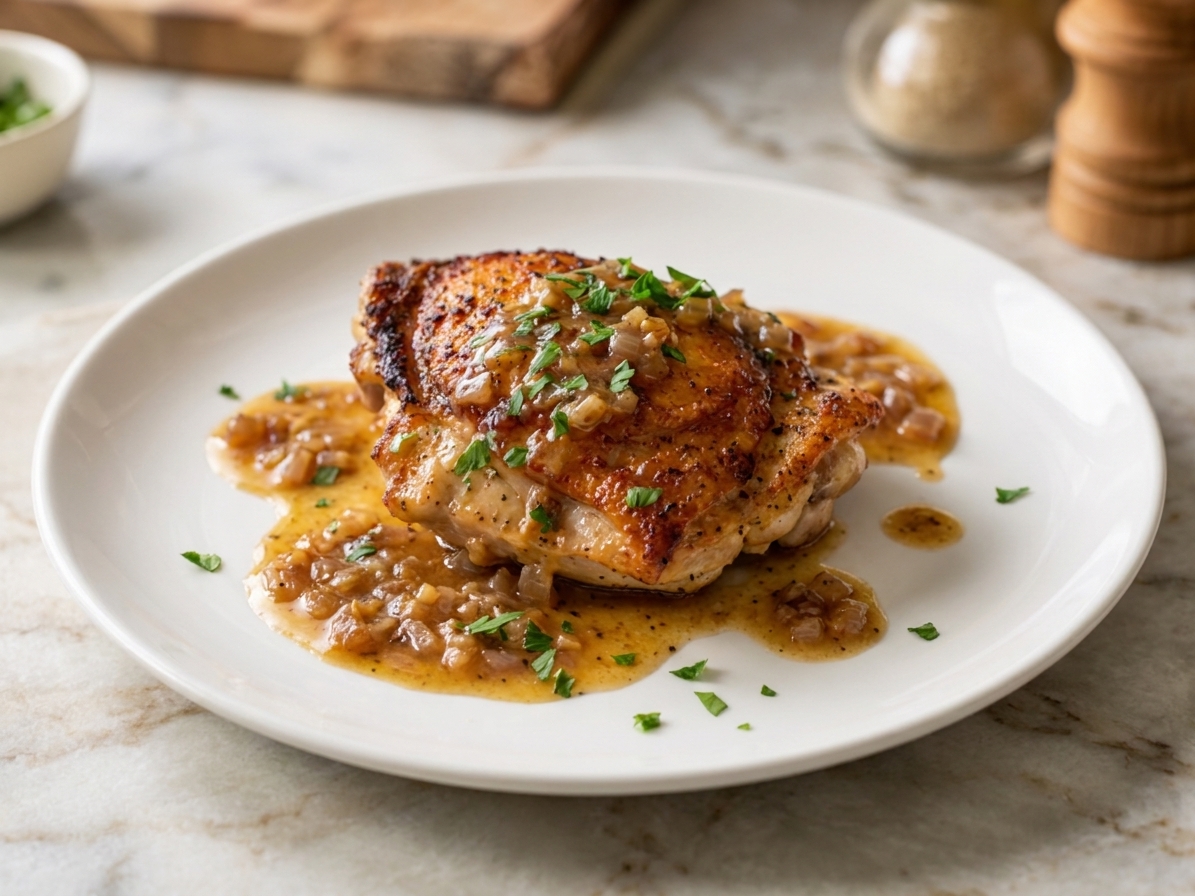
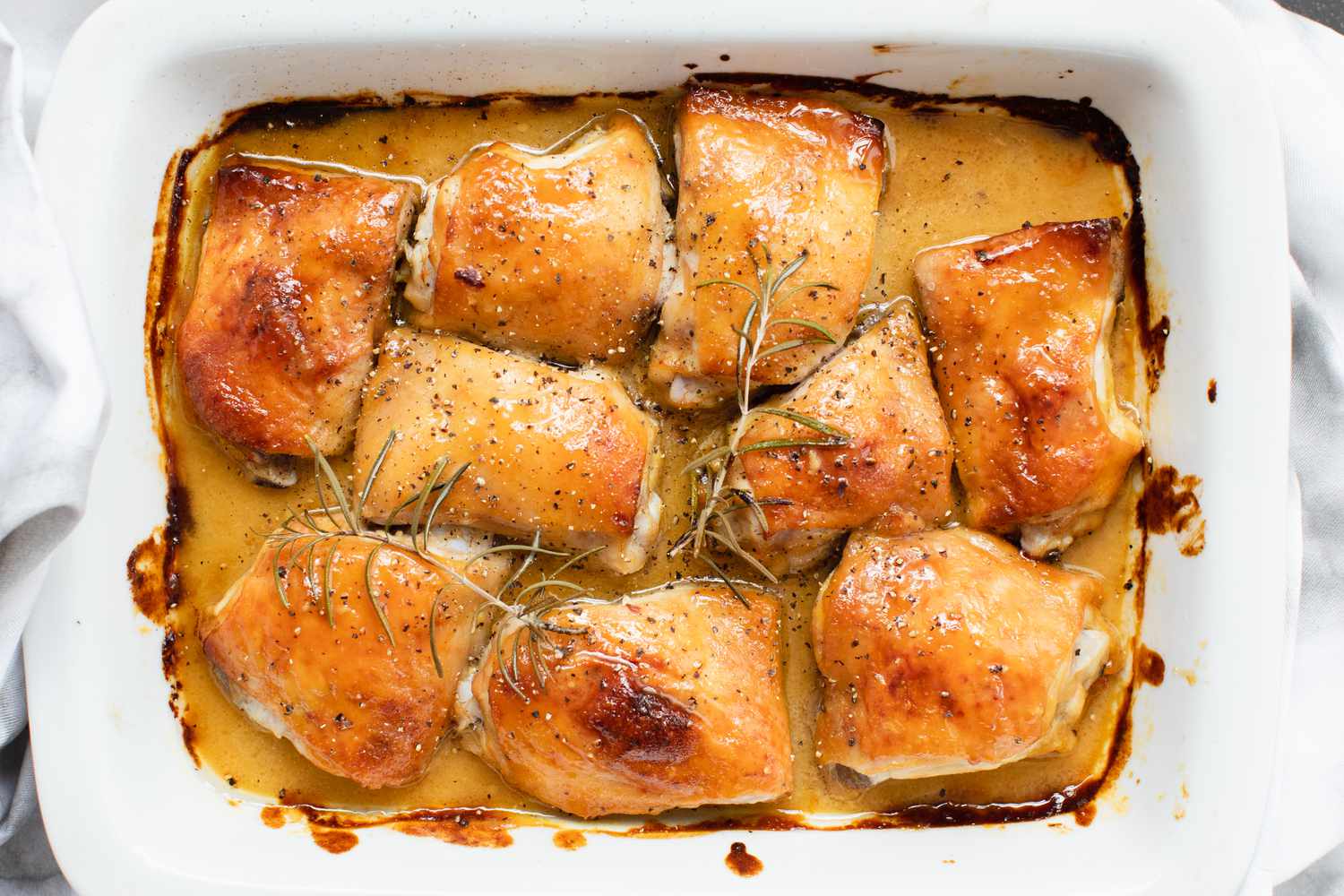
If you have ever wondered how restaurant chicken so often comes with a glossy, intensely flavorful sauce, the trick is usually the same: a simple pan sauce made right in the skillet after the chicken is done. No blender, no roux, no separate saucepan. Just the browned bits stuck to the pan (that is the good stuff), a splash of liquid, and a final swirl of butter.
This is a technique more than a recipe, which means once you learn the pattern you can improvise with whatever is in your fridge. My weeknight goal is always the same: use what you already created while cooking the chicken, waste nothing, and build a sauce that tastes like you planned it all along.
What a pan sauce is
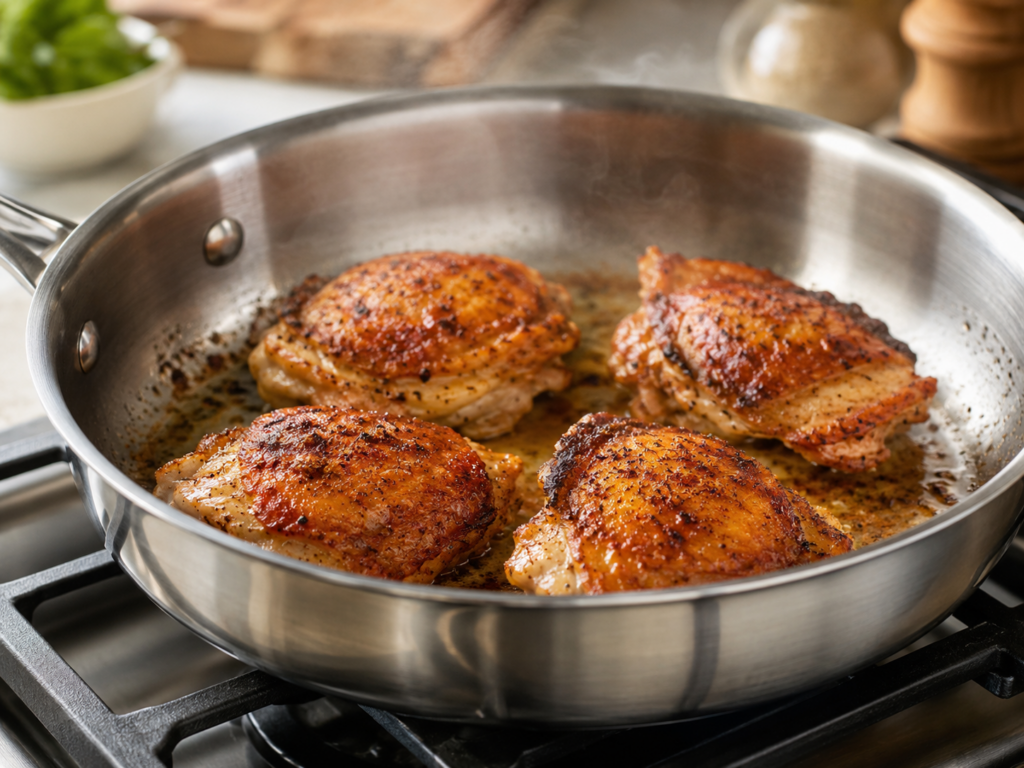
A pan sauce is a quick sauce made from what is left in the pan after you cook meat, especially chicken. Those browned bits on the bottom are called fond. Fond is concentrated flavor created by browning (including the Maillard reaction), and it dissolves beautifully when you add liquid and scrape.
A great basic pan sauce has six building blocks:
- Fond: browned bits in the pan, not blackened.
- Fat: usually the chicken fat left behind, sometimes helped with a small knob of butter or a drizzle of oil.
- Aromatics (optional but highly recommended): garlic, shallot, thyme, peppercorns.
- Acid: lemon juice, vinegar, or wine to brighten and lift the flavors.
- Broth or stock: the main liquid to dissolve the fond and create volume.
- Butter: whisked in at the end for shine, body, and that silky restaurant texture.
Best pan for pan sauce
You can make pan sauce in almost any pan, but some pans make it easier:
- Stainless steel: best fond, easiest deglazing.
- Enamel cast iron: great fond, holds heat well.
- Nonstick: least fond. You can still make a quick sauce, but it will be milder.
One key rule: if your pan is ripping hot from searing (or you just pulled it from the oven), reduce the heat and let it settle for 30 to 60 seconds before you start. A too-hot pan can make your liquid reduce too fast, which can over-concentrate salt and turn a balanced sauce into a heavy one.
The simple formula
Use this as your default blueprint for about 2 servings of sauce, enough to lightly sauce 2 chicken breasts or 4 thighs:
- 1 to 2 teaspoons fat in the pan (from chicken drippings). If the pan is dry, add 1 teaspoon olive oil or a small knob of butter.
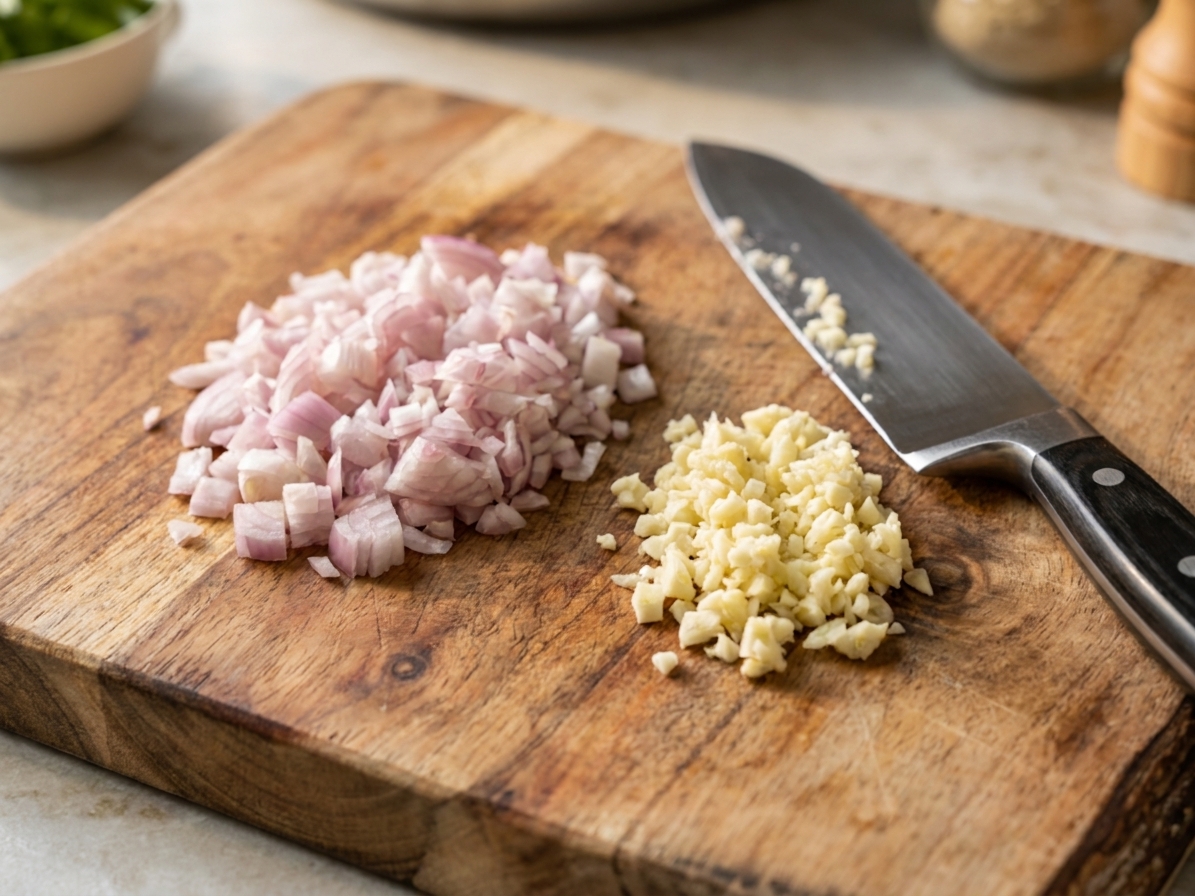
- 1 small shallot, finely chopped (optional) or 1 to 2 garlic cloves, minced.
- 2 to 4 tablespoons acid (wine, lemon juice, or vinegar).
- 1/2 to 3/4 cup low-sodium broth or stock (chicken stock is classic).
- 1 to 2 tablespoons cold butter, cut into pieces.
- Salt and pepper to finish.
If you want more sauce (for spooning over mashed potatoes, rice, or extra veg), use 1 cup broth and reduce a little longer.
Step-by-step
1) Move the chicken
Transfer the cooked chicken to a plate or cutting board and tent loosely with foil. Resting keeps it juicy and gives you time to build the sauce.
2) Keep the fond, manage the fat
Look at what is in the pan:
- If you see browned bits and a thin layer of drippings, you are in perfect shape.
- If there is a lot of grease, carefully spoon off some. Leave about 1 to 2 teaspoons behind.
- If the fond is very dark, you can add a tablespoon of broth and scrape quickly, then pour it off and start again. Think deep brown, not burnt toast.
3) Lower the heat, then add aromatics
Set the pan over medium heat (or medium-low if you just seared over high). Add shallot or garlic and stir for 15 to 30 seconds, just until fragrant. If garlic starts to brown, lower the heat. Bitter garlic is a sauce ruiner.
4) Deglaze and scrape
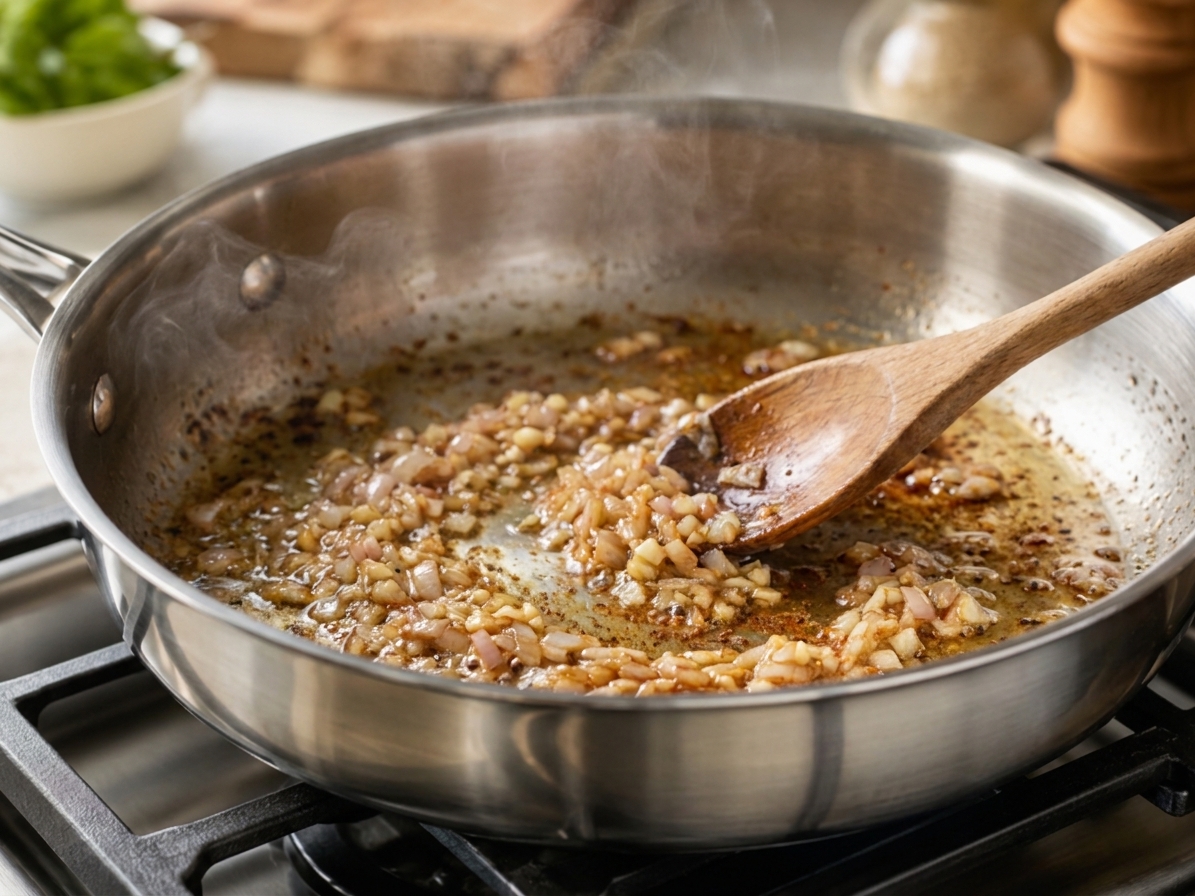
Pour in your acid (wine, lemon, or vinegar) and immediately scrape the bottom of the pan with a wooden spoon or spatula. You are dissolving flavor into the liquid.
Sensory cue: the pan should go from crusty to clean as the liquid loosens the fond, and the smell shifts from toasty to bright.
5) Add broth and reduce
Add broth, bring to a simmer, and let it bubble until it reduces slightly and looks glossy. This usually takes 2 to 5 minutes, depending on pan size and heat.
Sensory cue: drag your spoon through the sauce. If it briefly leaves a trail, you are close.
Salt control tip: wait to season until after reducing. Reduction concentrates everything, especially salt.
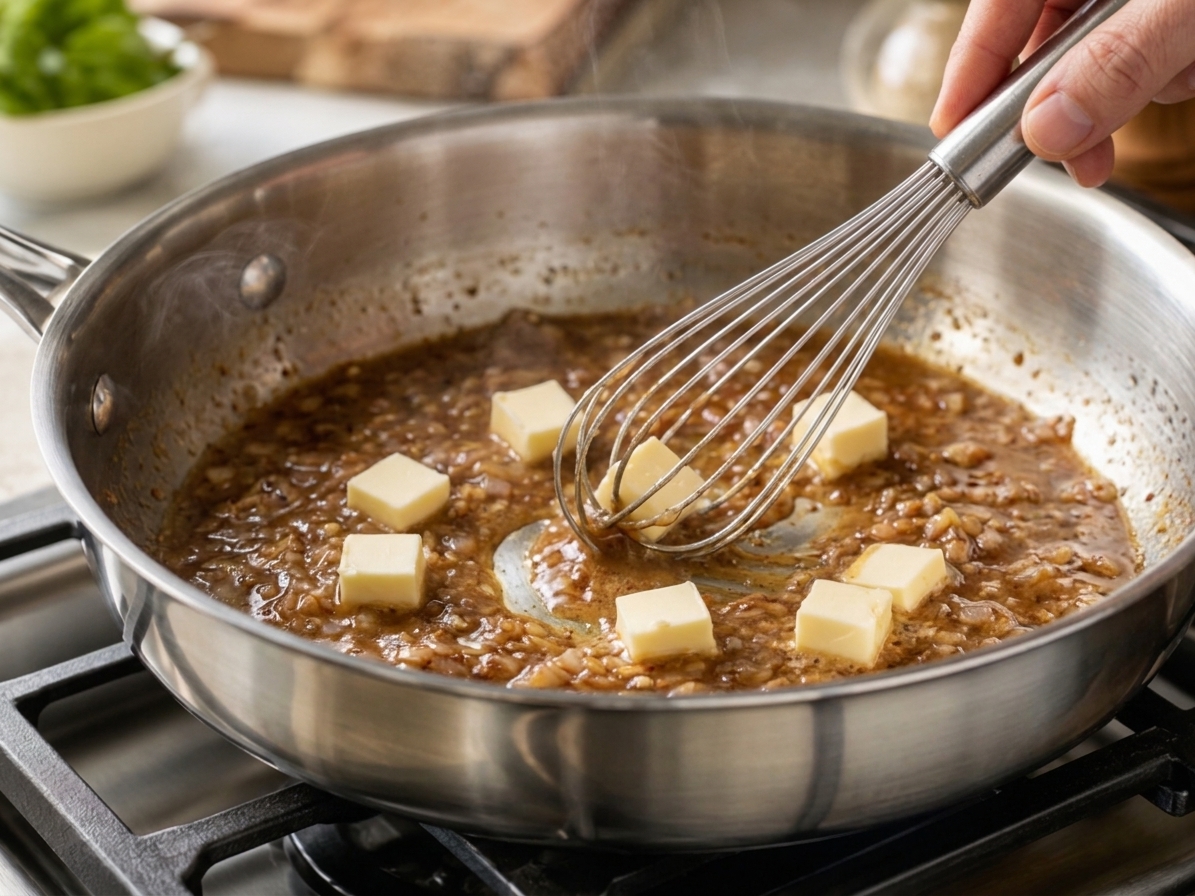
6) Off heat, whisk in cold butter
Take the pan off the heat and whisk in cold butter a piece at a time. This emulsifies the sauce, giving it a silky finish.
Important: if the sauce is boiling hard when you add butter, it can separate. Let it calm down for a few seconds first.
7) Taste, then season
Now you season. Depending on your broth and how much the sauce reduced, it might need only a pinch of salt. Add black pepper, and if it tastes flat, add a few drops of lemon juice or a tiny splash of vinegar.
Flavor variations
Once you know the basic method, you can steer the sauce in different directions without extra stress. Pick one path and keep it simple.
Lemon pan sauce
- Deglaze with 2 tablespoons fresh lemon juice.
- Add 1/2 cup chicken broth.
- Finish with 1 tablespoon butter and lemon zest if you have it.
Best with: crispy chicken cutlets, roasted broccoli, rice, or couscous.
Garlic herb pan sauce
- Sauté 1 to 2 minced garlic cloves for 15 seconds over medium or medium-low.
- Deglaze with 2 tablespoons white wine or 1 tablespoon vinegar + 1 tablespoon broth.
- Add 1/2 to 3/4 cup broth.
- Finish with butter and a small handful of chopped herbs like parsley, chives, or thyme.
Tip: add hardy herbs (thyme, rosemary) earlier, tender herbs (parsley, basil) at the end.
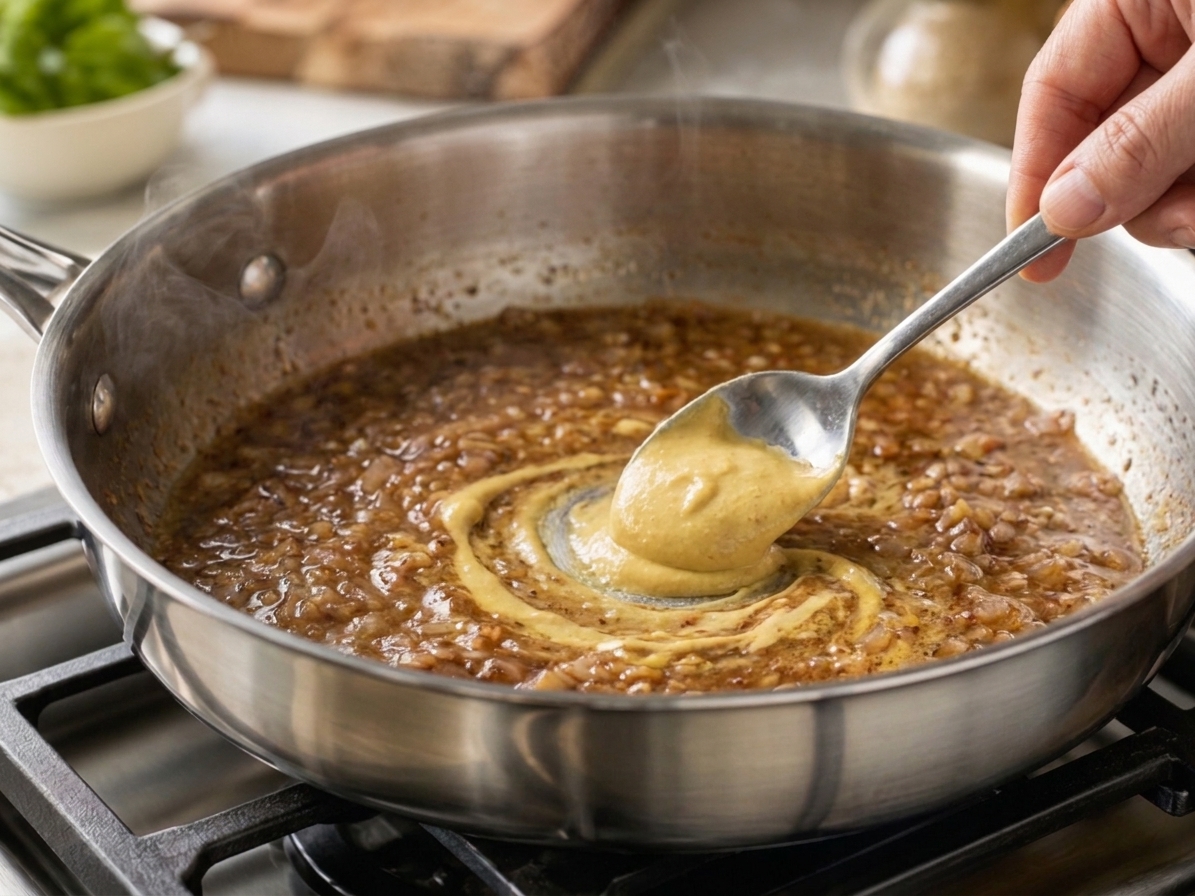
Mustard pan sauce
- Deglaze with 2 tablespoons white wine or 1 tablespoon vinegar.
- Add 1/2 cup broth, simmer 2 to 3 minutes.
- Whisk in 1 to 2 teaspoons Dijon mustard.
- Finish with 1 to 2 tablespoons butter.
Best with: chicken thighs, green beans, mashed potatoes.
Garlic lemon-caper pan sauce
- Sauté 1 minced garlic clove.
- Deglaze with 2 tablespoons lemon juice.
- Add 1/2 cup broth plus 1 tablespoon capers (drained).
- Finish with butter and parsley.
Food waste win: caper brine lasts ages in the fridge and wakes up sauces. A teaspoon can stand in for vinegar in a pinch.
Common problems
My sauce tastes greasy
- Spoon off excess fat before you deglaze. You only need a little.
- Increase acid with a small squeeze of lemon or a few drops of vinegar.
- Simmer 30 to 60 seconds longer to help the sauce come together.
My sauce tastes too sour
- Add a splash more broth and simmer for 1 minute.
- Whisk in a bit more butter to round it out.
- A tiny pinch of sugar or honey can help if you went heavy on vinegar.
My sauce is too thin
- Simmer and reduce longer. This fixes most thin sauces.
- Whisk in another 1 teaspoon cold butter to add body.
- If you need a faster fix, mix 1/2 teaspoon cornstarch with 1 tablespoon cold water, whisk in, and simmer 30 seconds. Use this sparingly so it still tastes like a pan sauce, not gravy.
My sauce broke
- Take it off the heat and whisk vigorously.
- Whisk in 1 teaspoon cold water, then add a small piece of cold butter.
- Next time, let the sauce stop boiling before adding butter.
The browned bits are stuck
- Lower heat slightly, add a splash of broth, and scrape with a wooden spoon.
- If you used a nonstick pan, you may not have much fond. That is okay. Your sauce will still taste good, just lighter.
Easy swaps
Because this is a technique, substitutions are built in. Here are my most-used swaps when I am trying to use up what is already open in the fridge:
Acid swaps
- No wine? Use lemon juice, cider vinegar, white wine vinegar, or a tiny splash of pickle brine.
- No lemon? A mild vinegar plus a pinch of zest from an orange works surprisingly well.
Broth swaps
- No chicken stock? Use water plus a pinch of salt, or a small spoonful of Better Than Bouillon-style paste if you keep it around.
- Only boxed broth? Great. Taste before salting, since many brands are already seasoned. Low-sodium makes seasoning easier.
Butter swaps
- Dairy-free: finish with a tablespoon of olive oil off heat. You lose a bit of silkiness, but it is still glossy and delicious.
- Want it richer: finish with 2 tablespoons butter, but reduce the sauce a touch more first so it does not get too loose.
FAQ
Can I make pan sauce after baking chicken?
Yes, as long as you have drippings and browned bits in the pan. If you roasted chicken on a sheet pan, you can still do a version, with a safety check: only deglaze on the stovetop if your sheet pan is sturdy, stovetop-safe, and sits flat over burners. Otherwise, scrape the drippings and browned bits into a skillet or small saucepan, then deglaze and reduce there.
How much sauce does this make?
With 1/2 to 3/4 cup broth, you will usually end up with about 1/3 to 1/2 cup finished sauce, depending on how much you reduce. It is enough to lightly coat chicken. If you like extra sauce, start with 1 cup broth.
Can I add cream?
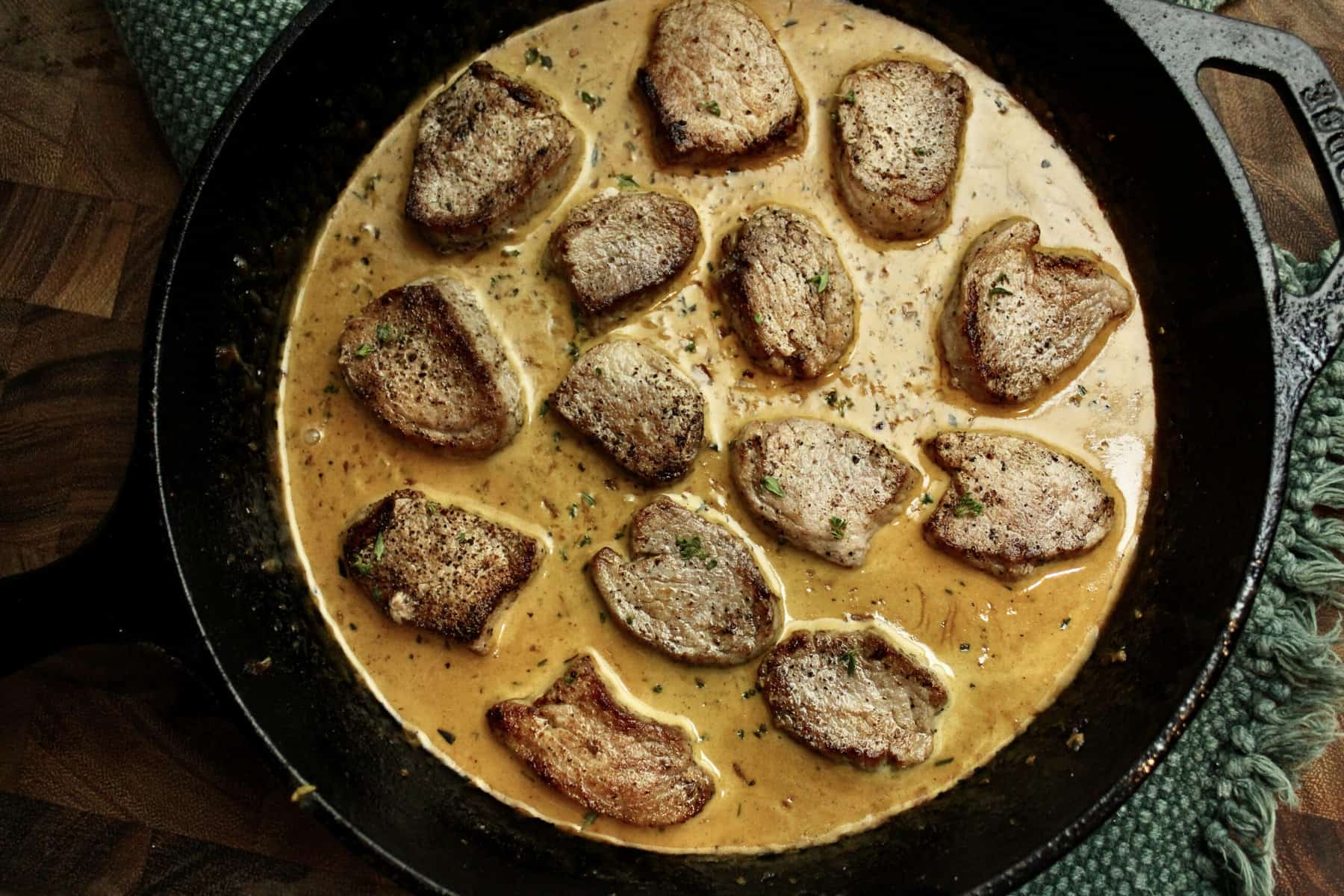
You can. After deglazing and adding broth, add 2 to 3 tablespoons heavy cream and simmer gently for a minute, then finish with a small amount of butter. Cream plus mustard is especially good.
How do I keep my chicken crispy with sauce?
Serve the sauce under the chicken or spoon it around the edges. If you pour sauce directly over crispy skin, it will soften quickly. Still tasty, just less crisp.
Weeknight rhythm
If you only remember one thing, make it this: scrape, simmer, swirl.
- Scrape up the fond with acid.
- Simmer with broth until slightly reduced.
- Swirl in cold butter off heat for a glossy finish.
Once you do this a few times, you will start making pan sauce without thinking. And that is when weeknight chicken stops feeling like a chore and starts feeling like you have a little restaurant magic at your own stove.