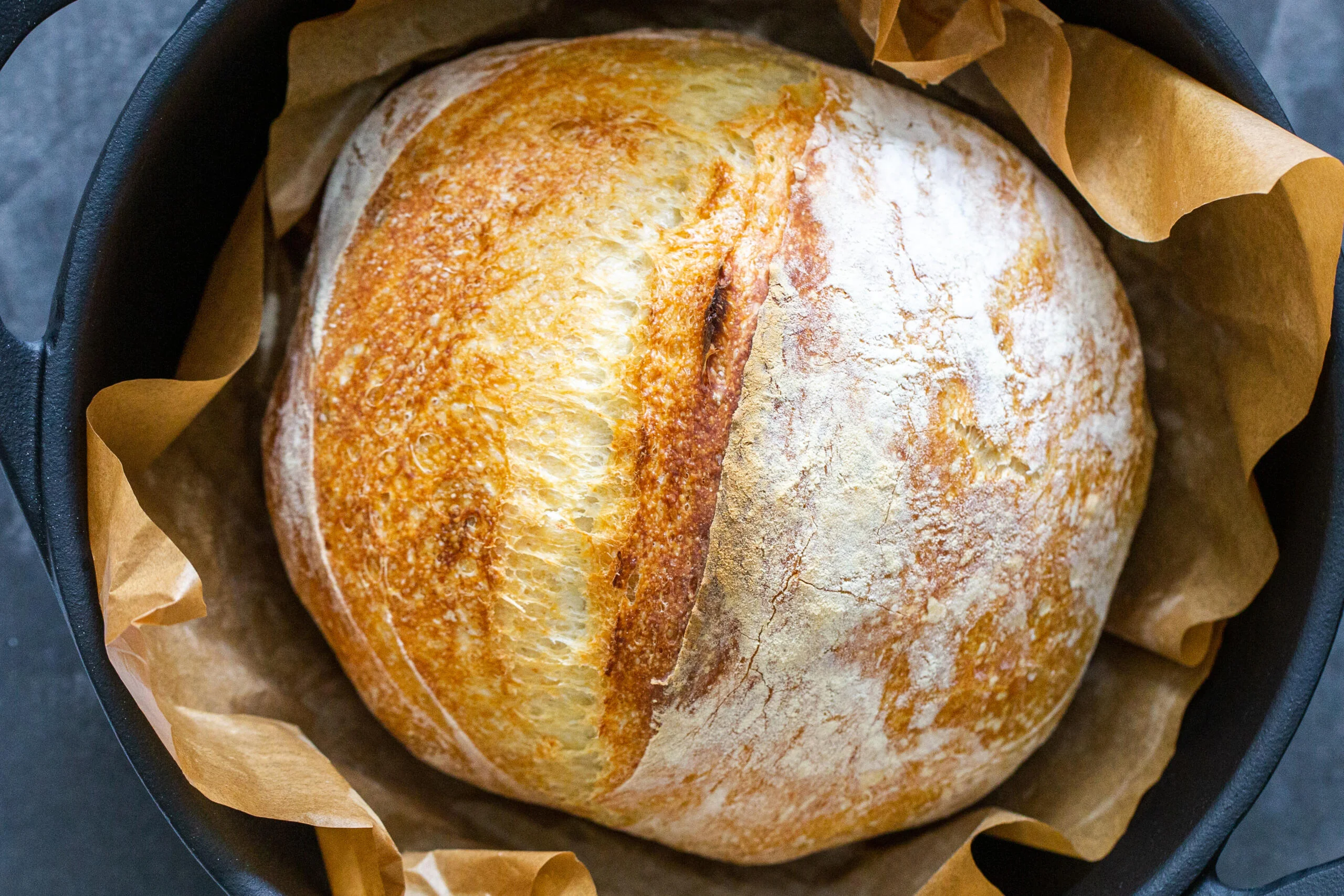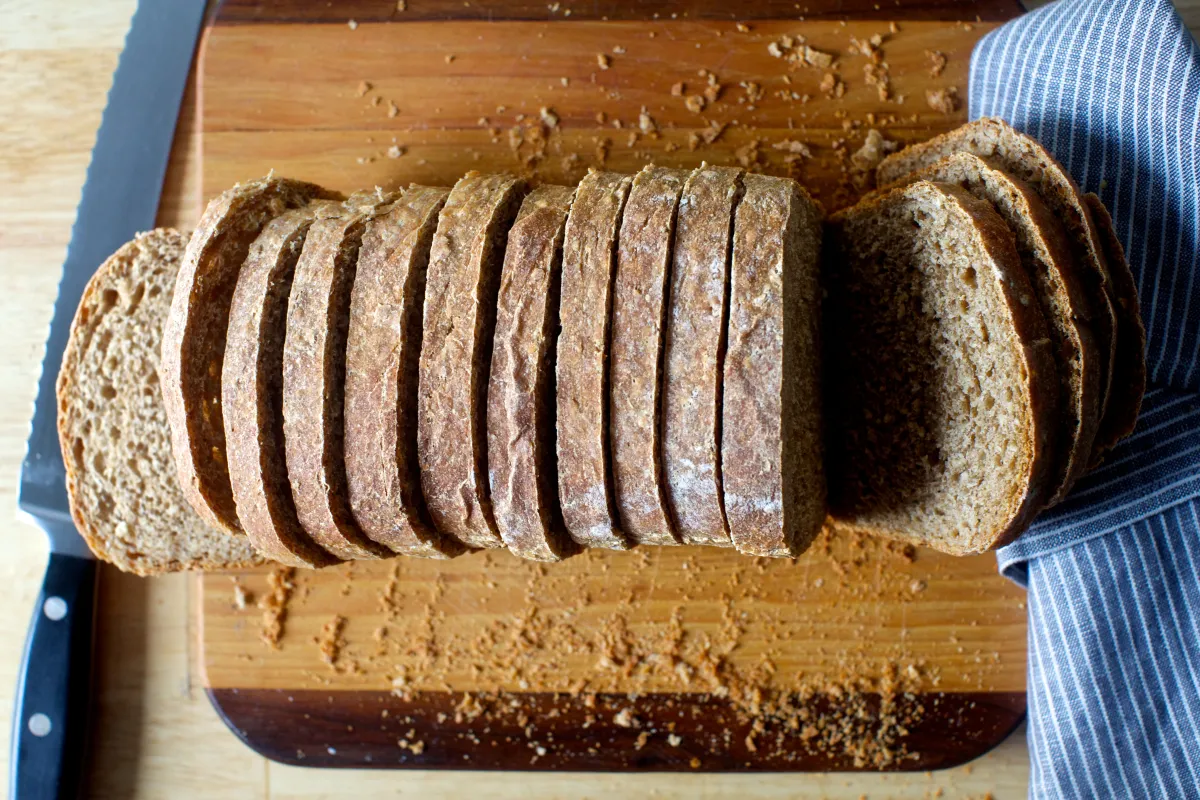
When I say bold wheat bread, I mean a loaf that tastes like it came from a real bakery: toasty wheat, a gentle tang, and a creamy, almost yogurt-like richness in the crumb. But we are doing it with home-kitchen tools and a method you can repeat on a Tuesday night without losing your mind.
The secret is not a complicated starter or a three-day project. It is a quick pre-ferment for better aroma and a hint of tang, plus a simple “creaminess booster” that keeps the loaf tender. If you want the tang to show up louder, there is an easy “flavor dial” option that does not require sourdough upkeep.
Why this recipe works
Tangy in this loaf is a team effort. The short pre-ferment adds depth and a subtle, bready tang, while the yogurt or buttermilk brings that clean, cultured zip right into the crumb. If you extend fermentation (especially with a cold rise), the tang gets more noticeable.
Creamy comes from two things: a touch of dairy (or an easy dairy-free swap) and good hydration. The crumb stays soft, slightly elastic, and moist, instead of dry or crumbly like some whole wheat loaves can be.
- Flavor goal: wheaty, lightly sweet, pleasantly tangy.
- Texture goal: sandwich-friendly slices with a tender chew and a thin, crisp crust.
Timing note: The rise times assume a kitchen around 70 to 75°F. If your kitchen is cooler, give it more time and trust the “puffy and airy” cues.
Ingredient notes
Flour
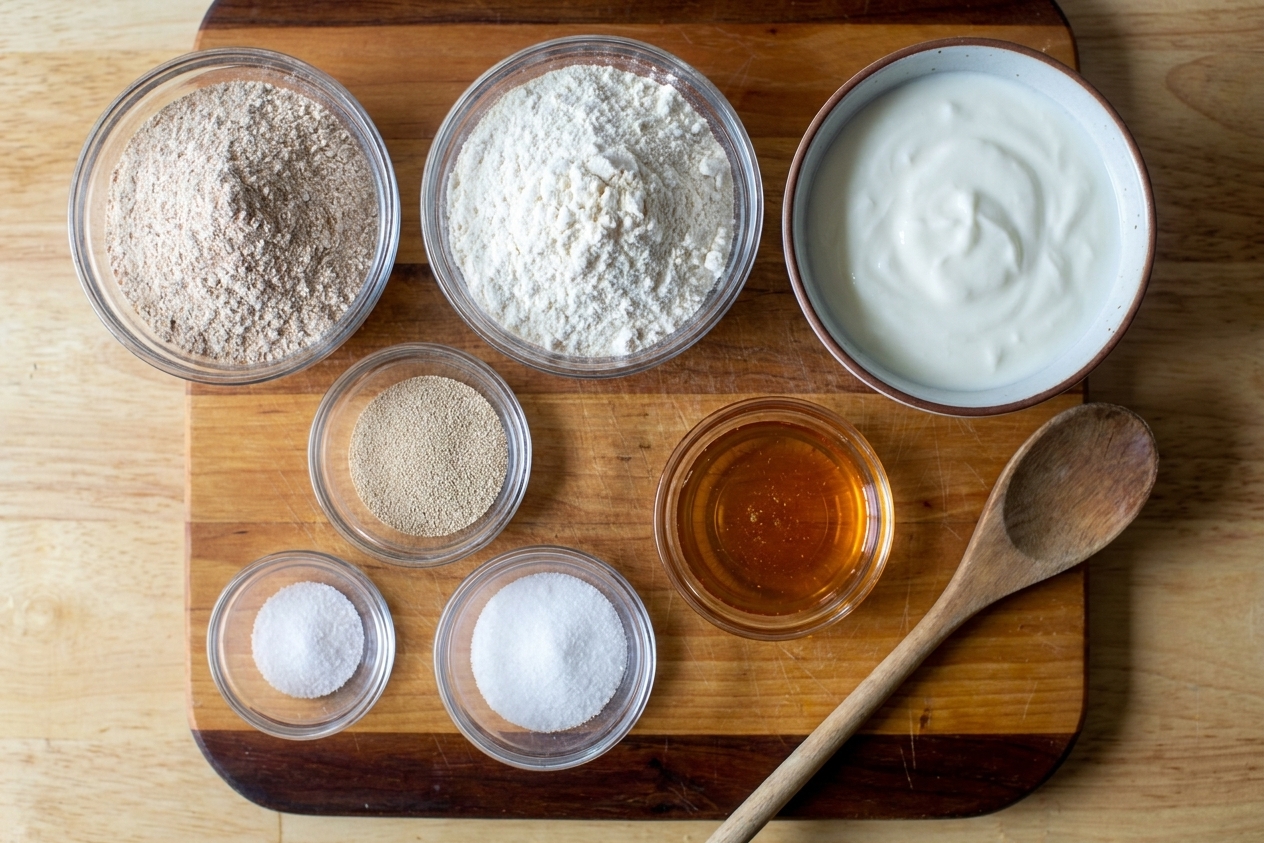
A blend of whole wheat flour + bread flour gives you bold wheat flavor plus structure so the loaf rises high and slices cleanly.
- Best blend: about 50 to 70% whole wheat, the rest bread flour.
- All-purpose works: the loaf will be slightly less lofty, still delicious.
- 100% whole wheat: doable, but increase hydration and expect a denser crumb.
Tang and creaminess boosters
For tang and tenderness, choose one:
- Plain yogurt: gentle, clean tang and a tender crumb.
- Buttermilk: a little more assertive tang, very soft texture.
- Dairy-free: unsweetened soy yogurt or oat yogurt. If it tastes flat, add 1 teaspoon lemon juice or vinegar.
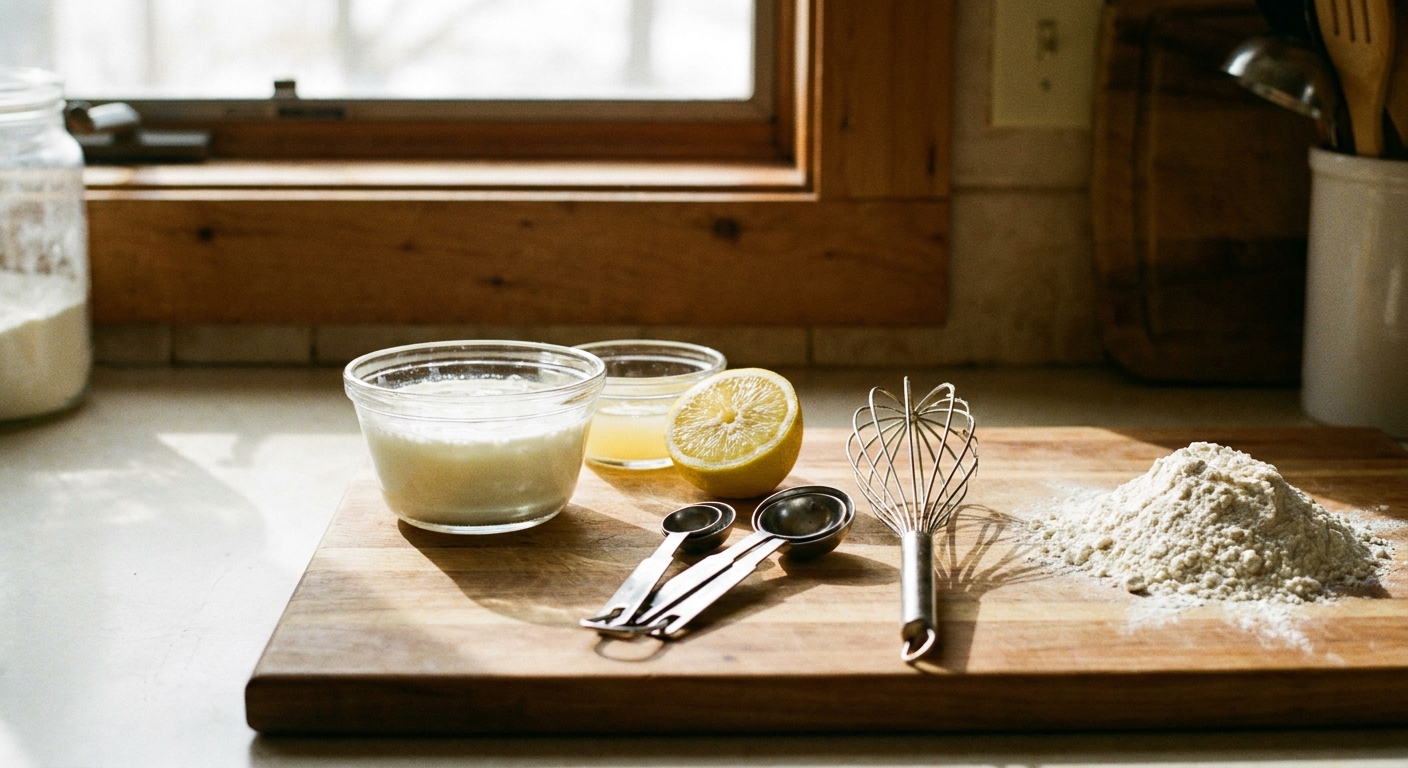
- No yogurt or buttermilk: use 170 g milk (dairy or unsweetened non-dairy) plus 2 teaspoons lemon juice or vinegar.
Sweetener and fat
A small amount of honey or maple syrup rounds the wheat flavor and helps browning. A touch of olive oil or softened butter keeps slices flexible for sandwiches.
Salt and yeast
Do not under-salt wheat bread. Salt is what makes the loaf taste “finished.” Gram weights are most consistent because salt brands vary. Instant yeast is easiest, but active dry works too (just give it a little extra time to wake up).
Equipment you will need
- Loaf pan: 8 1/2 x 4 1/2-inch (or a 9 x 5-inch pan, noting the loaf will be shorter and wider).
- Medium mixing bowl (for the pre-ferment).
- Large bowl (for mixing and rising) plus a cover (lid or wrap).
- Optional parchment (for a parchment sling in the pan, or for baking a boule).
- Optional stand mixer (hand kneading works great).
- Serrated knife (for slicing once fully cooled).
- Optional thermometer (to check for 200 to 205°F in the center).
- Optional sturdy metal pan (for adding steam when baking a boule).
Pro tips
- Use grams if you can: it is the most consistent way to get repeatable dough and proper seasoning.
- Hydration matters for “creaminess”: whole wheat absorbs slowly, so add water in small splashes until no dry flour remains, then wait 2 minutes before deciding if you need more.
- Start with 60 g water: you will often want closer to 90 to 120 g if you are using 70% whole wheat, a very thick yogurt, or baking in a dry environment.
- Err slightly wetter: a slightly wetter dough bakes up more creamy and less dry.
- Know the fermentation cues: pre-ferment should look active and airy (not necessarily doubled); first rise should be puffy and about 1 1/2 times its size; second rise is ready when a floured fingertip dent slowly springs back.
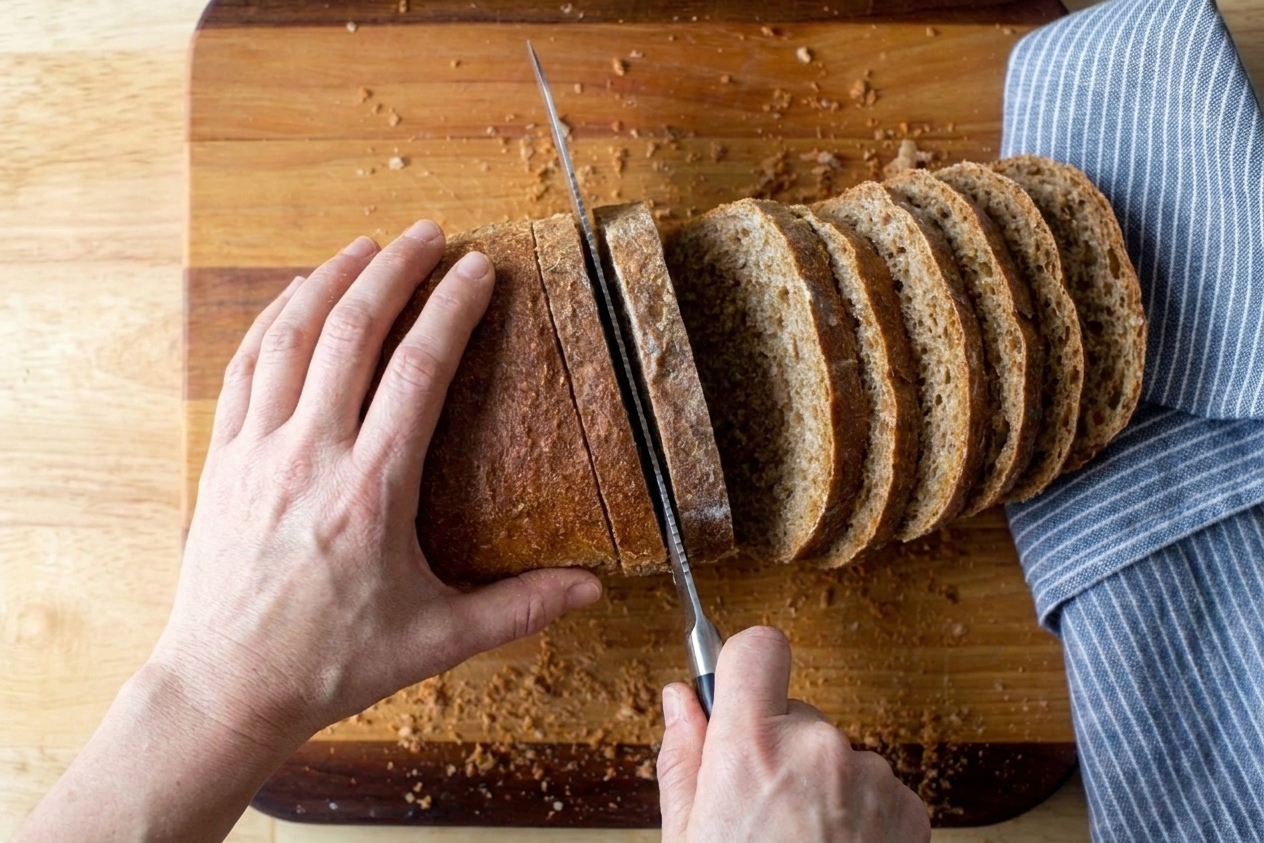
- Prevent gummy slices: cool in the pan 10 minutes, then turn out and cool fully before slicing.
Substitutes that work
- Bread flour: all-purpose works, but the loaf will be slightly less lofty.
- Yogurt or buttermilk: use 170 g milk (dairy or unsweetened non-dairy) plus 2 teaspoons lemon juice or vinegar.
- Dairy-free option: unsweetened soy yogurt or oat yogurt; if it tastes flat, add 1 teaspoon lemon juice or vinegar.
- Instant yeast: active dry works too; use the same amount and expect a slightly longer rise. For a more standard swap, use 2 teaspoons active dry in the final dough (instead of 1 1/2 teaspoons instant).
- Olive oil: softened butter also works (same amount).
- Honey: maple syrup works (same role in the dough).
Variations
More tang
- Let the pre-ferment go the full 90 minutes, until it smells more sharp than sweet.
- Use buttermilk instead of yogurt.
- Do a slow second rise in the fridge: shape the loaf, cover, refrigerate overnight, then bake the next day (bring toward room temp while the oven heats).
More creamy
- Choose whole milk yogurt.
- Add water slowly and keep the dough slightly tacky.
- Brush the warm loaf lightly with butter for a softer crust.
More bold wheat
- Use a darker whole wheat flour or stone-ground whole wheat.
- Toast 2 tablespoons of wheat germ and add with the flour.
- Swap 30 g (about 1/4 cup) flour for rye flour for a deeper, earthy note.
Serving ideas
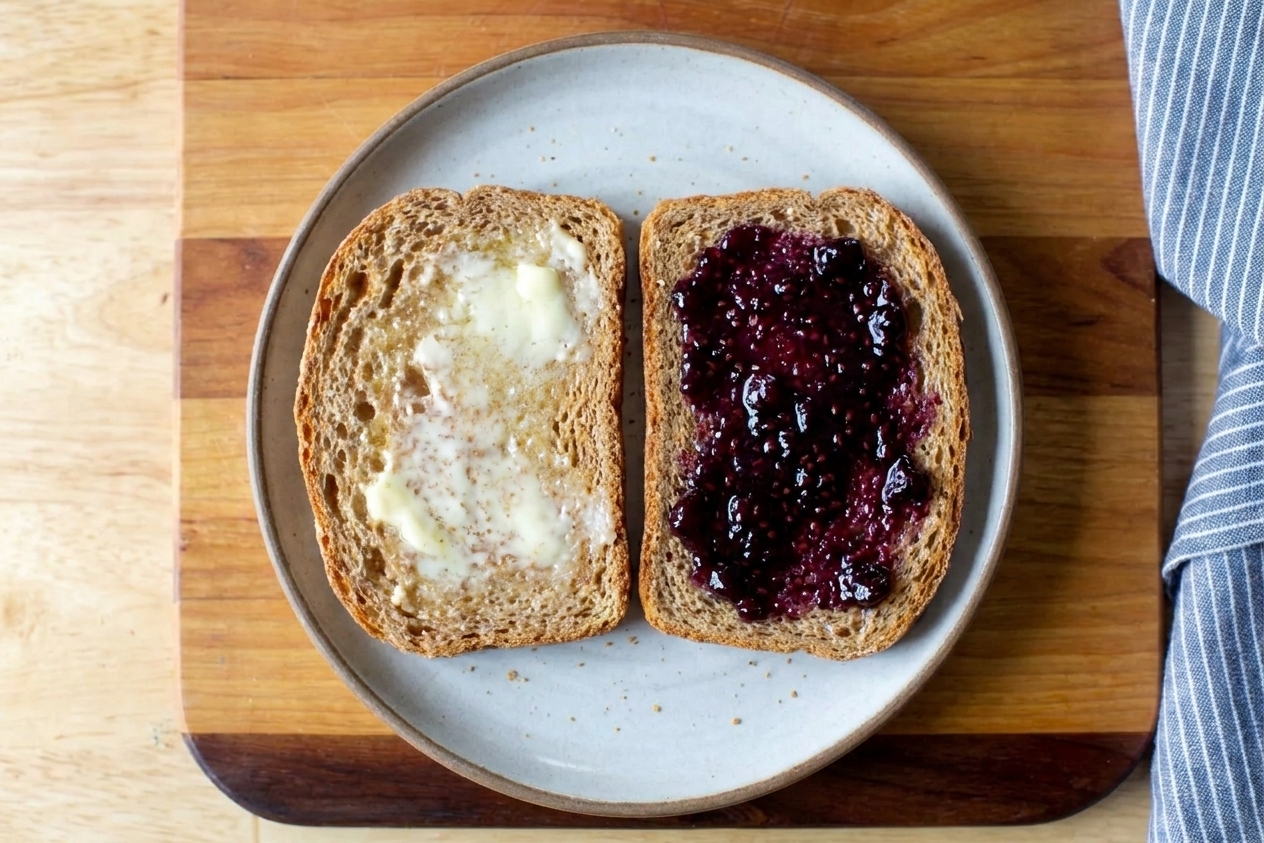
- Breakfast: toasted with salted butter and a swipe of jam, or peanut butter and banana.
- Lunch: turkey and sharp cheddar with pickles (acid + salt = magic).
- Dinner: alongside soup, especially tomato, lentil, or creamy mushroom.
Storage and reheating
- Room temp: store tightly wrapped for 2 to 3 days.
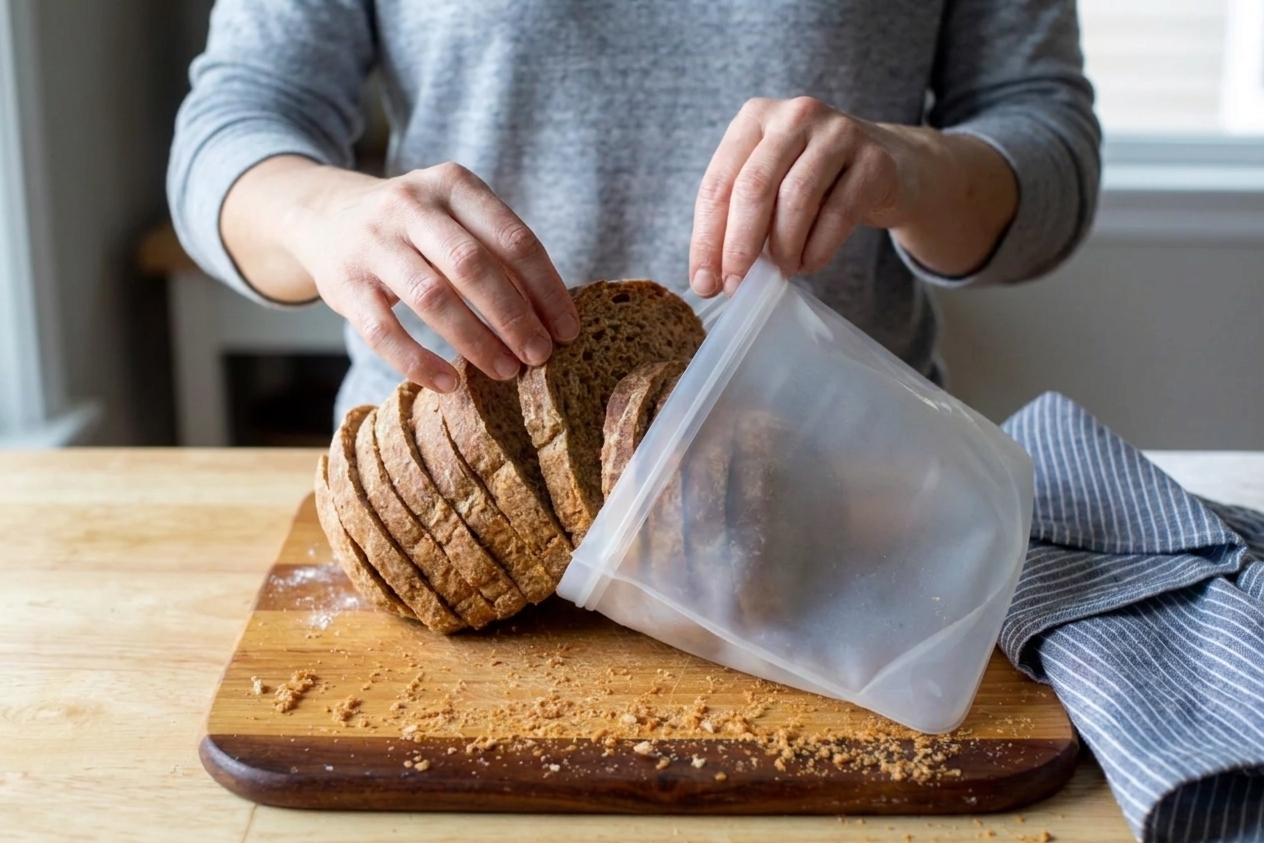
- Freeze: slice the fully cooled loaf, freeze slices in a bag, and toast straight from frozen.
- Stale slices: cube for croutons, blitz for breadcrumbs, or soak for a savory bread pudding.
Common mistakes
My loaf is dense
- Likely cause: not enough gluten development or under-proofed dough.
- Fix next time: knead a few minutes longer and let the first rise go until truly puffy.
- Also check: yeast freshness and water temperature (warm, not hot).
The top cracks
- Likely cause: under-proofed second rise or oven too hot for your pan.
- Fix: proof a bit longer. You can also score the loaf with a shallow slash before baking to control where it opens.
It tastes bland
- Fix: use the full salt amount and let the pre-ferment sit longer.
- Tip: whole wheat needs confident seasoning.
The crumb is gummy
- Likely cause: sliced too soon or underbaked.
- Fix: cool completely, and use the thermometer target if you can.
High altitude note
- At high altitude, dough can overproof faster. Watch the look and feel (puffy, slow spring-back) more than the clock, and consider shortening rises slightly.
FAQ
Can I make this without yogurt or buttermilk?
Yes. Use 170 g milk (dairy or unsweetened non-dairy) and add 2 teaspoons lemon juice or vinegar for a similar tang. The crumb will be slightly less plush than with yogurt, but still soft.
Can I use active dry yeast?
Yes. You can use the same amount and expect a slightly longer rise, especially in a cool kitchen. If you want a more standard swap, use 2 teaspoons active dry in the final dough (instead of 1 1/2 teaspoons instant).
Do I need a stand mixer?
Nope. Hand kneading works great. If your wrists get tired, knead 2 minutes, rest 5 minutes, then knead again. The dough relaxes and becomes easier to work with.
How do I know I added enough water?
The dough should feel soft and slightly tacky. If it feels stiff or dry, your loaf will bake up less creamy. Add water in small splashes, mix, then wait 2 minutes before deciding, because whole wheat keeps absorbing.
Bold Wheat Bread (Tangy and Creamy)
Bold Wheat Bread (Tangy and Creamy) is a repeatable home-baker loaf with toasty wheat flavor, gentle tang, and a tender, creamy crumb. It uses a quick pre-ferment plus yogurt or buttermilk for depth and softness, and it can be baked as a sandwich loaf or a free-form boule.
- Prep
- 25 minutes
- Cook
- 35 minutes
- Total
- 3 to 4 hours
- Yield
- 1 loaf (8 1/2 x 4 1/2-inch pan) or 1 boule
Ingredients
- Quick pre-ferment:
- 120 g whole wheat flour (about 1 cup, spooned and leveled)
- 120 g warm water (about 1/2 cup, 95 to 105°F)
- 1/8 teaspoon instant yeast
- 1 teaspoon honey or maple syrup (optional but helpful)
- Final dough:
- 240 g (2 cups) bread flour (or all-purpose)
- 120 g (1 cup) whole wheat flour
- 170 g (about 3/4 cup) plain yogurt or buttermilk
- 60 to 120 g (1/4 to 1/2 cup) warm water, as needed (start with 60 g)
- 9 g fine salt (about 1 1/2 teaspoons, but go by weight)
- 1 1/2 teaspoons instant yeast
- 18 g (1 tablespoon) olive oil or softened butter
Instructions
- Make the pre-ferment: In a medium bowl, stir together the whole wheat flour, warm water, yeast, and honey. Cover and let stand until you see bubbles and it smells pleasantly wheaty with a light tang, 30 to 90 minutes. In a cool kitchen it takes longer. You are looking for active and airy, not necessarily doubled.
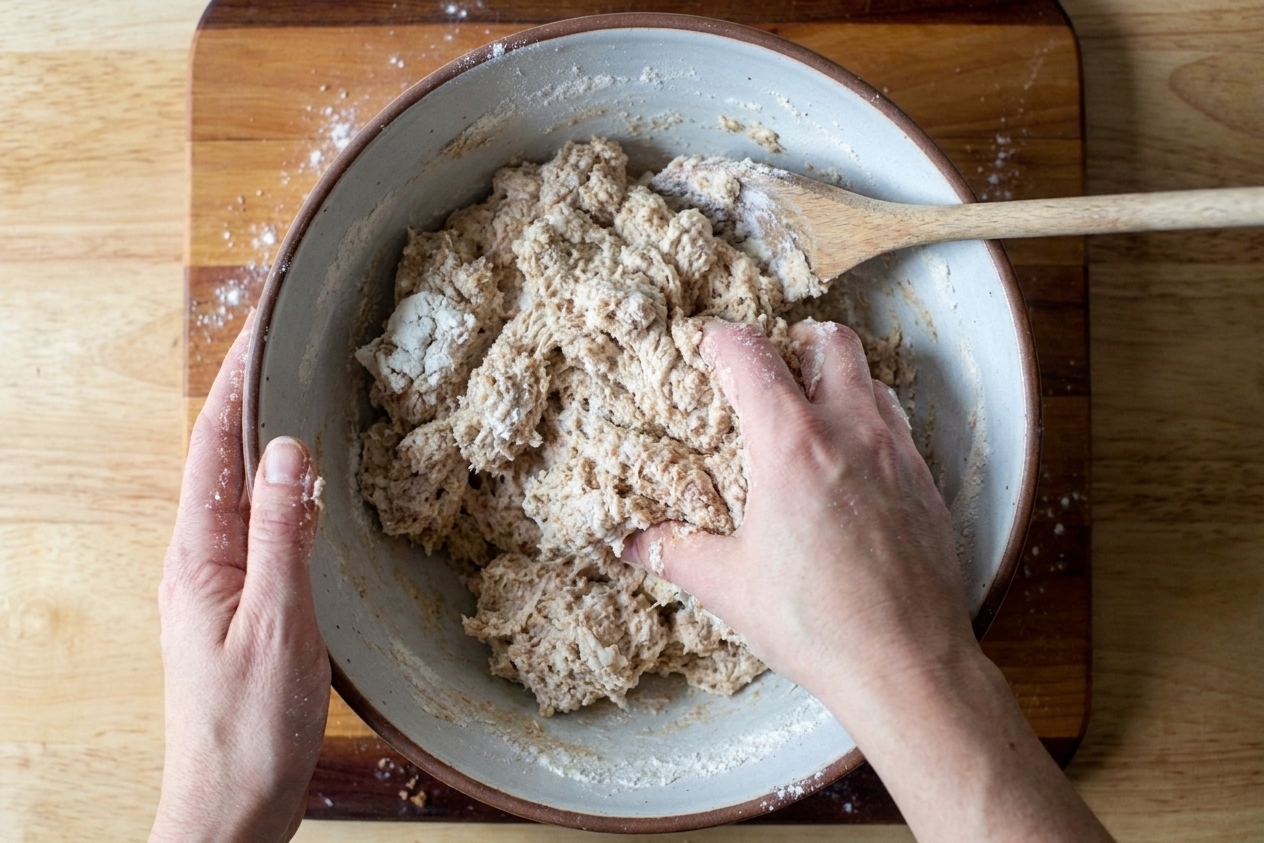
- Mix the dough: To the pre-ferment, add bread flour, additional whole wheat flour, yogurt or buttermilk, salt, yeast, and oil. Mix until you have a shaggy mass. Add warm water a splash at a time until no dry flour remains. Aim for dough that feels slightly tacky but not soupy. Start with 60 g water; you will often want closer to 90 to 120 g (especially with 70% whole wheat, very thick yogurt, or a dry environment). Mix, wait 2 minutes, then decide.
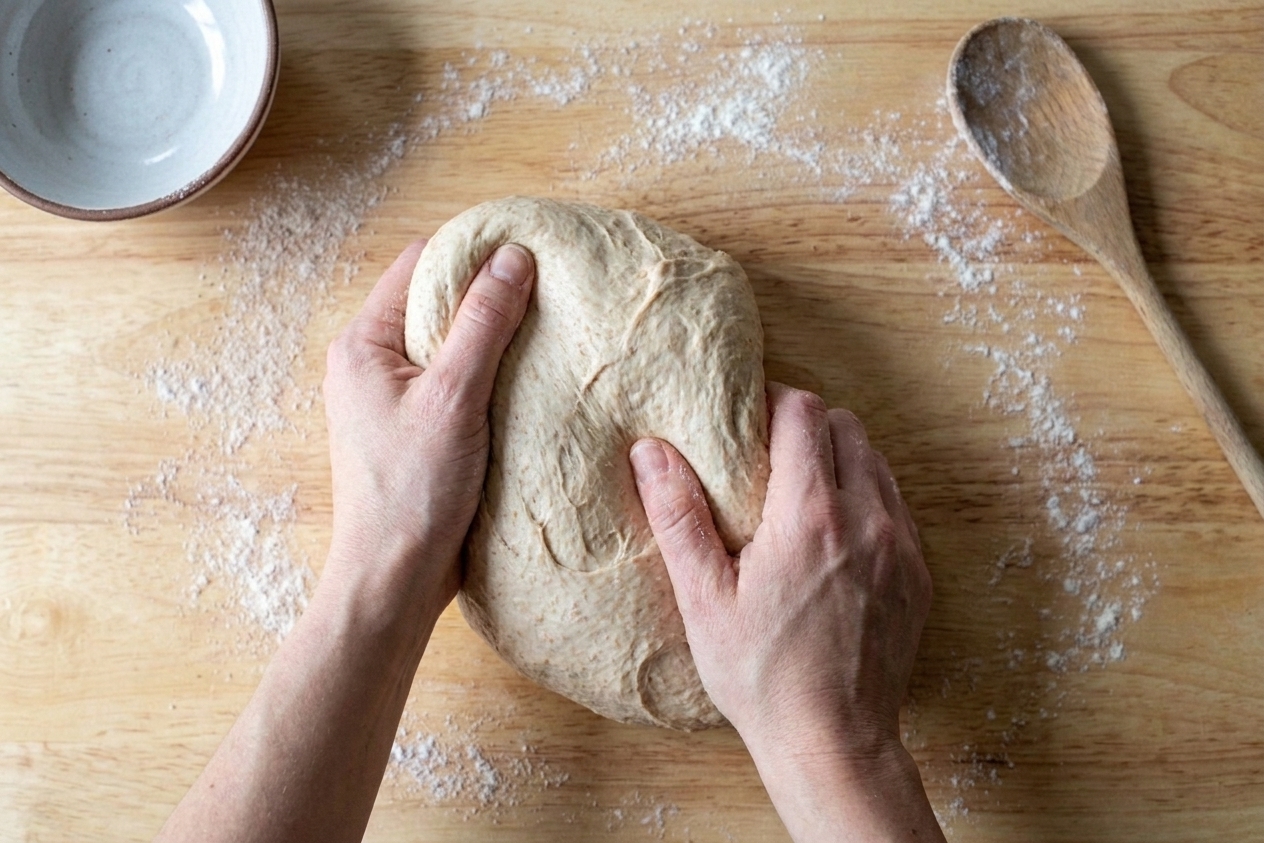
- Rest, then knead briefly: Cover and rest 10 minutes. Then knead 6 to 8 minutes by hand (or 4 to 5 minutes in a stand mixer) until the dough is smoother and stretchy. If you stretch a small piece, it should form a thin “window” before tearing (with higher whole wheat, it might not go glass-thin, and that is okay).
- First rise: Place dough in a lightly oiled bowl, cover, and rise until puffy and about 1 1/2 times its size, 60 to 90 minutes.
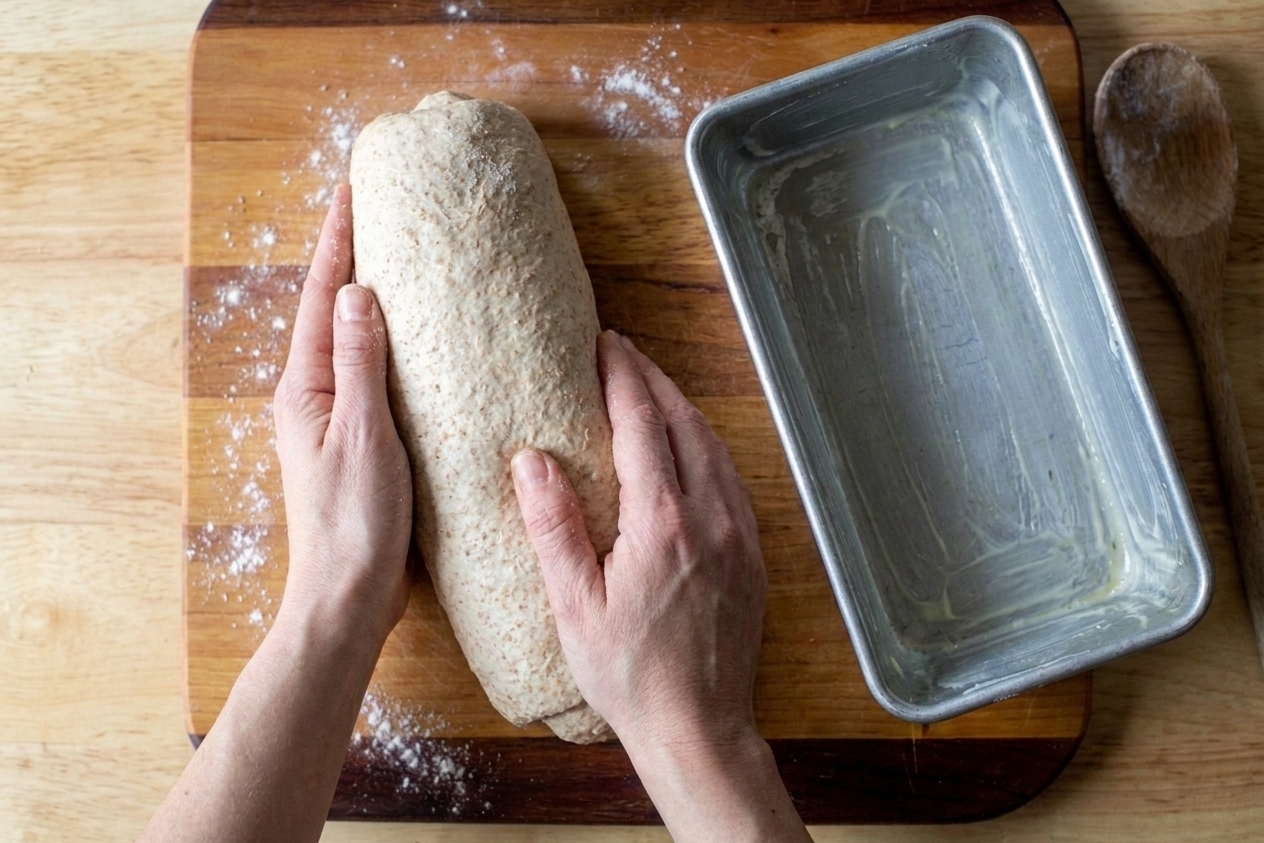
- Shape: Grease an 8 1/2 x 4 1/2-inch loaf pan well. If you want an easy release, line it with a parchment sling. Lightly flour the counter. Press the dough into a rectangle, roll into a tight log, and pinch the seam closed. Place seam-side down in the pan. For a boule: Shape into a tight round and place seam-side down on parchment (or proof in a bowl lined with a well-floured towel, then invert onto parchment before baking). Pan size note: If you use a 9 x 5-inch pan, the loaf will be a little shorter and wider; start checking for doneness 5 minutes earlier.
- Second rise and preheat: Cover and rise until the dough crowns about 1 inch above the pan rim (or the boule looks noticeably expanded and airy), 45 to 75 minutes. When you gently press a floured fingertip into the dough, the dent should slowly spring back. When the dough looks close, start preheating the oven: 375°F for a sandwich loaf, or 425°F for a boule.
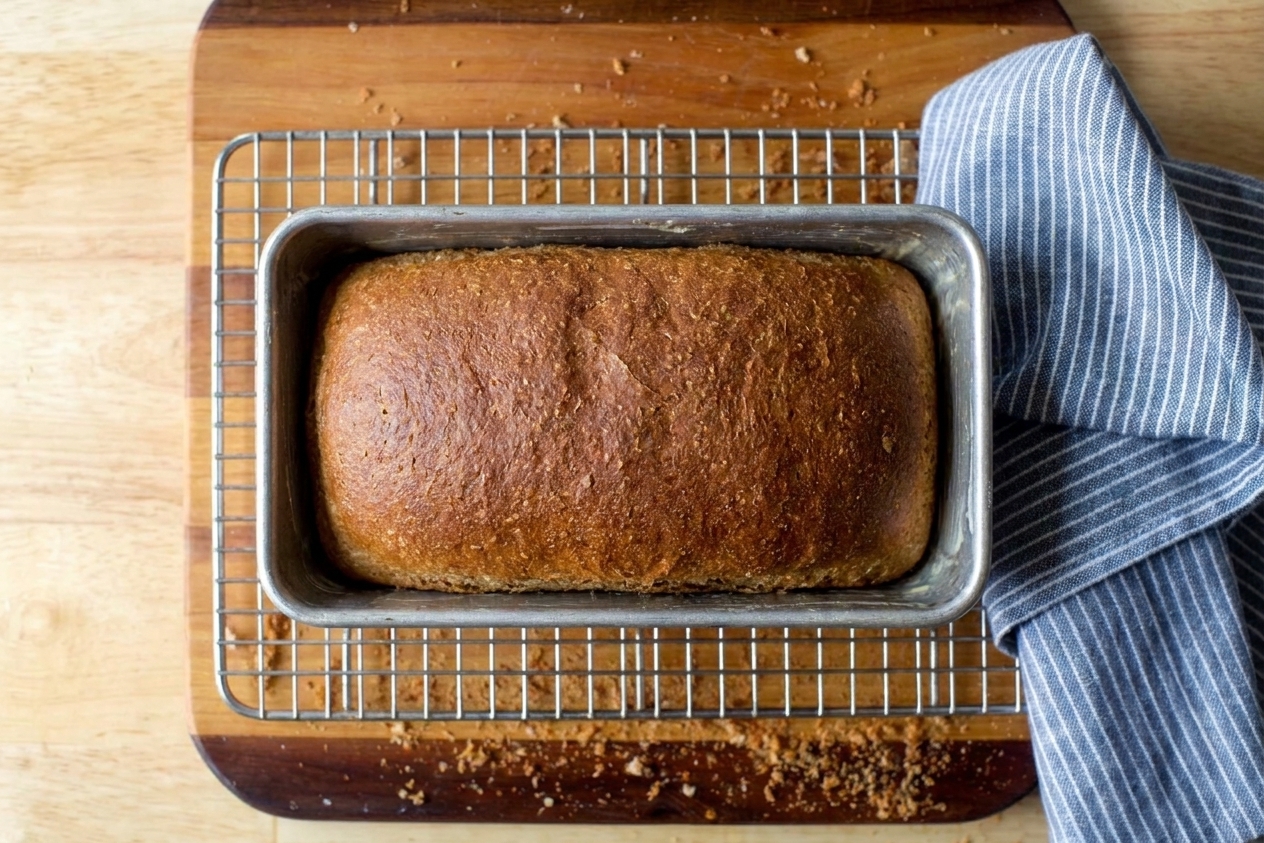
- Bake: Sandwich loaf: Bake at 375°F for 30 to 40 minutes, until deep golden (aim for 200 to 205°F in the center). Boule: Bake at 425°F for 28 to 35 minutes, until deeply browned (about 200 to 205°F in the center). Optional steam (for boule): Set a sturdy metal pan on a lower rack while the oven preheats. After the bread goes in, carefully pour in about 1 cup hot water and close the door right away (skip if your oven manual warns against it). If browning too fast, tent loosely with foil around the 20 to 25 minute mark. Cool in the pan 10 minutes, then turn out and cool fully before slicing.
Notes
Makes: 1 sandwich loaf (8 1/2 x 4 1/2-inch pan) or 1 free-form boule.
Measuring note: If you can, use grams. Cups are included as a helpful backup, but flour can vary by how you scoop.
Timing note: Rise times assume a kitchen around 70 to 75°F. In a cooler kitchen, it takes longer. Watch for “puffy and airy,” not just the clock.
One last cue: If your dough smells pleasantly wheaty with that cultured tang, feels elastic after kneading, and rises to a puffy, airy shape, you are on track.
Nutrition
- Calories: ~190 (per slice, assuming 16 slices per loaf)
- Fat: ~2.5 g
- Carbs: ~36 g
- Protein: ~6 g
- Fiber: ~3 g
- Sugar: ~2 g
- Sodium: ~210 mg
Nutrition values are approximate and will vary with specific ingredients (especially yogurt vs. buttermilk and flour brands).