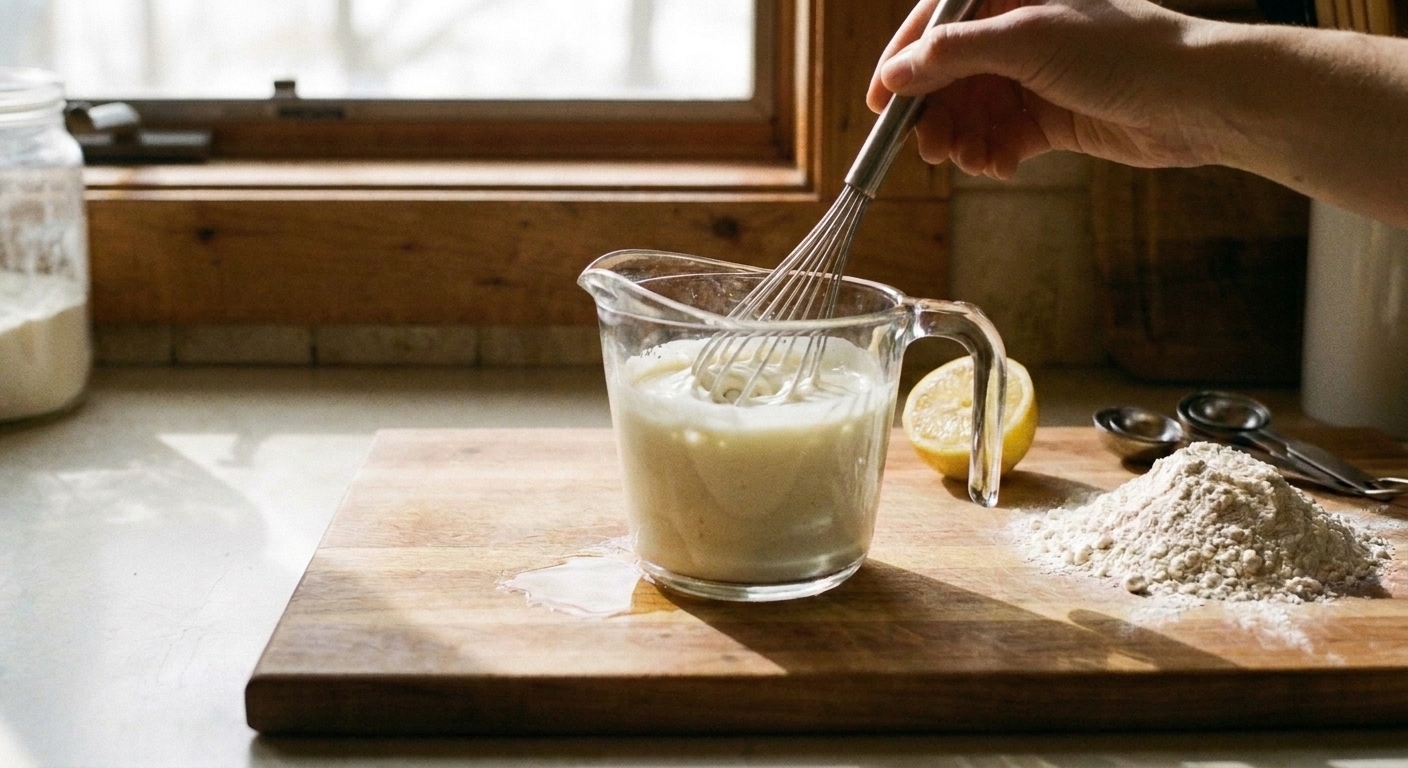
Buttermilk is doing three jobs at once: it adds tang, tenderizes, and reacts with baking soda for lift. In marinades, it is mostly the acidity (plus time) that helps soften and season the meat. The good news is you can replace it with ingredients you probably already have. Below are the best swaps, exactly how to mix them, and when to use which one so your pancakes stay fluffy and your biscuits still pull apart in flaky layers.
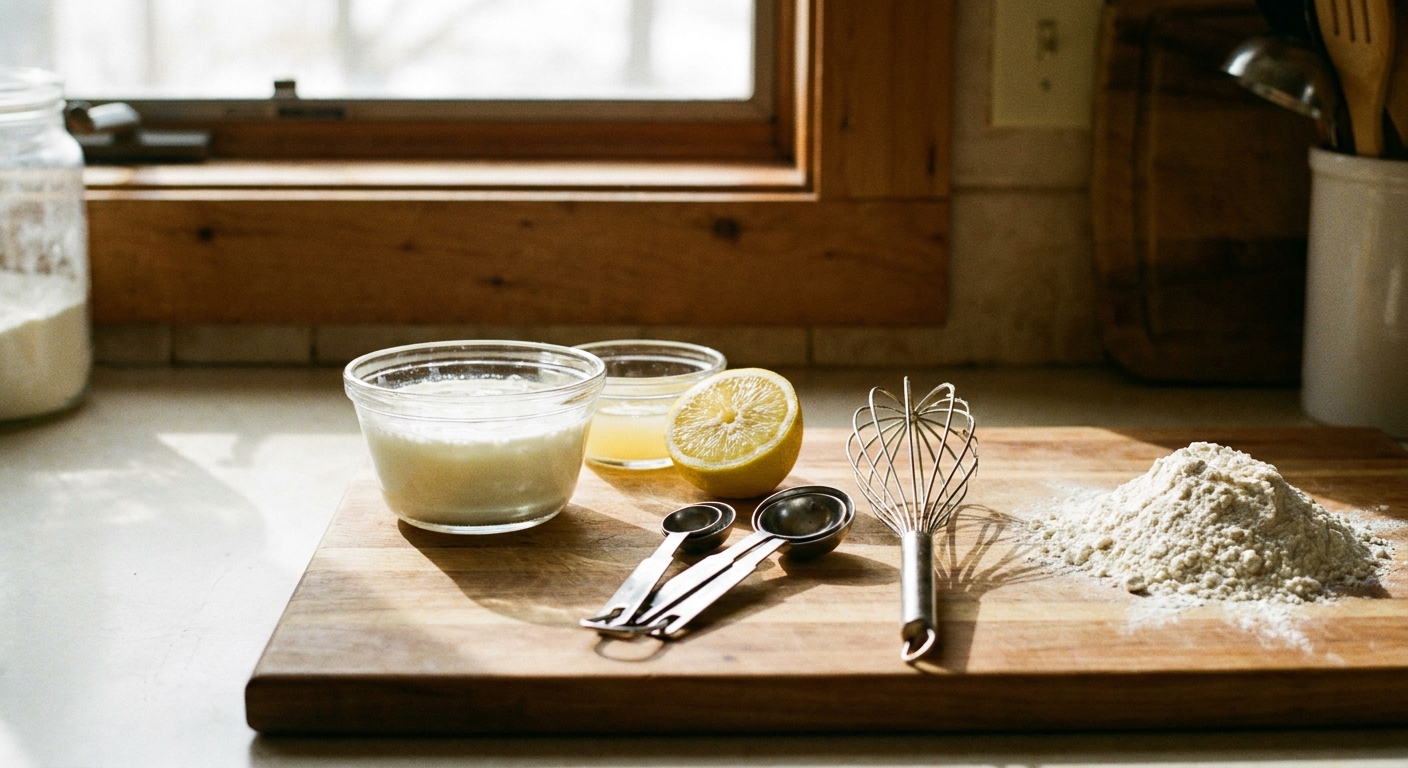
Best buttermilk substitutes (quick ratios)
Use these ratios to replace 1 cup buttermilk. Scale up or down as needed.
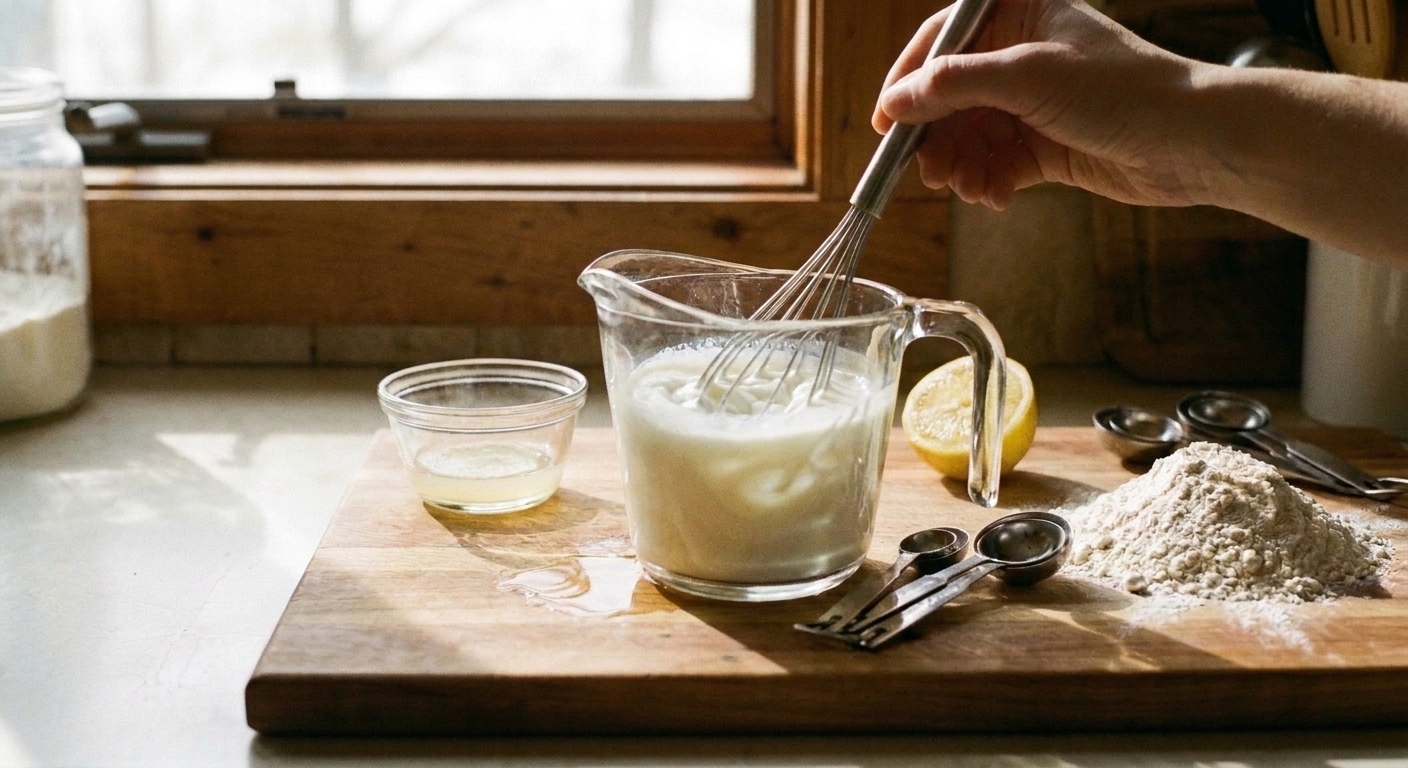
- Milk + lemon juice: 1 cup milk minus 1 tablespoon, plus 1 tablespoon lemon juice. Rest 5 to 10 minutes (so the total volume stays 1 cup).
- Milk + vinegar (white or apple cider): 1 cup milk minus 1 tablespoon, plus 1 tablespoon vinegar. Rest 5 to 10 minutes (so the total volume stays 1 cup).
- Plain yogurt + water (or milk): 3/4 cup plain yogurt + 1/4 cup water (or milk), whisk until smooth.
- Sour cream + water (or milk): 3/4 cup sour cream + 1/4 cup water (or milk), whisk until pourable.
- Kefir: 1 cup kefir (use as is; see note below).
- Powdered buttermilk: Use one of the methods below (labels vary).
- Non-dairy milk + acid: 1 cup unsweetened soy or oat milk minus 1 tablespoon, plus 1 tablespoon lemon juice or vinegar. Rest 5 to 10 minutes.
- Milk + cream of tartar: 1 cup milk + 1 3/4 teaspoons cream of tartar, whisk very well (best in cakes and muffins; results vary by brand and recipe).
Quick note: If your recipe calls for buttermilk and baking soda, choose an acidic substitute (milk + lemon/vinegar, yogurt, sour cream, kefir). Plain milk will still work in many baked goods, but the rise and tang can be a little different. More on that below.
Milk + lemon juice (or vinegar)
This is my weeknight default because it is fast, consistent, and works in most baking recipes where buttermilk is mixed into a batter.
Ratio
- For each 1 cup buttermilk: add 1 tablespoon lemon juice or vinegar to a measuring cup, then fill to the 1-cup line with milk.
- Stir and rest 5 to 10 minutes. It will look slightly curdled. That’s perfect.
Best for
- Pancakes, waffles, muffins, quick breads
- Cakes and cupcakes (especially chocolate, spice, and banana)
- Fried chicken or fish marinades
Little tip from my teaching days
If you are baking something delicate like a white cake, use lemon juice instead of vinegar for a cleaner flavor. You will not taste “lemon,” but it reads a bit brighter.
If it does not look very curdled after 10 minutes, do not stress. It will still work once it hits the batter.
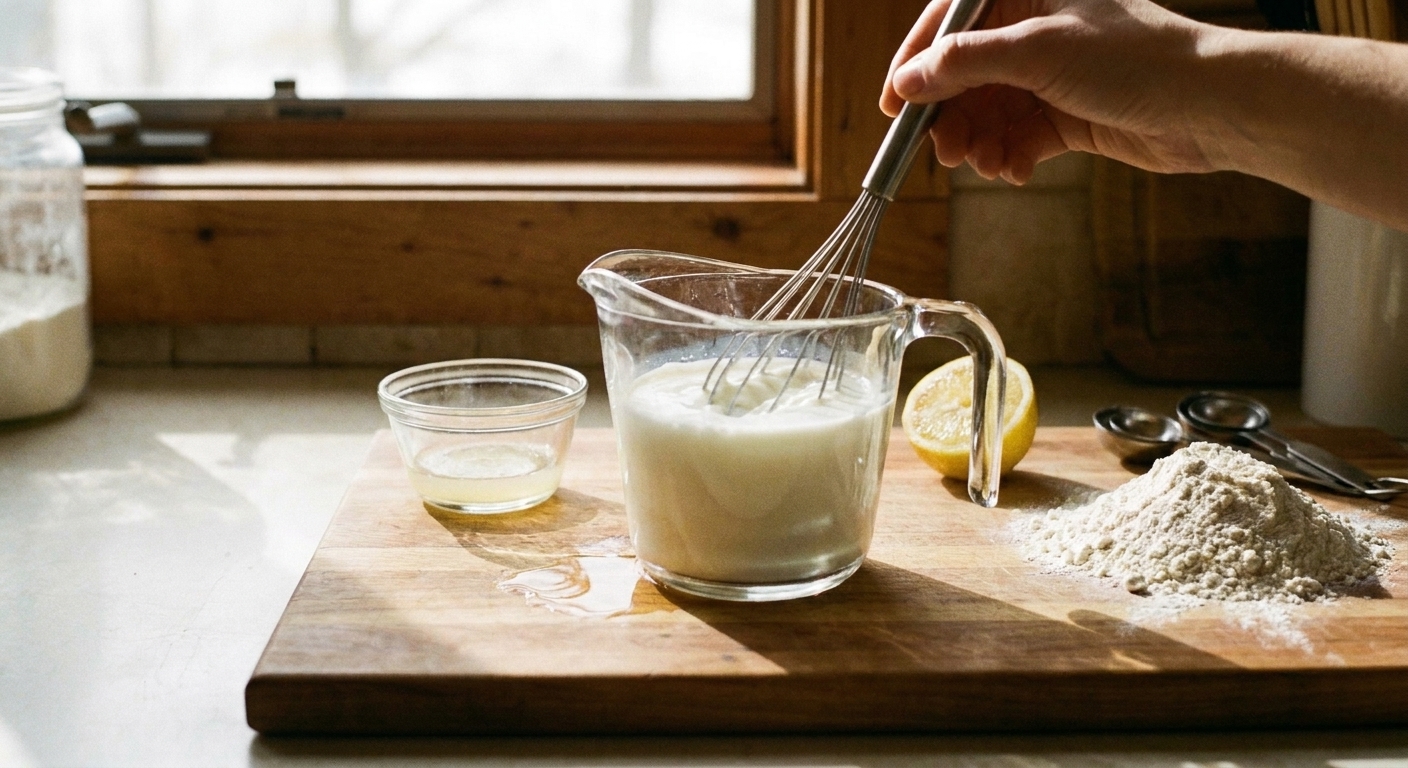
Yogurt thinned with water or milk
Yogurt gives you lactic tang and tenderness, plus it adds a little body. This is my favorite replacement for muffins and tender cakes because it helps keep the crumb moist for days.
Ratio
- For each 1 cup buttermilk: whisk 3/4 cup plain yogurt with 1/4 cup water or milk until smooth and pourable.
Best for
- Muffins, quick breads, coffee cake
- Pancakes when you want a slightly thicker batter
- Marinades and dressings (thin as needed)
Watch-outs
- Use plain yogurt. Vanilla and sweetened yogurts can throw off flavor and browning.
- Greek yogurt is fine, just thin it well so the batter is not overly dense.
- If your recipe already has other liquids (or can handle a thicker dairy), you can sometimes use yogurt with less added water. Add the liquid gradually and stop once it pours like buttermilk.
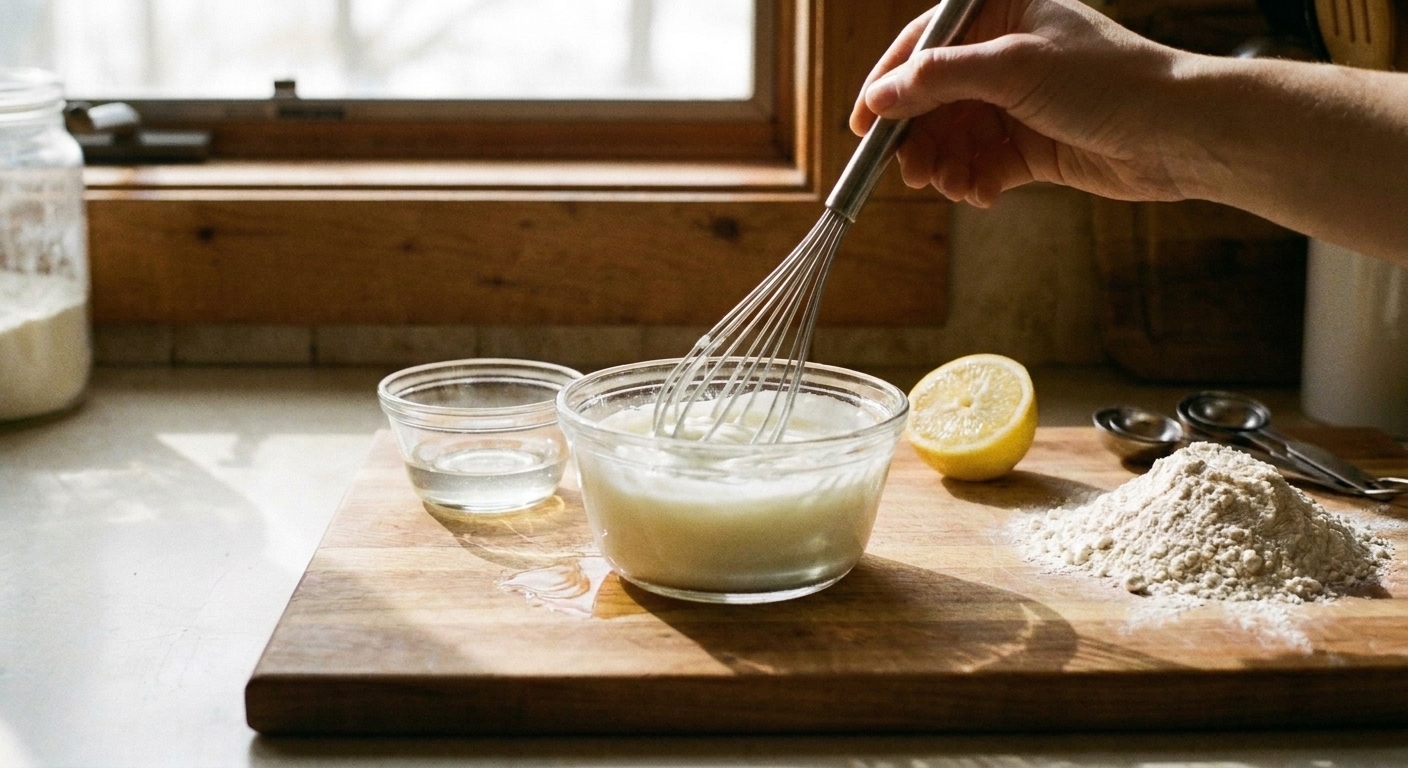
Sour cream thinned with water or milk
Sour cream is richer than buttermilk, which can be a huge win in biscuits and cakes. Think tender, slightly more decadent crumb.
Ratio
- For each 1 cup buttermilk: whisk 3/4 cup sour cream with 1/4 cup water or milk until smooth.
Best for
- Biscuits and scones (great tenderness)
- Bundt cakes, snack cakes, coffee cake
- Crumb-topped muffins
Texture cue
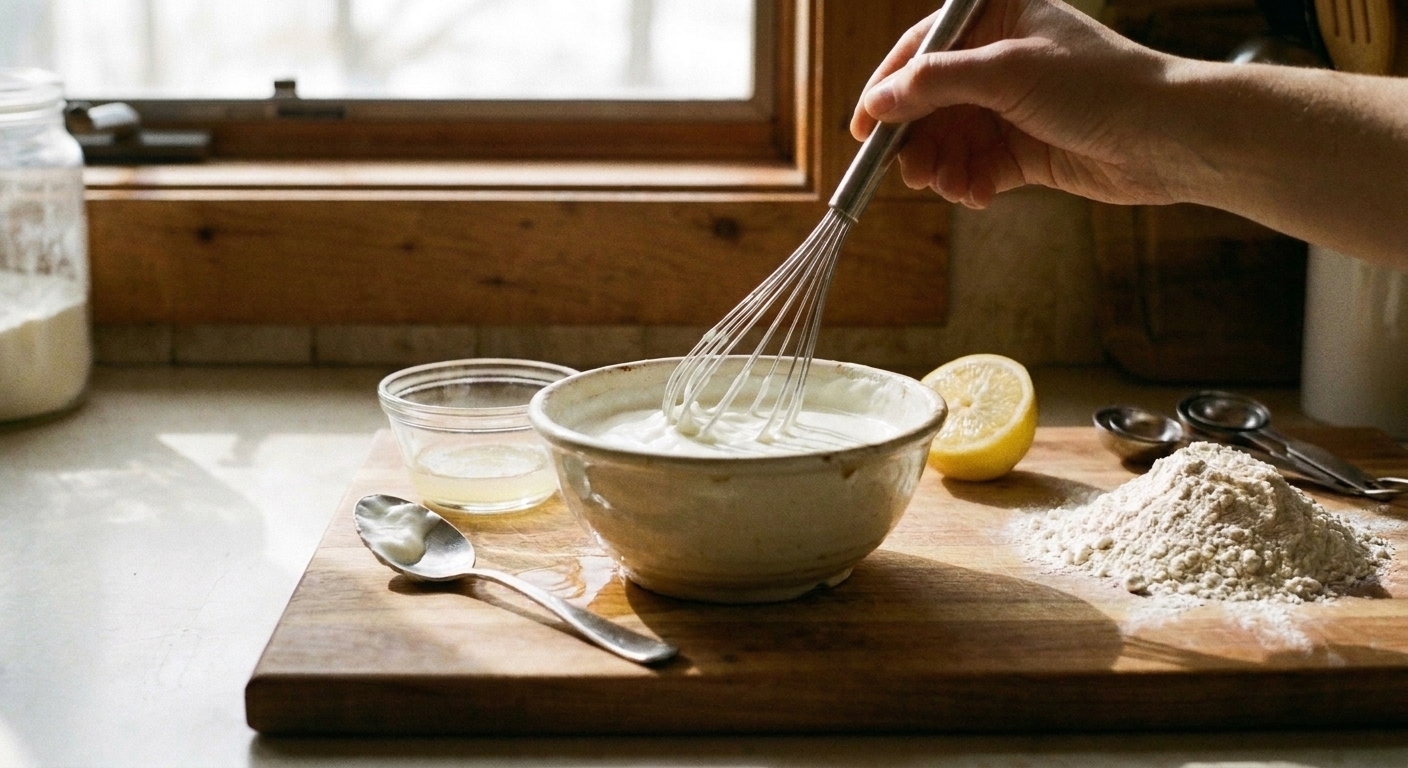
You are aiming for something that pours like heavy cream, not a thick dollop. If it is still too thick, add another teaspoon or two of water.
Kefir (a close match)
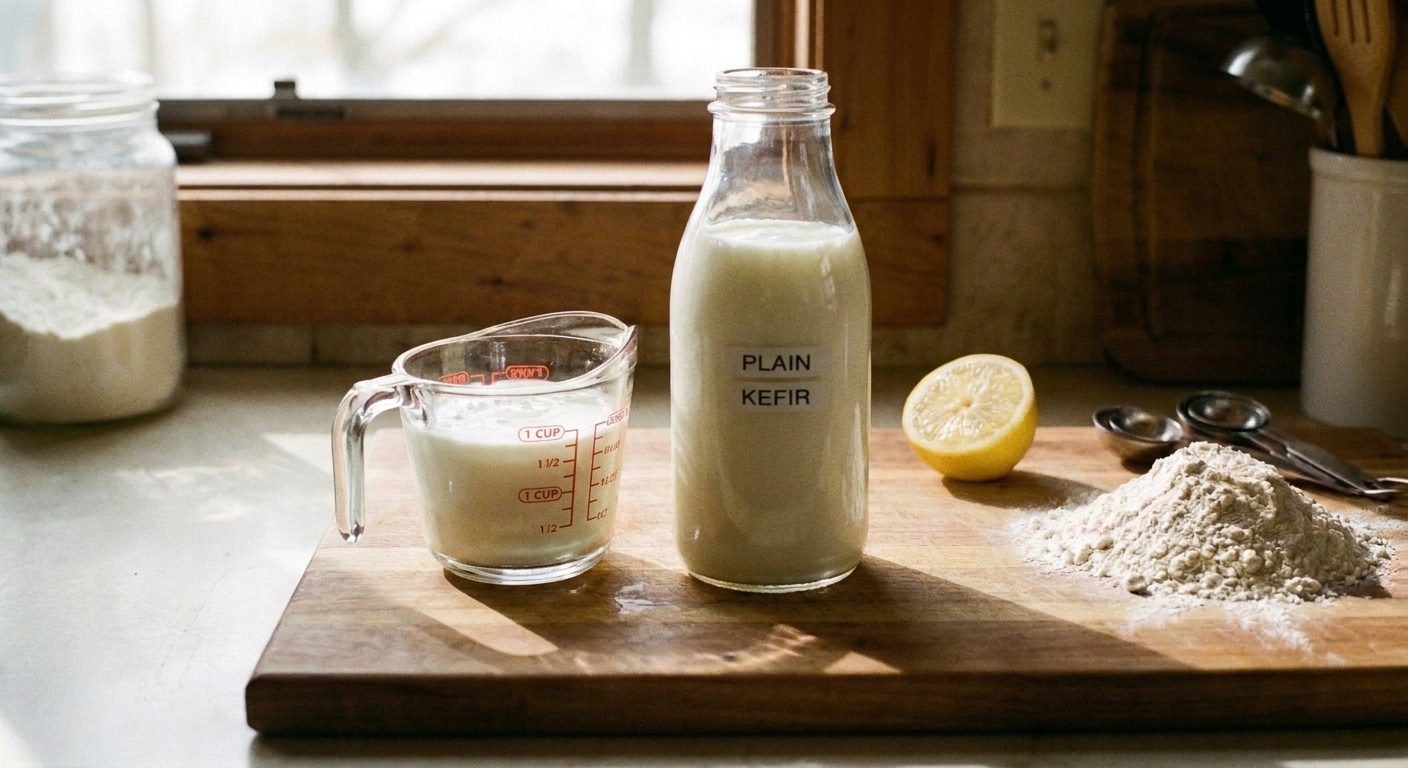
Kefir is fermented like buttermilk, so it behaves similarly in batters. If you already keep it in the fridge, this is an easy 1:1 swap. Brands vary, though, so use your eyes.
Ratio
- 1 cup kefir = 1 cup buttermilk
Quick consistency note
- If your kefir is very thin, use it as is.
- If it is unusually thick, thin it with 1 to 2 tablespoons milk so it pours like buttermilk.
Best for
- Pancakes and waffles (great tang and lift)
- Cakes, muffins, quick breads
Powdered buttermilk
This is the unsung hero for anyone who hates buying a full carton of buttermilk for one recipe. It is also fantastic for reducing food waste because it keeps longer in the pantry.
How to use it
- Method 1 (mix first): Prepare according to the package, then use 1 cup prepared in place of 1 cup buttermilk.
- Method 2 (dry mix): Many brands let you whisk the powder into your dry ingredients, then use water (or milk) as the liquid portion. Follow the label since ratios vary a lot by brand.
Best for
- Biscuits, pancakes, waffles, cakes
- Dry rubs and seasoning blends (a little powder adds a subtle tang)
Non-dairy options
You can absolutely make a “buttermilk-like” substitute without dairy. The key is choosing an unsweetened milk and adding acid.
Best plant milks to use
- Soy milk: closest protein structure to dairy milk, curdles reliably, bakes up well.
- Oat milk: mild flavor, good browning, slightly sweeter.
Ratio
- For each 1 cup buttermilk: add 1 tablespoon lemon juice or vinegar to a measuring cup, then fill to 1 cup with unsweetened soy or oat milk. Rest 5 to 10 minutes.
Best for
- Pancakes, waffles, muffins, sheet cakes
Note on biscuits
Plant milks tend to be thinner and lower in fat, so biscuits can bake up a bit less tender. If you can, use oat milk and add 1 to 2 teaspoons melted vegan butter or neutral oil to the liquid to help mimic richness.
Milk + cream of tartar
Cream of tartar is an acid, so it can stand in for the tangy part of buttermilk when you are out of lemons and vinegar. This one is a little more old-school and can vary in “bite,” so I reach for it mainly in cakes and muffins.
Ratio
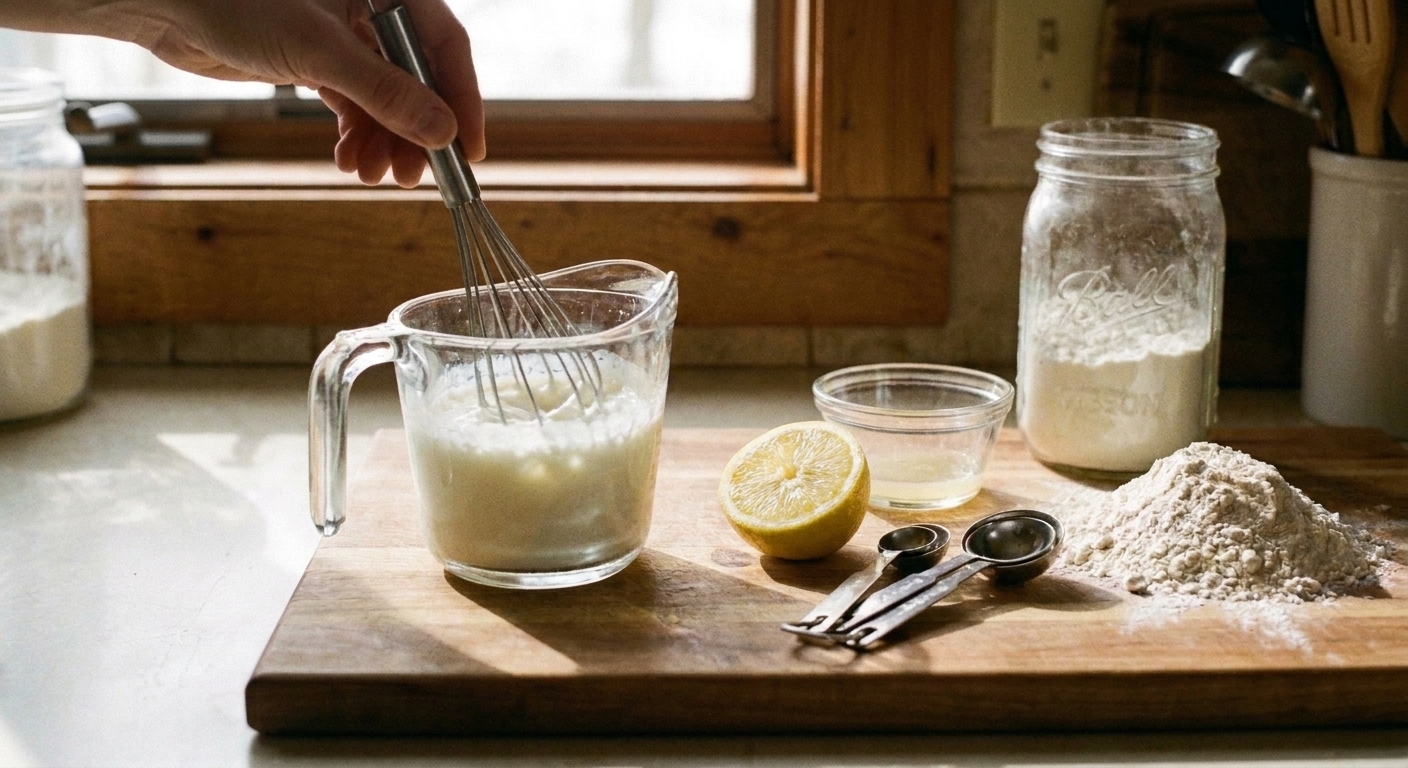
- For each 1 cup buttermilk: whisk 1 3/4 teaspoons cream of tartar into 1 cup milk until fully dissolved.
Notes
- Whisk very well. Cream of tartar likes to clump.
- Results vary a bit by brand and recipe, so consider this a solid starting point, not a promise.
- It can leave a slightly sharper tart note in delicate bakes, so if you have lemon or vinegar, those are usually the cleaner-tasting choice.
Which substitute should you use?
If you just want the fastest right answer, start here.
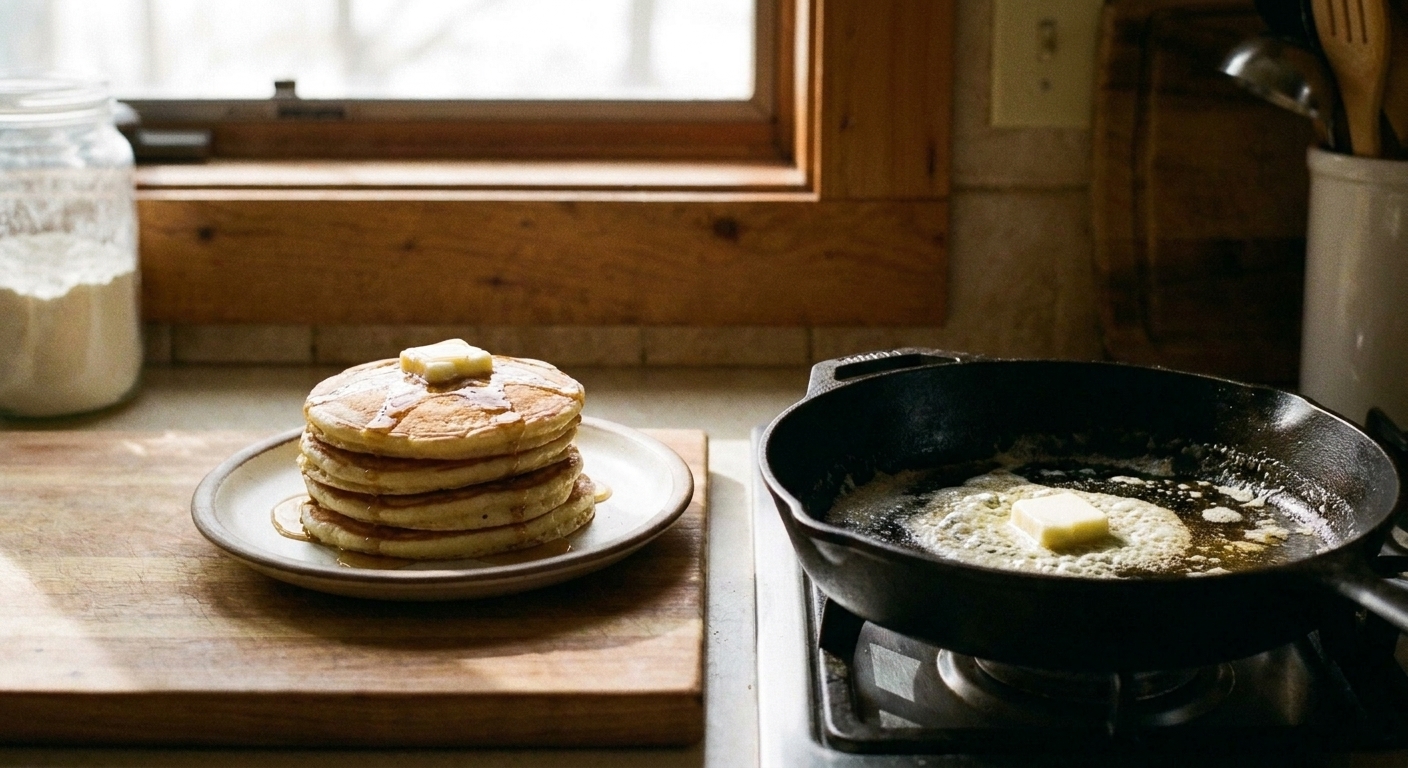
Pancakes and waffles
- Best choice: kefir (1:1) or milk + lemon/vinegar
- Also great: yogurt thinned (extra fluffy, slightly thicker batter)
Cakes and cupcakes
- Best choice: milk + lemon (clean flavor) or yogurt thinned (moist crumb)
- Chocolate cakes: any acidic substitute works well because cocoa loves a little tang
Muffins and quick breads
- Best choice: yogurt thinned or sour cream thinned
- For lighter muffins: milk + lemon/vinegar
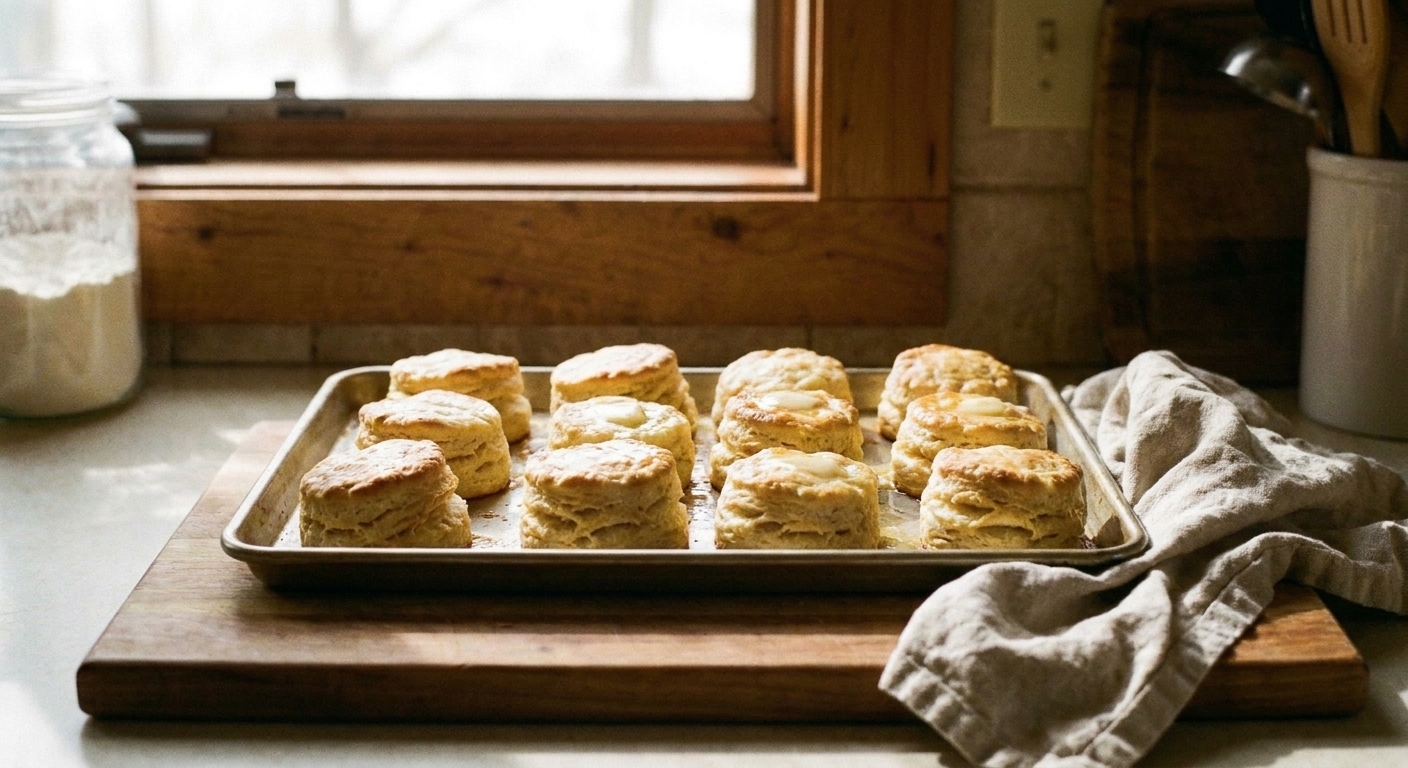
Biscuits and scones
- Best choice: powdered buttermilk (very reliable) or sour cream thinned (tender)
- In a pinch: milk + vinegar, but expect less flavor and slightly less flake
Fried chicken and savory marinades
- Best choice: milk + vinegar or kefir
- Yogurt: works, but thin it well so it coats evenly
What changes to expect
Most swaps get you very close in baked goods. Here is what might shift slightly so you are not surprised.
Flavor
- Milk + lemon: bright, clean tang.
- Milk + vinegar: tangy, slightly sharper. Usually unnoticeable in spiced or chocolate batters.
- Yogurt: gentle, rounded tang. Slight dairy richness.
- Sour cream: mild tang, noticeably richer.
- Kefir: a fermented tang that reads closest to buttermilk (brand-dependent).
Texture
- Yogurt and sour cream can make batters thicker and crumbs a bit tighter, but also moister.
- Milk + acid tends to bake up most similar to buttermilk in cakes and pancakes, but can feel a touch less rich in biscuits.
- Non-dairy milk + acid can be slightly less tender in rich baked goods unless you add a little fat.
Rise and browning
- Buttermilk’s acidity helps activate baking soda. If your substitute is not acidic enough, you may lose some lift.
- Slightly sweeter substitutes (some oat milks, some yogurts) can brown faster. Check a few minutes early.
Leavening adjustments
Most of the substitutes above are acidic, so you usually do not need to change anything. The time you might adjust is when you replace buttermilk with plain milk and nothing else.
- If a recipe uses baking soda and you swap in plain milk, the batter may be less tangy and can rise a bit less.
- General guideline for cakes and muffins: for each cup of buttermilk you removed, reduce baking soda by about 1/4 teaspoon and add about 1 teaspoon baking powder to make up the lift. This is approximate and recipe-dependent. It can also slightly affect browning and overall seasoning, so taste and color cues matter.
- Skip leavener tinkering for biscuits and other flake-focused bakes: choose an acidic substitute instead (milk + lemon/vinegar, sour cream, yogurt, kefir, or powdered buttermilk). It is the simplest way to keep the recipe behaving as written.
Quick FAQ
Can I use regular milk instead of buttermilk in pancakes?
You can, but they will taste less tangy and can be slightly less fluffy if the recipe relies on baking soda. For the same effort, add 1 tablespoon lemon juice or vinegar to your milk and you are back in business.
Do I have to let milk + vinegar sit before using?
It helps. That 5 to 10 minutes gives the acid time to slightly thicken the milk, which makes it behave more like buttermilk in a batter.
Is “soured milk” the same as buttermilk?
Not exactly. Soured milk (milk + acid) mimics buttermilk’s acidity, but cultured buttermilk has a deeper fermented flavor. In baking, they are very close.
What is the best substitute for buttermilk in biscuits?
Powdered buttermilk is the most consistent. Sour cream thinned with a bit of water is my favorite fridge option for tender, rich biscuits.
Can I freeze leftover buttermilk?
Yes. Freeze in 1/2-cup or 1-cup portions. It may separate when thawed, but it works great for baking once whisked.
What if I am short on buttermilk?
If you are just a little short, top it off with milk (or milk + a squeeze of lemon) to reach the full amount. I do this all the time for pancakes and quick breads.
Does fat percentage matter?
Yes, a bit. Whole milk makes the closest milk + acid substitute. Low-fat milk still works, but biscuits and scones may bake up a touch less tender.
My go-to rule
If the recipe is using buttermilk for tang and tenderness, yogurt or sour cream are wonderful. If it is using buttermilk to react with baking soda for lift, milk + lemon or kefir are the most foolproof.
And if you are tired of buying a carton for one batch of pancakes, powdered buttermilk earns its shelf space.