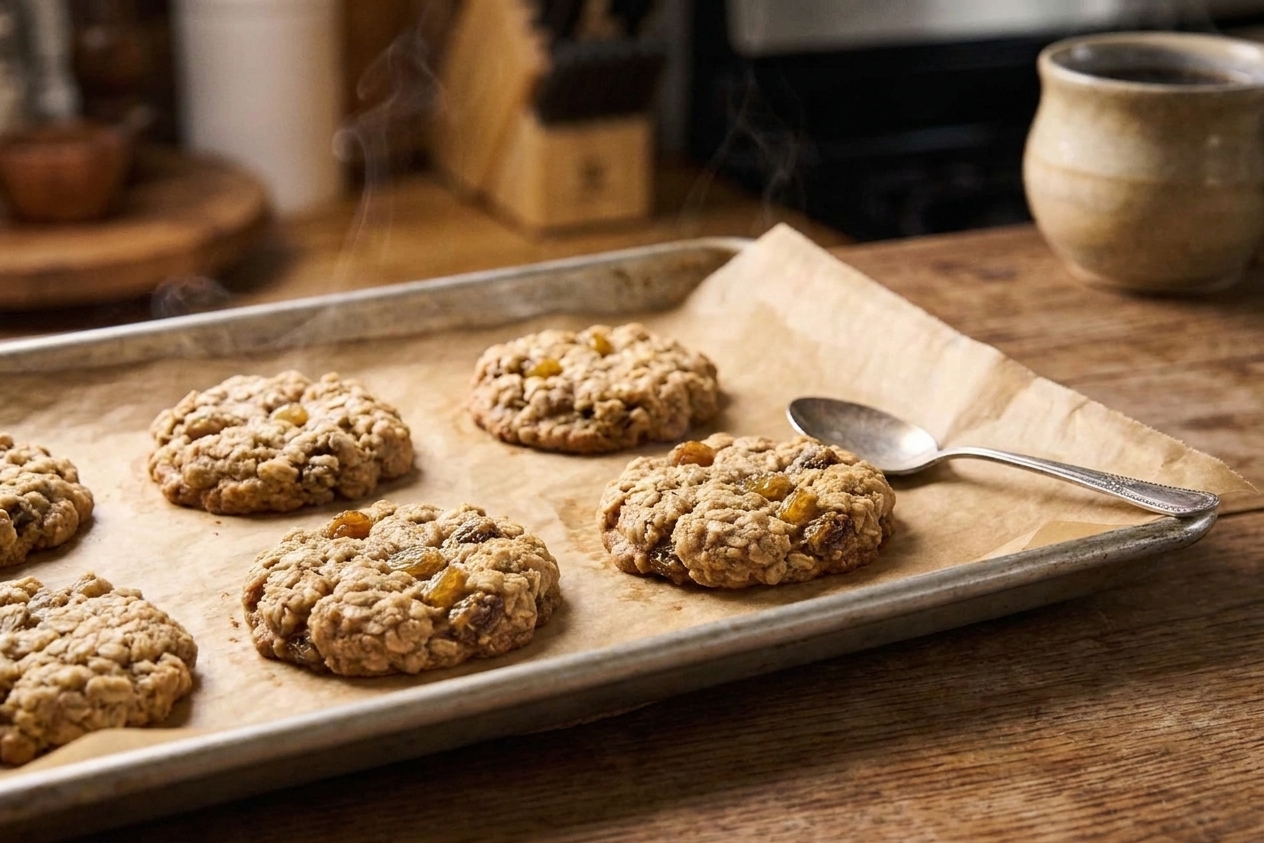

I have a soft spot for oatmeal raisin cookies because they are basically a pantry dessert that still tastes intentional. The trick is getting them chewy without turning them into dry little granola pucks, and getting them to spread just enough without becoming thin and lacy.

This recipe leans on a balanced oat-to-flour ratio, plenty of brown sugar, and just enough spice to make the raisins taste like their best selves. They bake up with a medium spread and thick, chewy centers, think crisp edges with a soft, bendy middle that sets as it cools.
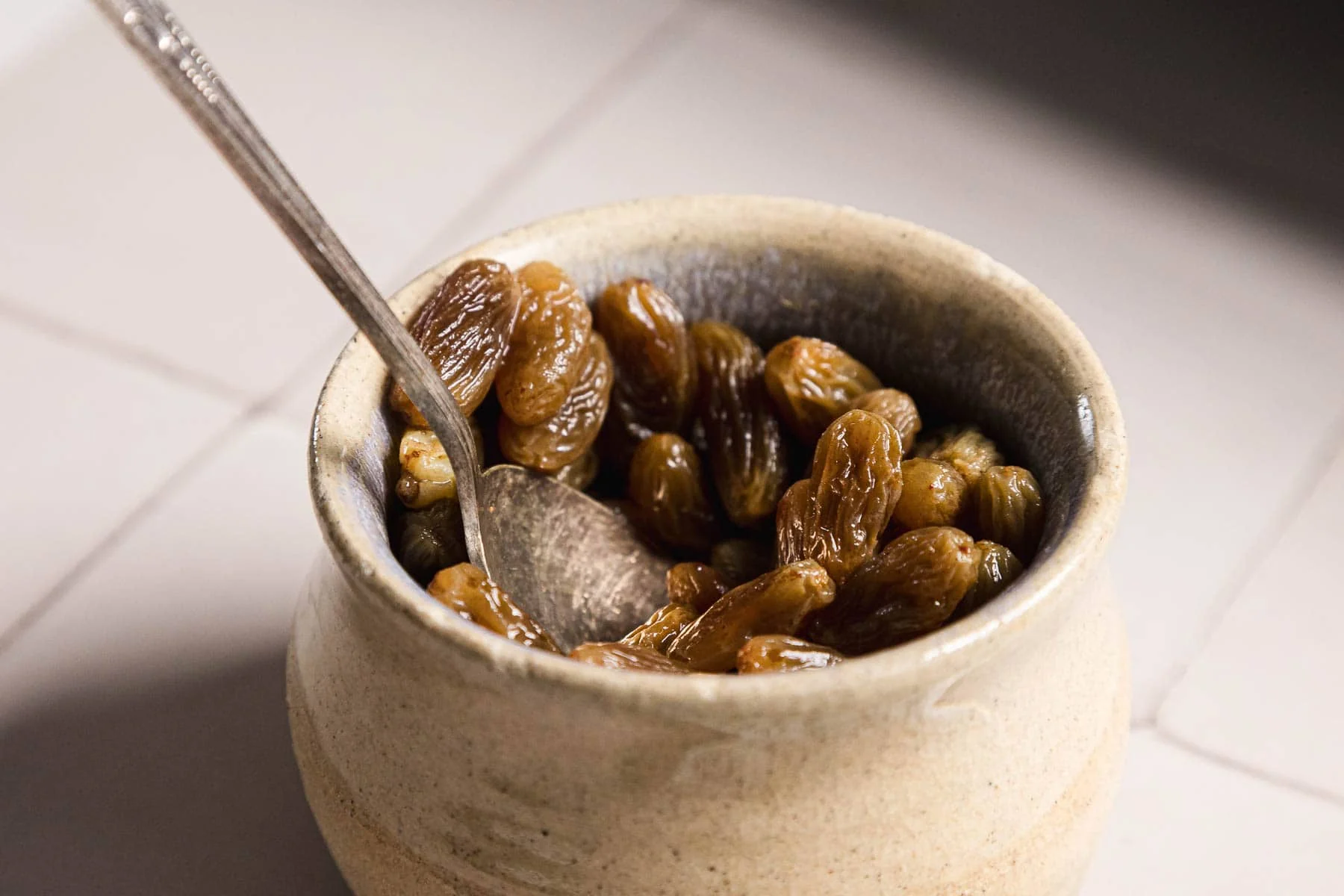
I recommend a quick raisin soak for soft pockets of fruit that stay tender for the next couple of days, as long as you store the cookies airtight at room temperature. Ten minutes is plenty. Drain well, then pat very dry before they go anywhere near the dough. If the raisins go in wet, they can streak the dough and encourage extra spread.
If you are after soft centers, keep an eye on the edges, not the tops. These are done when the edges are set and turning light golden brown, and the centers look a little puffed and still slightly glossy. If you wait for the tops to look fully dry and matte in the oven, you will usually end up with a drier cookie once they cool.
Why this recipe works
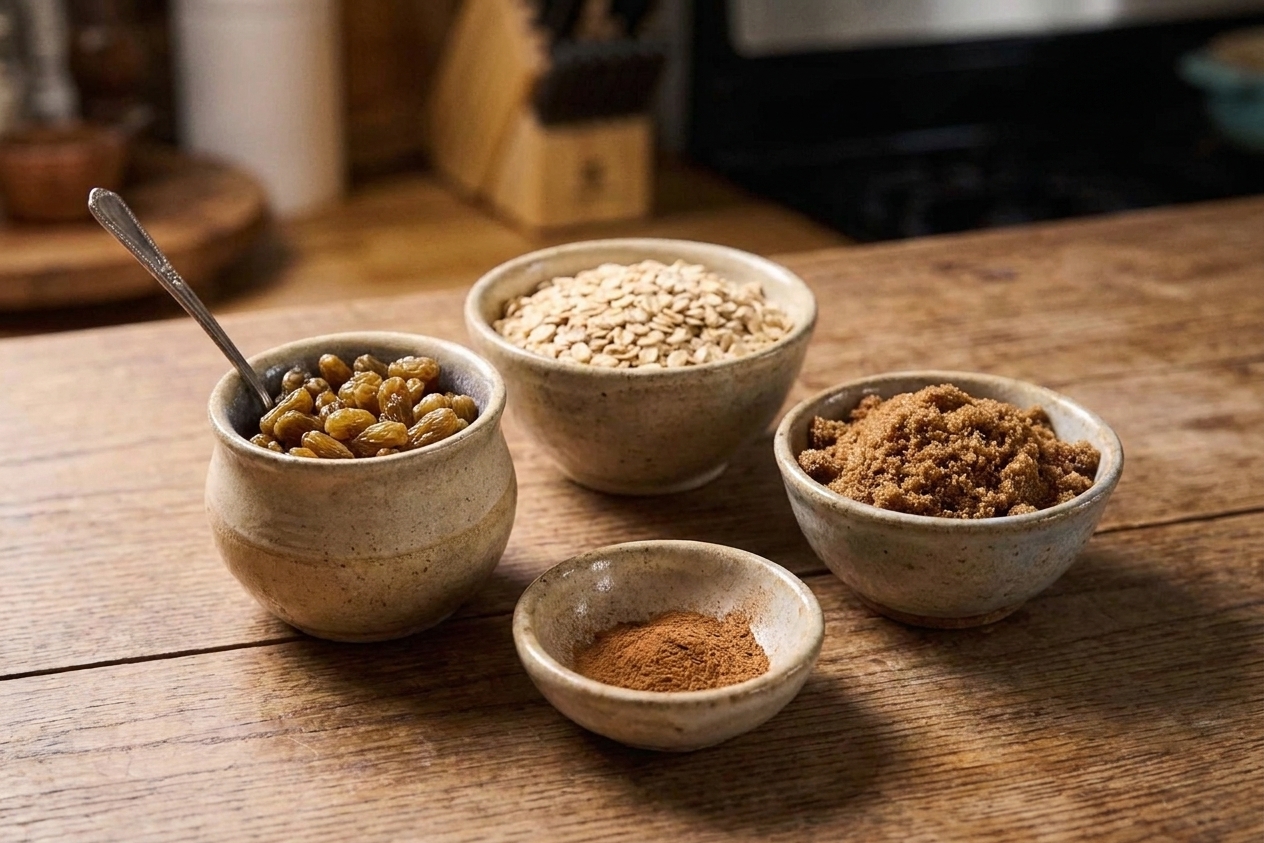
- Oats plus flour, not oats instead of flour: Rolled oats bring chew, but flour provides structure so the cookies do not over-spread or crumble.
- Brown sugar drives chew: The molasses in brown sugar adds moisture and tenderness, giving you that classic soft center.
- A touch of spice boosts flavor without tasting like potpourri: Cinnamon is essential, and a small amount of nutmeg makes the dough taste warm and bakery-like.
- Soaked raisins stay plump: Rehydrated raisins pull less moisture from the dough in the oven, so your cookies stay chewy instead of drying out overnight.
- Doneness is judged by edges: Pulling the cookies when centers look slightly glossy and underdone helps prevent dry results and gives you a soft middle once cooled.
Ingredient notes
Rolled oats: Use old-fashioned rolled oats for the best chewy bite. Quick oats make a softer, more uniform cookie. Steel-cut oats are too hard here.
Flour: All-purpose flour is the sweet spot. If you tend to scoop flour straight from the bag, consider spooning it into the measuring cup and leveling it off so you do not accidentally pack in too much and dry out the dough.
Brown sugar: Dark brown sugar gives a deeper caramel flavor and a slightly chewier texture. Light brown sugar works too, just a little less robust.
Butter: Unsalted is easiest to control. If you only have salted butter, reduce the added salt a bit.
Raisins: Regular raisins are classic, but golden raisins are great if you like a brighter, slightly tangier sweetness. For the best texture, soak them briefly and pat dry before mixing into the dough.
Spices: Cinnamon is nonnegotiable in my book. Nutmeg is optional but highly recommended for that cozy, rounded flavor.
Equipment you will need
- 2 baking sheets
- Parchment paper or a silicone baking mat
- Medium bowl and a larger mixing bowl
- Whisk
- Flexible spatula
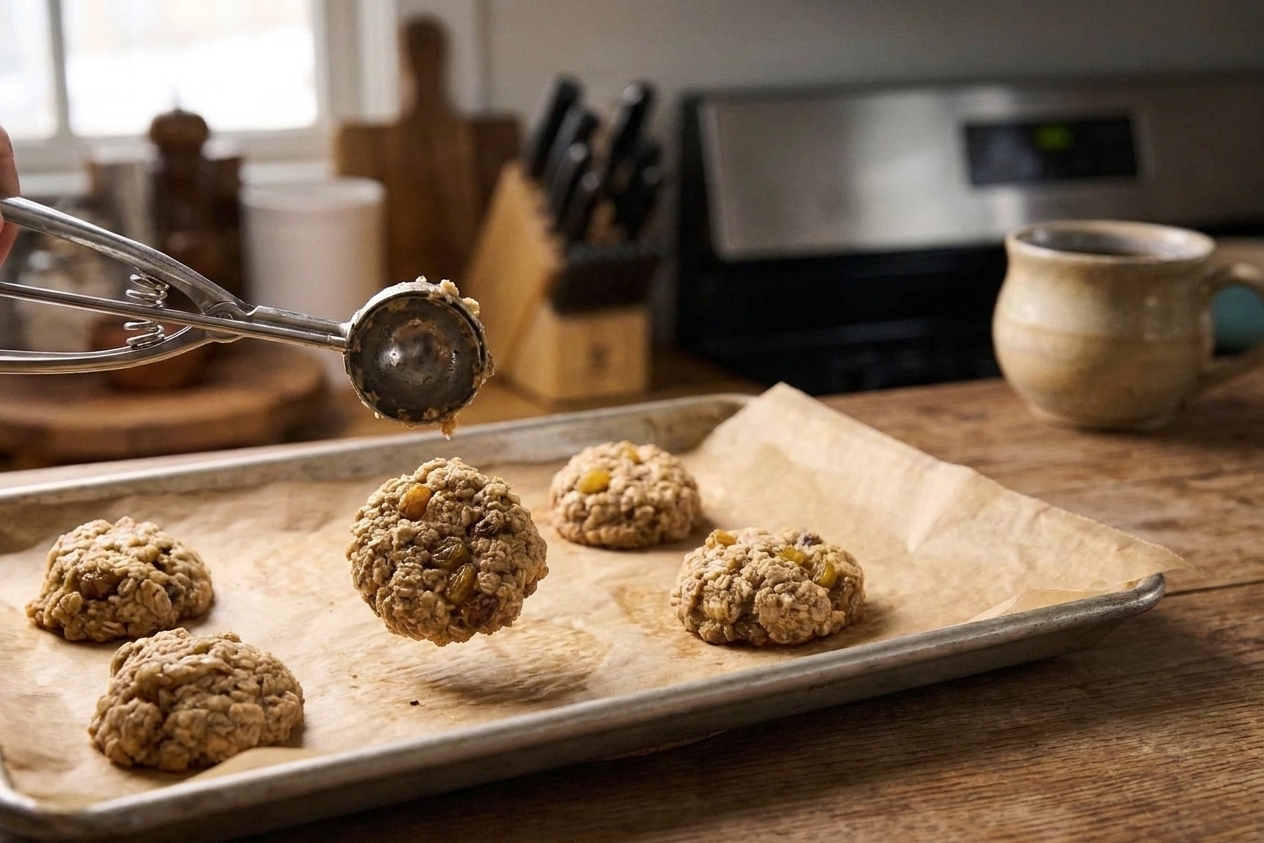
- Cookie scoop (optional but helps even baking)
- Wire rack for cooling
Pro tips
- Soak raisins while you measure everything else: Cover with hot water for about 10 minutes, then drain and pat very dry. Wet raisins can make the dough streaky and encourage extra spread.
- Do not overmix once flour goes in: Stir just until you stop seeing dry flour. Overmixing can make cookies tougher and less tender.
- Chill if your kitchen is warm: If the dough feels soft and shiny or your butter was very warm, chill 20 to 30 minutes for thicker cookies.
- Use the edge cue: Bake until edges are set and light golden brown. Centers should look slightly underbaked, a bit puffed, and still a little glossy.
- Let them rest on the pan: A 5 to 10 minute rest firms them up without overbaking, so you keep that chewy middle.
Substitutes that work
- No raisins: Swap in dried cranberries, chopped dates, or dried cherries. If the pieces are large, chop them so every bite gets some.
- No nutmeg: Use a tiny pinch of ground cloves or allspice instead, or simply add a bit more cinnamon.
- No unsalted butter: Salted butter is fine. Reduce the added salt slightly.
- Egg-free (texture will change): Use a standard egg replacer for baking. Expect a slightly less chewy, more tender cookie.
Variations
- Walnut oatmeal raisin: Add chopped toasted walnuts for a little bitterness and crunch.
- Orange-spiced: Add a little finely grated orange zest to the dough for a bright lift with the raisins.
- Extra cozy: Add a small amount of ground ginger along with the cinnamon for a warmer spice profile.
- Thicker bakery-style: Chill the dough longer and shape taller mounds rather than flattening.
Serving ideas
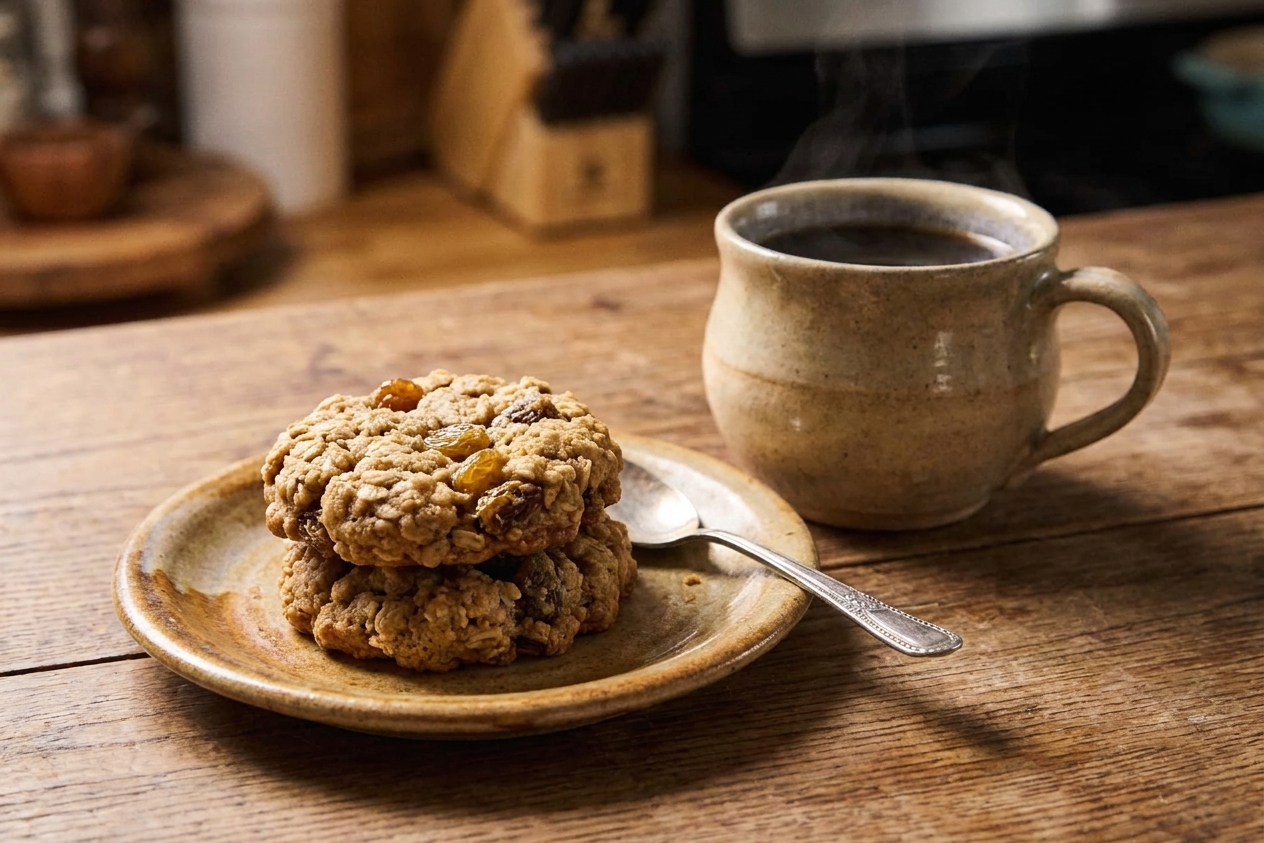
- With coffee or black tea for a not-too-sweet afternoon snack.
- Sandwich vanilla ice cream between two fully cooled cookies for an oatmeal raisin ice cream sandwich.
- Crumble a cookie over plain yogurt with sliced bananas for a zero-effort dessert.
- Pack in lunch boxes. They stay pleasantly chewy and are less crumbly than many cookies.
Storage and reheating
Room temperature: Store in an airtight container for 2 to 3 days for the best texture. If you want them extra chewy, tuck in a small piece of bread. It helps maintain moisture without making the cookies taste like bread.
Freezing baked cookies: Cool completely, then freeze in a freezer bag with parchment between layers. Thaw at room temperature.
Freezing dough: Scoop dough balls onto a baking sheet, freeze until firm, then transfer to a bag. Bake from frozen, adding a minute or two as needed. Use the same doneness cue: set edges, slightly soft center.
Common mistakes
- Cookies spread too much: Butter was too warm, dough was not chilled, or the baking sheet was hot from a previous batch. Use cool sheets and chill the dough briefly if it feels soft.
- Cookies are dry or crumbly: Too much flour or overbaking. Measure flour carefully and pull cookies when centers still look slightly underdone.
- Raisins taste hard: They were very dry to begin with or baked too long. Soak briefly and avoid baking until the entire cookie looks matte and fully set.
- Burned bottoms: Dark pans brown faster, and ovens often run hot at the bottom. Use parchment and bake in the middle of the oven. If your pans are very dark, lower the oven temperature slightly.
- Flat, dense cookies: Leavening may be old, or the dough was overmixed after adding flour. Replace baking soda if it is past its prime and mix gently.
FAQ
Should I soak raisins for oatmeal raisin cookies?
I recommend it. A quick soak makes the raisins plump and keeps them from stealing moisture from the dough as the cookies bake. Ten minutes in hot water is enough. Drain well and pat dry before adding.
How do I know oatmeal raisin cookies are done if I want soft centers?
Look for set, light golden-brown edges and a center that still looks a little puffed and slightly glossy. If the centers look fully dry in the oven, they will be overbaked once cooled.
Why are my oatmeal cookies cakey?
Cakey cookies usually come from too much flour, not enough sugar, or overmixing. Make sure you are measuring flour accurately and mixing just until combined after the dry ingredients go in.
Can I make the dough ahead?
Yes. Refrigerate the dough, tightly covered, and scoop and bake as needed. If it is very firm, let it sit at room temperature briefly so it is scoopable.
Chewy Oatmeal Raisin Cookies
Classic chewy oatmeal raisin cookies with warm cinnamon, plump raisins, crisp edges, and soft centers. Includes an easy raisin soak and the doneness cue that prevents dry cookies.
- Prep
- 20 minutes
- Cook
- 10 to 12 minutes per batch
- Total
- 45 minutes
- Yield
- About 24 cookies
Ingredients
- 1 cup (150 g) raisins
- 1 1/4 cups (170 g) all-purpose flour
- 1 teaspoon baking soda
- 1 teaspoon ground cinnamon
- 1/4 teaspoon ground nutmeg (optional)
- 3/4 teaspoon fine salt
- 1 cup (226 g) unsalted butter, softened but cool to the touch
- 1 cup (200 g) packed dark brown sugar
- 1/2 cup (100 g) granulated sugar
- 2 large eggs, room temperature
- 2 teaspoons vanilla extract
- 3 cups (255 g) old-fashioned rolled oats
Instructions
- Soak the raisins: Place raisins in a bowl and cover with hot water. Let sit 10 minutes, then drain well and pat very dry with a clean towel.
- Preheat and prep pans: Heat oven to 350°F (175°C). Line 2 baking sheets with parchment.
- Mix dry ingredients: In a medium bowl, whisk together flour, baking soda, cinnamon, nutmeg (if using), and salt.
- Cream butter and sugars: In a large bowl, beat butter, brown sugar, and granulated sugar until smooth and slightly fluffy, about 1 to 2 minutes.
- Add eggs and vanilla: Beat in eggs one at a time, then mix in vanilla, scraping the bowl as needed.
- Add dry ingredients: Stir in the flour mixture just until you no longer see dry flour.
- Add oats and raisins: Fold in oats, then fold in the dried, soaked raisins until evenly distributed. If the dough feels very soft or your kitchen is warm, chill 20 to 30 minutes for thicker cookies.
- Scoop: Scoop heaping tablespoons (or about 2 tablespoons each) onto prepared sheets, leaving space for spreading.
- Bake: Bake 10 to 12 minutes, rotating the pan halfway through, until the edges are set and lightly browned and the centers still look slightly puffed and a bit glossy.
- Cool: Let cookies cool on the baking sheet 5 to 10 minutes, then transfer to a wire rack to cool completely.
Notes
Doneness cue for chewy centers: Pull the cookies when the edges look set and have turned light golden brown, even if the centers look slightly glossy and underdone. They finish setting as they cool.
Raisin soak option: Hot water works great. For extra flavor, you can soak raisins in hot black tea, then drain and pat dry.
Storage: Store cooled cookies in an airtight container at room temperature for 2 to 3 days for the best chew.
Make ahead: Scoop dough balls and freeze on a tray until firm, then store in a freezer bag. Bake from frozen, adding 1 to 2 minutes as needed.
Nutrition
Per cookie (approximate): 190 calories; 8 g fat; 28 g carbs; 2 g protein; 1 g fiber; 14 g sugar; 160 mg sodium.