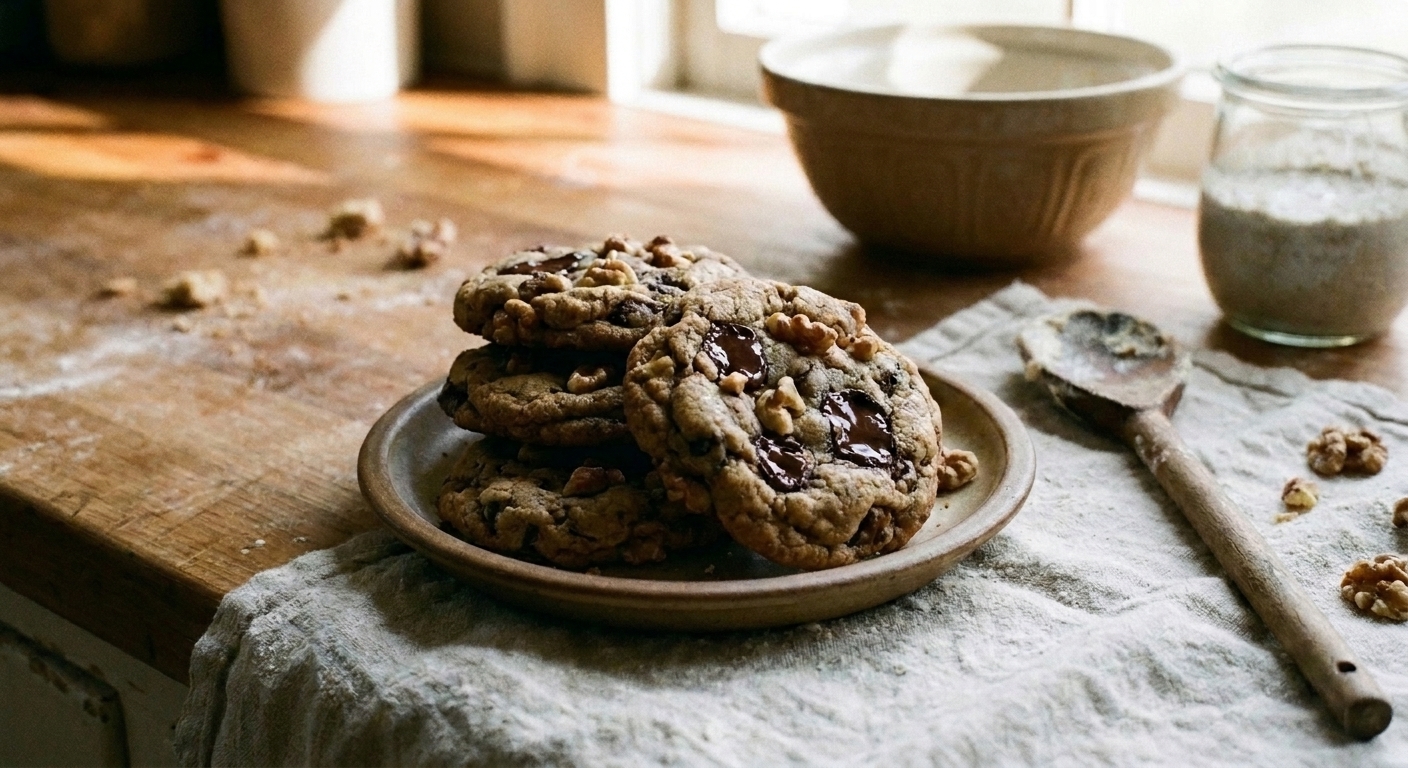

If you keep a sourdough starter, you know the feeling: you feed your starter, you have discard, and you are absolutely not in the mood to make pancakes again. These sourdough discard chocolate chip cookies are my favorite way to turn that unfed, straight-from-the-jar discard into something that tastes intentional, not like a compromise.

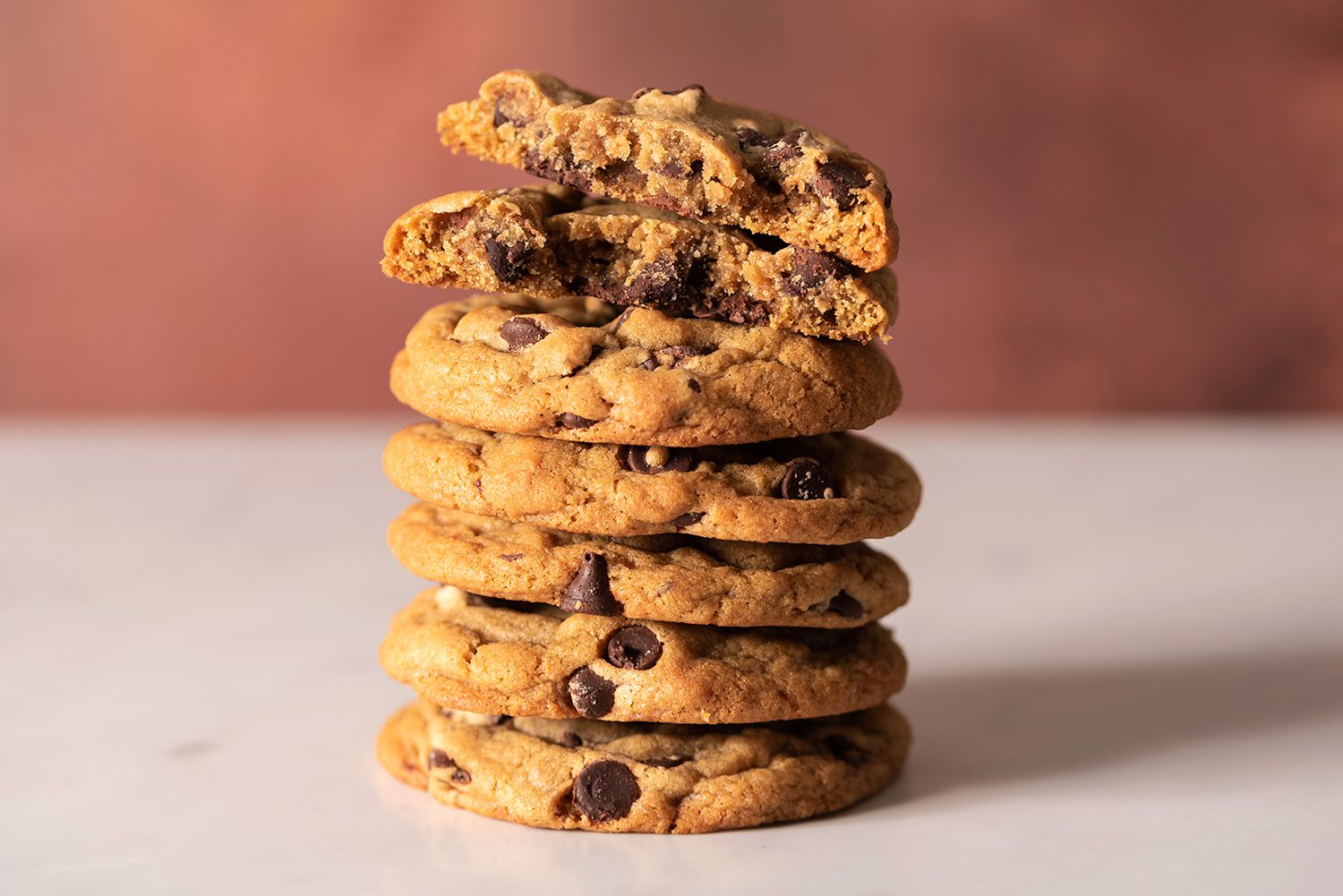
Expect chewy edges, soft centers, and a gentle tang that makes the chocolate taste even richer. The discard also brings extra moisture, which can help the cookies stay pleasantly soft for days, especially if you bake them just until the edges set and store them airtight.
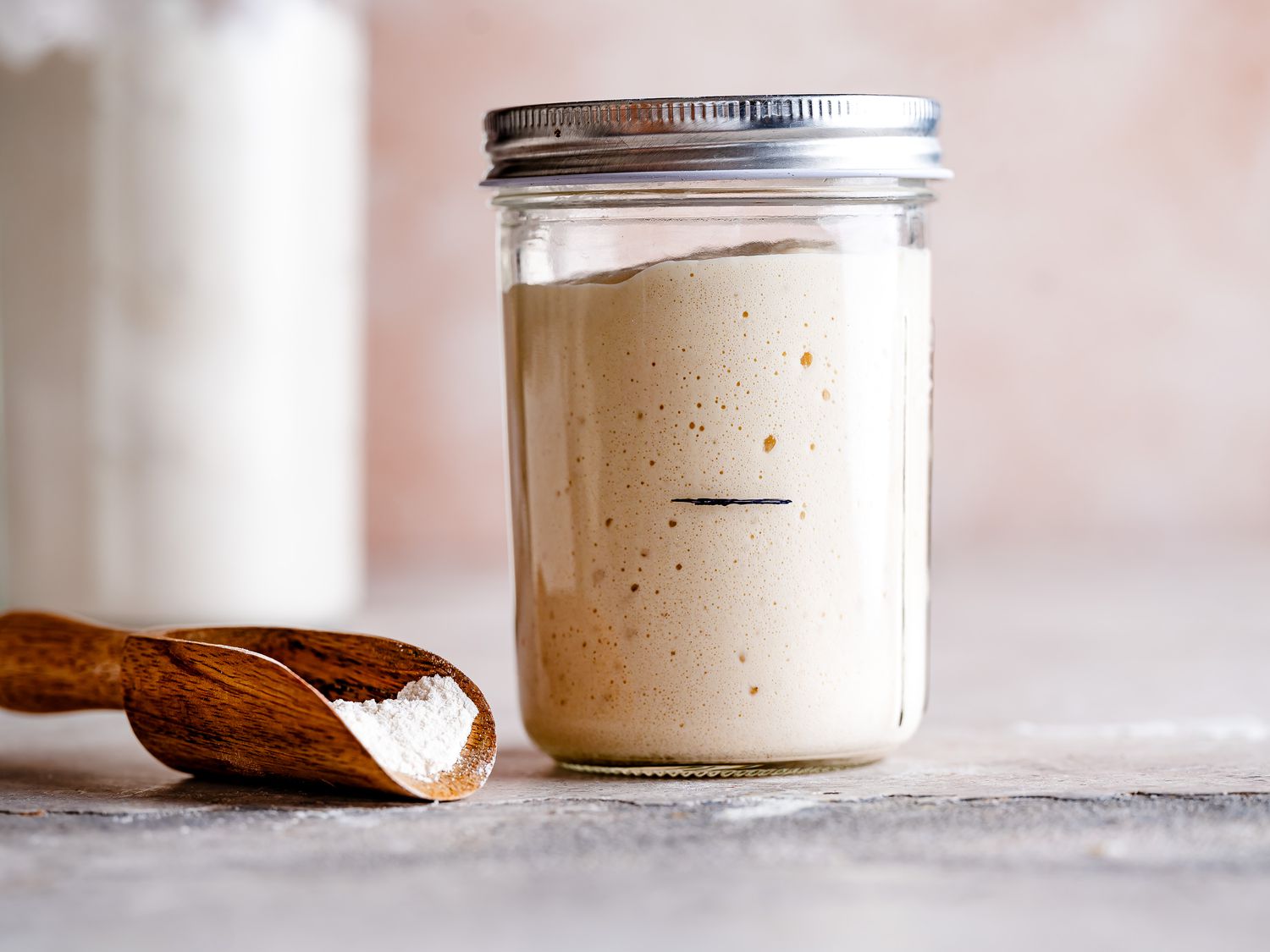
One quick clarity note: when I say discard, I mean unfed, inactive starter, not bubbly, recently fed starter. I usually use it cold, straight from the fridge. A typical 100 percent hydration discard (equal weights flour and water) is the easiest match here, but do not stress if yours is a little thicker or looser. That just affects how much the dough wants to spread.
Also, yes, this recipe does not use baking soda or baking powder. That is on purpose, and the recipe card reflects it. Instead, these cookies get what little lift they have from properly creaming the butter and sugars plus the eggs. Creaming helps the dough hold a thicker shape, but it will not give you the same lift as chemical leavening. Chilling is what keeps the texture where I want it.
You will get less puff than a leavened cookie. Just know this is not a puffy, bakery-style cookie. It is intentionally thick, dense, and chewy, with a soft middle.
Why these cookies work
Sourdough discard brings more than flavor. It adds moisture, a bit of acidity, and fermented complexity. For cookie dough, that means two things: it benefits from a chill to firm up and fully hydrate, and it bakes best when you pull the tray while the centers still look slightly underdone. The pan finishes the job.
Chill and bake cues
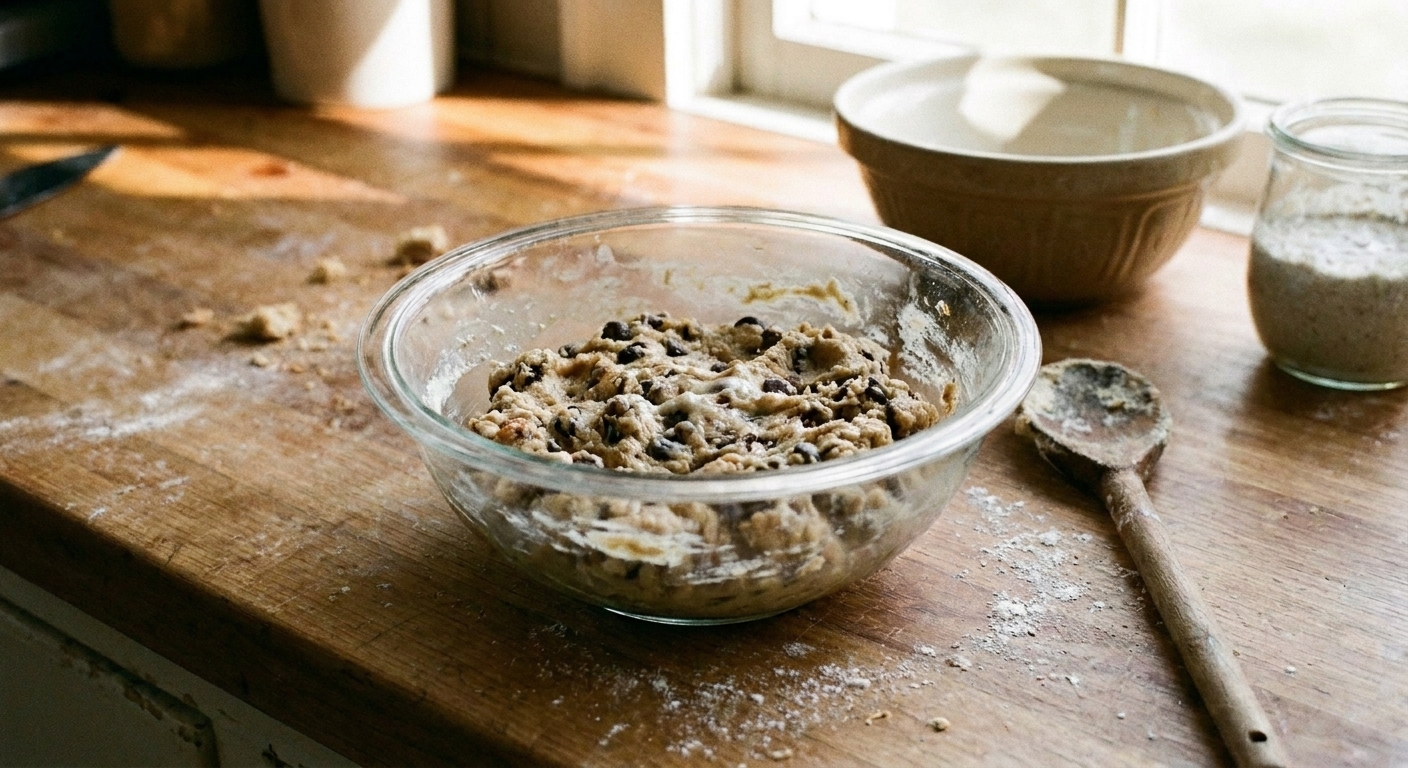
I know chilling cookie dough can feel like the part that ruins spontaneity. But with discard in the mix, chilling is usually what keeps the cookies thick and soft instead of thin and a little dry. Wetter discard, warmer butter, a warm kitchen, and even your flour measurement can all push the dough toward more spread, so think of the fridge as your insurance policy.
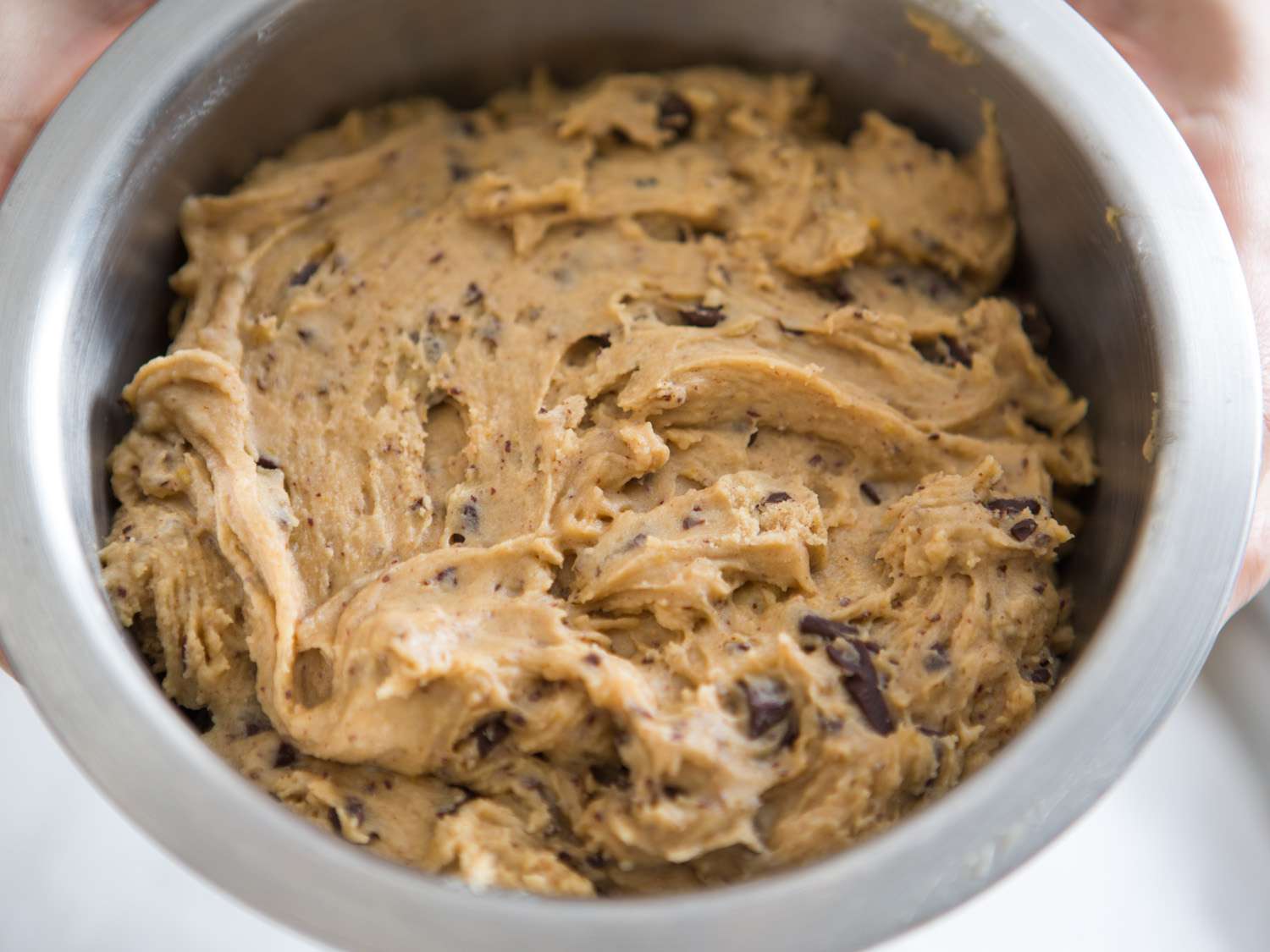
- Minimum chill: 2 hours. The dough should feel scoopable but firm, like cold peanut butter.
- Best chill: overnight. The flavor rounds out and the texture bakes thicker.
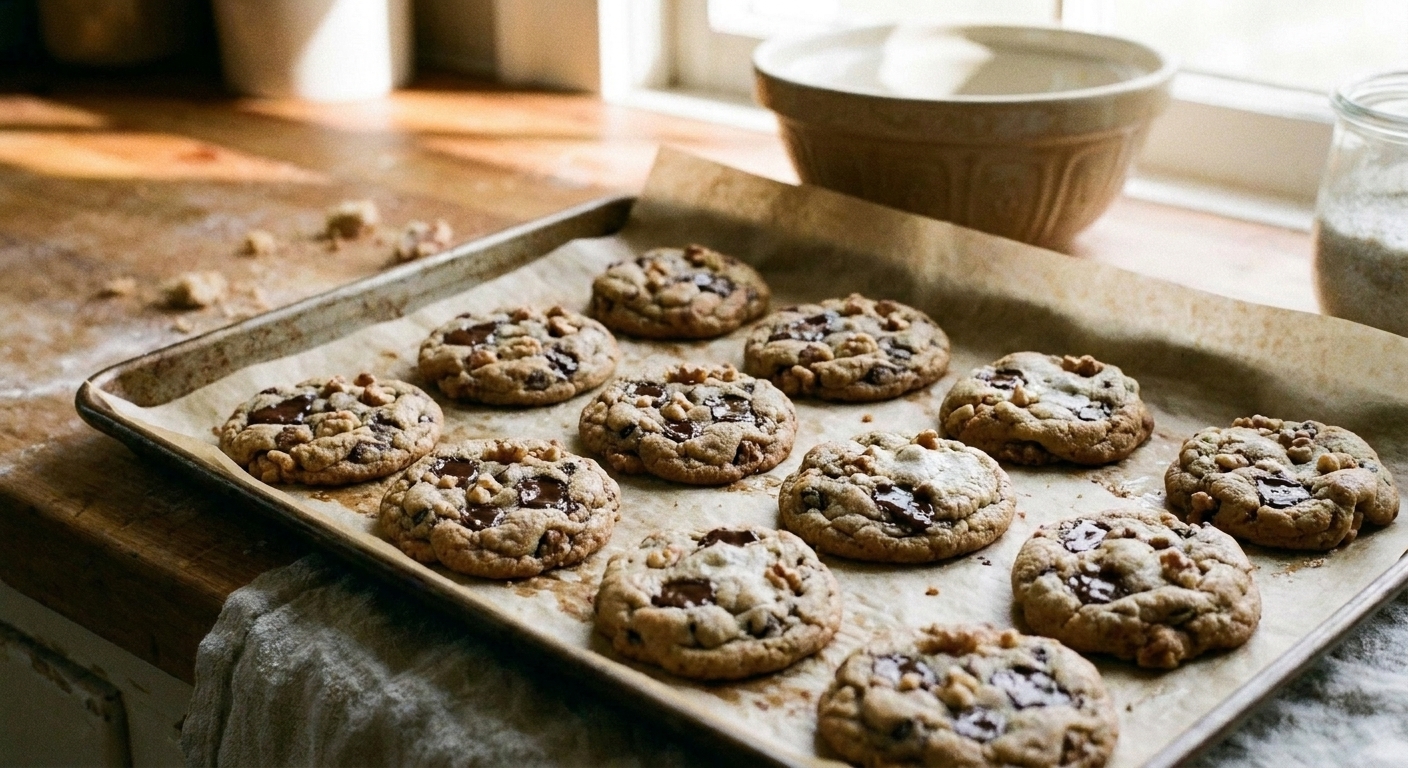
- Bake cue: pull the cookies when the edges look set and lightly golden, but the centers still look pale and slightly glossy. They should wobble a bit if you gently nudge the pan.
- Rest cue: leave them on the hot sheet 10 minutes. This sets the center without overbaking.
Why this recipe works
- Sourdough discard adds tenderness and flavor. The extra moisture and acidity give you a softer bite and subtle tang that plays beautifully with brown sugar and chocolate.
- No commercial leavening, by design. Creaming and eggs provide some lift and structure, but these will not bake up as puffy as a soda or baking powder cookie. The payoff is a more dense, chewy texture.
- Chilling controls spread. Cold dough means the butter melts slower in the oven, so the cookies bake thicker with soft centers.
- Visual doneness cues prevent dry cookies. Pulling the tray when the centers still look slightly underdone lets carryover heat finish the bake gently.
Ingredient notes
Sourdough discard
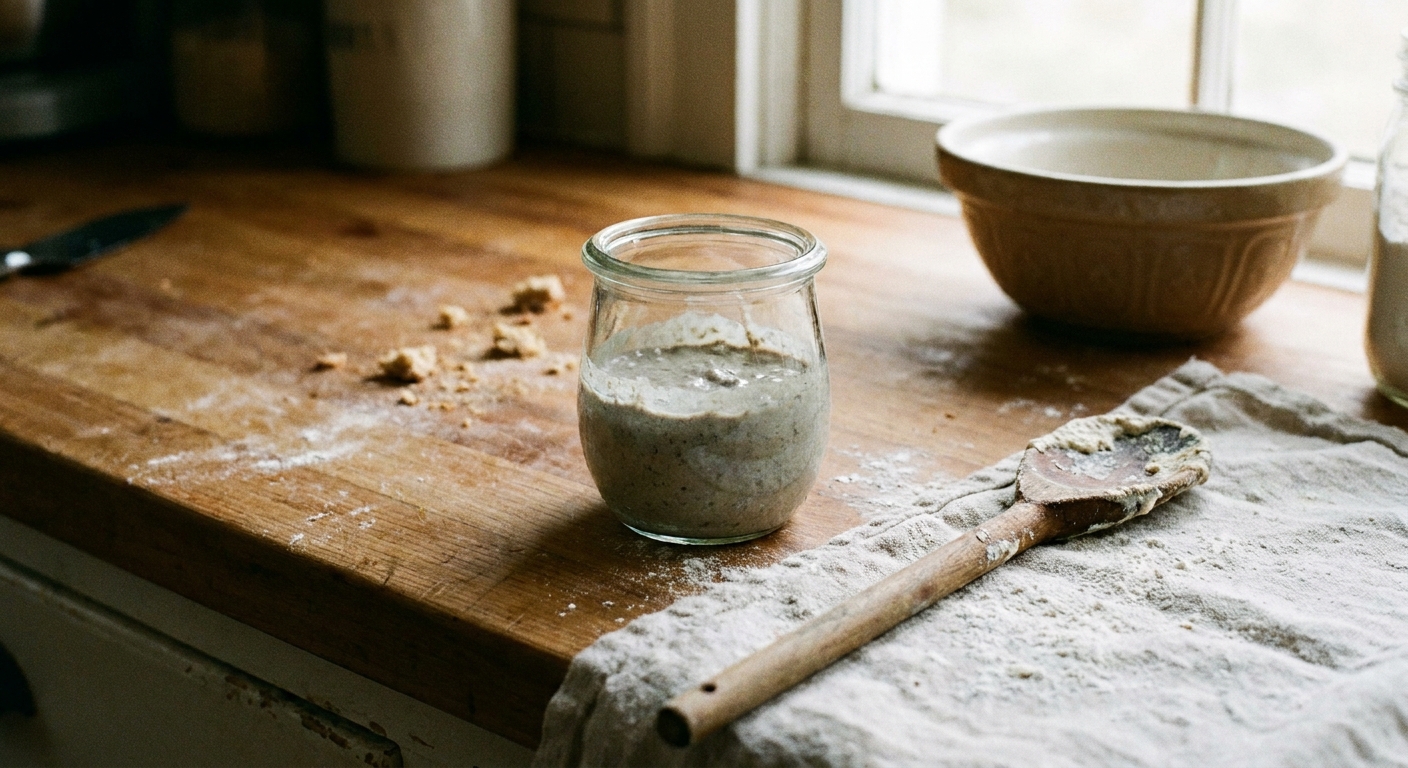
Use unfed, inactive discard straight from the fridge. Any hydration level close to typical starters (around 100 percent hydration, equal weights flour and water) works. If your discard is very runny, the dough may need the full chill and an extra tablespoon or two of flour. If it is very thick, you can let the mixed dough sit 5 minutes before scooping so it relaxes.
Butter
Start with room temperature butter so it creams smoothly. If it is greasy or melting, the dough will spread more.
Brown sugar and granulated sugar
Brown sugar boosts chew and moisture. Granulated sugar helps crisp the edges. The combo is what makes the center soft but not cakey.
Chocolate
Chopped chocolate or wafers melt into puddles. Chips keep their shape. I like a mix if I have it.
Salt and vanilla
Do not skip the salt. Sourdough discard brings complexity, but salt makes the chocolate taste louder.
Equipment you will need
- Stand mixer or hand mixer (for proper creaming)
- Medium bowl (for dry ingredients)
- Rubber spatula
- Cookie scoop (optional but helpful for even baking)
- Sheet pans
- Parchment paper
- Wire rack (for cooling)
Pro tips
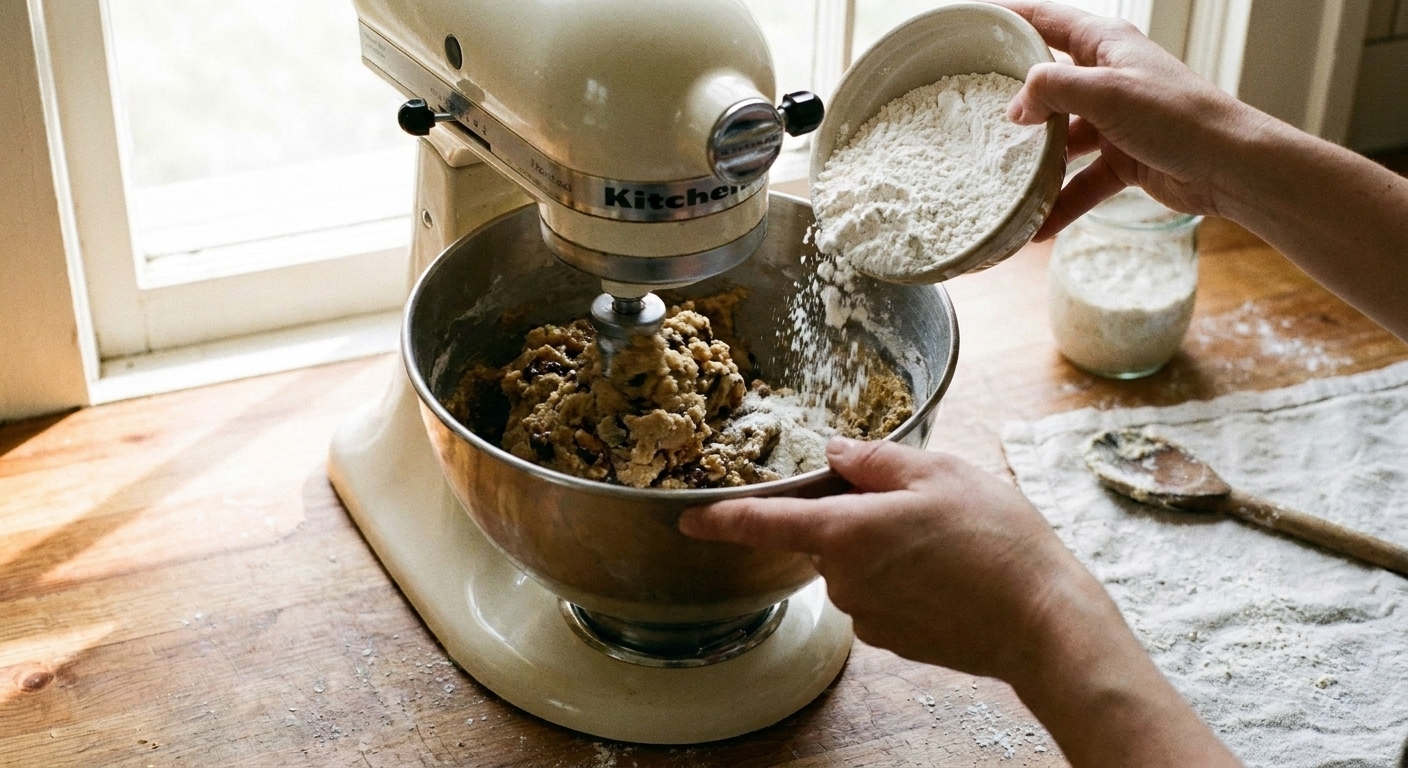
- Cream until fluffy. You are looking for the butter and sugars to lighten in color and look airy, usually 2 to 4 minutes. This is your main source of lift in a no-leavener cookie, but it will not create the same puff as baking soda or baking powder.
- Stop mixing as soon as the flour disappears. Overmixing makes cookies tougher.
- Scoop before chilling if your fridge is packed. Portion the dough onto a parchment-lined tray, cover, and chill. It saves space and you can bake straight from cold.
- For picture-perfect rounds: as soon as the cookies come out, use a large round cutter or a mug to gently scoot them into circles while they are still soft.
- Use the glossy-center rule. If the centers look fully matte in the oven, they are already heading toward crisp.
Substitutes that work
- Chocolate: swap semi-sweet for bittersweet, milk chocolate, or a mix. Keep the total amount the same.
- Flour: all-purpose flour is best. If you use bread flour, expect a slightly chewier, taller cookie.
- Butter: salted butter works, but reduce added salt slightly to avoid an overly salty finish.
- Vanilla: vanilla extract, vanilla paste, or a small splash of bourbon all work nicely.
Variations
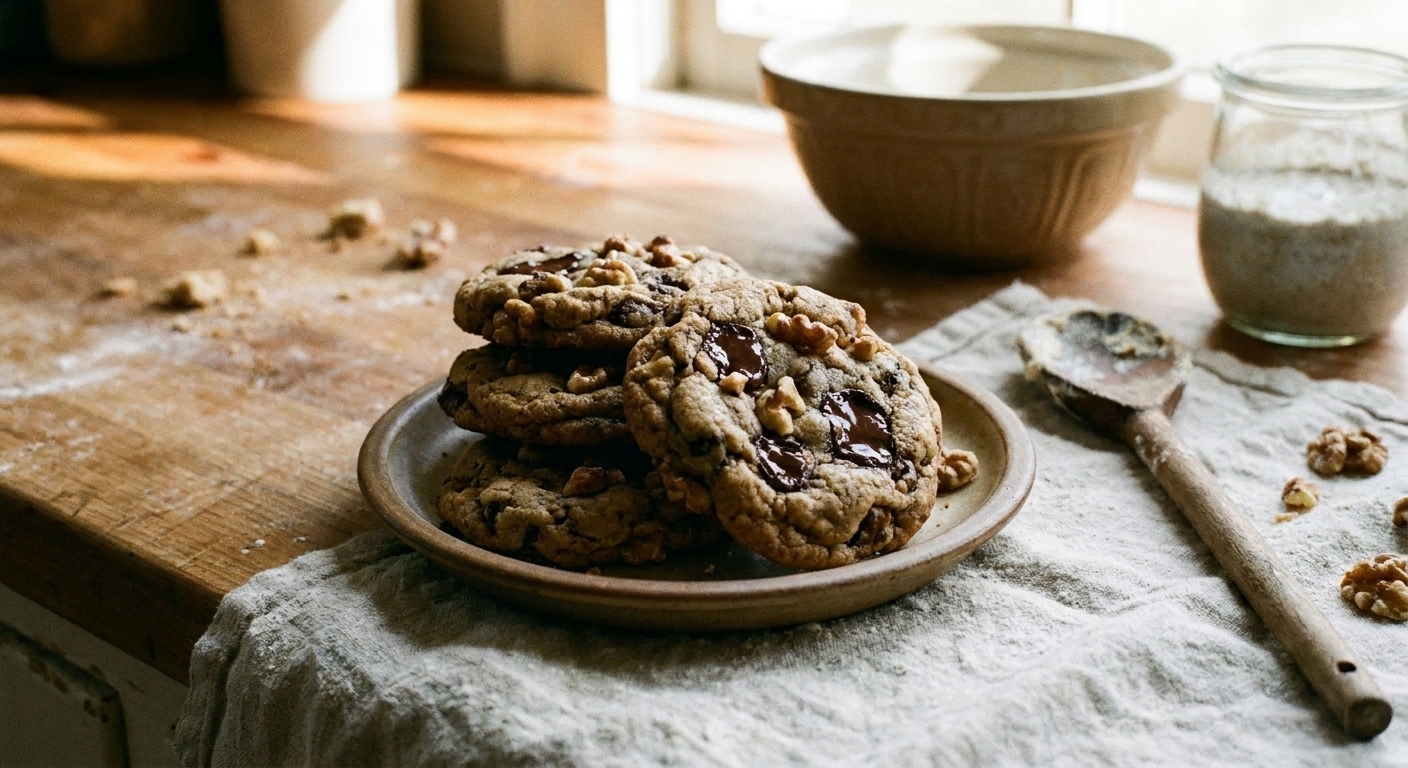
- Toasted nut: add toasted walnuts or pecans for crunch.
- Double chocolate: replace a small portion of the flour with cocoa powder for a chocolate base that still stays soft.
- Brown butter twist: brown the butter, cool until semi-solid, then proceed. Expect a deeper caramel note that pairs beautifully with the sourdough tang.
- Salted top: sprinkle a pinch of flaky salt on each dough ball before baking.
Serving ideas
- Serve warm with a glass of cold milk or oat milk.
- Make ice cream sandwiches with vanilla or coffee ice cream.
- Crumble over yogurt with berries for a zero-effort dessert.
- Pack for lunchboxes. These stay soft and travel well.
Storage and reheating
Room temperature
Store cooled cookies in an airtight container for up to 3 days. For extra softness, tuck in a small piece of bread. The cookies will steal moisture from it, not flavor.
Freeze baked cookies
Freeze fully cooled cookies in a freezer bag for up to 2 months. Thaw at room temperature.
Freeze cookie dough
Scoop chilled dough into balls, freeze on a tray until firm, then transfer to a freezer bag. Bake from frozen, adding a minute or two as needed. Use the same doneness cues: set edges, slightly glossy center.
Common mistakes
- Skipping the chill. Warm dough spreads faster, leading to thin, crisper cookies.
- Overbaking. If the centers look fully set in the oven, they will be dry once cooled. Pull earlier and let carryover heat finish them.
- Butter too warm. If your butter is shiny and oily, it will not hold air during creaming.
- Measuring flour inconsistently. If you scoop directly with the cup, you may pack in too much flour. Spoon and level, or use a scale if you have one.
- Using discard that tastes off. Discard should smell pleasantly tangy or yeasty. If it smells putrid or has visible mold, toss it.
FAQ
Will these cookies taste sour?
Not aggressively. You get a gentle tang that reads more like “complex” than “sour.” If your discard is extremely mature and sharply acidic, the tang will be more noticeable.
Do I need active starter?
No. This recipe is designed for unfed discard. Active starter works, but it is a waste of good bubbles here.
Why no baking soda or baking powder?
This recipe is intentionally written without commercial leavening. Creaming butter and sugar adds some air, eggs add structure, and chilling helps control spread. Creaming and chilling help the cookies hold a thicker shape, but they do not create the same lift as baking soda or baking powder. The tradeoff is less puff than a leavened cookie, so expect a more dense and chewy cookie with a soft center, not a cakey one.
My dough feels sticky. Did I mess up?
Probably not. Discard varies. Chill the dough fully, then reassess. Cold dough should be scoopable. If it is still loose after a full chill, mix in 1 to 2 tablespoons flour and chill 30 minutes more.
Can I chill longer than overnight?
Yes. Up to 48 hours is great for flavor and texture. Keep the dough tightly covered so it does not dry out.
Sourdough Discard Chocolate Chip Cookies
Thick, soft-centered chocolate chip cookies made with unfed sourdough discard for a gentle tang and extra tenderness. No baking powder or baking soda. Chill the dough for best texture and bake until edges are set and centers still look slightly glossy.
- Prep
- 20 minutes (plus chilling)
- Cook
- 10 to 12 minutes per batch
- Total
- 2 hours 40 minutes (with minimum chill)
- Yield
- About 24 cookies
Ingredients
- 1 cup (227 g) unsalted butter, room temperature
- 3/4 cup (165 g) packed light brown sugar
- 1/2 cup (100 g) granulated sugar
- 1/2 cup (120 g) unfed sourdough discard (100 percent hydration preferred)
- 1 large egg, room temperature
- 1 large egg yolk, room temperature
- 2 tsp vanilla extract
- 2 1/4 cups (270 g) all-purpose flour
- 1 tsp fine sea salt
- 2 cups (340 g) semi-sweet chocolate chips or chopped chocolate
- Optional: flaky salt for topping
Instructions
- Cream the butter and sugars. In a stand mixer fitted with the paddle (or a large bowl with a hand mixer), beat the butter, brown sugar, and granulated sugar on medium-high speed until lighter in color and fluffy, 2 to 4 minutes. Scrape down the bowl.
- Add discard, eggs, and vanilla. Add the sourdough discard, egg, egg yolk, and vanilla. Mix on medium speed until smooth and fully combined, about 30 to 60 seconds. Scrape down the bowl again.
- Add dry ingredients. Add the flour and salt. Mix on low just until no dry flour remains. The dough will look soft and slightly tacky.
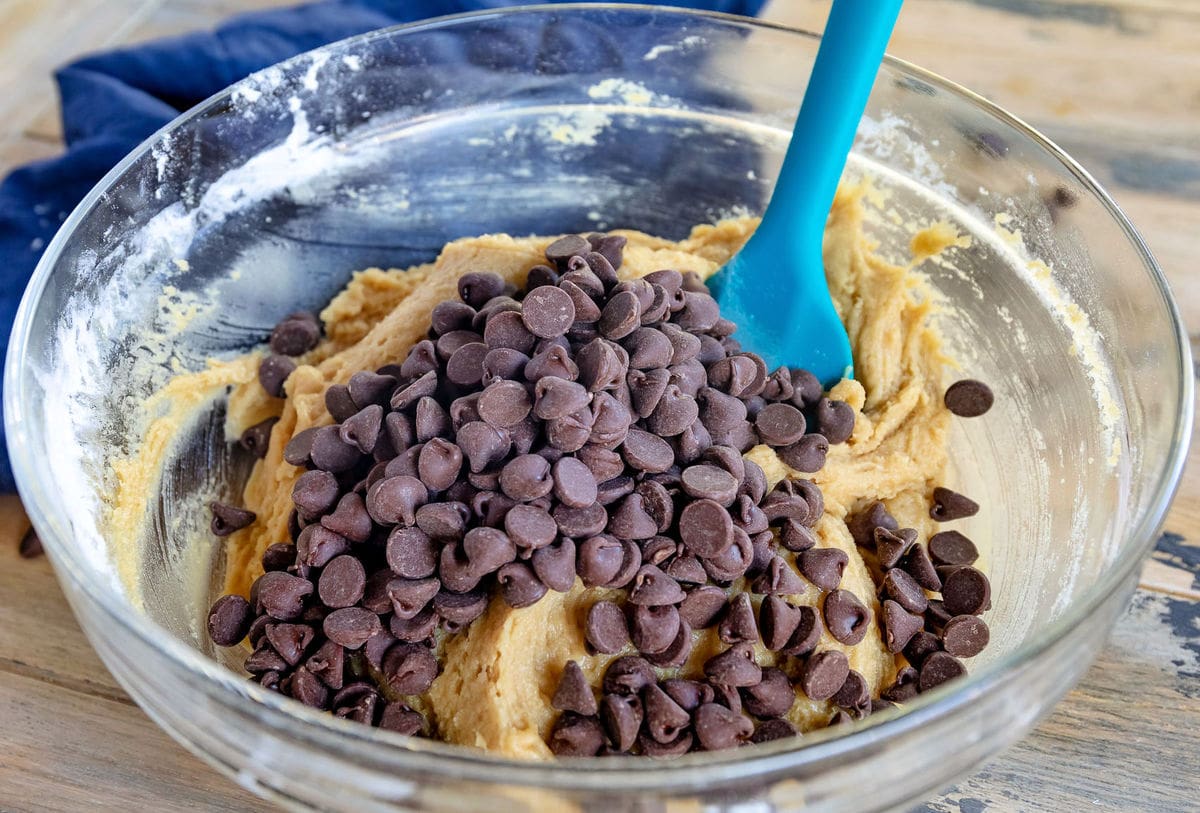
- Stir in chocolate. Add the chocolate chips and mix on low just to distribute, or fold in with a spatula.
- Chill the dough. Cover and refrigerate at least 2 hours, or ideally overnight (8 to 24 hours). The dough should feel firm and scoopable when cold, like cold peanut butter.
- Heat the oven. When ready to bake, preheat the oven to 350°F (175°C). Line 2 sheet pans with parchment paper.
- Scoop. Scoop dough into 2-tablespoon portions (about 40 g each) and place on the prepared pans, leaving about 2 inches of space between cookies. If desired, press a few extra chocolate pieces onto the tops and sprinkle lightly with flaky salt.
- Bake. Bake one pan at a time until the edges are set and lightly golden but the centers still look slightly pale and glossy, 10 to 12 minutes. The cookies should wobble slightly if you gently nudge the pan.
- Cool on the pan. Let cookies cool on the sheet pan for 10 minutes to finish setting, then transfer to a wire rack to cool completely.
Notes
Discard consistency note: If your discard is unusually runny, your dough may need the overnight chill for best thickness. If the dough still spreads too much after chilling, mix in 1 to 2 tablespoons flour and chill 30 minutes more.
For thicker cookies: Bake from very cold dough and keep the second tray in the fridge while the first batch bakes.
Doneness cue matters: For soft centers, remove the cookies when the centers are still slightly glossy. They will set as they cool on the hot pan.