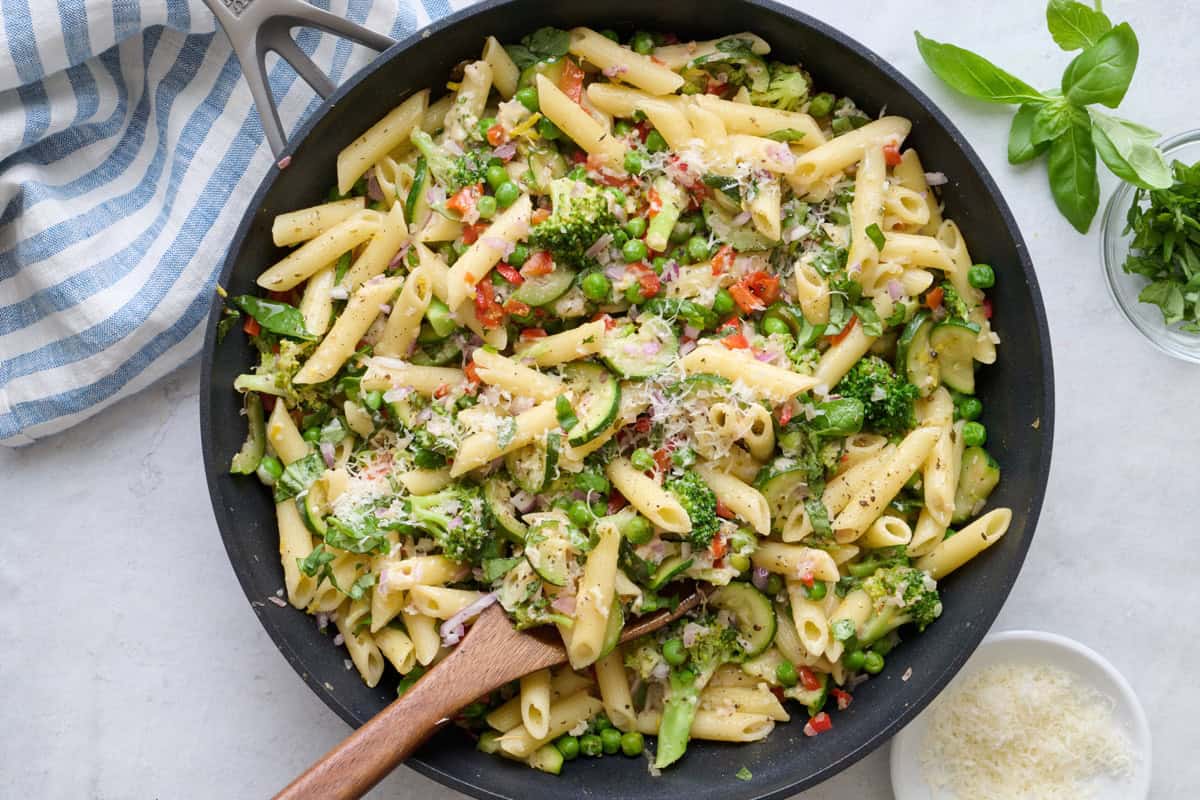
Pasta primavera is one of those dishes that feels like sunshine in a bowl. Crisp-tender vegetables, a glossy sauce that clings to every noodle, and that little spark of tangy lemon that keeps everything tasting alive. This version leans into a tangy and sweet balance: lemon (and a touch of vinegar) for brightness, plus naturally sweet peas and burst cherry tomatoes for contrast.
It is also a favorite way to rescue a crisper drawer that is getting a little too full. If you can chop it and it cooks fast, it belongs here.
Why this recipe works
Classic primavera is all about letting vegetables taste like themselves, then tying everything together with a light sauce. For a tangy-sweet profile without tasting sugary, this approach relies on:
- Lemon zest and juice for fragrant, upfront brightness.
- A splash of white wine vinegar (or wine) at the end for a clean, snappy finish.
- Sweet vegetables like peas and cherry tomatoes to round the edges and make the whole dish feel complete.
Brightness tends to dull as food sits, especially once it cools. For leftovers that still pop, save a wedge of lemon for reheating and finish your bowl right before eating.
Ingredient notes
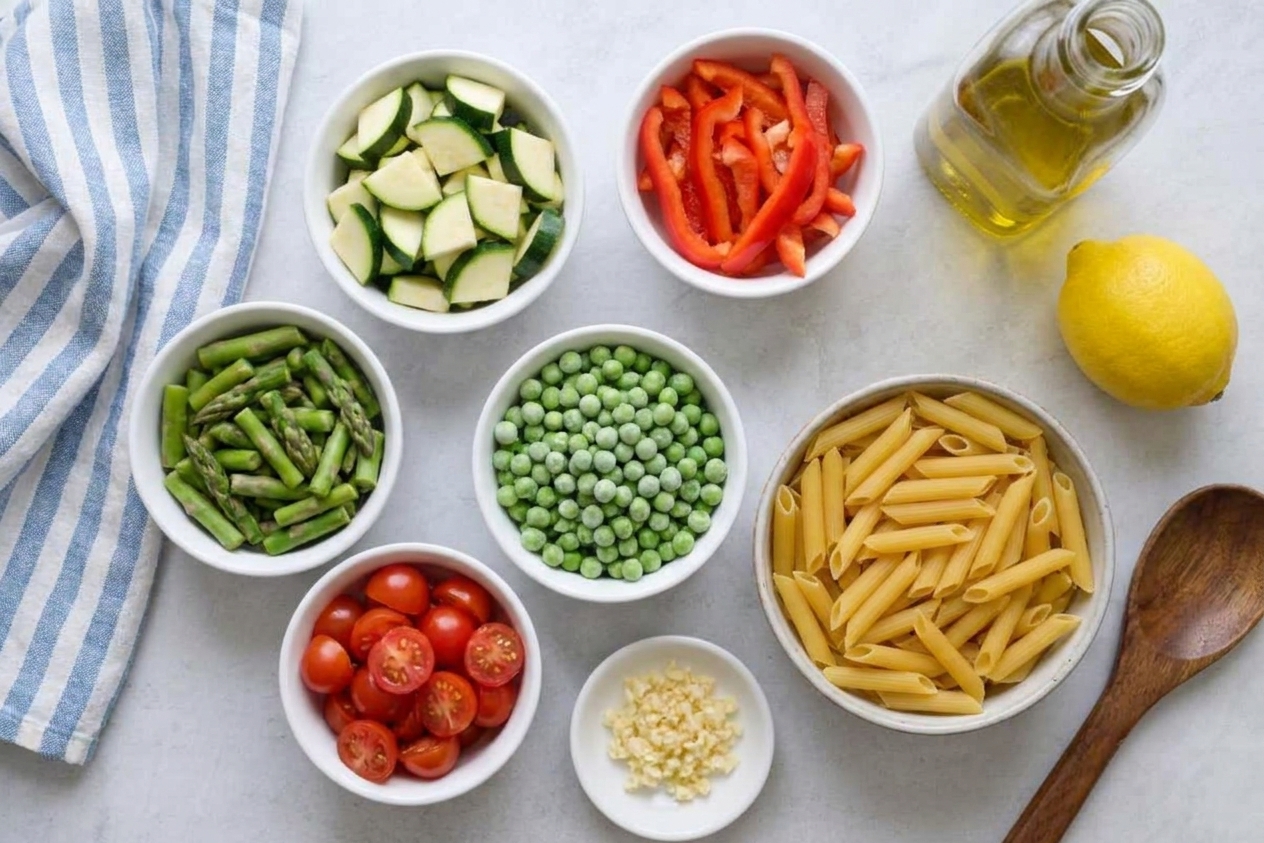
This is the classic version, with built-in flexibility. If you swap vegetables, keep the overall volume about the same so you do not crowd the pan.
- Pasta: Penne, farfalle, fusilli, or spaghetti all work.
- Butter (optional): Makes the sauce silky.
- Parmesan: Use finely grated (Microplane-style) so it melts smoothly.
- Lemon and vinegar: Lemon zest and juice bring brightness; a small splash of white wine vinegar (or dry white wine) at the end gives a clean finish.
- Waste-saving tip: Use broccoli stems sliced thin, carrot ribbons, or that last handful of spinach. Add tender greens at the very end so they do not turn swampy.
Equipment you will need
- Large pot (for boiling pasta)
- Large, wide pan or skillet (wide helps vegetables sauté instead of steam)
- Colander (for draining pasta)
- Zester or Microplane (for lemon zest and finely grating Parmesan)
- Chef’s knife and cutting board
- Tongs or a large spoon (for tossing and emulsifying)
Pro tips
- Timing shortcut: Start the vegetables right after you drop the pasta.
- Undercook pasta slightly: Cook until just shy of al dente (about 1 minute under) so it finishes in the skillet and soaks up flavor.
- Reserve pasta water: Save 1 1/2 cups; it is key for emulsifying a glossy sauce.
- Salt cue: Pasta water should taste pleasantly salty. This is your best chance to season the pasta from within.
- Garlic heat cue: If garlic starts browning fast, the pan is too hot. Lower heat and add a splash of pasta water to cool things down.
- Final taste check: If it tastes flat, add salt. If it tastes heavy, add lemon or vinegar. If it tastes sharp, add a bit more Parmesan or a drizzle of olive oil.
Optional one-pot move: Blanch asparagus and peas in the pasta water. Scoop asparagus out 2 minutes before the pasta is done, then add peas for the last 30 seconds. Drain, reserve pasta water, and proceed with the pan sauce.
Substitutes that work
- Vinegar substitute: Use 2 to 3 tbsp dry white wine instead of 1 to 2 tsp white wine vinegar.
- Gluten-free option: Use gluten-free pasta and reserve extra pasta water since GF pasta tends to soak up more liquid as it sits.
- Creamy option: Cream is optional. For a creamy primavera, a splash of half-and-half works, just add it off heat so it does not split.
- Vegetable swaps (keep cook order): Primavera is less about exact vegetables and more about cook order.
Variations
Primavera is less about exact vegetables and more about cook order. Use this timing guide:
- Start first (3 to 5 minutes): broccoli florets, asparagus, green beans, carrots (thin), bell peppers
- Middle (2 to 3 minutes): zucchini, mushrooms, snap peas, cauliflower
- End (30 to 90 seconds): cherry tomatoes, peas, spinach, arugula, fresh herbs
If you are using onions, cook them early. If you are using delicate herbs, add them off heat.
For a richer version, add a spoonful of ricotta on each bowl. It melts into the sauce and softens the acidity in the best way.
Serving ideas
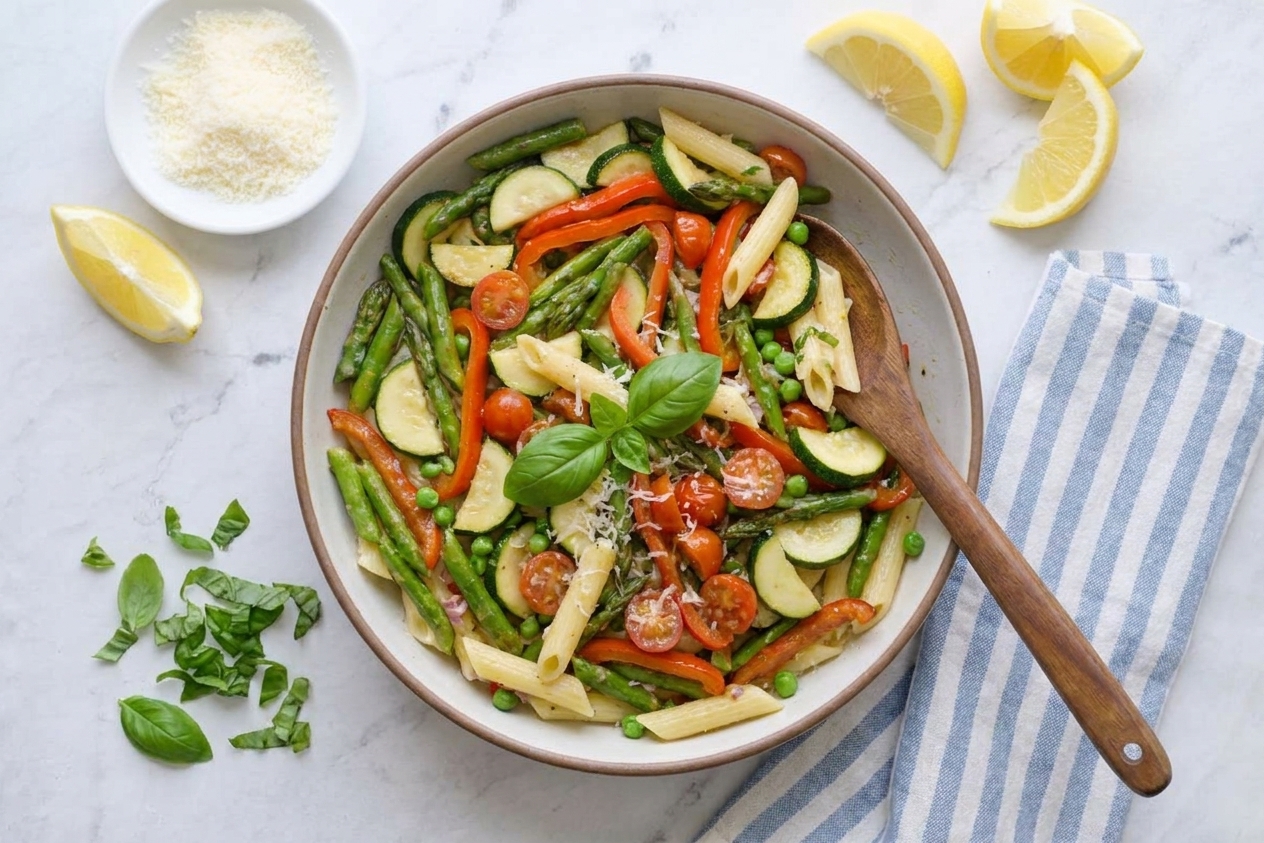
This pasta already has a lot going on, so simple add-ons work well:
- Chicken: sliced rotisserie chicken tossed in at the end
- Shrimp: sauté quickly in the pan first, remove, then add back at the end
- White beans: drained cannellini beans warmed with the pasta for an easy vegetarian protein boost
- Tofu: pan-seared cubes for a crisp contrast
Serve family-style in a warm bowl and finish with:
- Extra Parmesan
- A drizzle of good olive oil
- Lemon wedges on the side
- Lots of black pepper
If you want a little crunch, toasted panko breadcrumbs or toasted pine nuts are gorgeous here.
Storage and reheating
Fridge: Store in an airtight container up to 3 to 4 days.
Reheat: Warm in a pan with a splash of water (or broth). Once hot, brighten with a squeeze of lemon and a tiny splash of vinegar. This brings the dish back to life.
Freezer: Not recommended for the best texture. You can freeze it in a pinch, but the vegetables tend to turn watery and the sauce loses its shine.
Common mistakes
My sauce looks clumpy
That usually means the Parmesan hit a pan that was too hot, or there was not enough liquid. Lower the heat and add pasta water 1 to 2 tablespoons at a time while tossing until smooth. Also make sure you are using finely grated Parmesan, not thick shreds.
My vegetables turned soft
Two common causes: overcrowding the pan or cooking everything at once. Use a wide pan, cook in stages, and keep the heat high enough to sauté instead of steam.
It tastes bland
Add salt first. Then add lemon or vinegar. Primavera needs both seasoning and acid to taste like itself.
It tastes too sour
Stir in more Parmesan or a drizzle of olive oil. You can also add a few extra tomatoes or peas to push the sweetness forward naturally.
FAQ
Is pasta primavera supposed to have cream?
Cream is optional. Plenty of modern versions skip it and lean on Parmesan plus starchy pasta water for a creamy feel. If you love a creamy primavera, a splash of half-and-half works, just add it off heat so it does not split.
Can I make it gluten-free?
Yes. Use your favorite gluten-free pasta and reserve extra pasta water since GF pasta tends to soak up more liquid as it sits.
What is the best pasta shape?
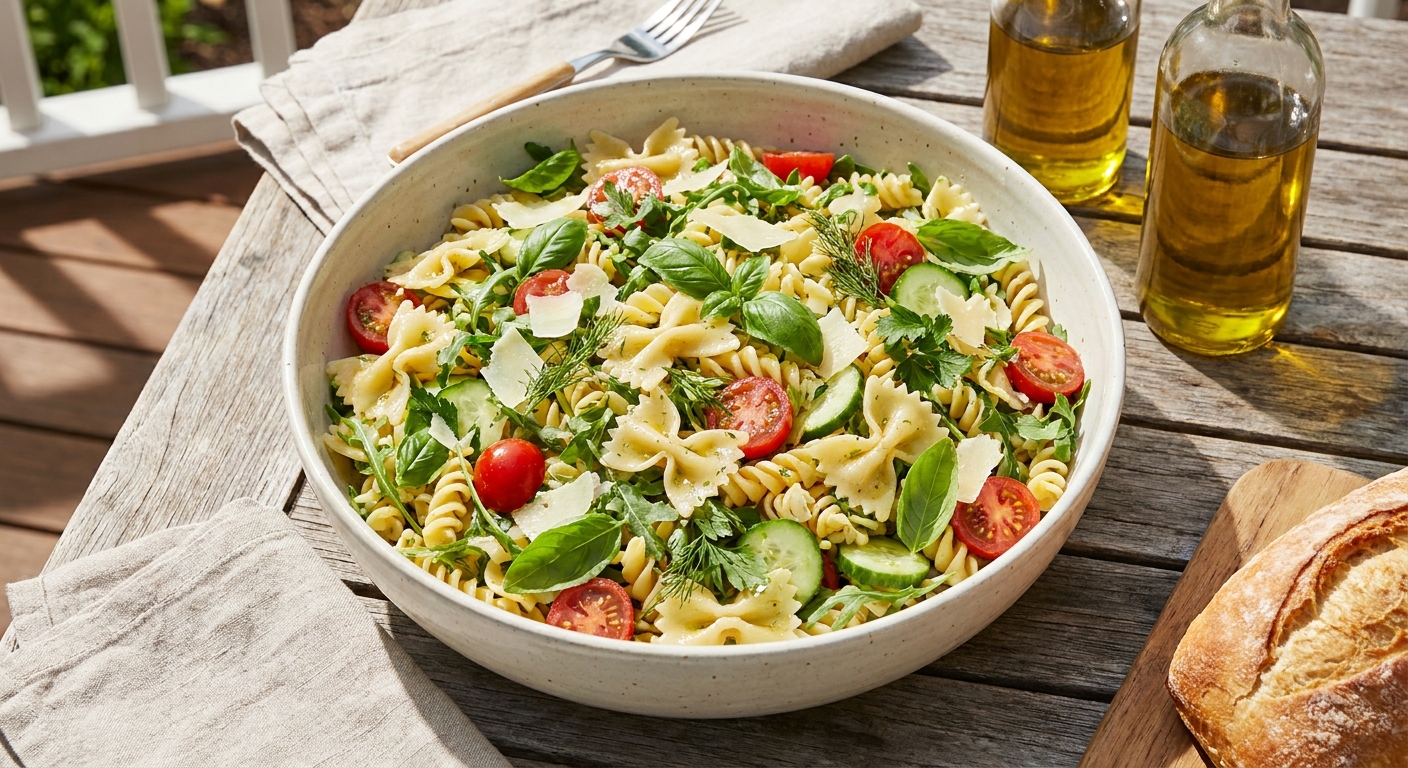
Penne, farfalle, and fusilli are go-tos because they catch little bits of vegetables and sauce in the curves. Spaghetti works too if you want a more classic twirl-and-tangle vibe.
Classic Pasta Primavera (Tangy and Sweet)
Classic Pasta Primavera (Tangy and Sweet): crisp-tender vegetables tossed with pasta in a glossy lemony Parmesan sauce, finished with a splash of vinegar for extra brightness.
- Prep
- 15 minutes
- Cook
- 15 minutes
- Total
- 30 minutes
- Yield
- Serves 4 to 6
Ingredients
- 12 oz pasta (penne, farfalle, fusilli, or spaghetti)
- 3 tbsp olive oil
- 2 tbsp butter (optional)
- 3 to 4 cloves garlic, minced
- Pinch red pepper flakes (optional)
- 1 bunch asparagus, cut into 1-inch pieces
- 1 bell pepper, thinly sliced
- 1 medium zucchini, sliced into half-moons
- 1 to 1 1/2 cups cherry tomatoes, halved
- 1 cup frozen peas
- Zest of 1 lemon
- 2 to 3 tbsp lemon juice, plus more to taste
- 1 to 2 tsp white wine vinegar (or 2 to 3 tbsp dry white wine)
- 3/4 cup finely grated Parmesan, plus more for serving
- Salt and black pepper
- Handful basil or parsley, torn or chopped
Instructions
- Boil pasta in well-salted water until 1 minute shy of al dente. Reserve 1 1/2 cups pasta water, then drain.
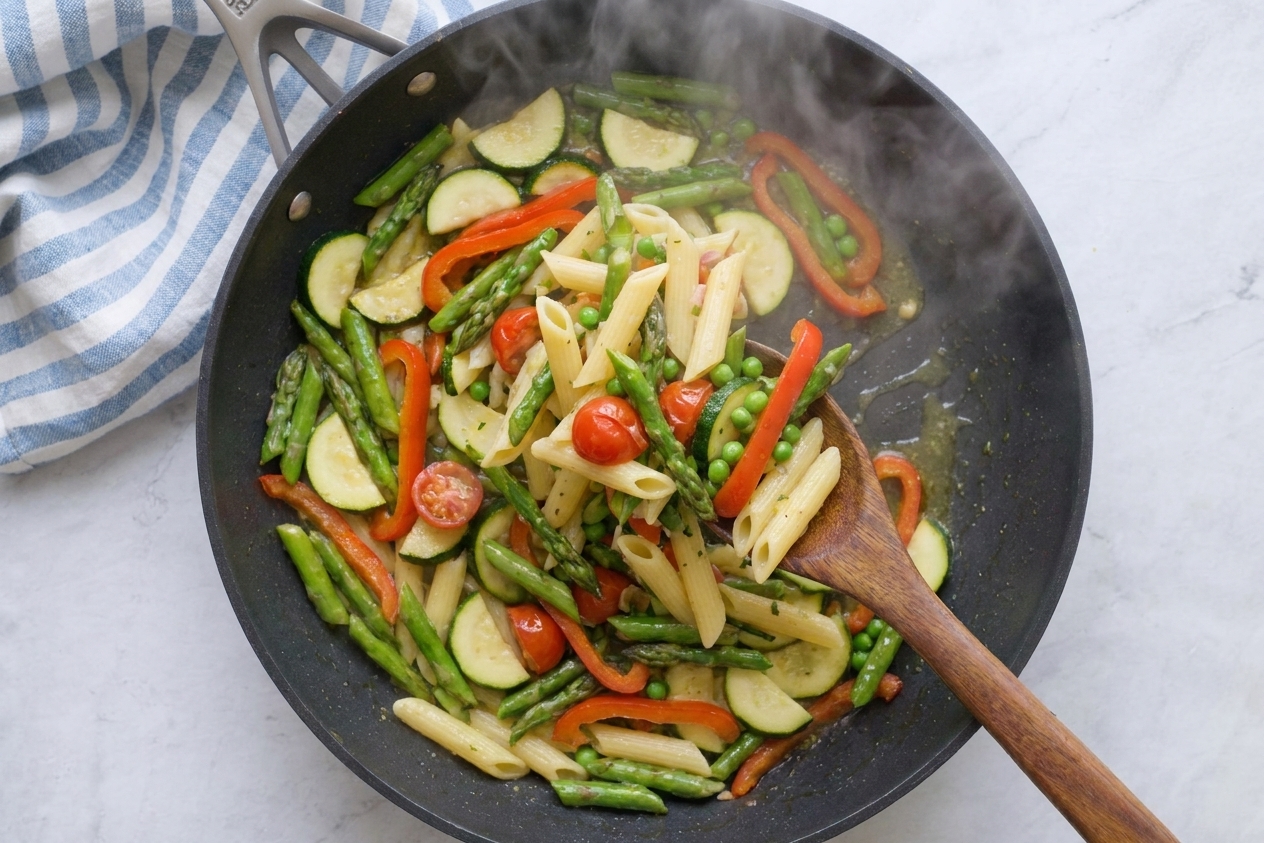
- As the pasta cooks, heat a large wide pan over medium-high heat. Add olive oil. Sauté asparagus and bell pepper 3 to 4 minutes.
- Add zucchini and cook 2 to 3 minutes.
- Push vegetables to the edges. Add butter (if using), then add garlic (and red pepper flakes if using) to the center. Stir 30 seconds, just until fragrant.
- Add tomatoes and a pinch of salt. Cook 1 to 2 minutes, just until they start to slump.
- Reduce heat to medium. Add 1/2 cup pasta water, lemon zest, and lemon juice. Stir and scrape up any browned bits.
- Add pasta and toss vigorously. Add Parmesan gradually while tossing, adding more pasta water as needed until glossy (usually another 1/4 to 3/4 cup).
- Stir in peas to warm through (about 60 seconds). Turn off heat and add vinegar, herbs, and black pepper. Taste and adjust salt, lemon, and vinegar.
Notes
Note: For the brightest flavor, finish each serving with a last squeeze of lemon.
Nutrition
- Calories: 520
- Fat: 18 g
- Carbs: 72 g
- Protein: 19 g
- Fiber: 7 g
- Sugar: 9 g
- Sodium: 520 mg
Nutrition values are approximate and will vary by ingredients, portion size, and how much salt is used in the pasta water.