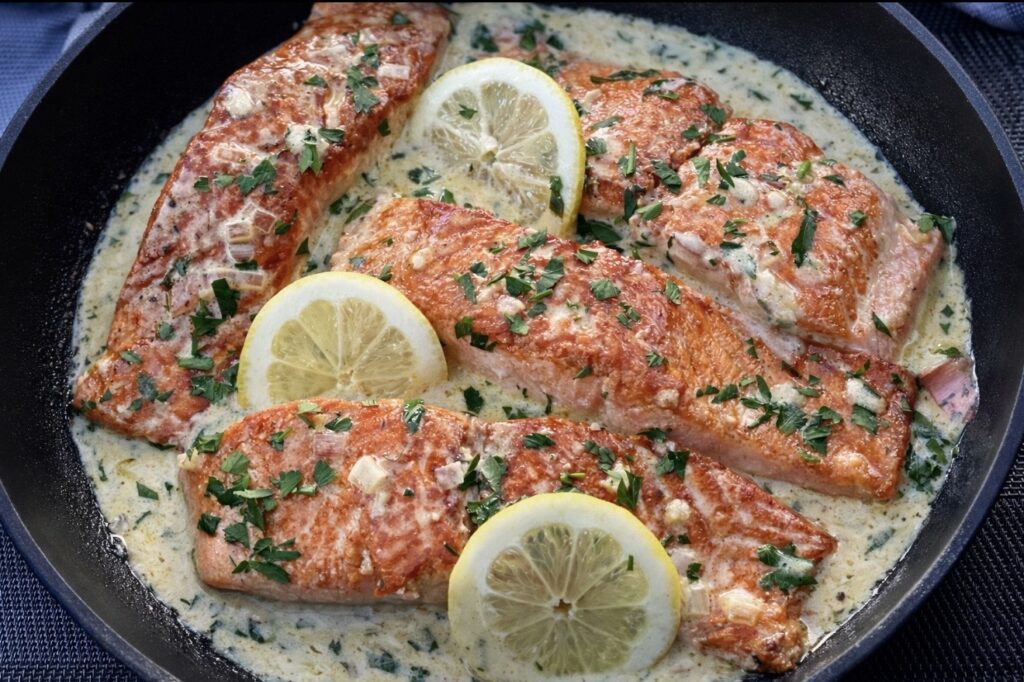
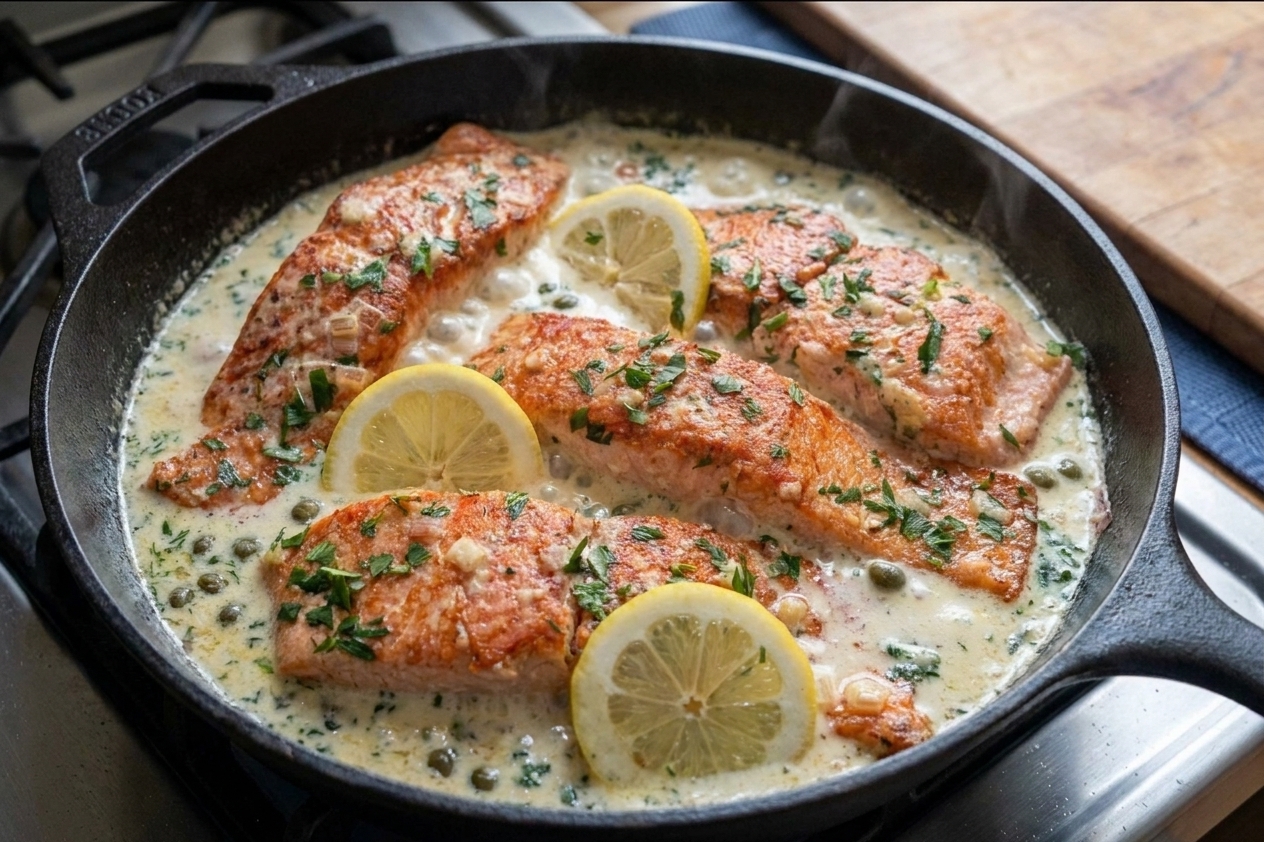
I love a dinner that reads “special occasion” but cooks like a Tuesday. This is that dish. You get crisp-edged salmon, a light cream sauce brightened with lemon, and little pops of briny capers and fresh herbs that make everything taste awake. The sauce is silky, not gloopy, because we reduce it just enough and let the salmon finish gently in the pan.
If you have ever had salmon turn chalky or your cream sauce split, this recipe is built to help. You will find clear sensory cues for doneness, plus straightforward swaps so you can cook what you have and waste less.
Why this recipe works
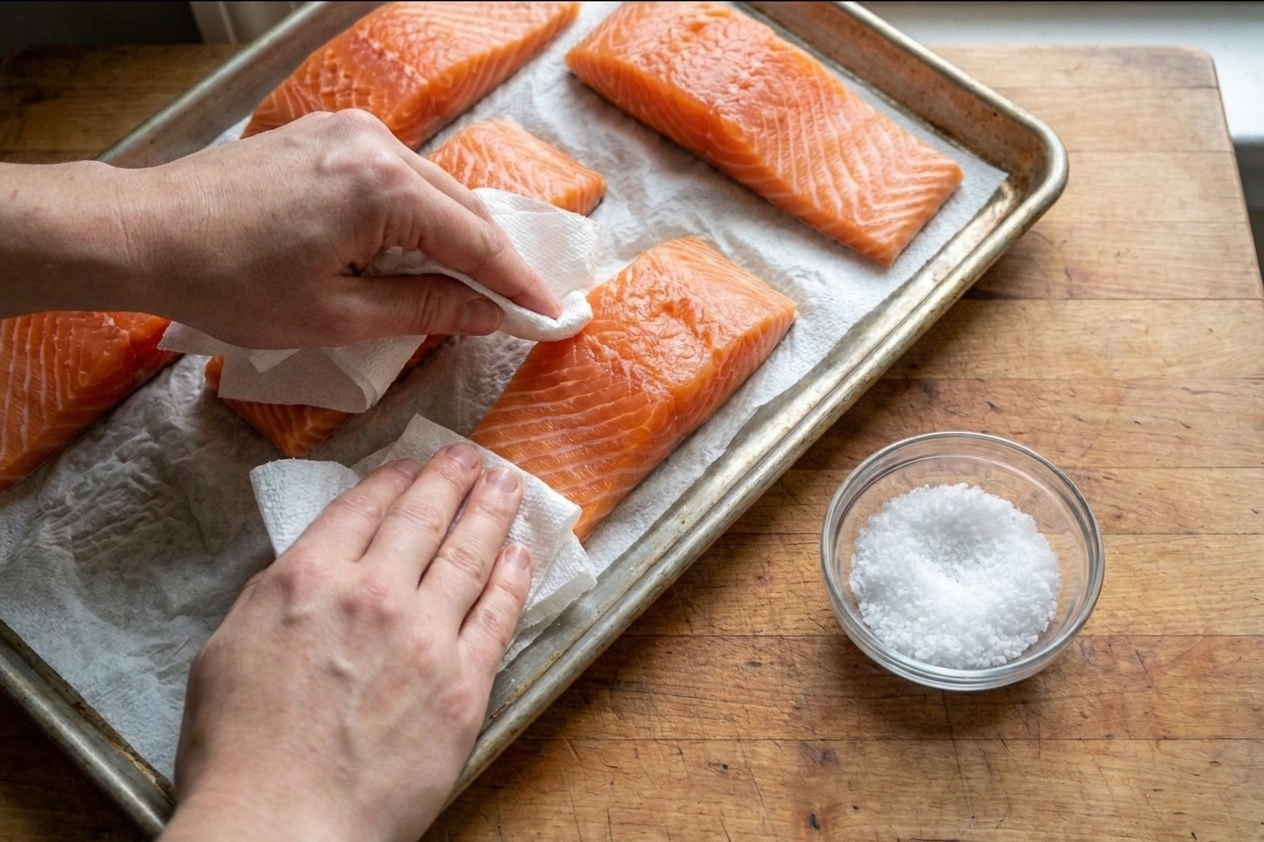
- Dry salmon + a proper sear: Patting the fillets dry and searing without moving builds a deeply golden crust and better flavor.
- Gentle finish: The salmon is not cooked through during searing; it finishes gently in the sauce so the center stays moist and silky.
- Balanced sauce texture: Reducing the wine (or broth) and then simmering the cream until it coats a spoon creates a sauce that is silky, not thick or gloopy.
- Brightness without harshness: Lemon zest adds “lemon perfume,” while lemon juice is added at the end to fine-tune acidity and help prevent splitting.
- Built-in contrast: Capers add briny pops and herbs keep the whole dish tasting fresh and lively.
Ingredient notes
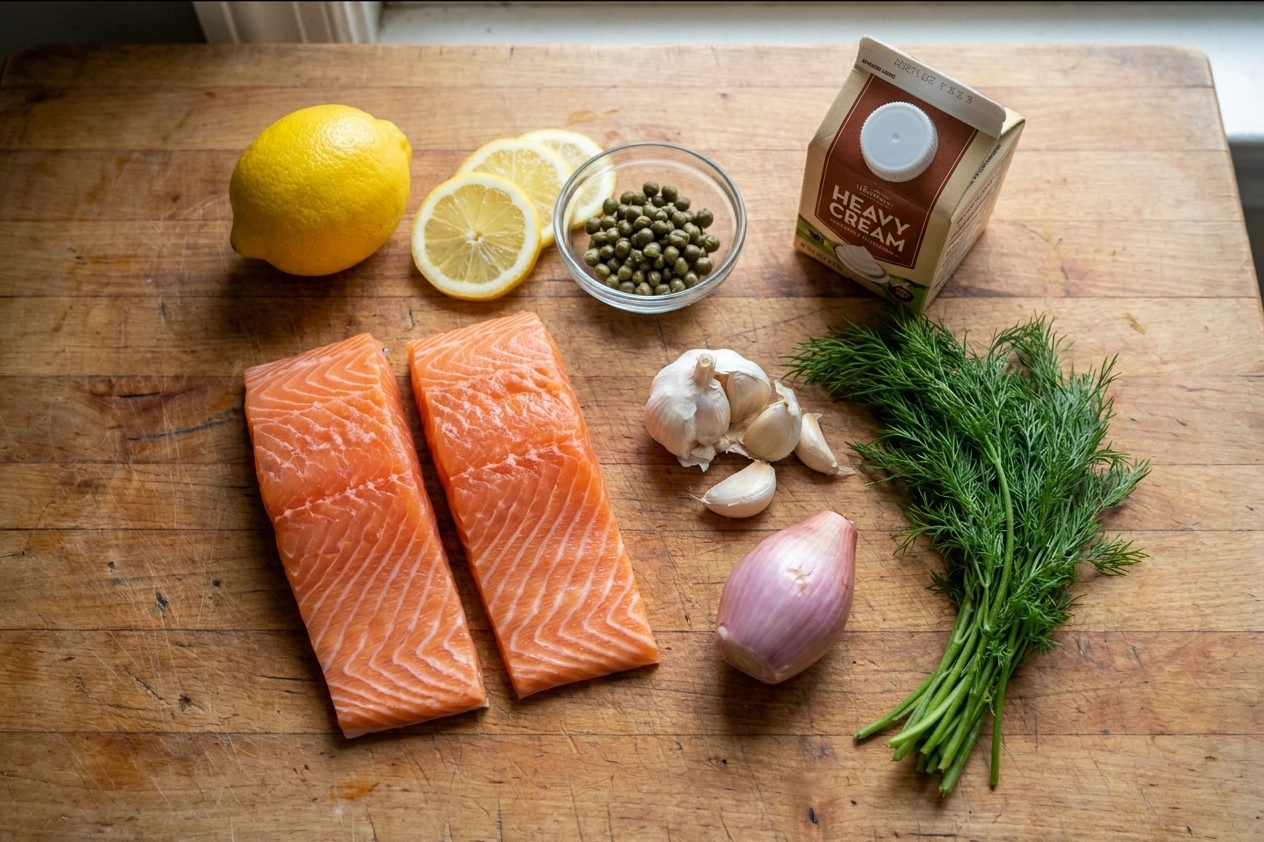
- Salmon: Use 4 fillets, 5 to 6 ounces each, skin-on or skinless. If your pieces are uneven, plan to pull the thinner one first.
- Aromatics: Shallot and garlic build a quick, savory base; onion can stand in for shallot.
- Fat: Olive oil for searing plus a little butter for flavor and a glossy finish.
- Cream: Heavy cream makes the most stable sauce, but you only need a little for a light, silky texture.
- Lemon: Use both zest (for fragrance) and juice (for brightness). Zest gives “lemon perfume” without making the sauce too sharp.
- Capers: Drain them so you get clean briny sparkle without watering down the sauce.
- Herbs: Dill is classic, parsley is universal, and chives feel fancy. Use what is perky.
- Wine: Choose a dry white like Sauvignon Blanc or Pinot Grigio; avoid anything sweet.
Equipment you will need
- Large 12-inch skillet (a cast iron skillet works well)
- Paper towels (to pat salmon very dry)
- Microplane or fine grater (for lemon zest)
- Knife and cutting board (for shallot, garlic, and herbs)
- Spoon (for basting sauce over the salmon)
- Instant-read thermometer (optional, for temperature cues)
Pro tips
- Season and rest briefly: After seasoning, let the salmon sit at room temperature while you chop shallot and garlic (about 10 minutes) to help centers cook more evenly.
- Do not move the fish: Sear 3 to 5 minutes without moving until it releases easily; that is how you get a deeply golden crust.
- Use the browned bits: When cooking the shallot, scrape up the fond for more flavor in the sauce.
- Reduce until mellow: Simmer the wine (or broth) until reduced by about half; the pan should smell mellow, not boozy.
- Stop at “silky”: Simmer the cream until it coats a spoon and you can draw a clean trail with your finger. It will thicken slightly as it cools.
- Add lemon juice at the end: Reduce first, then add most of the lemon juice off heat to lower the risk of splitting (especially with lighter dairy).
- Finish with butter off heat: That final half tablespoon gives a restaurant-style sheen.
- If the sauce thickens too much: Loosen with warm broth or pasta water, 1 tablespoon at a time.
Substitutes that work
- Shallot: Use 1/3 small onion in place of 1 small shallot.
- Wine: Replace dry white wine with low-sodium chicken broth. For extra lift, add an extra teaspoon of lemon juice at the end.
- Capers: Use chopped green olives, or add a tiny spoon of Dijon plus extra lemon.
- Herbs: Swap dill for parsley, or use chives for a fancier feel.
- Lighter dairy options: Use half-and-half and reduce slightly longer, or use 2 parts whole milk to 1 part cream. If using milk, keep the heat low and add lemon juice at the very end to help prevent splitting.
- Dairy-free: Use full-fat canned coconut milk; keep the heat low and do not boil hard. Lean into herbs and lemon zest.
Variations
- Gentle heat: Add a pinch of red pepper flakes.
- Extra-luxurious: Finish with a spoon of salmon roe.
- More greens: Wilt a handful of baby spinach into the sauce.
- Crispy-skin focus: If using skin-on fillets, start skin-side down, then keep heat very gentle when returning the fish and serve skin-side up so the sauce does not soften it. You can also spoon sauce around the fish instead of directly on top.
Serving ideas
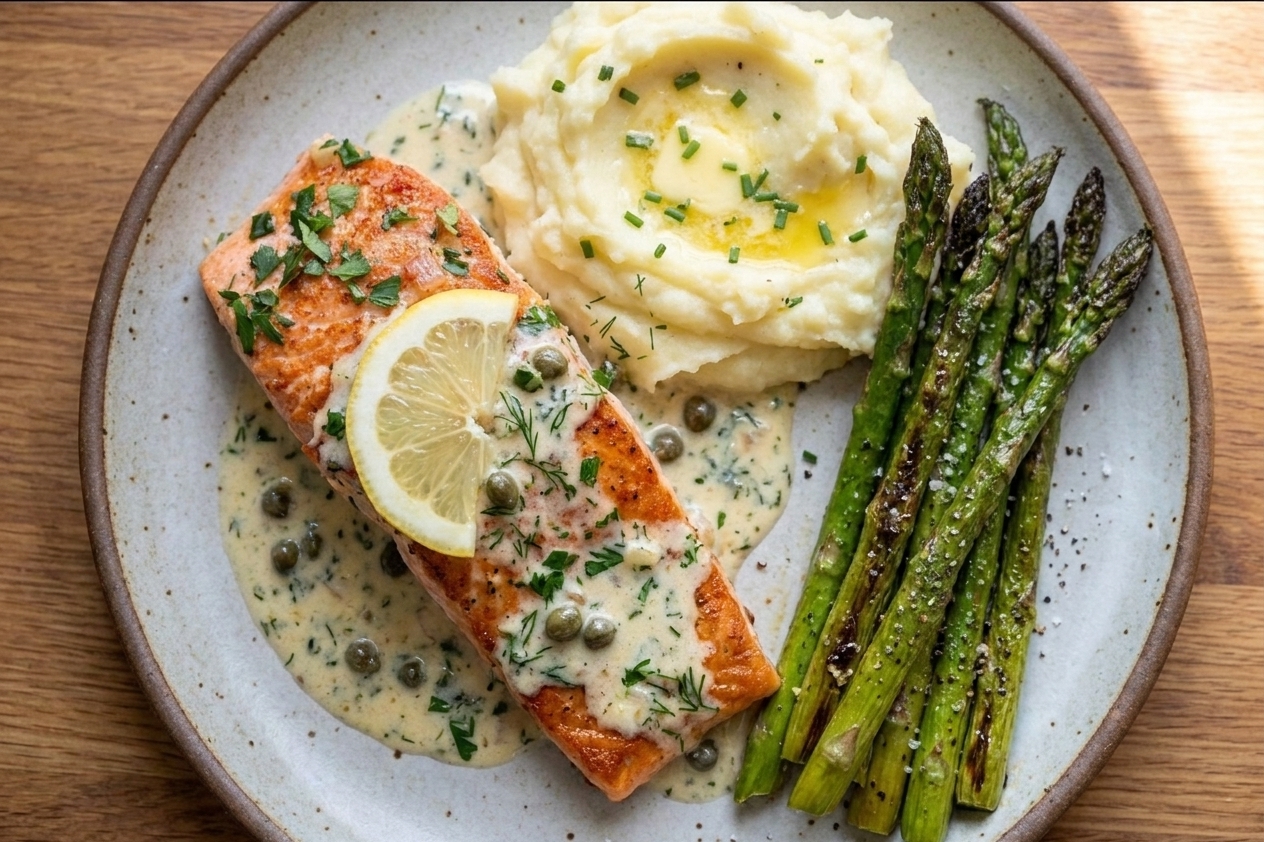
- Classic cozy: Mashed potatoes or buttery rice to catch every drop.
- Bright and green: Roasted asparagus, broccolini, or a crunchy fennel salad.
- Fastest: Couscous or orzo. If you cook pasta, reserve a splash of pasta water to adjust sauce thickness.
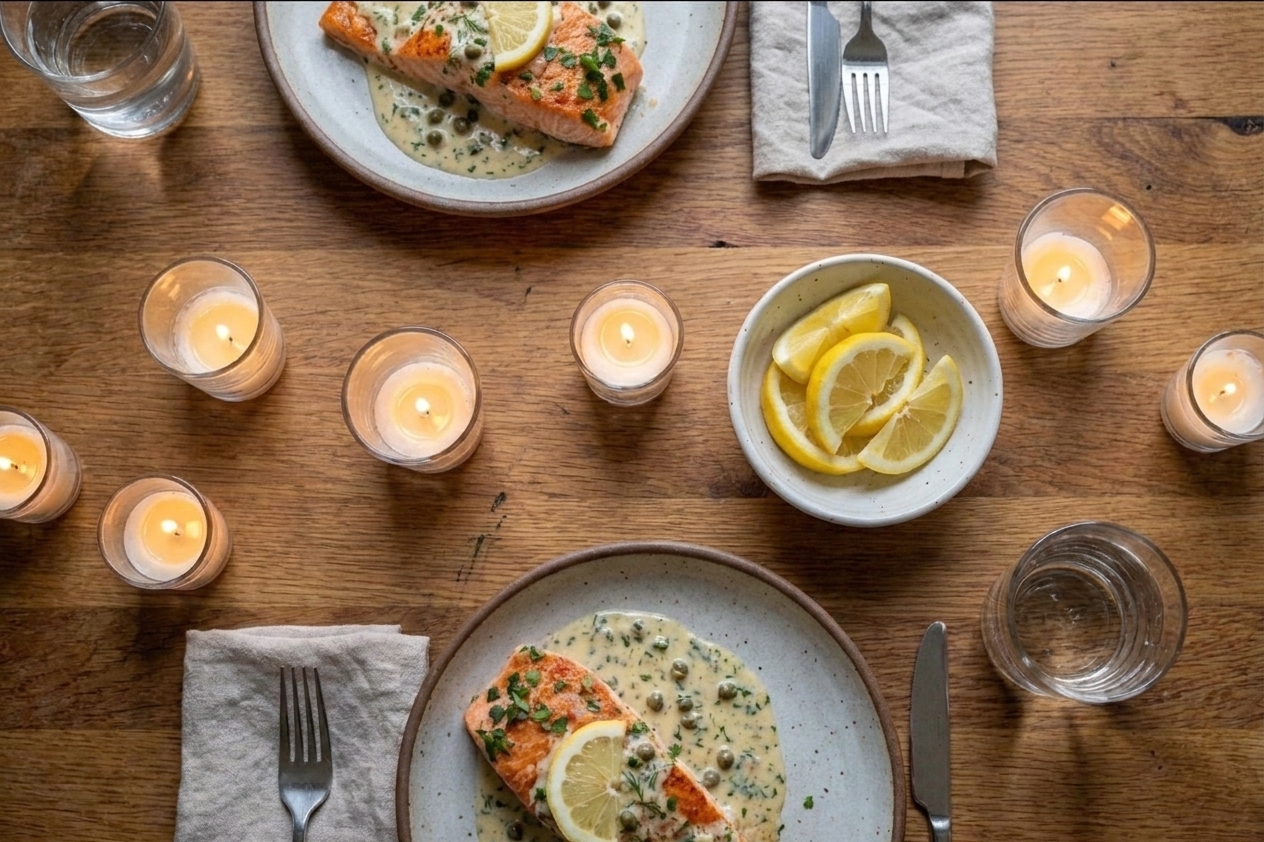
- Festive table: Add a bowl of citrus wedges, extra herbs, and warm bread for swiping.
Storage and reheating
- Best timing: This dish is best the night you make it.
- Prep ahead: Chop shallot and garlic up to 2 days ahead. Zest the lemon and store the zest in a small container. Drain capers.
- Leftovers: Store salmon and sauce together airtight up to 2 days.
- Reheating: Reheat gently on low heat with a splash of broth or water. Avoid the microwave if you can; it tightens salmon quickly.
- Use the extras: Stir leftover sauce into pasta with spinach, or spoon it over roasted cauliflower. If you have extra herbs, chop and freeze with a little olive oil in an ice cube tray.
Common mistakes
- Not drying the salmon: Excess moisture is the enemy of a good sear and can thin the sauce.
- Moving the salmon too soon: If it does not release easily, it is not ready; leaving it undisturbed helps it brown properly.
- Trying to cook the salmon through during searing: The recipe is designed for a quick sear, then a gentle finish in the sauce.
- Boiling after adding lemon juice: High heat plus acid is the biggest split risk (especially with lighter dairy). Reduce first, then add lemon juice at the end.
- Over-reducing the cream: Stop when the sauce is silky and coats a spoon; it thickens a bit as it cools.
- Microwaving leftovers: The microwave tightens salmon quickly; low, gentle heat works better.
FAQ
Can I use frozen salmon?
Yes. Thaw overnight in the fridge, then pat very dry. Excess water is the enemy of a good sear and can thin your sauce.
What can I use instead of white wine?
Chicken broth works great. If you want some of the wine’s lift, add an extra teaspoon of lemon juice at the end.
Can I make this dairy-free?
You can, but the sauce will behave differently. Use full-fat coconut milk (the canned kind) and lean into herbs and lemon zest. Keep the heat low and do not boil hard.
Skin-on or skinless?
Either works. If you love crispy skin, start skin-side down, then when you return the salmon to the skillet, keep the heat very gentle and serve skin-side up so the sauce does not soften it. You can also spoon sauce around the fish instead of directly on top.
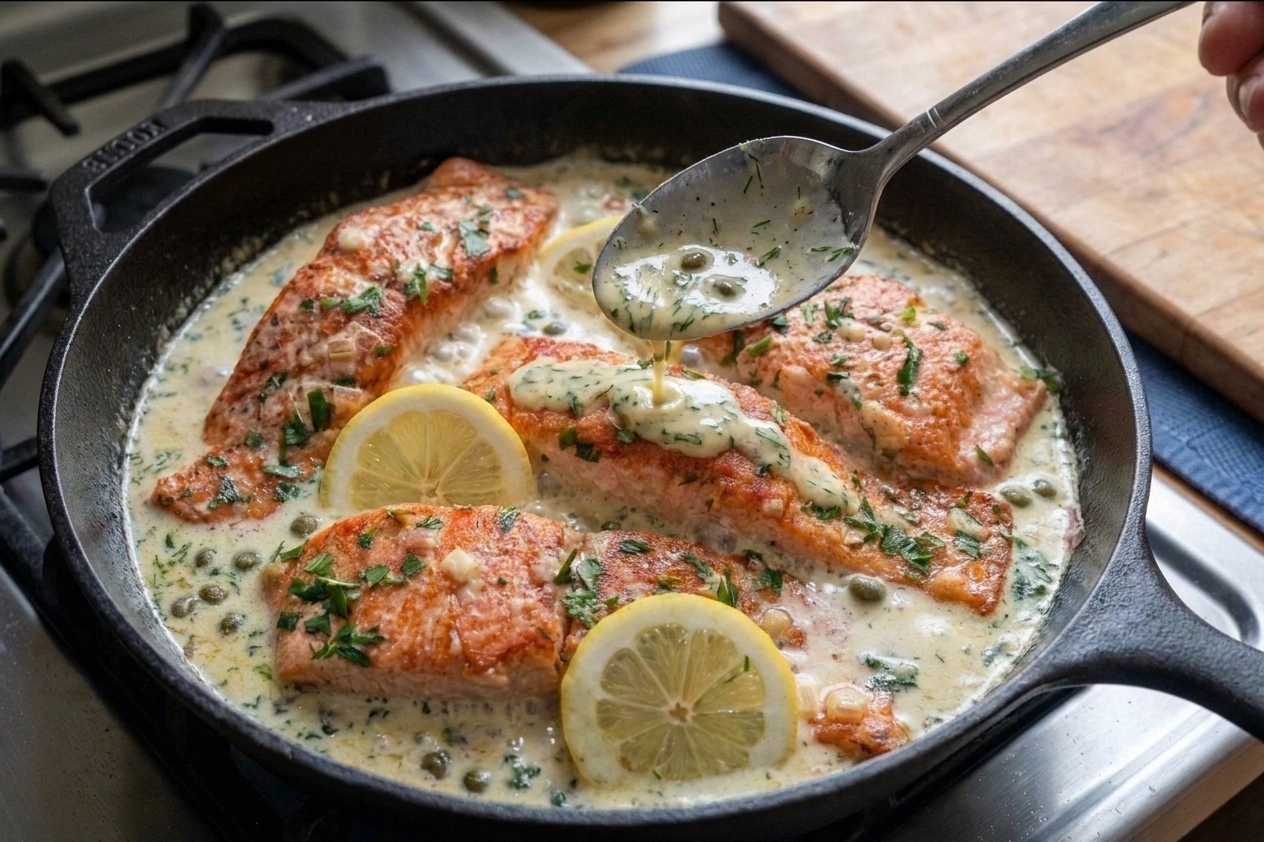
Festive Salmon (Light and Creamy)
Crisp-edged salmon finished in a silky, light lemon cream sauce with capers and fresh herbs. Festive enough for a special dinner, doable enough for a weeknight.
- Prep
- 10 minutes
- Cook
- 20 minutes
- Total
- 25 to 30 minutes
- Yield
- Serves 4
Ingredients
- 4 salmon fillets (5 to 6 oz each), patted very dry
- Kosher salt and black pepper
- 1 to 2 tbsp olive oil
- 1 tbsp unsalted butter, divided
- 1 small shallot, finely chopped
- 2 garlic cloves, finely chopped
- 1/2 cup dry white wine or low-sodium chicken broth
- 2/3 cup heavy cream (or see swaps in notes)
- 1 tsp lemon zest (about 1 lemon)
- 1 1/2 to 2 tbsp lemon juice, plus more to taste
- 2 tbsp capers, drained
- 2 to 3 tbsp chopped fresh dill or parsley, plus more for serving
Instructions
- Season like you mean it. Season salmon all over with salt and pepper. Let it sit at room temp while you chop the shallot and garlic, about 10 minutes.
- Sear for flavor. Heat a large 12-inch skillet over medium-high heat. Add olive oil and 1/2 tbsp butter. When the butter foams, add salmon skin-side down if skin-on. Sear 3 to 5 minutes without moving, until deeply golden and releases easily. If your salmon is skinless, start with the presentation side down for the prettiest sear.
- Flip briefly. Flip and cook 1 to 2 minutes. Transfer salmon to a plate. If using skin-on fillets and you want to keep the skin crisp, place the salmon skin-side up on the plate while you make the sauce.
- Build the sauce. Lower heat to medium. Add shallot with a pinch of salt and cook 1 to 2 minutes, scraping up browned bits. Add garlic for 30 seconds, just until fragrant.
- Deglaze. Add wine (or broth). Simmer 2 to 3 minutes until reduced by about half. You want the pan to smell mellow, not boozy.
- Make it creamy, keep it light. Stir in cream, lemon zest, and capers. Simmer 3 to 5 minutes until the sauce coats a spoon and you can draw a clean trail with your finger.
- Finish the salmon gently. Return salmon and any juices to the skillet. Spoon sauce over the top. Simmer 2 to 4 minutes, depending on thickness, until the salmon is just cooked.
- Final balance. Turn off heat. Stir in remaining 1/2 tbsp butter and the herbs. Add lemon juice to taste (about 1 1/2 tbsp, plus a few extra drops right before serving, if you like).
Notes
When salmon is done
- Look: The sides turn opaque, and the center is slightly translucent but not raw.
- Flake test: Press gently with a fork. It should separate into moist flakes, not crumble dry.
- Thermometer: Pull at 120 to 125°F for a medium, silky center. For more done, take it to 130 to 135°F. For USDA-recommended doneness, cook to 145°F.
Keep the sauce smooth
- Lower the heat before adding cream. A hard boil can reduce too aggressively and rough up the texture.
- Watch high heat plus acid. Reduce the sauce first, then add most of the lemon juice at the end.
- Finish with butter off heat. The last half tablespoon gives a glossy sheen.
- If it gets too thick: Loosen with a splash of warm broth or pasta water, 1 tablespoon at a time.
Nutrition
- Calories: 520
- Fat: 36 g
- Carbs: 6 g
- Protein: 40 g
- Fiber: 0 g
- Sugar: 2 g
- Sodium: 520 mg
Nutrition estimates are approximate and will vary by exact ingredients, brands, and seasoning levels.