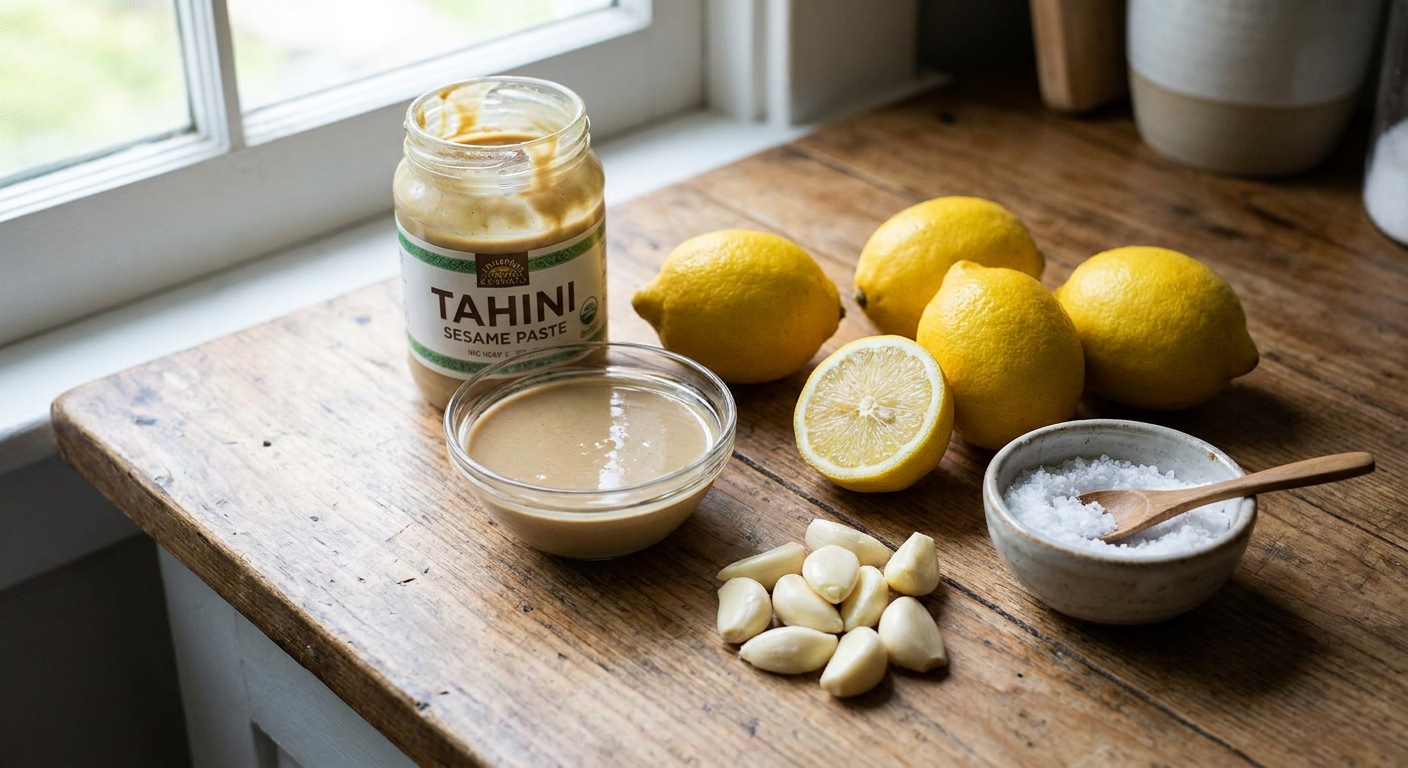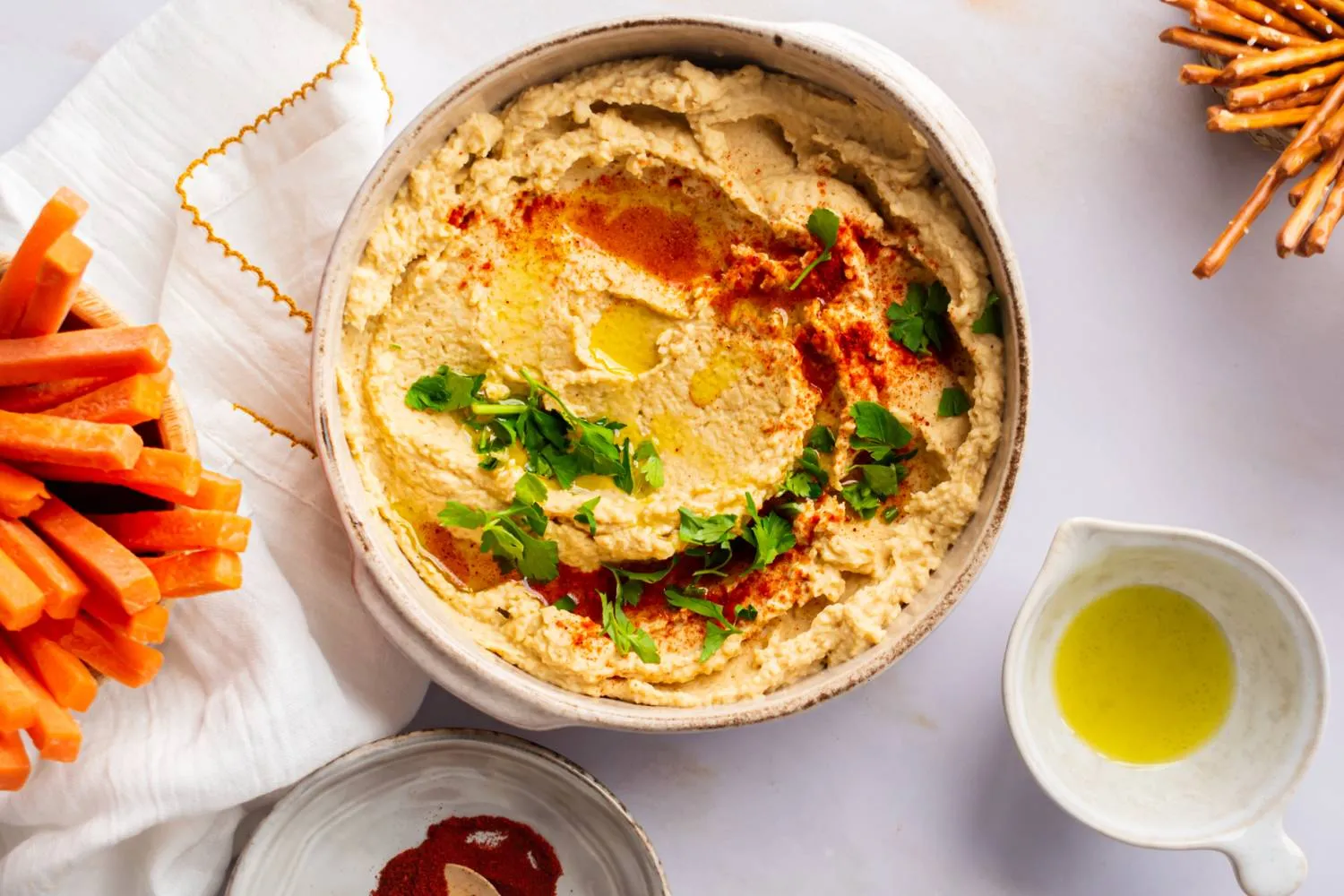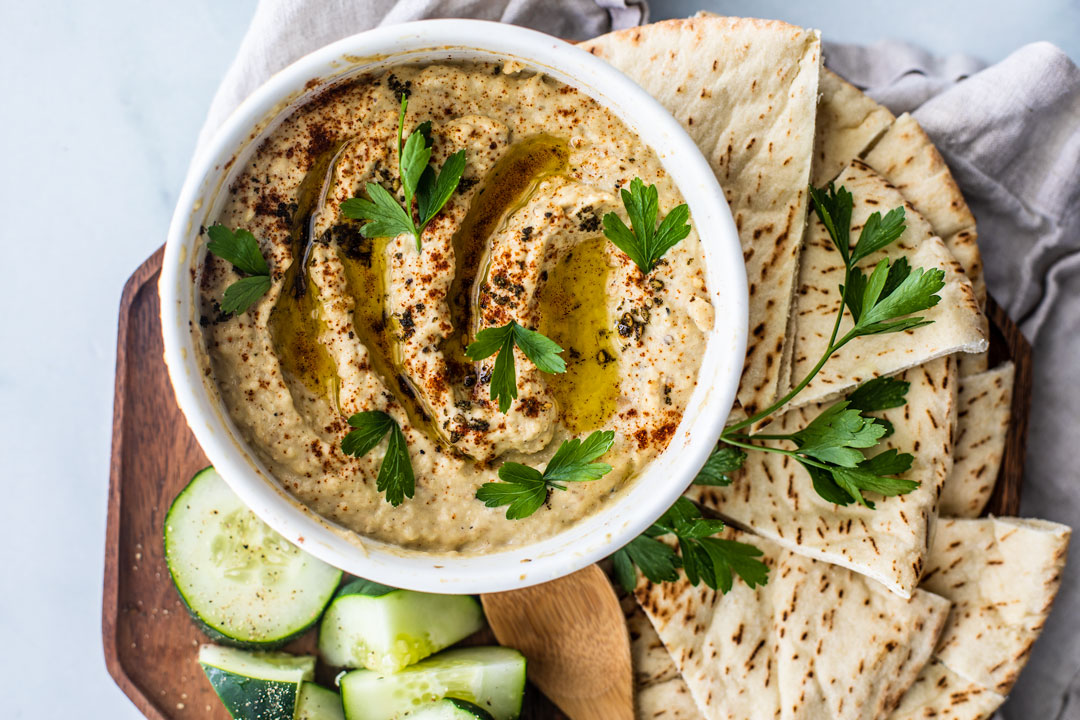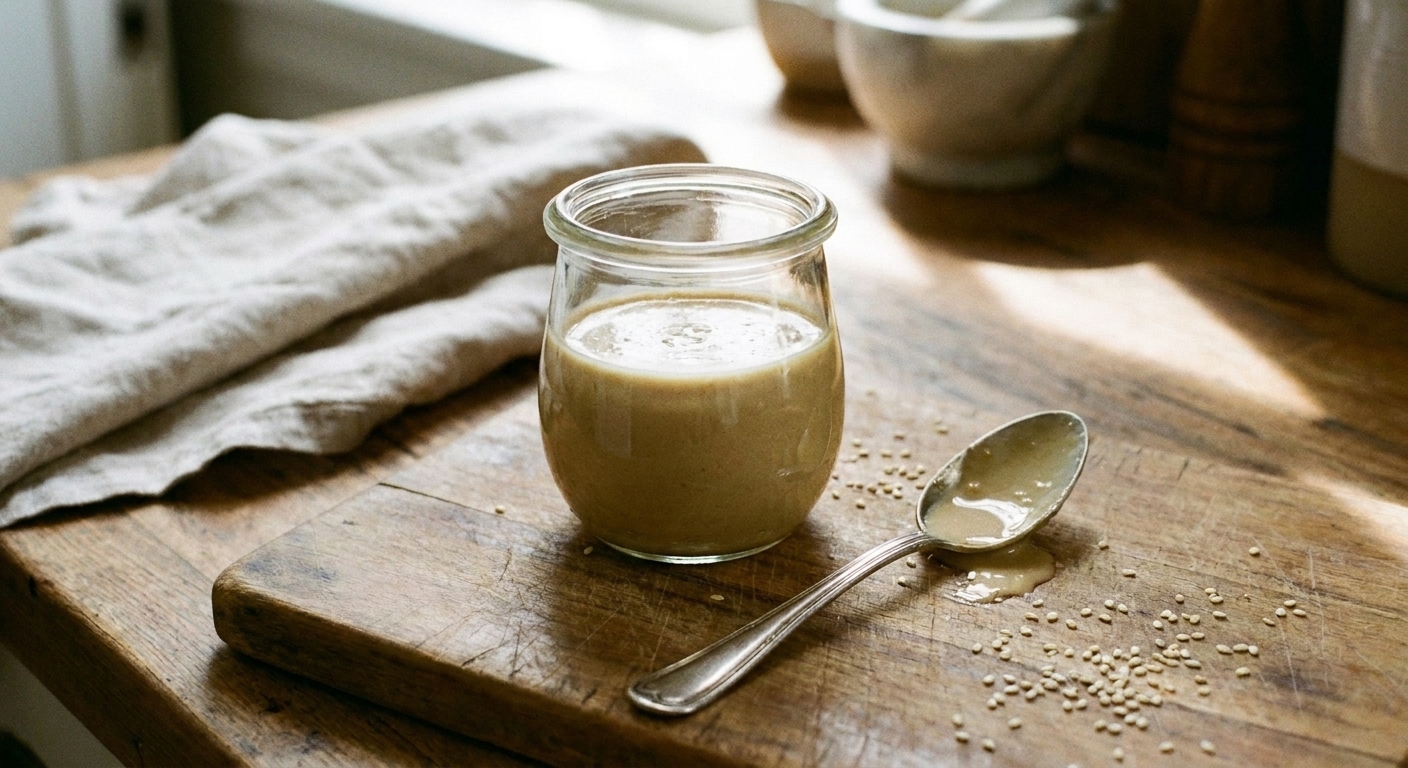


Tahini is one of those pantry staples that feels mysterious until you make it once. At its core, it’s sesame seeds blended into a thick, glossy paste. For this recipe, I lightly toast the seeds first for a deeper, nuttier flavor, but you can also make tahini from raw sesame seeds if you prefer it milder.
I started making tahini at home back when I was teaching, mostly so students could see what “nutty” really smells like and how quickly seeds can go from perfect to bitter. The happy surprise is that homemade tahini can taste sweeter and fresher than many jars, and you can choose your vibe: lightly toasted and delicate, or deeper and more assertive.
In this recipe, I will show you exactly how dark to toast the seeds, what the tahini should look like as it moves through the food processor, and how to add just enough neutral oil (if needed) to get that pourable, swooshable texture for hummus and sauces. I will also cover a quick fix for the moment your tahini feels stubbornly thick while blending, plus what to do if it tightens up later when you whisk it into a lemony sauce.
What to expect
- Flavor: nutty and lightly sweet, warmly toasted (and not bitter when toasted correctly)
- Texture: thick but pourable, like a runny natural nut butter
- Time: quick active work, plus a few minutes for the seeds to cool slightly so they are easier to blend and do not overheat the processor
- Equipment note: a food processor makes this easiest, especially for small batches
- Seed tip: hulled sesame seeds give you the smoothest, mildest tahini
Why this recipe works
- Controlled toasting: Sesame seeds develop flavor quickly. Pulling them at pale golden keeps tahini rich and nutty, not harsh.
- Blend in stages: Processing first without added oil lets the seeds break down and release their natural fats, creating a cohesive paste.
- Oil is adjustable: Adding oil at the end gives you control. You can keep it thick for baking or thin it for hummus and sauces.
- Warmth and patience help texture: Slightly warm seeds, a brief rest, and small oil additions help the paste smooth out if it turns stubbornly thick.
Ingredient notes
Sesame seeds
Use hulled sesame seeds for the creamiest, least bitter tahini. Unhulled seeds work, but the flavor is stronger and the color is darker, and the paste can taste more astringent.
If your seeds smell dusty or faintly paint-like, they are old. Tahini cannot hide that. Fresh sesame should smell mild before toasting and deeply nutty after.
Oil
I like grapeseed or avocado oil because they stay neutral and let sesame lead. Light olive oil is fine if you like a little fruitiness.
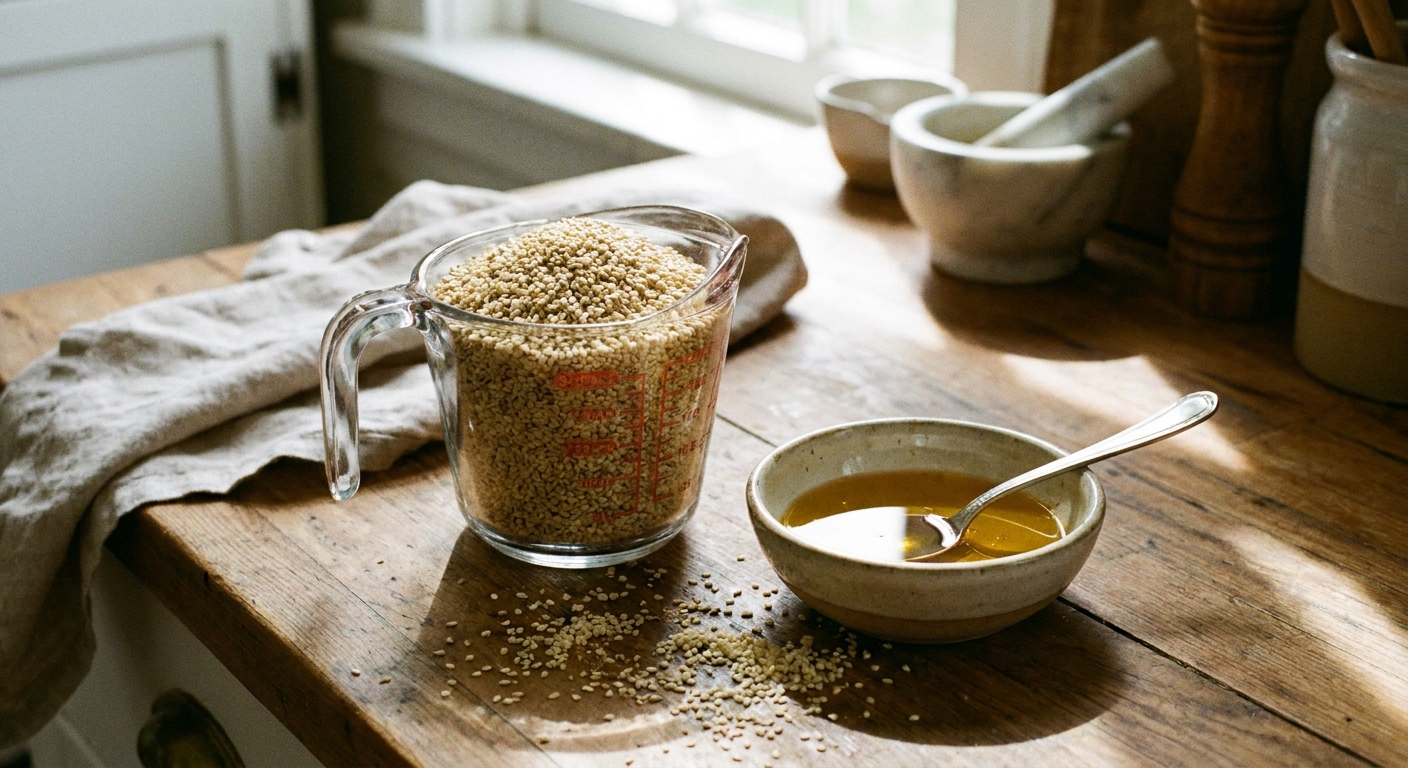
How much oil? Start with 3 tablespoons per 1 cup sesame seeds. Add up to 5 tablespoons if you want a looser, drizzle-friendly tahini.
Salt (optional)
A small pinch makes tahini taste more “sesame-y.” It is optional, especially if you want maximum flexibility for sweet applications.
Equipment you will need
- Food processor (preferred) for the smoothest texture
- Wide skillet for even toasting
- Flexible spatula for scraping down the bowl
- Fine-mesh strainer (optional) if you want to sift out any stubborn coarse bits
- Jar with lid for storage
A blender can work, but many home blenders struggle with small volumes and you often end up adding more oil than you really want. If a blender is your only option, use a small blender jar if you have one.
Pro tips
How dark to toast sesame seeds
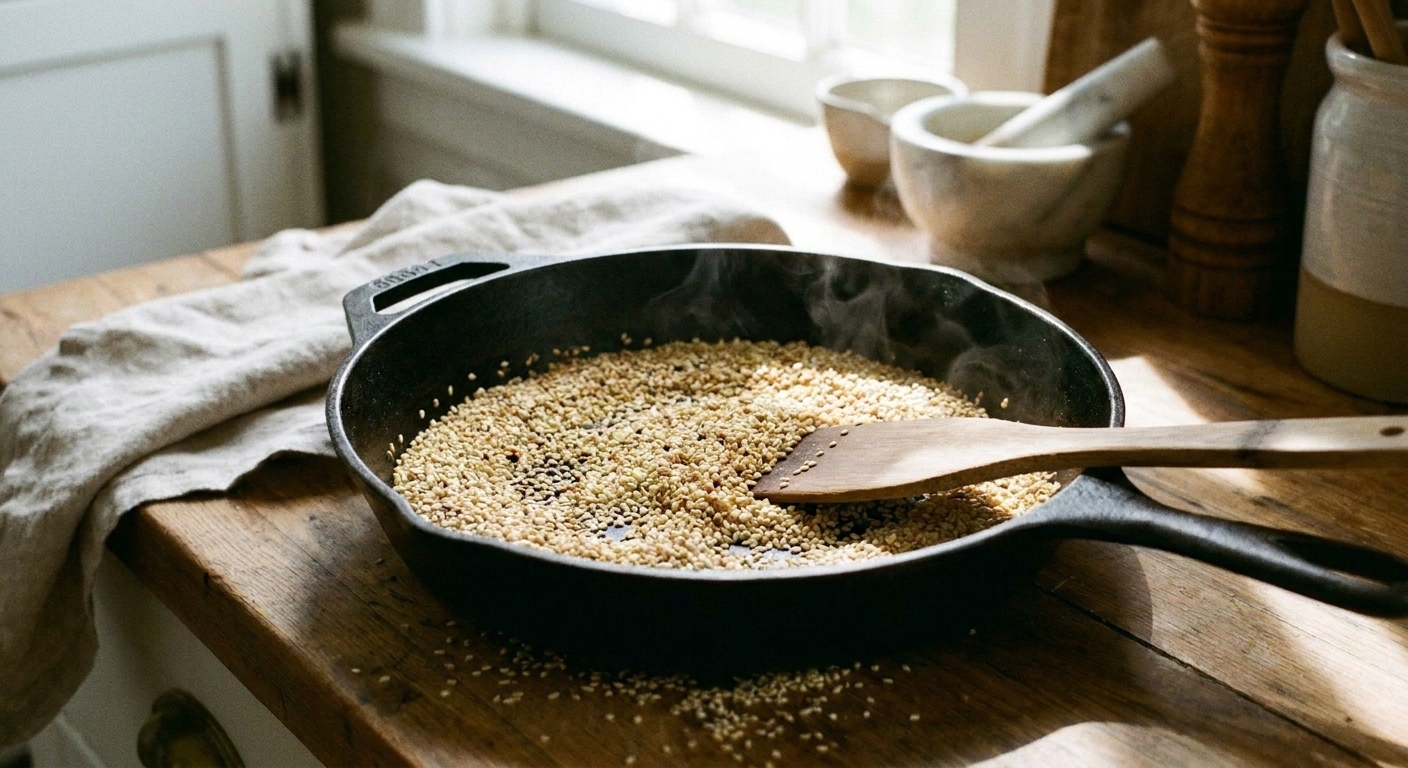
Toast over medium to medium-low heat, stirring often, until the seeds are fragrant and pale golden. Think: the color of lightly toasted bread crumbs. You should smell a warm, nutty aroma before you see dramatic browning.
- Too light: still tasty, but more neutral and less complex
- Just right: pale golden, deeply nutty, not bitter
- Too dark: noticeably brown seeds and a sharp smell. This will read bitter in tahini.
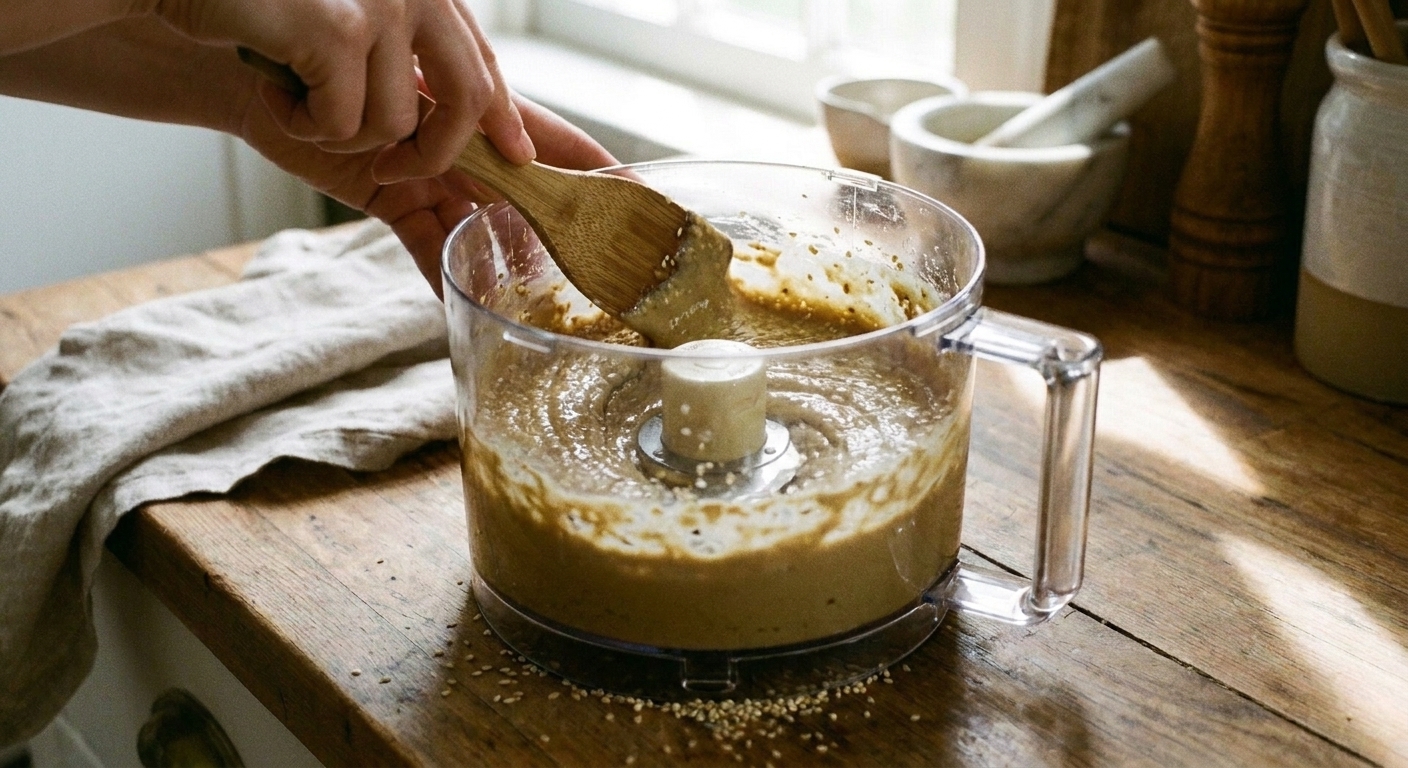
What it should look like in the food processor
- Stage 1: seeds look like dry sand. Keep going.
- Stage 2: it clumps into damp-looking rubble. Scrape the bowl.
- Stage 3: it turns into a thick paste and starts to look glossy along the sides.
- Stage 4: after adding oil, it loosens into a creamy, flowing paste that slowly ribbons off a spoon.
How to loosen tahini that feels stuck
If your tahini turns stubbornly thick while blending, fix it like this:
- Give it time: run the processor 30 to 60 seconds longer, then let it rest 2 minutes. Often it relaxes and smooths out.
- Add oil slowly: drizzle in 1 teaspoon at a time while the machine is running until it turns glossy and cohesive.
- Use gentle warmth: if it is truly stuck, set the processor bowl in a larger bowl of warm (not hot) water for a minute, dry the outside well, then process again.
Substitutes that work
- Sesame seeds: hulled is best. If using unhulled, toast lighter and expect a stronger, more bitter edge.
- Oil: grapeseed, avocado, sunflower, canola, or light olive oil all work. Avoid strongly flavored toasted sesame oil for the whole amount since it can dominate and read harsh.
- No added oil: you can make oil-free tahini by blending longer and accepting a thicker paste. It will be less pourable and may need more stirring after chilling.
Variations
Light roast tahini
Toast just until fragrant with minimal color change. The flavor is mild and buttery, great for lemony sauces.
Deep roast tahini
Toast to a deeper golden, but stop before the seeds turn brown. This version is bolder and fantastic in hummus and savory dressings.
Salted tahini
Add 1/8 teaspoon fine salt for every 1 cup seeds. It tastes more rounded straight from the spoon and in simple sauces.
Serving ideas
- Whisk into hummus for extra creaminess.
- Stir into yogurt with lemon and garlic for a quick dip.
- Thin with warm water, lemon juice, and salt for a classic tahini sauce.
- Blend into salad dressings for body and richness.
- Use in baking or sweets where you would use nut butter.
Storage and reheating
Store tahini in a tightly sealed jar in the refrigerator for the best flavor. It will thicken when cold. Let it sit at room temperature for 10 to 15 minutes, then stir well to bring back a creamy, spoonable texture.
Natural separation is normal. Sesame solids settle and oil rises. Just stir, or warm the jar briefly in a bowl of warm water to make stirring easier.
Common mistakes
- Toasting too dark: the biggest cause of bitter tahini. Pull the seeds when they are pale golden and very fragrant.
- High heat: sesame seeds scorch fast. Medium to medium-low is your friend.
- Not scraping the bowl: the paste can climb the sides and never fully smooth out without a couple scrape-downs.
- Dumping in oil early: adding oil too soon can make the seeds slip around instead of breaking down. Blend first, then oil.
- Pan not wide enough: a crowded pan toasts unevenly and creates bitter hot spots.
FAQ
Can I make tahini from untoasted sesame seeds?
Yes. It will be milder and a little flatter in flavor. If you love tahini in sauces, I recommend at least a light toast for depth.
Why is my tahini gritty?
Most often: the seeds were not processed long enough, or the batch is too small for your processor to circulate properly. Process longer, scrape the bowl more often, and add oil gradually. If it still feels coarse, you can strain it, but usually more blending solves it.
Why did my tahini turn into a stiff dough?
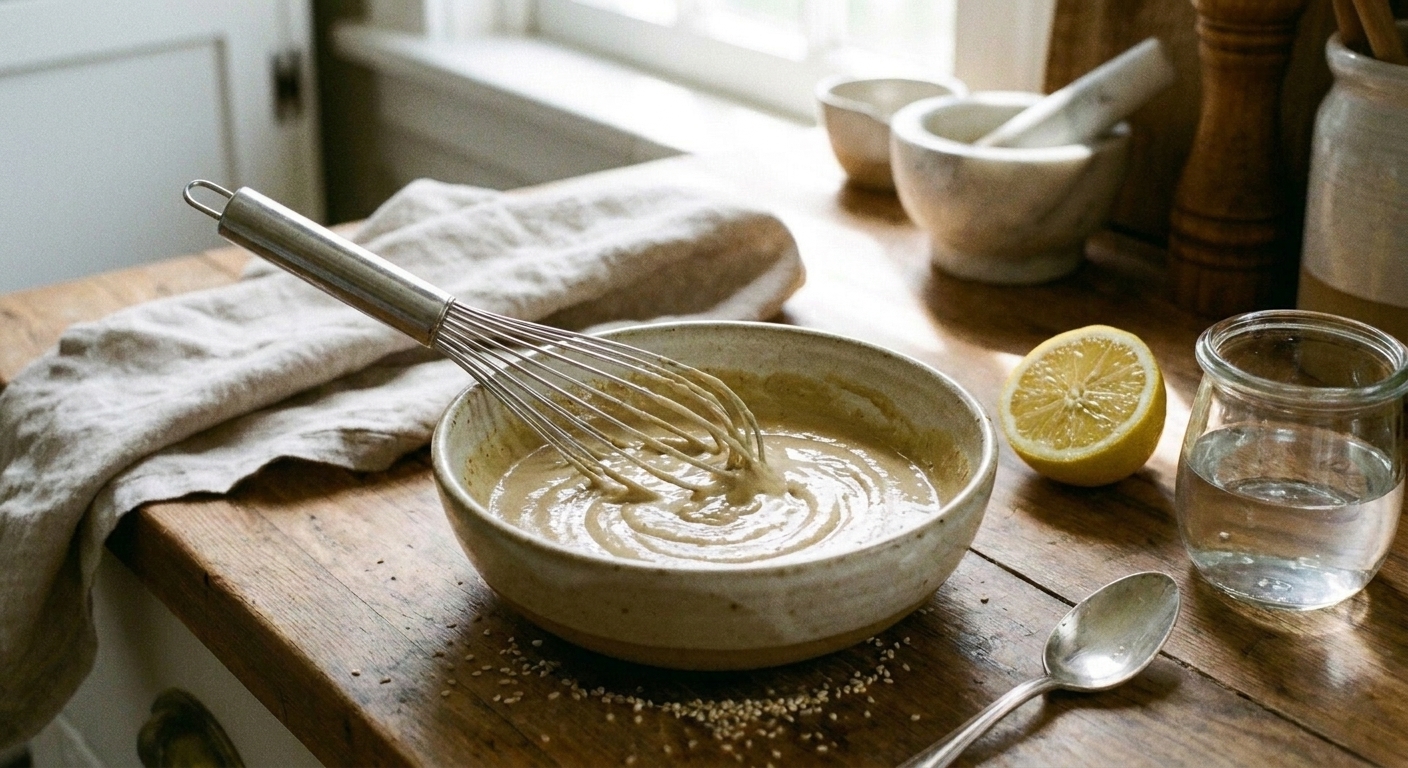
It usually just needs more processing time, a good scrape-down, or a touch more oil. Keep processing, rest for a minute, then drizzle in oil 1 teaspoon at a time until glossy and flowing. Separately, tahini can also seize when you whisk it with water or lemon juice for a sauce. Keep whisking and add liquid slowly, and it will smooth back out.
Should tahini be pourable?
For hummus and sauces, yes, I like it pourable. For baking, you might prefer it thicker. The good news is you control the oil, so you can choose your texture.
Do I need to add water to make tahini?
No. Use oil for the tahini itself. Add water later when you are making a sauce, where tahini intentionally thickens at first and then loosens as you whisk and dilute it.
Homemade Tahini
Toasted sesame seeds blended into a creamy, pourable tahini with a small splash of oil. Includes cues for perfect toast level and an easy fix if the paste seizes.
- Prep
- Cook
- Total
- Yield
Ingredients
- 1 cup hulled sesame seeds
- 3 to 5 tablespoons neutral oil (such as grapeseed, avocado, sunflower, or canola), plus more as needed
- Pinch of fine salt (optional)
Instructions
- Toast the sesame seeds. Add the sesame seeds to a wide, dry skillet over medium to medium-low heat. Cook, stirring frequently, until the seeds smell very nutty and turn pale golden, 3 to 6 minutes depending on your pan and stove. Do not let them get deeply brown.
- Cool slightly. Immediately transfer the toasted seeds to a plate or sheet pan to stop the cooking. Let cool 5 minutes. They can be warm, just not piping hot.
- Start blending. Add the seeds to a food processor. Process for 1 to 2 minutes, stopping to scrape down the bowl as needed, until the seeds break down into a thick, clumpy paste.
- Add oil to reach a pourable texture. With the processor running, drizzle in 3 tablespoons oil. Process 1 minute. Check texture, then add more oil 1 tablespoon at a time until the tahini is smooth and slowly pourable. Add the salt, if using, and process 10 seconds to combine.
- Troubleshoot if it thickens. If the tahini turns stiff, crumbly, or dough-like, keep processing 30 to 60 seconds and scrape the bowl. If needed, drizzle in additional oil 1 teaspoon at a time until it turns glossy and cohesive.
- Store. Scrape into a jar with a lid. Let cool completely, then refrigerate. Stir before using, especially after chilling.
Notes
Toast cue: Look for pale golden color and a strong nutty aroma. If you see lots of dark brown seeds, the batch may taste bitter.
Oil amount: 3 tablespoons yields a thick tahini. 4 to 5 tablespoons yields a looser, sauce-friendly tahini.
Separation is normal: Stir well before using. If it is too thick to stir, let it sit at room temperature or warm the jar briefly in a bowl of warm water, then stir.