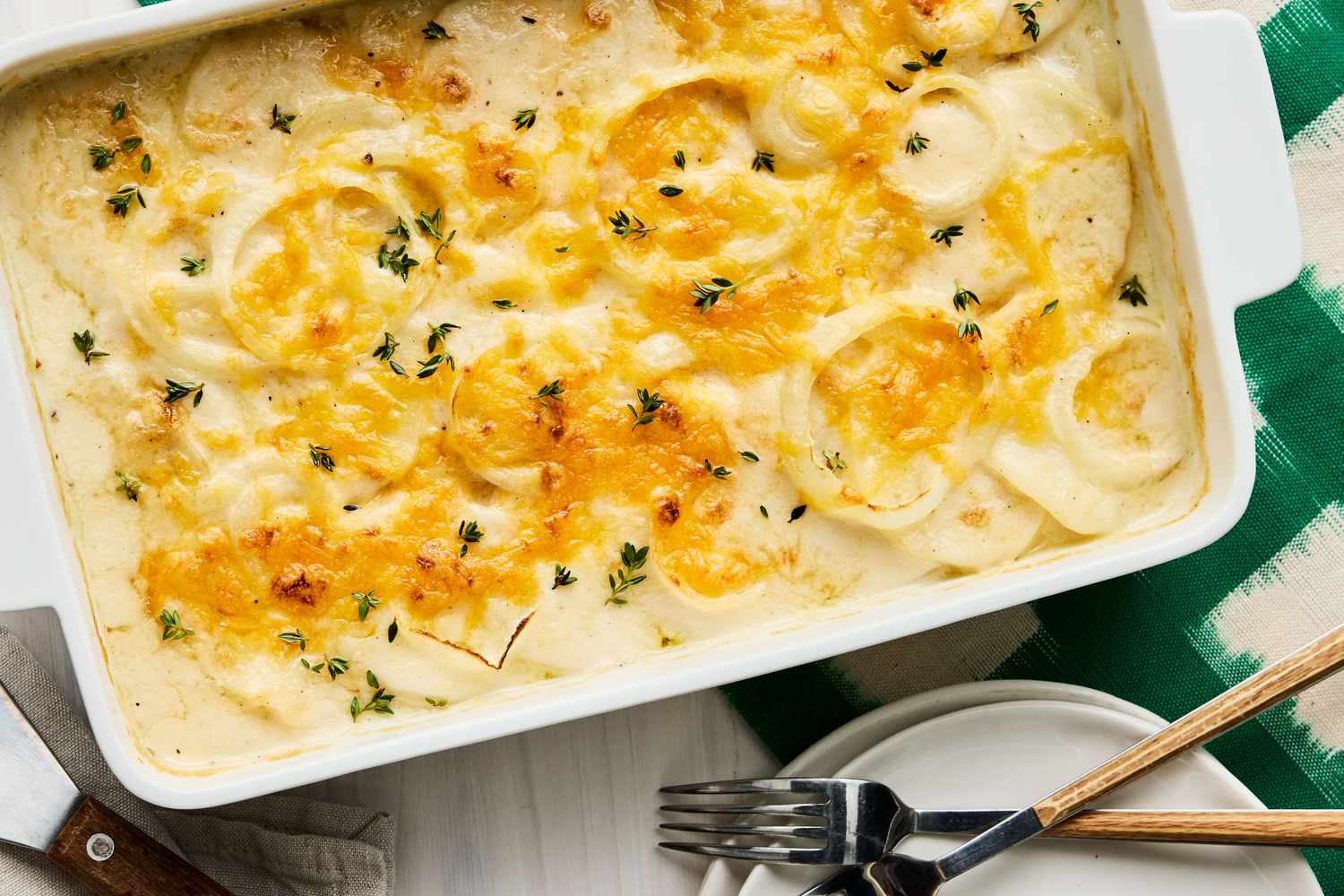
Creamy pasta leftovers can be incredible… or they can turn into a grainy, oily mess that clings to the noodles like wet sand. The good news: Most “broken” sauces are just stressed sauces. With gentler heat, a splash of liquid, and one or two smart finishing moves, you can bring them right back to silky.
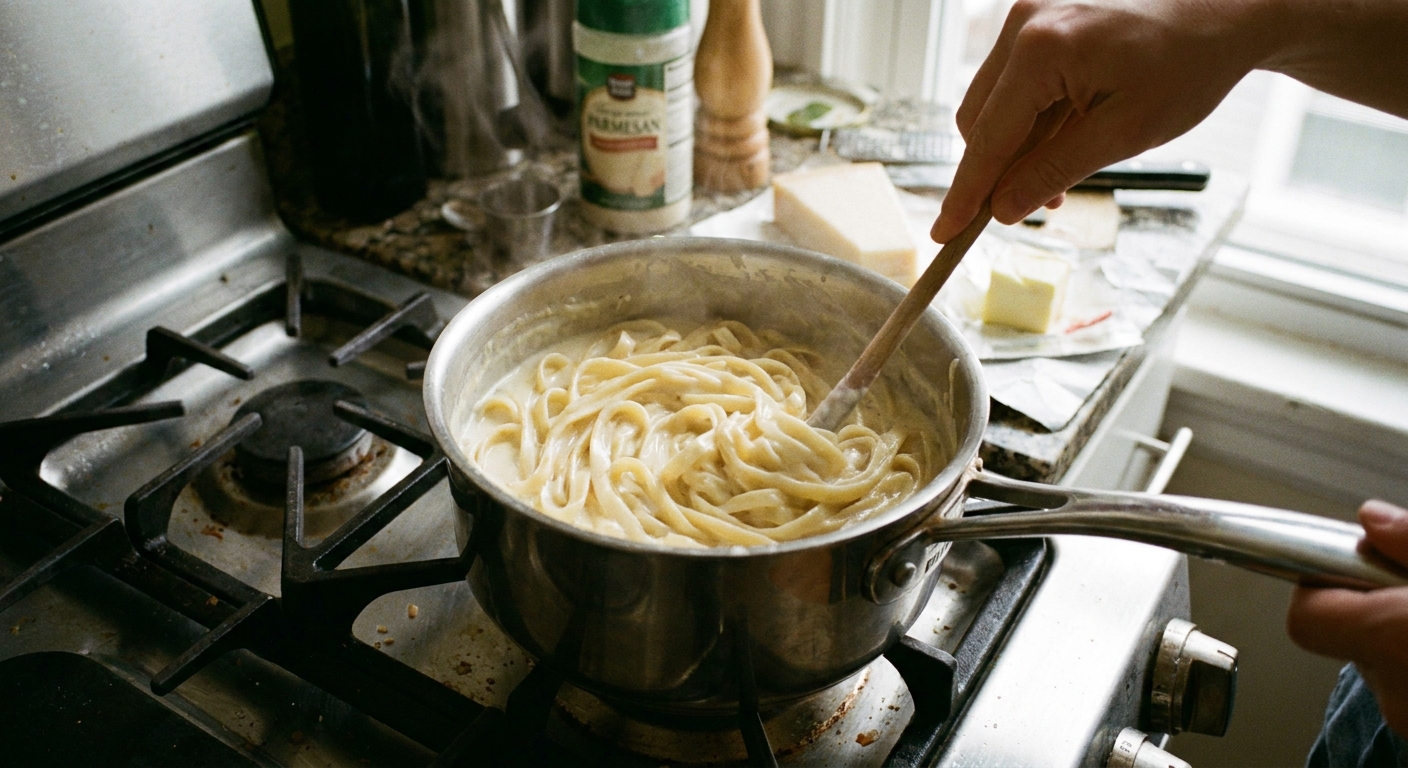
Why creamy sauces split
Creamy pasta sauces are emulsions, meaning fat and water are suspended together in a smooth, stable mix. Reheating can break that balance. Here’s what usually goes wrong:
- Too much heat, too fast: High heat forces fats (butter, cream, cheese) to separate from the water in the sauce.
- Pasta keeps absorbing liquid: In the fridge, noodles drink up sauce. When you reheat, what’s left can be overly concentrated and prone to breaking.
- Cheese proteins tighten: Parmesan, pecorino, and other aged cheeses can turn grainy when overheated, especially in low moisture sauces.
- Acid plus heat: Tomato, lemon, wine, or vinegar are delicious, but when combined with high heat they can make dairy curdle more easily.
Translation: Your goal is slow heat, added moisture, and minimal bubbling.
Two rules that prevent most splitting
1) Add a splash of liquid before you heat
This is the single most important habit. Start with 1 tablespoon per serving, then add up to 3 tablespoons per serving as needed:
- Water (great all-purpose option)
- Milk or half-and-half (best for very rich sauces like Alfredo)
- Broth (nice for mushroom cream sauces or chicken Alfredo)
- Pasta water (best if you saved some, because the starch helps re-emulsify)
If your pasta looks dry in the container, it probably needs more than you think. You want it to look a little “too loose” cold because it will tighten as it warms.
2) Reheat gently and stop before it really simmers
A gentle simmer is okay for a moment. Sustained bubbling is where creamy sauces go to die. Watch for these cues:
- Good: a little steam, sauce loosening, maybe a few tiny bubbles at the edges
- Bad: active bubbling in the center, sizzling sounds, oil pooling on top
Best method: stovetop
If you have 6 to 10 minutes, the stovetop is your best friend.
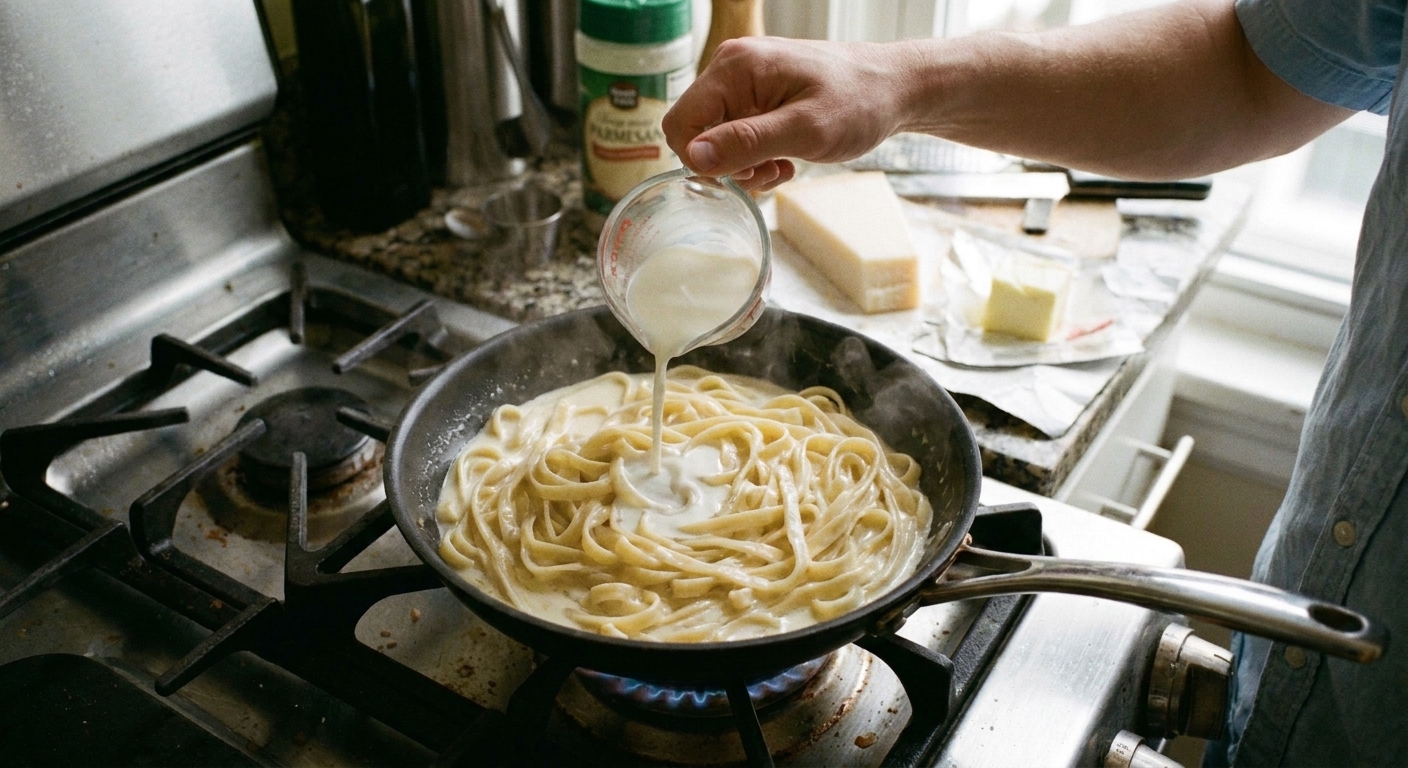
Step-by-step
- Choose the right pan: A nonstick skillet or wide sauté pan is ideal so the sauce warms evenly.
- Add pasta + liquid: Add your leftover pasta and start with 1 tablespoon per serving of water, milk, or broth (up to 3 tablespoons per serving if it’s very tight).
- Cover and warm on low: Cover for 1 to 3 minutes, just until the pasta begins to loosen and steam gently.
- Stir, then keep it moving: Uncover, stir well, and continue heating on low to medium-low until hot.
- Finish off heat for cheese-heavy sauces: Turn off the burner, then stir in any extra grated cheese or a pat of butter.
Pro tip: If the sauce is clinging to the pasta and won’t loosen, add liquid in small splashes, stirring each time. You’re aiming for glossy and creamy, not soupy.
Food safety note: Reheat leftovers until they’re steaming hot throughout. If you prefer a number, many food-safety guidelines use 165°F / 74°C for reheated leftovers.
Fast method: microwave
The microwave is where most creamy sauces break because it heats unevenly. The fix is to reheat in short bursts and stir like you mean it.
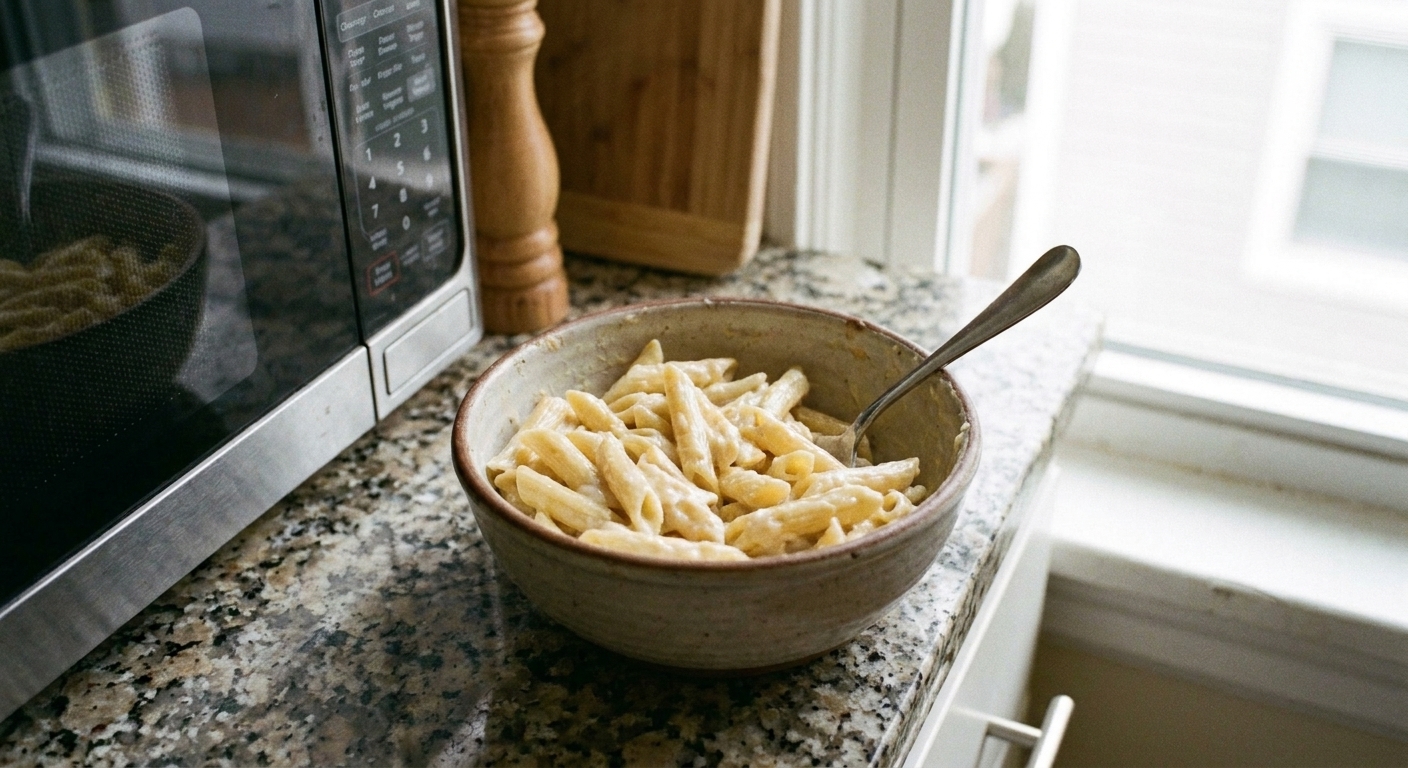
Step-by-step
- Use a wide bowl: More surface area means more even heating.
- Add liquid: Start with 1 tablespoon per serving of water, milk, or broth (up to 3 tablespoons if needed).
- Cover loosely: Use a microwave-safe lid or a damp paper towel. You want trapped steam, not a sealed container.
- Microwave at 50% power: For about 1 serving, heat for 45 to 60 seconds, then stir thoroughly, scraping the edges.
- Repeat in short bursts: Continue in 20 to 30 second bursts, stirring between each, until hot.
- Rest 1 minute: The sauce relaxes and thickens slightly as the heat equalizes.
If you only remember one thing: Low power + frequent stirring beats blasting it for 2 minutes straight.
If the sauce already split
Don’t toss it. Most split sauces can be coaxed back with one of these small fixes.
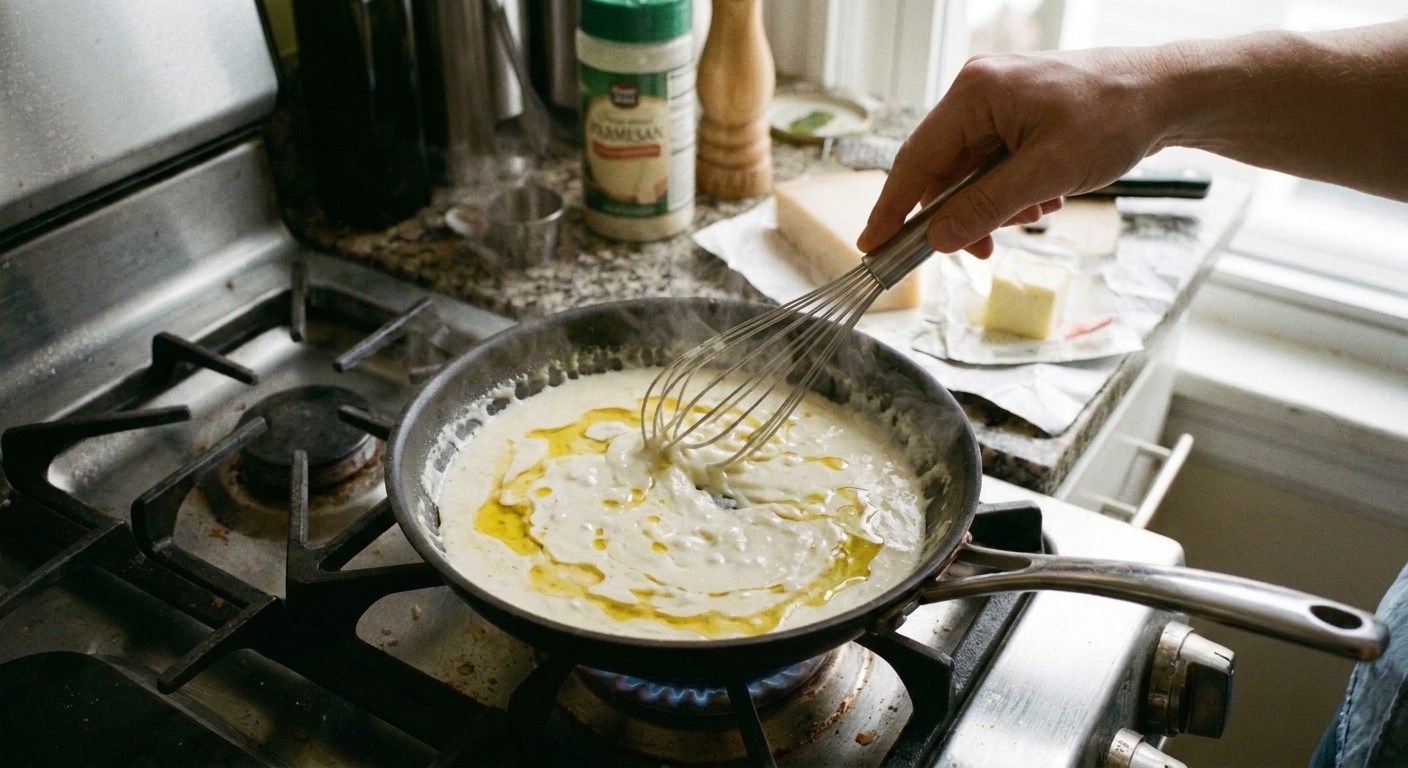
Fix 1: Add warm water and whisk
Heat on low. Add 1 tablespoon warm water (or milk) at a time and stir or whisk until it turns glossy again. This works because you are rebuilding the water phase of the emulsion.
Fix 2: Use a little starch
- Best: a splash of reserved pasta water (starch helps emulsify)
- If you don’t have it: dissolve 1/2 teaspoon cornstarch in 1 tablespoon cold water, then stir into the sauce over low heat until it smooths and lightly thickens
Go easy. Too much starch can make the sauce gluey.
Fix 3: Finish with a little fat, off heat
If the sauce is grainy but not fully broken, turn off the heat and stir in:
- 1 teaspoon butter, or
- 1 tablespoon heavy cream, or
- 1 tablespoon mascarpone or cream cheese
Think of it as a small “reset” button for richness and texture.
Tips by sauce type
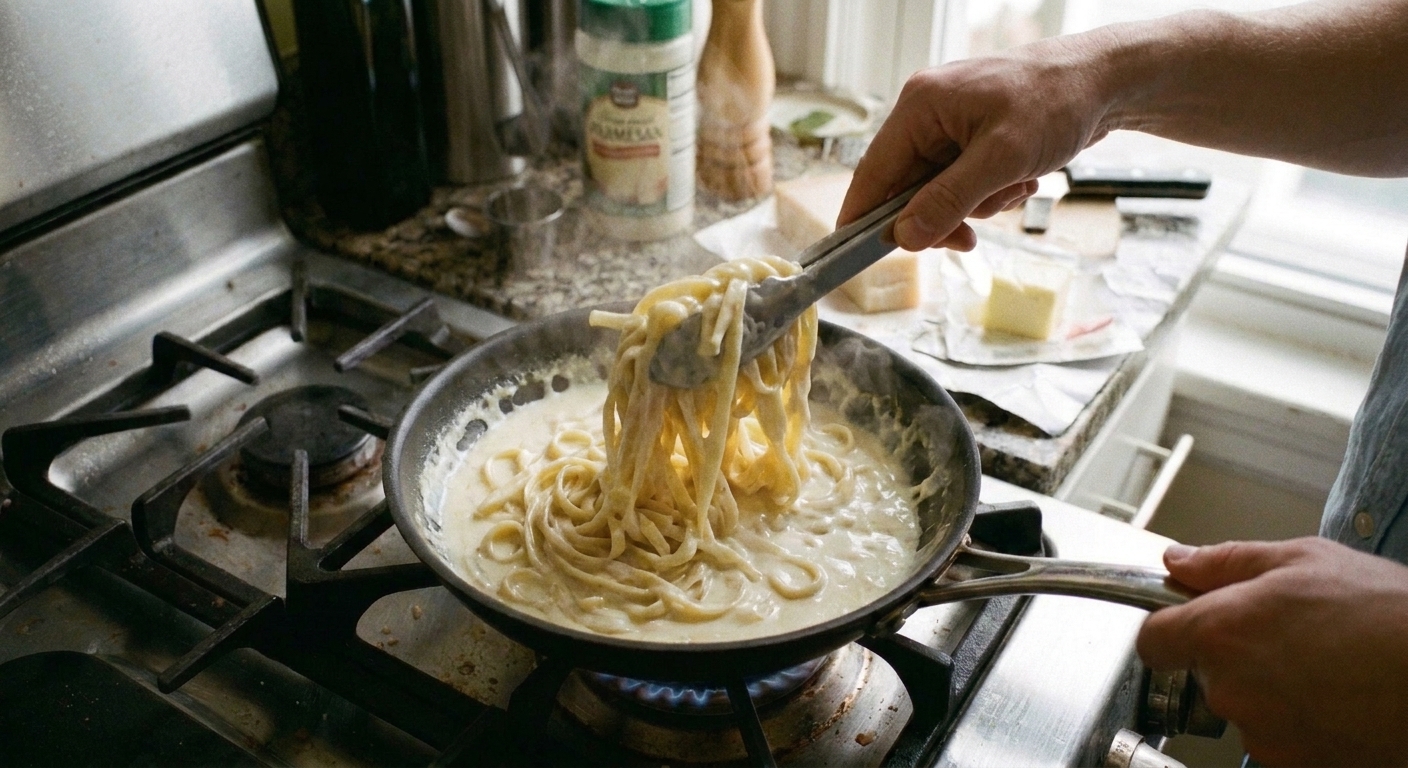
Alfredo and other cream-butter sauces
- Best liquid to add: milk or half-and-half
- Best method: stovetop, low heat
- Avoid: boiling, and piling cold pasta into a blazing hot pan
Carbonara (egg and cheese)
Carbonara is the trickiest because egg thickens with gentle heat and scrambles with high heat. Also, even with perfect technique, leftovers usually will not return to that just-made, silky magic. You can get it creamy again, but expect it to be a little different.
- Best method: stovetop with steam
- Key move: Put the pasta in a cool (unheated) pan, add a splash of water, then turn the heat to low.
- How: cover on low 1 to 2 minutes, then stir off heat
- If it looks tight: add another splash of warm water and toss
Microwave note: If you must, use 50% power in short bursts and stop while it still looks slightly underheated. Residual heat will carry it.
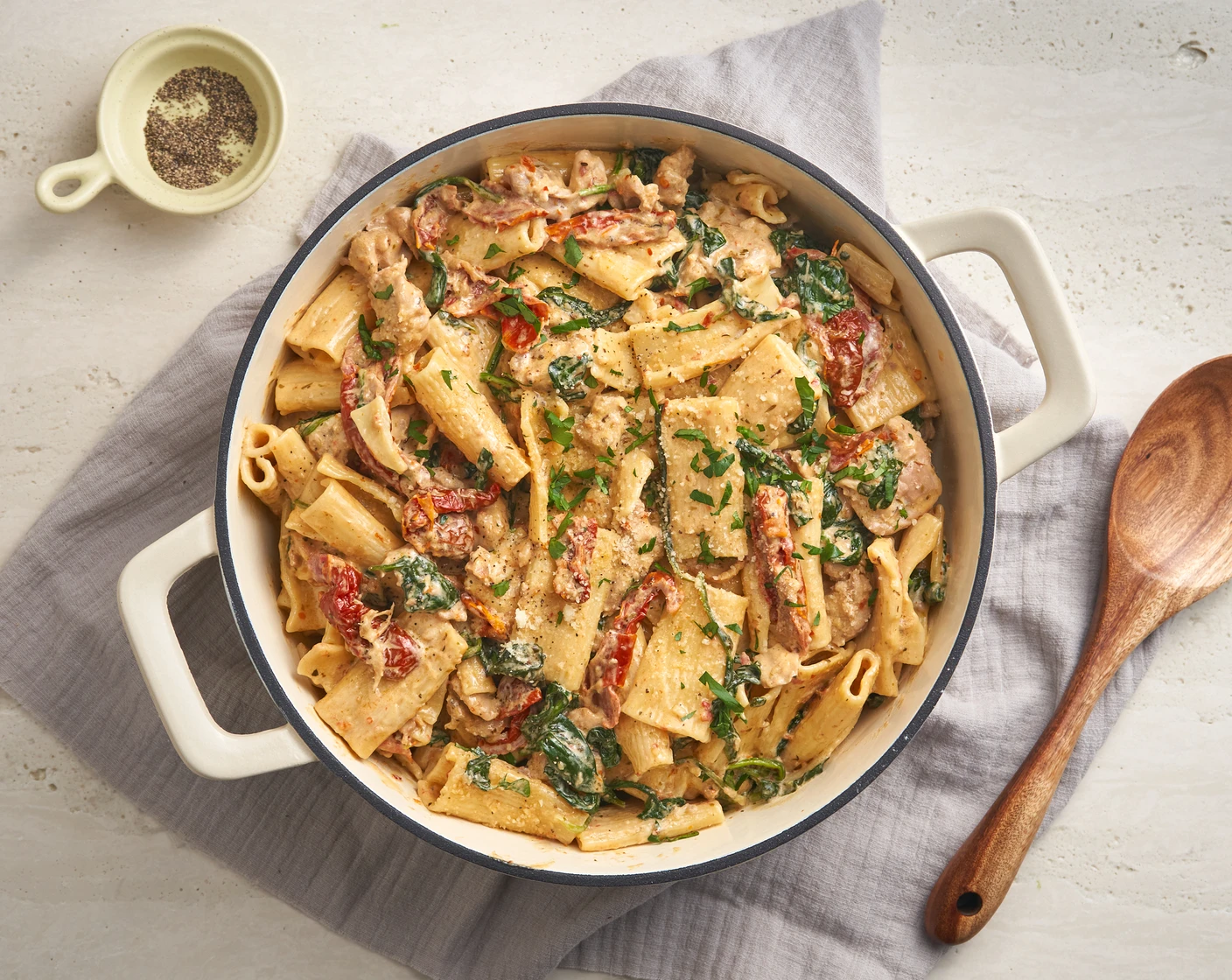
Vodka sauce and tomato cream sauces
- Best liquid to add: water or broth (milk works too, but start with water)
- Best method: stovetop or microwave, both work
- Avoid: aggressive boiling, which can make dairy separate in acidic sauces
Pesto cream or cheese pesto sauces
- Best liquid to add: water
- Best method: stovetop on low
- Avoid: high heat, which can dull pesto’s bright flavor and make oil separate
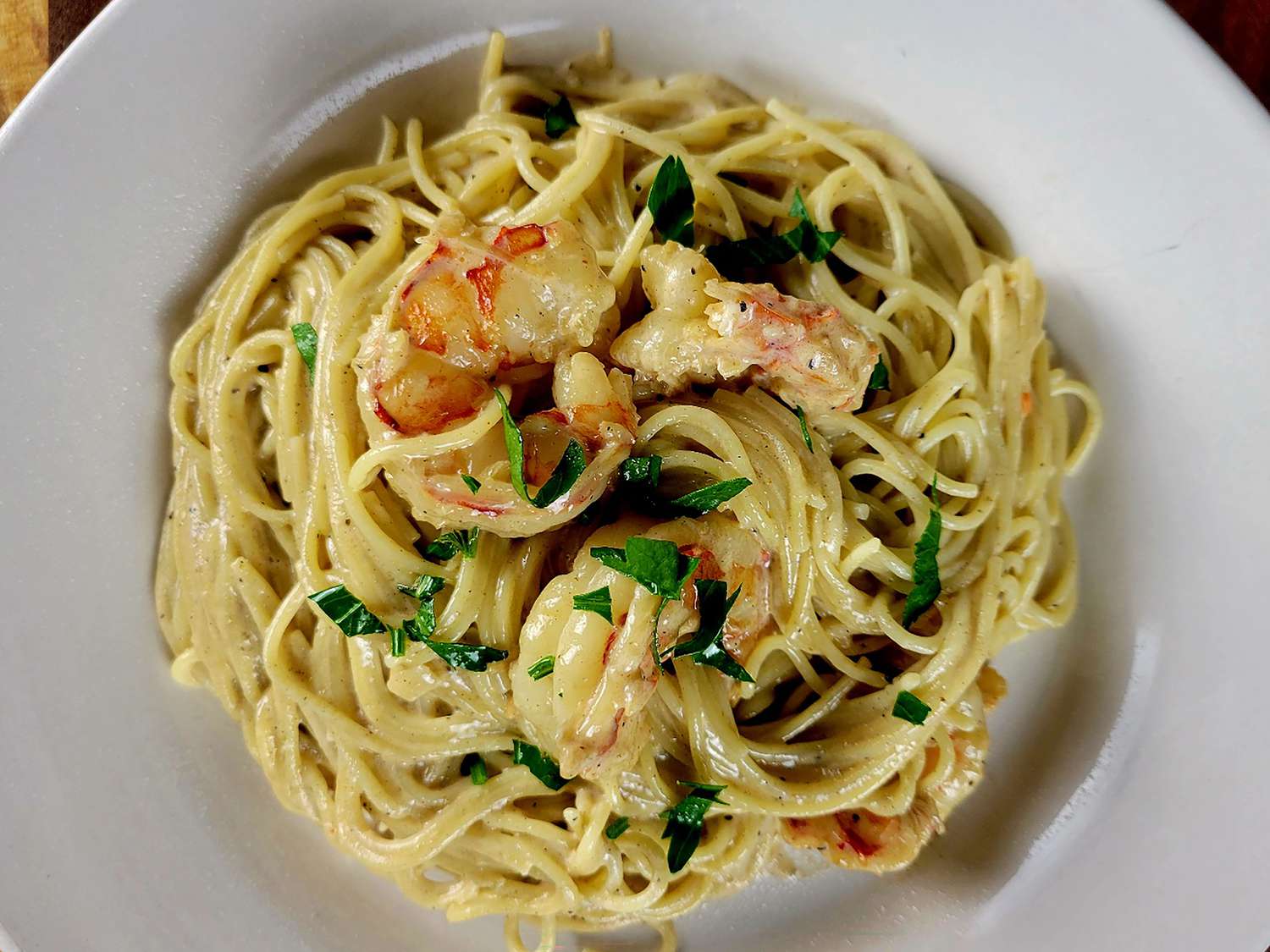
Seafood cream sauces (shrimp, scallops)
- Best method: gentle stovetop with a splash of water or milk
- If you can: remove the seafood, warm the pasta and sauce first, then add the seafood back just long enough to heat through
- Avoid: overcooking on the reheat, seafood goes rubbery fast
Baked creamy pasta (oven)
If your leftovers are more casserole than noodles in sauce (think mac and cheese, Alfredo bakes, creamy lasagna-style pastas), the oven is often the best texture move.
How to do it
- Heat oven to 325°F / 165°C.
- Put pasta in a baking dish and add a few tablespoons of milk, broth, or water (start small, you can add more later).
- Cover tightly with foil and bake 15 to 25 minutes depending on thickness, until steaming hot.
- Uncover for the last 3 to 5 minutes if you want a little browning, then stir to redistribute the sauce.
Storage and make-ahead
If you love meal prep, you’ll get better results with one simple shift: store pasta and sauce separately when possible. It reduces absorption and keeps the sauce properly balanced.
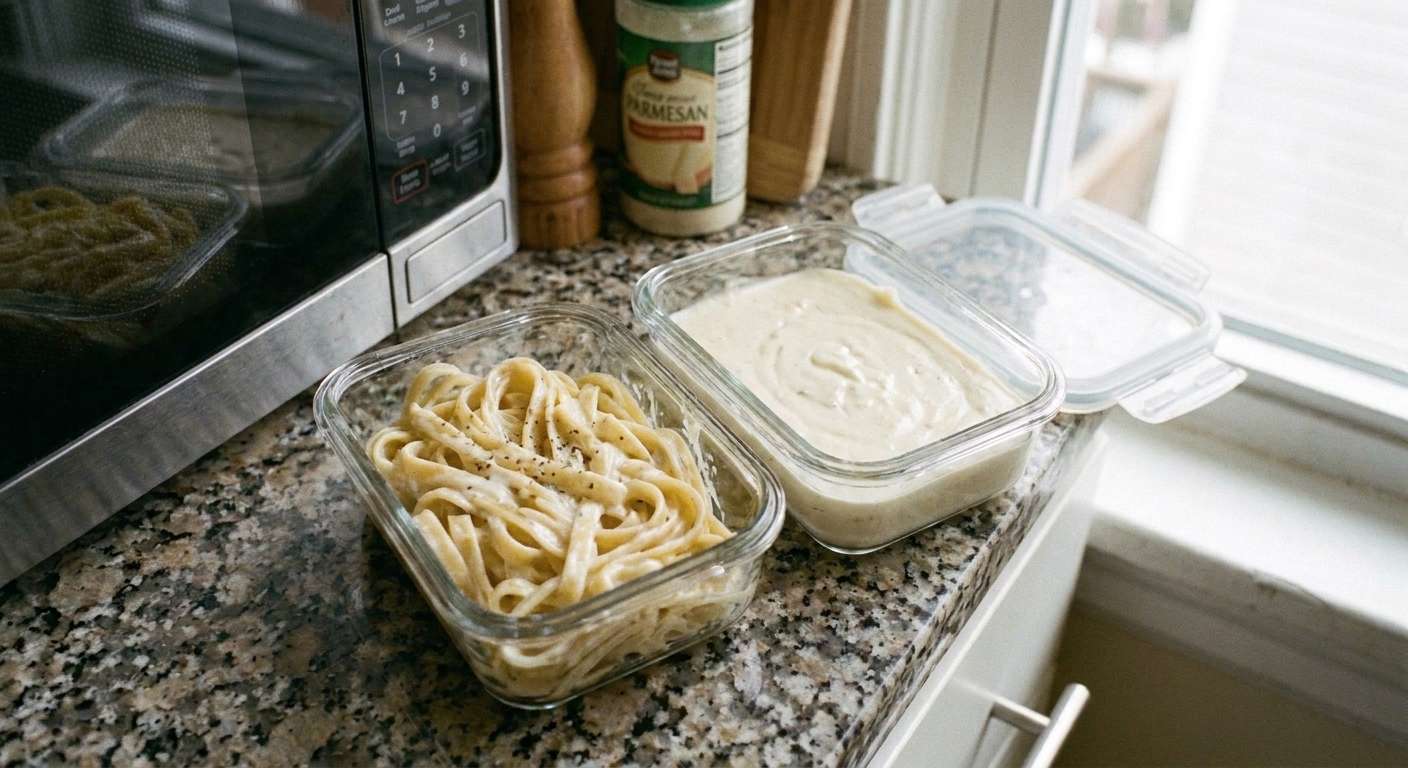
How to store
- Cool quickly: Get leftovers into shallow containers so they chill fast and safely.
- Separate if you can: Pasta in one container, sauce in another. Combine when reheating.
- Seal tightly: Cream sauces pick up fridge odors fast.
- Use within 3 to 4 days, generally: For best texture and typical food-safety guidance.
Smart make-ahead move: keep sauce slightly looser
If you know it’s headed for leftovers, make your sauce just a touch thinner than you normally would. It will thicken as it cools and again as the pasta sits.
Freezing creamy pasta: what actually works
Freezing is hit or miss, but you can improve your odds:
- Freeze the sauce, not the dressed pasta when possible.
- Cream sauces with more starch (roux-based, or with some pasta water) tend to reheat smoother.
- Thaw overnight in the fridge, then reheat gently with a splash of liquid.
Delicate emulsions like carbonara do not love the freezer. If you do freeze it, expect a little texture loss and plan to use the “fix” section above.
Troubleshooting checklist
If your sauce isn’t behaving, run through this in order. It’s basically my weeknight pasta triage.
- Looks dry or clumpy? Add a splash of water or milk, then stir.
- Looks oily on top? Heat is too high. Lower it and whisk in warm water a tablespoon at a time.
- Looks grainy? Take it off the heat. Stir in a spoonful of cream or mascarpone, and don’t let it bubble.
- Pasta still cold in the middle? Cover the pan for 1 to 2 minutes to steam, or microwave in shorter bursts.
- Tastes flat after reheating? Add a pinch of salt and a tiny hit of acid (lemon juice or a few drops of vinegar). Creamy leftovers often need both.
FAQ
Should I reheat creamy pasta on high heat to do it faster?
No. High heat is the fastest route to splitting. Medium-low with a little added liquid is faster in the long run because you are not trying to rescue a broken sauce afterward.
How much liquid should I add when reheating?
Start with 1 tablespoon per serving. For very thick leftovers, go up to 3 tablespoons per serving. Add it gradually until the sauce loosens and turns glossy.
Can I add cheese when reheating?
Yes, but add it at the end and preferably off heat. Overheating grated Parmesan is a common cause of grainy texture.
What’s the best container for storing creamy pasta leftovers?
Shallow, airtight containers. Glass is great because it doesn’t hold odors and reheats evenly. If you’re meal prepping, separate pasta and sauce whenever you can.