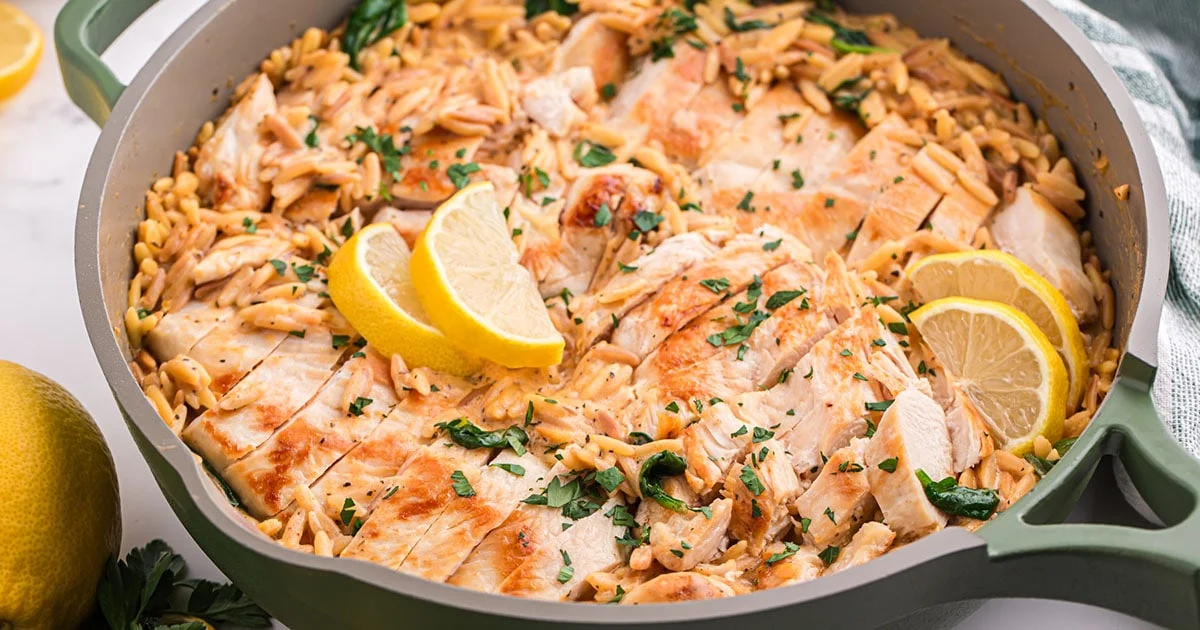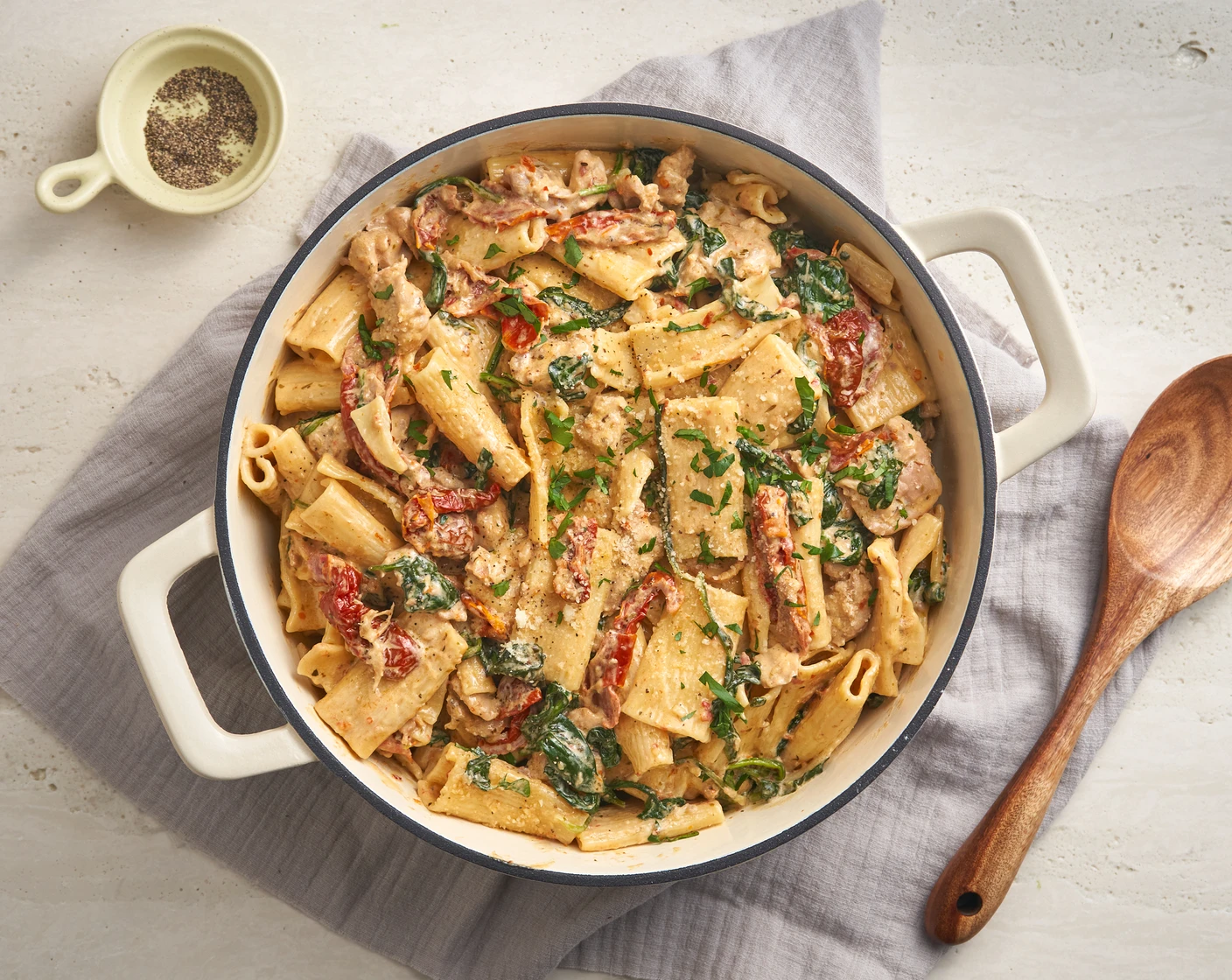
Tuscan chicken pasta is one of those restaurant-style dishes that looks fancy, tastes indulgent, and is secretly built on very practical home-cook moves. You sear chicken for flavor, use the same pan to build a quick cream sauce, then lean on punchy ingredients like sun-dried tomatoes, parmesan, and a little lemon to keep everything bright and balanced.
My weeknight rule is simple: if a creamy pasta does not have enough acid and salt, it tastes flat by bite three. This one does not. The sun-dried tomatoes bring sweetness and tang, parmesan brings savory depth, and a squeeze of lemon at the end makes it taste like you fussed, even if you did not.
Why this recipe works
This dish works because it is built on smart layering: sear the chicken for flavor, then use the same skillet to build a quick cream sauce. Sun-dried tomatoes and parmesan bring big savory, tangy payoff, and a squeeze of lemon at the end keeps the whole pan bright and balanced.
The result is a creamy pasta that tastes restaurant-style without getting flat or heavy after a few bites.
Ingredient notes
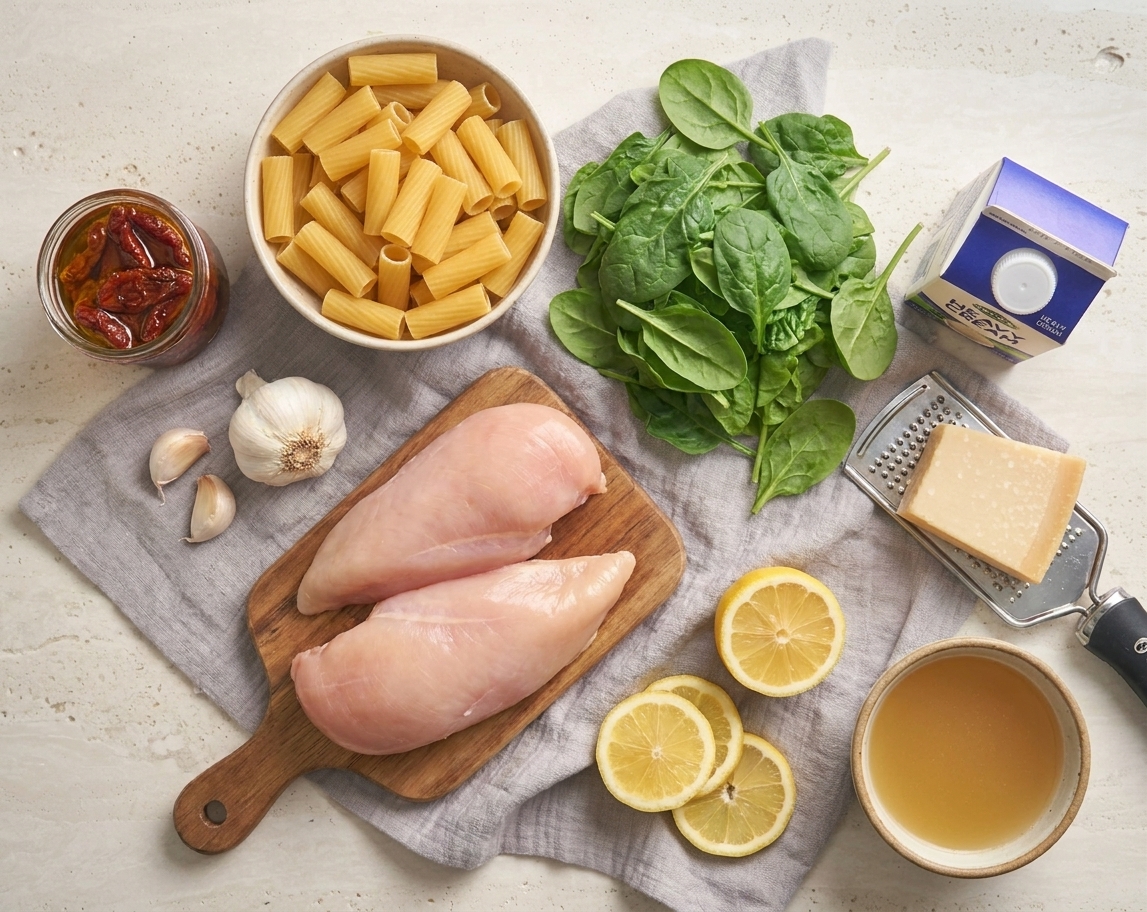
- Chicken: If breasts are thick, slice horizontally into cutlets so they cook evenly and stay juicy.
- Parmesan: Finely grated parmesan melts more smoothly than shredded.
- Sun-dried tomatoes: Oil-packed gives a built-in flavor booster, but drain well so the sauce does not get greasy. If dry-packed, rehydrate in hot water for 10 minutes, then slice.
Equipment you will need
- Large pot for boiling pasta
- Large skillet (wide enough to toss pasta and chicken in the sauce)
- Cutting board and knife (for resting and slicing chicken)
- Whisk (to smooth out the cream and parmesan sauce)
- Colander (for draining pasta)
Pro tips
- Pat the chicken dry: Dry chicken browns better, which means more flavor.
- Keep cream at a gentle simmer: After adding cream, simmer, do not hard-boil, to reduce the chance of separation (especially with lower-fat dairy).
- Add parmesan over low heat: Whisk in a handful at a time so it melts smoothly instead of clumping.
- Use reserved pasta water: The starch helps emulsify the sauce into a silky coating.
- Add lemon off heat: It stays fresh and fragrant and brightens the whole dish.
Sensory cue: The finished sauce should cling to the pasta and look shiny, not soupy and not stodgy. If it looks tight, loosen with pasta water. If it looks thin, let it simmer 1 to 2 minutes before adding more cheese.
Substitutes that work
This recipe flexes well with what you have on hand while still keeping the dish balanced.
- Chicken thighs instead of breasts: Juicier and more forgiving. Cook a little longer and aim for 175 to 185°F for tender thigh texture.
- Half-and-half instead of heavy cream: The sauce will be thinner and more prone to breaking if boiled. Reduce broth to 1/2 cup and keep the heat low.
- Milk only: Use 1 cup whole milk + 1 tablespoon flour whisked into the broth first, then simmer to thicken before adding parmesan.
- Kale instead of spinach: Slice thin and give it an extra 2 to 3 minutes to soften.
- No sun-dried tomatoes: Use 1 cup halved cherry tomatoes; sauté 3 to 4 minutes until they blister before adding broth.
- Gluten-free pasta: Works well. Reserve extra pasta water since GF pasta can drink sauce quickly.
Variations
To keep it creamy but lighter and brighter, try these tweaks.
- Use less cream: Try 3/4 cup cream + 1 cup broth, then finish with more lemon to keep it lively.
- Increase greens: Add an extra 2 cups spinach or toss in steamed broccoli.
- Go easy on the cheese: Start with 1/2 cup parmesan, then add more only if it truly needs it.
Food waste-friendly options:
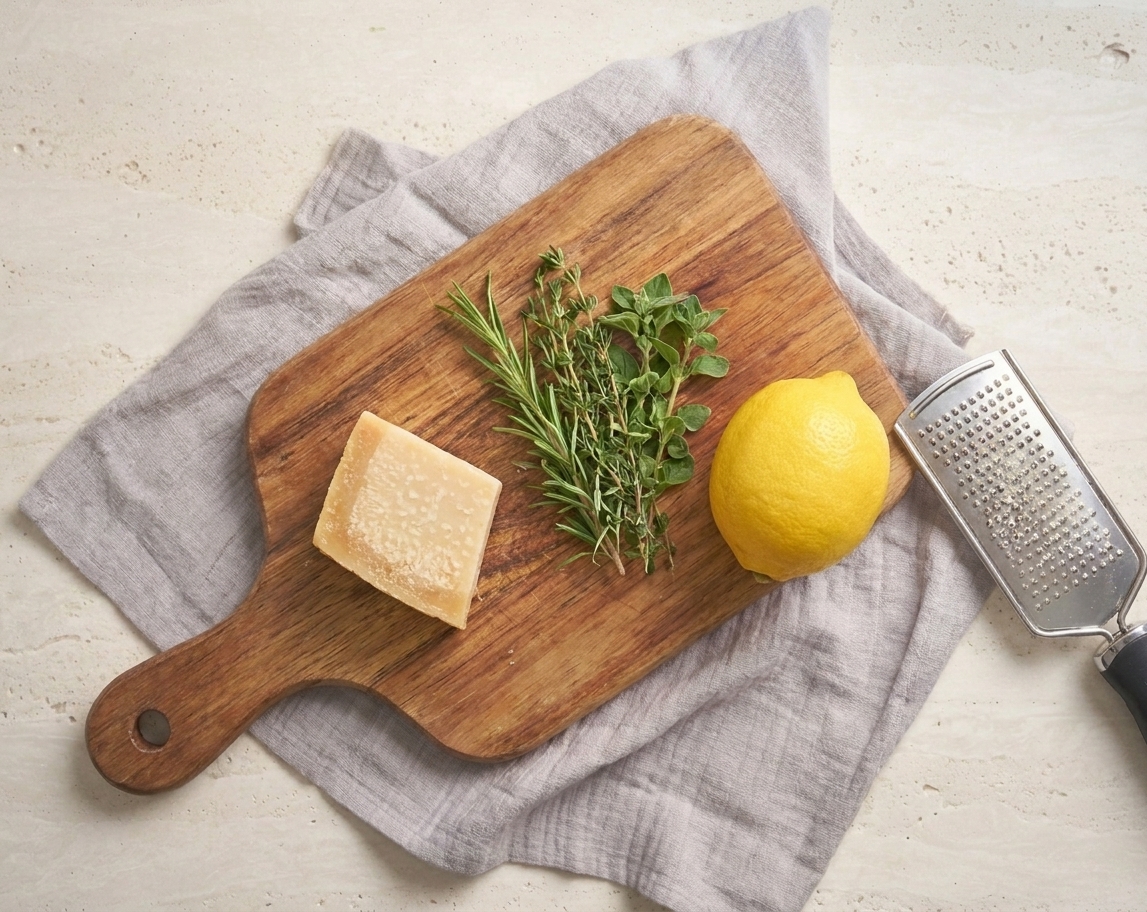
- Save parmesan rinds: Simmer a rind in your chicken broth for 10 minutes, then remove for extra depth.
- Spinach on its last legs: As long as it is not slimy, it will wilt into the sauce beautifully.
- Leftover roasted chicken: Skip the sear and warm shredded chicken in the finished sauce just until hot so it stays tender.
Serving ideas
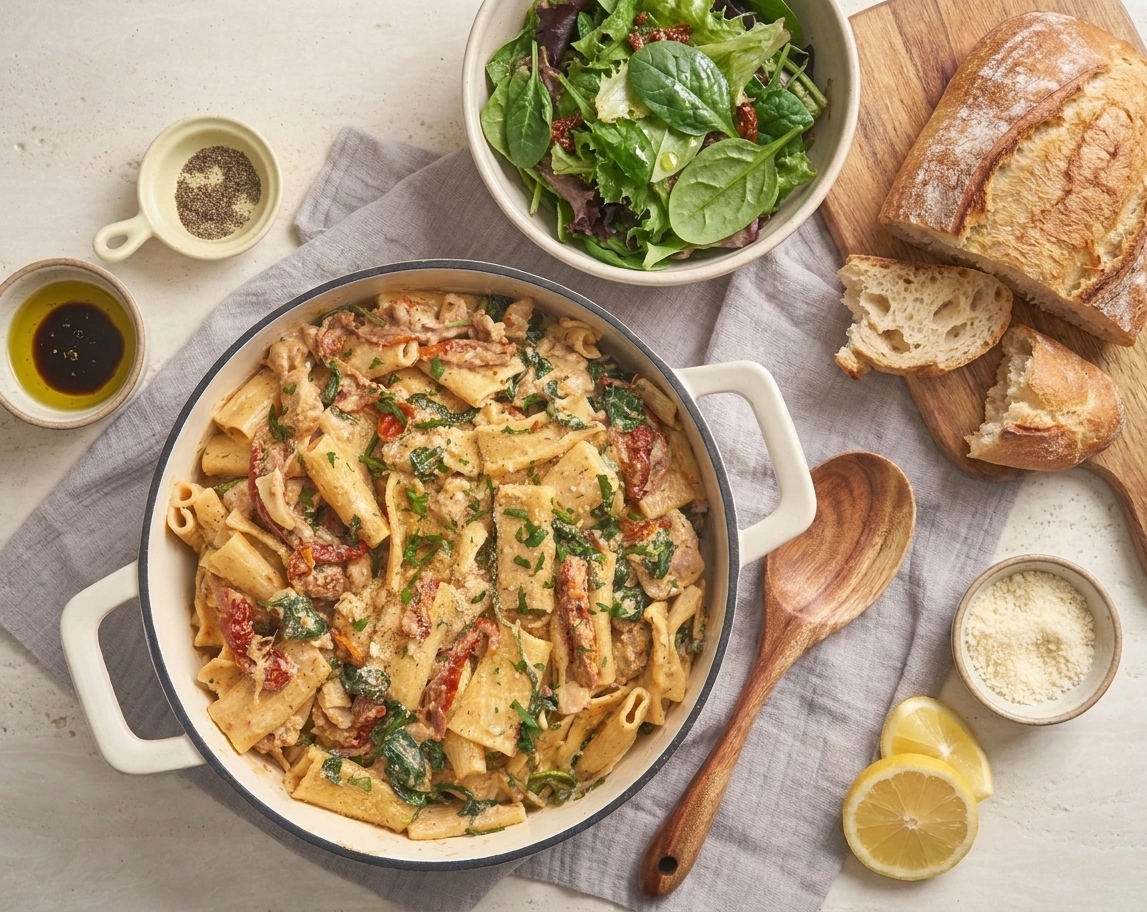
- Simple arugula salad with lemon vinaigrette
- Garlicky green beans or roasted broccoli
- Crusty bread for swiping up sauce
Storage and reheating
Refrigerate: Store in an airtight container for up to 3 to 4 days.
Reheat: Warm gently in a skillet over low heat with a splash of water, broth, or milk. Stir often. If you microwave, use 50 percent power and stir halfway through.
Freezing: Cream sauces can separate when frozen. It is safe, but the texture may be grainier. For a freezer-friendly version, use a roux-thickened milk sauce (milk + flour) instead of straight cream.
Common mistakes
My sauce looks oily
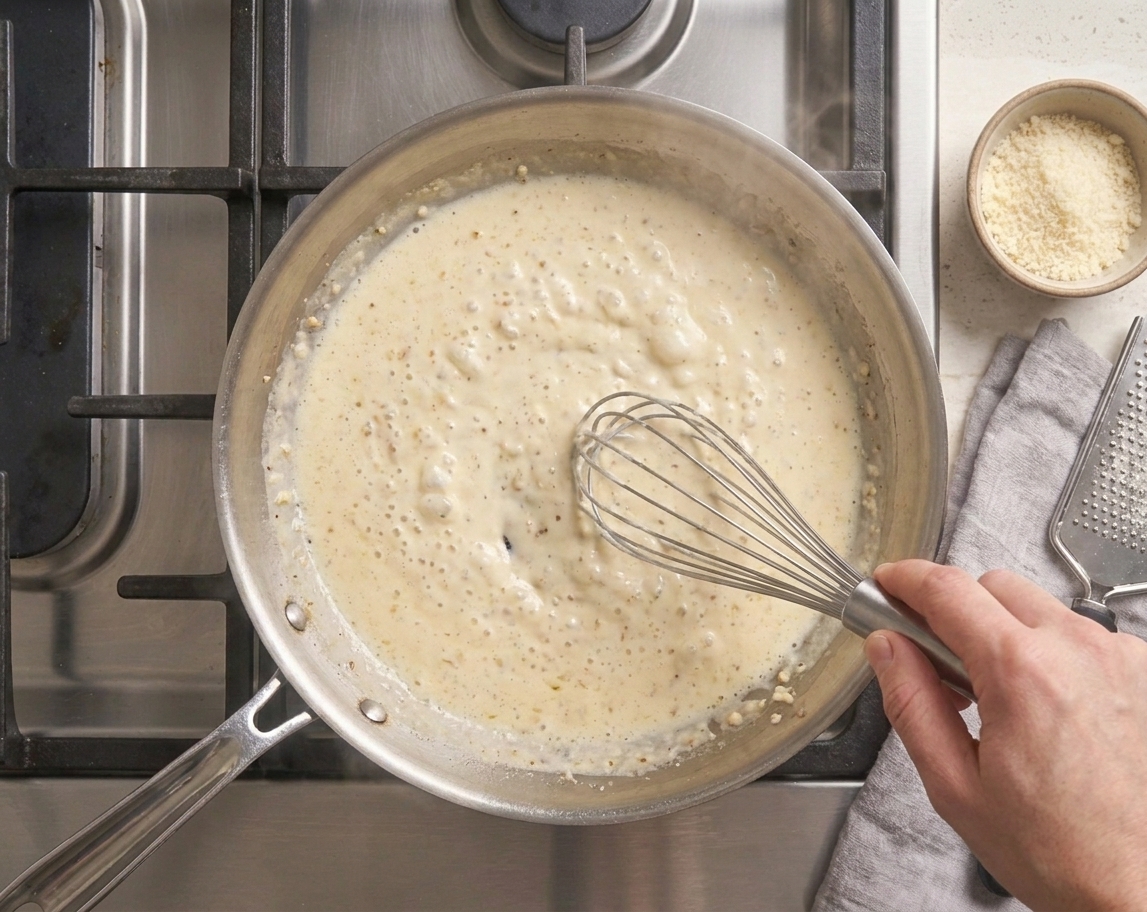
This usually happens from high heat, a prolonged hard simmer, or adding cheese when the liquid is too hot. Lower the heat and whisk in a splash of pasta water to help it come back together.
My sauce is too thick
Add reserved pasta water a tablespoon at a time until the sauce loosens and turns glossy.
My chicken is dry
Chicken breasts overcook fast. Next time, slice breasts into cutlets so they cook evenly. For tonight, stir sliced chicken into the sauce only at the end and let it warm gently.
It tastes flat
Add a pinch of salt, another squeeze of lemon, or an extra tablespoon of parmesan. Most “meh” creamy pasta needs one of those three.
FAQ
Is Tuscan chicken pasta actually Tuscan?
It is more Tuscan-inspired in the American restaurant sense, with a creamy sauce, garlic, greens, and sun-dried tomatoes. It is delicious either way, and it is built for weeknights.
Can I make it in one pot?
You can, but cooking pasta separately gives more control. For one pot, use a large deep skillet or Dutch oven: sear the chicken, then remove it. Add 2 1/2 cups water + 1 cup broth and bring to a boil. Stir in pasta and simmer, stirring often, until just al dente and there is a little starchy liquid left, 10 to 12 minutes depending on shape. Reduce heat to low, stir in cream, then whisk in parmesan off a gentle simmer. Add spinach, then return sliced chicken to warm through. If it gets tight, loosen with a splash of water.
What pasta shape is best?
Penne and rigatoni catch the sauce and bits of tomato. Fettuccine is great if you want a more classic creamy pasta vibe.
Tuscan Chicken Pasta
Creamy Tuscan chicken pasta with sun-dried tomatoes, spinach, parmesan, and a bright finish of lemon. Chicken is seared for flavor, then everything is tossed in a quick skillet cream sauce that clings glossy to the pasta.
- Prep
- 15 minutes
- Cook
- 20 minutes
- Total
- about 35 minutes
- Yield
- Serves 4 to 6
Ingredients
- 12 ounces penne, rigatoni, or fettuccine
- 1 pound boneless, skinless chicken breasts or thighs
- Kosher salt
- Black pepper
- 1 1/2 teaspoons Italian seasoning
- 1 tablespoon olive oil, plus a drizzle if needed
- 2 tablespoons butter
- 4 to 6 cloves garlic, minced
- 1/2 cup sliced sun-dried tomatoes (oil-packed preferred), plus 1 teaspoon of the oil (optional)
- 3/4 cup chicken broth
- 1 cup heavy cream
- 3/4 cup finely grated parmesan, plus more for serving
- 4 packed cups baby spinach
- 1 to 2 tablespoons lemon juice (to taste)
- Pinch of red pepper flakes (optional)
Instructions
- Start the pasta water, but do not drop the pasta yet. Bring a large pot of well-salted water to a boil. Keep it at a steady boil while you start the chicken so the pasta finishes right as the sauce is ready.
- Season and sear the chicken. Pat chicken dry. Season both sides with salt, pepper, and Italian seasoning. Heat olive oil in a large skillet over medium-high heat. Sear chicken until browned and cooked through, about 4 to 6 minutes per side for cutlets. Aim for 165°F for breasts. Thighs can go to 165°F for safety, but are often juiciest around 175 to 185°F. Transfer to a cutting board to rest.
- Cook the pasta. While the chicken rests and you start the sauce, add pasta to the boiling water and cook until just shy of al dente (about 1 minute less than the box). Reserve 1 cup pasta water, then drain. If your sauce is not ready yet, toss drained pasta with a small drizzle of olive oil to prevent sticking.
- Build the flavor base. Reduce skillet heat to medium. Add butter. Add garlic and cook 30 to 45 seconds, just until fragrant. Stir in sun-dried tomatoes (and a teaspoon of their oil if using) and red pepper flakes if you like.
- Make the sauce. Pour in chicken broth and scrape up the browned bits. Simmer 1 to 2 minutes. Add heavy cream and bring to a gentle simmer (avoid a hard boil). Reduce heat to low. Whisk in parmesan a handful at a time until smooth.
- Add spinach. Stir in spinach and cook until just wilted, 1 to 2 minutes.
- Slice chicken, then combine. Slice chicken into strips. Add pasta and chicken to the skillet and toss. If the sauce feels too thick, add reserved pasta water 1 to 2 tablespoons at a time until glossy and creamy.
- Finish with acid. Turn off the heat. Add lemon juice, taste, and adjust salt and pepper. Serve with extra parmesan.
Notes
- Timing tip: Start the pasta water first, but wait to add the pasta so it finishes right as the sauce is ready.
- Heat management: Keep the sauce at a gentle simmer after adding cream, and whisk parmesan in over low heat so it melts smoothly.
- Sauce control: Use reserved pasta water to loosen and gloss the sauce 1 to 2 tablespoons at a time.
- Finish: Add lemon off heat, then taste and adjust salt and pepper before serving.
Nutrition
- Calories: 720
- Fat: 33 g
- Carbs: 61 g
- Protein: 43 g
- Fiber: 4 g
- Sugar: 6 g
- Sodium: 780 mg
Nutrition values are approximate and will vary by specific ingredients, brands, and portion size.