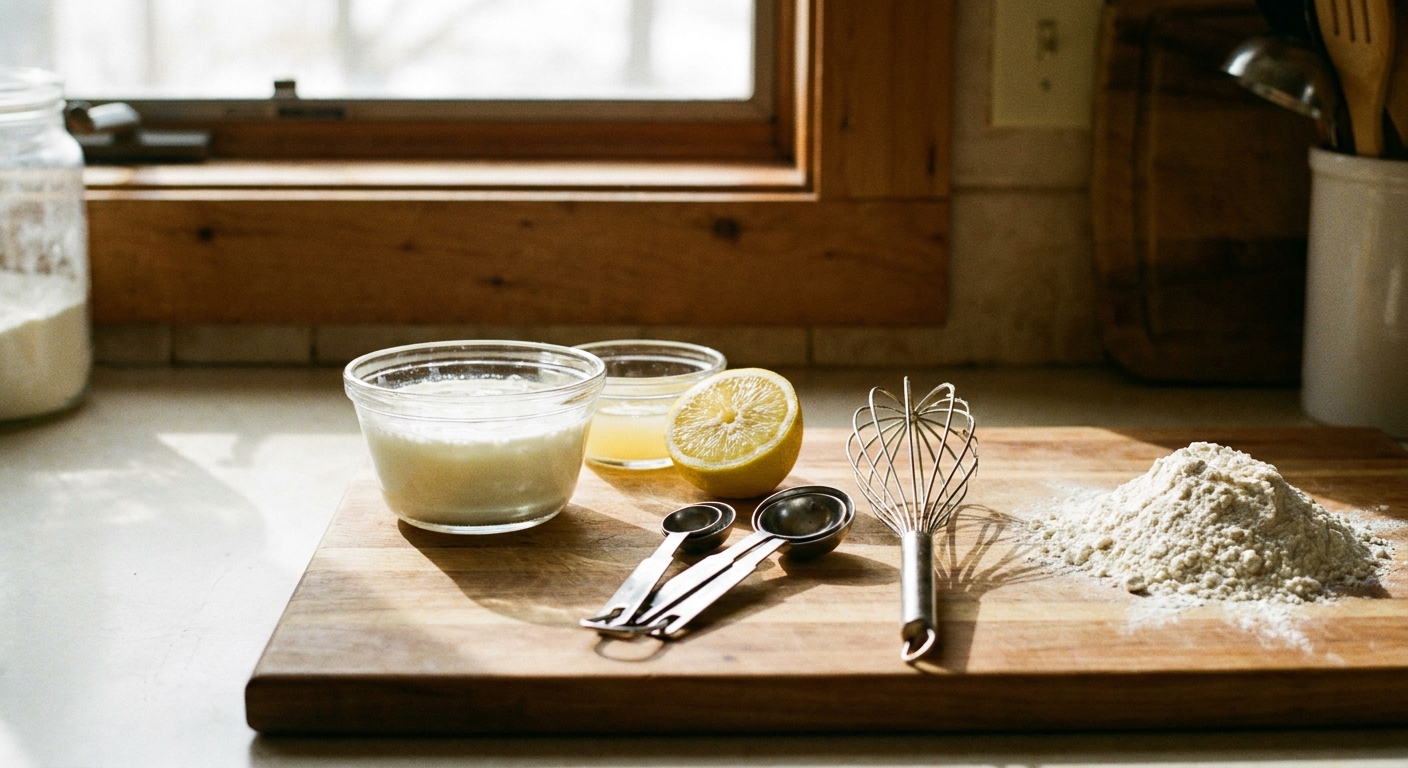
If your pancakes have ever come out flat, rubbery, or weirdly tough, you are not alone. Fluffy pancakes are less about fancy ingredients and more about how you mix, rest, and cook the batter. I will walk you through the why in plain language, then give you a recipe that is dependable on a sleepy Saturday and realistic on a rushed weekday.
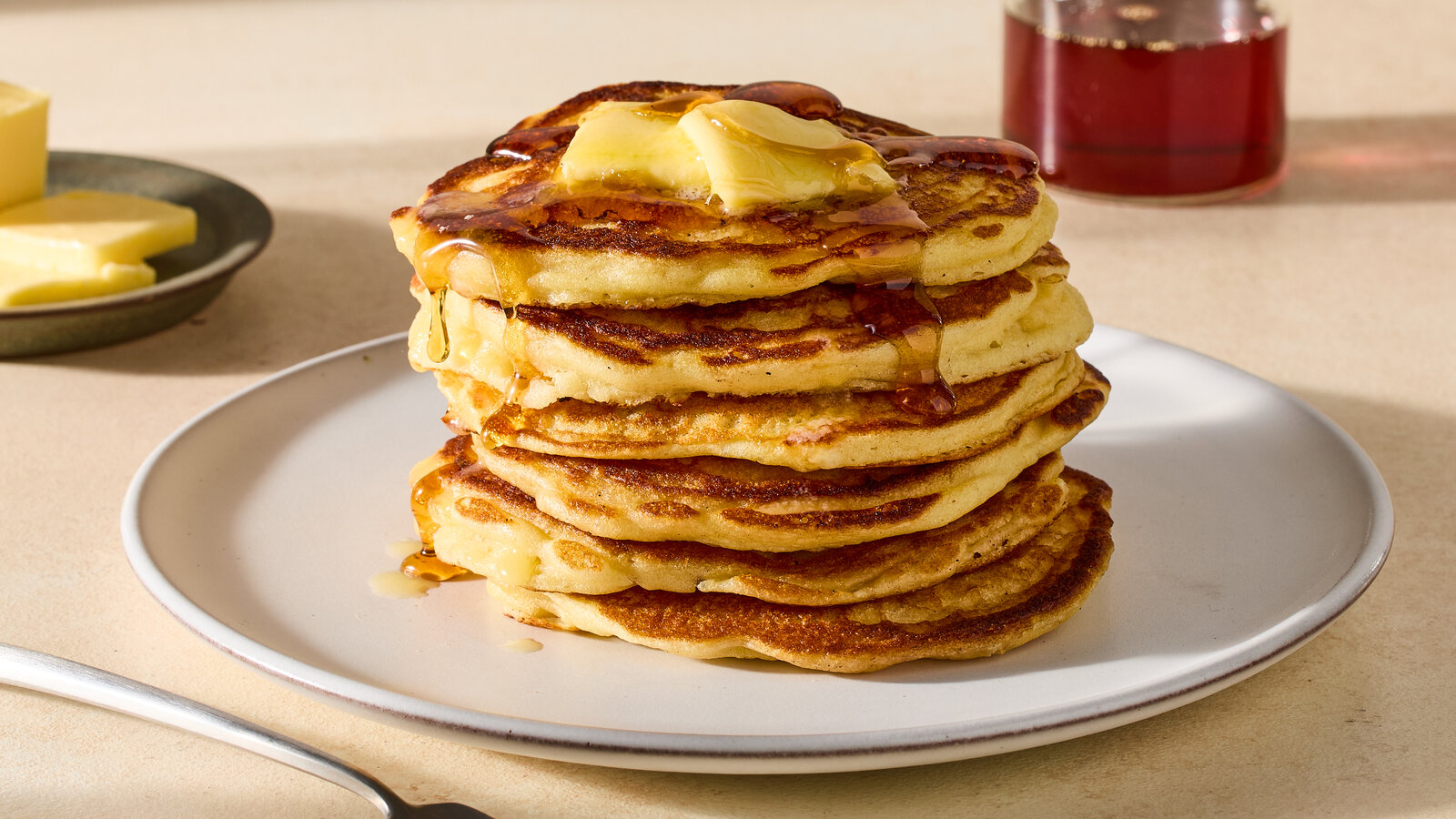
Why this recipe works
Think of pancake fluff as tiny bubbles held in place long enough to set. You get those bubbles from leaveners and you keep them by being gentle.
- Leavening: Baking powder does most of the lifting because it already contains an acid plus baking soda. A small amount of extra baking soda helps when your batter has extra acid (like buttermilk, yogurt, or lemon), and it also encourages better browning.
- Acid balance: A little tang makes pancakes taste less sweet and more buttery. Acid can also help keep the crumb tender, especially alongside fat and gentle mixing.
- Minimal mixing: Overmixing develops gluten, which turns pancakes bready and chewy. Lumps are good. Really.
- Heat control: Medium heat gives the center time to cook before the outside gets too dark.
- Rest time: A short rest hydrates the flour and lets the batter thicken. You may see bubbles forming on top, which is a nice sign you are on the right track.
Ingredient notes
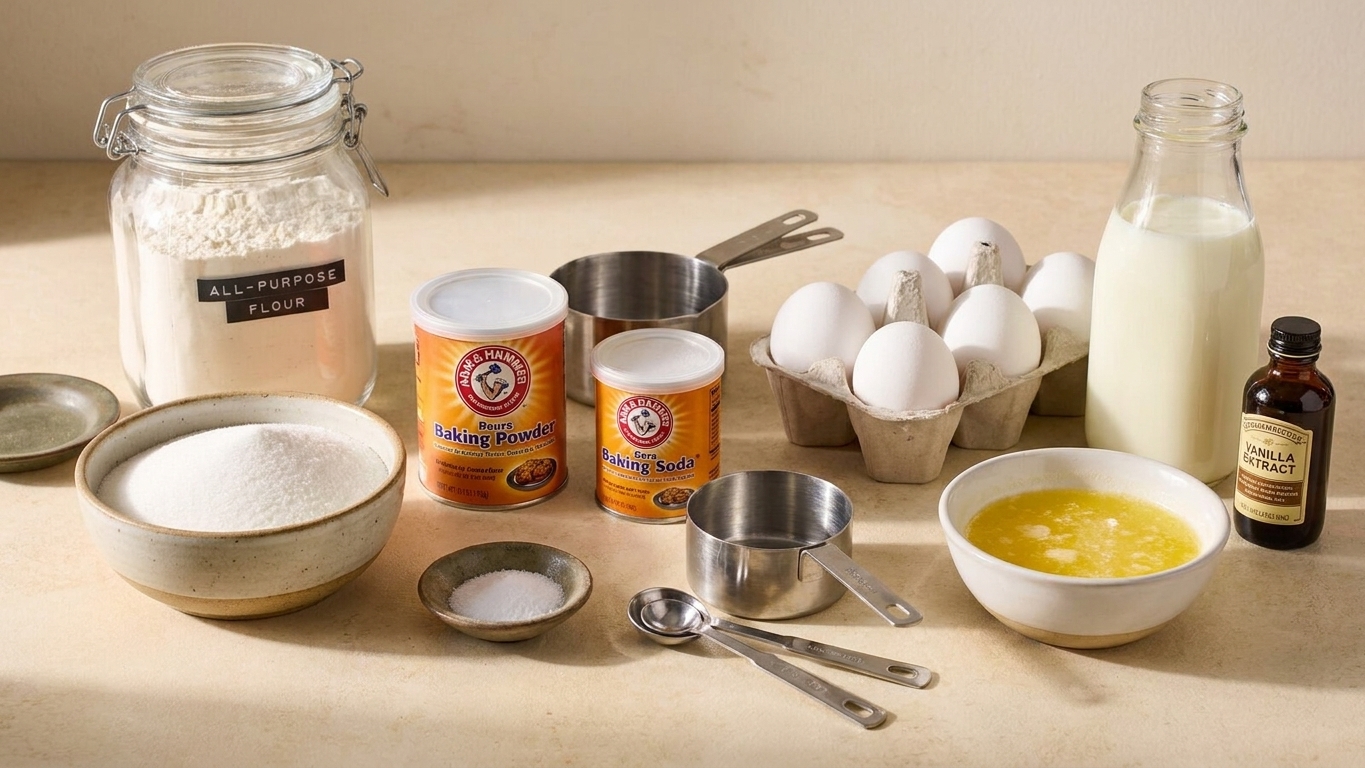
- Buttermilk: Using it at room temperature if you can helps the batter mix more evenly and supports good rise and browning.
- Baking powder: Fresh baking powder matters. If yours has been open for a year, it may be tired, and old baking powder can lead to flat pancakes.
- Baking soda: A small amount supports browning when paired with an acidic batter (like buttermilk, yogurt, or lemon).
- Mixing: Lumps are expected. The goal is to stop mixing once you no longer see dry flour, keeping the crumb tender.
- Vanilla: Optional, but adds a lovely flavor.
- Flour measuring: Too much flour often comes from scooping directly from the bag. If you can, spoon flour into the cup and level it.
Equipment you will need
- Large mixing bowl (for dry ingredients)
- Medium mixing bowl (for wet ingredients)
- Whisk (for mixing dry and wet separately)
- Spatula (for gently folding wet into dry)
- Nonstick skillet or well-seasoned cast iron skillet
- Electric griddle (optional, helpful for batches)
- Measuring cups and spoons
- 1/4 cup measure (for portioning batter)
- Paper towel (to wipe the pan after buttering)
- Sheet pan and oven (optional, for keeping pancakes warm)
Pro tips
- Do not chase smooth batter. Stop mixing early. A few small streaks of flour are fine, but you do not want any big dry pockets.
- Use fresh baking powder. If yours has been open for a year, it may be tired. Old baking powder equals sad pancakes.
- Let the batter thicken. After resting, batter should feel scoopable. If it seems thin, add 1 to 2 tablespoons flour. If it seems like paste, splash in a tablespoon of buttermilk.
- Flip once. Repeated flipping deflates bubbles and can cause uneven cooking.
- Butter, then wipe. For evenly golden pancakes, butter the pan lightly, then wipe with a paper towel so you do not get dark blotches from burning milk solids.
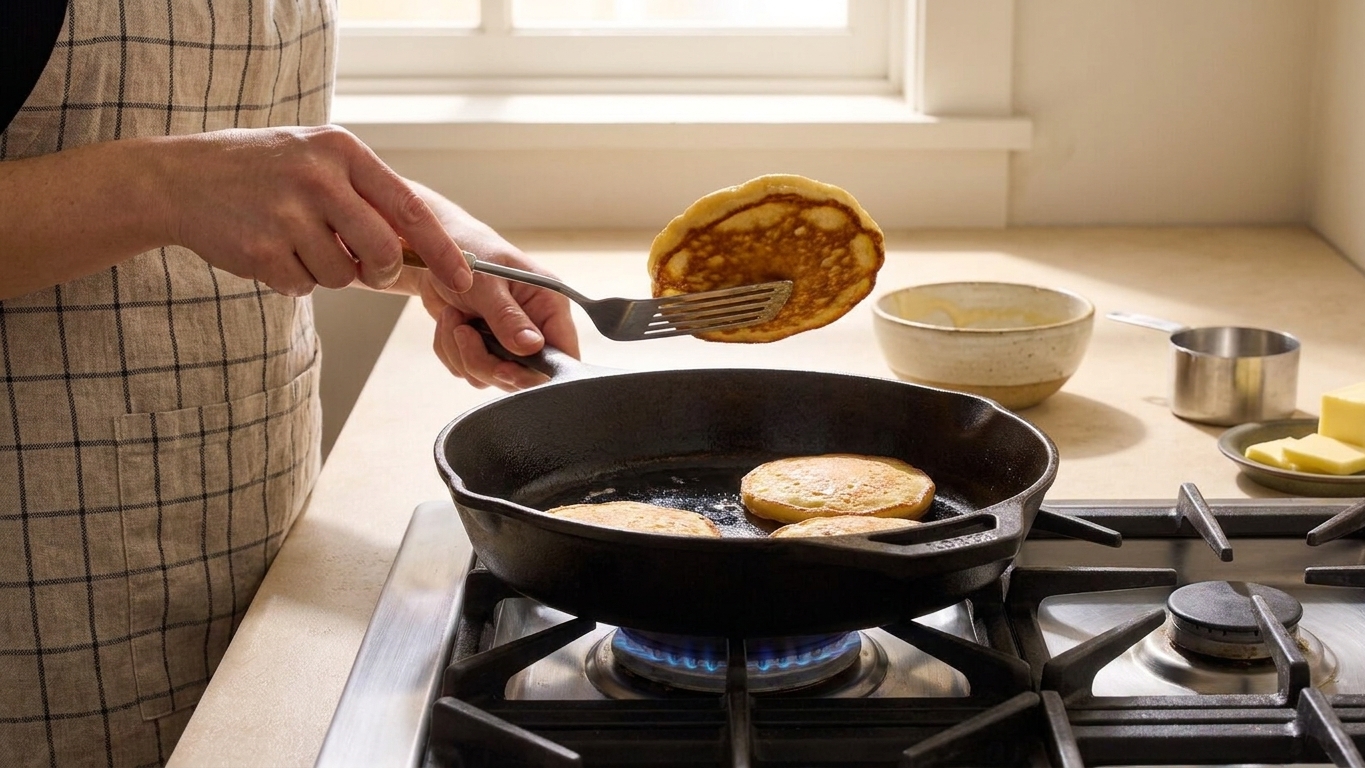
Sensory cue you can trust: If your first pancake browns too fast, turn the heat down and wait 2 minutes before the next pour. Pancakes love a calm, steady pan.
Substitutes that work
No buttermilk?
My favorite low-waste option is to make a quick sour milk.
- Milk + acid: Add 2 tablespoons lemon juice or white vinegar to a measuring cup, then fill to 2 cups with milk. Stir and rest 5 minutes. Use as buttermilk.
- Yogurt or sour cream: Whisk 3/4 cup yogurt or sour cream with 1 1/4 cups milk to equal 2 cups. This makes extra tender pancakes.
Dairy-free?
- Use unsweetened oat or soy milk plus lemon juice as the acid.
- Swap melted butter for neutral oil or melted coconut oil (refined keeps the flavor neutral).
Whole wheat?
Replace up to 1 cup of the flour with white whole wheat flour. Add 2 extra tablespoons buttermilk if the batter seems thick.
Variations
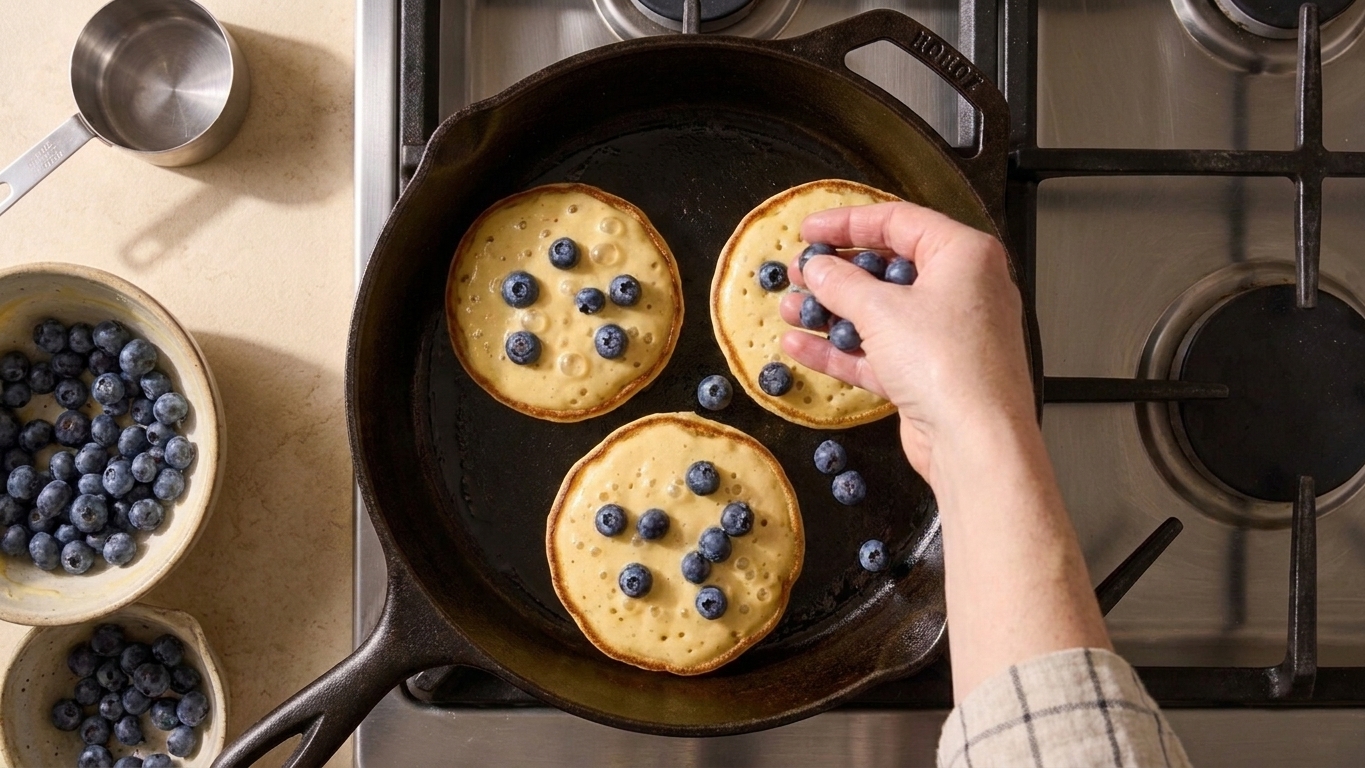
- Blueberries: Sprinkle onto pancakes after you pour the batter, instead of mixing into the bowl. Less bleeding and less stirring.
- Chocolate chips: Same method as blueberries. Mini chips distribute best.
- Banana: Mash 1 ripe banana into the wet ingredients for a naturally sweet, softer pancake. Reduce sugar to 1 tablespoon.
- Lemon zest: Add 1 to 2 teaspoons to the wet mix for a bright, bakery-style aroma.
- Warm spices: 1/2 teaspoon cinnamon or a pinch of cardamom adds cozy depth without changing texture.
Serving ideas
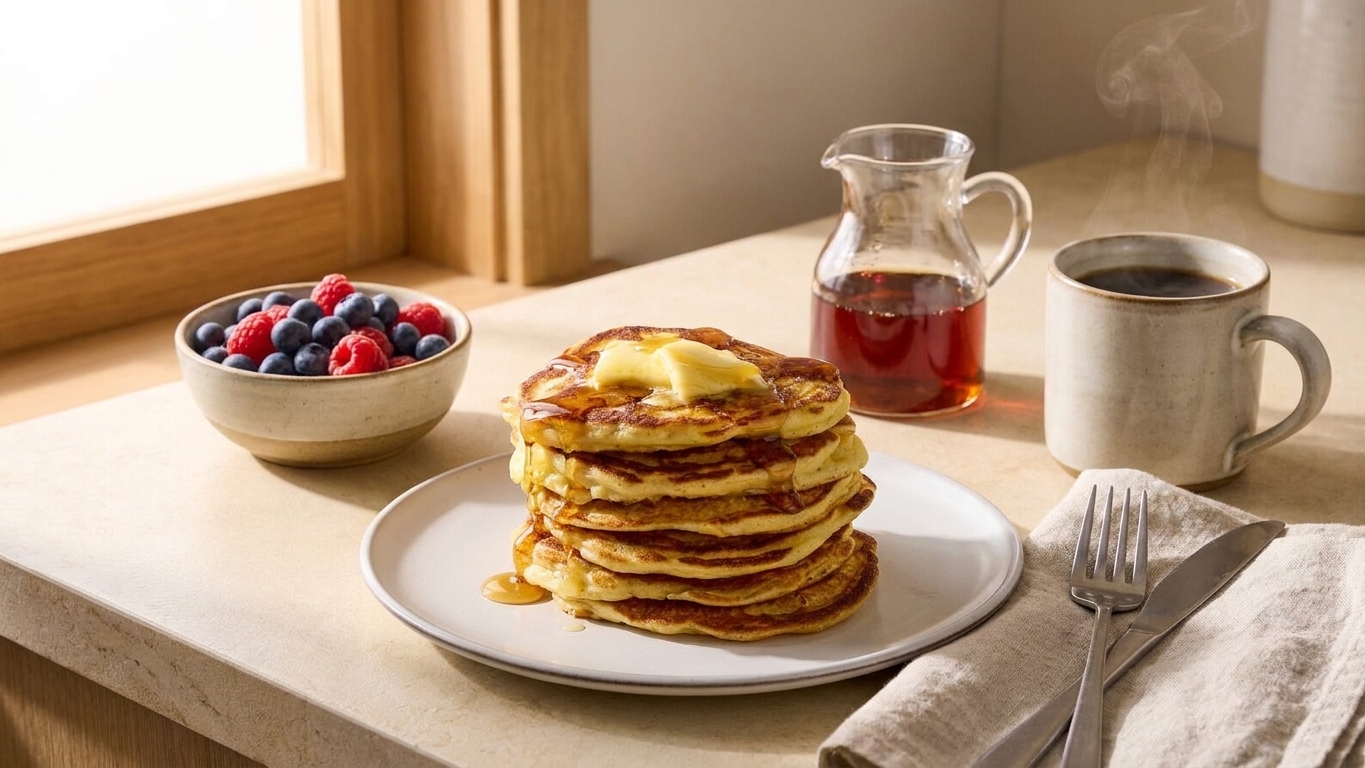
For that perfect sweet-salty balance I am always chasing, try a tiny pinch of flaky salt on top right before serving. It makes maple syrup taste even more maple.
- Classic: butter + warm maple syrup
- Bright: yogurt + berries + lemon zest
- Cozy: peanut butter + sliced banana
- Weekend brunch: crispy bacon or breakfast sausage plus fruit
Storage and reheating
Pancakes are a dream for reducing food waste because they freeze beautifully.
- Fridge: Cool completely, then store airtight for about 3 days.
- Freezer: Freeze pancakes in a single layer on a sheet pan until firm, then transfer to a bag. They keep well for about 2 months.
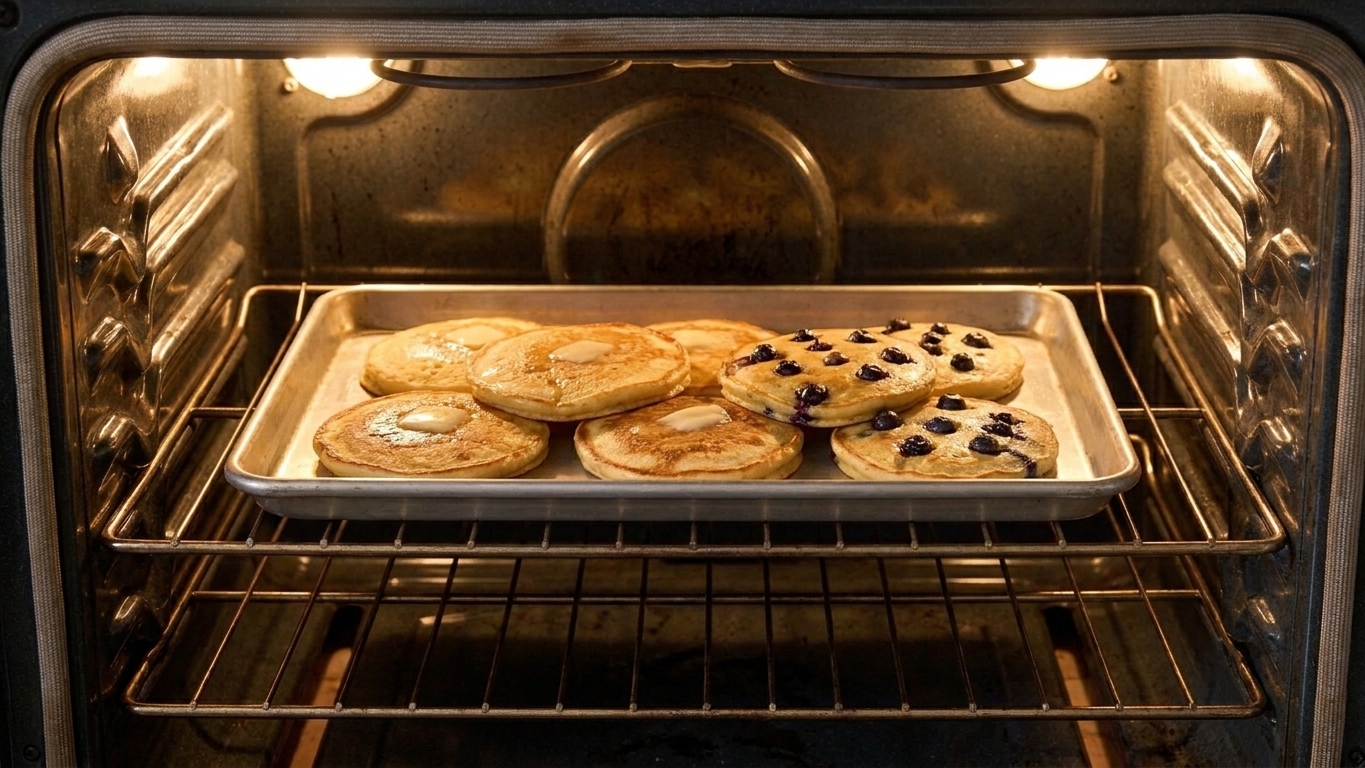
- Reheat: Toast straight from frozen for crisp edges, or warm on a sheet pan at 350°F for about 6 to 8 minutes. Microwave works, but you lose the edges.
Common mistakes
Why are my pancakes flat?
- Your baking powder may be old.
- You overmixed the batter, popping bubbles and strengthening gluten.
- Your pan was too cool, so the batter spread before setting.
Why are they tough or chewy?
- Too much mixing or whisking.
- Too much flour, often from scooping directly from the bag. If you can, spoon flour into the cup and level it.
Why are they raw in the middle?
- Heat is too high. Lower to medium or medium-low and give them time.
- Pancakes are too thick. Thin batter with 1 tablespoon buttermilk at a time.
Why are they pale?
- Your pan is too cool.
- Your batter may not have enough acidity for the baking soda to do its browning magic. Buttermilk (or milk plus lemon juice) plus a small amount of baking soda helps.
FAQ
Can I make the batter the night before?
You can, but it is not my favorite for maximum fluff because the leaveners start working right away. If you need to prep ahead, mix the dry ingredients and wet ingredients separately, refrigerate, then combine in the morning and rest 5 minutes before cooking.
Should I use a whisk or spatula?
Whisk the dry and wet separately, then use a spatula to fold them together gently. This keeps the batter airy.
What is the best pan?
A nonstick skillet is easiest. Cast iron is great once you have the heat dialed in. Electric griddles are wonderful for batches because the temperature stays steady.
Light and Fluffy Pancakes
Light, fluffy buttermilk pancakes that stay tender thanks to gentle mixing, a short rest, and steady medium heat. Makes about 10 to 12 (4-inch) pancakes.
- Prep
- 10 minutes
- Cook
- 10 minutes
- Total
- 20 minutes
- Yield
- Makes about 10 to 12 pancakes (4-inch)
Ingredients
- 2 cups (240 g) all-purpose flour
- 2 tablespoons sugar
- 2 teaspoons baking powder
- 1/2 teaspoon baking soda
- 1 teaspoon fine salt
- 2 cups (480 ml) buttermilk, room temperature if you can
- 2 large eggs
- 4 tablespoons (56 g) melted butter, plus more for the pan
- 1 teaspoon vanilla extract (optional but lovely)
Instructions
- Mix the dry. In a large bowl, whisk flour, sugar, baking powder, baking soda, and salt until very well combined. This evenly distributes the leaveners so you do not get bitter pockets.
- Mix the wet. In a medium bowl, whisk buttermilk, eggs, melted butter, and vanilla.
- Combine gently. Pour wet into dry. Use a spatula to fold just until you stop seeing dry flour. The batter should look lumpy and thick, like soft mounds that slowly relax.
- Rest. Let batter sit 5 to 10 minutes while you heat the pan. It should thicken slightly, and you may see a few bubbles on top.
- Preheat the pan. Heat a nonstick skillet or well-seasoned cast iron over medium heat. If you use an electric griddle, aim for about 350°F (175°C). Add a small smear of butter. It should sizzle softly, not brown instantly. (A tiny drop of water should dance and evaporate quickly.)
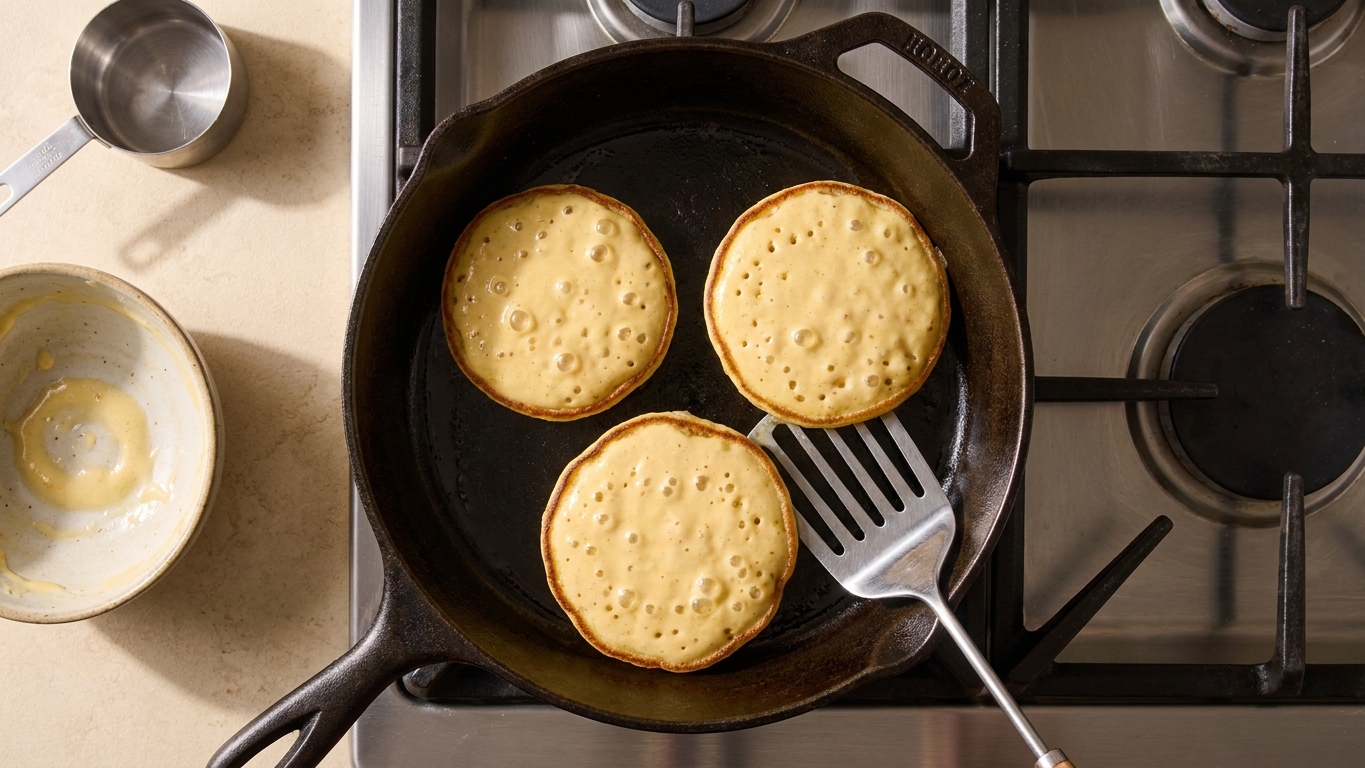
- Cook. Scoop 1/4 cup batter per pancake. Cook until you see bubbles on the surface and the edges look set, 2 to 3 minutes. Flip once and cook 1 to 2 minutes more, until golden and springy when gently pressed. Do not press them down with the spatula.
- Keep warm (optional). Hold pancakes on a sheet pan in a 200°F oven while you finish the batch. If you stack them, they steam and soften, which is great if you like them super tender.
Notes
- Heat check: If your first pancake browns too fast, turn the heat down and wait 2 minutes before the next pour.
- Texture target: The batter should be thick and lumpy. After resting, if it seems thin, add 1 to 2 tablespoons flour. If it seems like paste, splash in a tablespoon of buttermilk.
- For even color: Butter the pan lightly, then wipe with a paper towel to avoid dark blotches from burning milk solids.
- Flip once: Repeated flipping can deflate bubbles and lead to uneven cooking.
Nutrition
- Calories: 210
- Fat: 7 g
- Carbs: 29 g
- Protein: 7 g
- Fiber: 1 g
- Sugar: 5 g
- Sodium: 520 mg
Nutrition values are approximate and will vary by ingredient brands and exact pancake size.