

Potato leek soup is one of those quietly perfect meals: a handful of humble ingredients that turn into something silky, cozy, and honestly a little elegant. When I taught basic soups in cooking classes, this was the one that reliably made people feel like they had “real chef” skills, even on a Tuesday night.
The keys are simple but specific. You have to clean the leeks well (they hold onto sand like it is their job), simmer the potatoes until they are truly collapsing tender, and then blend long enough to get that smooth potage texture. After that, you just adjust with stock and a little dairy so it stays pourable, not gluey.

This version stays true to the classic. No bacon, no cheddar blanket, no loaded baked potato vibes. Just sweet leeks, buttery potatoes, and a finish that tastes balanced and bright.
How to clean leeks (the no grit method)
Leeks grow in sandy soil, and grit hides between the layers. I clean them the same way every time, because it works and it is fast:
- Trim: Cut off the dark green tops (save for stock) and trim the root end, leaving the leek intact enough to hold together.
- Slice: Halve lengthwise, then slice into half moons.
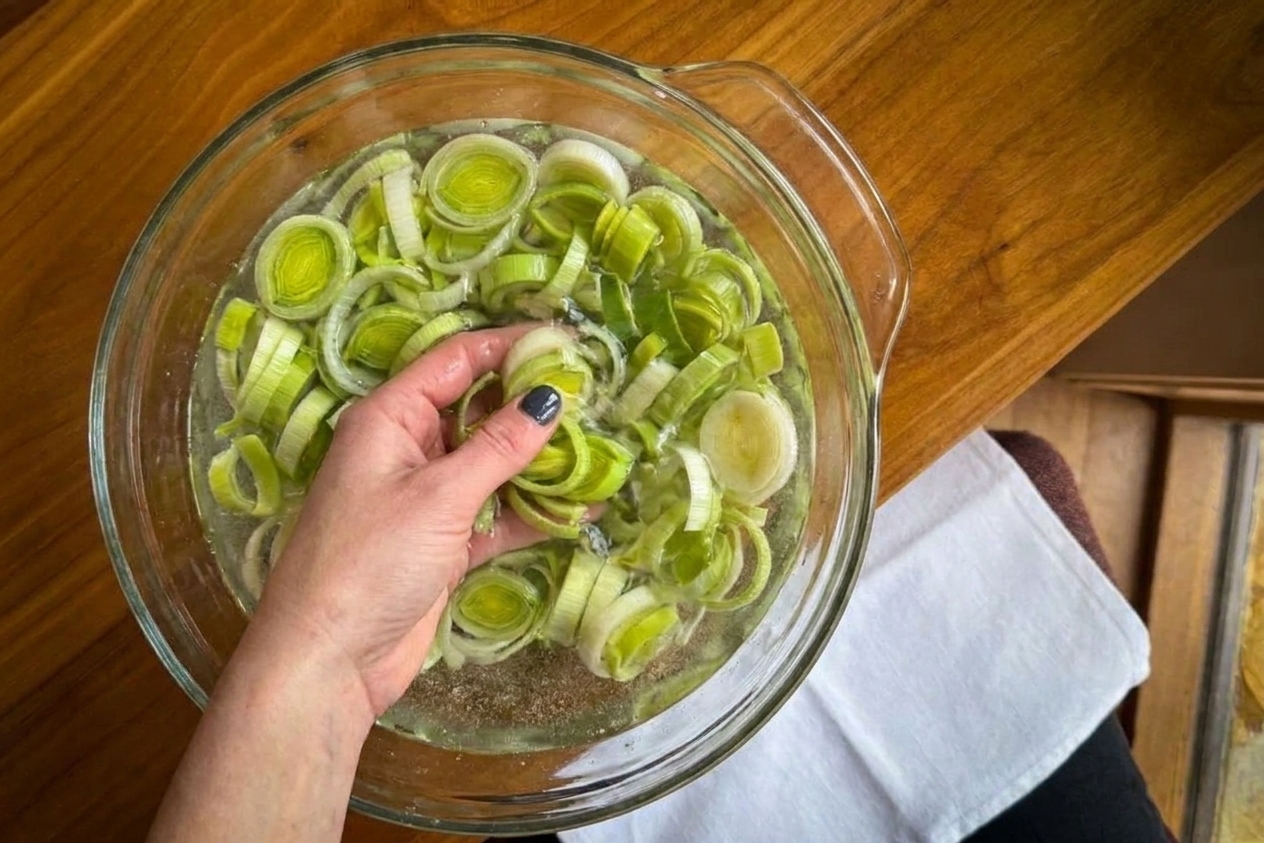
- Swish: Put slices in a big bowl of cold water and swish aggressively with your hands.
- Lift, do not pour: Let the grit sink for 30 seconds, then lift leeks out with your hands or a strainer. If you pour the bowl, the sand just follows you.
How tender should the potatoes be?
For a truly smooth soup, the potatoes need to go beyond “fork tender.” You want them starting to crumble at the edges, so they blend into a velvety base without stubborn chunks.
Look for these cues:
- A knife slides through with zero resistance.
- The potato cubes break apart when pressed against the pot with a spoon.
- The broth looks slightly cloudy and thickened, because starch has started to disperse.
Blending into a smooth potage
My two rules: blend hot soup carefully, and blend longer than you think. A high speed blender gives the silkiest results, but an immersion blender can still get you very smooth if you give it time.
- Countertop blender: Blend in batches and vent the lid. Start on low, then increase. This prevents hot soup from exploding upward.
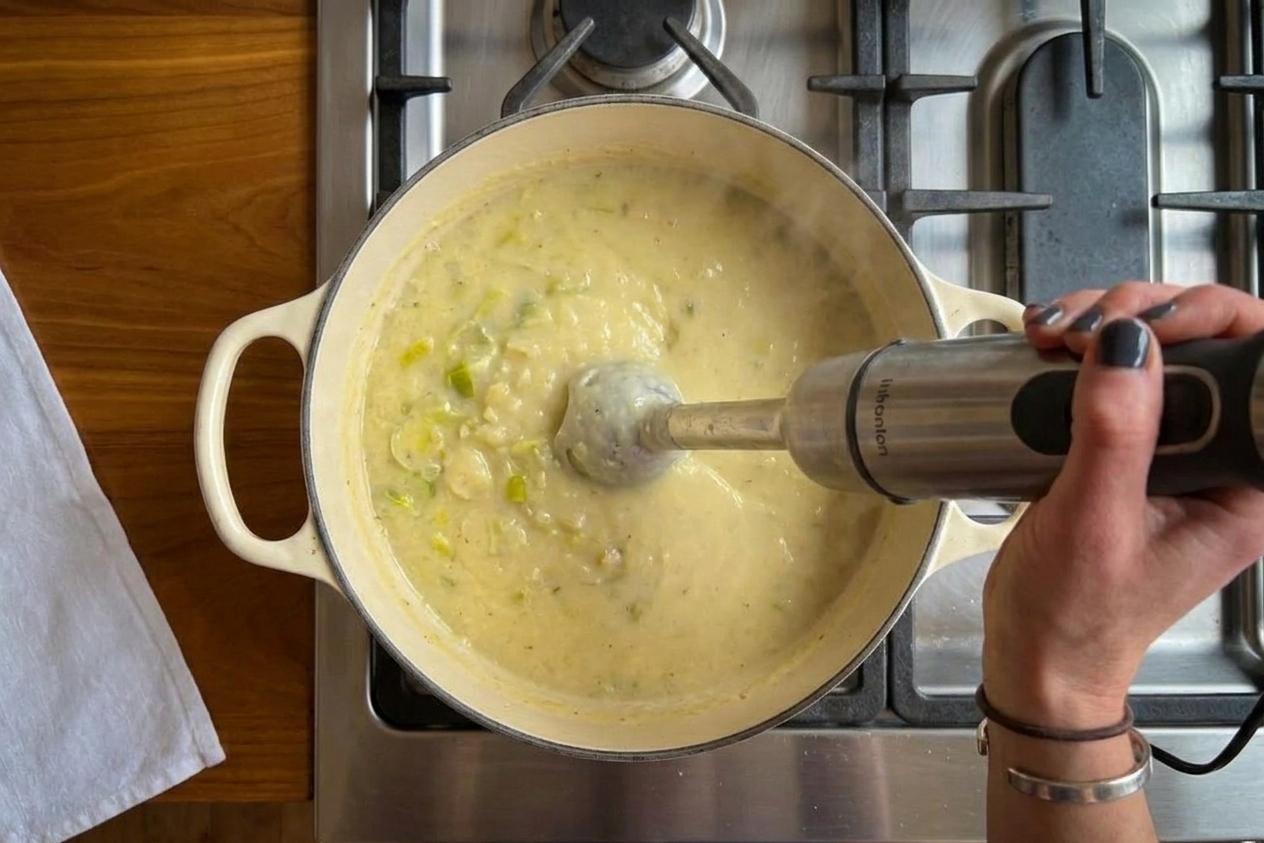
- Immersion blender: Keep the head fully submerged and move slowly around the pot. Let it run a full minute or two, pause, then continue.
If you want a restaurant-smooth finish, strain through a fine mesh sieve after blending. I do this when I am serving guests, not usually when I am feeding myself in sweatpants.
Keeping it pourable (cream and stock options)
Potato soup thickens as it sits because the starch continues to hydrate. The fix is easy: hold back some stock, blend the soup thick and smooth first, then thin to a velvet, pourable texture.
Options that work well:
- All stock, no cream: Clean and light, still silky from the potatoes. Finish with olive oil or a small pat of butter for gloss.
- Half and half: Classic, gently rich, stays smooth without tasting heavy.
- Heavy cream: Most luxurious, but add gradually so it does not become too thick.
- Whole milk: Works, but add at the end and do not boil hard to avoid a slightly “cooked milk” taste.
Whatever you choose, taste at the end and adjust salt and acid. A tiny squeeze of lemon can make the leek sweetness pop without making it taste lemony.
Why this recipe works
- Leeks are sweated, not browned, so the soup tastes sweet and delicate instead of roasty.
- Potatoes simmer until they collapse, which creates natural creaminess without needing a flour thickener.
- Blending first, thinning second gives you a smooth potage that stays pourable, even after it cools slightly.
- Flexible finish: you can go dairy free, lightly creamy, or fully luscious without changing the core method.
Ingredient notes
- Leeks: Use the white and light green parts for the soup. The dark greens are tougher but excellent for stock.
- Potatoes: Yukon Golds give a buttery texture and blend smoothly. Russets also work and make the soup a touch fluffier and thicker. Waxy red potatoes are not my first choice here because they can blend a little gluey.
- Stock: Chicken stock gives the most classic flavor. Vegetable stock keeps it vegetarian. If your stock is very salty, hold back on added salt until the end.
- Cream or milk: Add at the end and use it to control texture. You can always thin with more stock.
- Butter and olive oil: Butter brings classic flavor; a little olive oil helps with mouthfeel, especially if you go lighter on dairy.
- Acid: A squeeze of lemon or a few drops of white wine vinegar at the end balances the potato richness.
Equipment you will need
- Large heavy pot or Dutch oven
- Chef’s knife and cutting board
- Large bowl for washing leeks
- Fine mesh strainer (optional, for ultra smooth soup)
- Immersion blender or countertop blender
- Ladle
Pro tips
- Do not rush the leeks. Keep the heat low to medium and sweat them until soft. Browning changes the flavor profile.
- Salt in layers. Add a small pinch when sweating leeks, then adjust again after blending. Potatoes need salt to taste like themselves.
- Blend longer than feels necessary. Many “chunky” blended soups are just under blended.
- Control thickness at the end. Hold back 1 to 2 cups of stock, then add as needed after blending until it pours in a smooth ribbon.
- Reheat gently. Avoid a hard boil once dairy is in the pot to keep the texture silky.
Substitutes that work
- No leeks? Use a mix of yellow onion and a little sliced celery, or add a small handful of chopped green onions at the end for a mild allium lift.
- Dairy free: Skip cream and finish with olive oil or a spoonful of unsweetened cashew cream. Thin with stock as needed.
- Stock swap: Water works in a pinch, but you will need a bit more salt and a slightly more generous finish of butter or olive oil for flavor.
- Herbs: Thyme is classic. Chives or parsley are great for serving.
Variations
- Vichyssoise style: Chill the blended soup, then thin with a little extra cream or milk until it is sip-able. Serve cold with chives.
- Extra green: Blend in a few handfuls of baby spinach right at the end for color and a mild earthy note.
- Allium forward: Add one clove of garlic with the leeks, cooking gently so it stays sweet.
- Nutty finish: A drizzle of browned butter on each bowl makes it taste fancy with almost no effort.
Serving ideas
- Top with chopped chives, parsley, or thinly sliced green onion
- Add homemade croutons or a thick slice of crusty bread
- Serve with a bright side salad with lemony dressing for contrast
- Finish each bowl with a swirl of cream or olive oil and a few cracks of black pepper

Storage and reheating
Refrigerate
Store in an airtight container for up to 4 days. The soup will thicken as it chills.
Reheat
Warm gently over medium low heat, stirring often. Add a splash of stock or water until it loosens back to a pourable consistency. Taste and re salt if needed.
Freeze
You can freeze it, but for best texture freeze before adding cream. Thaw overnight in the fridge, reheat gently, then add dairy at the end. If you already added dairy, it will still be fine, just expect a slightly less silky texture.
Common mistakes
- Not cleaning leeks well enough: If you taste grit, it is almost always from skipping the soak and swish step.
- Browning the leeks: Color equals different flavor. Keep it soft and pale for classic potato leek soup.
- Stopping the simmer too early: Potatoes that are only barely tender do not blend as smoothly.
- Over reducing: A thick potato base can turn pasty. Thin with stock after blending to keep it silky and pourable.
- Boiling after adding dairy: Gentle heat keeps the texture smooth and the flavor clean.
FAQ
Can I make potato leek soup without cream?
Yes. It is still silky from the potatoes. Finish with olive oil or a little butter, then thin with stock to your preferred consistency.
Why did my soup turn gluey?
This usually happens from overworking starchy potatoes in a way that activates too much starch, or from using a food processor. Use a blender or immersion blender, and thin with stock after blending. Also avoid waxy potatoes if you are sensitive to texture.
Do I need to strain it?
No, but straining gives you that ultra smooth restaurant texture. If your blender is strong and you simmered the potatoes until collapsing tender, you can skip it.
How do I keep leftovers from getting too thick?
Plan on thinning when reheating. Add stock a splash at a time until the soup pours easily and looks glossy again.
What part of the leek do I use?
Use the white and light green parts for the soup. Save the dark green tops for stock, or simmer them in your soup base then discard before blending if you want to use them for extra flavor.
Potato Leek Soup
A classic, silky potato leek soup made by gently sweating leeks, simmering potatoes until collapsing tender, then blending smooth and thinning to a pourable potage with stock and a touch of cream if you like.
- Prep
- 20 minutes
- Cook
- 35 minutes
- Total
- 55 minutes
- Yield
- 6
Ingredients
- 3 large leeks (about 1 1/2 lb), white and light green parts only, sliced and cleaned well
- 2 tbsp unsalted butter
- 1 tbsp olive oil
- 1 tsp kosher salt, plus more to taste
- 1/4 tsp black pepper, plus more to taste
- 1 tsp fresh thyme leaves (or 1/2 tsp dried thyme)
- 2 lb Yukon Gold potatoes, peeled and cut into 1-inch cubes
- 4 cups low-sodium chicken stock or vegetable stock, plus more as needed to thin
- 1 cup water (optional, use if you need a little more liquid for simmering)
- 1/2 to 1 cup heavy cream or half and half (optional, to taste)
- 1 to 2 tsp fresh lemon juice (optional, to finish)
- Chopped chives or parsley, for serving (optional)
Instructions
- Clean the leeks. Trim off dark green tops (save for stock if you want). Slice the white and light green parts, then place in a large bowl of cold water and swish well. Let grit sink for 30 seconds, then lift leeks out with your hands or a strainer without pouring the gritty water.
- Sweat the leeks. In a large pot or Dutch oven, melt butter with olive oil over medium heat. Add leeks, salt, pepper, and thyme. Cook 8 to 10 minutes, stirring often, until very soft and sweet. Keep the heat moderate so they do not brown.
- Add potatoes and stock. Stir in potatoes, then add 4 cups stock. The potatoes should be mostly covered. If they are not, add a little more stock or up to 1 cup water.
- Simmer until collapsing tender. Bring to a gentle simmer, then reduce heat to maintain a steady, low simmer. Cook 15 to 20 minutes, stirring occasionally, until a knife slides through potatoes with zero resistance and some pieces crumble at the edges.
- Blend smooth. Turn off heat. Blend with an immersion blender until very smooth, 1 to 3 minutes, or carefully blend in batches in a countertop blender (vent the lid and start on low). If you want an extra silky texture, strain through a fine mesh sieve back into the pot.
- Thin to a pourable consistency. Return soup to low heat. Add additional stock a splash at a time until the soup pours in a smooth ribbon from a ladle. This soup thickens quickly, so do not be shy about thinning.
- Add cream (optional). Stir in 1/2 cup cream or half and half. Taste, then add more if you want it richer. Heat gently until steaming, not boiling.
- Finish and serve. Taste and adjust salt and pepper. Add lemon juice a few drops at a time until the flavor tastes bright and balanced. Serve hot, topped with chives or parsley if you like.
Notes
Potato choice: Yukon Golds blend silky and buttery. Russets work too but will thicken more, so you may need extra stock to keep it pourable.
Make ahead: The soup thickens as it sits. When reheating, loosen with stock or water and recheck seasoning.
Dairy free: Skip the cream and finish with a generous drizzle of olive oil. Thin with stock to your ideal texture.