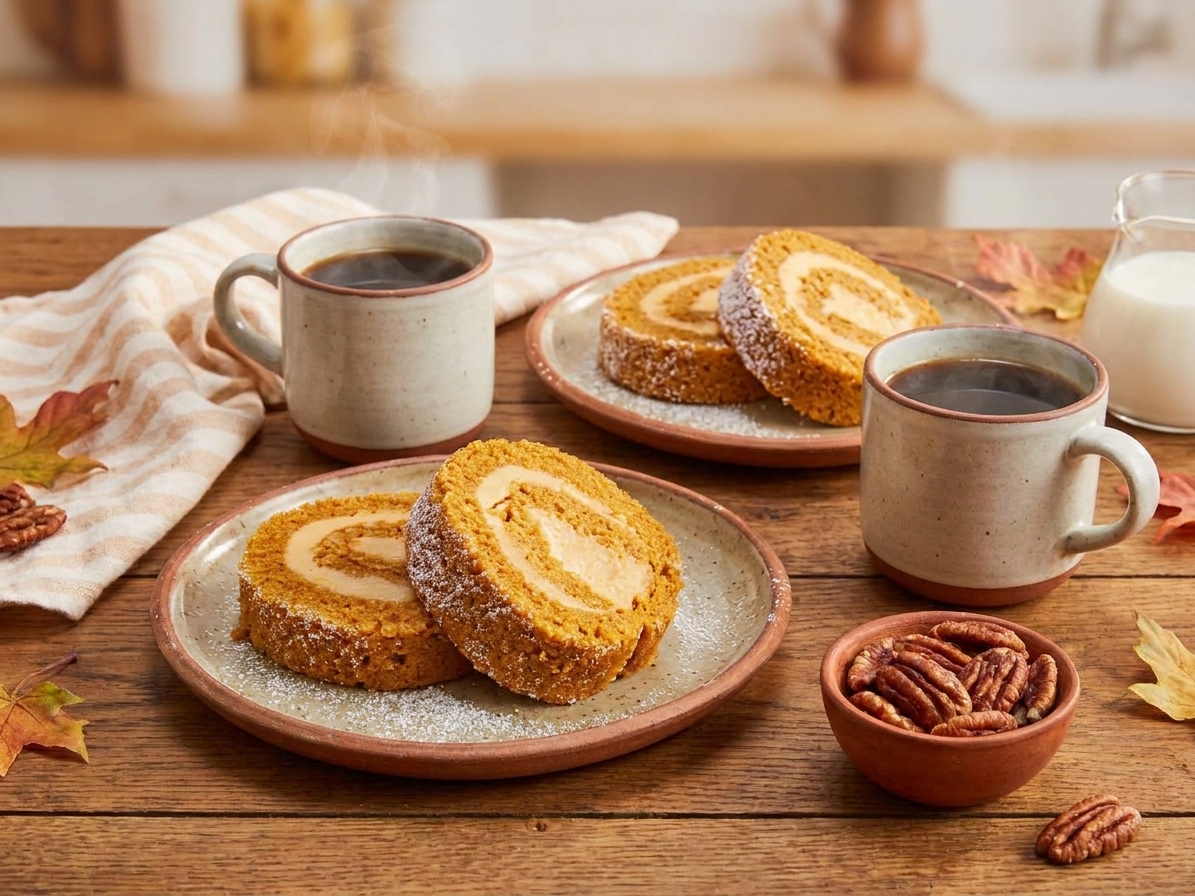
There is something wildly satisfying about slicing into a pumpkin roll and seeing that perfect spiral. It looks like a bakery project, but it is really a thin, flexible pumpkin sponge cake that gets rolled while it is warm, then filled and rolled again once cool. If your past attempts have cracked, stuck to the towel, or oozed filling out the sides, this version is built to prevent all three.
Yield: Makes 1 pumpkin roll (about 8 to 10 slices).
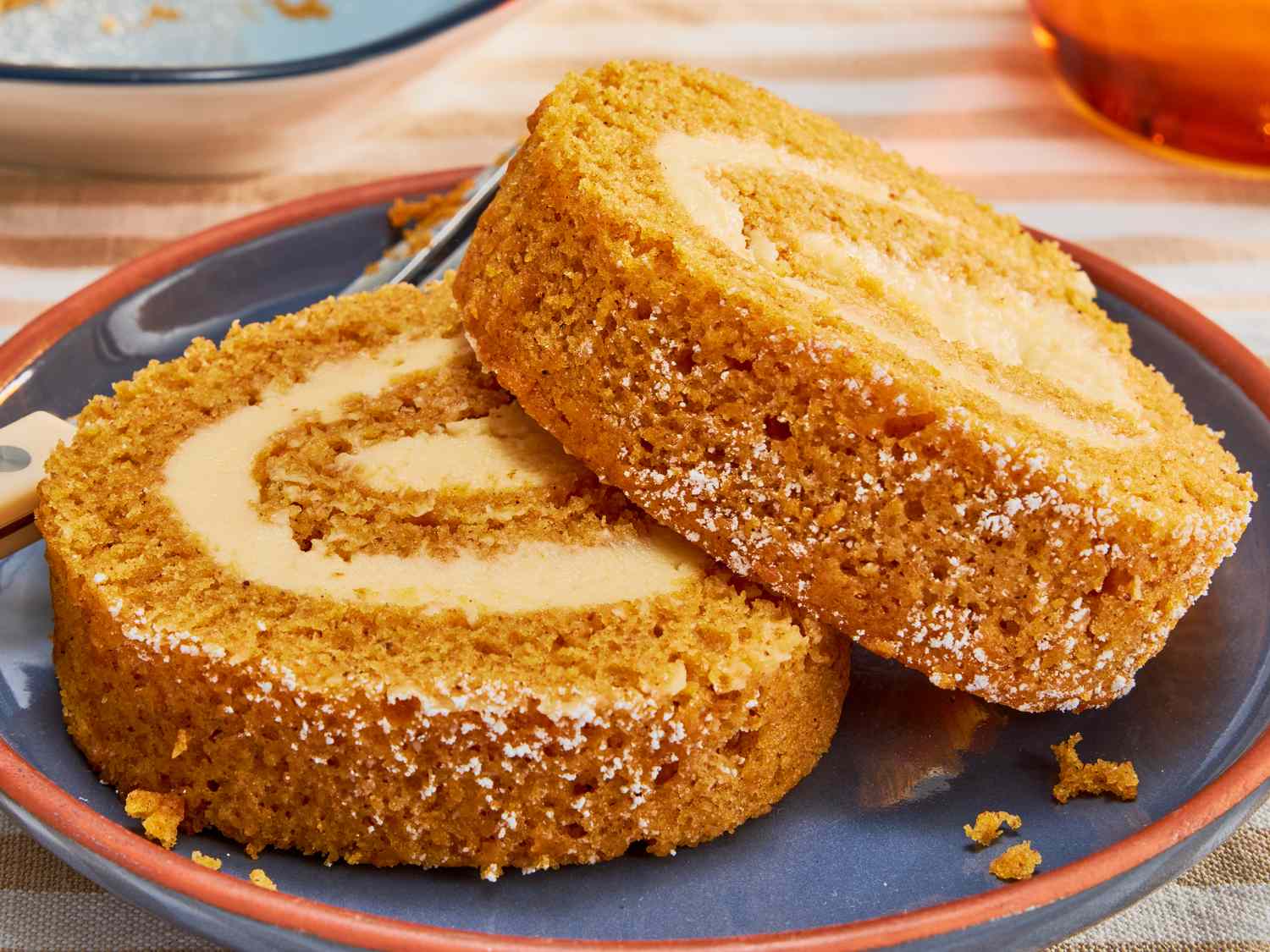
What makes this pumpkin roll work
- Whipped eggs for lift: A pumpkin roll is basically a sponge. Beating eggs and sugar until thick gives you a flexible cake that does not crumble.
- Thin bake + quick turnaround: Baking in a jelly roll pan keeps it pliable. Rolling while warm trains the cake into its future shape.
- Powdered sugar barrier: A generous dusting prevents sticking and helps avoid the dreaded towel peel.
- Chilled filling: A slightly firm cream cheese filling stays put, giving you a clean spiral.
Ingredients
For the pumpkin cake
- 3/4 cup (150 g) granulated sugar
- 3 large eggs, room temperature
- 2/3 cup (160 g) pumpkin puree (not pumpkin pie filling)
- 1 teaspoon vanilla extract
- 3/4 cup (95 g) all-purpose flour
- 1 teaspoon baking powder
- 1/2 teaspoon baking soda
- 1/2 teaspoon fine salt
- 2 teaspoons pumpkin pie spice (or 1 1/2 teaspoons cinnamon + 1/4 teaspoon ginger + 1/4 teaspoon nutmeg)
- Powdered sugar, for dusting
For the cream cheese filling
- 8 ounces (225 g) cream cheese, softened
- 6 tablespoons (85 g) unsalted butter, softened
- 1 cup (120 g) powdered sugar, plus more to finish
- 1 teaspoon vanilla extract
- Pinch of salt
- Optional: 1/2 teaspoon cinnamon or pumpkin pie spice
Pumpkin note: Pumpkin puree brands vary. If yours looks very watery, blot it briefly with paper towels so the batter stays light and the cake bakes up springy instead of damp.
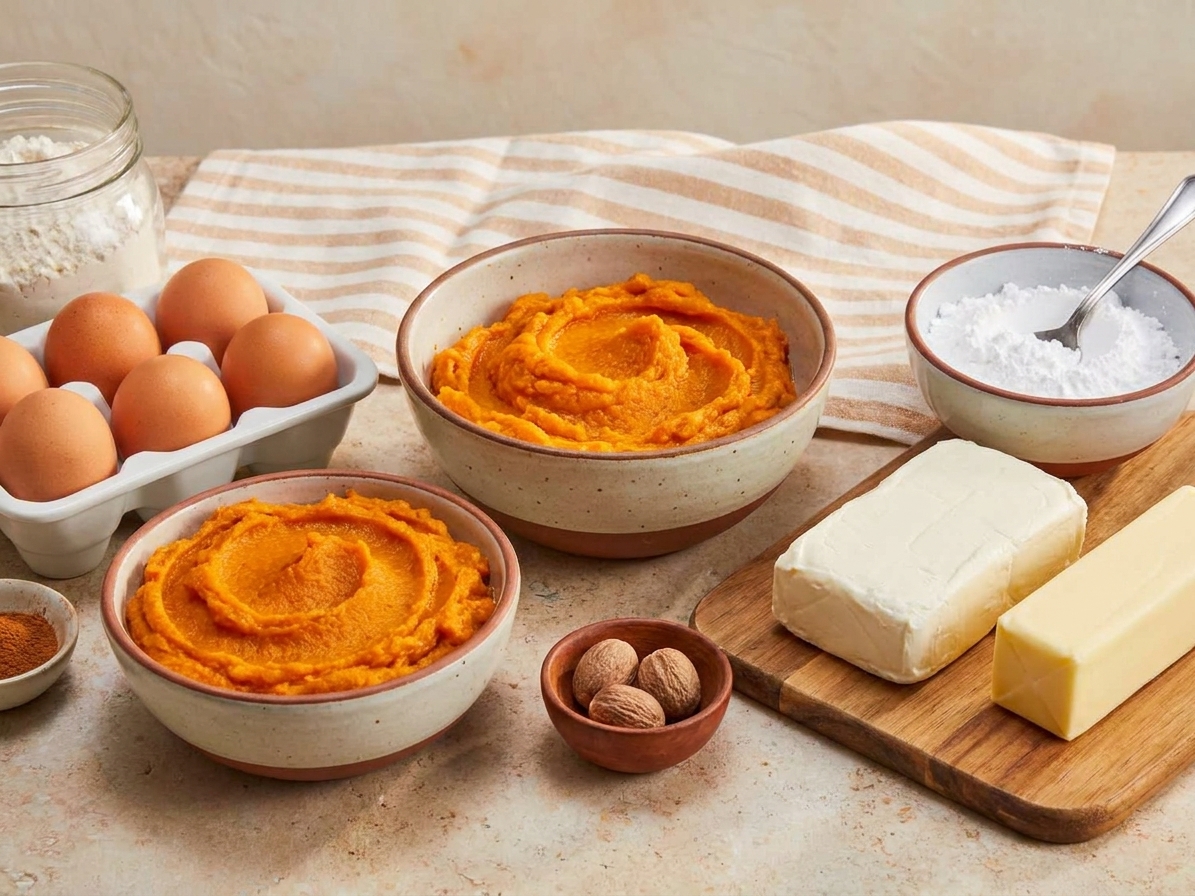
Tools you will need
- 10x15-inch jelly roll pan
- Parchment paper
- Stand mixer or hand mixer
- Fine-mesh sieve for powdered sugar (optional but helpful)
- Clean thin kitchen towel or a large piece of parchment
Pan note: A slightly different size can work, but it can change thickness and bake time. A larger pan can make the cake thinner and easier to overbake. A smaller pan can make it thicker and more prone to cracking when rolled.
Step-by-step pumpkin roll
1) Prep the pan
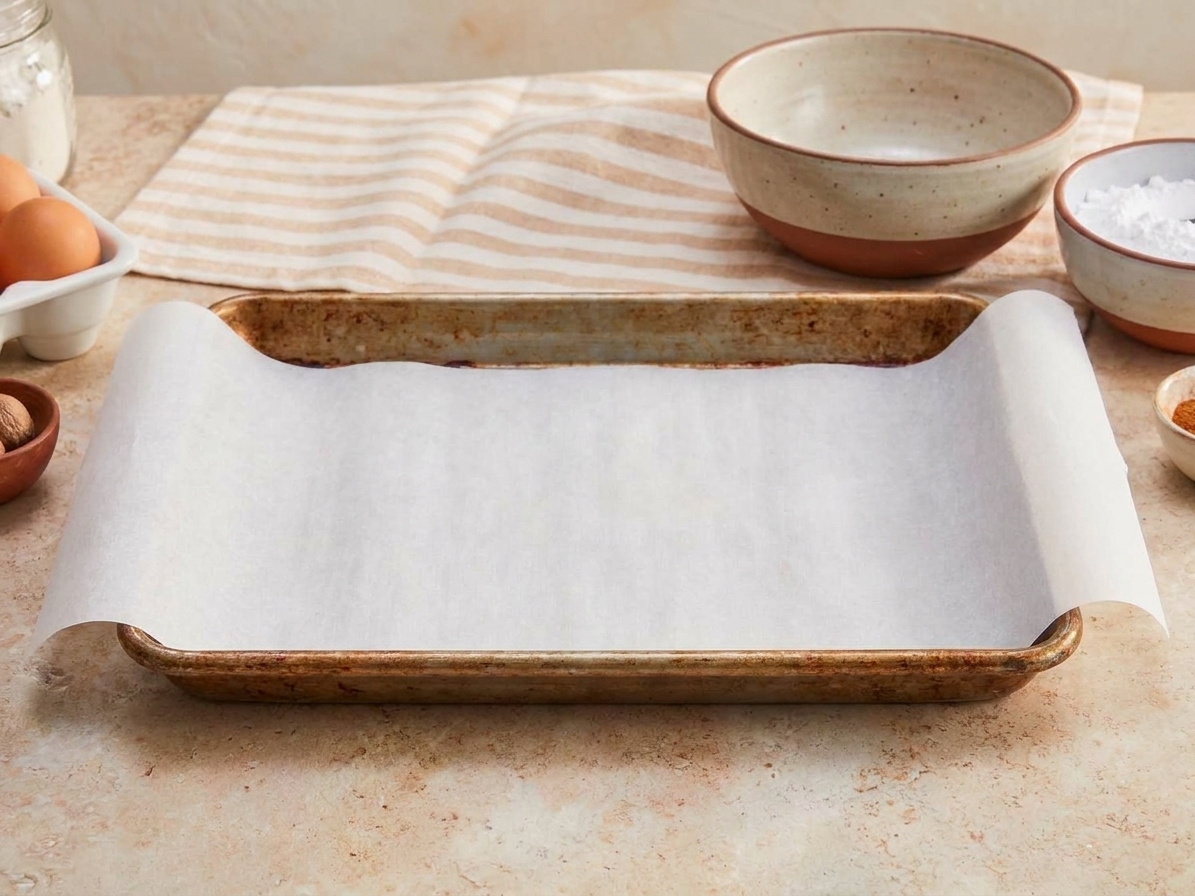
Heat the oven to 375°F (190°C). Line a 10x15-inch jelly roll pan with parchment, leaving a little overhang on the short sides for easy lifting. Lightly grease the parchment.
2) Whip eggs and sugar until thick
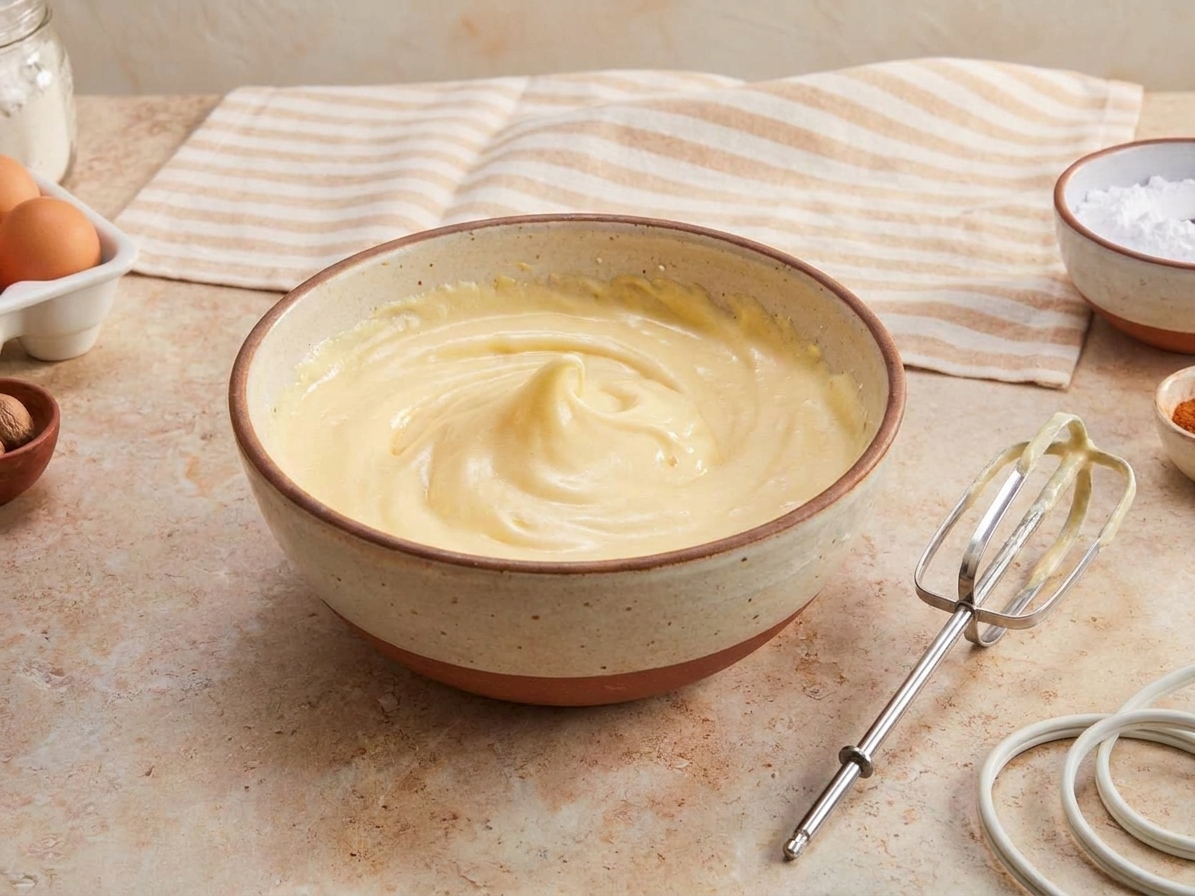
In a large bowl, beat the eggs and granulated sugar on medium-high until pale, thick, and ribboning, about 3 to 5 minutes. You should be able to lift the beaters and see the batter fall back in thick trails that sit on the surface for a moment.
Beat in the pumpkin puree and vanilla just until combined.
3) Fold in dry ingredients gently
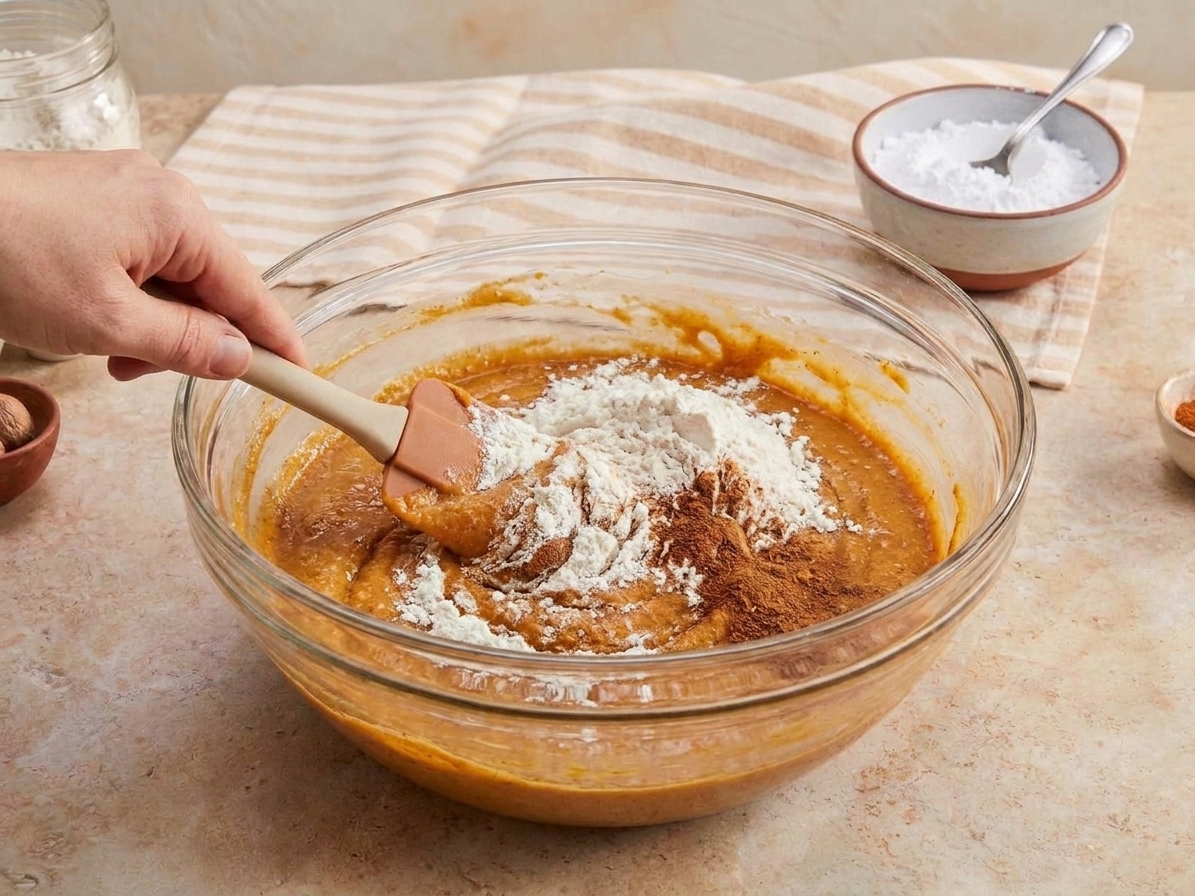
In a separate bowl, whisk together flour, baking powder, baking soda, salt, and spices. Sprinkle the dry mix over the pumpkin mixture and fold with a spatula until no dry streaks remain.
Sensory cue: The batter should feel airy and mousse-like, not dense. Stop folding as soon as it is uniform.
4) Bake
Spread batter evenly into the prepared pan. Bake 12 to 14 minutes, until the cake springs back when gently pressed and the edges look set. Do not overbake, which is the fastest path to cracking.
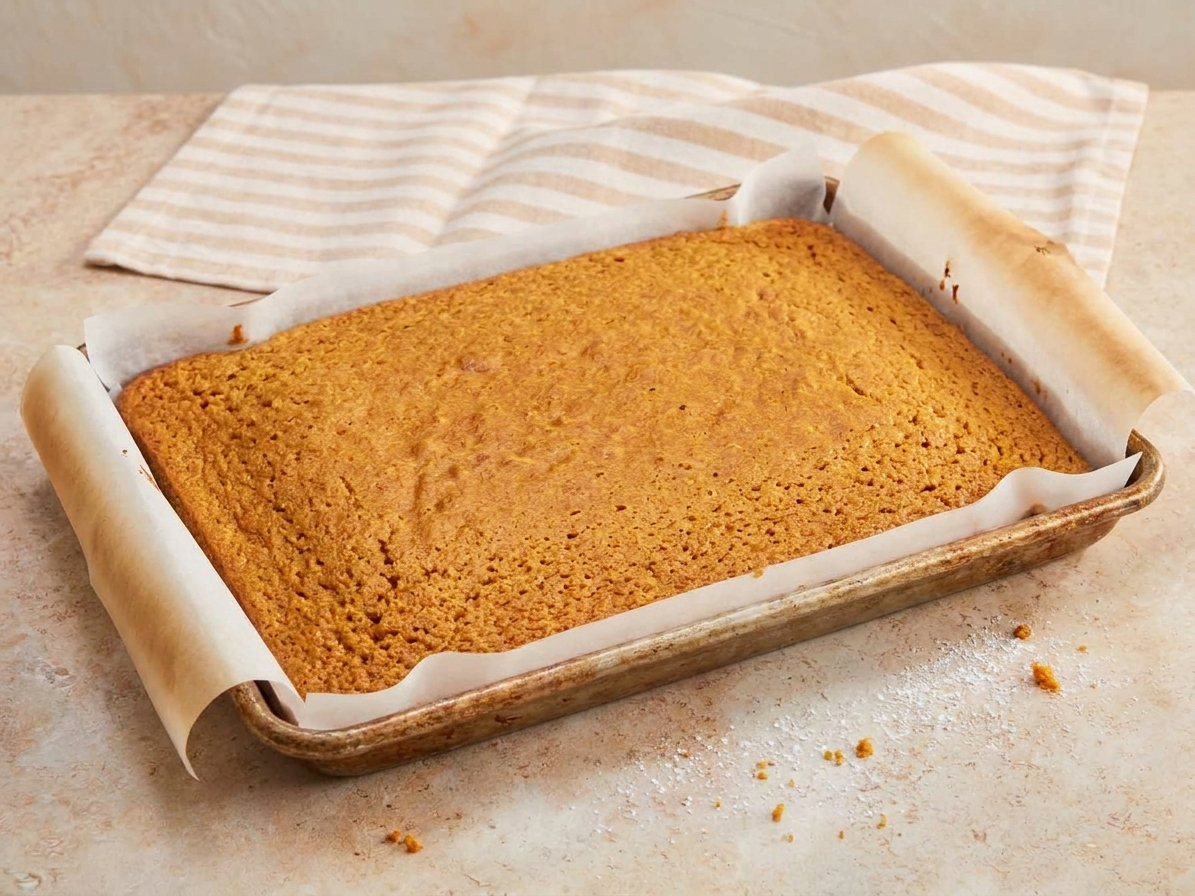
5) Roll while warm
Lay a clean thin towel on the counter and dust it generously with powdered sugar. Immediately loosen the cake edges, then invert the warm cake onto the towel. Peel off the parchment.
Starting at a short end, roll the cake up with the towel inside. Use the towel to lift and guide as you roll. Roll snugly but without squashing. Place seam-side down and let cool completely at room temperature, about 1 hour.
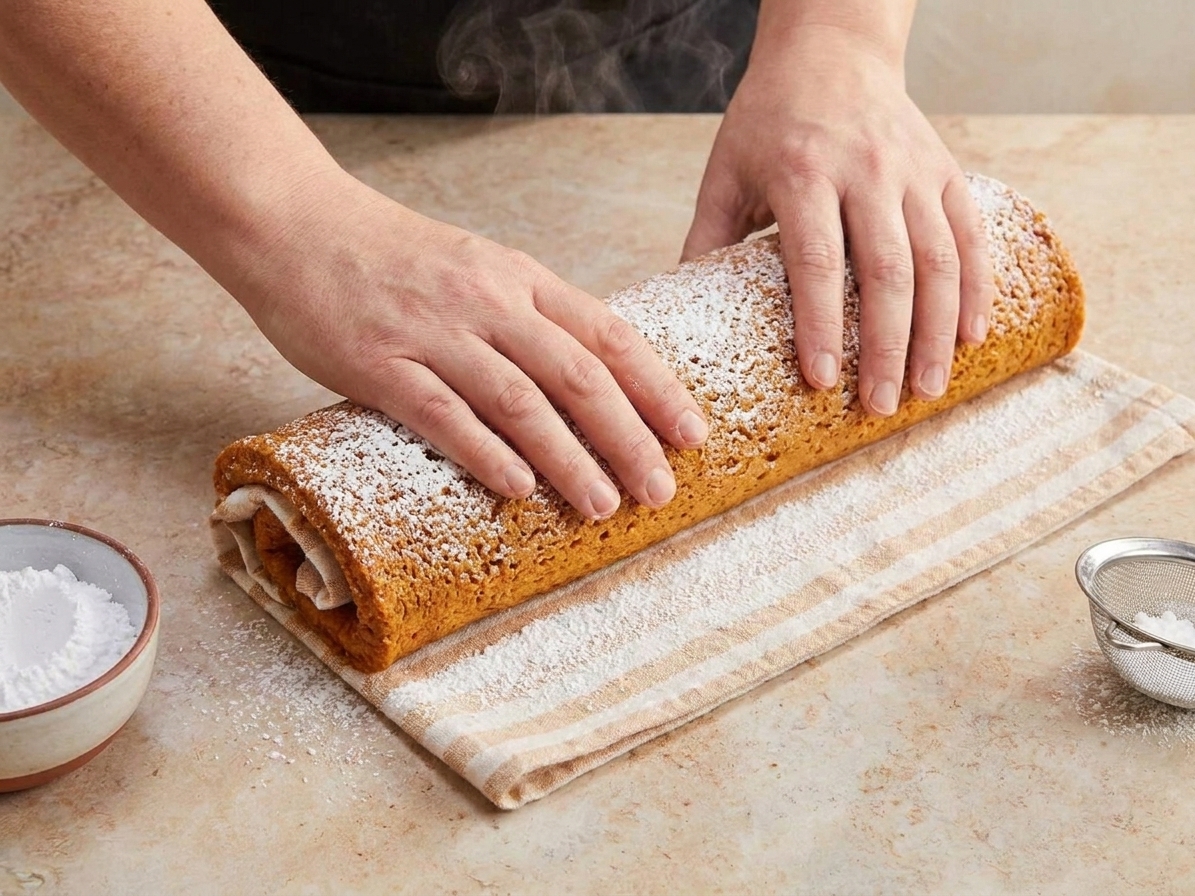
6) Make the filling
Beat cream cheese and butter until smooth and fluffy, 1 to 2 minutes. Add powdered sugar, vanilla, salt, and optional spice, then beat until creamy. If your kitchen is warm, chill the filling 10 to 15 minutes so it spreads neatly.
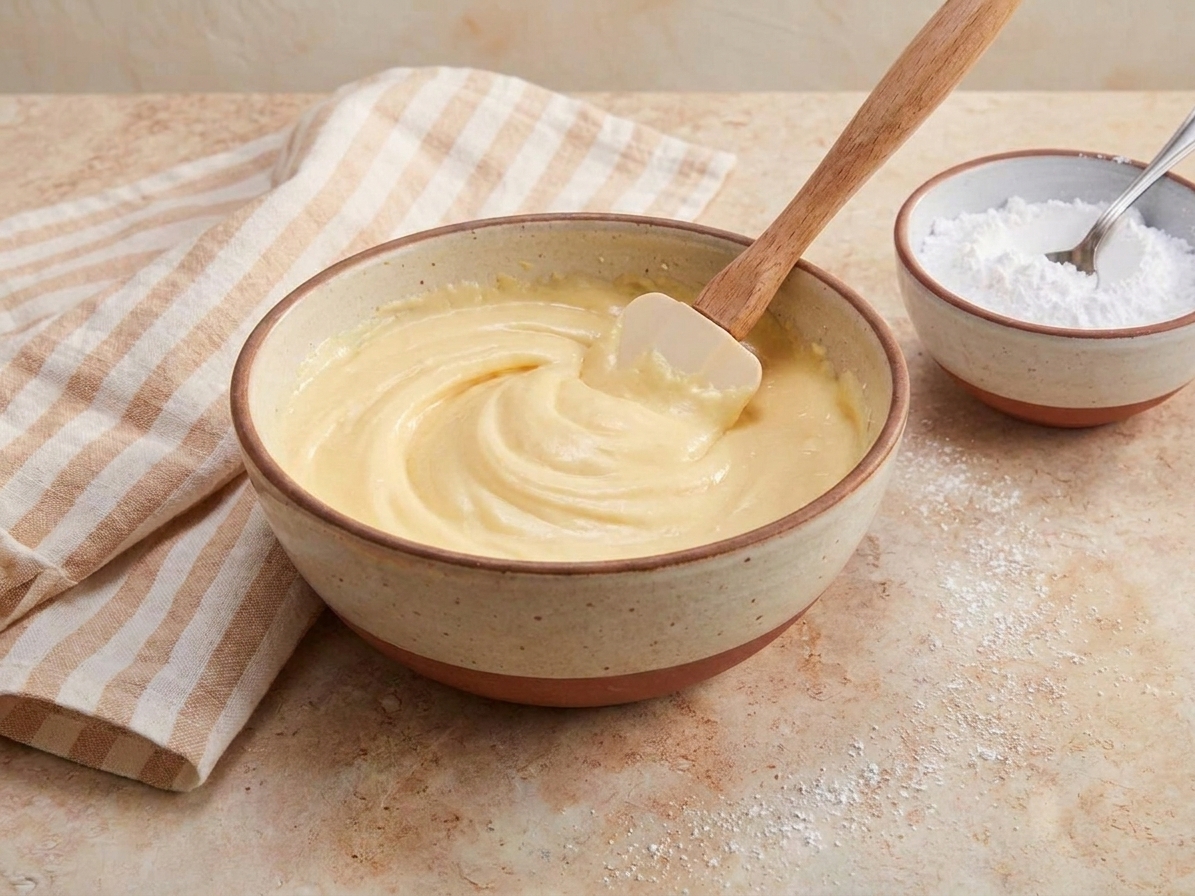
7) Fill, re-roll, and chill
Unroll the cooled cake gently. Spread filling in an even layer, leaving a 1/2-inch border on all sides and a slightly wider border (about 3/4 inch) on the far end, meaning the last edge you finish rolling toward. This helps prevent squeeze-out.
Roll the cake back up, this time without the towel. Wrap tightly in plastic wrap and refrigerate at least 1 hour, or up to 2 days, for clean slices.
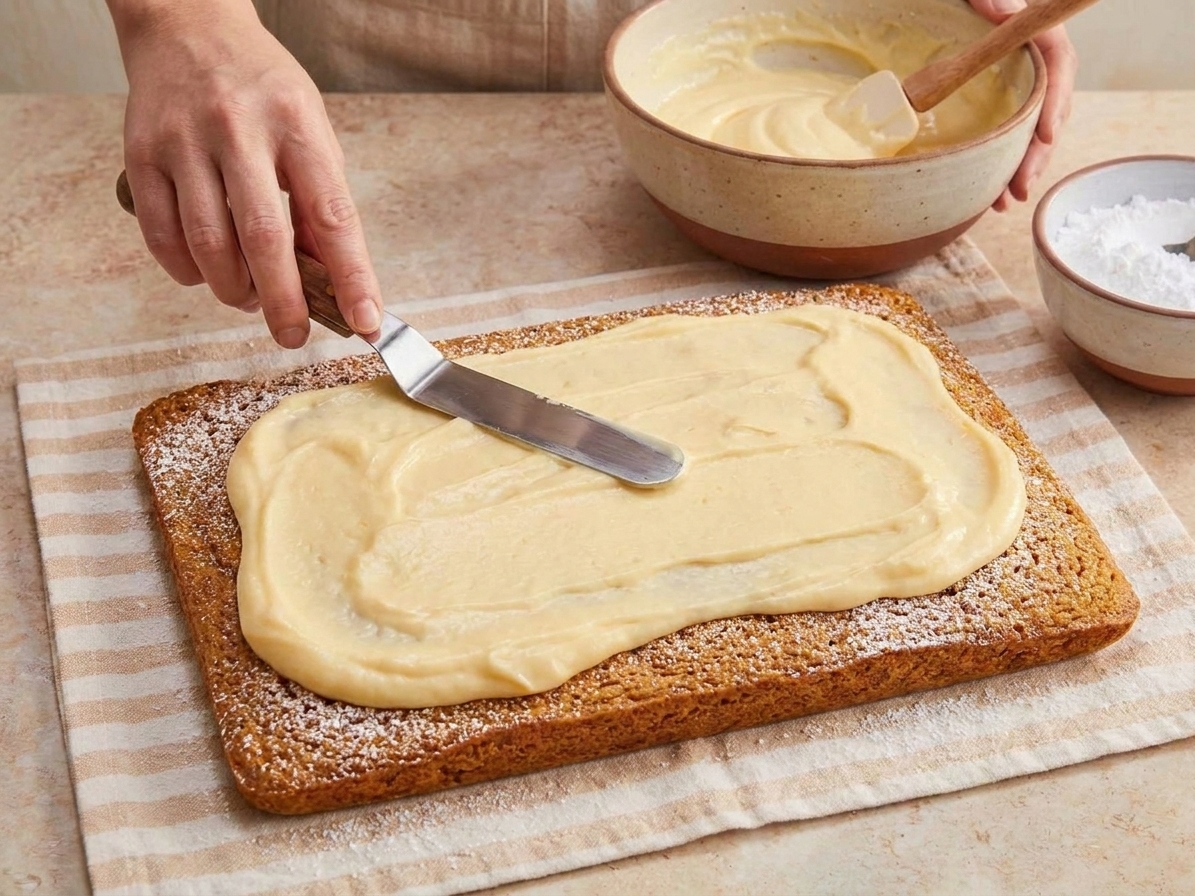
8) Slice and serve
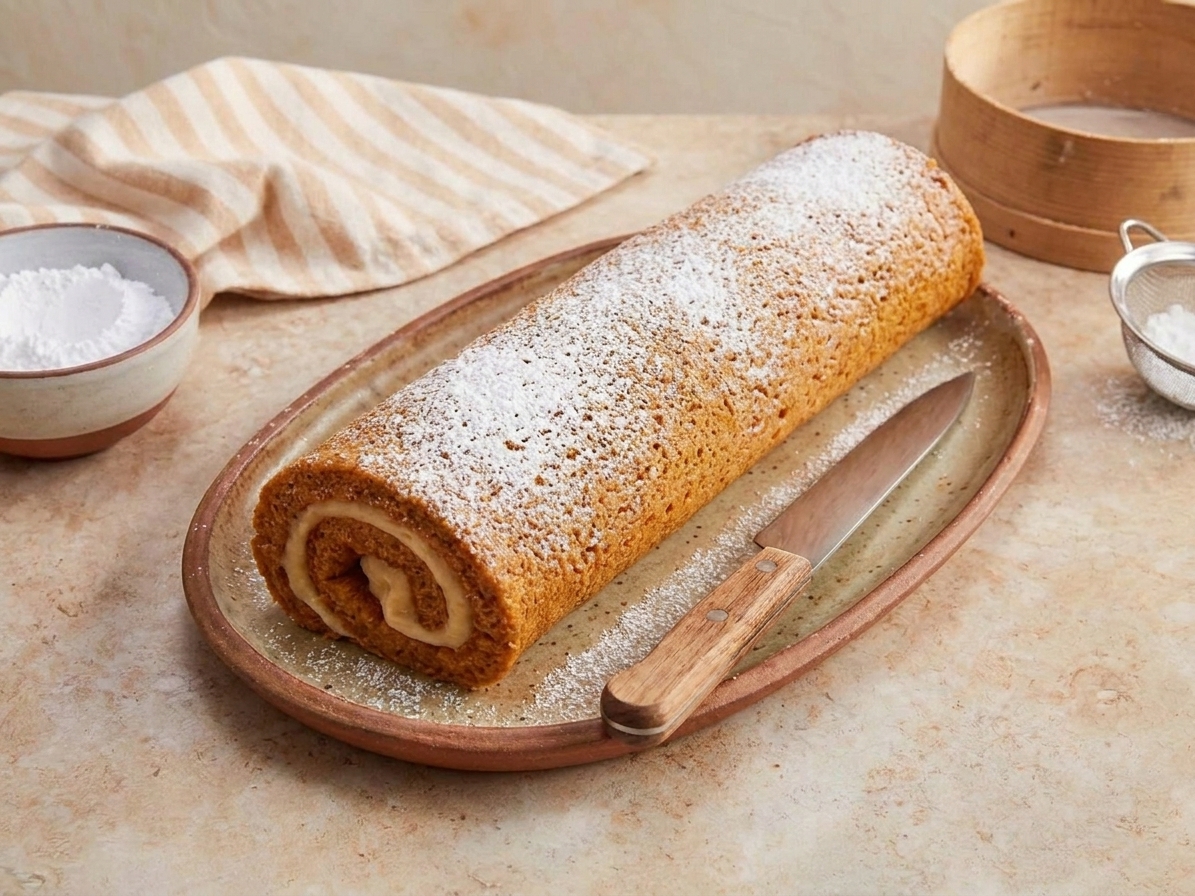
Dust with powdered sugar right before serving. Trim the ends for the neatest presentation, then slice with a sharp serrated knife, wiping the blade between cuts.
My best tips for a crack-free roll
- Roll it warm, fill it cool. The first roll is all about flexibility. The second roll is all about clean structure.
- Do not overbake. If you are unsure, pull it when it springs back and looks set, not when it starts to brown heavily.
- Use enough powdered sugar. Think of it as nonstick flour for desserts.
- Keep the filling off the edges. That small border is the difference between a tidy spiral and a messy slip-and-slide.
- Chill before slicing. Cold filling cuts cleanly and helps the roll hold its shape.
Substitutions and variations
Spice options
- More aromatic: Add 1/8 teaspoon ground cloves.
- More ginger: Add 1/4 teaspoon ground ginger for extra warmth.
Filling variations
- Maple: Replace vanilla with 1 tablespoon pure maple syrup and reduce powdered sugar by 2 tablespoons if you like it less sweet.
- Orange: Add 1 teaspoon finely grated orange zest and a tiny squeeze of juice.
- Nutty crunch: Sprinkle 1/2 cup finely chopped toasted pecans over the filling before rolling.
Gluten-free note
A 1:1 gluten-free baking flour blend can work here, but results are brand-dependent. For the best structure, use a blend that includes xanthan gum (or add 1/4 teaspoon xanthan gum if yours does not). The sponge may be slightly more delicate, so roll extra gently and do not skip the towel roll while warm.
Make-ahead, storage, and freezing
- Make-ahead: Assemble up to 2 days ahead. Keep wrapped and refrigerated, then dust with powdered sugar right before serving.
- Refrigerator: Store tightly wrapped up to 4 days.
- Freezer: Wrap the filled roll in plastic wrap, then foil. Freeze up to 2 months. Thaw overnight in the fridge. Dust with powdered sugar after thawing.
Food safety note: Because of the cream cheese filling, keep the roll refrigerated and do not leave it out at room temperature for more than about 2 hours (less if your kitchen is warm).
Food waste tip: Those trimmed ends are the cook’s treat. Chop them into a bowl with yogurt and toasted nuts for a five-minute parfait.
Troubleshooting
My cake cracked. Is it ruined?
Not at all. Most cracks happen on the outside and get covered with powdered sugar. If it cracked badly, spread a touch of extra filling over the crack like spackle, chill, then dust generously.
It stuck to the towel.
Usually not enough powdered sugar, or the towel had texture that grabbed the cake. Next time, use a very smooth tea towel or parchment paper and dust more generously.
My filling squeezed out.
Either the filling was too soft or it went all the way to the edges. Chill the filling briefly and leave that 1/2-inch border. Also roll with steady, even pressure instead of tightening at the very end.
My roll is gummy.
Underbaking is a common culprit, and extra-moist batter can do it too. Bake until the center springs back, then roll promptly so it does not sit in the hot pan. If you notice condensation while it cools, let the rolled cake rest seam-side down with a little airflow around it (not wrapped) until fully cool.
Quick serving ideas
- Serve with strong coffee or masala chai.
- Add a spoonful of lightly sweetened whipped cream and a few toasted pecans.
- For a dessert board, pair slices with apple wedges and salted caramel sauce.