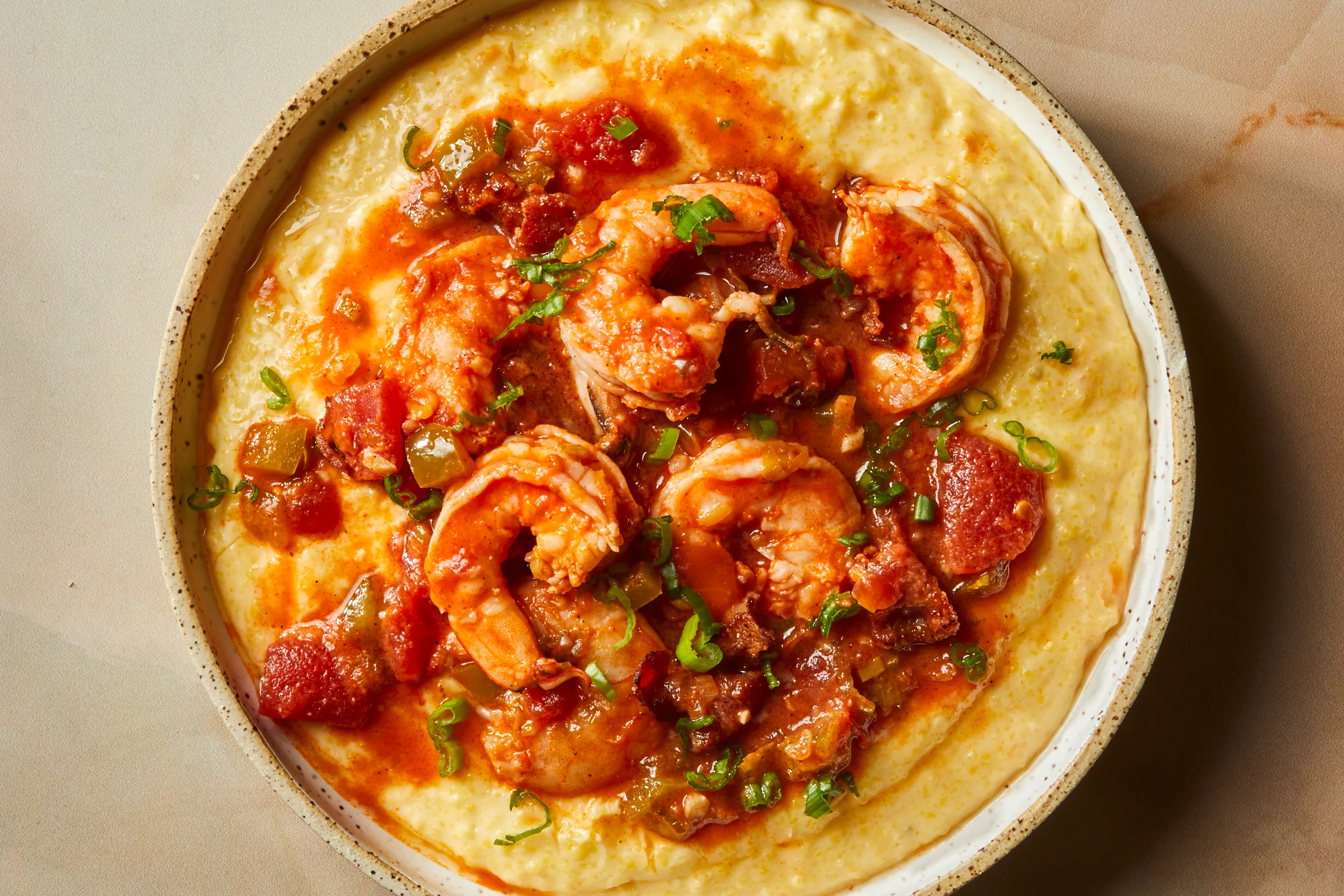

Shrimp and grits is one of those dishes that feels like a restaurant treat, but it is absolutely a weeknight-friendly dinner when you nail two things: grits that stay creamy and pourable, and shrimp that cook fast without turning rubbery.

My approach is simple and very organized (because I have burned one too many pans of grits while trying to multitask): start the grits first, then cook the shrimp right at the end so they only spend a few minutes on the heat. I go by cues, not the clock: pull the shrimp as soon as they turn opaque, curl into a loose “C,” and feel just-firm when you press one. If they curl into a tight “O,” you have probably gone a little too far.
This is not a heavy-cream sauce. It is a quick, savory pan sauce built from butter, garlic, a splash of stock, and lemon (zest and juice) to keep the whole bowl bright.
If you have ever had grits seize up into a brick or shrimp overcook while you are waiting for the grits, you are in the right place. I will show you the ratio, the cues to watch for, and the timing that keeps everything silky at the same moment.
Why this recipe works
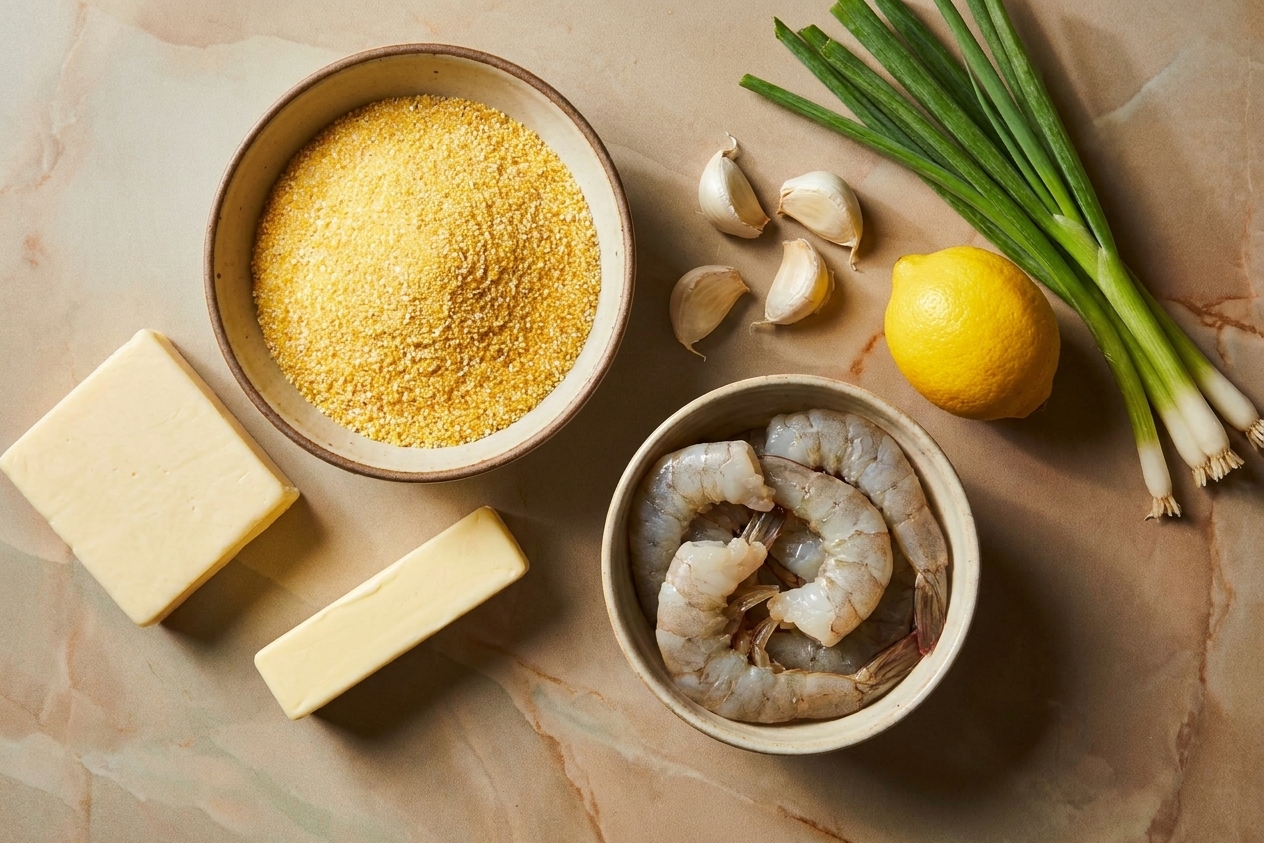
- Reliable grit-to-liquid ratio: 1 cup grits to 4 cups liquid gives a creamy, spoonable texture that stays pourable on the stovetop with a short rest and a final loosen-up.
- Two-stage seasoning: Salt goes into the grits early for even flavor, then cheese and butter go in at the end for smoothness without making them stiff too soon.
- Tender shrimp timing: Shrimp cook in 2 to 4 minutes. They go into a hot pan only after the grits are basically done, then get pulled immediately when they turn opaque with a pink curl.
- Light pan sauce, not a cream sauce: A small splash of stock and lemon lifts the shrimp and keeps the bowl bright, which is the secret to not feeling weighed down.
- Food-waste friendly: This is a great home for leftover stock, scallions, and odds-and-ends cheese. You can also use frozen shrimp with excellent results.
Ingredient notes
Grits
Stone-ground grits have the best corn flavor and texture, but they cook a bit longer than quick grits. This recipe is written for stone-ground. If you only have quick grits, use the same ratio and start checking for doneness earlier.
Liquid: I like a mix of water and chicken stock for savoriness without heaviness. All water works. All stock works too, just watch the salt level.
Cheese
Sharp cheddar is classic and melts well. Grate it yourself if you can. Pre-shredded cheese often has anti-caking agents that can make grits slightly grainy.
Shrimp
Large shrimp (16 to 20 count) are ideal. Smaller shrimp cook so fast they are easy to overdo.
Frozen shrimp are totally fine. Thaw overnight in the fridge, or thaw quickly in a bowl of cold water (drain and pat very dry before seasoning).
Seasoning and acid
Paprika plus a little cayenne gives warmth without turning this into a different dish. Lemon zest and lemon juice at the end makes the whole bowl taste more like itself. It is the difference between “rich” and “I want another bite.”
Equipment you will need
- Medium heavy-bottomed pot with lid (for grits)
- Whisk (important for preventing lumps early on)
- Large skillet (cast iron or stainless steel are great for a quick sauce)
- Microplane or fine grater (for garlic, optional but helpful)
- Instant-read thermometer (optional for shrimp, helpful if you are anxious about overcooking)
Pro tips
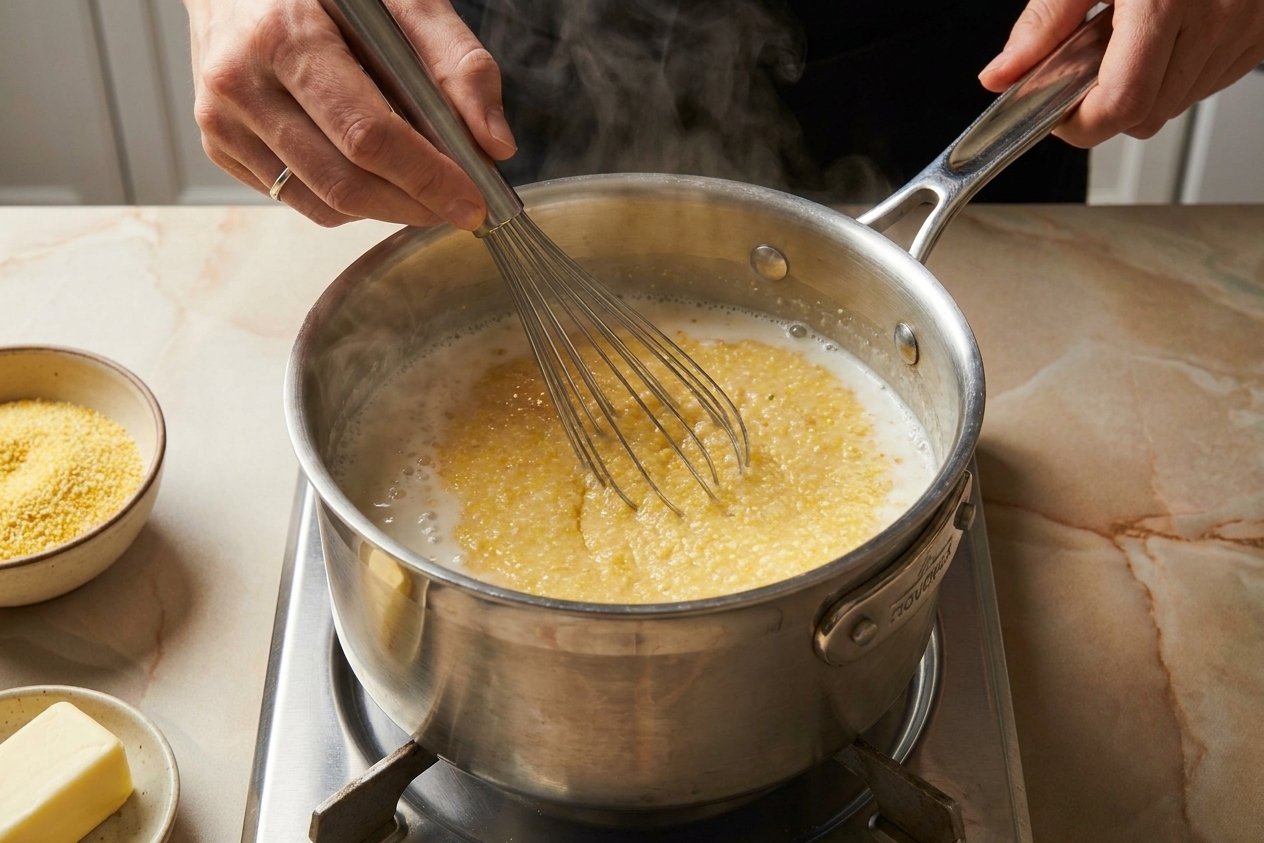
- Whisk early, stir later: Whisk as you pour grits into simmering liquid to prevent clumps. Once they thicken, switch to a spoon or spatula and scrape the corners.
- Simmer gently: A low simmer keeps grits creamy. A hard boil can scorch the bottom fast.
- Keep grits pourable: If they look perfect in the pot, they will be slightly thicker in the bowl. Before serving, loosen with a splash of hot water or stock until they flow off a spoon.
- Dry shrimp = better sear and better texture: Pat shrimp very dry before seasoning so they sauté instead of steaming.
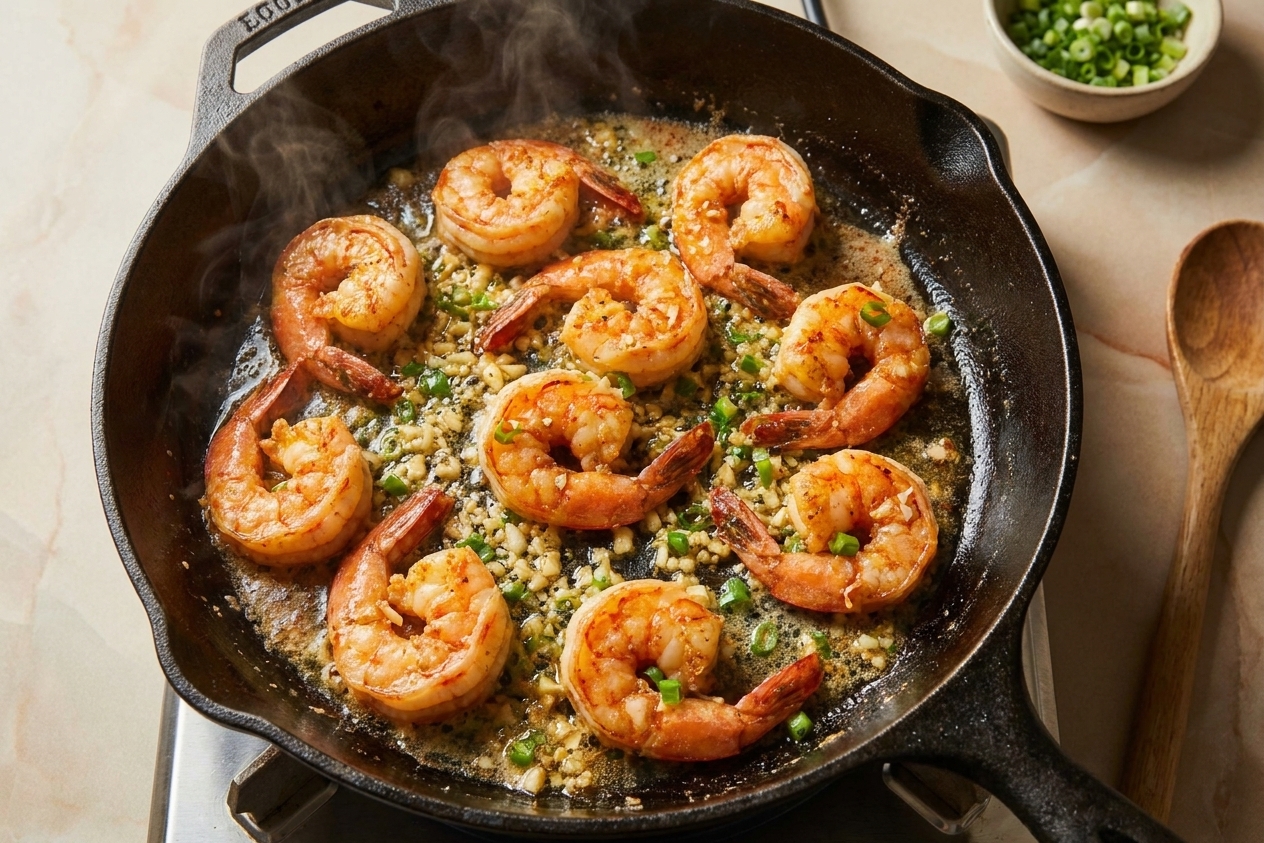
- Cook shrimp just to done: Pull them when they are opaque and curled into a “C” shape and feel just-firm. If they curl into a tight “O,” they are likely overcooked.
- Finish sauce off-heat: Add lemon juice with the heat lowered or off so it stays bright and does not taste harsh.
Substitutes that work
- No stock? Use water plus a small pinch of extra salt, or water plus a splash of clam juice if you keep it around.
- No cheddar? Smoked gouda (milder), Monterey Jack (very melty), or Parmesan (saltier, use less) all work.
- No lemon? A small splash of white wine vinegar works in a pinch. Start with 1 teaspoon and taste.
- Need gluten-free? This dish is naturally gluten-free as written. Just confirm your stock is gluten-free.
- Butter alternative: Olive oil works for the shrimp pan, but for the grits I strongly prefer butter for texture. If dairy-free, use a good plant butter and skip the cheese or use a dairy-free cheddar-style shreds.
Variations
- Creole-style: Add a pinch of dried thyme and oregano to the shrimp seasoning, plus a spoonful of diced tomatoes into the pan sauce.
- Bacon boost: Crisp 2 to 3 slices of bacon, use 1 tablespoon of the drippings to sauté the shrimp, then crumble bacon over the top.
- Greens on the side: Serve with quick sautéed spinach or garlicky kale for contrast and color.
- Spicier: Add hot sauce to the pan sauce at the end, a few shakes at a time.
- Extra tang: Stir a spoonful of sour cream into the grits at the end for a gentle tang and extra silkiness.
Serving ideas
- Top with sliced scallions, chives, or parsley.
- Add a few halved cherry tomatoes for freshness.
- Serve with a simple vinegar-dressed side salad to balance the richness.
- For a brunch vibe, add a soft fried egg on top.
Storage and reheating
- Best day-of: Shrimp and grits are at their peak right after cooking.
- Store: Refrigerate grits and shrimp separately in airtight containers for up to 2 days.
- Reheat grits: Warm in a saucepan over low heat with splashes of water or stock, whisking until smooth and creamy again. They will need more liquid than you think.
- Reheat shrimp gently: Warm shrimp and sauce in a skillet over low heat just until heated through, 1 to 2 minutes. Avoid microwaving too long or they will toughen.
Common mistakes
- Using too little liquid for grits: Thick grits are fine, but shrimp and grits should be spoonable and creamy. Stick to 1:4 (grits:liquid) for stone-ground.
- Boiling grits hard: This is how scorching happens. Keep it at a low simmer and stir more as they thicken.
- Adding cheese too early: Cheese can tighten the texture if it goes in before the grits are fully tender. Add it at the end.
- Overcooking shrimp: Shrimp go from perfect to rubbery fast. Cook them last, and pull them as soon as they are opaque.
- Skipping the final acid: Lemon at the end is not optional if you want the dish to taste balanced instead of flat.
FAQ
What is the best grit-to-liquid ratio?
For creamy, pourable stovetop grits, use 1 cup stone-ground grits to 4 cups liquid. If they thicken as they sit, loosen with hot water or stock right before serving.
Can I use quick grits?
Yes. Keep the same ratio, but start checking early. Quick grits can finish in about 5 to 10 minutes depending on the brand. Add cheese and butter at the end, just like stone-ground.
How do I keep shrimp tender?
Pat them dry, cook over medium-high heat, and stop as soon as they turn opaque and curled into a gentle “C.” If they curl into a tight “O,” they are likely overcooked. If you are using a thermometer, aim for about 120 to 130°F in the thickest part, then carryover heat will finish the job.
Why did my grits turn into a solid block?
Grits naturally firm up as they cool because the starches set. Reheat low and slow with additional liquid and whisk until smooth. You cannot fix it without adding more water or stock, so be generous.
Can I make the grits ahead?
You can, but plan to reheat with extra liquid and whisk. For the best shrimp texture, cook shrimp right before serving.
Shrimp and Grits
Creamy stovetop grits (with a clear 1:4 ratio) topped with seasoned shrimp and a bright, buttery pan sauce. Comforting, balanced, and doable on a weeknight.
- Prep
- 10 minutes
- Cook
- 25 minutes
- Total
- 35 minutes
- Yield
- 4 servings
Ingredients
- For the grits
- 1 cup stone-ground grits
- 4 cups liquid (2 cups water + 2 cups chicken stock, or all water)
- 1 teaspoon kosher salt, plus more to taste
- 2 tablespoons unsalted butter
- 1 cup sharp cheddar cheese, freshly grated (about 4 ounces)
- Freshly ground black pepper, to taste
- Hot water or stock, as needed to loosen before serving
- For the shrimp and pan sauce
- 1 pound large shrimp (16 to 20 count), peeled and deveined
- 1 tablespoon olive oil
- 1 teaspoon kosher salt
- 1 teaspoon smoked or sweet paprika
- 1/4 teaspoon garlic powder
- 1/8 teaspoon cayenne pepper (optional)
- 2 tablespoons unsalted butter
- 3 cloves garlic, minced
- 1/2 cup chicken stock (or seafood stock)
- 1 teaspoon lemon zest
- 1 tablespoon lemon juice, plus more to taste
- 2 scallions, thinly sliced (for serving)
Instructions
- Start the grits. In a medium pot, bring the 4 cups liquid to a gentle simmer over medium heat. Slowly whisk in the grits in a steady stream. Add the salt. Reduce heat to low so the grits are at a low simmer (small bubbles), then cover and cook, stirring and scraping the bottom every few minutes, until thickened and tender, 18 to 25 minutes depending on your grits.
- Finish the grits creamy. When the grits taste fully tender (not gritty), turn off the heat. Stir in the butter and cheddar until melted and smooth. Season with black pepper, then taste and add more salt if needed. Keep covered off-heat while you cook the shrimp. If the grits get too thick, loosen with a splash of hot water or stock until pourable.
- Season and dry the shrimp. Pat shrimp very dry with paper towels. In a bowl, toss with olive oil, salt, paprika, garlic powder, and cayenne (if using) until evenly coated.
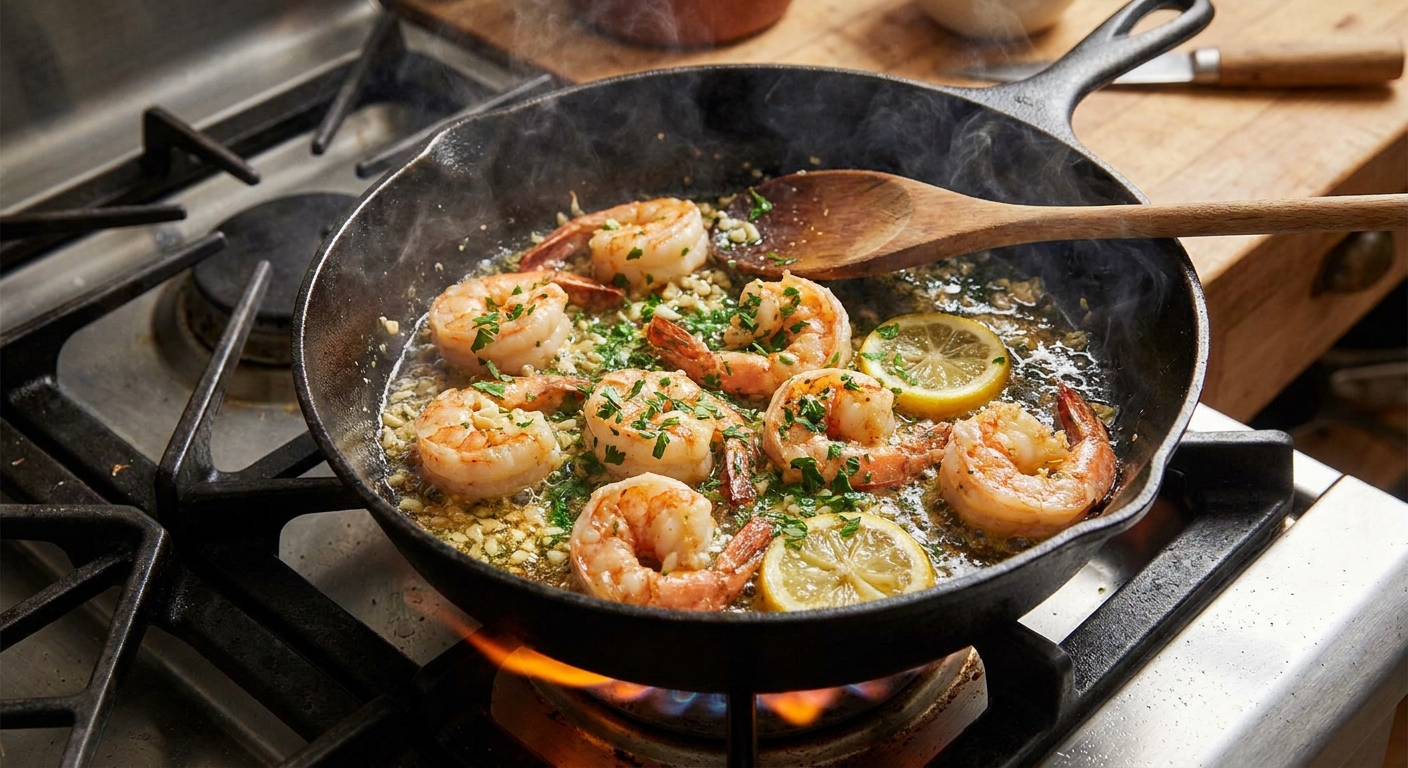
- Sauté the shrimp quickly. Heat a large skillet over medium-high heat. Add the shrimp in a single layer. Cook 1 to 2 minutes per side, just until opaque and pink. Transfer shrimp to a plate immediately.
- Make the light pan sauce. Lower heat to medium. Add 2 tablespoons butter to the same skillet. Once melted, add minced garlic and cook 20 to 30 seconds, just until fragrant. Pour in the 1/2 cup stock and scrape up any browned bits. Simmer 1 to 2 minutes to reduce slightly. Stir in lemon zest.
- Return shrimp briefly, then add lemon. Return shrimp (and any juices) to the skillet and toss for 30 to 60 seconds to coat and warm through. Turn off the heat and stir in lemon juice. Taste and add a little more lemon juice or a pinch of salt if needed.
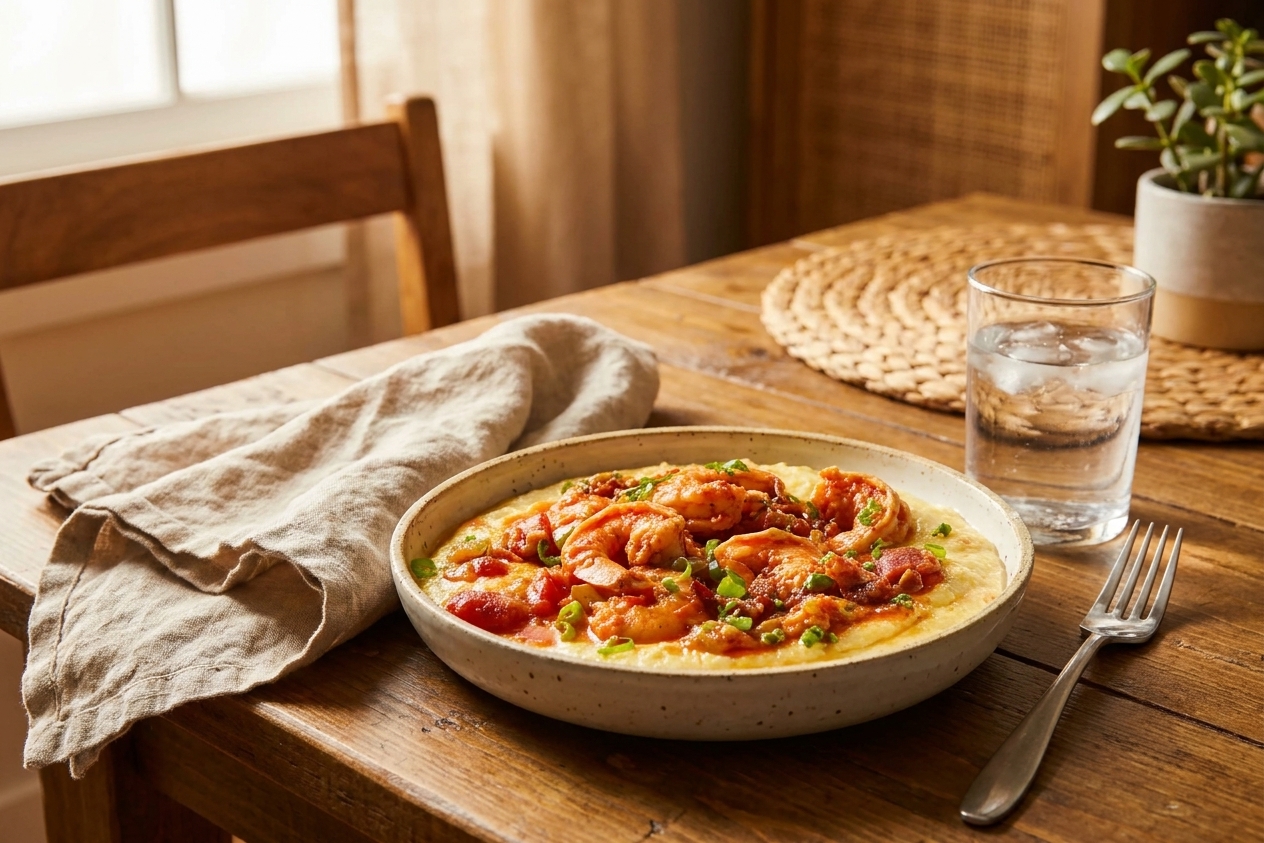
- Serve. Spoon grits into bowls. Top with shrimp and pan sauce. Finish with sliced scallions and black pepper. Serve immediately while the grits are creamy and the shrimp are tender.
Notes
Grits ratio: This recipe uses 1 cup stone-ground grits to 4 cups liquid for creamy, spoonable grits. If you want them thicker, start here anyway and reduce less at the end rather than cutting liquid upfront.
To keep grits pourable: Right before serving, stir in hot water or stock 1 tablespoon at a time until they flow off a spoon.
Shrimp doneness cue: Pull shrimp as soon as they turn opaque and curl into a “C.” Waiting for “a little more color” is how they overcook.
Salt note: If your stock is salty, start with 3/4 teaspoon salt in the grits and adjust at the end.