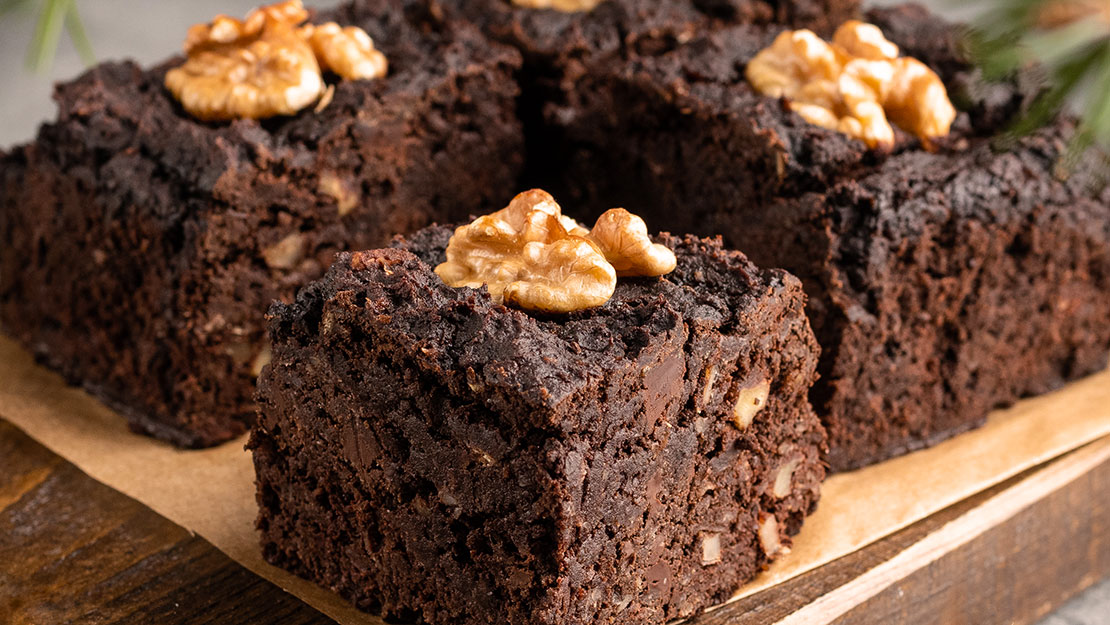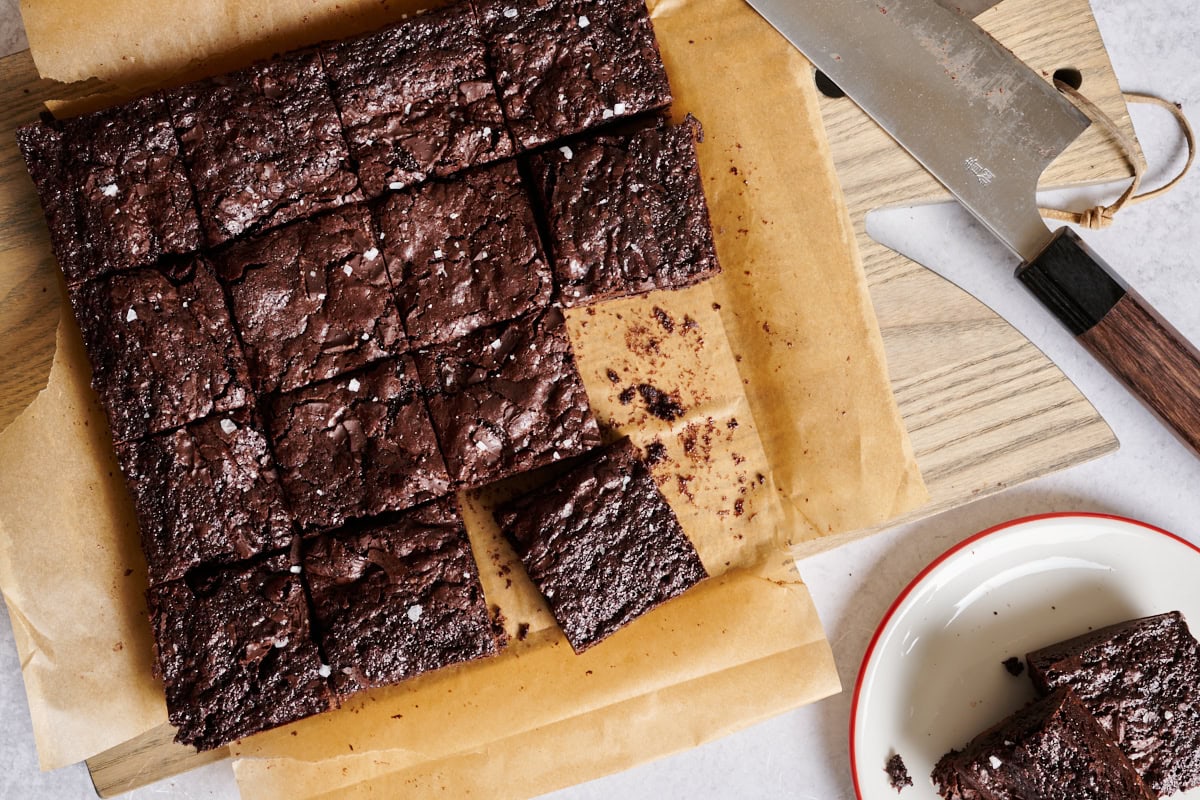

I keep a jar of sourdough discard in my fridge like it’s a tiny promise to my future self. The promise isn’t always pancakes. Sometimes it’s brownies. These are cocoa brownies, not a “starter” brownie that tastes like bread. The discard is here for tenderness and a subtle, yogurt-like tang that, with my starter, can make the chocolate taste darker and more intense.

The key is treating discard like what it essentially is: mostly flour plus water, with natural acidity that can vary a lot from kitchen to kitchen. Hydration varies too, and that matters. If you just stir a cup of 100% hydration discard (equal weights flour and water) into a standard brownie batter without adjusting anything else, you can end up with a batter that is too wet. Then you compensate with extra flour, and suddenly you are in cakey territory. Instead, this recipe builds the batter around a specific amount of discard so the texture stays fudgy, dense, and sliceable.
One more thing I care about more than a crackly top: a doneness cue that works even if your oven runs hot or your cocoa is extra absorbent. I will walk you through exactly what to look for so you pull them at the right moment. Then they set into that soft, truffle-like middle as they cool.
Why this recipe works
- Discard adds tenderness without making the brownies “bready.” Unfed sourdough discard contains hydrated flour and organic acids that can soften the crumb and deepen chocolate flavor.
- The batter is balanced for discard. The recipe assumes discard is about 100% hydration, meaning roughly equal weights flour and water. We reduce both the added flour and the added liquid so the batter stays thick and fudgy instead of loose and cakey.
- Cocoa plus a touch of coffee equals bigger chocolate flavor. Coffee does not make these taste like mocha. It simply amplifies cocoa’s bitterness and aroma.
- A gentle mix keeps the texture dense. Overmixing develops gluten in the added flour, which can push brownies from fudgy to chewy and dry.
- The doneness cue is visual and tactile. You will look for set edges and a slightly under-set center that finishes cooking from residual heat as the pan cools.
Ingredient notes
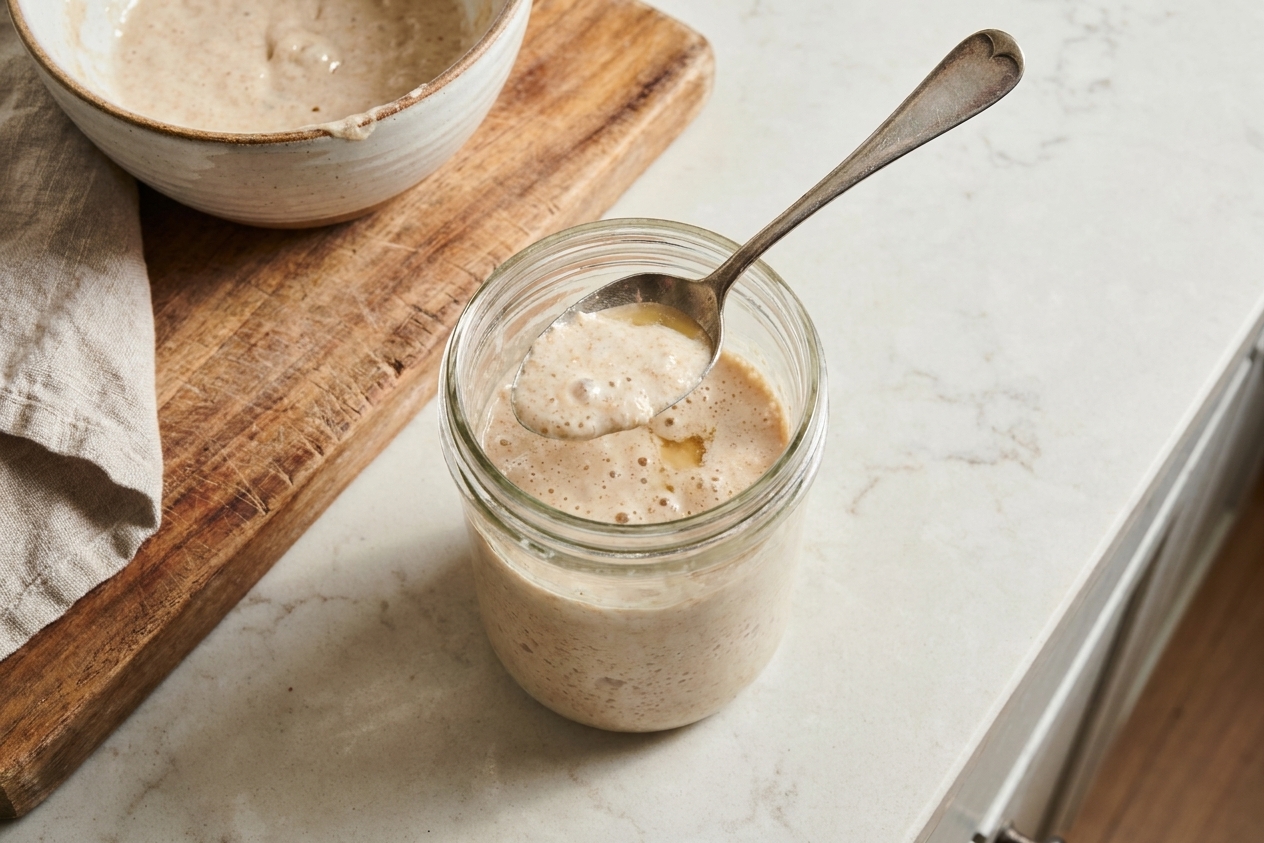
- Sourdough discard (unfed): Use cold discard straight from the fridge or room temperature discard, both work. The important part is consistency. If yours is extremely watery or extremely thick, check the FAQ for how to adjust. This recipe uses 1 cup discard, which is about 240 g for many starters at about 100% hydration.
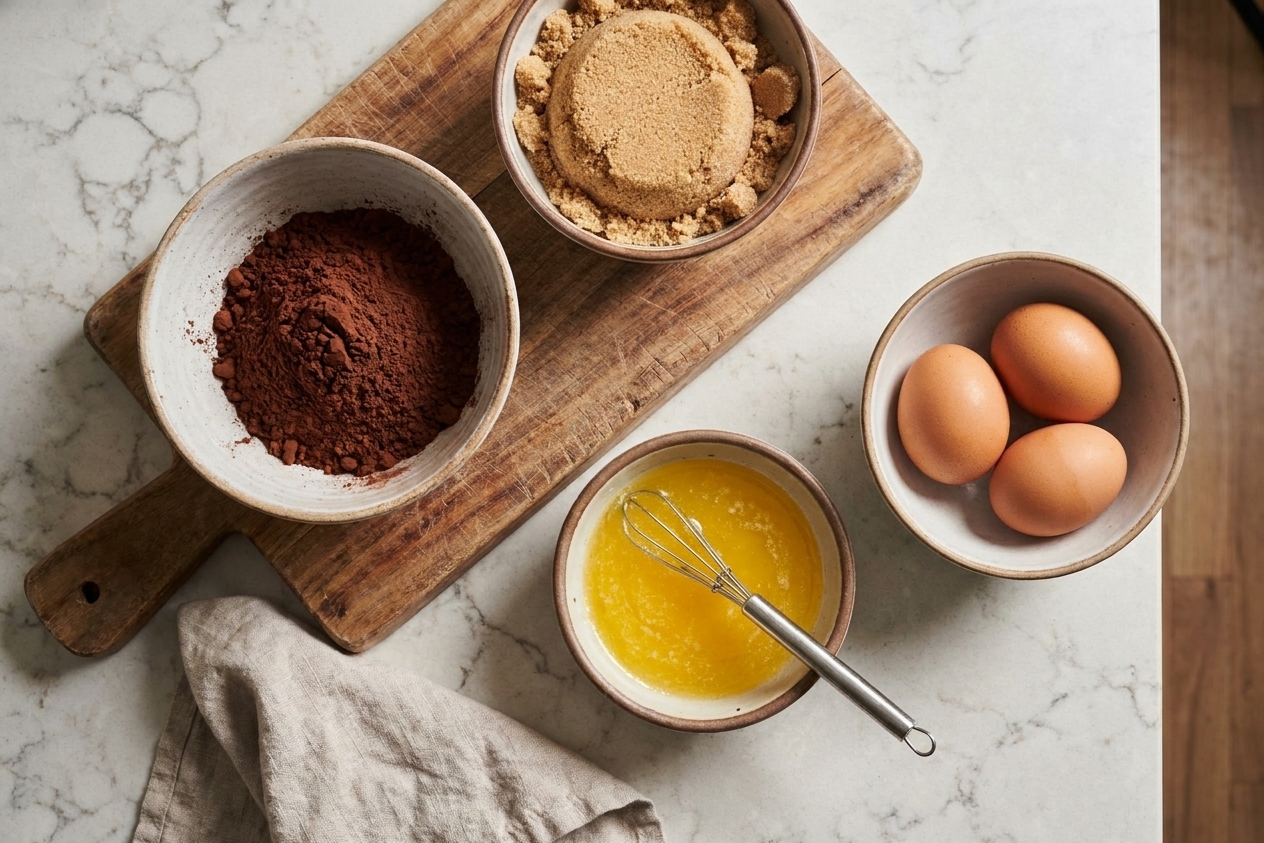
- Unsweetened cocoa powder: Natural or Dutch-process both work. Dutch-process gives a smoother, darker cocoa vibe. Natural cocoa tastes a bit sharper. Either way, sift if it is lumpy.
- Butter: Melted butter gives a fudgy, rich brownie and helps bloom the cocoa. If you brown the butter, cool it slightly before adding eggs.
- Brown sugar plus granulated sugar: Brown sugar adds moisture and chew. Granulated sugar keeps the crumb from getting too heavy.
- Eggs: Room temp mixes in more smoothly, but cold eggs are fine. Just whisk well and do not overbeat once flour is in.
- Flour: Just enough to set the brownies. The discard already brings flour to the party, so the added flour is intentionally modest.
- Liquid adjustment note: Many cocoa brownie recipes add a splash of milk or water to loosen the batter. Here, the discard usually provides that moisture, so the added liquid is minimal and only if needed.
Equipment you will need
- 8x8-inch metal baking pan (preferred for even baking)
- Parchment paper
- Medium saucepan or microwave-safe bowl (for melting butter)
- Mixing bowl
- Whisk and flexible spatula
- Fine-mesh sieve (optional, for cocoa)
Pro tips
- Measure discard by weight if you can. Starters vary in airiness. A packed cup and a loose cup can be meaningfully different. Aim for about 240 g discard.
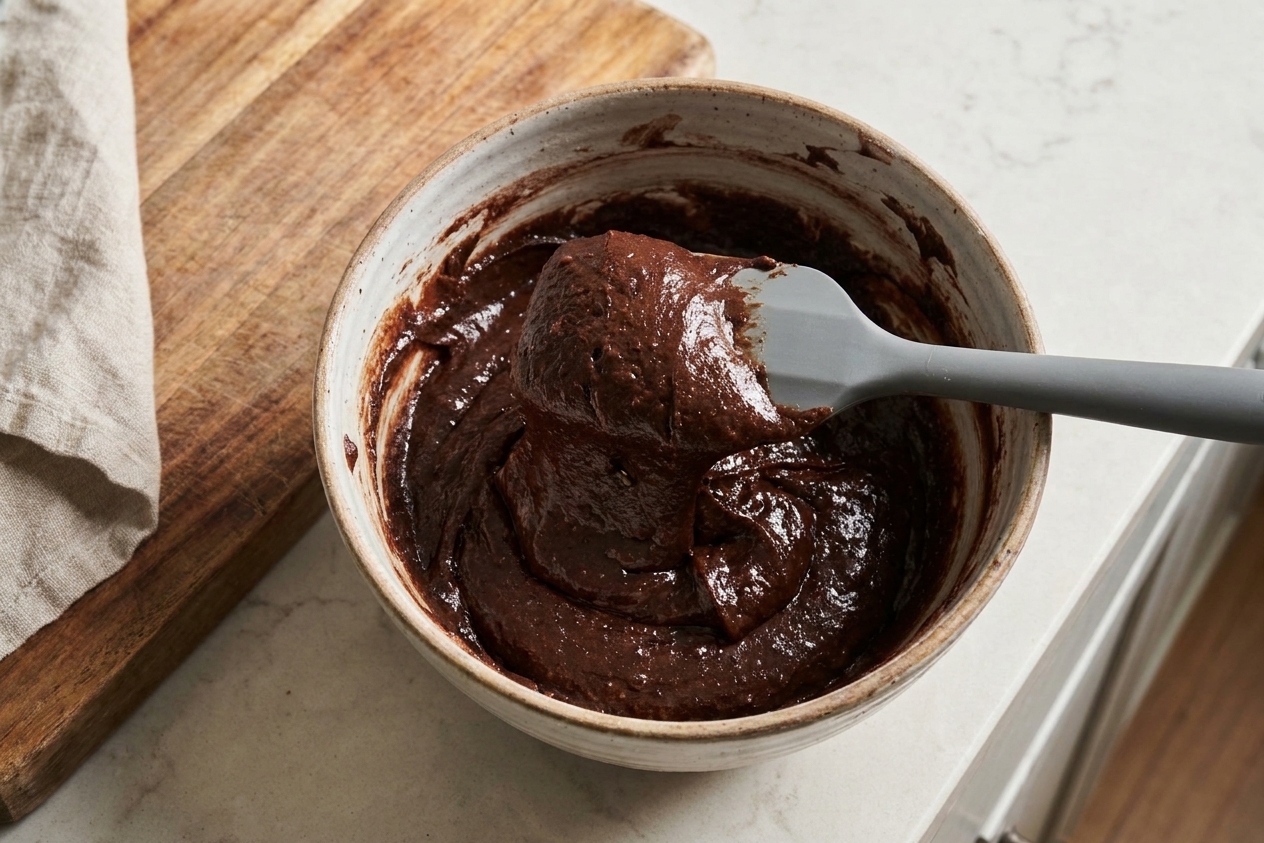
- Bloom the cocoa. Stir cocoa into the warm melted butter before adding anything else. It wakes up the chocolate flavor and makes the batter taste richer with zero extra effort.
- Do not chase a perfectly smooth batter. Once flour goes in, mix only until you stop seeing dry streaks. A few tiny lumps are better than overmixing.
- Doneness cue that is not the crackly top test: Bake until the edges look set and slightly pulled from the pan, and the center looks matte (not shiny wet batter) but still feels soft and slightly jiggly when you gently nudge the pan. A toothpick inserted about 2 inches from the edge should come out with thick, fudgy crumbs, not wet batter.
- Cool completely before slicing. The center sets as it cools. If you cut early, you will think they are underbaked when they are just still setting.
Substitutes that work
- No espresso powder: Swap in 1 teaspoon instant coffee granules, or skip it entirely.
- Butter: You can use neutral oil in the same amount for a slightly denser, shinier brownie. Flavor will be less buttery.
- All brown sugar: If you are out of granulated sugar, use all brown sugar. The brownies will be a touch softer and more chewy.
- Gluten-free (best-effort): A 1:1 gluten-free baking blend can work, but results vary by brand. Expect a slightly more delicate crumb. Also note your discard will still contain wheat unless your starter is gluten-free.
Variations
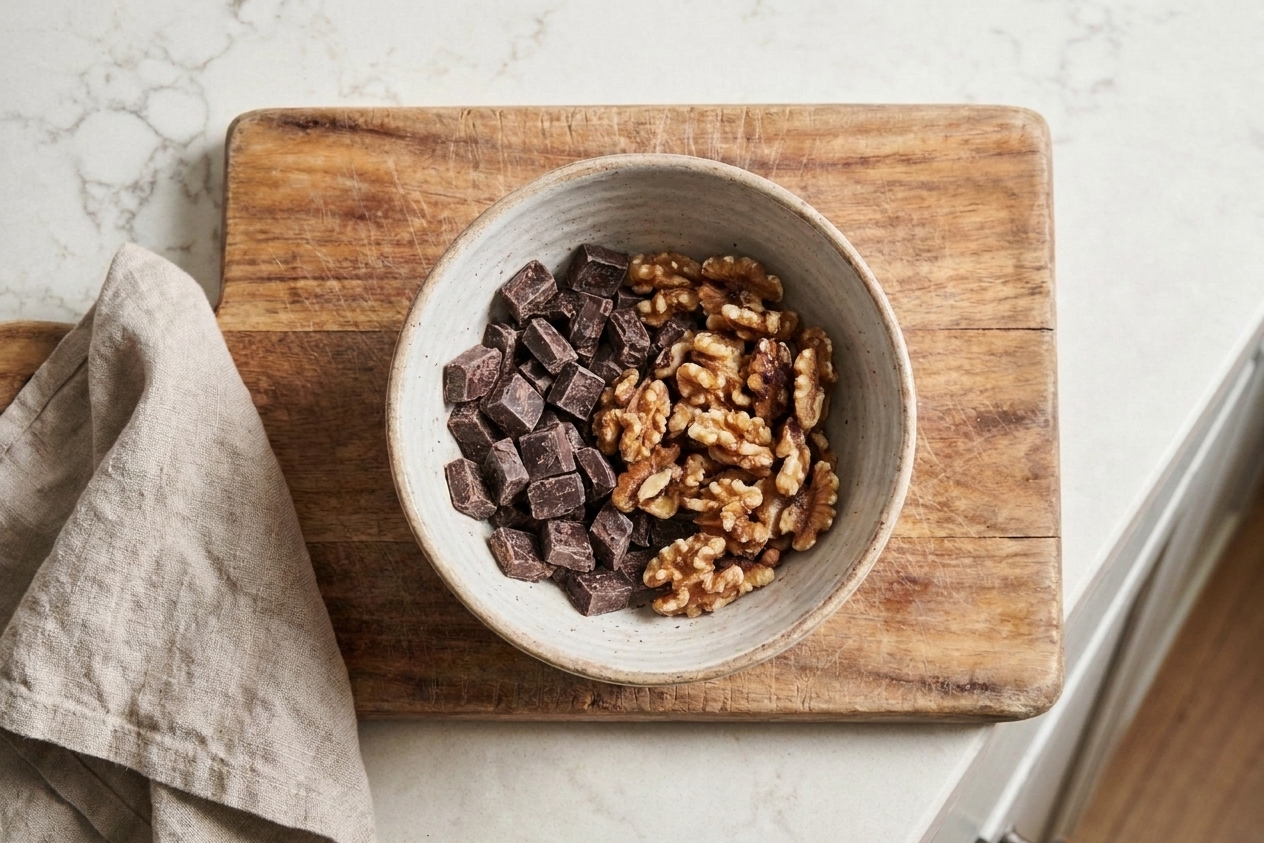
- Walnut crunch: Fold in 1/2 cup toasted chopped walnuts for texture.
- Double chocolate: Fold in 3/4 cup chocolate chips or chopped chocolate. This makes the brownies extra gooey, so lean toward the longer cooling time.
- Salted top: Sprinkle flaky salt over the batter right before baking. It makes the chocolate pop.
- Orange twist: Rub a little orange zest into the sugars before mixing. It adds a subtle citrus aroma that plays well with the discard’s tang.
Serving ideas
- Warm a square for 10 seconds and top with vanilla ice cream and a pinch of flaky salt.
- Serve with fresh raspberries or sliced strawberries for a bright, acidic contrast.
- Cut into small bites and add to a dessert board with fruit and coffee.
Storage and reheating
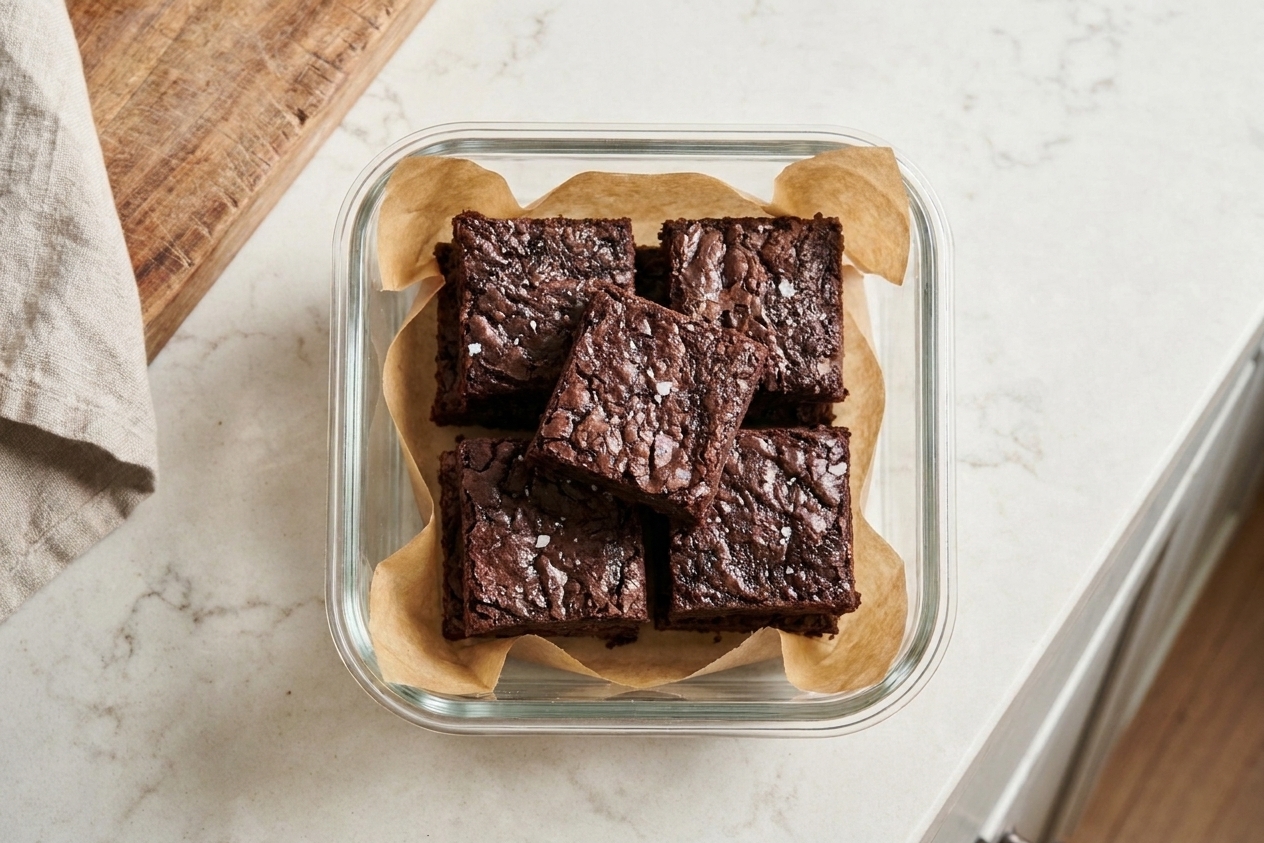
- Room temperature: Store airtight for up to 3 days. They get fudgier on day 2.
- Refrigerator: Up to 1 week airtight. Let come to room temp for best texture, or warm briefly.
- Freezer: Wrap individual squares and freeze up to 2 months. Thaw at room temperature, still wrapped, so condensation forms on the wrap instead of the brownie.
Common mistakes
- Using discard like a “bonus ingredient” without adjusting anything: Discard adds both flour and water, and its hydration can vary. Without balancing, the brownies can bake up gummy or cakey.
- Overbaking: Cocoa brownies go from fudgy to dry fast. Pull when the center is just set enough to look matte and gives a soft jiggle.
- Overmixing after adding flour: This can make brownies tough. Switch to a spatula and fold gently.
- Slicing too soon: Warm brownies are delicious, but they are structurally fragile. For clean squares, cool completely.
FAQ
How much sourdough discard do these brownies use?
This 8x8-inch pan uses 1 cup sourdough discard, which is about 240 g for a typical 100% hydration starter. It is a satisfying dent in the discard jar without turning the brownies into a sourdough science project.
Do these taste sour?
Not sharply sour. Think of the discard as a flavor amplifier. You get a gentle tang that can read a bit like yogurt or buttermilk, depending on your starter and how old it is, and it makes chocolate taste deeper.
My discard is very runny. What should I do?
If your discard pours like heavy cream, it is likely higher hydration than 100%. To keep the batter thick, add 1 to 2 extra tablespoons flour. Start with 1 tablespoon and judge the batter. It should be thick and ribbon off the spatula slowly.
My discard is very thick. What should I do?
If it holds its shape like dough, it is likely lower hydration. Add 1 to 2 tablespoons milk or water to loosen the batter slightly.
Can I use active starter instead of discard?
You can, but the brownies may rise a bit more and bake up slightly less dense. If you are trying to use up starter, discard is the better match for fudgy brownies.
Why not use the crackly top as the doneness test?
Crackly tops depend on sugar, mixing style, and humidity. Instead, trust set edges plus a matte, softly jiggly center and a toothpick that comes out with thick crumbs.
Sourdough Discard Brownies
Fudgy cocoa brownies made with sourdough discard for an ultra-tender crumb and deeper chocolate flavor. Balanced for discard so the batter stays thick, with a reliable doneness cue for perfectly set edges and a soft center.
- Prep
- 15 minutes
- Cook
- 28 to 34 minutes
- Total
- 50 minutes (including cooling time before slicing)
- Yield
- 16 brownies (8x8-inch pan)
Ingredients
- 113 g (1/2 cup) unsalted butter
- 50 g (1/2 cup) unsweetened cocoa powder
- 100 g (1/2 cup) granulated sugar
- 100 g (1/2 cup packed) light brown sugar
- 2 large eggs
- 1 tsp vanilla extract
- 240 g (1 cup) sourdough discard (unfed, about 100% hydration)
- 60 g (1/2 cup) all-purpose flour
- 3/4 tsp fine salt
- 1/2 tsp espresso powder (optional)
- 30 g (2 tbsp) milk or water (only if needed to loosen a very thick batter)
- Flaky salt for topping (optional)
Instructions
- Heat the oven to 350°F (175°C). Line an 8x8-inch metal baking pan with parchment paper, leaving overhang on two sides for easy lifting.
- Melt the butter in a small saucepan over low heat (or in the microwave). Remove from the heat and whisk in the cocoa powder until fully smooth and glossy.
- Whisk in the granulated sugar and brown sugar until the mixture looks like wet sand and starts to thicken slightly.
- Add the eggs and whisk vigorously for 30 to 45 seconds until the batter looks smoother and a bit lighter. Whisk in the vanilla.
- Whisk in the sourdough discard until mostly smooth. If your discard is very cold, keep whisking until it is fully incorporated.
- Switch to a spatula. Add the flour, salt, and espresso powder (if using). Fold just until you no longer see dry flour. The batter should be thick and spreadable, not pourable. If it feels unusually stiff, fold in 1 to 2 tablespoons milk or water, just enough to make it spreadable.
- Scrape the batter into the prepared pan and smooth the top. Sprinkle with flaky salt if you like.
- Bake for 28 to 34 minutes. Do not rely on a crackly top for doneness. Instead look for edges that are set and slightly pulled from the pan, and a center that looks matte (not shiny wet batter) but still gives a soft jiggle when you gently nudge the pan. A toothpick inserted about 2 inches from the edge should come out with thick, fudgy crumbs, not wet batter.
- Cool completely in the pan for the cleanest slices, at least 20 minutes, then lift out using the parchment overhang and slice.
Notes
How discard changes the math: This recipe is built around 240 g sourdough discard. At about 100% hydration, that discard contributes roughly 120 g flour and 120 g water to the batter. That is why the added flour is modest and the added liquid is optional. If your discard is much thinner or thicker than usual, use the FAQ adjustments.
Pan note: Glass pans tend to bake slower and can lead to overbaked edges by the time the center sets. If using glass, start checking at the earlier end and expect a slightly longer bake.
For the fudgiest texture: Err on the side of slightly underbaked. The brownies will continue to set as they cool.