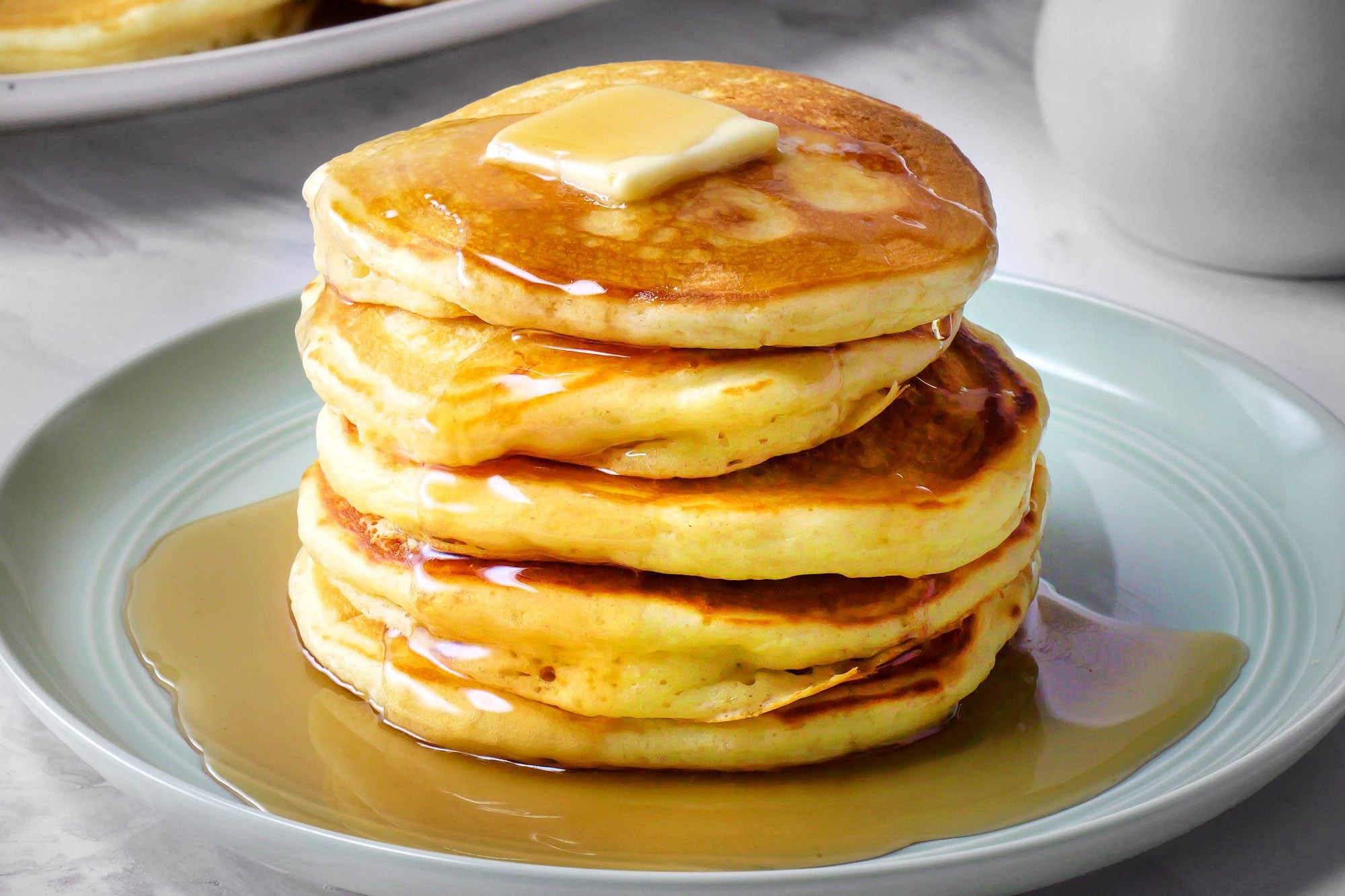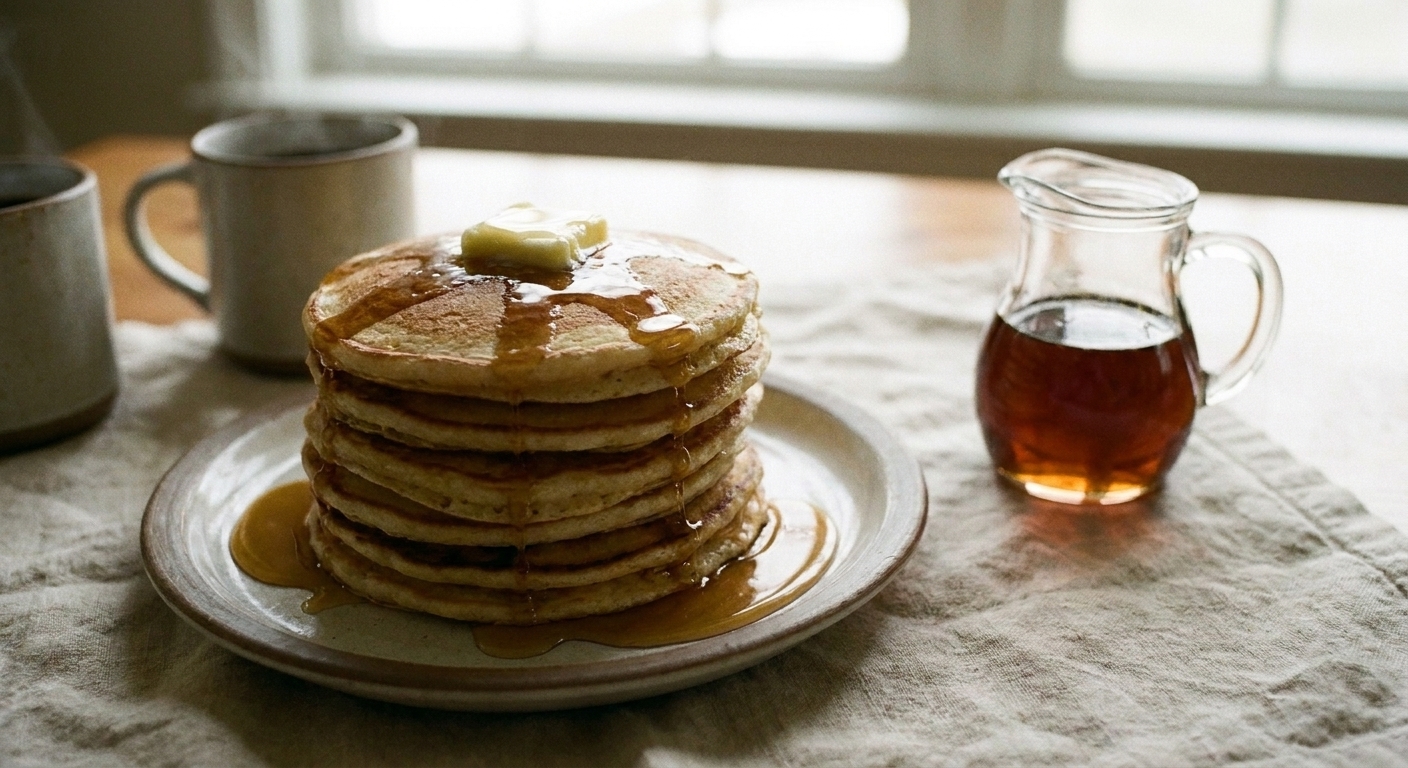

I keep a jar of unfed sourdough discard in my fridge for one reason: it turns basic pantry breakfasts into something quietly special with almost no extra work. These sourdough discard pancakes are my go-to when I want a stack that is tender in the middle, lightly crisp at the edges, and just tangy enough to taste interesting, not sour.

This recipe is built around a thick-but-pourable batter and a short rest, which helps you end up with pancakes that cook up fluffy instead of thin and floppy.
I use 240 g unfed sourdough discard because it gives you noticeable flavor and tenderness without making the batter feel heavy. In my testing, that amount hits the sweet spot between "tastes like sourdough" and "still classic pancake." Discard hydration can vary a lot from kitchen to kitchen, so the grams are the most reliable. (A cup measure can be close at around 100% hydration, but it is easy to be off if your discard is thicker or looser.) If yours is on either end of the spectrum, the batter consistency cues in the recipe will get you back on track.
The leavening is a combo of baking powder and baking soda. The baking soda can help the batter lift and brown by reacting with the discard’s natural acidity. How dramatic that lift is depends on how tangy your discard is, but this combo is designed to keep the pancakes reliably light in most everyday starter situations.
Dairy-free note: swap the milk for an unsweetened non-dairy milk (oat and soy work especially well) and cook in neutral oil or plant-based butter. The pancakes still brown beautifully.
Why this recipe works
- Discard adds tenderness without extra fuss: Unfed sourdough discard brings acidity and pre-fermented flour, which softens the crumb and adds a gentle tang.
- Baking soda plus acidic discard supports lift: The soda reacts with the discard, which helps create bubbles for lighter pancakes and better browning.
- A short rest fixes texture: Resting the batter 10 minutes hydrates the flour, thickens the batter slightly, and helps you avoid thin, spread-out pancakes.
- Clear griddle cues beat guessing: A properly heated pan and the right bubble and matte edge signal keep the centers cooked without over-browning.
Ingredient notes
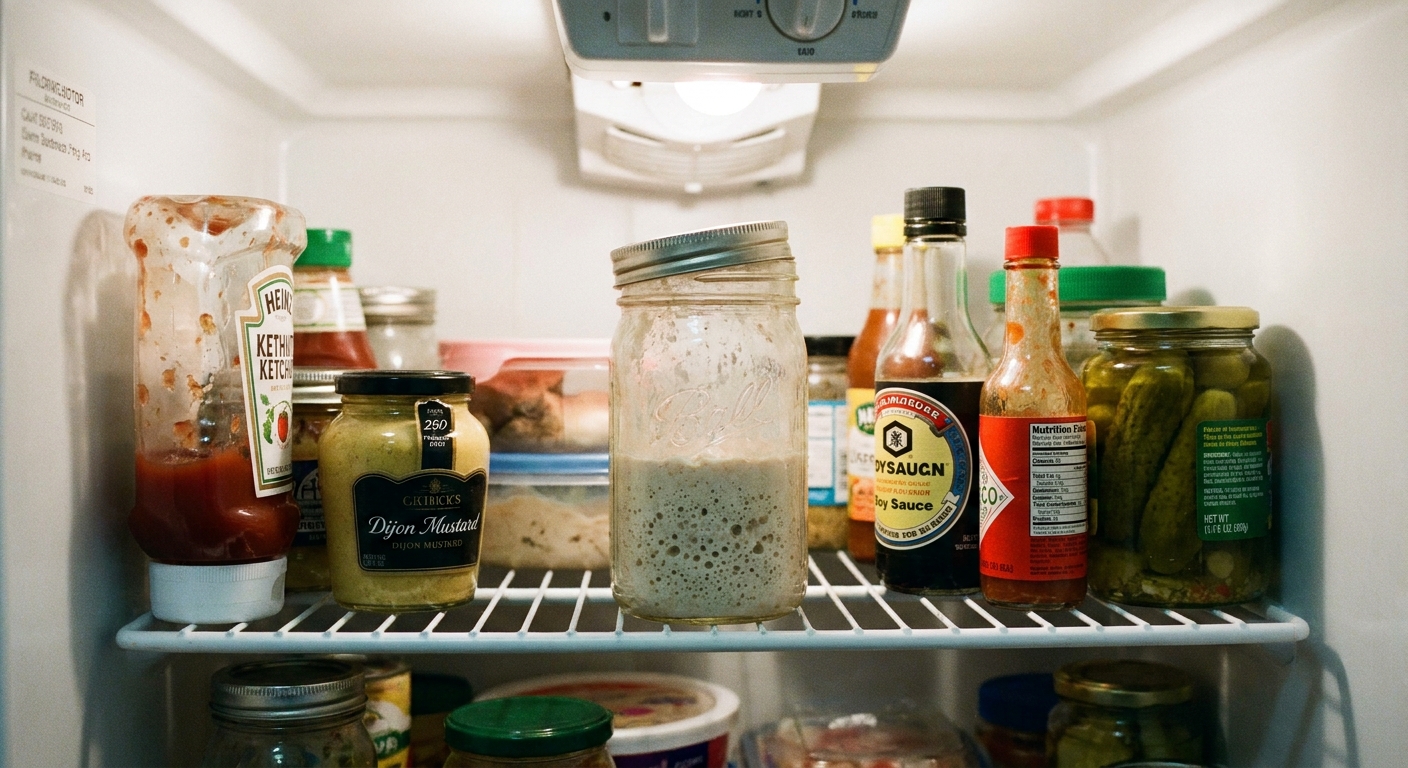
- Unfed sourdough discard: Use discard straight from the fridge or at cool room temperature. If there is a layer of grayish liquid on top, stir it back in first. For best accuracy, measure 240 g.
- All-purpose flour: Keeps the pancakes light. Whole wheat can work, but it drinks more liquid and makes a heartier texture.
- Milk: Any dairy milk works. Non-dairy milk works too, especially oat or soy for good browning.
- Brown sugar (or sugar): A small amount helps with browning and rounds out the tang. You can reduce it slightly if you prefer less sweetness.
- Baking powder plus baking soda: The powder provides reliable lift; the soda helps browning and reacts with the discard’s acidity.
- Melted butter (or oil): Butter adds flavor; neutral oil keeps things simple and dairy-free friendly.
Equipment you will need
- Large mixing bowl
- Whisk and spatula
- Measuring cups and spoons (or a kitchen scale)
- 12 inch nonstick skillet, cast iron skillet, or griddle
- Thin spatula for flipping
- Sheet pan for keeping pancakes warm (optional)
Pro tips
- Mix gently: Whisk just until you stop seeing dry flour. A few small lumps are your friend. Overmixing makes pancakes chewy.
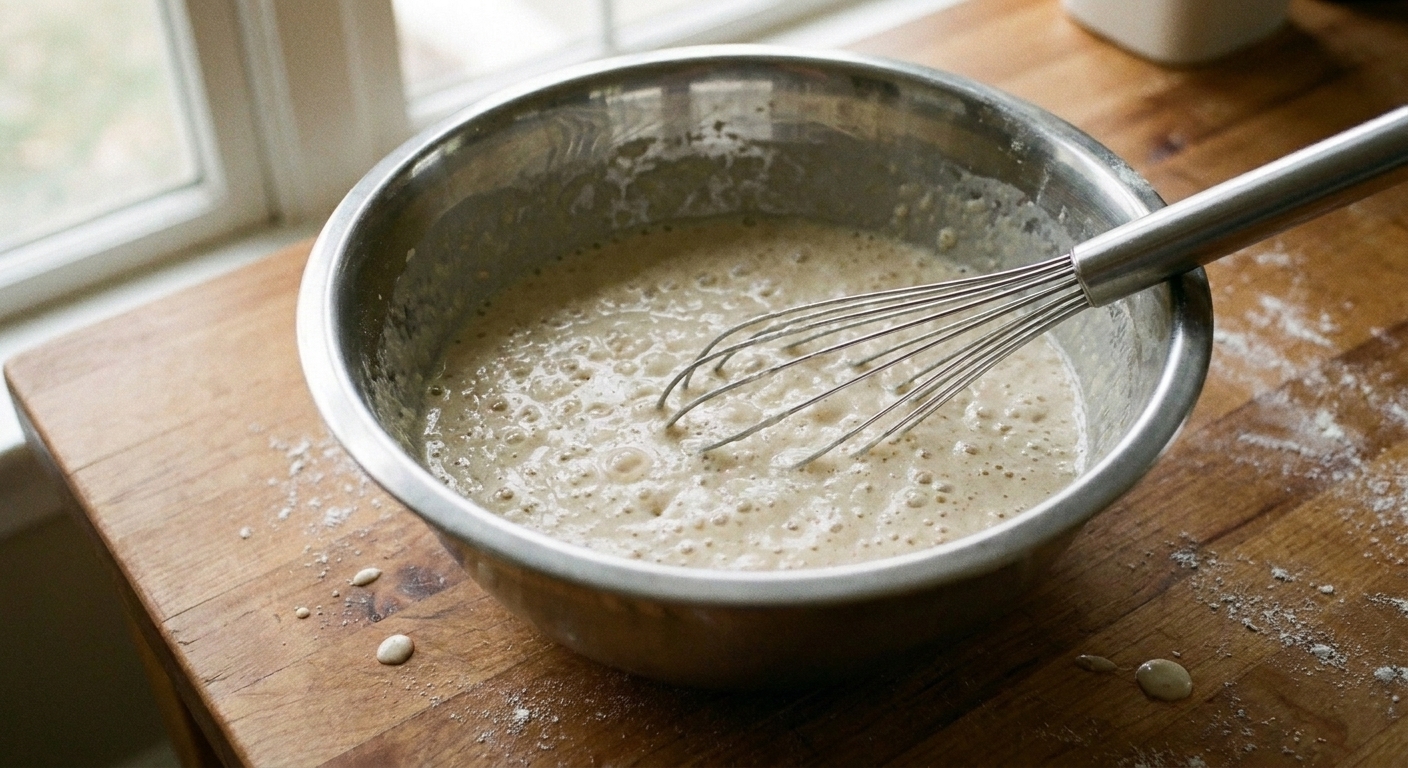
- Rest, then reassess thickness: After the 10 minute rest, the batter should flow slowly off the spoon, not pour like cream. If it feels too thick, add milk 1 tablespoon at a time.
- Preheat the pan properly: Medium to medium-low is usually right. If your first pancake browns before the center sets, your heat is too high.
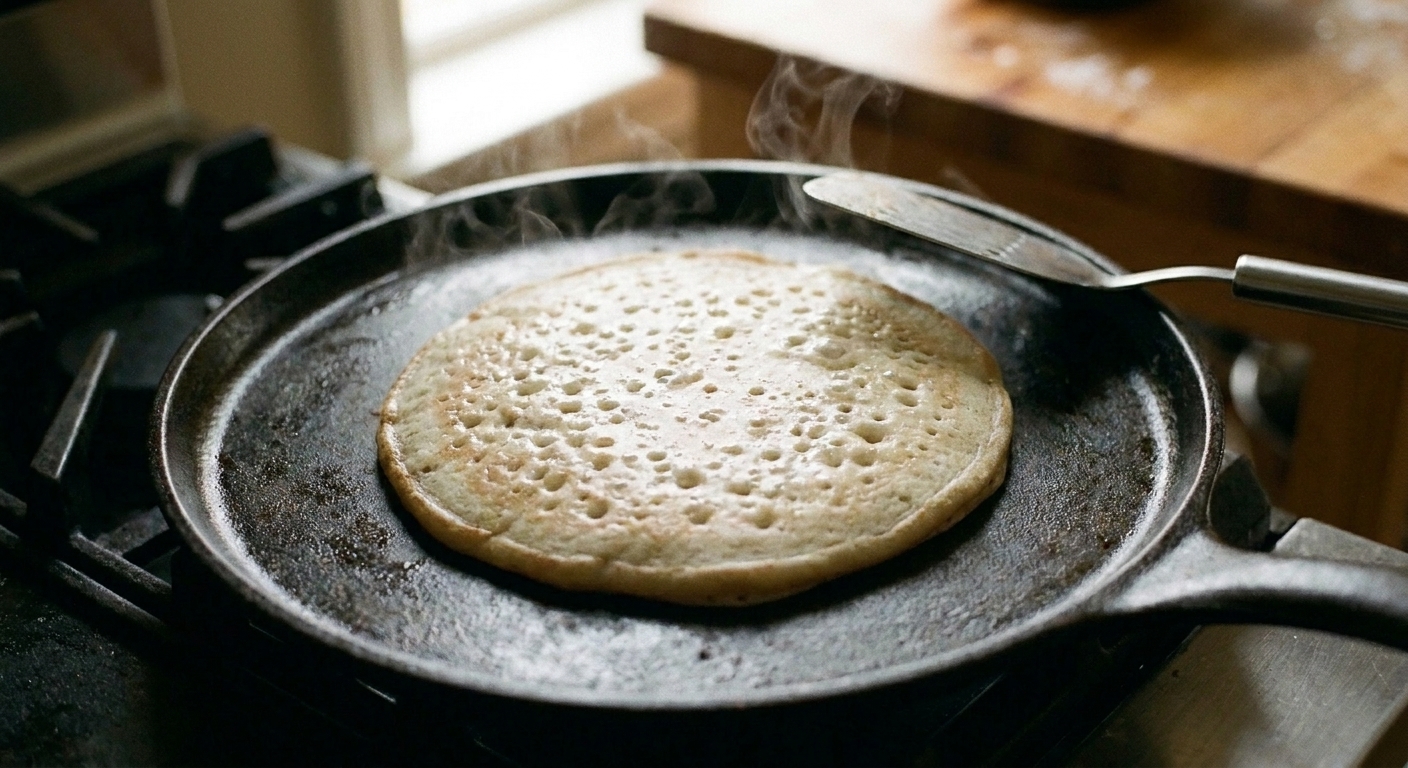
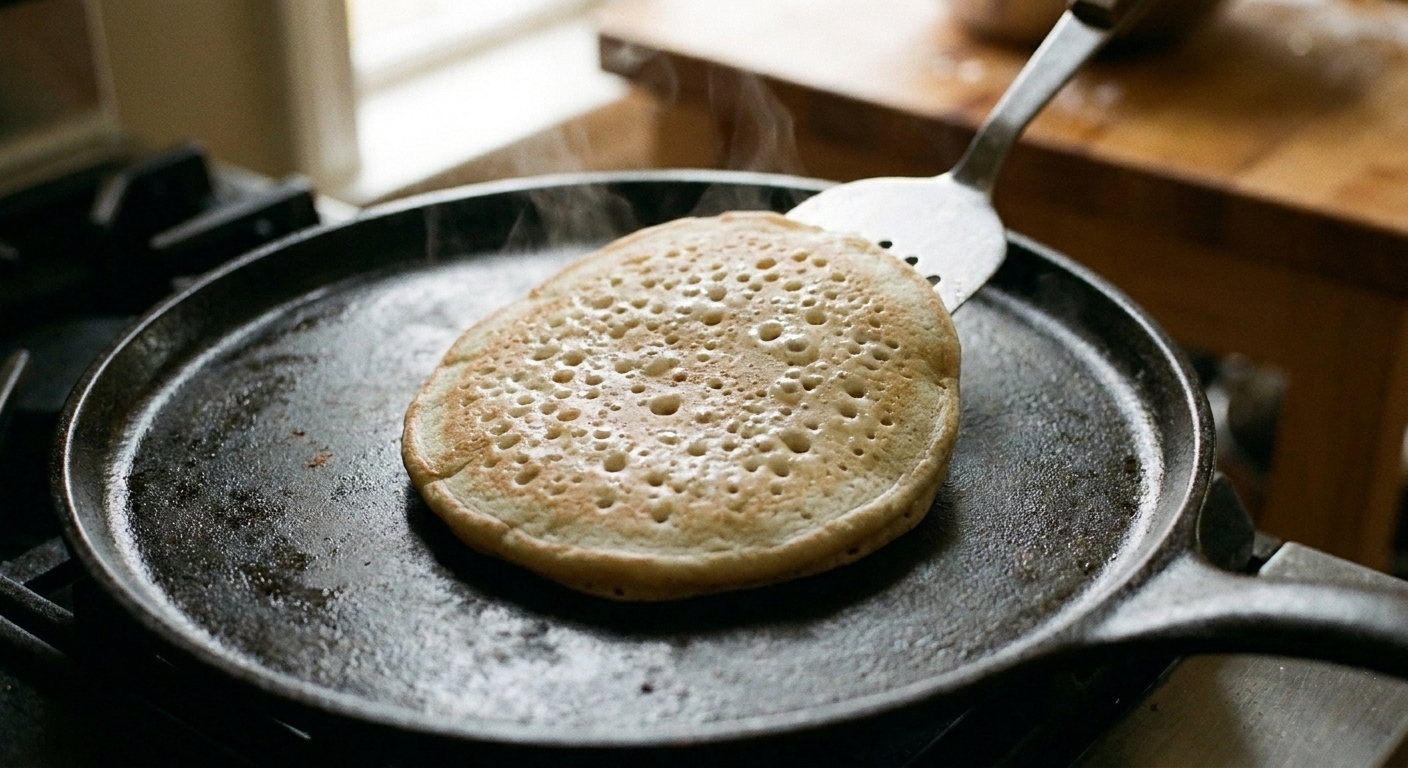
- Look for the matte edge cue: Flip when bubbles rise and pop, and the edge looks slightly dry and matte. That is your best timing signal.
- Keep finished pancakes warm: Hold on a sheet pan in a 200°F oven while you cook the remaining batter.
Substitutes that work
- Dairy-free: Use unsweetened oat or soy milk and neutral oil or plant-based butter.
- Sweetener: Swap brown sugar for granulated sugar, coconut sugar, or maple syrup. If using maple syrup, the batter may loosen slightly.
- Butter: Neutral oil works great. If using coconut oil, choose refined if you do not want coconut flavor.
- Flour: You can replace up to half the all-purpose flour with white whole wheat flour. Plan to add an extra splash of milk after resting.
Variations
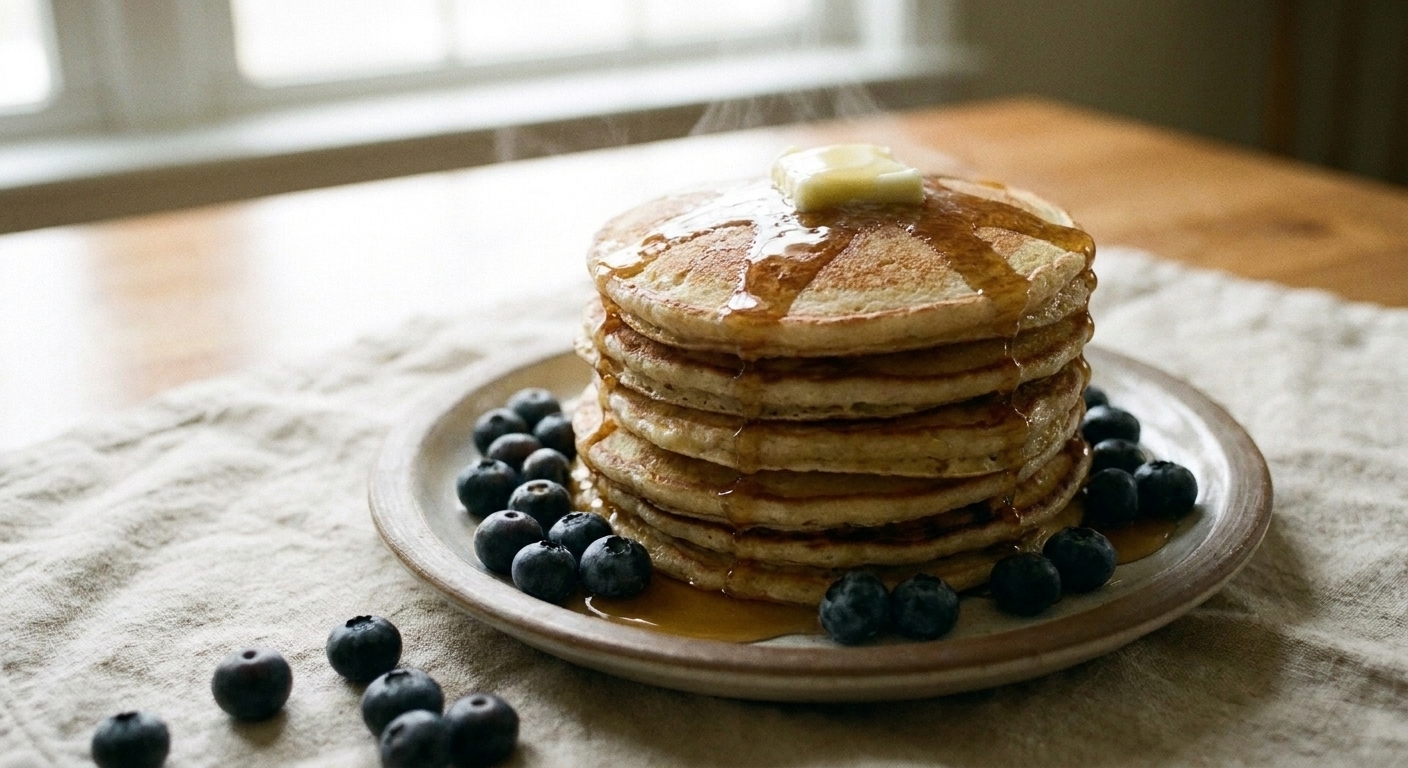
- Blueberry: Sprinkle a few berries onto each pancake right after ladling the batter, so they do not bleed into the bowl.
- Chocolate chip: Add a small handful of chocolate chips per pancake after pouring, not into the batter, for cleaner flipping.
- Lemon poppy: Add 1 teaspoon lemon zest and 1 tablespoon poppy seeds to the dry ingredients.
- Cinnamon vanilla: Add 1 teaspoon vanilla extract and 1/2 teaspoon cinnamon for a cozy, classic diner vibe.
Serving ideas
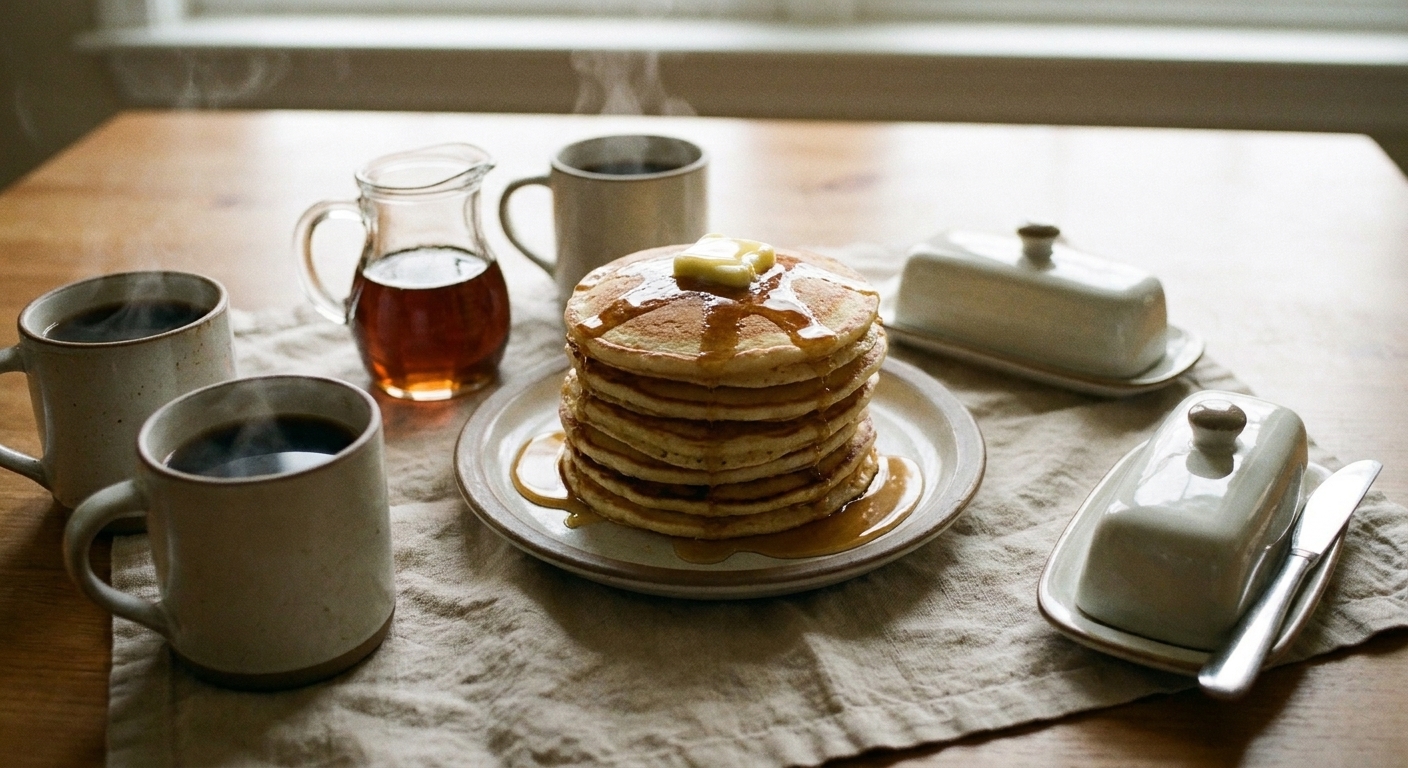
- Warm maple syrup and salted butter
- Greek yogurt or coconut yogurt with berries
- Peanut butter or almond butter with sliced bananas
- Stewed apples with cinnamon and a pinch of salt
- For a savory plate: fried eggs and a squeeze of lemon over the pancakes
Storage and reheating
- Fridge: Cool completely, then store in an airtight container up to 4 days.
- Freezer: Freeze pancakes in a single layer until firm, then transfer to a freezer bag with parchment between layers. They keep well up to 2 months.
- Reheat: Toast straight from the fridge or freezer for crisp edges. Or warm in a 300°F oven until heated through.
Common mistakes
- Skipping the rest: Without it, the batter can be thin and the pancakes can spread, plus the texture is less tender.
- Overmixing: If you whisk until perfectly smooth, you develop gluten and the pancakes turn springy instead of soft.
- Pan too hot: Dark outside, raw middle. Lower the heat and give the pan a minute to stabilize.
- Flipping too early: Wait for bubbles to pop and edges to look matte so the pancake holds together.
- Pressing pancakes with the spatula: This squeezes out the air you worked for and makes them dense.
FAQ
Can I use discard straight from the fridge?
Yes. Cold discard is fine here. Just stir it well first, then measure 240 g (or about 1 cup).
Why does this recipe use both baking powder and baking soda?
Baking powder gives steady lift. Baking soda reacts with the natural acidity in sourdough discard, which helps with rise and browning.
My batter seems thicker after resting. Is that normal?
Totally normal. The flour hydrates during the rest. Thin it with milk, 1 tablespoon at a time, until it slowly ribbons off the spoon.
Do these taste sour?
They are lightly tangy, not aggressively sour. If your discard is very old and sharp, add an extra teaspoon of sugar to balance it.
Can I make the batter the night before?
I do not recommend it for this specific formula because the baking soda and baking powder start working once mixed. For best lift, mix and cook the same morning, with the short rest in the recipe.
Sourdough Discard Pancakes
Weeknight-friendly, extra-tender pancakes made with unfed sourdough discard, a quick 10 minute rest, and easy griddle cues for perfectly golden results.
- Prep
- 10 minutes
- Cook
- 20 minutes
- Total
- 30 minutes
- Yield
- 10 to 12 pancakes (serves 4)
Ingredients
- 1 cup (240 g) unfed sourdough discard
- 1 cup (240 g) milk (any dairy milk or unsweetened non-dairy milk)
- 1 large egg
- 2 tablespoons (25 g) brown sugar (or granulated sugar)
- 3 tablespoons (42 g) melted butter, plus more for the pan (or neutral oil for dairy-free)
- 1 cup (125 g) all-purpose flour
- 2 teaspoons baking powder
- 1/2 teaspoon baking soda
- 1/2 teaspoon fine salt
- Neutral oil or butter for cooking
Instructions
- Mix the wet ingredients. In a large bowl, whisk together the sourdough discard, milk, egg, brown sugar, and melted butter until mostly smooth.
- Add the dry ingredients. Sprinkle the flour, baking powder, baking soda, and salt evenly over the top. Whisk gently just until you no longer see dry flour. The batter should look slightly lumpy.
- Rest the batter. Let the batter stand for 10 minutes. It should thicken slightly and look a bit bubbly. If it becomes very thick, whisk in more milk 1 tablespoon at a time until it slowly ribbons off a spoon.
- Preheat the pan. Heat a nonstick skillet, cast iron skillet, or griddle over medium to medium-low heat. Lightly grease with butter or neutral oil.
- Cook the first side. Scoop about 1/4 cup batter per pancake onto the hot surface. Cook until the pancakes look set around the edges, the surface has bubbles that rise and pop, and the edges look slightly matte, about 2 to 3 minutes.
- Flip and finish. Flip and cook until the second side is golden and the center feels springy when lightly pressed, about 1 to 2 minutes.
- Repeat. Adjust heat as needed to keep the pancakes steadily browning without scorching. Serve warm, or keep pancakes on a sheet pan in a 200°F oven while you finish the batch.
Notes
Discard amount and measuring: This recipe is designed for 240 g unfed sourdough discard. Discard thickness varies, so treat the cup measure as approximate and use grams when you can. If your discard is extremely thick, you may need an extra splash of milk after the rest.
Dairy-free option: Use unsweetened oat or soy milk, and replace the melted butter with neutral oil or plant-based butter.
Doneness cues: Flip when bubbles pop and the edges look matte. If the pancakes brown too fast, reduce heat and give the pan a minute to cool slightly.