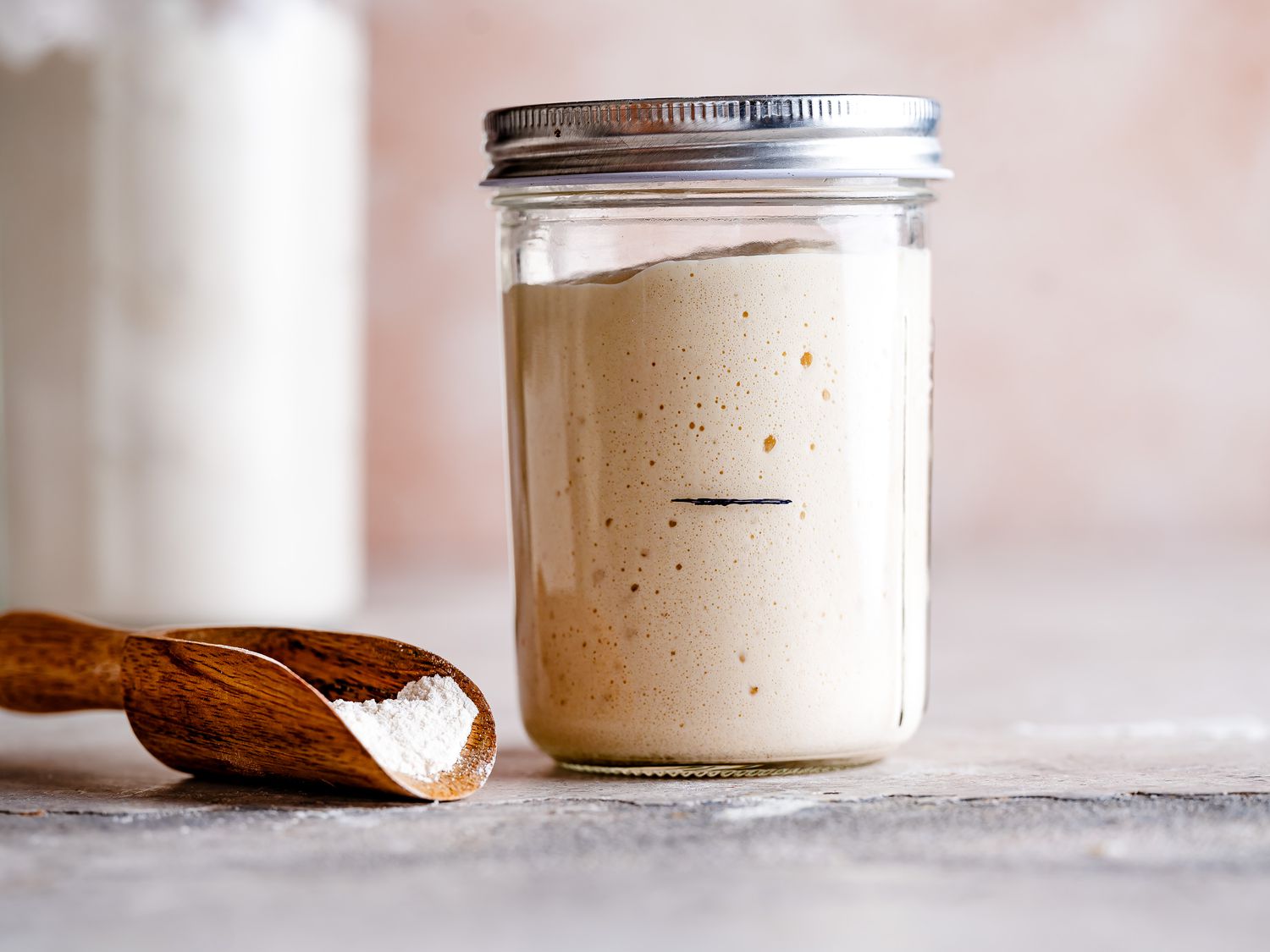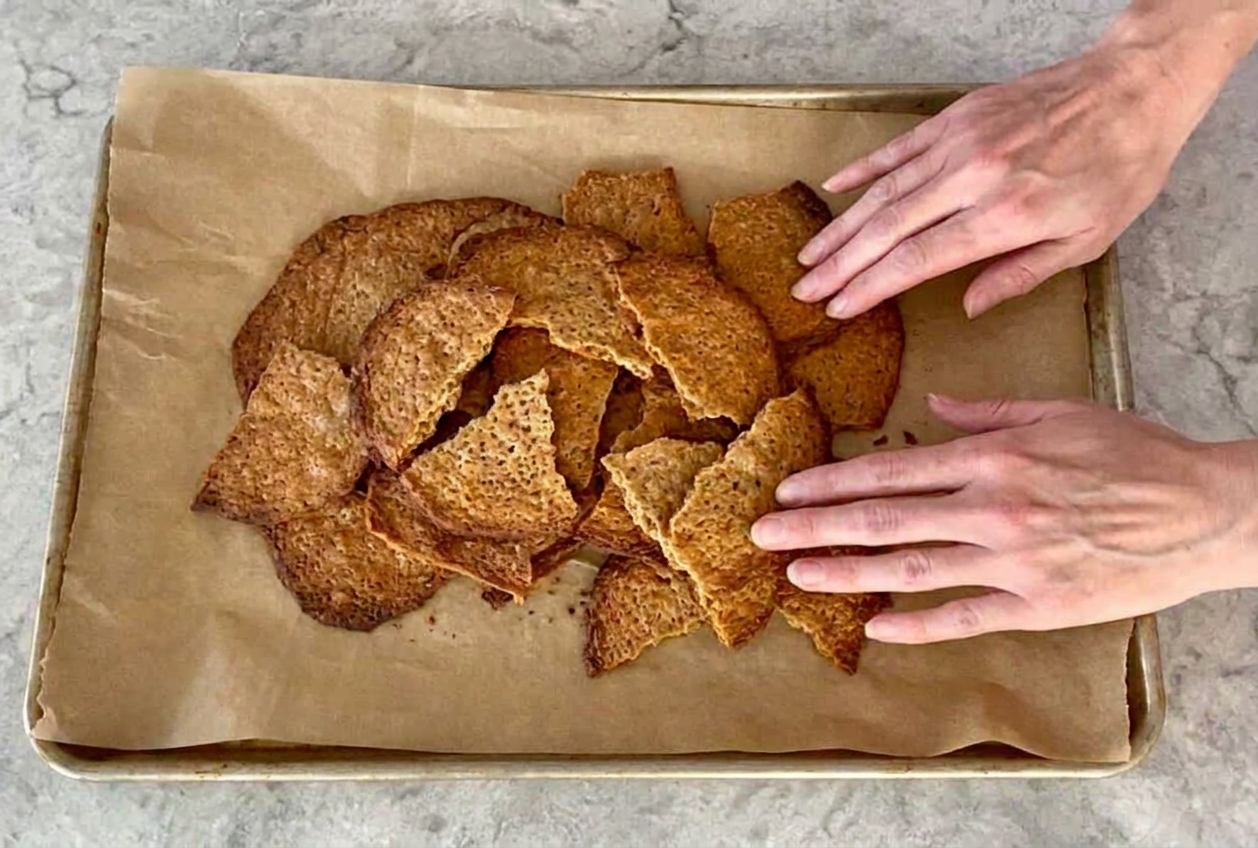

I keep a jar of unfed sourdough discard in my fridge like it’s a tiny savings account. When it starts to pile up, I don’t want another sweet bake. I want something salty, crunchy, and low effort that makes me feel like I “rescued” leftovers in the best way.
These sourdough discard crackers are that recipe. The dough is just discard, flour, salt, and oil. Roll it super thin, dock it aggressively, and bake it until it’s deeply golden. The result is the kind of snappy, shattery crisp cracker that disappears next to a hunk of cheese or a bowl of soup.

Here’s what to expect: one batch uses 240 g unfed sourdough discard (about 1 cup) and makes a generous sheet pan of crackers. If you’ve ever made discard crackers and ended up with something bendy or chewy, don’t worry. Texture usually comes down to a few things, especially rolling thin enough, baking long enough, and cooling and storing them in a way that lets steam escape. I’ll walk you through all of it.
Why this recipe works
- Unfed discard is perfect here. You get tangy flavor without relying on yeast activity for lift. This is a crisp, not a rise, situation.
- A very thin roll (about 1/16 inch) means the crackers bake through before the centers can stay leathery.
- Docking (lots of fork holes) prevents big air bubbles that can make uneven thickness and chewy pockets.
- A longer bake to deep golden drives off moisture, which is the key to snap.
- Cooling on the pan, then finishing with the oven off helps dry the crackers fully without over-browning.
Ingredient notes
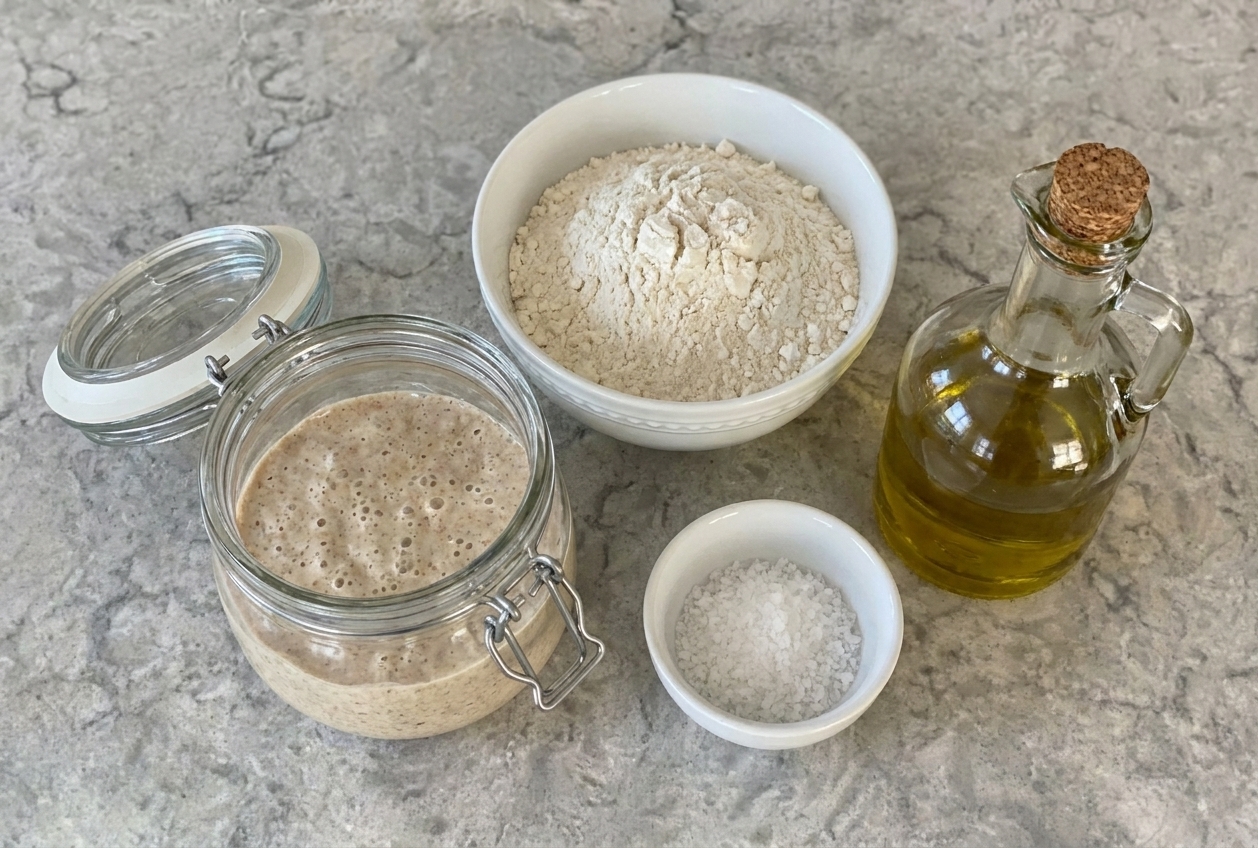
- Sourdough discard (unfed): This recipe is written for a 100% hydration starter discard, meaning it was originally fed equal weights flour and water. Cold discard straight from the fridge is fine.
- All-purpose flour: Keeps the crackers light and crisp. If your discard is extra loose, you may need a tablespoon or two more flour during mixing.
- Salt: Don’t skimp. Crackers need enough salt to taste like something.
- Oil: Olive oil gives great flavor and helps crisping. Neutral oil works too if you want the sourdough tang to be the main note.
- Optional finishing salt: A light sprinkle on top right before baking makes them taste like a fancy cheese board cracker.
Equipment you will need
- Half sheet pan (18 by 13 inches) or similar
- Parchment paper (recommended for easy release)
- Rolling pin
- Fork (for docking)
- Bench scraper or pizza wheel (to cut shapes)
- Kitchen scale (optional, but helpful for consistent dough)
Pro tips
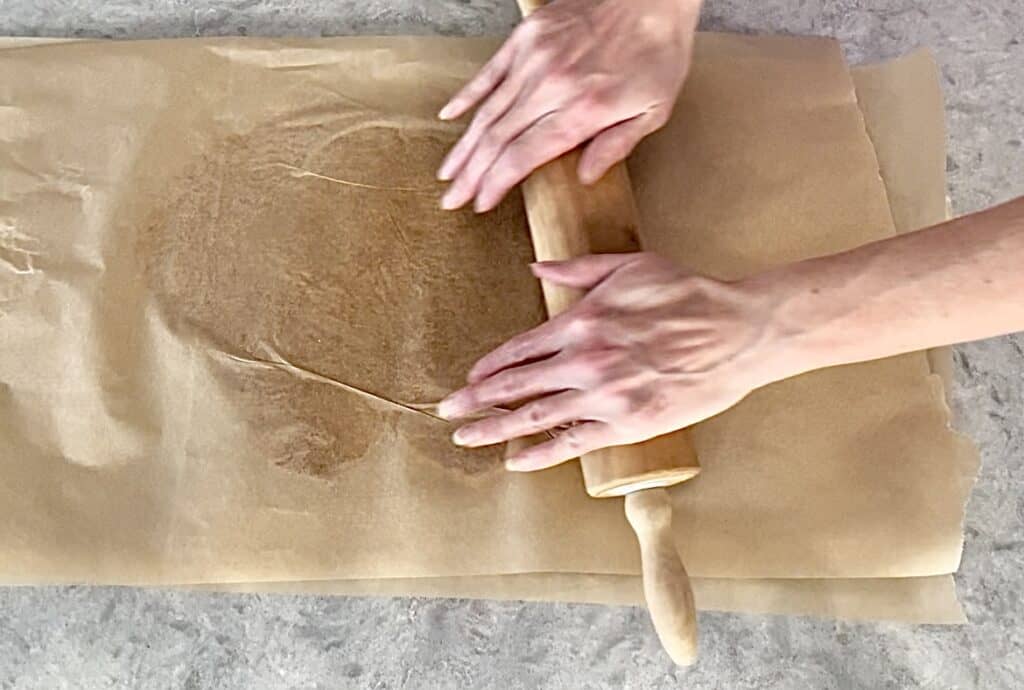
- Roll thinner than you think. Aim for about 1/16 inch (1 to 2 mm). If you can lift the parchment and see the countertop shadow faintly through the dough, you’re in the zone.
- Use parchment on top and bottom. It prevents sticking, cuts down on added flour (which can toughen crackers), and makes transferring to the pan easy.
- Dock like you mean it. Fork holes every inch or so across the whole surface. Docking helps steam escape so you get flat, evenly crisp crackers.
- Chase the right color. Bake until deep golden with some darker edges. Pale crackers tend to soften as they cool.
- For extra snap, dry them out. If they’re crisp at the edges but slightly bendy in the center, turn the oven off, crack the door, and let them sit inside 5 to 10 minutes.
- Cool completely before storing. Warm crackers trap steam, and steam is the enemy of crunch.
Substitutes that work
- Whole wheat flour: Swap up to half the all-purpose flour for whole wheat. Expect a slightly heartier crunch.
- Oil: Use avocado oil or grapeseed oil for a neutral flavor. Melted butter works, but browns faster, so watch the edges.
- Salt: If you only have kosher salt, it’s fine. For topping, flaky salt is especially nice.
Variations
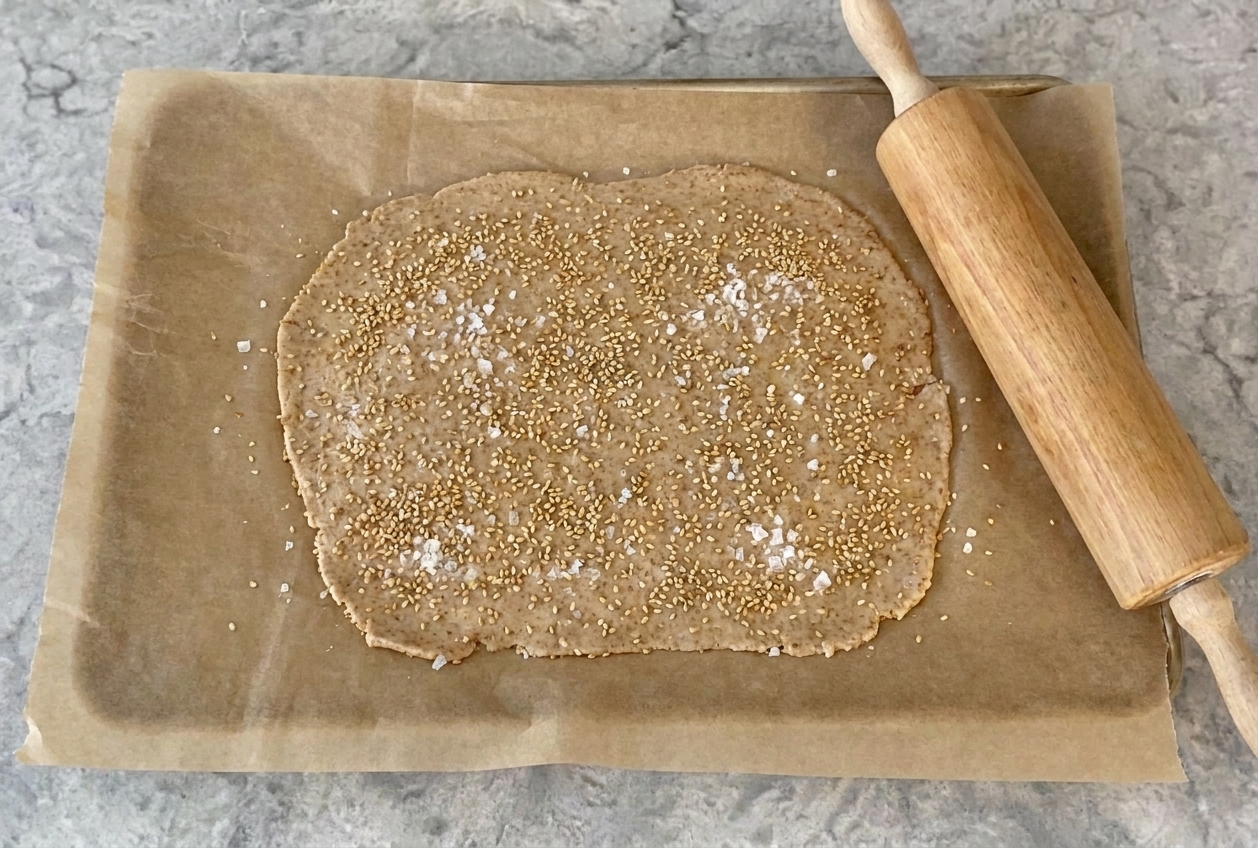
- Sesame: Sprinkle sesame seeds on top before the final roll so they press into the surface.
- Everything-style: Top with a seed and spice blend for a deli vibe.
- Herby: Add dried rosemary or thyme to the dough. Start with a small amount since dried herbs get loud in a thin cracker.
- Black pepper: Add a few grinds to the dough for subtle heat.
Serving ideas
- With cheddar, apple slices, and a swipe of mustard
- Alongside tomato soup, lentil soup, or any cozy puree soup
- With hummus, baba ganoush, or a quick yogurt dip
- Crumble over salads like croutons, especially if a few crackers lose their snap
Storage and reheating
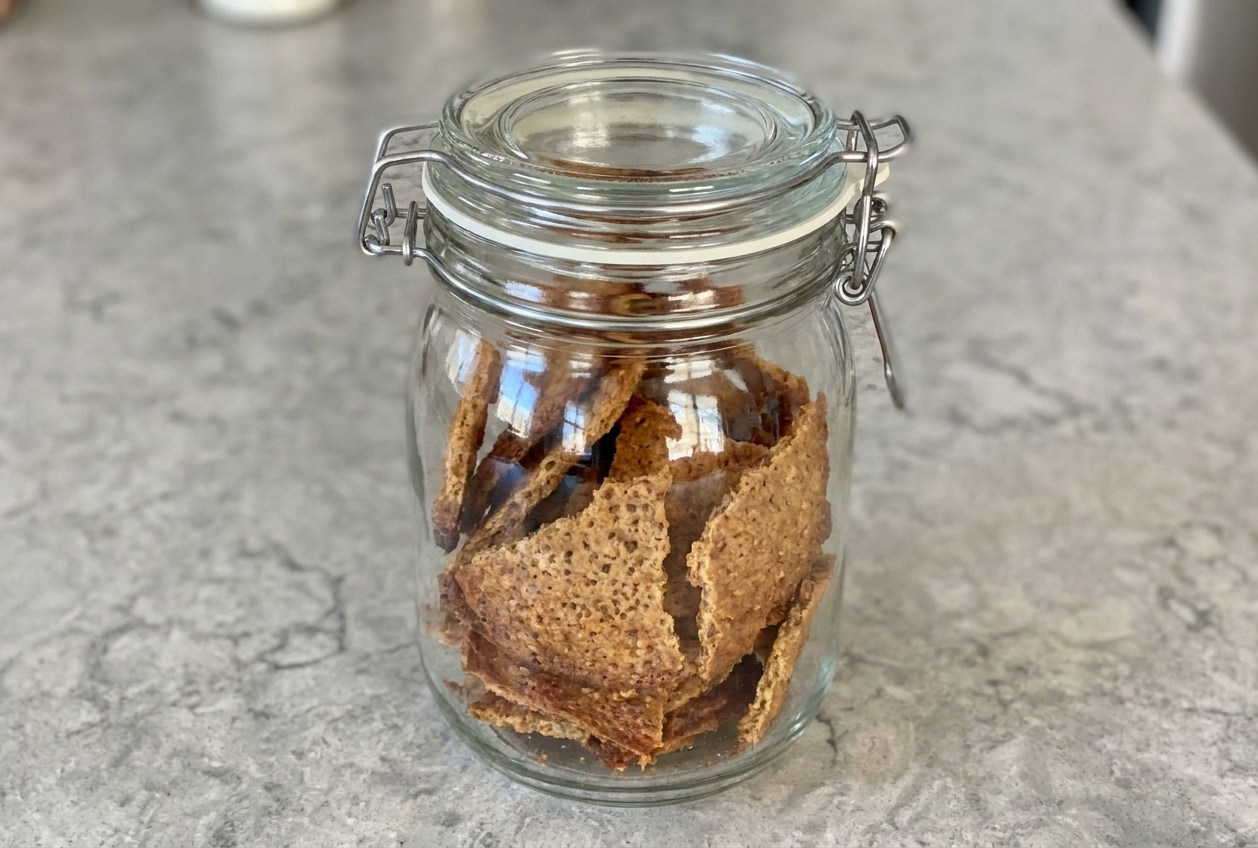
To keep crackers crisp: cool completely, then store in an airtight container at room temperature. A glass jar with a tight lid is my favorite because it seals well and you can see what you’re about to snack on.
- Room temperature: Best texture for 4 to 5 days, often longer if your kitchen is dry.
- If they soften: Re-crisp in a 300°F oven for 5 to 8 minutes, then cool fully before re-lidding the container.
- Avoid the fridge: Refrigeration adds humidity and makes crackers go stale faster.
Common mistakes
- Rolling too thick: The centers stay chewy. If you’re unsure, err thinner. You can always bake a little less if they brown too fast.
- Not docking enough: Large bubbles create thick, underbaked spots. Fork holes across the entire sheet prevent that.
- Pulling them too pale: Pale usually means moisture. Bake to deep golden for lasting crunch.
- Storing while warm: Trapped steam softens the whole batch. Let them cool completely first.
- Overcrowding cuts: If you cut pieces too large, the middle can take longer to dry out. Smaller pieces crisp more evenly.
FAQ
How much sourdough discard does this use?
This batch uses 240 g unfed sourdough discard (about 1 cup).
My crackers turned out chewy. Can I fix them?
Yes. Put them on a sheet pan and bake at 300°F for 5 to 8 minutes, then cool completely. Next time, roll thinner and bake a shade darker.
Do I need to ferment the dough first?
No. You can bake right away. These are meant to be quick, and crispness comes from thin rolling and thorough baking, not fermentation time.
Why did mine bubble up a lot?
Usually that’s not enough docking. Fork holes give steam a place to escape so the crackers stay flatter and bake more evenly.
Can I make them without a rolling pin?
If you’ve got a wine bottle, you’ve got a rolling pin. The key is getting the dough evenly thin.
Sourdough Discard Crackers
Thin, crisp sourdough discard crackers made with unfed starter, flour, oil, and salt. Roll to 1/16 inch, dock well, and bake until deep golden for a snappy, not chewy, crunch.
- Prep
- 15 minutes
- Cook
- 20 to 28 minutes
- Total
- 45 minutes
- Yield
- 1 sheet pan (about 6 to 8 servings)
Ingredients
- 240 g unfed sourdough discard (100% hydration) (about 1 cup)
- 1 cup (120 g) all-purpose flour, plus more as needed
- 2 tablespoons (30 g) olive oil, plus a little for brushing (optional)
- 3/4 teaspoon fine sea salt
- Flaky salt for topping (optional)
Instructions
- Heat the oven. Arrange a rack in the center and preheat to 350°F. Line a half sheet pan with parchment paper.
- Mix the dough. In a medium bowl, stir together the sourdough discard, flour, olive oil, and fine sea salt until a shaggy dough forms. Knead in the bowl 10 to 15 turns until it comes together. The dough should feel smooth and not sticky. If it sticks to your fingers, knead in 1 tablespoon flour at a time.
- Roll very thin. Place the dough on a sheet of parchment and cover with a second sheet of parchment. Roll into a large rectangle about 1/16 inch (1 to 2 mm) thick. Peel off the top parchment occasionally to smooth any wrinkles, then lay it back down and keep rolling.
- Transfer and dock. Peel off the top parchment. Lift the bottom parchment with the dough onto the prepared sheet pan. Use a fork to dock the dough all over, making holes every inch or so across the entire surface.
- Cut into crackers. Use a pizza wheel or knife to cut into squares or diamonds. You can leave them connected for easy baking, then snap apart after, or separate pieces slightly if you prefer cleaner edges.
- Season (optional). For a shinier, more seasoned top, lightly brush with a little oil and sprinkle with flaky salt.
- Bake until deep golden. Bake for 20 to 28 minutes, rotating the pan at about the 12 minute mark. The crackers are done when the surface is deep golden with a few darker edges, and the center pieces feel dry, not bendy.
- Dry for extra snap (recommended). Turn the oven off, crack the door, and let the crackers sit inside for 5 to 10 minutes to drive off lingering moisture.
- Cool completely. Cool on the pan until fully crisp. Snap apart along the cut lines.
- Store. Store completely cooled crackers in an airtight container at room temperature.
Notes
Discard amount: This recipe uses 240 g unfed sourdough discard (about 1 cup).
Thickness matters: If your crackers are chewy, roll thinner next time. Aim for 1/16 inch and bake to a deep golden color.
To re-crisp: Bake softened crackers at 300°F for 5 to 8 minutes, then cool completely before storing again.