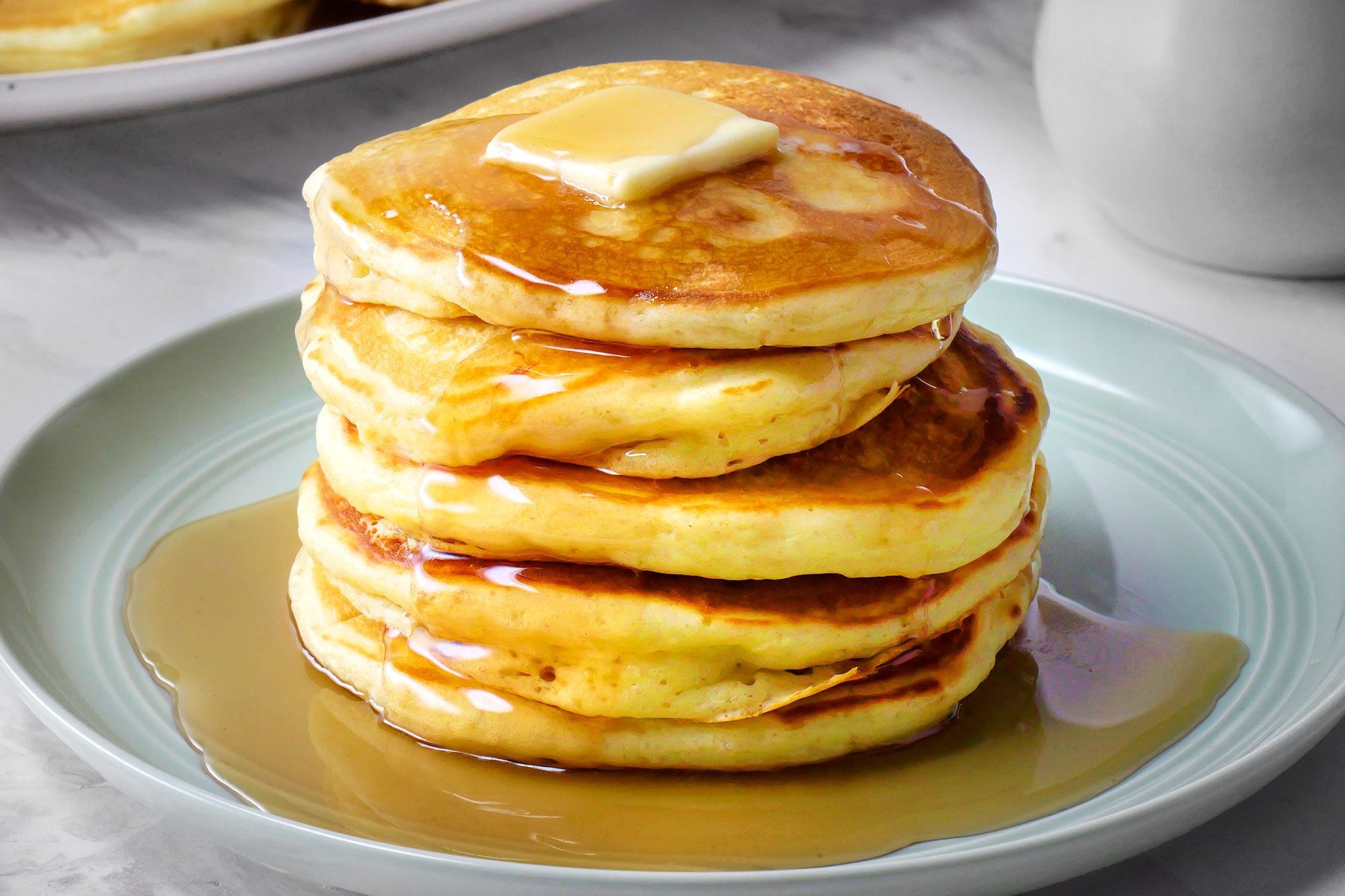
If you have ever made pancakes that were flat, pale, or weirdly tough, you are not alone. Fluffy buttermilk pancakes are less about fancy ingredients and more about a few controllable details: how you mix, how long you rest, and how you manage heat. This is the method I taught to nervous first-time cooks and busy weeknight folks who just want a reliable breakfast. It is forgiving, fast, and built for real kitchens.
What makes pancakes fluffy
Fluffiness comes from tiny bubbles that inflate on the griddle and set before they deflate. You get those bubbles from two places:
- Chemistry: Buttermilk (acid) reacts with baking soda to create carbon dioxide quickly, while baking powder provides extra lift as the batter cooks.
- Steam and structure: Heat turns moisture into steam, and the batter sets around those bubbles. Eggs help with structure and tenderness, and a little gluten gives the pancakes enough backbone to hold their shape.
Your job is to create bubbles, then avoid knocking them out. That is why gentle mixing and a short rest matter so much.
Ingredients (and why they matter)
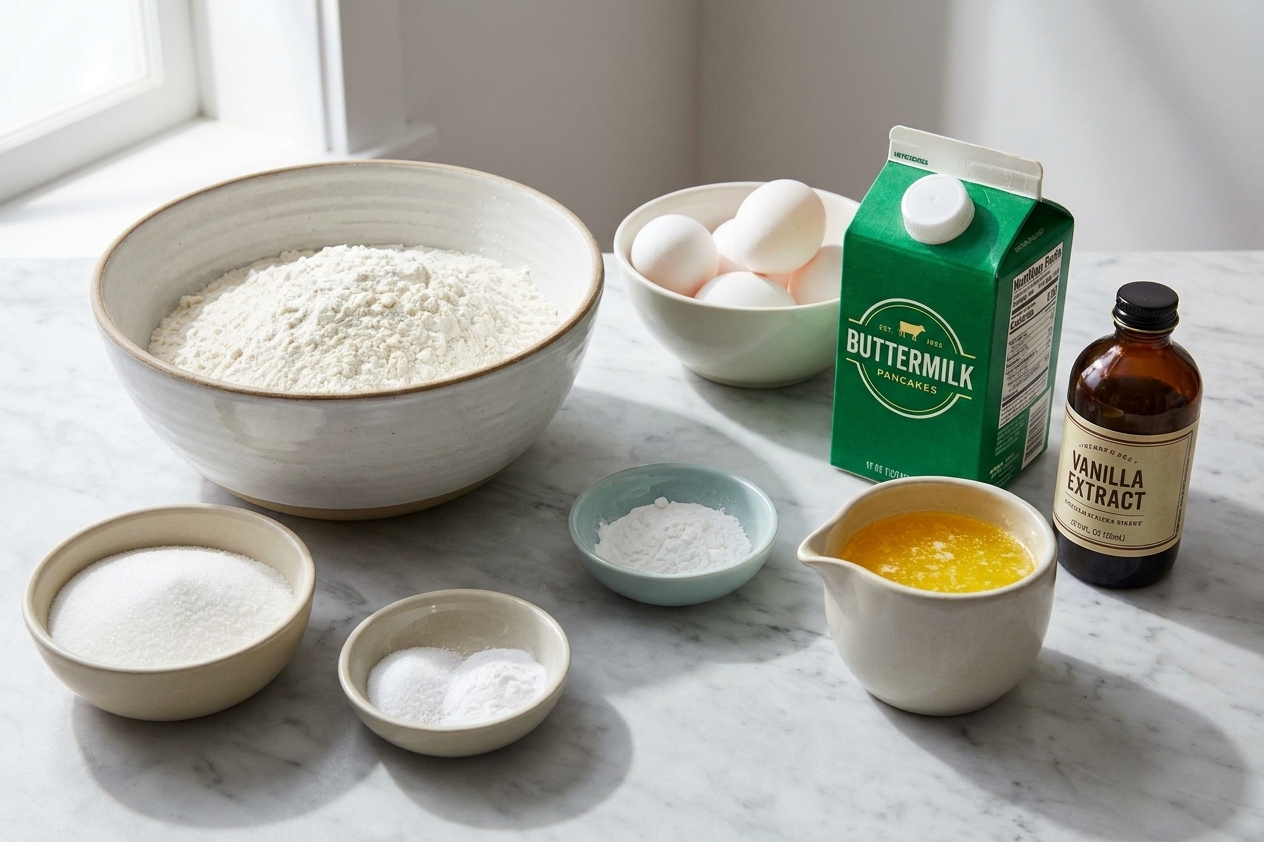
- All-purpose flour: The baseline for tender pancakes with enough structure to rise.
- Sugar: Just a little for browning and a balanced flavor.
- Salt: Makes the buttermilk taste brighter and the butter taste richer.
- Baking powder + baking soda: Baking powder gives ongoing lift; baking soda boosts lift and browning with buttermilk.
- Buttermilk: Tangy, thick, and acidic. It helps tenderness and activates baking soda.
- Eggs: Bind, add structure, and help the batter cook up tender.
- Melted butter: Flavor and tender texture. You can swap neutral oil in a pinch.
- Vanilla (optional): Subtle bakery aroma.
Fluffy Buttermilk Pancakes recipe
Yield: about 10 to 12 pancakes (4-inch) | Time: 25 minutes
You will need
- Large bowl, medium bowl, whisk, spatula
- Nonstick skillet or griddle
- Thin spatula
Ingredients
- 2 cups (240 g) all-purpose flour
- 2 tablespoons (25 g) sugar
- 1 1/2 teaspoons kosher salt (or 3/4 teaspoon fine salt)
- 2 teaspoons baking powder
- 1 teaspoon baking soda
- 2 cups (480 ml) buttermilk
- 2 large eggs
- 4 tablespoons (56 g) unsalted butter, melted and cooled slightly, plus more for the pan
- 1 teaspoon vanilla extract (optional)
Instructions
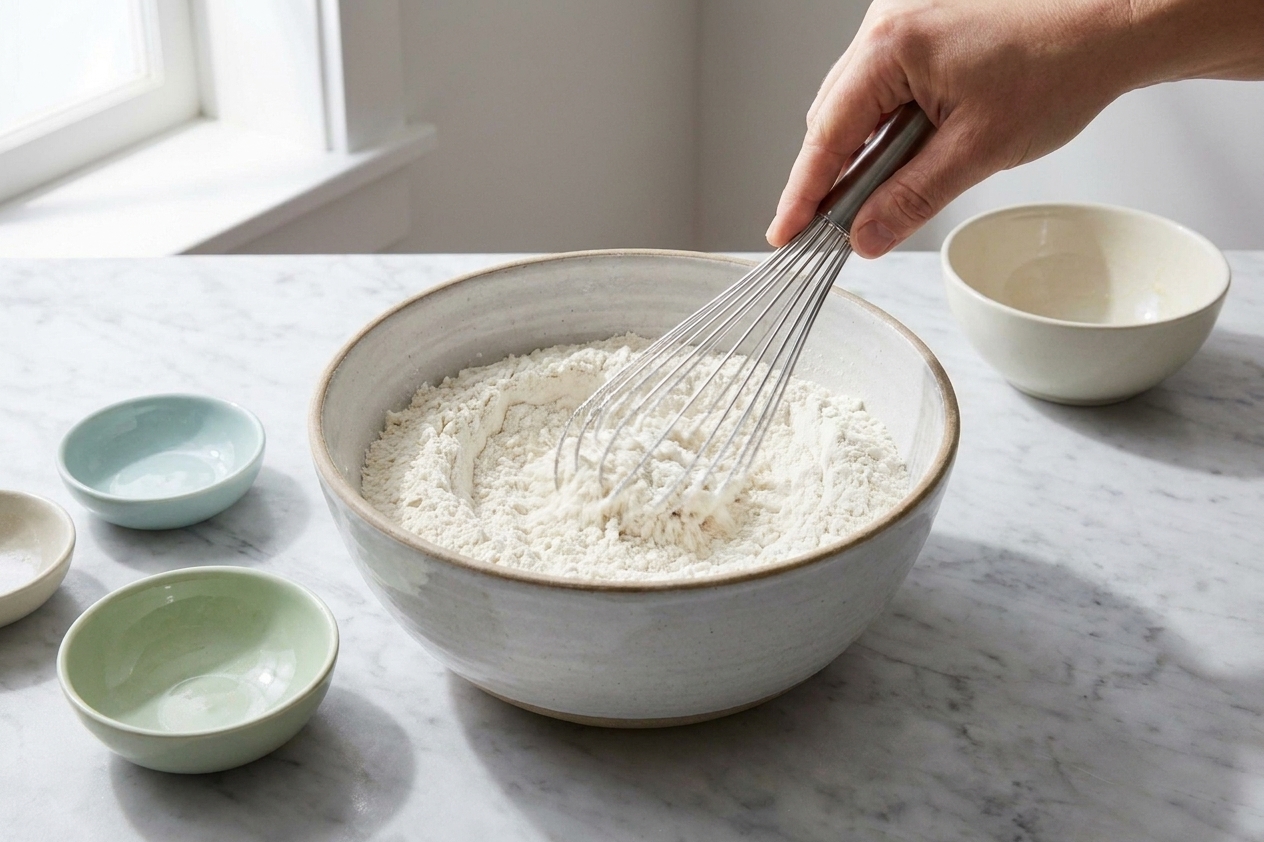
- Mix the dry ingredients. In a large bowl, whisk the flour, sugar, salt, baking powder, and baking soda until evenly combined. This prevents bitter pockets of leavener.
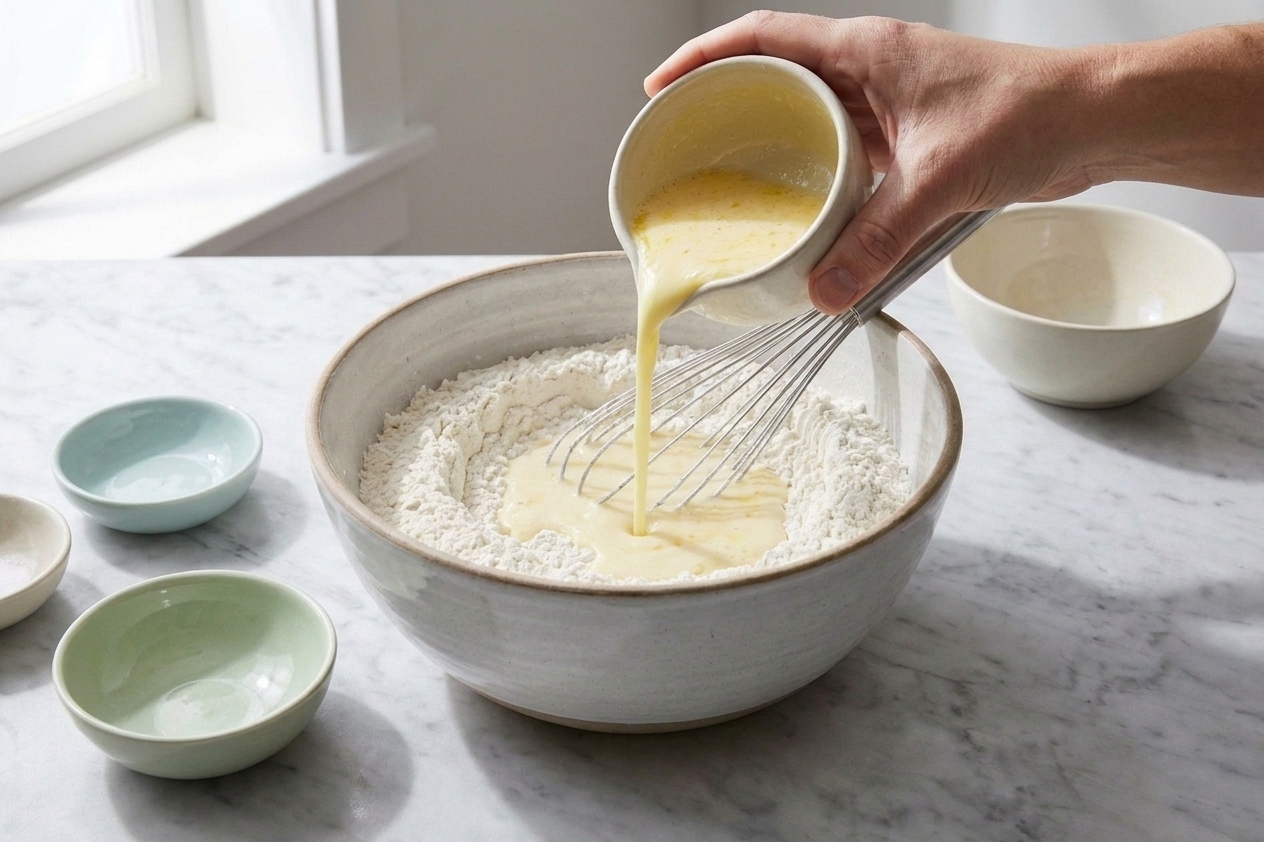
- Mix the wet ingredients. In a medium bowl, whisk the buttermilk and eggs until smooth, then whisk in the melted butter and vanilla (if using).
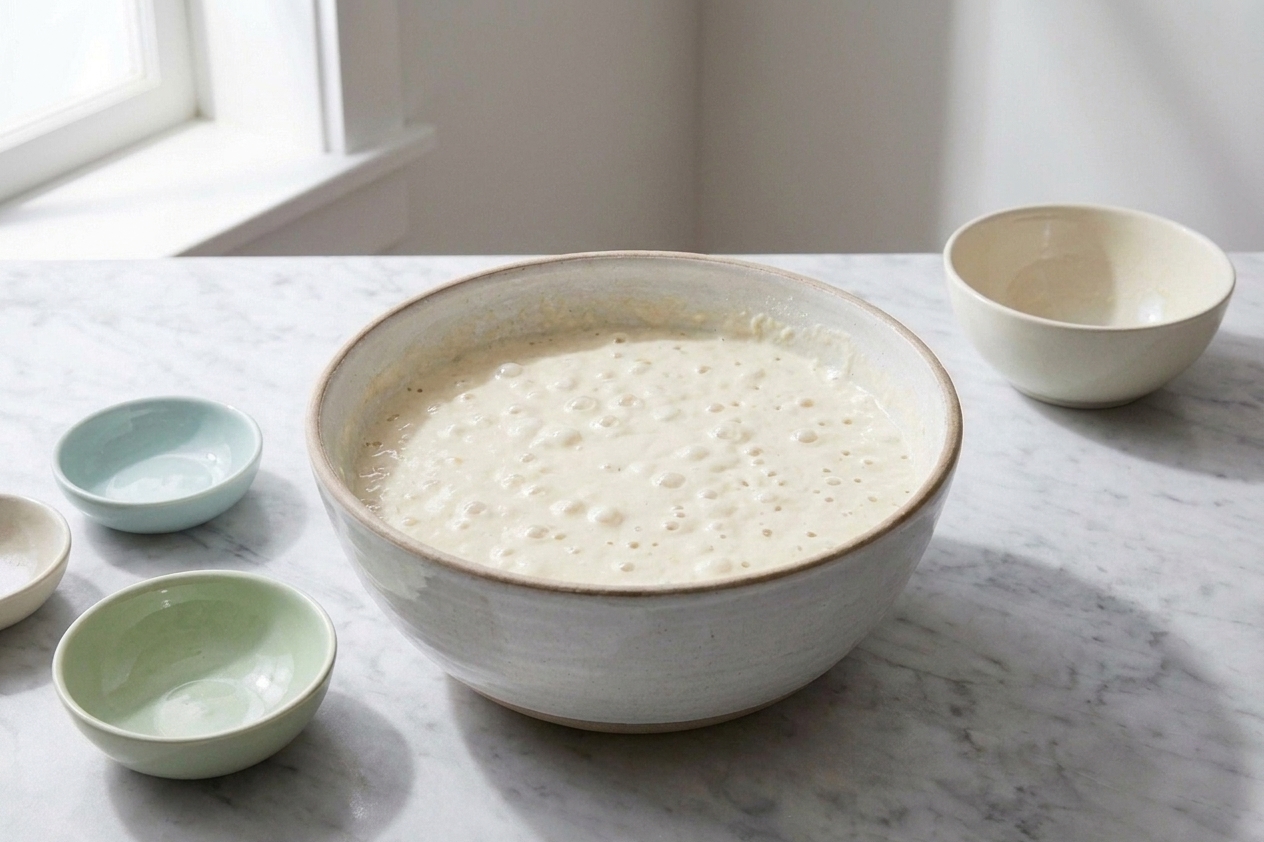
- Combine gently. Pour the wet into the dry. Use a spatula to fold (not whisk) just until you no longer see dry flour. The batter should look lumpy and thick. A few streaks are fine. Overmixing is the fast track to tough pancakes.
- Rest the batter. Let the batter sit 5 to 10 minutes. You will see it puff slightly and get airy.
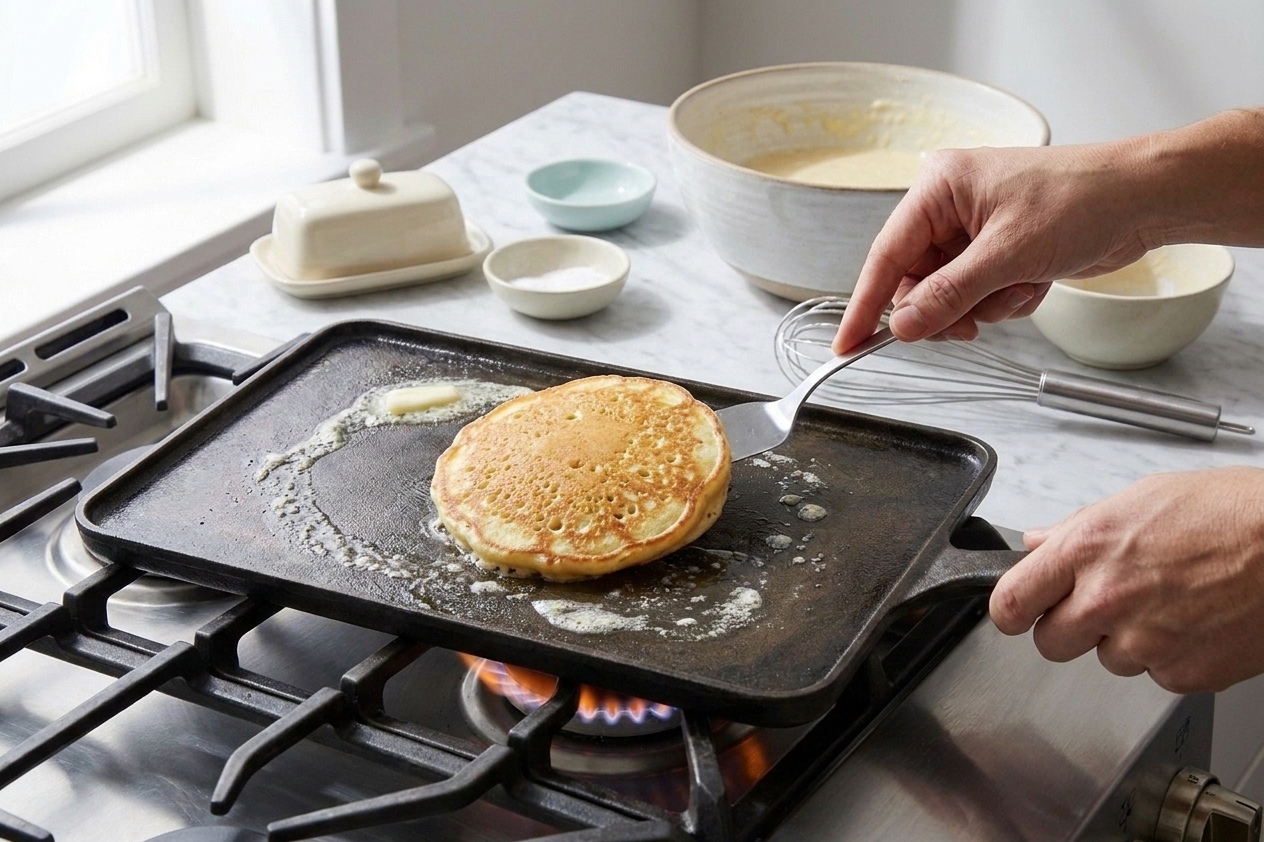
- Heat the pan. Preheat a nonstick skillet or griddle over medium-low to medium heat. If you have an infrared thermometer, aim for about 350°F (175°C). Add a small pat of butter and swirl to coat. The butter should sizzle gently, not brown instantly.
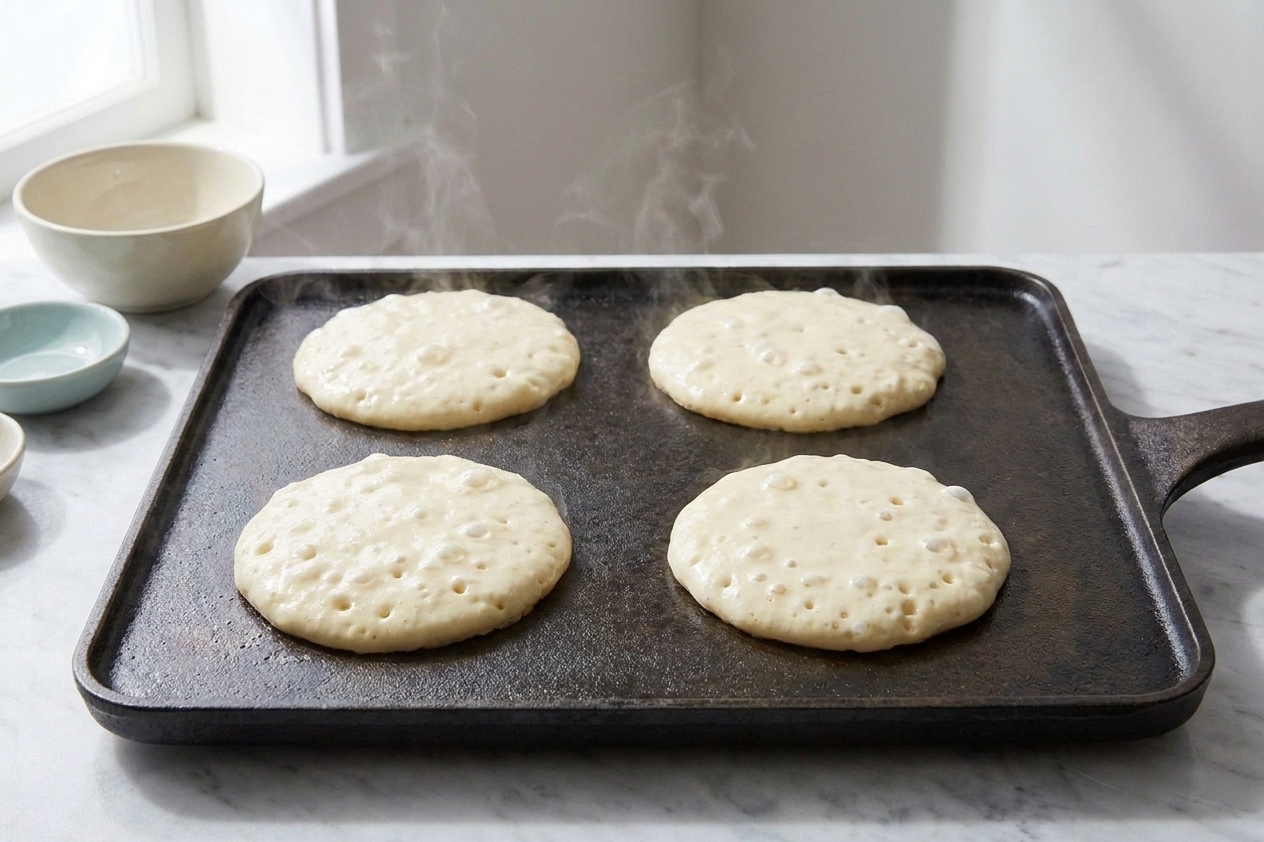
- Cook. Scoop about 1/4 cup batter per pancake for 4-inch pancakes. Cook until you see bubbles rise and pop across the surface and the edges look set, 2 to 3 minutes.
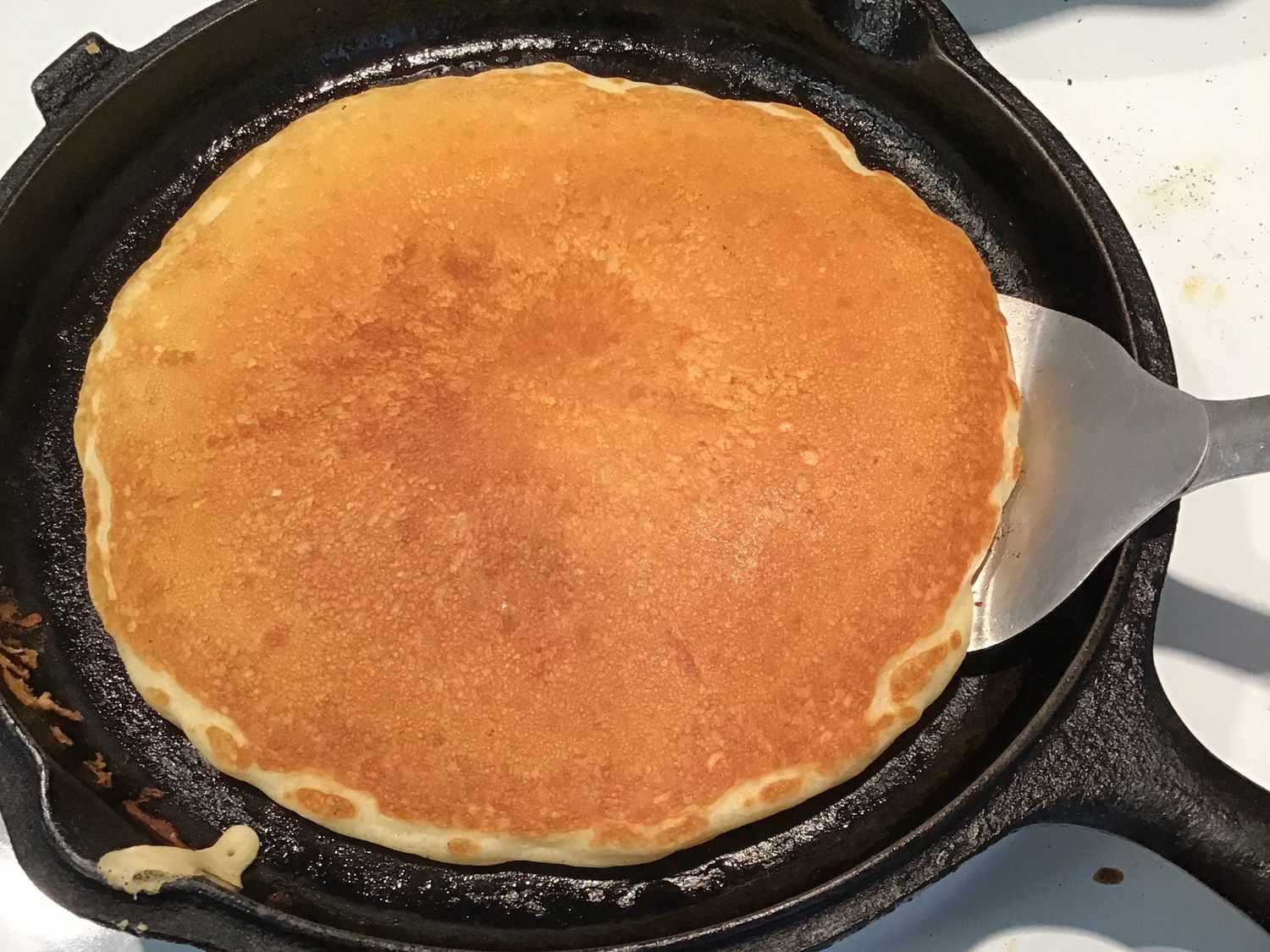
- Flip once. Flip and cook 1 to 2 minutes more, until golden and springy in the center. Do not press pancakes down with the spatula. If the pancake darkens before the middle sets, lower the heat.
- Keep warm (optional). Transfer to a sheet pan in a 200°F oven while you finish the batch. Add a tiny bit more butter to the pan between batches as needed.
My don’t-fail cues for perfect pancakes
When you do not want to guess, cook by cues:
- Pan heat: A drop of water should dance and evaporate within a second or two. If it explodes and vanishes instantly, your pan is too hot.
- When to flip: Wait for bubbles that pop and leave little craters that do not fill back in. The edges should look matte, not glossy.
- Doneness: The center should feel springy when you press lightly. If it feels wet and wobbly, give it 30 to 60 seconds more.
Common pancake problems (and quick fixes)
1) Pancakes are flat
- Your leaveners are weak. Quick tests: stir baking powder into hot water (it should fizz vigorously), or mix baking soda with lemon juice or vinegar (it should foam right away). If nothing happens, replace.
- You overmixed the batter. Next time, fold gently and stop early.
- Your pan is too hot, setting the outside before the inside can lift.
2) Pancakes are tough or rubbery
- Overmixing is usually the culprit. Lumps are your friend here.
- Too much flour. Spoon flour into the measuring cup and level, or weigh it.
3) Pancakes are pale
- Pan is too cool. Increase heat slightly and give it a couple minutes to stabilize.
- Not enough fat in the pan. A thin film of butter helps browning and crisp edges.
4) Pancakes burn before cooking through
- Lower heat to medium-low.
- Wipe out browned butter bits and start fresh with a small pat of butter.
Easy swaps and add-ins
If you do not have buttermilk
Real buttermilk gives the best flavor and texture, but you have options:
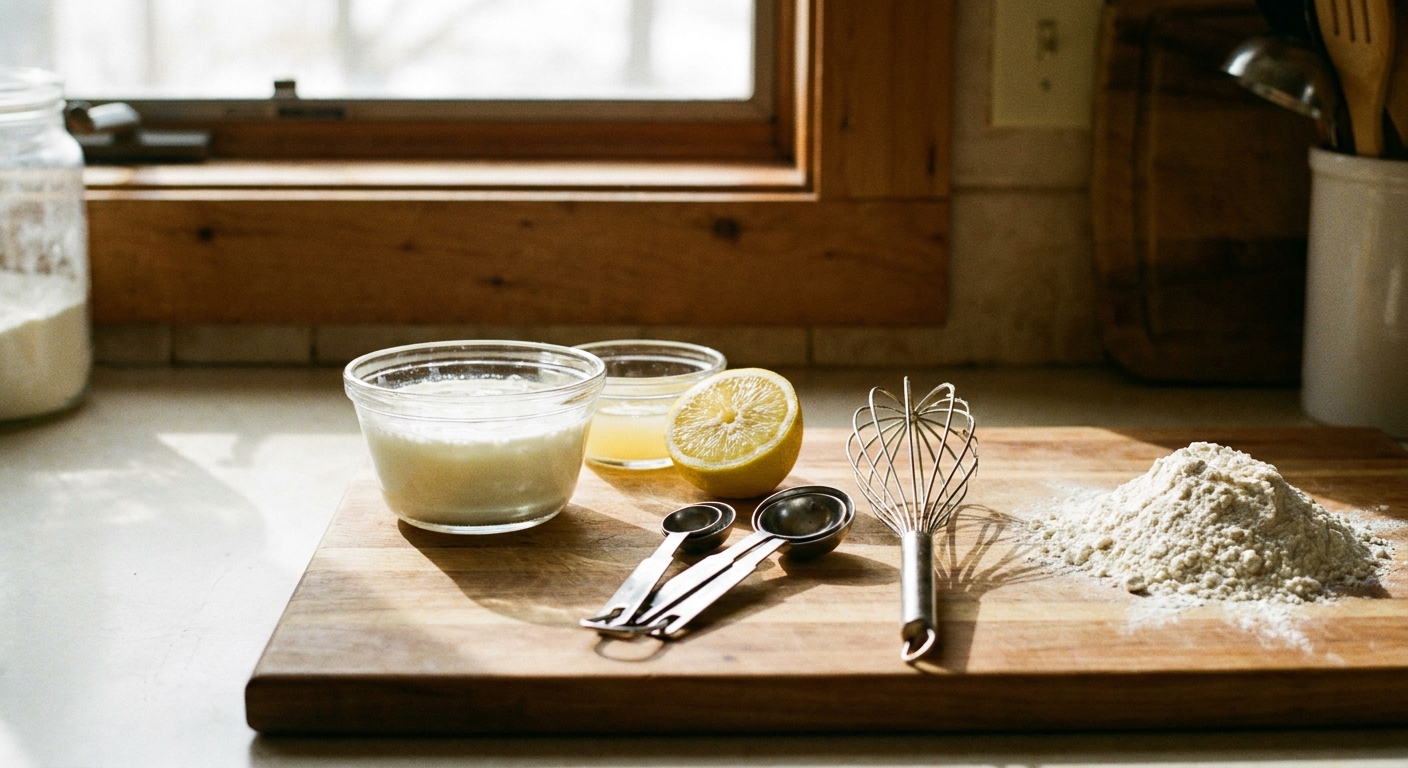
- Milk + lemon juice or vinegar: Mix 2 cups milk with 2 tablespoons lemon juice or white vinegar. Let sit 5 minutes, then use. It works, but it is thinner and less tangy than real buttermilk.
- Plain yogurt or sour cream: Thin with milk to buttermilk consistency. This is my favorite substitute for extra-tender pancakes.
If you want whole wheat pancakes
Swap up to 1 cup (120 g) of the all-purpose flour for whole wheat flour. Expect a slightly heartier texture. Add an extra tablespoon or two of buttermilk if the batter feels stiff.
Fun add-ins (fold in after mixing)
- Blueberries, raspberries, or sliced strawberries
- Chocolate chips
- Toasted chopped nuts
- Orange zest
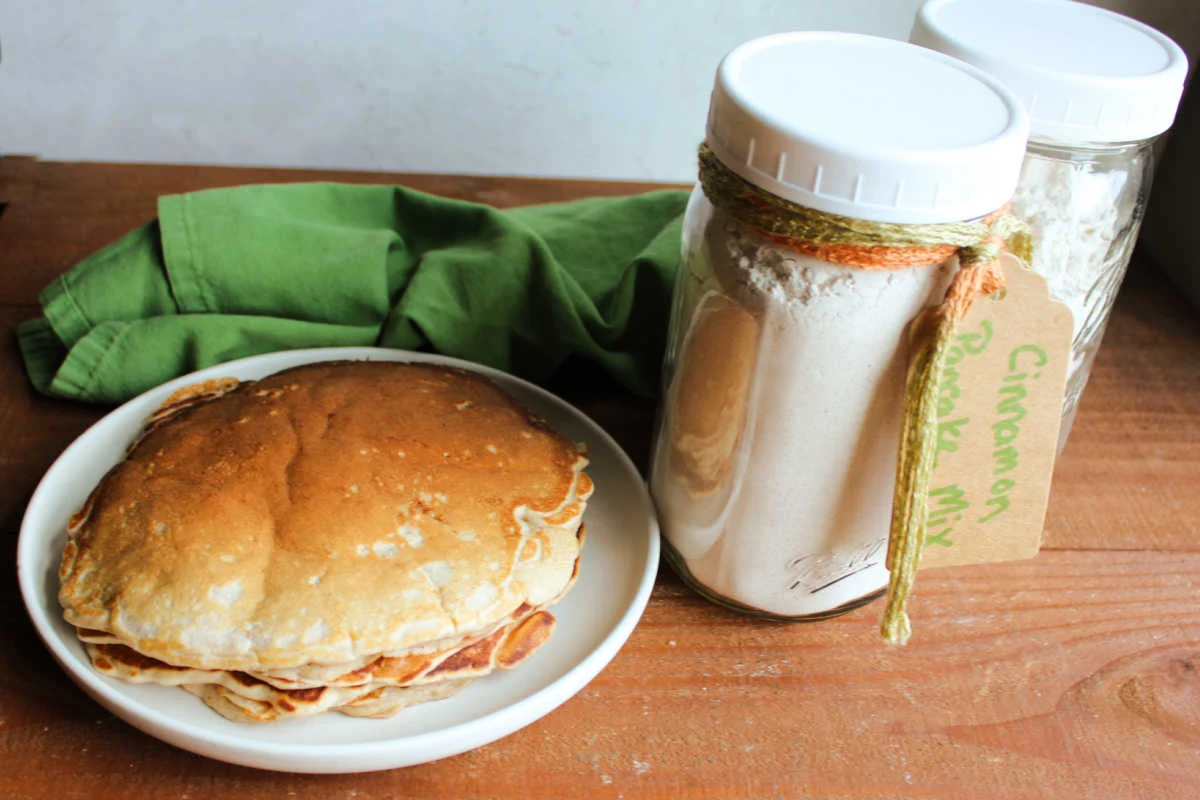
- A pinch of cinnamon
Tip: If you are adding berries or chips, sprinkle them onto the wet batter once it is on the griddle. This prevents streaking and helps pancakes cook evenly.
Make-ahead, storage, and freezing
Pancakes are one of my favorite low-effort meal prep breakfasts. Make a batch on Sunday and you have quick weekday mornings all week.
To store
- Fridge: Cool completely, then store in an airtight container for up to 4 days.
- Freezer: Freeze in a single layer on a sheet pan, then transfer to a bag or container for up to 2 months. This prevents one giant pancake brick.
To reheat (best methods)
- Toaster: My go-to for crisp edges and a hot center.
- Oven: 350°F for 8 to 10 minutes, covered loosely with foil if you want them softer.
- Microwave: 20 to 40 seconds, but you will lose the crisp edge.
Serving ideas
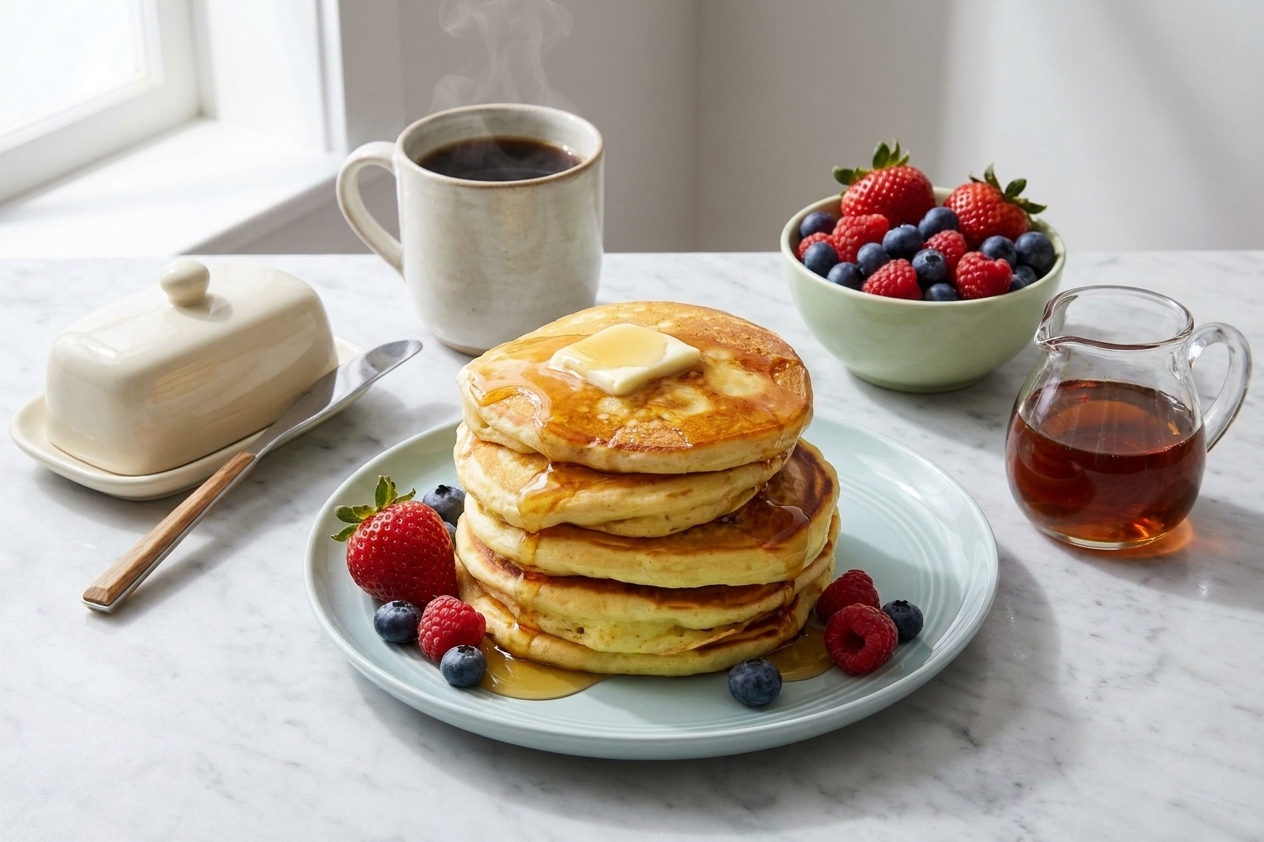
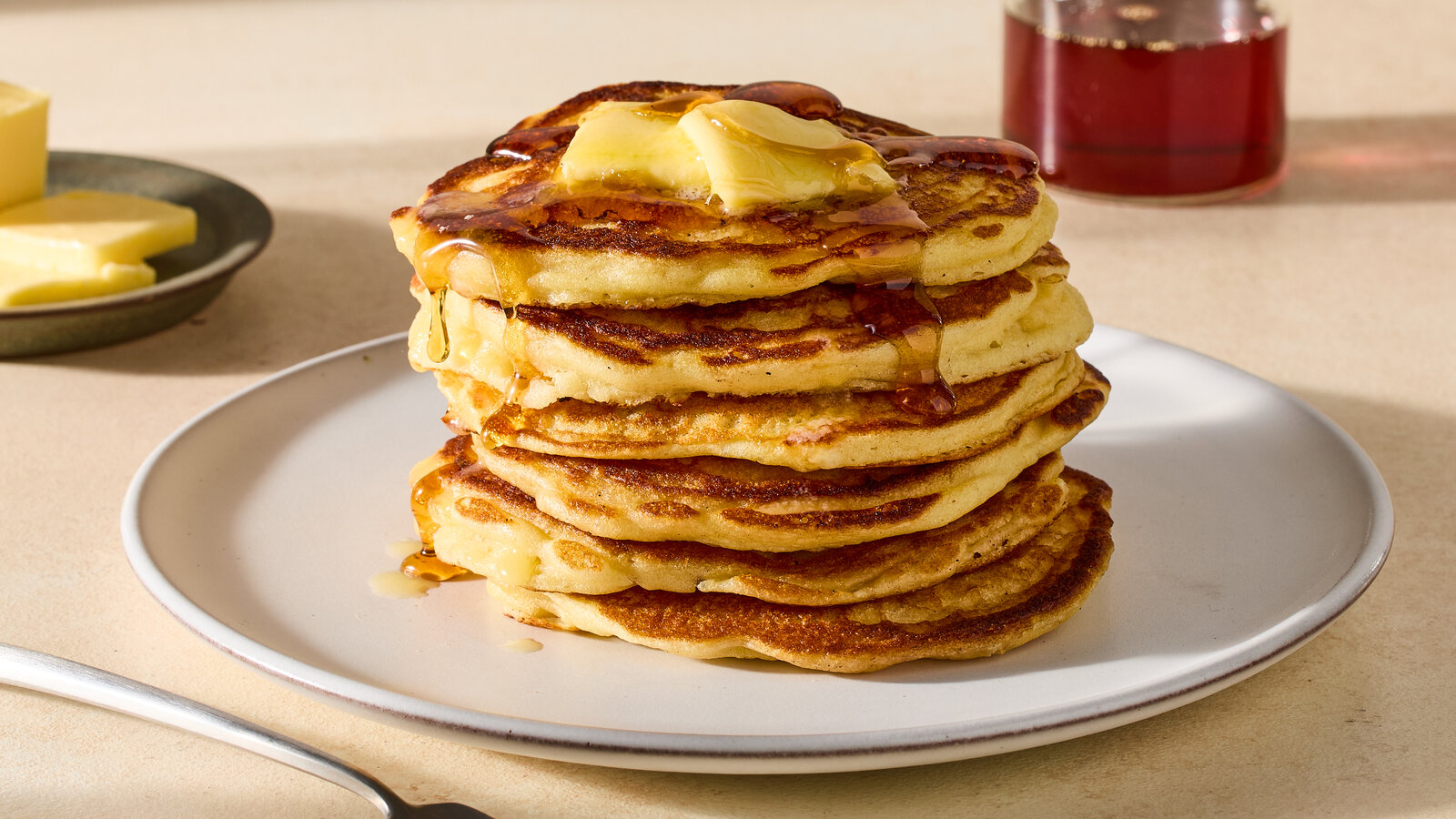
- Classic: butter + warm maple syrup + a pinch of flaky salt
- Bright: lemon zest in the batter, topped with berries and a spoonful of yogurt
- Cozy: cinnamon and vanilla in the batter, topped with sautéed apples
- Extra: whipped cream and toasted pecans for a brunch feel
FAQ
Should pancake batter be lumpy?
Yes. Lumps mean you did not overwork the flour. Stirring until perfectly smooth develops gluten and makes pancakes chewy.
How long should I rest pancake batter?
Five to ten minutes is enough to hydrate the flour and let bubbles form. Longer is fine, but after about 30 minutes you may lose some lift.
Why did my pancakes stick?
Usually the pan was not fully preheated, or there was not enough fat. Let the pan warm for a few minutes, then add a small amount of butter and swirl before each batch.
Can I make the batter the night before?
You can, but the leaveners start working right away, so overnight batter is less fluffy. If you want true make-ahead, cook the pancakes and reheat. If you must prep ahead, mix the dry ingredients in one bowl and the wet in another, then combine in the morning.
One last tip from my Portland kitchen
If your first pancake is not perfect, do not take it personally. The first one is the heat test. Adjust the burner, make a note of how the butter behaves in the pan, and the rest of the batch will be the fluffy, golden kind you actually want to stack.