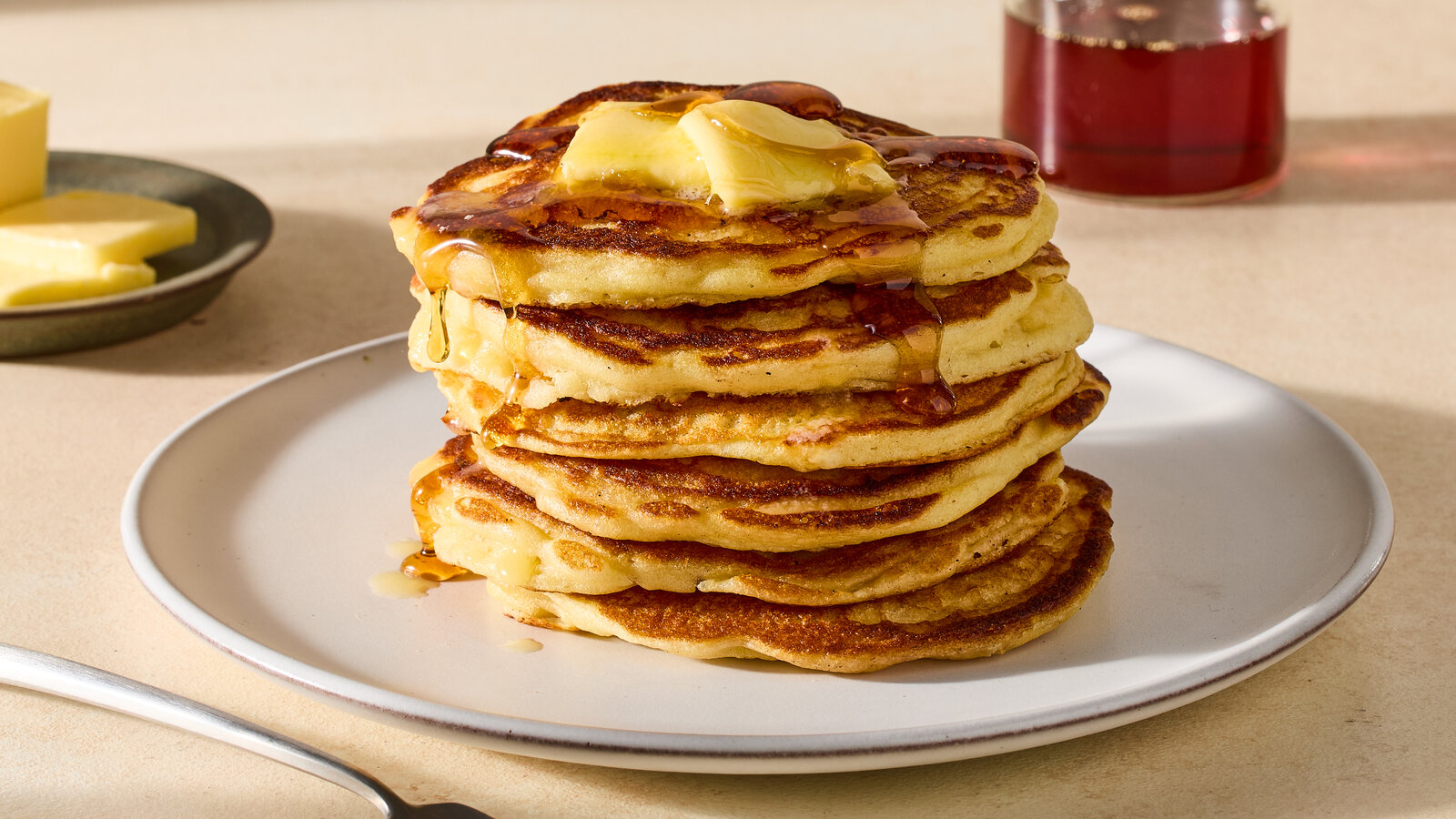
Diner-style pancakes get their extra lift from gas and timing. The “baking soda trick” is simple: use baking soda only when your batter includes a real acidic ingredient (like buttermilk or yogurt), and measure it carefully so you get maximum fluff without any off flavors. Below you will find when to use it, how much to add, what to watch for, and a reliable fluffy pancake formula you can customize.
Why this recipe works
Baking soda (sodium bicarbonate) is a chemical leavener that creates carbon dioxide bubbles when it meets acid and moisture. Those bubbles expand on the hot griddle, and your batter sets around them, giving you pancakes that are lighter, taller, and more tender.
Here is the key: baking soda needs an acid to work well. Without enough acid, you may get a little lift from heat, but it is much less effective and more likely to leave behind an alkaline, slightly bitter or soapy taste and overly fast browning.
The trick: Use baking soda only when your pancake batter includes a real acidic ingredient (like buttermilk, yogurt, sour cream, kefir, lemon juice, or vinegar), and measure it carefully so you get maximum fluff without any off flavors.
How to tell it is working:
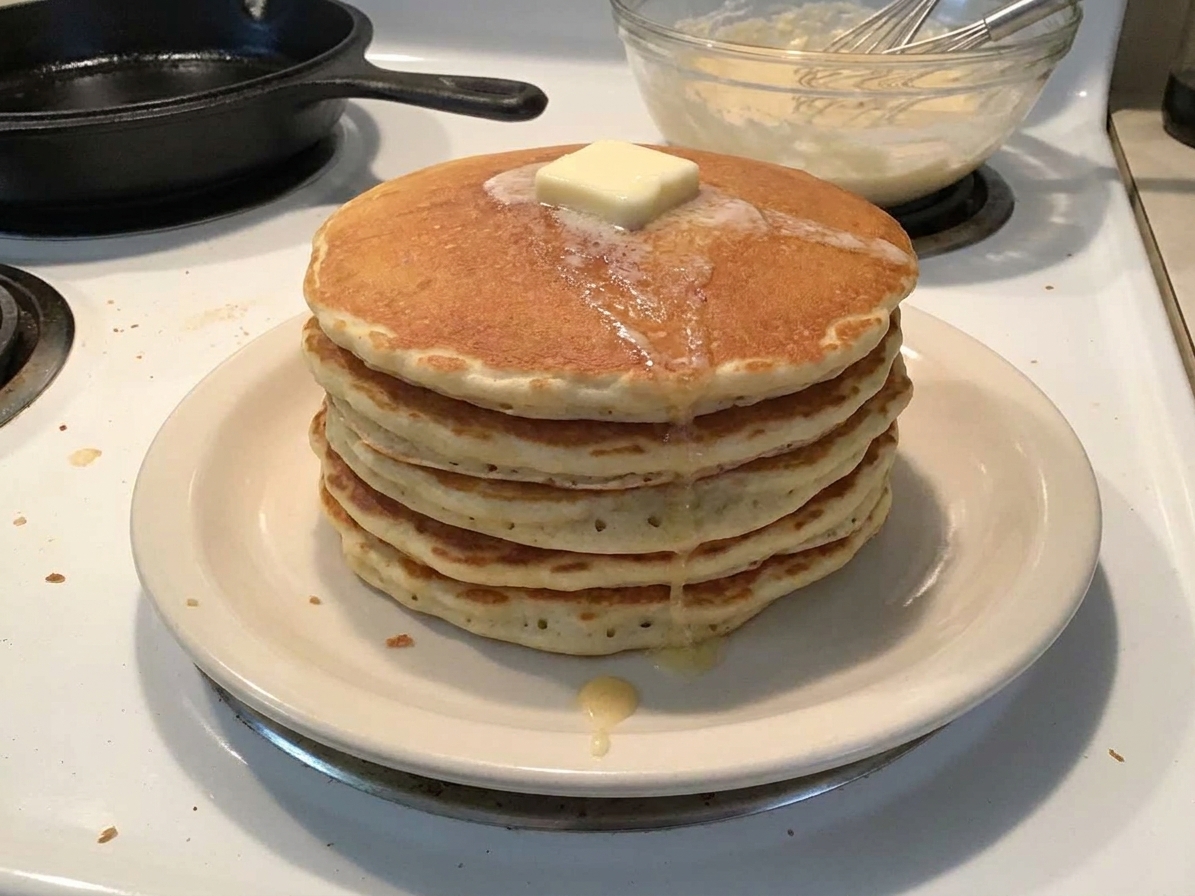
- Before cooking: Batter looks slightly foamy at the edges and feels lighter when you scoop it.
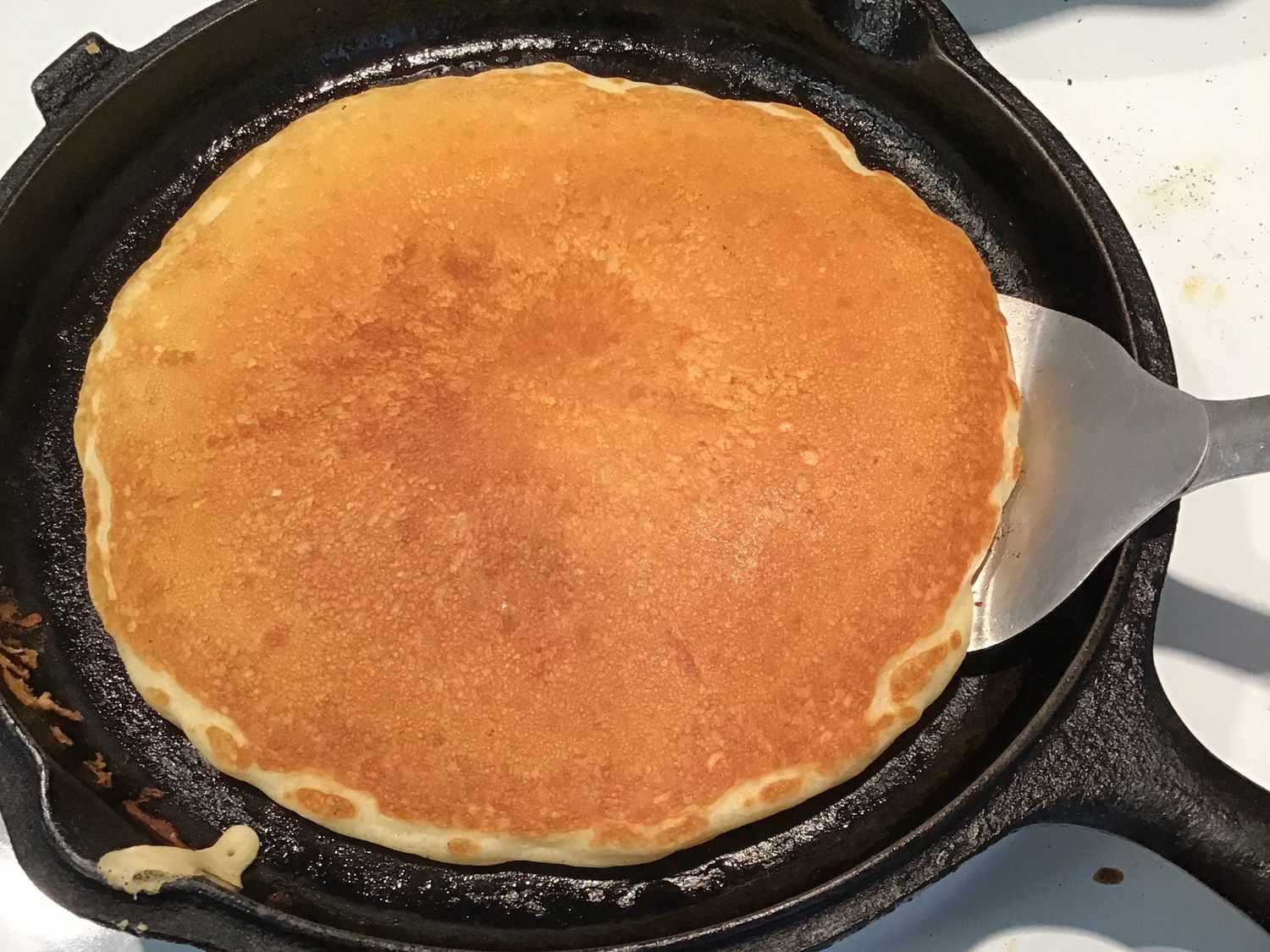
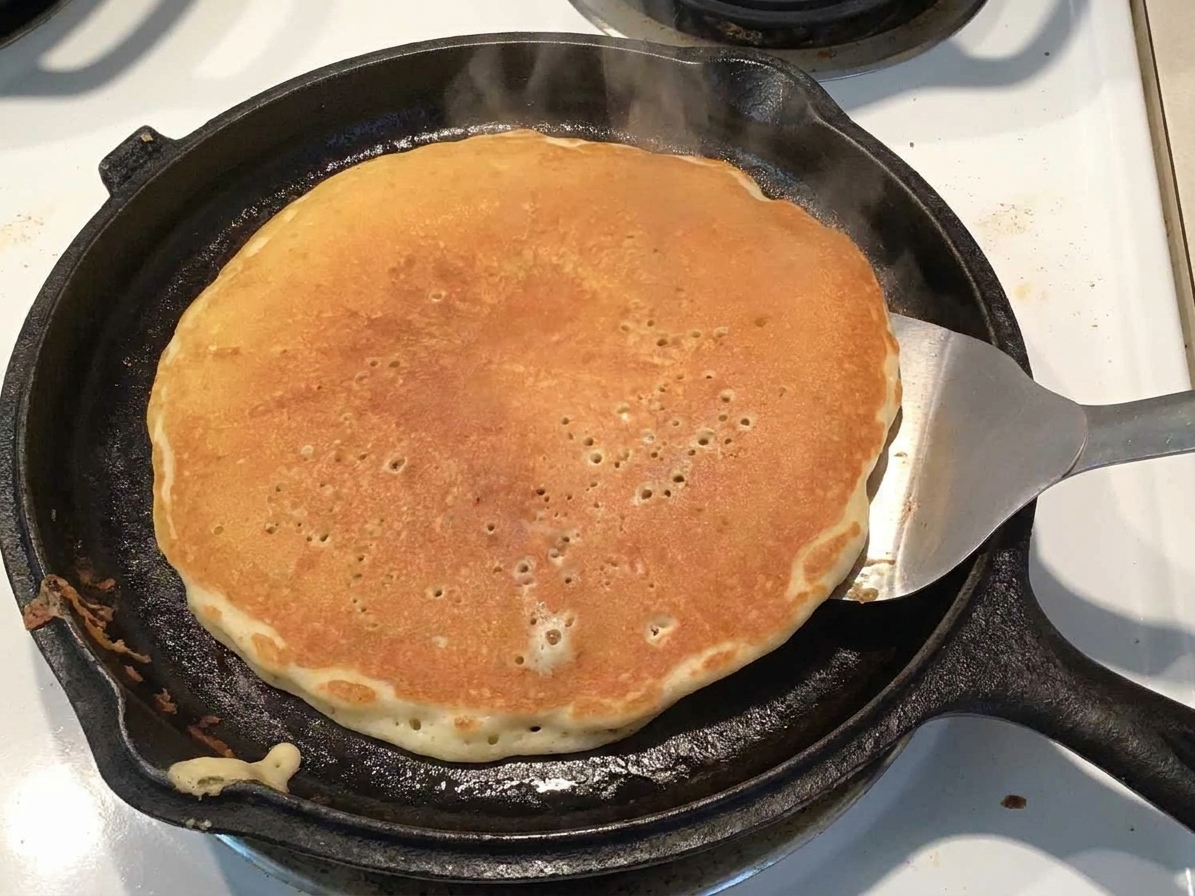
- On the griddle: Bubbles appear steadily across the surface, not just a few random ones.
- After cooking: Pancake crumb is tender with small, even holes, not gummy or bread-like.
Ingredient notes
When to use baking soda
Use baking soda if your batter has one of these:
- Buttermilk (acidity varies by brand, so treat baking soda as a range)
- Plain yogurt (regular or Greek, thinned with a splash of milk if needed)
- Sour cream (also great for extra-tender pancakes)
- Kefir
- Lemon juice or vinegar (small amounts, usually paired with milk)
- Brown sugar or molasses (mildly acidic, can help a bit, but unreliable as the only acid)
Skip baking soda if your batter is mostly sweet milk: If your recipe is built on regular milk with no real acid, baking powder is usually the better choice. Baking powder already contains both an acid and a base, so it works in neutral batters and gives a more predictable rise.
How much baking soda to add
These ratios are forgiving, but they keep you out of the “why do these taste soapy?” zone.
- Easy starting point: For every 1 cup (240 ml) of buttermilk or yogurt in your batter, use 1/4 teaspoon baking soda.
If your recipe already has baking powder: Many pancake recipes use both. Baking powder provides steady lift, while baking soda neutralizes acidity and adds extra puff.
- Keep the recipe’s baking powder as written.
- Add (or keep) baking soda in the 1/8 to 1/4 teaspoon per cup of acidic dairy range.
Buttermilk note: Cultured buttermilk brands can vary in tang, so if your pancakes ever taste even slightly “soda-forward,” pull the baking soda back a touch next time.
Note: More baking soda does not equal more fluff. Past a certain point, you get fast expansion that collapses, plus off flavors and too-dark pancakes.
Equipment you will need
- Skillet or griddle
- Large mixing bowl
- Second bowl for wet ingredients
- Whisk
- Scoop (for consistent portions)
- Sheet pan (for holding pancakes warm)
Pro tips
Timing matters
Once baking soda hits acid, it starts producing bubbles immediately. That means you want to:
- Preheat your pan or griddle first. Batter should not be sitting around while the pan warms up.
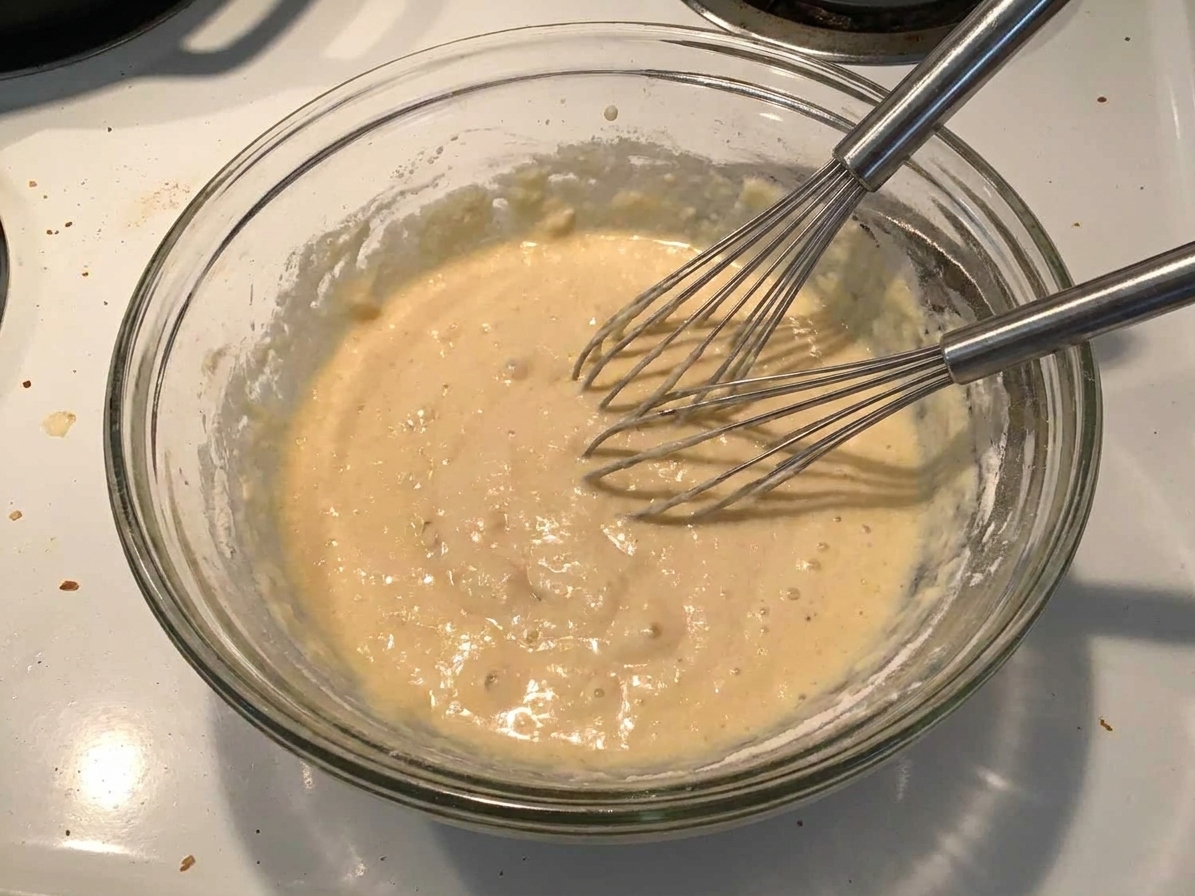
- Mix gently and stop early. Overmixing knocks out the bubbles you are trying to keep.
- Cook soon after mixing. You do not have to sprint, but do not leave the bowl on the counter for 30 minutes.
Small details that matter
- Do not chase a perfectly smooth batter. Lumps are your friend here.
- Let the flour hydrate briefly if you want extra tenderness. Even 5 minutes helps, but do not leave it forever. If you rest the batter longer than 10 to 15 minutes, expect to lose some lift. If that happens, cook anyway, or make the last pancakes a little smaller so they set faster.
- Use a scoop. Consistent portions cook evenly, so you get the same fluff level across the batch.
Substitutes that work
No buttermilk?
You have options. My favorite for flavor is yogurt, but the fastest is the milk-and-acid method.
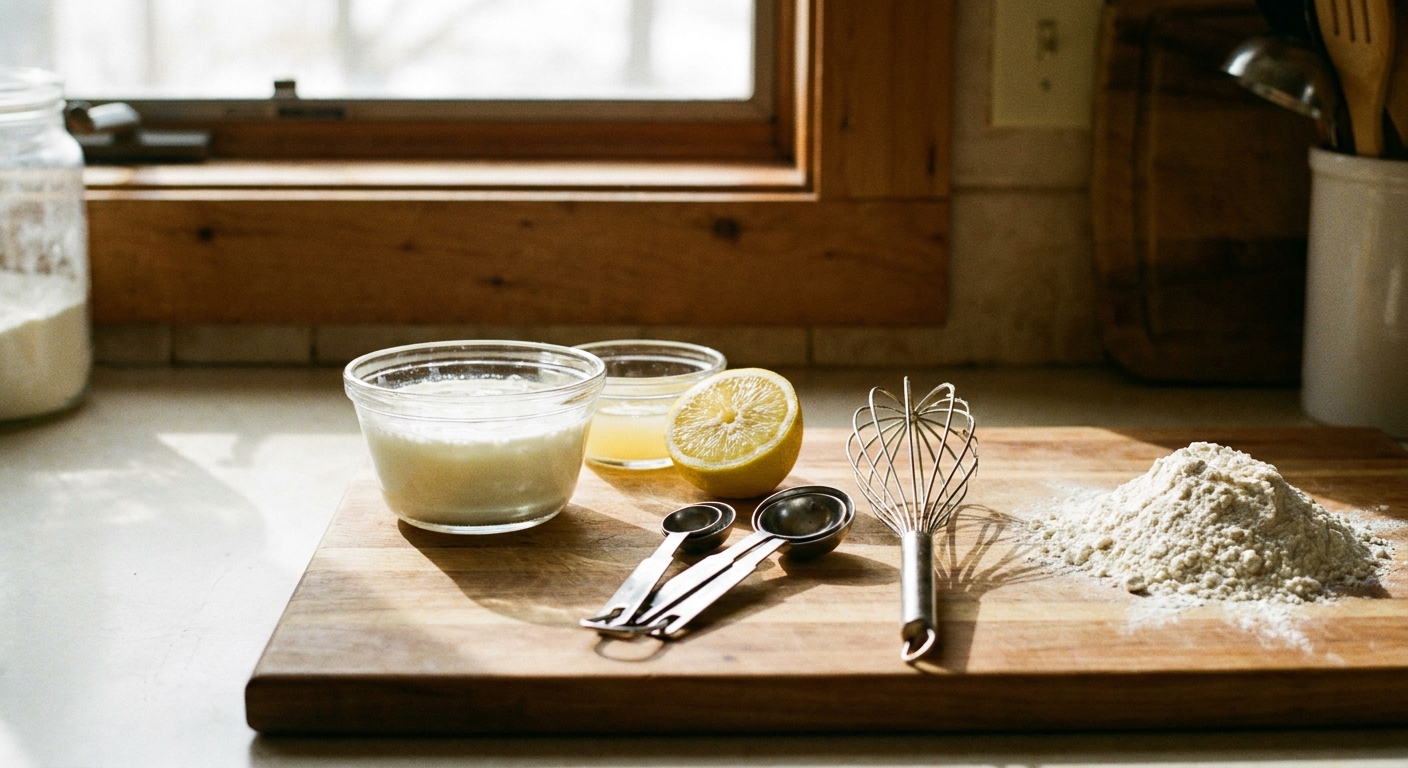
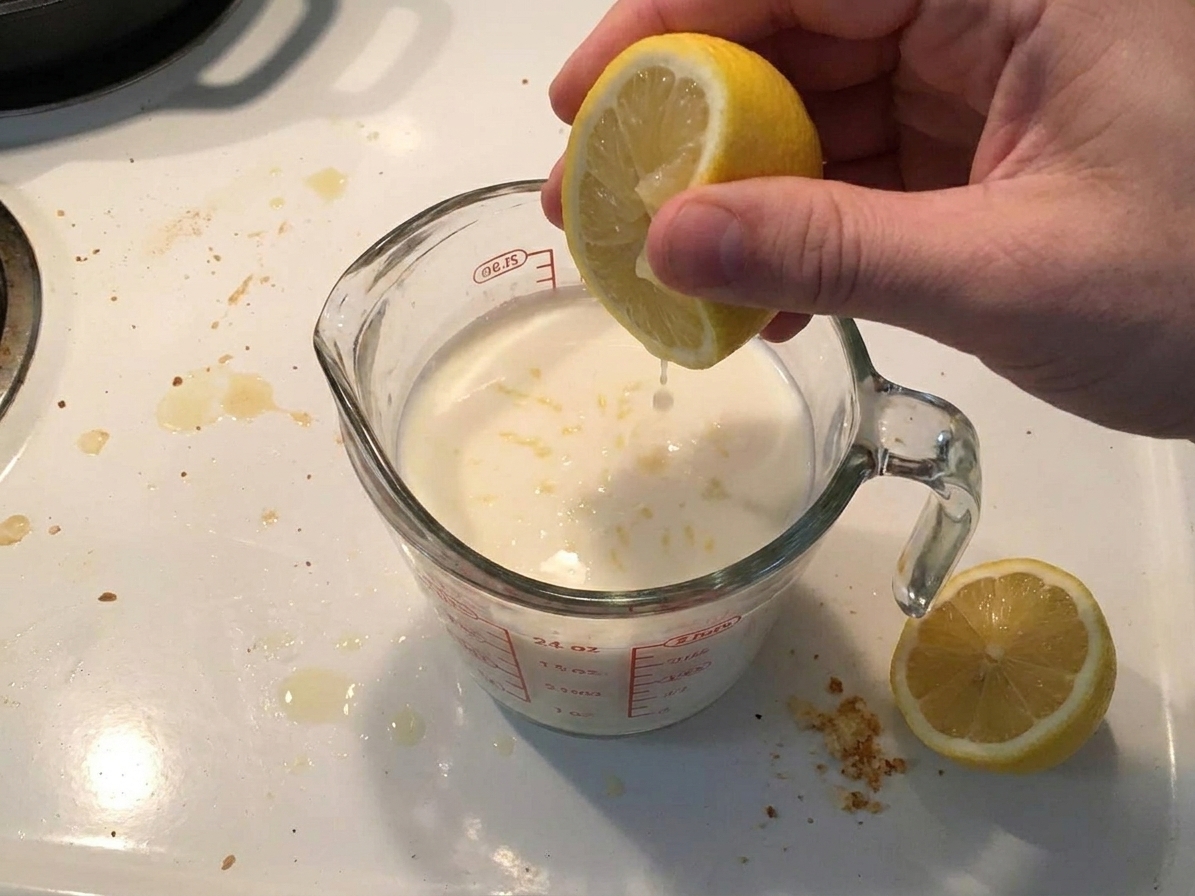
- Milk + lemon juice or vinegar: Add 1 tablespoon lemon juice or white vinegar to a measuring cup, then fill to 1 cup with milk. Let sit 5 minutes. It will look slightly curdled, that’s perfect for pancakes.
- Yogurt + milk: Use 3/4 cup yogurt + 1/4 cup milk to replace 1 cup buttermilk.
- Kefir: Use 1:1 in place of buttermilk.
Dairy-free?
Use an unsweetened plant milk plus acid (lemon juice or vinegar). Oat milk works nicely for texture. You still need that acid if you want baking soda to do its job.
Variations
Food-waste friendly upgrades
Pancakes are one of the best “save it” breakfasts. A few ideas that work especially well with a buttermilk-and-baking-soda batter:
- Wilting berries: fold into batter or warm into a quick compote with a pinch of salt and lemon.
- Overripe bananas: mash one in, then reduce sugar slightly.
- Leftover cooked grains: add a few spoonfuls of cooked oats or quinoa for texture (keep add-ins modest so the pancakes still lift).
- Last spoonful of jam: whisk into softened butter for an instant flavored spread.
Serving ideas
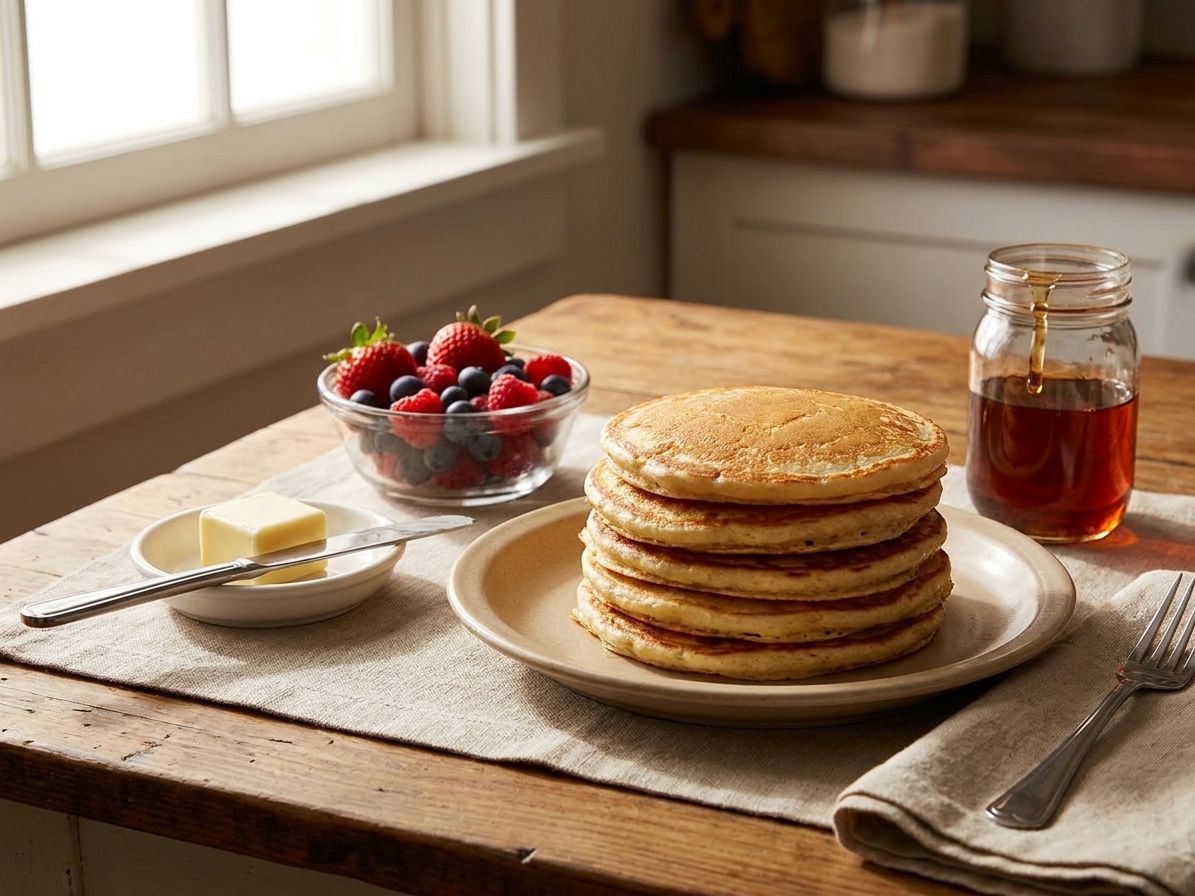
- Serve pancakes right away. They are at their fluffiest in the first few minutes off the griddle.
- For berries that are past their prime, fold them into the batter or warm them into a quick compote with a pinch of salt and lemon.
- Turn the last spoonful of jam into an instant spread by whisking it into softened butter.
Storage and reheating
Keeping pancakes warm (short-term)
- Hold them on a sheet pan in a 200°F oven, uncovered, ideally no more than 20 to 30 minutes.
- If you are holding longer, a very loose foil tent can prevent edge-drying without steaming them into softness.
Common mistakes
Common problems and quick fixes
My pancakes taste bitter or soapy
This is almost always too much baking soda or not enough acid. Fix it by reducing baking soda next time (try cutting it back by 1/8 teaspoon). If you are using milk, either switch to buttermilk or add an acid.
My pancakes are fluffy at first, then go flat
Two usual culprits: overmixing or batter sitting too long. Mix gently, cook sooner, and keep your pan at steady medium heat so the structure sets before bubbles escape.
My pancakes are pale and bland
Check salt first. Then check heat. A properly heated pan plus a little sugar helps browning. Also, if you remove all acidity, baking soda will not help with flavor balance.
My pancakes are too dark on the outside
Baking soda increases browning because it raises pH. If your pancakes are getting dark fast, lower the heat a notch and confirm you are not heavy-handed with the soda.
My pancakes taste metallic
This is more often from too much baking powder (especially some aluminum-based baking powders) than baking soda. Try reducing baking powder slightly, check that your leaveners are fresh, and avoid overdoing the total amount of chemical leavener.
FAQ
Can I add baking soda to any pancake mix?
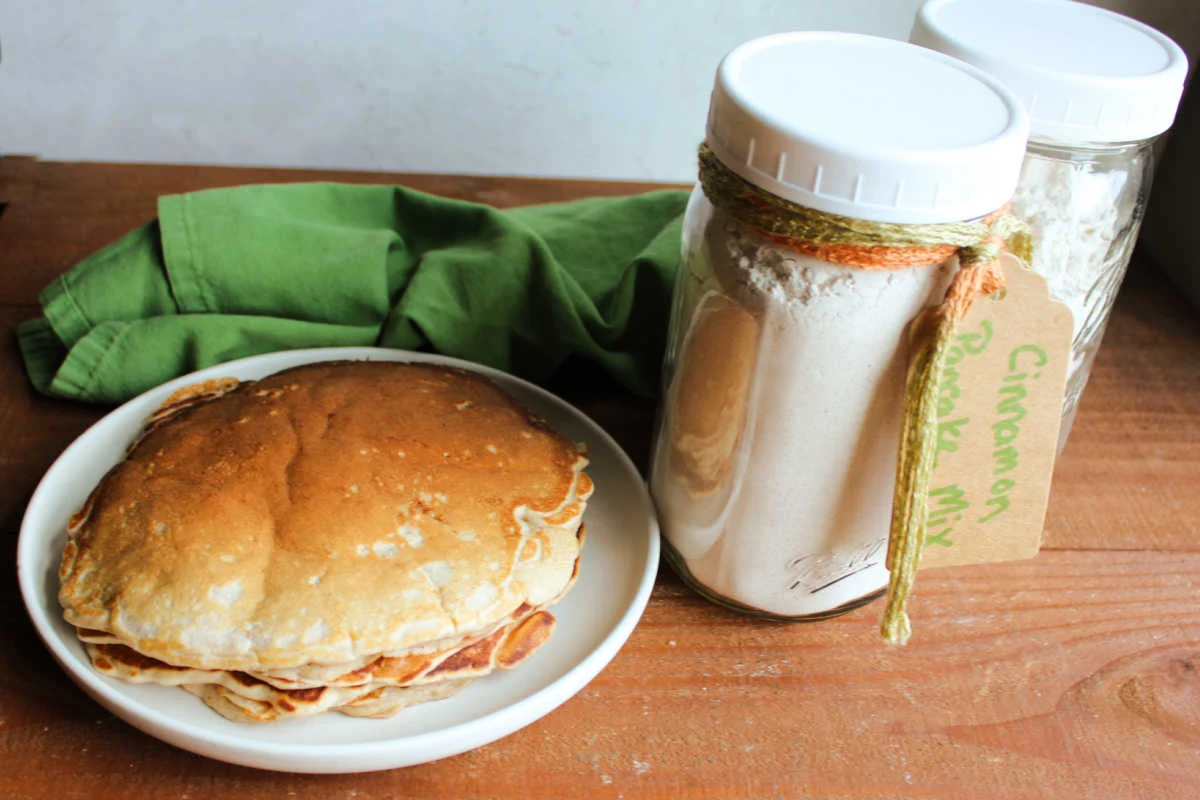
You can, but you should only do it if you are also adding an acidic ingredient. If you stir baking soda into a neutral batter, you risk a soapy taste and overly dark pancakes. If you are using a boxed mix, check if it already contains baking soda or baking powder before tweaking.
Is baking soda better than baking powder for pancakes?
They do different jobs. Baking powder is more all-purpose because it includes its own acid. Baking soda is powerful and great for fluffy pancakes when your batter already has acid like buttermilk or yogurt.
Why do my buttermilk pancakes still come out flat?
Most often: old leaveners, overmixing, or a pan that is not hot enough. Baking soda and baking powder lose strength over time. If yours have been sitting open for ages, it is worth replacing them.
Can I make the batter the night before?
I would not if fluff is your priority. The baking soda reaction starts once mixed, and the bubbles do not wait overnight. If you want a make-ahead option, mix the dry ingredients and wet ingredients separately, refrigerate, then combine in the morning right before cooking.
The Baking Soda Trick for Fluffier Pancakes
A reliable buttermilk pancake template that uses a carefully measured amount of baking soda (plus baking powder) for lighter, taller, more tender pancakes. Makes about 8 to 10 pancakes.
- Prep
- 10 minutes
- Cook
- 15 minutes
- Total
- 25 minutes
- Yield
- About 8 to 10 pancakes
Ingredients
- 1 1/2 cups (195 g) all-purpose flour
- 2 tablespoons sugar (optional, but helps browning)
- 1 teaspoon kosher salt
- 1 1/2 teaspoons baking powder (double-acting is most common and gives lift in the bowl and on the griddle)
- 3/8 to 1/2 teaspoon baking soda
- 1 1/2 cups (360 ml) buttermilk
- 2 large eggs
- 3 tablespoons melted butter (or neutral oil), plus more for the pan
- 1 teaspoon vanilla (optional)
Instructions
- Heat the pan first. Set a skillet or griddle over medium heat. You want it hot enough that a drop of water skitters and evaporates quickly, but not so hot that butter instantly burns.
- Mix dry ingredients. In a large bowl, whisk flour, sugar, salt, baking powder, and baking soda until evenly combined.
- Mix wet ingredients. In a second bowl, whisk buttermilk, eggs, melted butter, and vanilla.
- Combine gently. Pour wet into dry and fold until you still see small streaks of flour and a few lumps. The batter should look thick and airy, not smooth like cake batter.
- Cook. Melt a bit of butter on the pan. Scoop 1/3 cup batter per pancake. Cook until bubbles form on the surface and the edges look set, 2 to 3 minutes. Flip and cook 1 to 2 minutes more.
- Serve right away. Pancakes are at their fluffiest in the first few minutes off the griddle.
Notes
Quick note on the baking soda range: If your buttermilk is very tangy, 1/2 teaspoon can be perfect. If it is mild (or you are sensitive to that soda taste), start at 3/8 teaspoon.
Timing note: Once baking soda hits acid, it starts producing bubbles immediately. Preheat the pan first, mix gently, and cook soon after mixing (do not leave the bowl on the counter for 30 minutes).
Nutrition
- Calories: 240
- Fat: 9 g
- Carbs: 31 g
- Protein: 8 g
- Fiber: 1 g
- Sugar: 5 g
- Sodium: 430 mg
Nutrition values are approximate and will vary by exact ingredients and portion size.