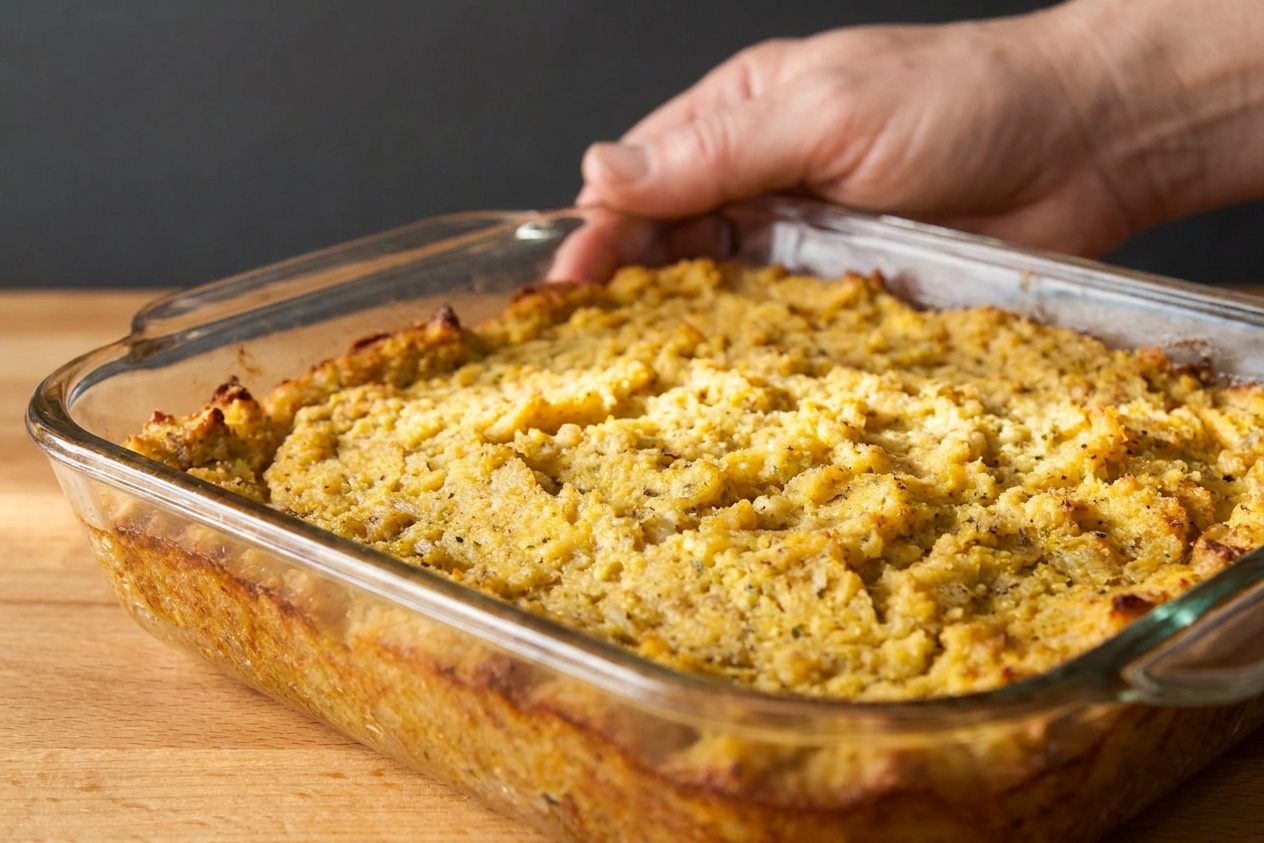

I grew up thinking cornbread dressing was its own food group. It was always the first pan to disappear, and the adults hovered around the crispy corners like it was their job. In my kitchen, the version I come back to is my own Southern standard: crumbled cornbread, a simple celery and onion sauté, enough stock to keep it tender without turning soupy, and a good hot oven that sets the center while the edges turn irresistibly crisp.

The part that trips people up is moisture. Too dry and you get cornbread croutons. Too wet and it bakes up like a spoonable pudding. The sweet spot is a mixture that looks a little too loose in the bowl, spoonable and glossy rather than crumbly, then bakes into something that scoops easily, slices if you want it to, and still tastes like you used your good stock on purpose.
This recipe is built to be practical on a busy day. In the recipe card, I share the visual cues I use before it goes in the oven, a simple doneness check for when the center is truly set, and a make-ahead approach that helps you avoid the classic dry, overbaked pan.
What to expect
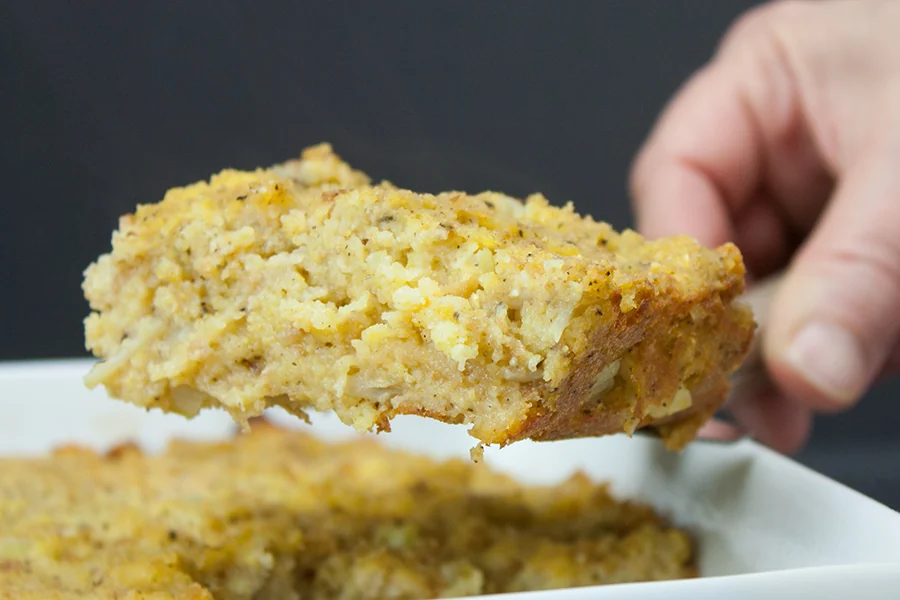
- Texture: soft and savory in the center with crisp, browned edges
- Flavor: corn-forward, aromatic from celery and onion, deeply savory from stock, with that classic sage and thyme warmth
- Difficulty: straightforward, with a few easy cues that make it dependable
- Best for: holidays, potlucks, and leftovers that reheat well
Why this recipe works
- Drying the cornbread first helps it absorb stock without turning gummy.
- Sautéed celery and onion add sweetness and aroma and contribute moisture, so the dressing bakes up tender.
- Eggs bind the mixture so the center sets cleanly while staying moist.
- Clear doneness cues using look, movement, and temperature remove the guesswork.
Ingredient notes
Cornbread
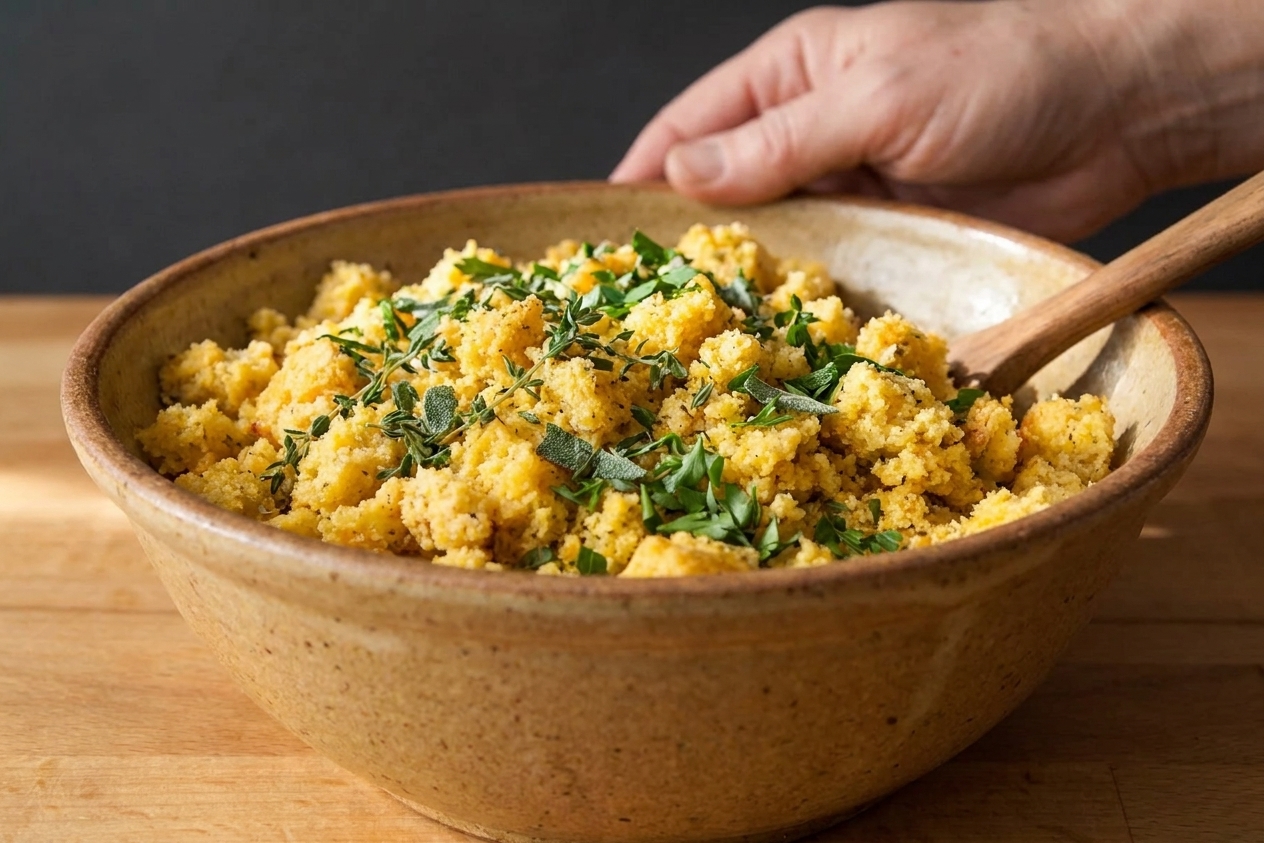
Use a simple, unsweetened cornbread if you can. A lightly sweet cornbread will still work, but avoid anything that tastes like cake. The cornbread should be fully cooled before crumbling, and slightly stale is ideal.
Celery and onion
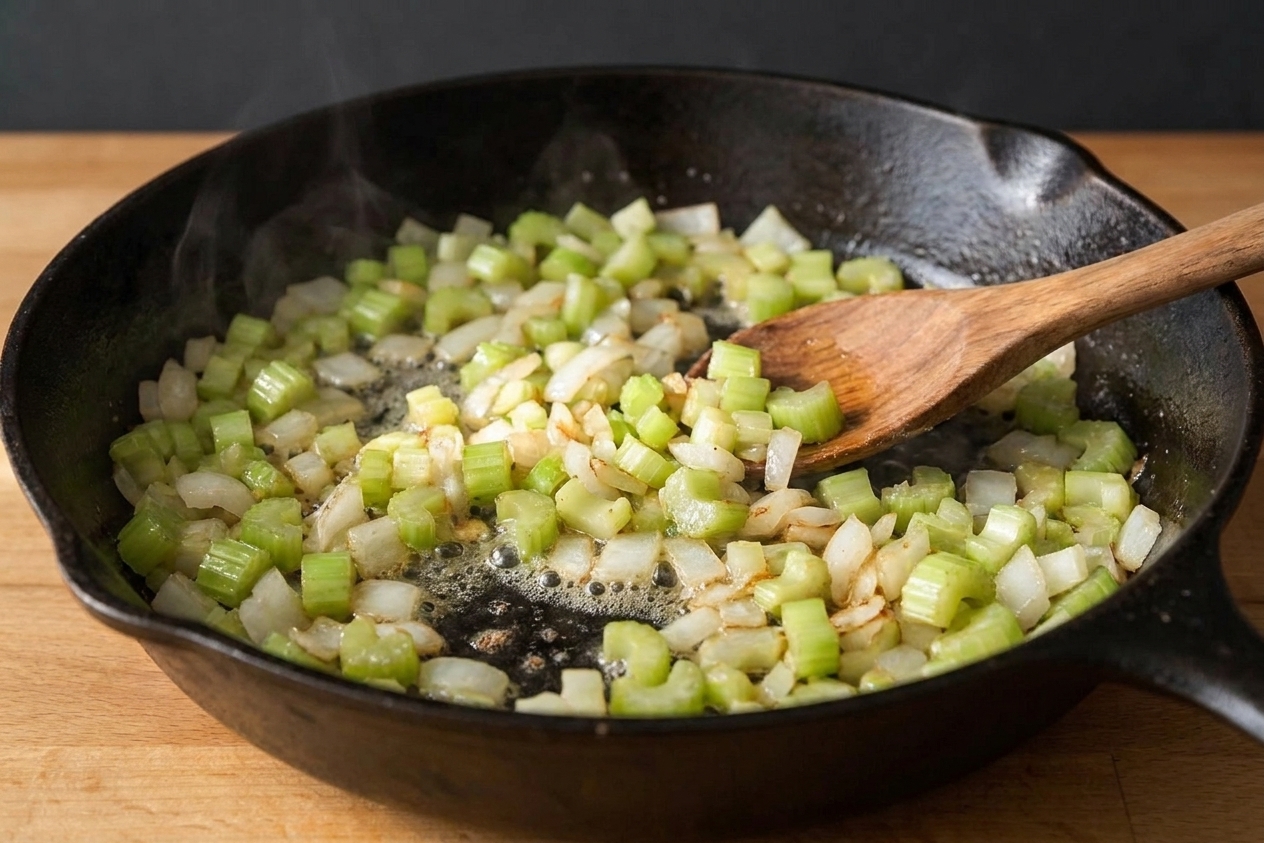
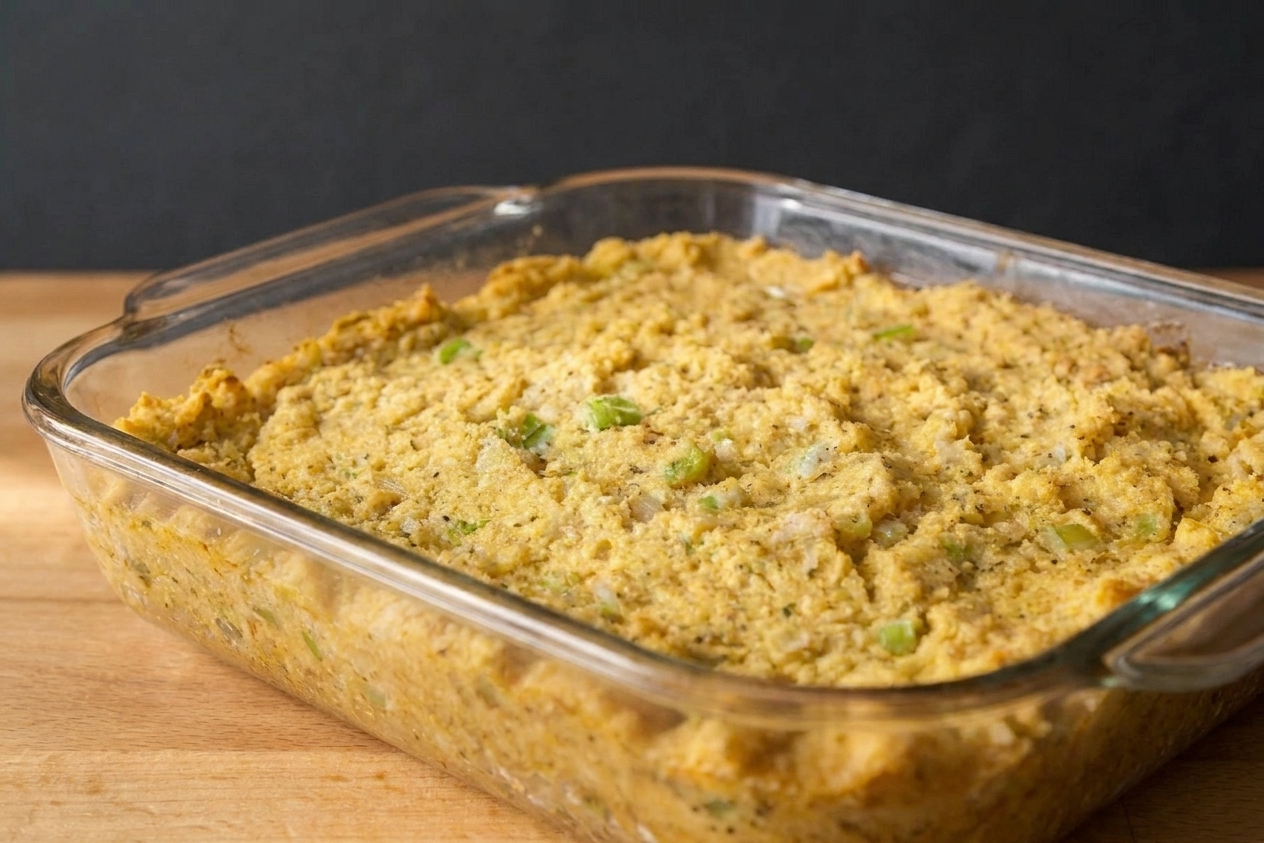
Chop them small and even so they soften quickly and distribute throughout the pan. You should see little flecks in every slice, not big crunchy chunks.
Stock
Chicken stock is classic, but turkey stock is incredible if you have it. Use low-sodium if possible because cornbread, butter, and seasoning add salt quickly. You can always salt at the end, but you cannot unsalt a whole pan of dressing.
Eggs
Eggs help the mixture set. If you skip them, you will need more bake time and the center may not slice cleanly.
Herbs
Sage is the signature holiday note. Poultry seasoning is an easy shortcut if your spice drawer is chaotic.
Equipment you will need
- 9x13-inch baking dish (or similarly sized casserole dish)
- Large mixing bowl
- Large skillet
- Measuring cups and spoons
- Rubber spatula or large spoon
- Instant-read thermometer (helpful for doneness confidence)
Pro tips
How wet should it be?
In the bowl, the mixture should look very moist and spoonable, like a thick porridge. When you spread it into the baking dish, it should settle and level slightly on its own. If you drag a spoon through it, the trench should slowly fill back in. If it sits in dry mounds, add more stock. If you can pour it like batter, it is too wet and will take longer to set.
How to tell it is done
- Center test: The center should be set and not ripple when you gently shake the dish.
- Surface cues: The top should look matte and lightly browned, not glossy.
- Temperature cue: If you have an instant-read thermometer, aim for 165°F in the center.
Make-ahead that works
You can assemble the dressing up to 24 hours ahead. Cover and refrigerate. Bake straight from the fridge, adding 10 to 20 minutes. If the top browns before the center sets, tent loosely with foil and keep baking until the center is set.
Substitutes that work
- Vegetarian: Swap chicken stock for vegetable stock and use butter or plant-based butter.
- No fresh herbs: Use poultry seasoning in place of sage and thyme. Start small, then adjust next time to taste.
- Gluten-free: Use gluten-free cornbread. The method stays the same, but you may need a splash more stock if the cornbread is extra absorbent.
Variations
- Sausage cornbread dressing: Brown 8 to 12 ounces of breakfast sausage, then sauté the celery and onion in the drippings. Fold sausage in before baking.
- Oyster dressing: Fold in drained oysters and a little of their liquor for a briny, old-school twist.
- Extra crisp top: Dot the top with a little extra butter and bake uncovered the whole time.
Serving ideas
- Serve alongside roast turkey or roast chicken with plenty of gravy.
- Pair with tangy cranberry sauce or a bright, acidic salad to balance the richness.
- Make it a meal: top a warm square with a fried egg and hot sauce for a next-day brunch.
Storage and reheating
Refrigerator
Cool completely, then cover and refrigerate for up to 4 days.
Freezer
Freeze tightly wrapped portions for up to 2 months. Thaw overnight in the fridge.
Reheating
Reheat in a 350°F oven until hot in the center. For crisp edges, reheat uncovered. If it seems dry, add a small splash of stock around the edges of the dish and cover with foil for the first part of reheating.
Common mistakes
- Using fresh, steamy cornbread: Hot cornbread turns gummy when mixed with stock. Cool it fully and let it dry a bit if possible.
- Not adding enough stock: Dressing should look almost too wet before baking. If it looks dry going in, it will bake up dry.
- Overbaking: Once the center is set, stop. Extra time steals moisture.
- Over-salting early: Stocks vary a lot. Taste the mixture before baking and salt cautiously, especially if your stock is not low-sodium.
FAQ
Is cornbread dressing the same as stuffing?
They are close cousins. Stuffing is traditionally cooked inside the bird, while dressing is baked in a dish. This recipe is written for a baking dish so you get those crisp edges.
Can I make this without eggs?
You can, but it will be looser and harder to slice. If you skip eggs, expect a more spoonable texture and bake until the center is hot and no longer glossy.
Why did my dressing turn out dry?
Most often it needed more stock before baking or it baked too long. Next time, make the mixture looser in the bowl and start checking for doneness earlier.
Why is my dressing gummy?
The cornbread was likely too fresh or the mixture was overmixed into a paste. Crumble gently, use cooled or slightly stale cornbread, and stir just until combined.
Southern Cornbread Dressing
A classic Southern-style cornbread dressing with sautéed celery and onion, plenty of savory stock, and herbs, baked until set in the center and crisp at the edges.
- Prep
- 25 minutes
- Cook
- 45 minutes
- Total
- 1 hour 10 minutes
- Yield
- 10 servings
Ingredients
- 10 cups crumbled cornbread (from 1 large pan), cooled and preferably a little stale
- 4 tbsp unsalted butter, plus more for the baking dish
- 1 large yellow onion, finely diced (about 2 cups)
- 4 celery ribs, finely diced (about 1 1/2 cups)
- 2 tsp kosher salt, divided, plus more to taste
- 1 tsp freshly ground black pepper
- 2 tsp dried sage (or 1 tbsp chopped fresh sage)
- 1 tsp dried thyme (or 1 tbsp chopped fresh thyme)
- 3 large eggs
- 3 to 4 cups low-sodium chicken or turkey stock, warmed if possible
Instructions
- Prep the oven and pan. Heat oven to 375°F. Butter a 9x13-inch baking dish.
- Optional: dry the cornbread if needed. If your cornbread is very fresh or moist, spread the crumbles on a sheet pan and bake at 300°F for 10 to 15 minutes to dry slightly. Cool before mixing so it does not turn gummy.
- Sauté the aromatics. In a large skillet over medium heat, melt the butter. Add onion and celery with 1/2 tsp of the salt. Cook, stirring occasionally, until softened and glossy, 8 to 10 minutes. Do not brown. Let cool for about 5 minutes.
- Build the base. In a large bowl, combine crumbled cornbread, the sautéed onion and celery (including any butter from the pan), remaining 1 1/2 tsp salt, pepper, sage, and thyme. Toss gently to distribute.
- Add the eggs. In a small bowl, whisk eggs. Pour over the cornbread mixture and stir gently until you no longer see streaks of egg.
- Add stock to the right moisture level. Pour in 3 cups stock and fold gently. Add more stock a little at a time until the mixture is very moist and spoonable. It should look a little too loose in the bowl. When you drag a spoon through it, the trench should slowly fill back in. It should not be pourable like batter.
- Fill the baking dish. Scrape mixture into the prepared dish and spread into an even layer without packing it down.
- Bake. Bake uncovered until the edges are browned and crisp and the center is set, 40 to 55 minutes. Start checking at 40 minutes if your dish is shallow or your oven runs hot.
- Check doneness. The top should look matte, not glossy. The center should not ripple when you gently shake the pan. For extra confidence, check that the center reaches 165°F with an instant-read thermometer.
- Rest, then serve. Let rest 10 to 15 minutes before scooping or slicing. Taste and add a pinch more salt if needed.
Notes
Make-ahead: Assemble through the step where you spread the mixture in the baking dish. Cover and refrigerate up to 24 hours. Bake straight from the fridge, adding 10 to 20 minutes. If the top browns too quickly, tent loosely with foil and continue baking until the center is set.
Stock note: Stocks vary in salt. If your stock is not low-sodium, reduce the added salt and season to taste after baking.