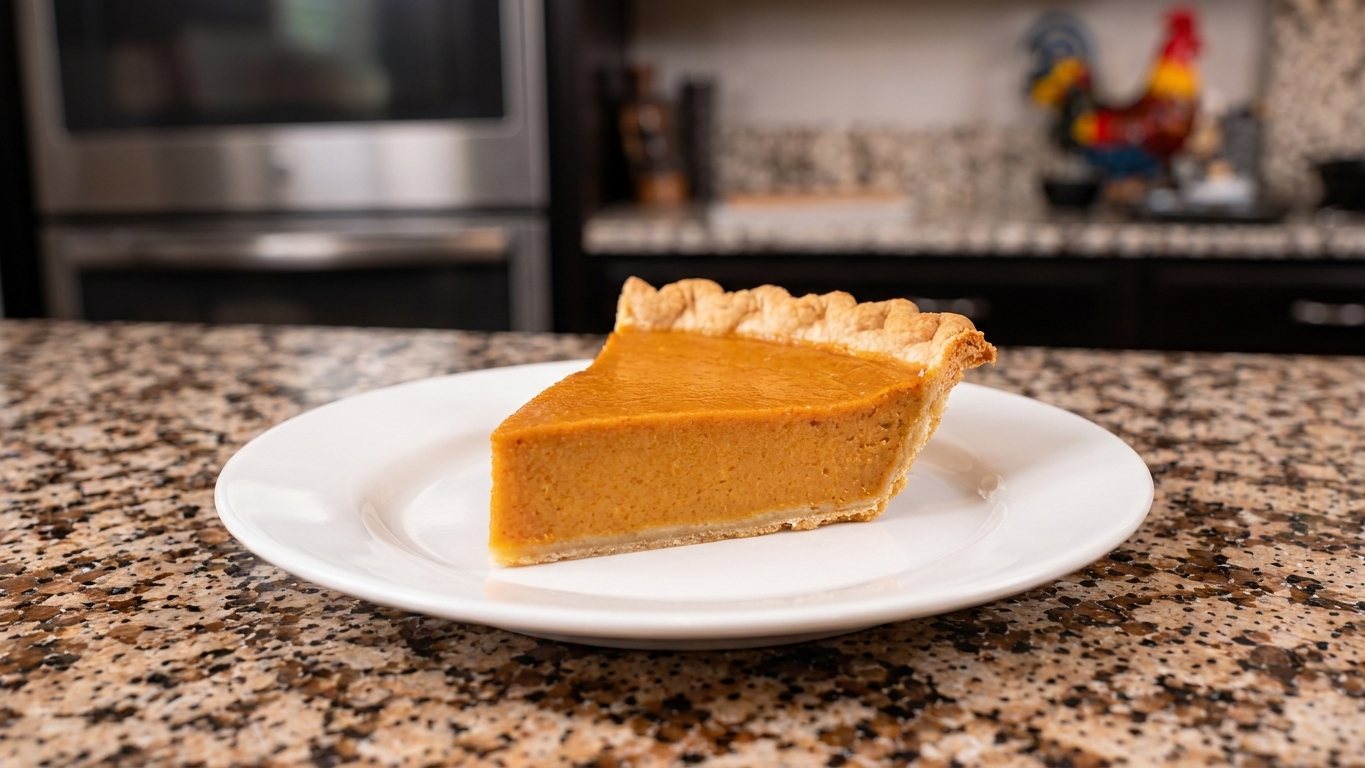

Sweet potato pie is one of those desserts that looks humble but tastes deeply luxurious when you treat it like what it is: a gentle custard set inside a crisp crust. I learned early on (standing on a step stool, “helping” in a very busy family kitchen) that the difference between a pie that slices cleanly and one that slumps usually is not about tossing in extra flour as a quick fix. More often, it comes down to moisture control, a sensible egg-to-dairy balance, and knowing what “set” actually looks like.
This version is my home-kitchen-trustworthy sweet potato pie. The filling is silky and not stringy, warmly spiced without getting perfumey, and brightened with a small hit of acid (the same amount listed in the recipe: lemon juice or a smaller amount of apple cider vinegar) to keep the sweetness from tasting flat. The recipe works beautifully in a classic pastry crust, and it also plays well with a graham crust if that is your comfort zone.

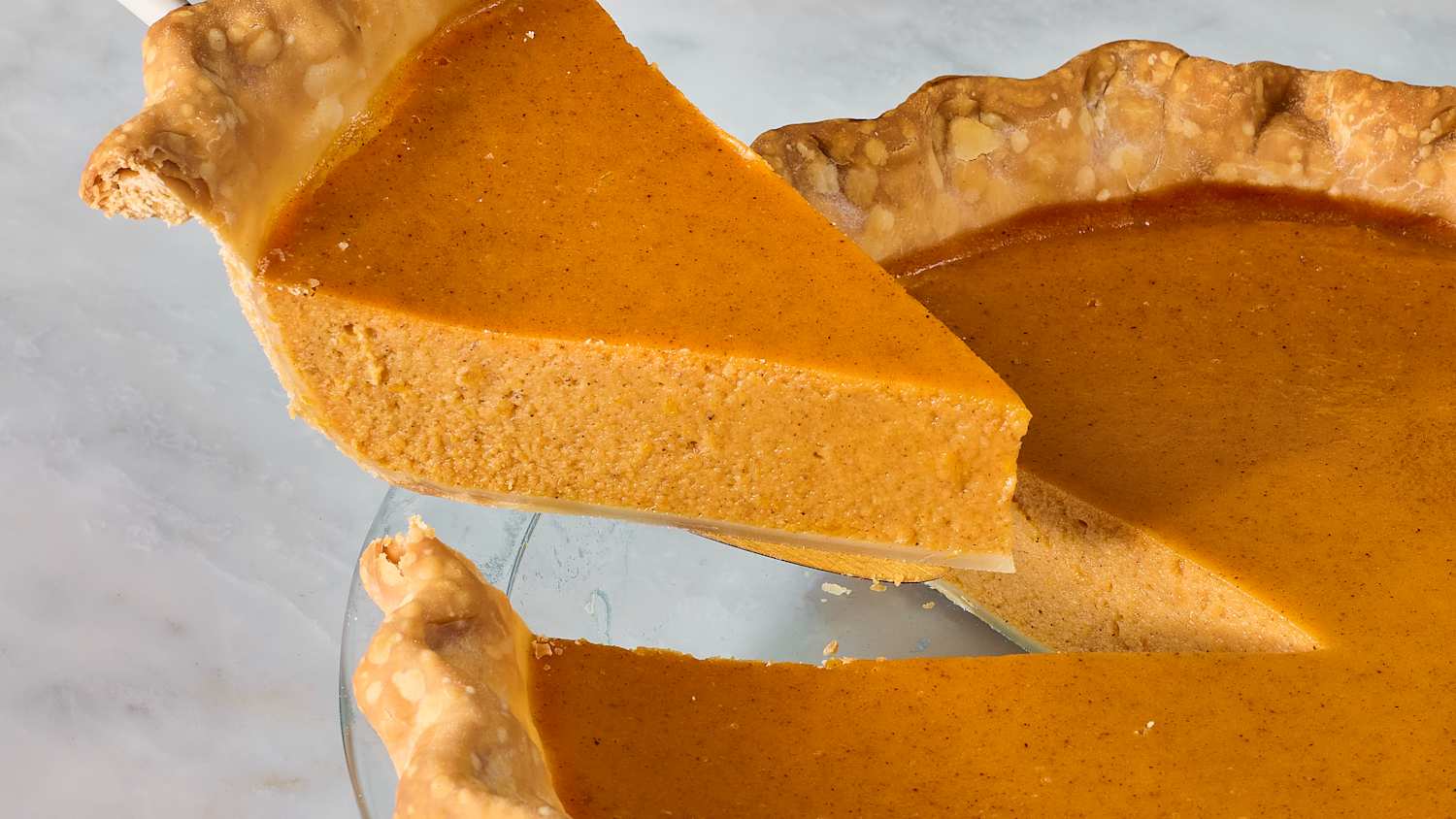
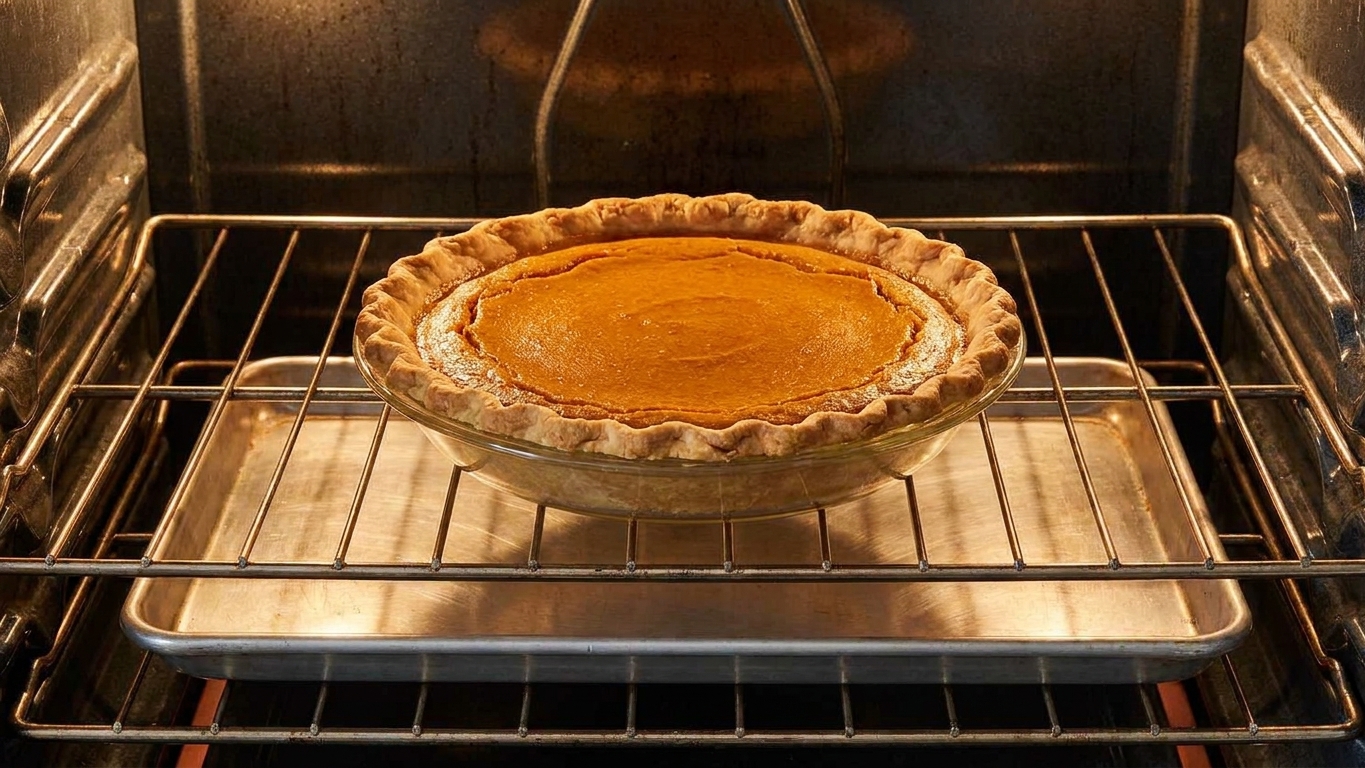
The key move is baking until the edges are set and the center still gives you a controlled wobble, then cooling in stages. For me, a “controlled wobble” means the pie looks set all around the rim and only the very middle jiggles when you gently nudge the pan. It should not ripple like a liquid. If you like a more objective cue, the center temperature is a great confidence check.
Cooling in stages means letting the pie sit at room temperature just until it is no longer warm, then refrigerating until fully cold before you even think about slicing. In a cooler kitchen, that room-temp rest can be around 1 to 2 hours. If your kitchen runs hot, shorten the counter time and get it into the fridge sooner. That is how you get neat slices and a custard texture that feels plush instead of dense.
What to expect
- Texture: Smooth, custardy, and sliceable with a tender set
- Flavor: Sweet potato forward, warm spice, and a small lift of tang to keep it balanced
- Difficulty: Very doable, especially if you use a store-bought crust
- Best make-ahead: Even better after an overnight chill
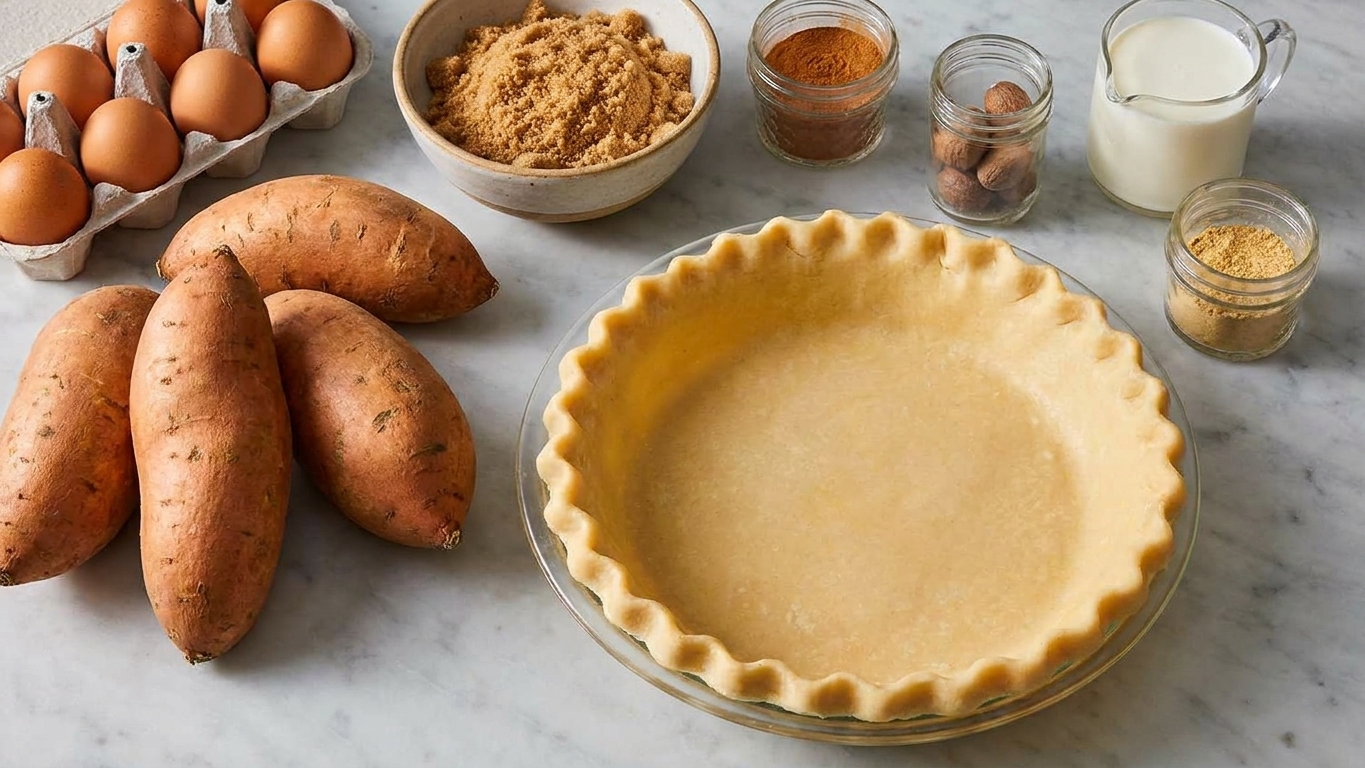
Pastry or graham
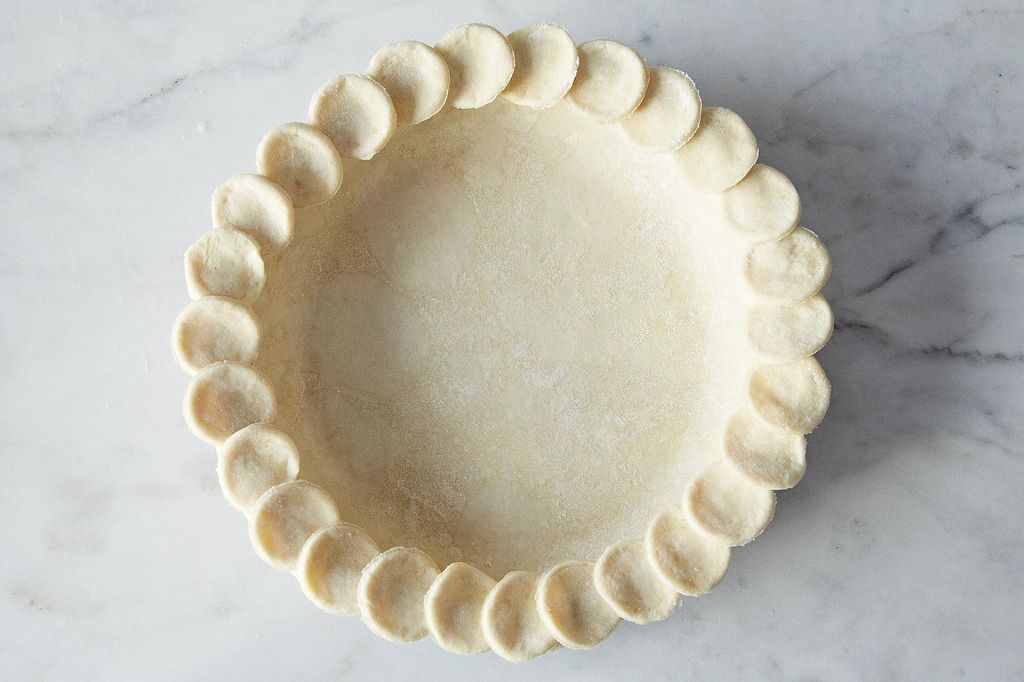
I am giving this recipe in a standard 9-inch pie crust because it delivers that classic contrast between flaky and creamy. If you prefer graham, you can absolutely use it. The filling is a custard, so you still want a fully supported shell and a steady bake.
If you go the graham route, use a 9-inch graham crust and watch the last 10 minutes closely. If the edge is getting too dark before the center passes the wobble test, tent the rim with foil and keep going until the middle is where it needs to be.
Why this recipe works
- Roasting the sweet potatoes concentrates flavor. You get more sweetness and less watery filling than boiling.
- A smart spice blend stays balanced. Cinnamon leads, with ginger for warmth and a lighter touch of nutmeg so it does not take over.
- Custard method, not a mash-heavy filling. Eggs and dairy set gently for a silky slice instead of a dense, starchy wedge.
- A clear set test helps prevent overbaking. Looking for set edges and a center-only jiggle keeps the custard creamy and helps prevent cracks.
- Cooling in stages gives clean slices. Cooling until no longer warm, then a full chill, locks in the custard structure.
Ingredient notes
Sweet potatoes
Look for orange-fleshed sweet potatoes (often labeled garnet or jewel). Size matters less than total weight. Roast until very soft all the way through, not just fork-tender at the edges.
Dairy
Evaporated milk is traditional and gives a stable, classic custard. Heavy cream makes it richer and silkier. Either works. If you use half-and-half, the pie can set a little softer, so be strict about chilling before slicing.
Brown sugar
Brown sugar brings a deeper, lightly molasses note that plays well with sweet potatoes. Dark brown sugar is bolder; light brown is a bit cleaner.
Spices
Cinnamon does most of the work. Ginger adds warmth and lift. Nutmeg is powerful, so keep it measured. If you love clove, use it carefully because it can dominate quickly.
Acid
A small amount of lemon juice (or a smaller amount of apple cider vinegar) makes the filling taste more vivid. It is a small thing, but it keeps the sweetness from landing heavy.
Equipment you will need
- 9-inch pie pan
- Sheet pan (for roasting sweet potatoes and for baking the pie)
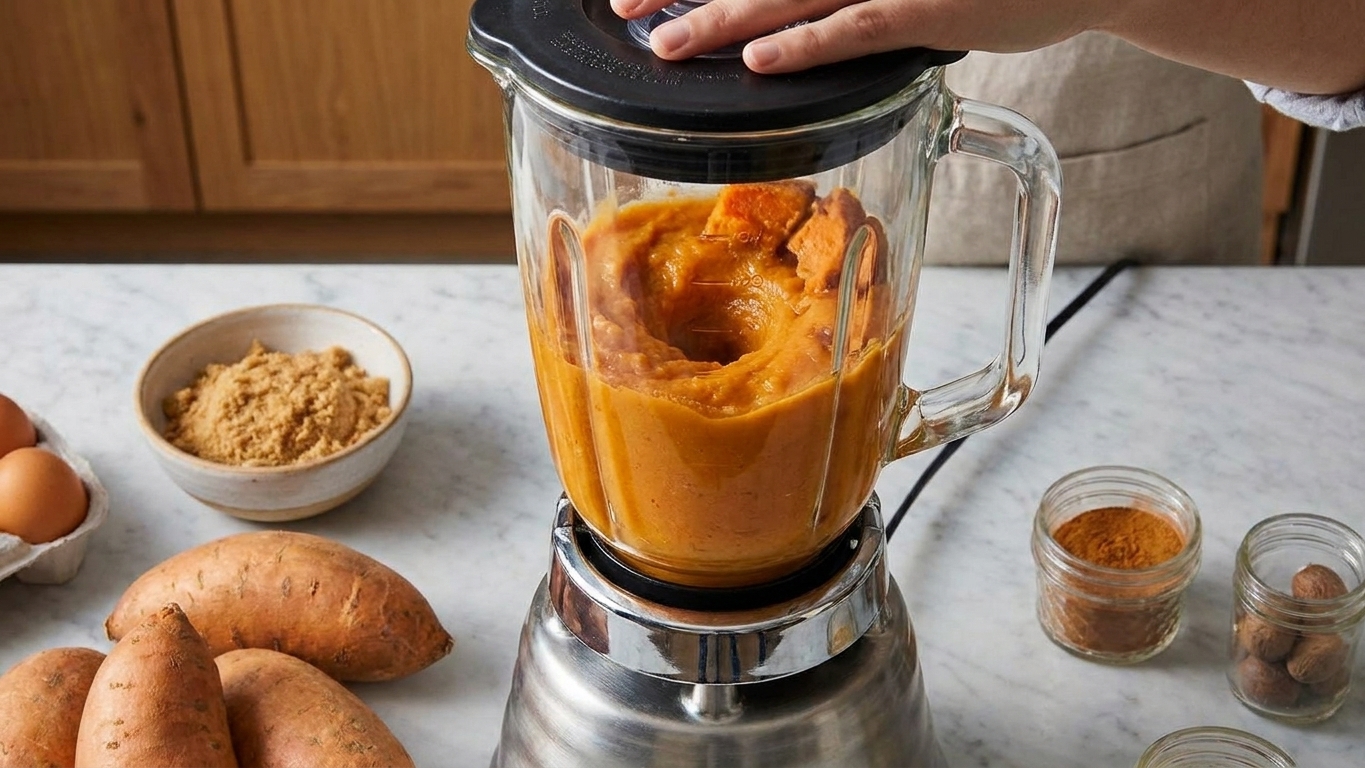
- Food processor or blender (best for ultra-smooth filling)
- Mixing bowl and whisk
- Fine-mesh sieve (optional, for extra-silky custard)
- Instant-read thermometer (optional, but helpful for doneness confidence)
Pro tips
- Roast, do not boil. Boiling adds water, which can make the custard looser and dull the flavor.
- Puree while warm. Warm sweet potato blends smoother with fewer strings.
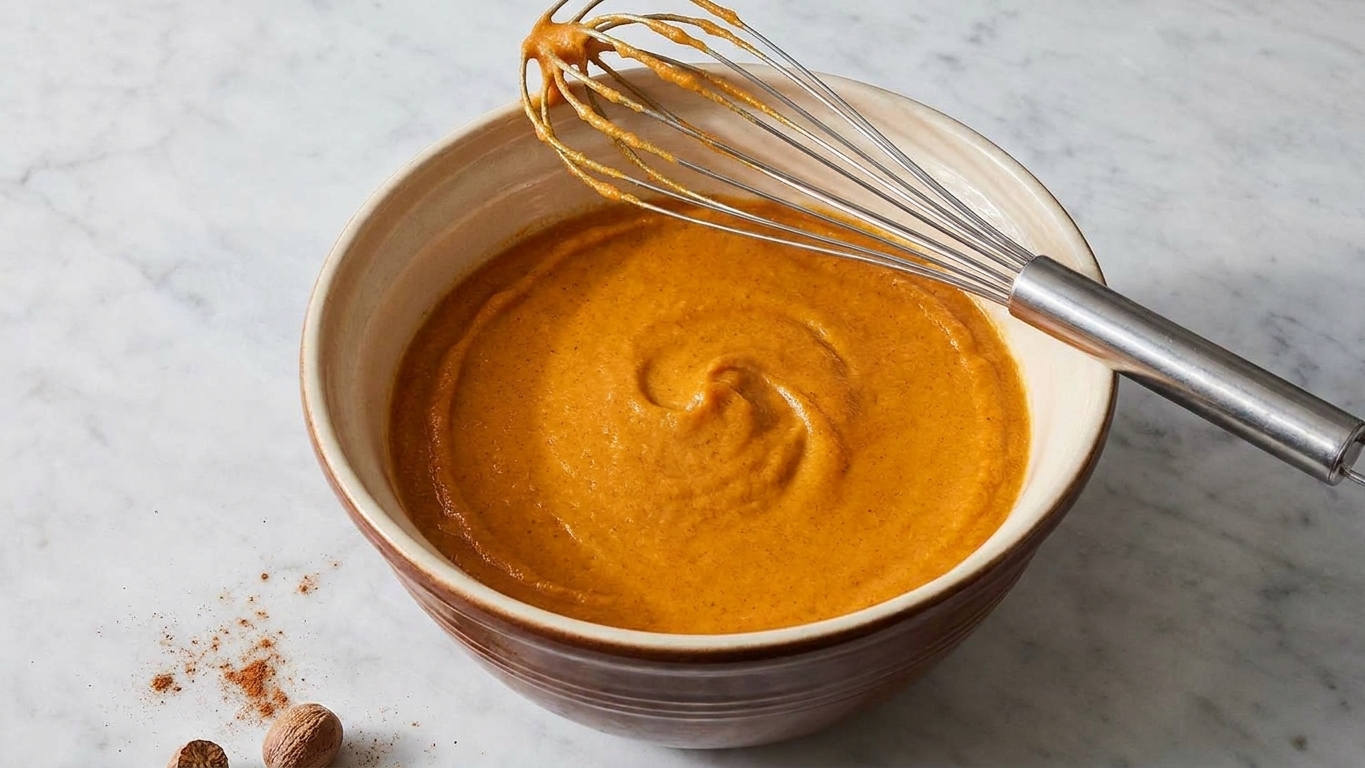
- Mix gently once eggs go in. Whisk enough to combine, but avoid whipping in lots of air which can cause bubbles and puffing.
- Use the wobble test plus one backup cue. The edges should look set and slightly puffed, and only the very center should jiggle. For extra certainty, check the temperature.
- For extra certainty, temp it. If you have an instant-read thermometer, aim for 175 to 180°F in the center. Over 185°F can push custard toward curdled or grainy.
- Cool in stages for neat slices. Let it cool at room temp until no longer warm, then chill until fully cold before slicing.
Substitutes that work
- Pastry crust: Use a graham crust if you prefer. You can also use a store-bought frozen deep-dish crust, but watch bake time because depth changes set time.
- Evaporated milk: Swap with heavy cream for richer texture, or half-and-half for a lighter custard.
- Brown sugar: Granulated sugar works, but the flavor will be a little less caramel-like.
- Lemon juice: Apple cider vinegar works in the same small amount.
- Spices: Pumpkin pie spice works in a pinch. If using a blend, start smaller and add to taste because blends vary.
Variations
- Graham crust sweet potato pie: Use a 9-inch graham crust. Consider tenting the rim with foil if it browns too fast.
- Bourbon: Add 1 to 2 tablespoons bourbon for a deeper aroma. Keep it modest so the custard still sets cleanly.
- Toasted pecan top: Sprinkle a small handful of toasted pecans over the pie after baking and cooling. (Avoid adding nuts before baking because they can sink and disrupt the custard surface.)
- Coconut twist: Replace part of the dairy with full-fat coconut milk for a subtle coconut note.
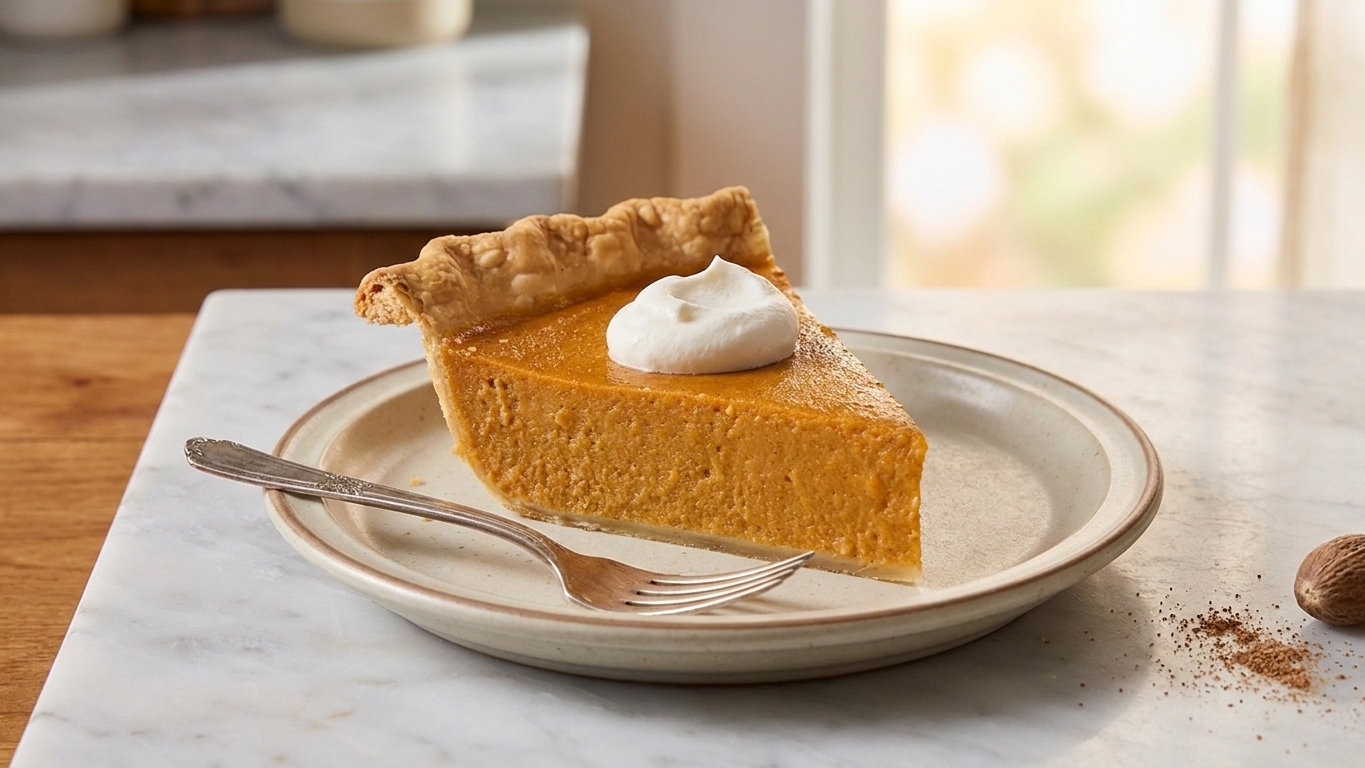
Serving ideas
- Serve chilled or at cool room temperature for the cleanest slices.
- Top with lightly sweetened whipped cream and a pinch of cinnamon.
- For a more grown-up finish, add a tiny pinch of flaky salt over each slice.
- If you want contrast, pair with tart berries or a spoonful of cranberry sauce.
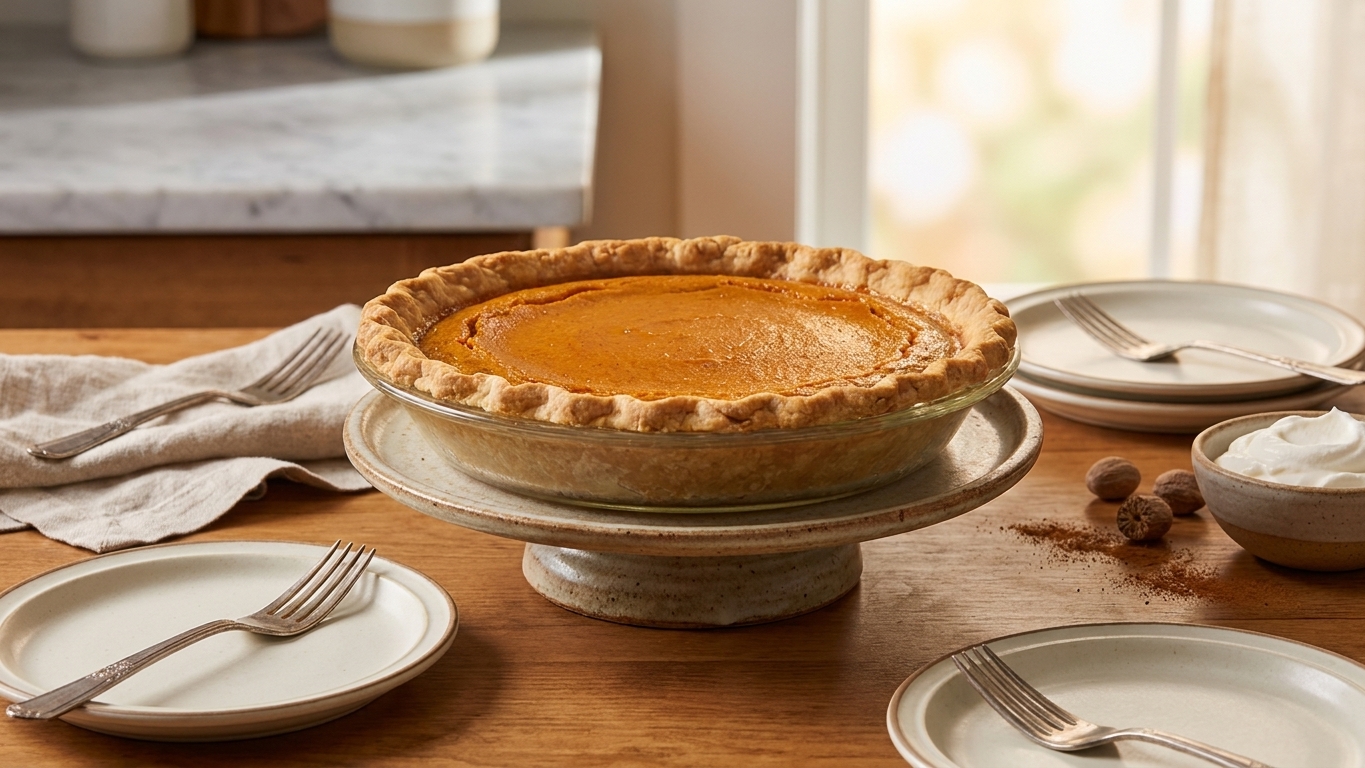
Storage and reheating
- Refrigerator: Cover and refrigerate for up to 4 days. Custard pies are happiest cold.
- Freezer: You can freeze the fully cooled pie (or individual slices) tightly wrapped for up to 2 months. Thaw overnight in the fridge.
- Serving after chilling: For the best texture, let slices sit at room temperature 10 to 15 minutes before eating.
- Reheating: Not required, but if you prefer warm pie, gently warm slices in a 300°F oven for 10 to 12 minutes. Avoid the microwave if you want a tidy custard texture.
Common mistakes
- Under-roasting the sweet potatoes: If the centers are not fully soft, you will fight strings and lumps even with blending.
- Skipping par-bake: A wet custard needs a head start to keep the bottom crust from going soggy.
- Overbaking: If the center is completely firm in the oven, it is already over the ideal set and can turn grainy as it cools.
- Slicing too soon: Warm custard is still setting. Chill fully for clean, confident slices.
- Too much spice: Sweet potato is delicate. Heavy clove or too much nutmeg can crowd it out.
FAQ
How do I know when sweet potato pie is done?
Look for set edges and a center that jiggles only in the very middle when you gently nudge the pan. The filling should not ripple like liquid. If you use a thermometer, the center should read about 175 to 180°F.
Why did my sweet potato pie crack?
Cracks usually come from overbaking or cooling too fast. Pull it while the center still has a gentle wobble, then cool at room temperature until no longer warm before refrigerating.
Can I make sweet potato pie ahead?
Yes, and I recommend it. Bake the day before, cool completely, then refrigerate. The custard firms up and slices beautifully the next day.
Can I use canned sweet potato puree?
You can, as long as it is plain sweet potato and not pre-sweetened pie mix. The flavor will be a bit less roasty, but the texture can still be smooth.
Do I need a blender?
It helps a lot for that ultra-silky filling. If you do not have one, mash extremely well, then press the mixture through a fine-mesh sieve for a smoother custard.
Sweet Potato Pie
A silky, custard-style sweet potato pie with balanced warm spices and a clear set test, baked in a flaky pastry crust (or graham crust if you prefer) and cooled in stages for clean slices.
- Prep
- 30 minutes
- Cook
- 1 hour 5 minutes
- Total
- 6 hours (includes cooling and chilling)
- Yield
- 1 (9-inch) pie, about 8 slices
Ingredients
- 1 unbaked 9-inch pastry pie crust (homemade or store-bought), fitted into a 9-inch pie pan
- 2 pounds orange-fleshed sweet potatoes (about 2 to 3 medium)
- 2 tablespoons unsalted butter, melted
- 3 large eggs, at room temperature
- 3/4 cup packed light or dark brown sugar
- 1/4 cup granulated sugar
- 1 (12-ounce) can evaporated milk (or 1 1/2 cups heavy cream)
- 1 teaspoon vanilla extract
- 1 tablespoon lemon juice (or 2 teaspoons apple cider vinegar)
- 1 1/2 teaspoons ground cinnamon
- 1/2 teaspoon ground ginger
- 1/4 teaspoon freshly grated nutmeg (or ground nutmeg)
- 3/4 teaspoon fine salt
- Optional for serving: softly whipped cream
Instructions
- Roast the sweet potatoes. Heat the oven to 400°F. Line a sheet pan with foil. Pierce the sweet potatoes all over with a fork and roast until completely soft and collapsing a bit, 45 to 60 minutes depending on size. Cool just until you can handle them.
- Lower the oven temperature. Reduce oven to 350°F. Position a rack in the middle.
- Par-bake the crust. Dock the bottom of the crust with a fork. Line with parchment and fill with pie weights or dried beans. Bake 15 minutes, then carefully lift out the parchment and weights. Bake 5 to 7 minutes more, until the bottom looks dry and just barely starting to color. Leave the oven at 350°F.
- Make sweet potato puree. Scoop the warm roasted sweet potato flesh into a food processor or blender (discard skins). Blend until very smooth. Measure out 2 cups puree (packed but not compressed). If you have extra, save it for oatmeal or pancakes.
- Mix the filling. In a large bowl, whisk eggs, brown sugar, and granulated sugar until smooth. Whisk in evaporated milk, melted butter, vanilla, lemon juice, cinnamon, ginger, nutmeg, and salt. Add the sweet potato puree and whisk until fully combined. For the silkiest custard, strain through a fine-mesh sieve into a bowl or large measuring cup.
- Fill the crust. Place the par-baked crust on a sheet pan (for easy transfer). Pour the filling into the crust.
- Bake until gently set. Bake at 350°F until the edges are set and the center jiggles only in the very middle when you gently nudge the pan, 45 to 60 minutes. If using an instant-read thermometer, the center should read 175 to 180°F. If the crust edge browns too quickly, tent the rim with foil.
- Cool in stages. Cool the pie on a rack at room temperature until no longer warm, about 1 to 2 hours (shorter if your kitchen is warm). Then refrigerate uncovered until fully cold, at least 4 hours (overnight is best) before slicing.
- Slice cleanly and serve. For neat slices, use a sharp knife and wipe it clean between cuts. Serve chilled or let slices sit at room temperature for 10 to 15 minutes for a softer custard feel.
Notes
Graham crust option: Swap the pastry crust for a 9-inch graham crust. You can skip par-baking, but do watch for faster browning at the edges near the end.
Make ahead: This pie improves with a full overnight chill. If you want the cleanest slices, bake it the day before.
Extra puree: If your sweet potatoes yield more than 2 cups puree, refrigerate the extra up to 4 days or freeze up to 2 months.