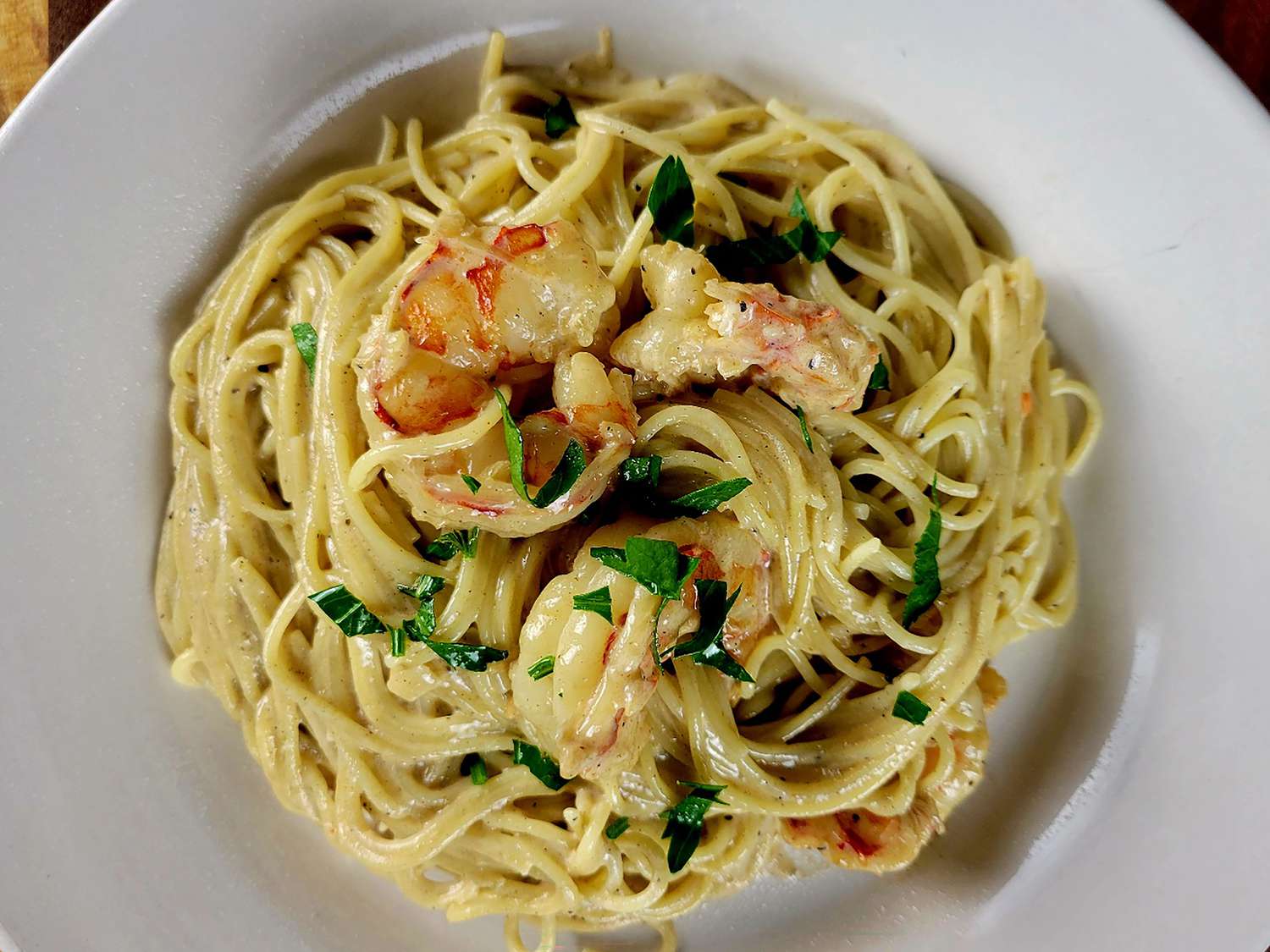
When you want creamy garlic pasta right now, heavy cream is usually the first thing people reach for. But you can get that same silky, glossy sauce with what you probably already have: butter (or olive oil), garlic, Parmesan, and the starchy pasta water you are about to drain.
This recipe is my weeknight teaching-kitchen favorite because it is more technique than ingredient list. Once you learn the 30-second “emulsify off the heat” move, you can make nearly any pasta feel restaurant-level without buying anything special.
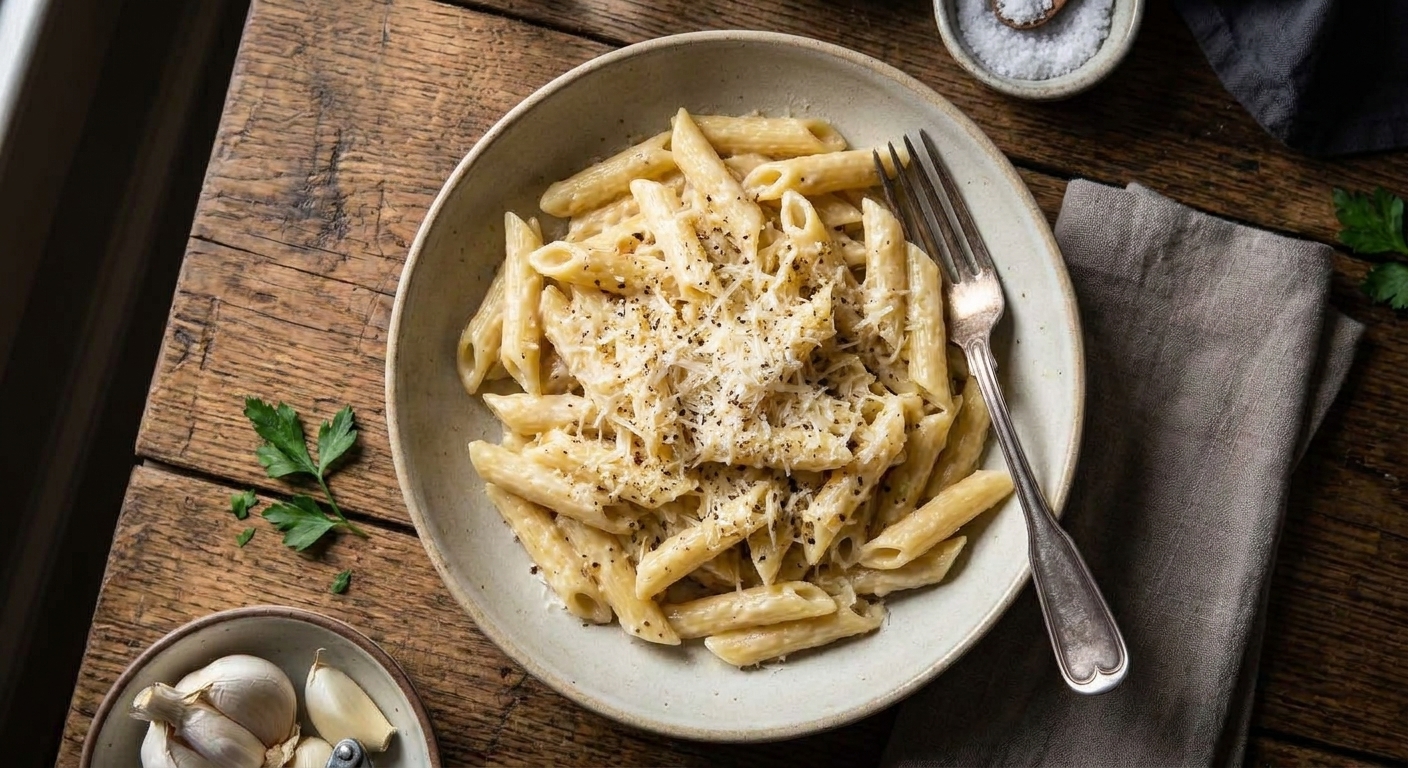
What you will do: boil pasta, quickly sauté garlic, then toss everything together with Parmesan and pasta water until it turns into a creamy sauce that clings.
Your 15-minute game plan
- Minute 0: Start the pasta water. Salt it well.
- Minute 3: Prep garlic, grate cheese, measure butter and pepper.
- Minute 8: Garlic hits the pan.
- Minute 10 to 12: Pasta finishes. Reserve pasta water before draining.
- Minute 12 to 15: Toss, emulsify, taste, and serve.
Why this recipe works
Pasta water is the secret
That cloudy water you are about to drain is full of starch. When you toss it with fat (butter or olive oil), it forms an emulsion that looks and feels creamy.
Cheese thickens without cream
Finely grated Parmesan melts into the warm sauce, adding body and savoriness. The key is to add it off the heat so it melts smoothly instead of clumping.
Garlic blooms fast
We only cook the garlic long enough to turn fragrant. It perfumes the butter, then the pasta does the rest.
Ingredient notes
Pasta
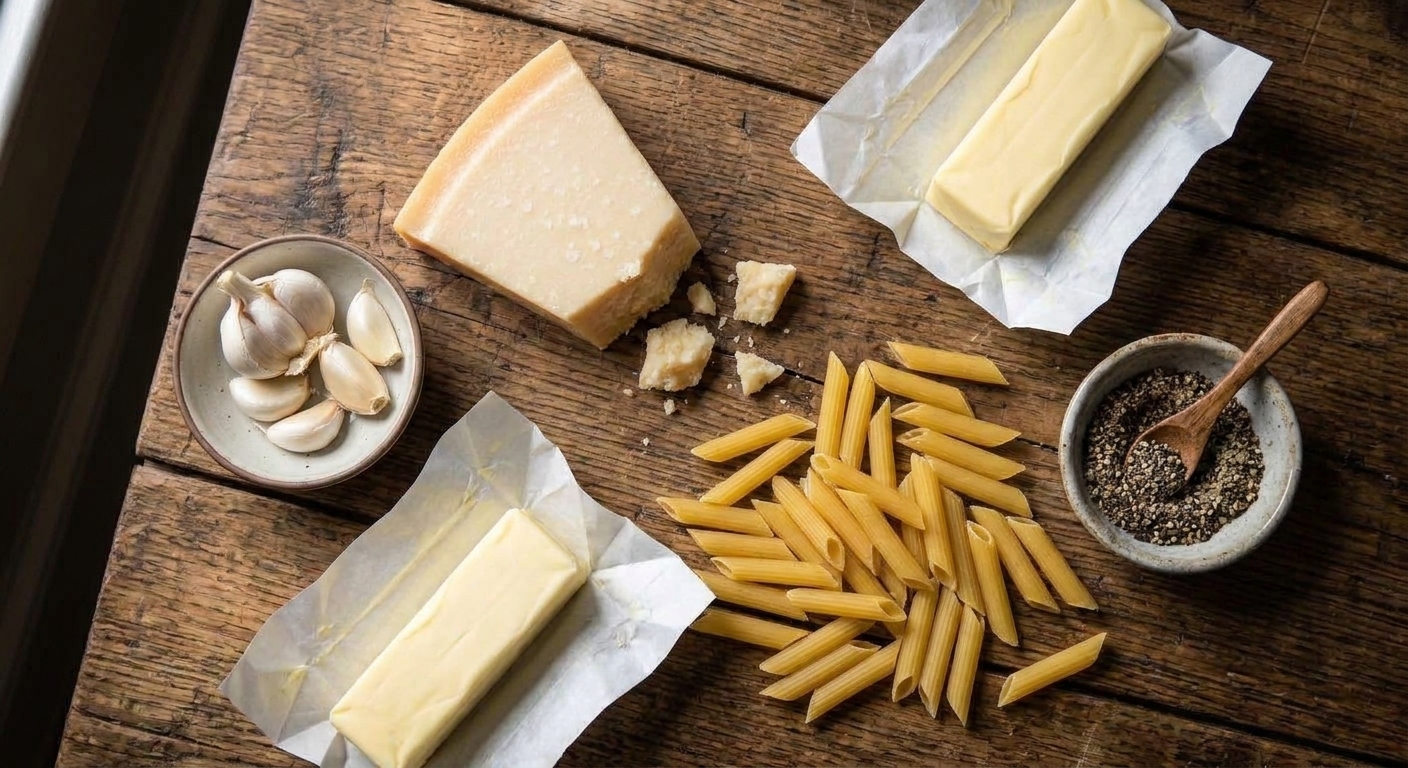
Spaghetti, linguine, fettuccine, or even short shapes like penne all work. If you use a very short-cooking pasta (thin spaghetti, angel hair), start the garlic a little later so nothing over-browns.
Garlic
Fresh garlic is best here. Mince it fine so it distributes evenly and does not feel chunky in the sauce. If your stove runs hot, use medium-low and give it your full attention for that first minute.
Parmesan
Grate it yourself if you can. Pre-grated shelf-stable cheese often contains anti-caking agents that can make the sauce grainy or slow to melt.
Butter and olive oil
Butter makes it rich and classic. Olive oil makes it lighter and a little peppery. A 50-50 mix is my favorite.
Lemon (optional but highly recommended)
A squeeze at the end wakes up the whole bowl and keeps the garlic from tasting flat. If you do not have lemon, a tiny splash of vinegar can do the same job.
Equipment you will need
- Large pot for boiling pasta
- Large skillet or sauté pan (12-inch is ideal)
- Microplane or fine grater for the cheese
- Tongs (best for long noodles) or a large spoon for tossing
- Measuring cup or mug for reserving pasta water
Pro tips
Reserve more pasta water than you think you need
Grab at least 1 cup. You might only use 1/2 cup, but having extra makes it easy to fix a too-thick sauce.
Turn off the heat before adding cheese
High heat can cause Parmesan to tighten up and turn grainy. Off-heat tossing is the easiest way to keep things silky.
Use sensory cues, not a timer
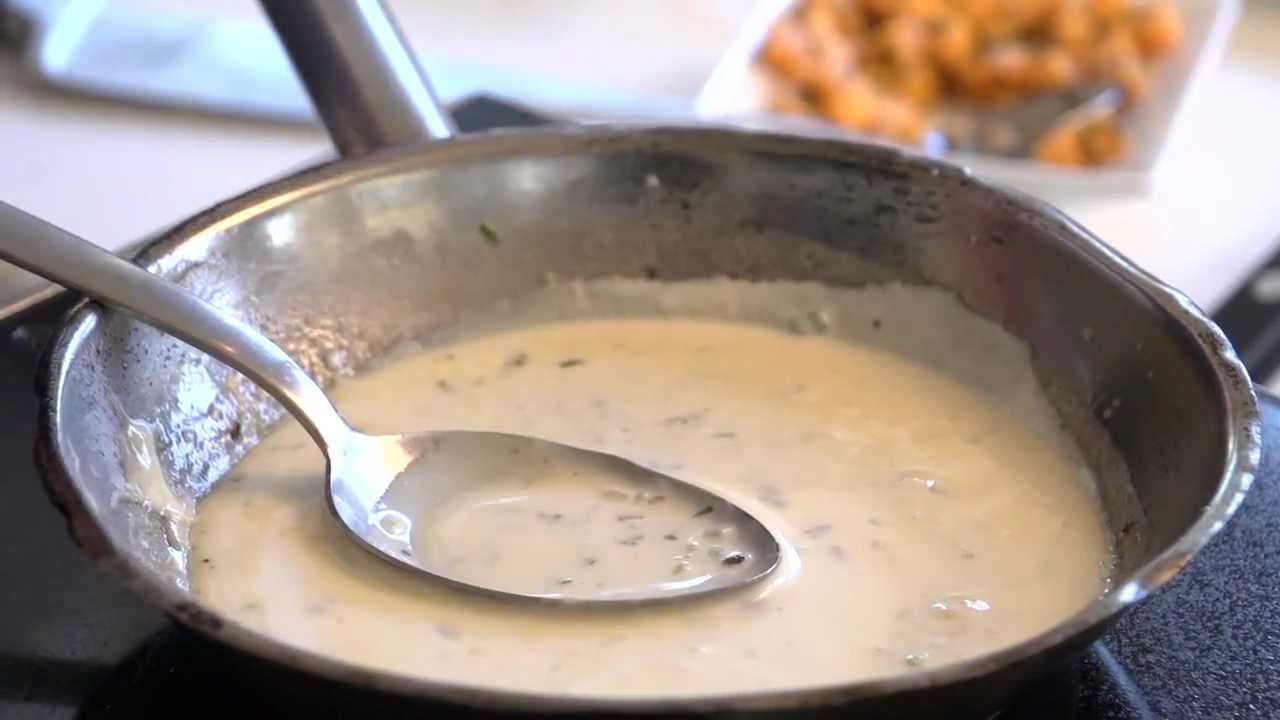
Your sauce is ready when it looks glossy and coats the noodles, and when you drag tongs through the pan the pasta leaves a brief trail before the sauce flows back.
Salt in layers
Salt the pasta water until it tastes pleasantly salty. Then season at the end with a final pinch if needed. Parmesan adds salt too, so taste before you add more.
Substitutes that work
No Parmesan?
- Pecorino Romano: saltier and sharper, use a little less and taste.
- Grana Padano: slightly milder, swaps 1:1.
- Nutritional yeast: not the same, but gives a savory, cheesy vibe. Start with 2 to 3 tablespoons and add more to taste.
No butter?
- Olive oil: use 3 tablespoons for a rich feel.
- Plant butter: works well, especially with a squeeze of lemon at the end.
No lemon?
- White wine vinegar or apple cider vinegar: add 1/2 teaspoon at the end, then taste.
- Pickle brine: sounds odd, works in a pinch. Add a teaspoon and call it a night.
Gluten-free pasta?
Yes. Just be extra careful not to overcook it and reserve plenty of pasta water since starch levels vary by brand.
Variations
Add protein
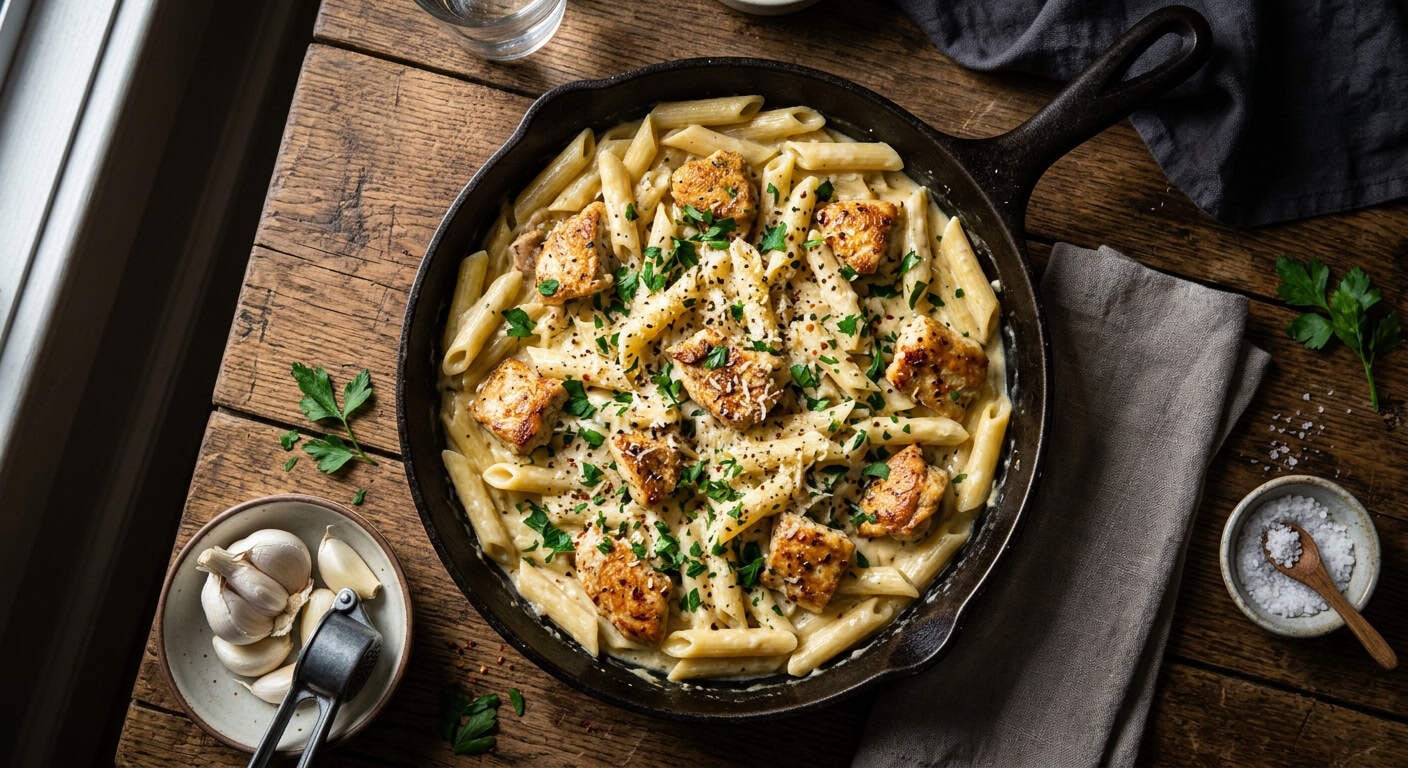
- Rotisserie chicken: stir in shredded chicken at the end to warm through.
- Shrimp: quickly sauté shrimp in the butter first, remove, then add back at the end.
- White beans: stir in 1/2 cup rinsed canned cannellini beans for a pantry boost.
Add vegetables
- Spinach: toss in a big handful right after draining pasta so it wilts.
- Frozen peas: add during the last minute of pasta boiling.
- Broccoli: chop small and boil with the pasta for the last 2 to 3 minutes.
Make it spicy
Add 1/4 to 1/2 teaspoon red pepper flakes with the garlic.
Make it extra lemony
Add zest plus juice. Zest gives a bright aroma without extra sourness.
Serving ideas
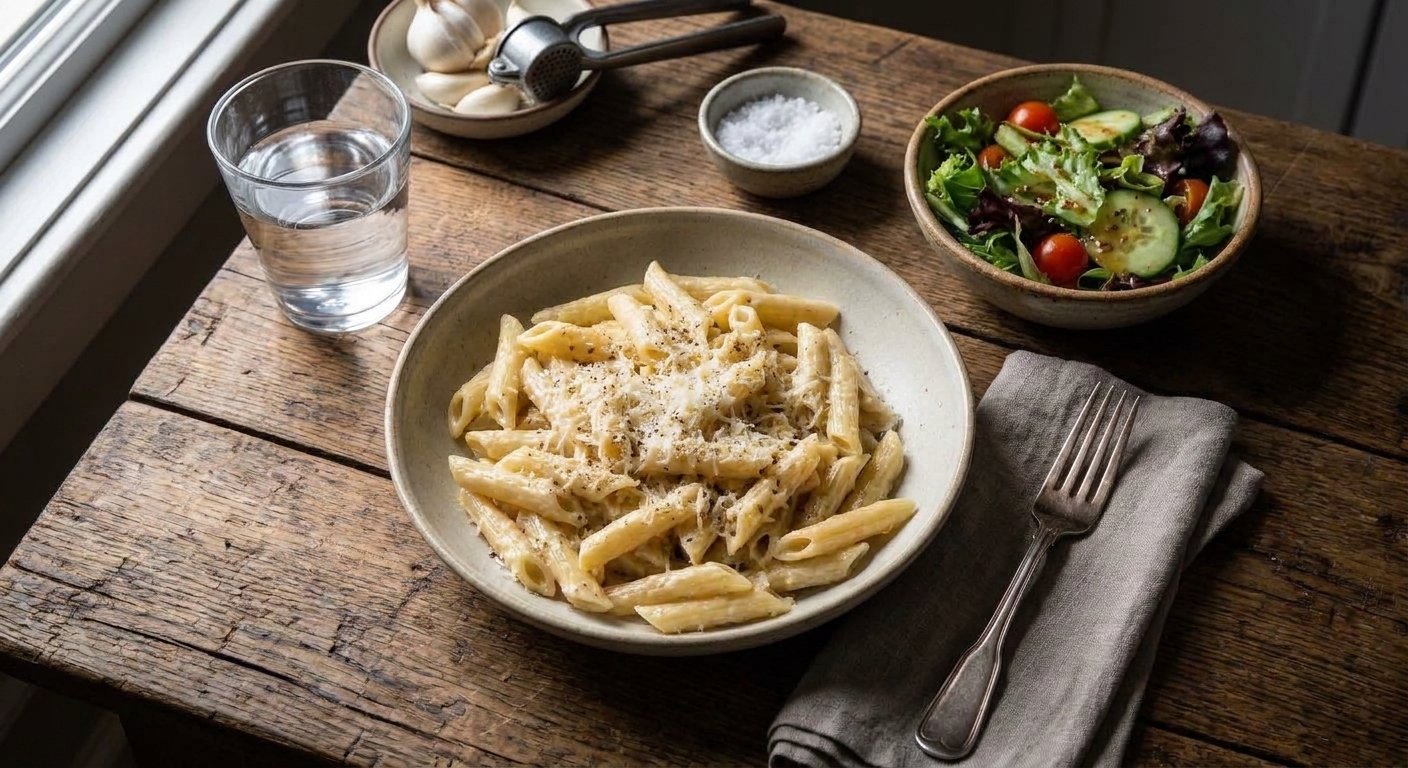
- Serve with a crisp green salad dressed with lemon and olive oil.
- Add a side of roasted or air-fried vegetables if you have them.
- Top with extra black pepper, lemon zest, or chopped parsley for a fresh finish.
- If you are feeding hungry people, add garlic bread or toasted pita to swipe through the sauce.
Storage and reheating
Fridge
Store leftovers in an airtight container for up to 3 days.
Reheating (best method)
Reheat in a skillet over medium-low with a splash of water. Toss gently until the sauce loosens and turns glossy again.
Microwave method
Microwave in 30-second bursts, stirring each time, with a teaspoon or two of water added first.
Freezing
I do not recommend freezing this. Cheese-based emulsions often turn grainy after thawing.
Common mistakes
Draining without saving pasta water
Fix: use very hot water from the kettle, but next time reserve pasta water first. It is what makes the sauce creamy.
Cooking the garlic too dark
Garlic goes from fragrant to bitter fast. If it browns aggressively, wipe the pan and start over. It takes 60 seconds and saves dinner.
Adding cheese over high heat
This is the biggest cause of clumps. Turn off the heat, move the skillet off the burner, add pasta water, then add cheese while tossing.
Not salting the pasta water enough
If the noodles are bland, the whole dish tastes flat. Salt early and taste at the end.
FAQ
How do you make pasta creamy without heavy cream?
Use an emulsion: fat (butter or oil) plus very hot starchy pasta water, then thicken and flavor with finely grated Parmesan. Toss vigorously off the heat until glossy.
Why is my sauce not creamy?
Usually one of three things: not enough pasta water, cheese added with too much heat, or not enough tossing to emulsify. Add a splash of very hot pasta water and toss for 20 to 30 seconds.
How do I keep Parmesan from clumping?
Take the pan off the heat, add pasta water first, then add finely grated Parmesan in small additions while tossing constantly. Avoid very dry pre-grated cheeses if you can. If it starts to clump, add a splash more very hot pasta water and keep tossing.
Can I use milk instead?
You can, but you do not need it. If you want to, add 2 to 4 tablespoons milk at the end with the pasta water, then toss off heat. Keep it gentle so it does not split.
Can I make it without cheese?
Yes, it will be more like garlic butter noodles. Use extra pasta water and a squeeze of lemon for balance. Nutritional yeast is a good dairy-free flavor booster.
Is this the same as Alfredo?
Not exactly. Alfredo traditionally relies on butter and Parmesan with pasta water, and many American versions add cream. This is closer to the butter-Parmesan style: light, glossy, and very garlicky.
15-Minute Creamy Garlic Pasta (No Heavy Cream)
A fast, silky garlic pasta made creamy with butter, Parmesan, and starchy pasta water, no heavy cream required. Ready in about 15 minutes and endlessly customizable with what you have.
- Prep
- 5 minutes
- Cook
- 10 minutes
- Total
- 15 minutes
- Yield
- 4
Ingredients
- 12 oz (340 g) spaghetti or linguine
- 1 1/2 tsp kosher salt (for the pasta water), plus more to taste
- 3 tbsp (42 g) unsalted butter (or 2 tbsp butter + 1 tbsp olive oil)
- 5 to 6 garlic cloves, finely minced
- 1/2 tsp freshly ground black pepper, plus more for serving
- 3/4 cup finely grated Parmesan or Parmigiano-Reggiano (about 2 1/2 oz / 70 g), plus more for serving
- 1/2 to 1 cup reserved very hot pasta water, as needed
- 1 to 2 tsp fresh lemon juice (optional)
- 2 tbsp chopped parsley (optional)
Instructions
- Boil the pasta. Bring a large pot of water to a boil. Add the 1 1/2 teaspoons kosher salt. Cook pasta until al dente according to the package.
- Reserve pasta water. Before draining, scoop out at least 1 cup of very hot pasta water. Drain the pasta.
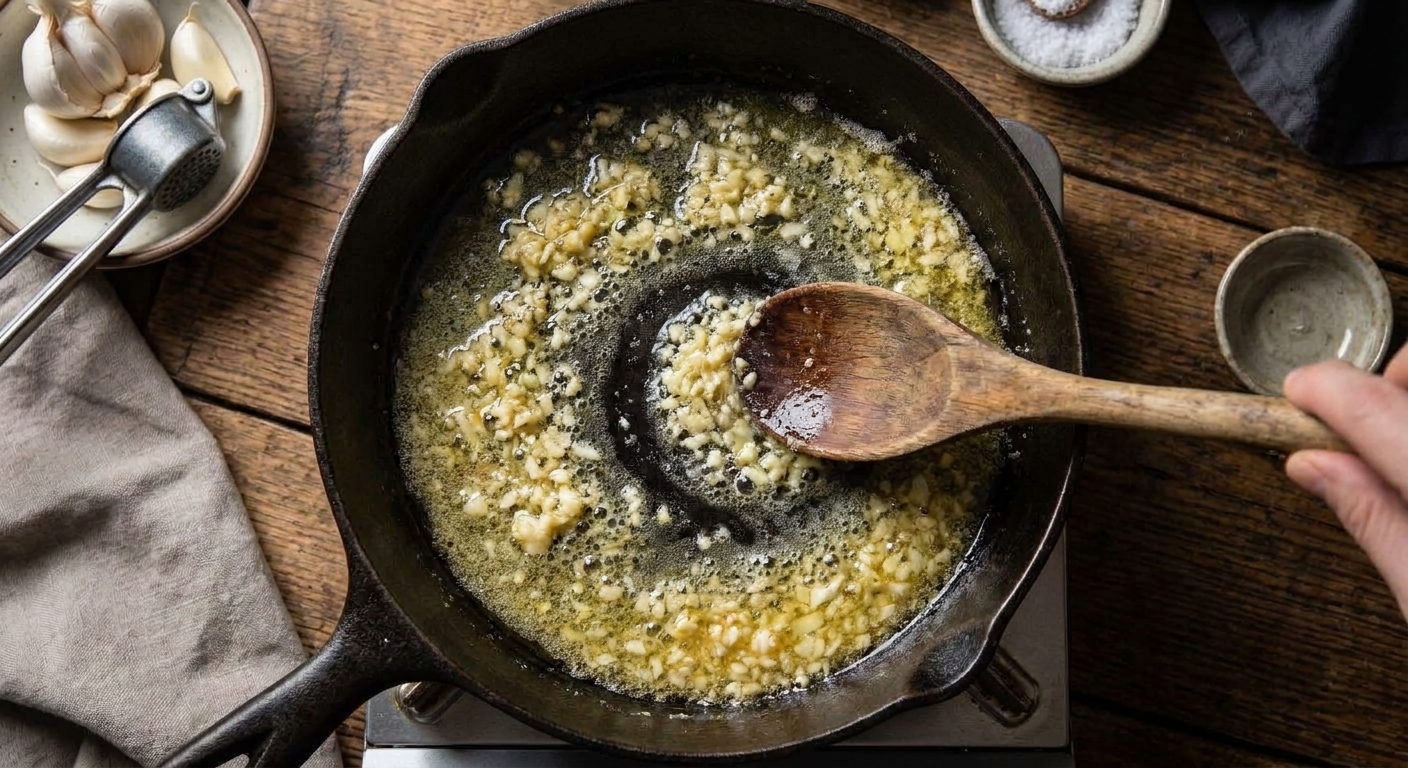
- Bloom the garlic. Melt butter (and/or warm olive oil) in a large skillet (12-inch is ideal) over medium to medium-low heat. Add garlic and black pepper and cook 30 to 60 seconds, stirring constantly, just until fragrant. Lower heat if garlic sizzles aggressively. Do not let the garlic brown.
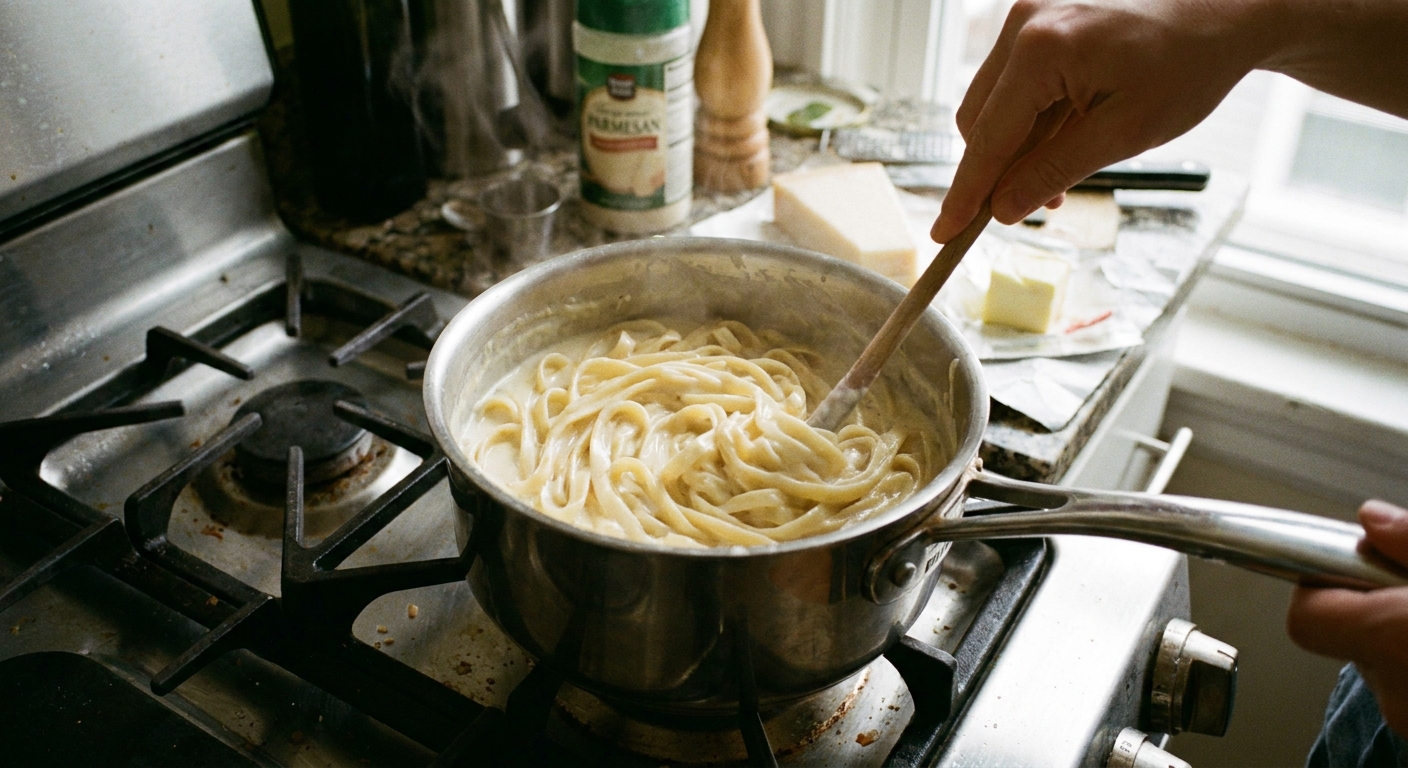
- Toss and emulsify off heat. Add drained pasta to the skillet and toss to coat. Turn off the heat and move the skillet off the burner. Add 1/2 cup pasta water and toss vigorously for 20 to 30 seconds.
- Add the cheese off heat. Sprinkle in Parmesan in 2 to 3 additions while tossing constantly until the sauce turns glossy and lightly creamy. Add more pasta water, a splash at a time, until it coats the noodles the way you like.
- Finish and serve. Taste and adjust salt and pepper. Add lemon juice and parsley if using. Serve immediately with extra Parmesan and black pepper.
Notes
Salt cue: The 1 1/2 teaspoons is for the pasta water. After it dissolves, taste the water. It should taste pleasantly salty, not bland.
Cheese tip: For the smoothest sauce, use freshly and finely grated Parmesan or Parmigiano-Reggiano. Very dry pre-grated cheeses (especially shaker-style) can melt less smoothly due to anti-caking agents.
The 30-second move: Off the heat, add very hot pasta water first and toss hard for 20 to 30 seconds, then add Parmesan in small showers while tossing. This order helps prevent clumps.
Garlic control: If you love a mellow garlic flavor, use 3 to 4 cloves. If you want it bold, use 6 and keep the sauté gentle so it stays sweet, not bitter.
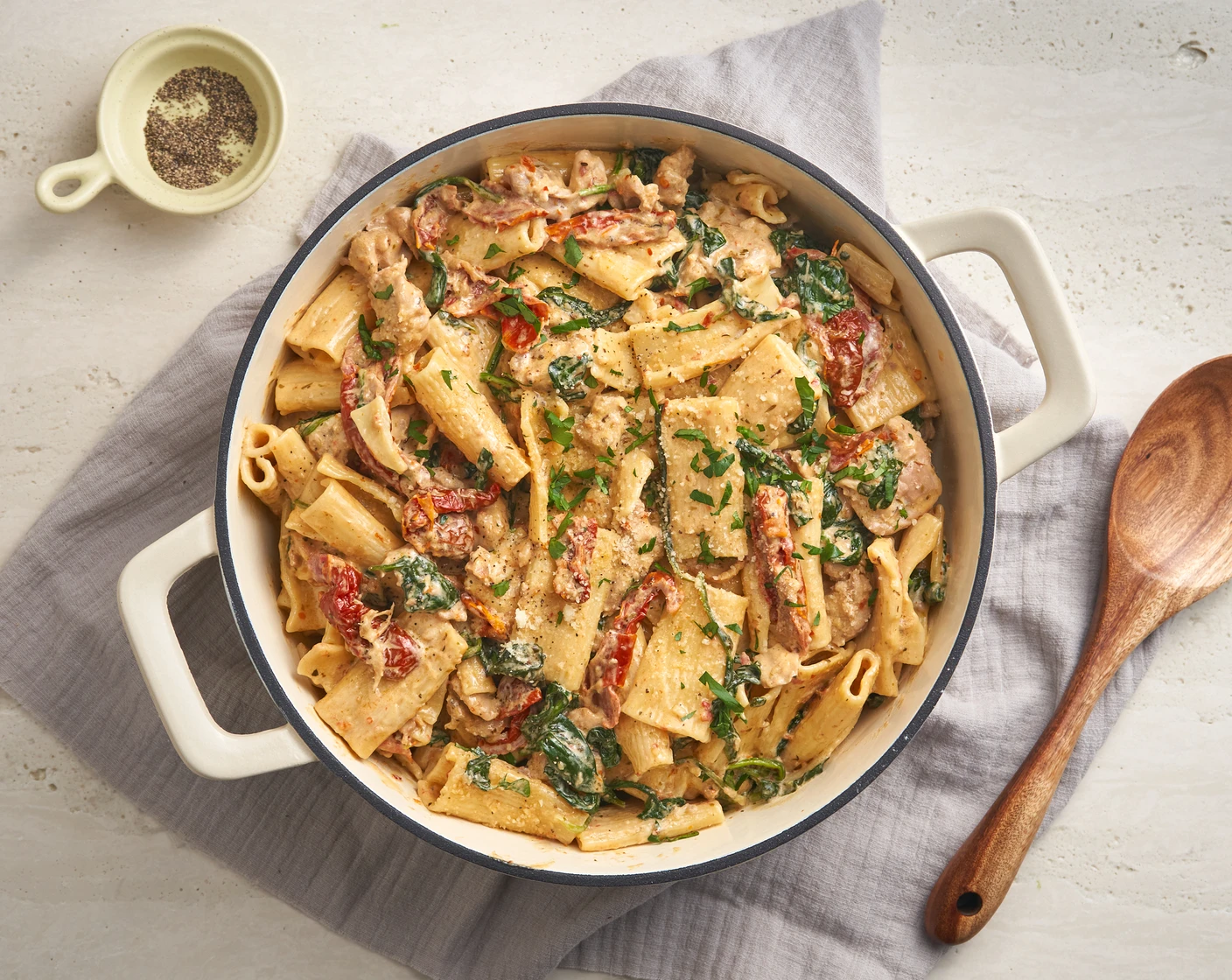
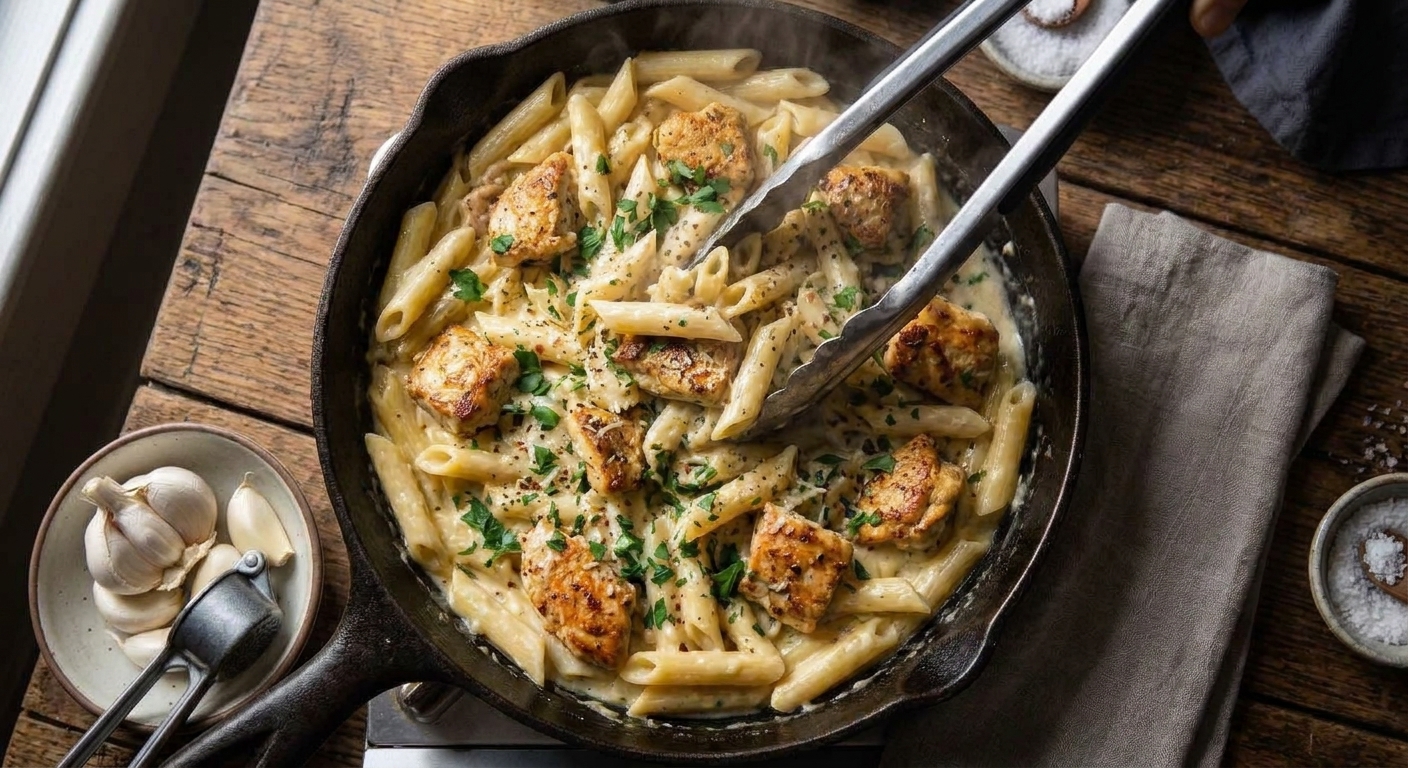
To make it a full meal: Stir in a handful of spinach at the end, or add shredded rotisserie chicken. Both are great for using up leftovers.
Emulsify like a pro
This is the part that makes it creamy without cream.
The setup
- Very hot pasta water: It emulsifies fastest and most reliably when it is very hot. Warm water can still work, but it may take more tossing and feel less consistent.
- Off the heat: Take the skillet off the burner before you add cheese. High heat can make cheese tighten up and go grainy.
- Finely grated cheese: Fluffy, fine shreds melt smoothly. Chunky shreds clump.
- Cheese type matters: Freshly grated Parmesan or Parmigiano-Reggiano melts best. The shelf-stable, pre-grated kind (especially the very dry shaker-style) can be stubborn because of anti-caking agents, and it is more likely to turn grainy. It still tastes good, just expect less silk.
If something goes wrong
- Clumps: You likely added cheese over too much heat, too fast, or used cheese that does not melt smoothly. Pull the pan fully off the burner, add a splash of very hot pasta water, and toss hard. Next time, grate finer and add cheese in smaller showers.
- Greasy sauce: Not enough tossing or not enough pasta water. Add a splash of very hot pasta water and toss until it comes together.
- Too thick: Add pasta water and toss. It loosens fast.
- Too thin: Toss another 15 to 20 seconds. The starch will tighten it as it cools slightly.
Nutrition
- Calories: 470
- Fat: 16 g
- Carbs: 64 g
- Protein: 18 g
- Fiber: 3 g
- Sugar: 3 g
- Sodium: 650 mg
Values are approximate and will vary by pasta type, cheese brand, and how much pasta water and salt you use.