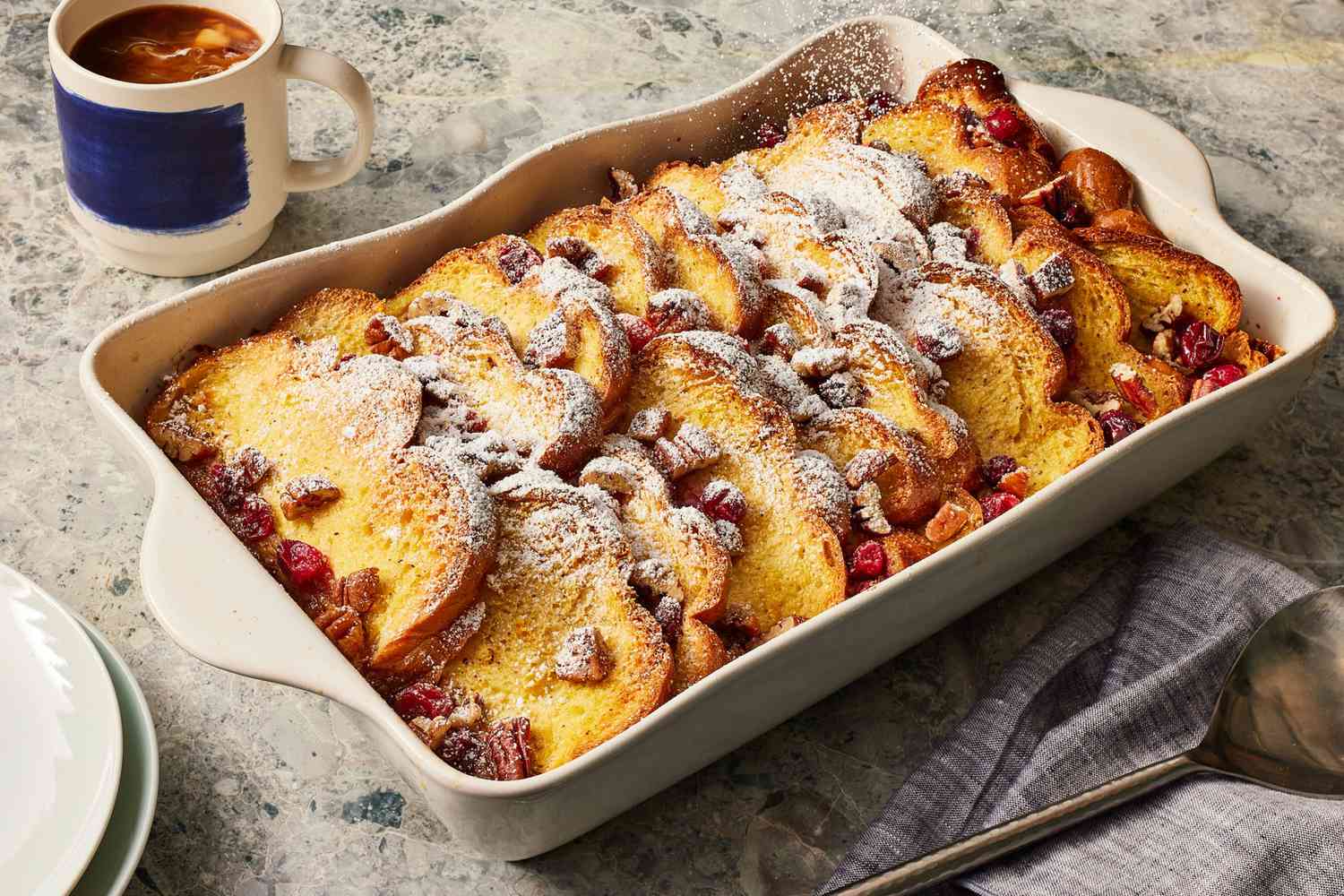
Baked French toast is what I make when I want the comfort of classic French toast without standing at the stove flipping slices for 30 minutes. You get the same cozy custard-soaked bread, but the oven does the heavy lifting.
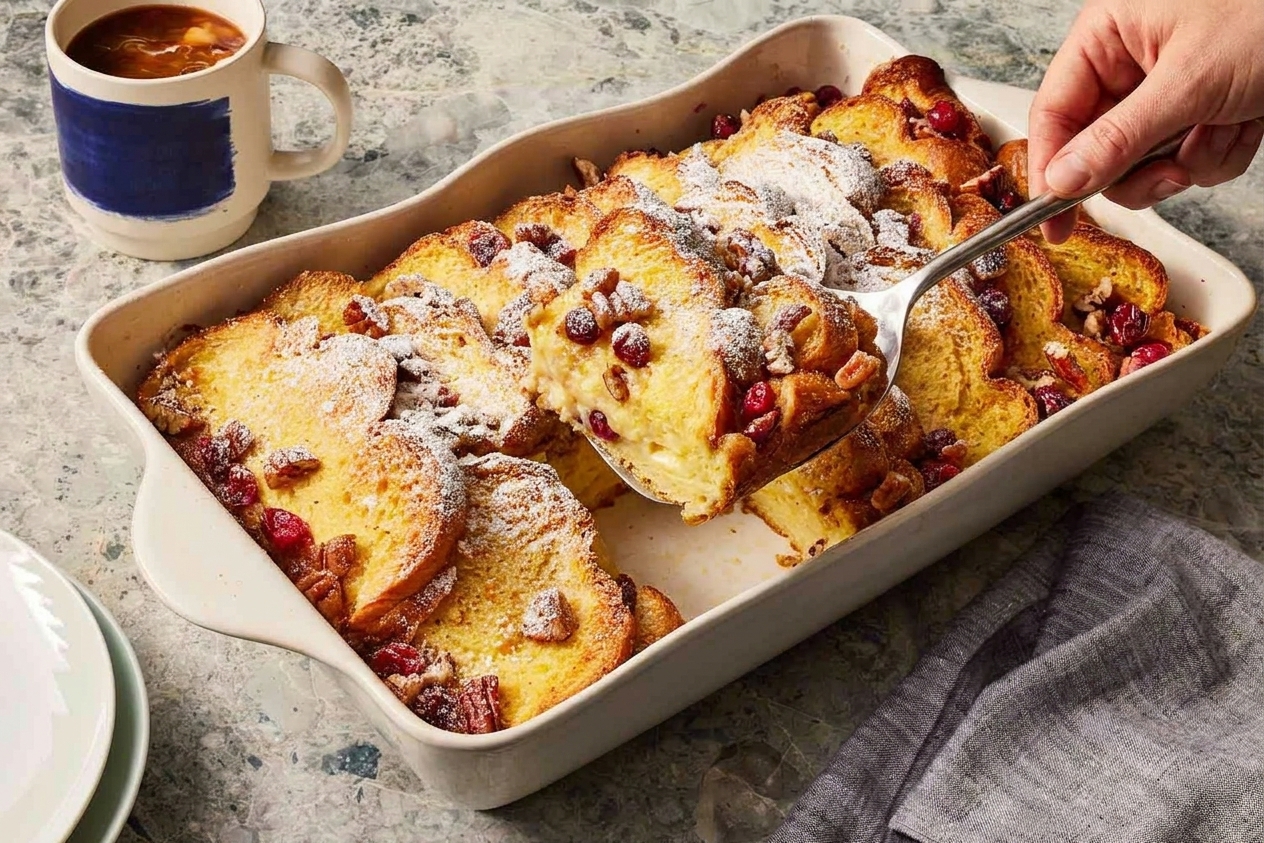
The best part is the texture: crisp, caramelized top and edges, and a soft, custardy center that feels almost like bread pudding (in the best way).
It is also one of the most forgiving ways to use up bread that is a little past its prime. Stale bread is not a problem here. It is the plan.
Why this recipe works
- Oven-baked ease: You get classic French toast flavor without flipping slices at the stove.
- Texture contrast: A crisp, caramelized top and edges with a soft, custardy center.
- Stale bread welcome: Slightly stale, sturdy bread absorbs custard without turning to mush.
- Built-in balance: Sugar supports browning and sweetness, while salt keeps it from tasting flat.
Ingredient notes
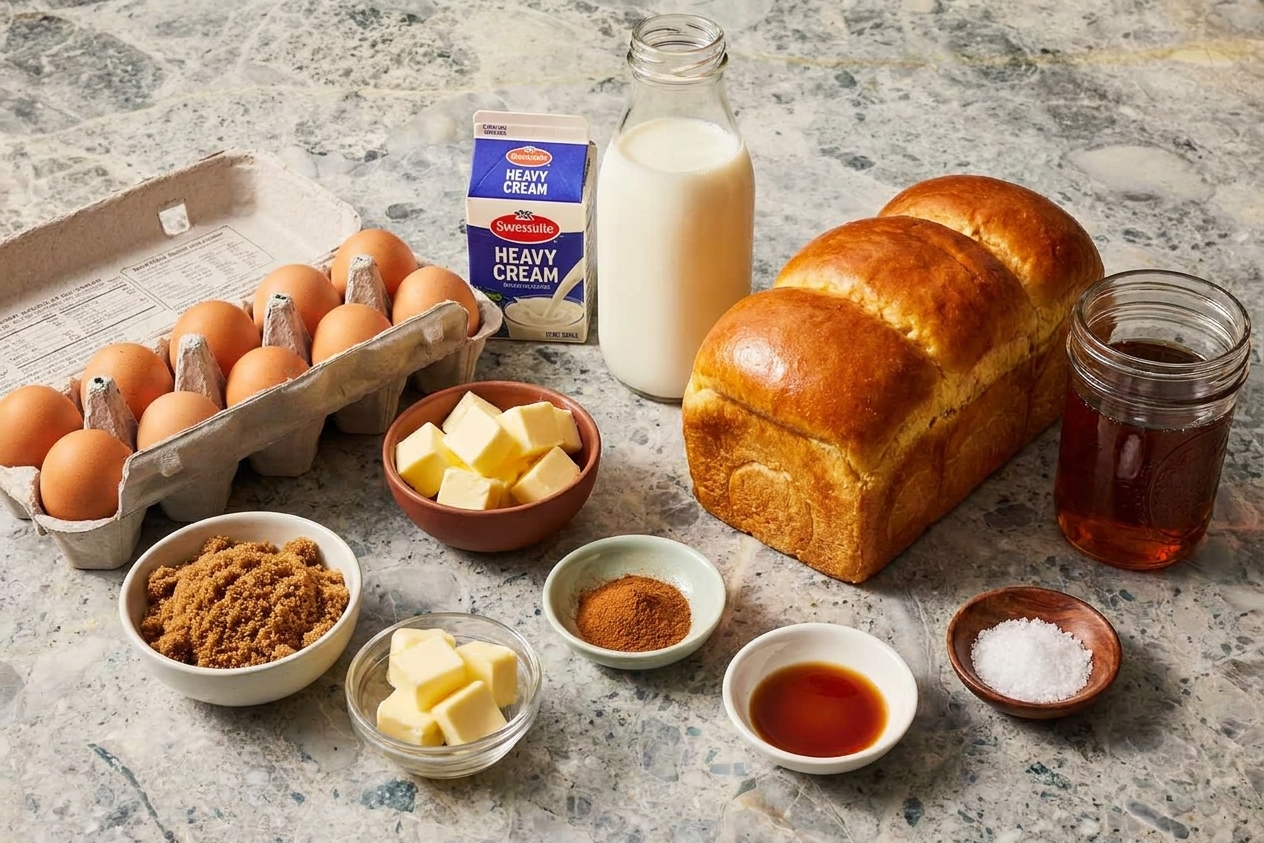
Bread
Use a sturdy, enriched bread for the dreamiest texture: brioche, challah, or thick-cut French bread all work. Slightly stale is ideal because it absorbs custard without turning to mush.
- Best: brioche or challah (custardy and rich)
- Also great: French bread or sourdough (a little chewier, more structure)
- Avoid if possible: very soft sandwich bread, unless it is thick-cut and slightly dried out
The custard (eggs + dairy + sugar + salt)
The egg-to-dairy ratio matters a lot for tenderness, but it is not the only thing that controls texture. Bread type, how dry it is, pan depth, and bake time all play a role too. This recipe aims for a center that sets softly, not stiffly, with enough dairy to keep it tender. A little sugar helps with browning and that classic French toast sweetness, and salt is non-negotiable for balance.
Flavor boosters
Vanilla and cinnamon are the cozy defaults, but you can take it anywhere with citrus zest, cardamom, bourbon, or even a spoonful of cream cheese dolloped in between the bread cubes.
Equipment you will need
- 9x13-inch baking dish (timing can vary by material)
- Sheet pan (optional, for lightly drying/toasting fresh bread cubes)
- Large mixing bowl
- Whisk
- Spatula (for gently pressing bread into the custard)
- Knife for doneness check (optional)
- Thermometer (optional, for checking about 160°F in the center)
- Foil (optional, for tenting if the top browns too quickly)
Pro tips
Perfect texture tips
- Cut 1-inch cubes: Too small and they can turn mushy. Too large and you get dry pockets.
- Salt matters: Without it, everything tastes flat and extra sugary.
- Bake until set: The center should be set, not sloshy. If the top browns too quickly before the middle sets, loosely tent with foil for the last 10 to 15 minutes.
- Rest before slicing: Let it rest 10 minutes for cleaner slices and a more custardy, cohesive bite.
- Press during the soak: Press once or twice so everything gets a turn in the custard.
Substitutes that work
- Bread: Brioche or challah are ideal; thick-cut French bread also works; sourdough works for more structure.
- No cream: Use all milk, or use half-and-half.
- Non-dairy: Oat milk works well for a neutral flavor. Use full-fat if possible.
- Less sugar: You can drop the brown sugar to 1/3 cup. It will be a little less caramelized, but still delicious.
Variations
Cinnamon roll vibe
Add 2 tablespoons of softened butter mixed with 1/4 cup brown sugar and 1 teaspoon cinnamon, then dot it across the top before baking. It melts into little caramel pockets.
Berry version
Scatter 2 cups fresh or frozen berries over the bread before adding custard. If using frozen, do not thaw first.
Apple pie version
Toss 2 peeled, thin-sliced apples with 1 tablespoon brown sugar and a pinch of cinnamon. Layer them through the bread cubes.
Orange-vanilla
Add zest of 1 orange to the custard. Serve with yogurt and a drizzle of honey instead of syrup.
Add streusel
Mix 4 tablespoons flour, 4 tablespoons brown sugar, 3 tablespoons softened butter, a pinch of salt, and a little cinnamon. Crumble over the top right before baking.
Serving ideas
I like to build contrast: something creamy, something bright, something crunchy.
- Creamy: Greek yogurt, lightly sweetened whipped cream, or mascarpone
- Bright: fresh berries, orange segments, or a spoonful of jam
- Crunchy: toasted pecans, walnuts, or sliced almonds
- Salty sidekick: crispy bacon or breakfast sausage
Storage and reheating
Make-ahead
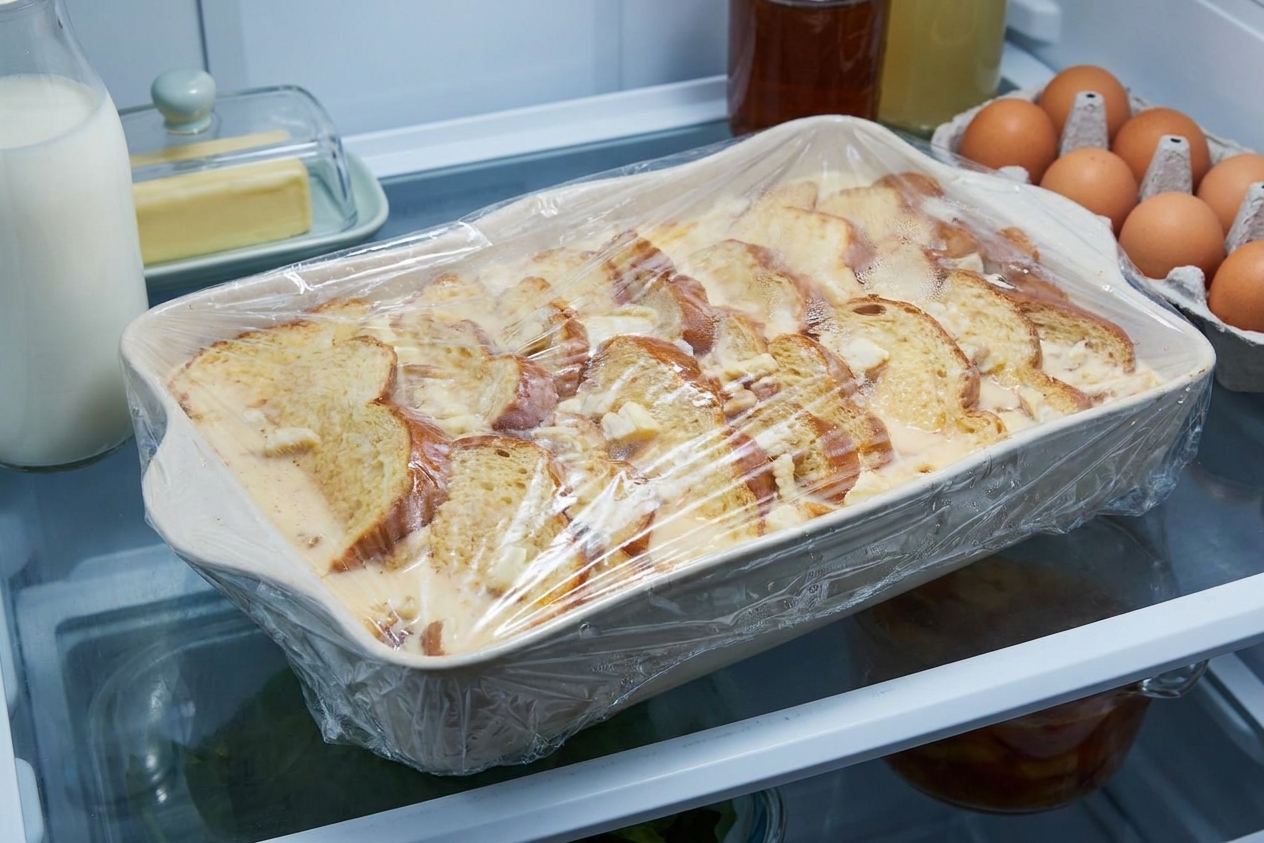
Assemble up to 14 hours ahead and bake in the morning. For longer prep, bake it fully, cool, and refrigerate.
Store
Cover and refrigerate leftovers for up to 4 days.
Freeze
Slice into portions, wrap well, and freeze up to 2 months. Thaw overnight in the fridge for best texture.
Reheat
- Oven (best): 325°F until warmed through, about 12 to 18 minutes for slices
- Microwave (fast): 30 to 60 seconds per slice, then crisp in a toaster oven if you want edges again
Common mistakes
- Soggy center: Usually underbaked. Bake until the center is set (not sloshy). If the top browns too quickly, tent with foil for the last 10 to 15 minutes.
- Using bread that is too soft and fresh: Toast the cubes first, or use day-old bread.
- Pan too small or too deep: Use a 9x13-inch dish so the casserole is not too thick to cook through.
- Dry result: Often overbaked, or the bread cubes were very large and did not soak evenly. Press bread down during the soak and start checking at 40 minutes.
- Slicing too soon: Skipping the 10-minute rest can lead to messier slices and a less cohesive custardy texture.
FAQ
Can I make it overnight?
Yes. Assemble through adding the butter, cover tightly, and refrigerate 8 to 14 hours. In the morning, uncover while the oven heats. If you have time, let it sit at room temperature for 20 to 30 minutes for more even baking. Bake at the same temperature, adding 5 to 15 minutes if it is going in very cold, then rely on the set-in-the-center cues.
Can I halve it?
Yes. Use an 8x8-inch pan and start checking around 30 to 35 minutes, then use the same set-in-the-center cues. Depending on your pan material and how deep it is, it might take closer to 35 to 45 minutes.
How do I know it is done?
It should be puffed and golden. The center should feel set when gently pressed, and a knife inserted near the middle should come out without wet custard clinging to it (a little moisture is fine, raw liquid is not). If you like using a thermometer, aim for about 160°F in the center.
Can I mix different breads?
Yes. If you have a few lonely slices from different loaves, you can mix them. Just aim for similar thickness so they soak and bake at the same pace.
Baked French Toast
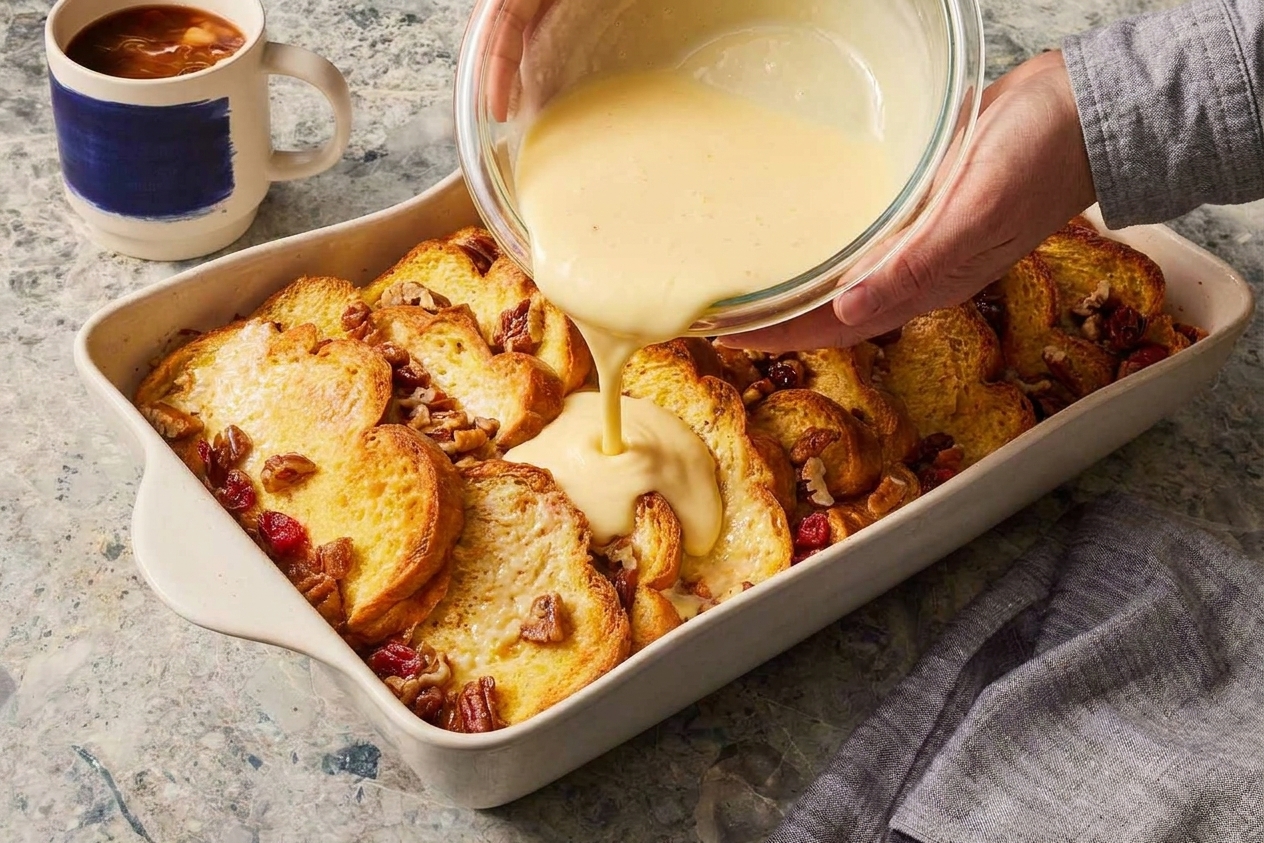
This baked French toast casserole delivers crisp, caramelized edges and a soft, custardy center, all in a 9x13-inch pan. It is sweet enough to stand alone, but not so sweet that it cannot handle a drizzle of maple syrup.
- Prep
- 15 minutes
- Cook
- 40 to 50 minutes
- Total
- 1 hour 15 minutes
- Yield
- Serves 8 to 10
Ingredients
- 1 (16 to 18 ounce) loaf brioche or challah, cut into 1-inch cubes (about 10 to 12 cups)
- 6 large eggs
- 2 cups whole milk
- 1/2 cup heavy cream (or more milk)
- 1/2 cup packed light brown sugar
- 2 tablespoons maple syrup (optional but lovely)
- 2 teaspoons vanilla extract
- 1 1/2 teaspoons ground cinnamon
- 3/4 teaspoon kosher salt
- 4 tablespoons butter, melted (plus more for the pan)
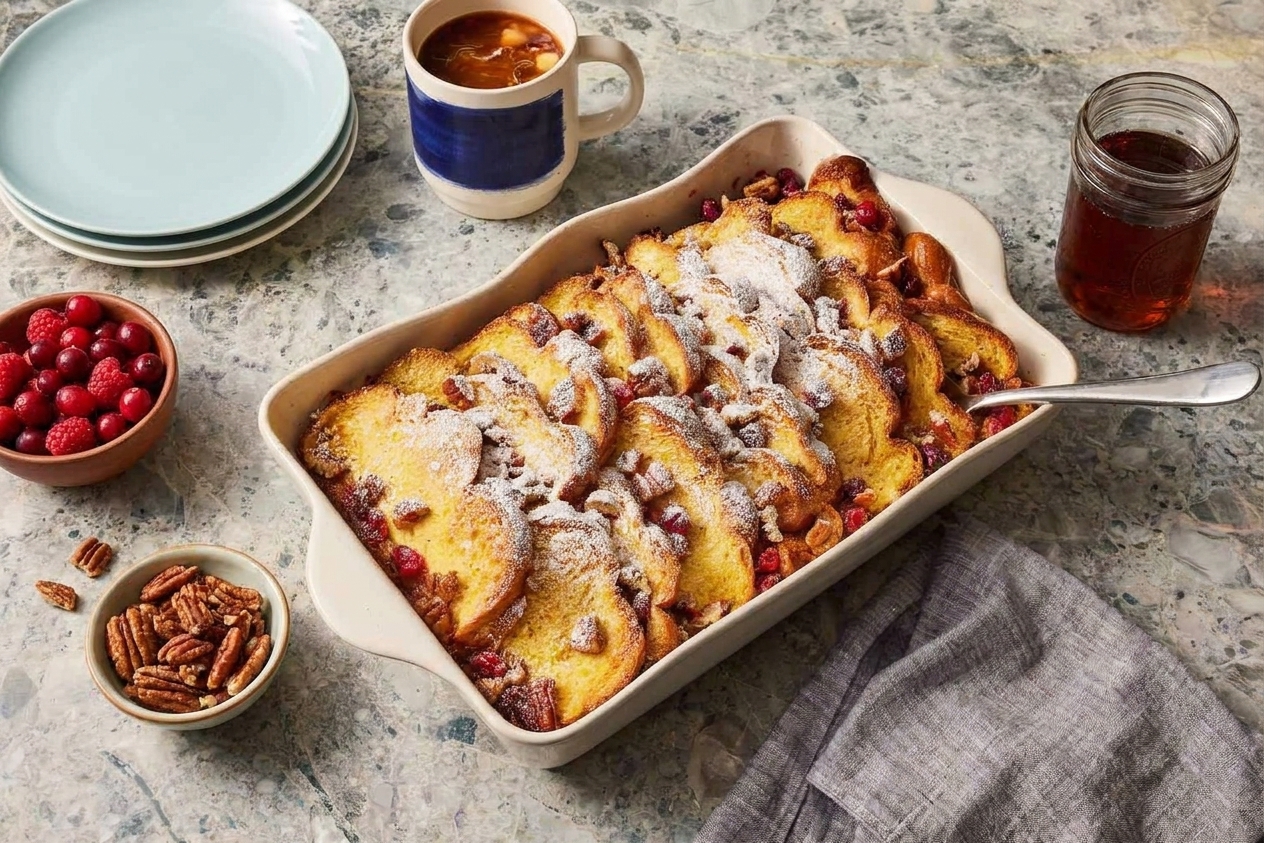
- Optional toppings: powdered sugar, maple syrup, fresh berries, toasted pecans or walnuts, whipped cream or yogurt
Instructions
- Prep the pan and oven. Butter a 9x13-inch baking dish. Preheat the oven to 350°F.
- Dry the bread slightly (optional, but helpful). If your bread is fresh and soft, spread cubes on a sheet pan and toast for 8 to 10 minutes, stirring once, just until the surface feels a little dry. You are not trying to brown it, just take the spongy edge off.
- Make the custard. In a large bowl, whisk eggs, milk, cream, brown sugar, maple syrup, vanilla, cinnamon, and salt until well combined and the sugar is mostly dissolved.
- Assemble. Add bread cubes to the dish. Pour the custard evenly over the top. Gently press down with a spatula so the bread starts absorbing.
- Add the butter. Drizzle the melted butter evenly over the top (this prevents it from clumping if your dairy and eggs are cold). If your eggs and dairy are at room temperature, you can whisk the melted butter into the custard instead.
- Soak (safely). Let sit 30 minutes. If your kitchen is warm, or if you want to soak longer than 30 minutes, cover and refrigerate instead. During the soak, press once or twice so everything gets a turn in the custard.
- Bake. Bake uncovered for 40 to 50 minutes, until puffed and golden. The center should feel set when gently pressed, and a knife inserted near the middle should come out without wet custard clinging to it (a little moisture is fine, raw liquid is not). If you like using a thermometer, aim for about 160°F in the center.
- Rest, then serve. Let rest 10 minutes. This helps the custard finish setting and makes cleaner slices. Dust with powdered sugar and serve with maple syrup, fruit, and crunchy nuts.
Notes
Soak time: 30 minutes (or overnight).
Overnight method: Assemble through adding the butter, cover tightly, and refrigerate 8 to 14 hours. In the morning, uncover while the oven heats. If you have time, let the dish sit at room temperature for 20 to 30 minutes for more even baking. Bake at the same temperature, adding 5 to 15 minutes if it is going in very cold, then rely on the set-in-the-center cues.
Pan note: Dish material changes timing. Glass and ceramic often bake a touch slower than metal. Use the doneness cues and add a few minutes if needed.
Nutrition
- Calories: 360
- Fat: 16 g
- Carbs: 44 g
- Protein: 10 g
- Fiber: 1 g
- Sugar: 15 g
- Sodium: 380 mg
Nutrition values are approximate and will vary by bread choice, exact loaf size, and toppings.