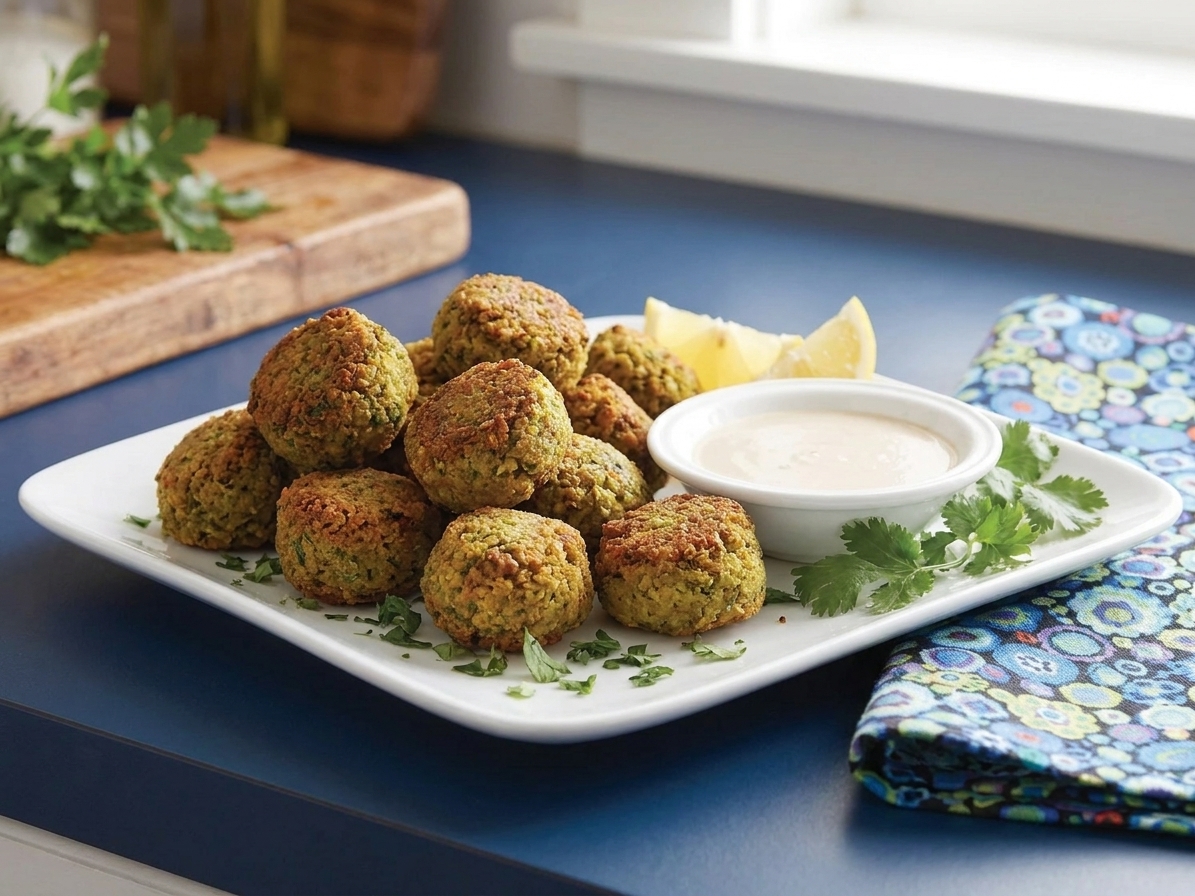

Falafel is one of those foods that looks deceptively simple until you try to make it at home and it either turns into chickpea sand in the fryer or a dense little hockey puck. The good news is that truly crispy, herby falafel is not about fancy chef tricks. It’s about two non-negotiables for the most reliable classic texture: using soaked dried chickpeas and getting the moisture level right so the mixture holds together without turning into hummus.

I grew up in a kitchen where someone was always pinching, tasting, and adjusting. Falafel is that kind of recipe. If it tastes a little flat, it needs salt. If it tastes heavy, it might need a brighter hit of lemon, or it might be telling you it was ground too fine, packed too tightly, or cooked at the wrong temperature. If it feels sticky like cookie dough, it’s often too-wet onion or herbs, or a few too many pulses in the processor, and it usually needs a touch more chickpea flour and a little more chilling time. I’ll walk you through those cues so you can cook confidently, whether you’re frying for the crunchiest crust or baking for a lighter weeknight option.
One more thing before we start: in this recipe, falafel is a fritter, a coarse-ground chickpea mixture that gets shaped and cooked until crisp. The texture should never be smooth. (Other versions exist, but this is the classic chickpea-forward approach I come back to.)
And yes, people do make falafel with canned chickpeas. It can be done with extra binders and careful handling, but the texture is less reliable because the chickpeas are already cooked. If you want that fluffy, tender interior and a crust that stays crisp, start with dried chickpeas that you soak, then grind. Do not cook them.
Fry or bake?
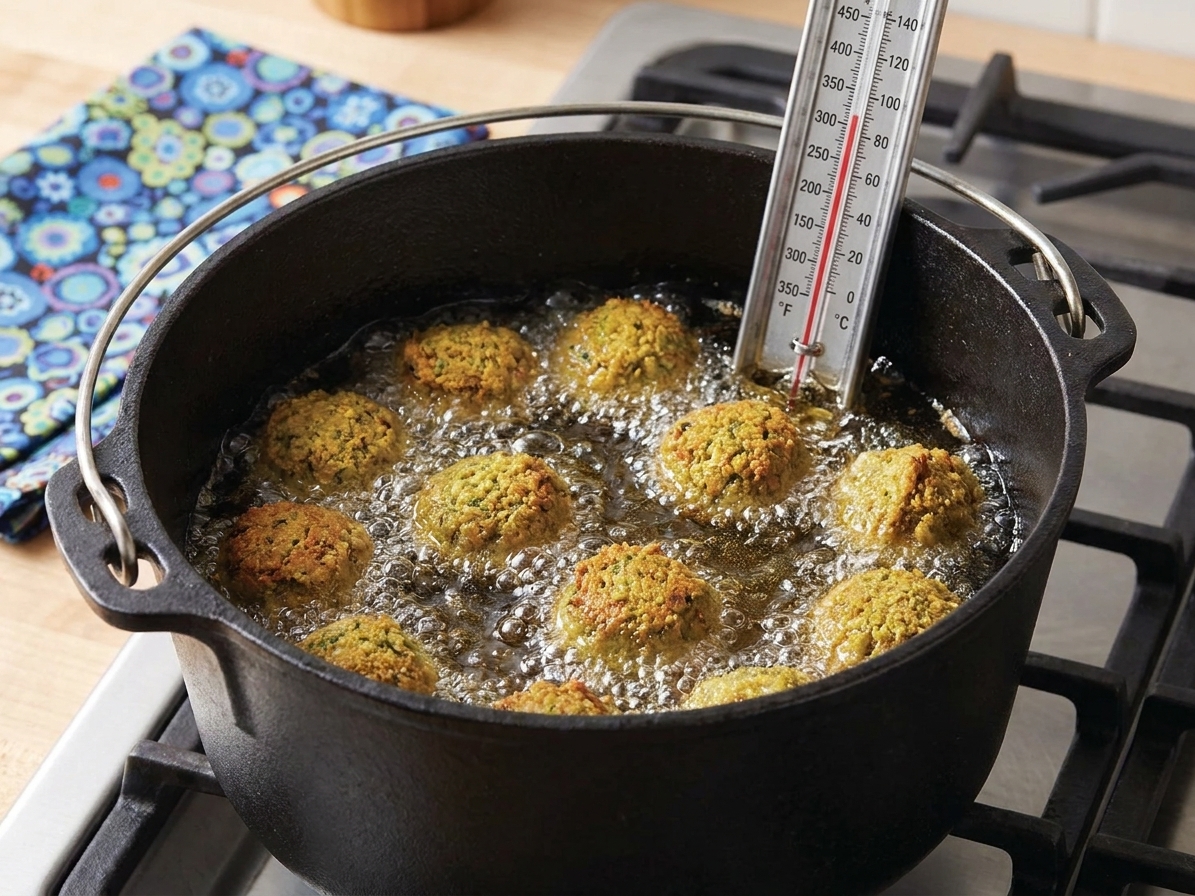
Frying gives you the iconic shatter-crisp exterior and tender, steamy center. If you can manage a small pot of oil and a thermometer, it’s absolutely worth it. For the best results, keep the oil in the 350 to 360 F range so the falafel sets quickly instead of soaking up oil. Keep in mind the temperature drops when the falafel goes in, which is why small batches matter.
Baking still works if your mixture is properly ground and well seasoned. You’ll get a crisp edge and a softer crust overall. I recommend brushing generously with oil, baking at 425 to 450 F, and flipping once so both sides brown. Convection helps if you have it, but it is not required.
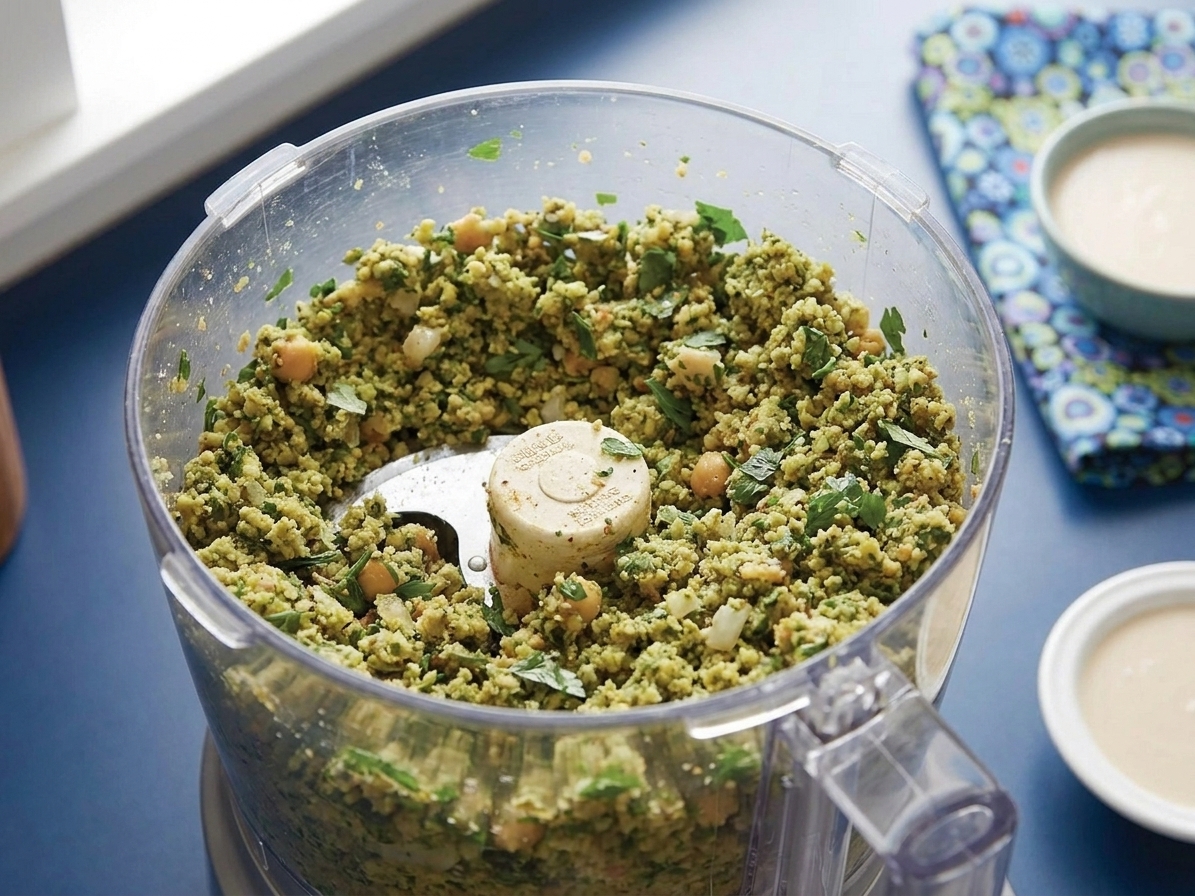
Whatever method you choose, you’re aiming for a mixture that looks like damp sand. It should be crumbly, not pasty, and it should clump when you squeeze it in your palm. You also want a coarse grind, more like a nubby meal than a purée. Pulse, stop, scrape, and resist the urge to “just blend a little more.” A short rest in the fridge helps everything hydrate and hold together before it hits hot oil or a hot pan.
Why this recipe works
- Soaked dried chickpeas grind into a fluffy, cohesive dough that fries up crisp. Canned chickpeas are already cooked and often lead to a pasty mixture.
- Coarse grind, not puree: pulsing keeps tiny chickpea bits intact for a tender interior. A smooth paste cooks up dense and can taste like fried hummus.
- Short rest time lets the flour hydrate and the mixture firm up, making shaping easier and reducing blowouts in hot oil.
- Baking powder creates a lighter interior by encouraging a gentle lift as the falafel cooks.
- Clear heat targets (oil temperature or oven temperature) prevent greasy falafel on one end and undercooked centers on the other.
Ingredient notes
Dried chickpeas (garbanzo beans)
Use dried chickpeas soaked overnight. They should be swollen and firm, not soft like canned. Drain very well and pat dry. Excess surface water makes the mixture gummy and harder to shape.
Fresh herbs
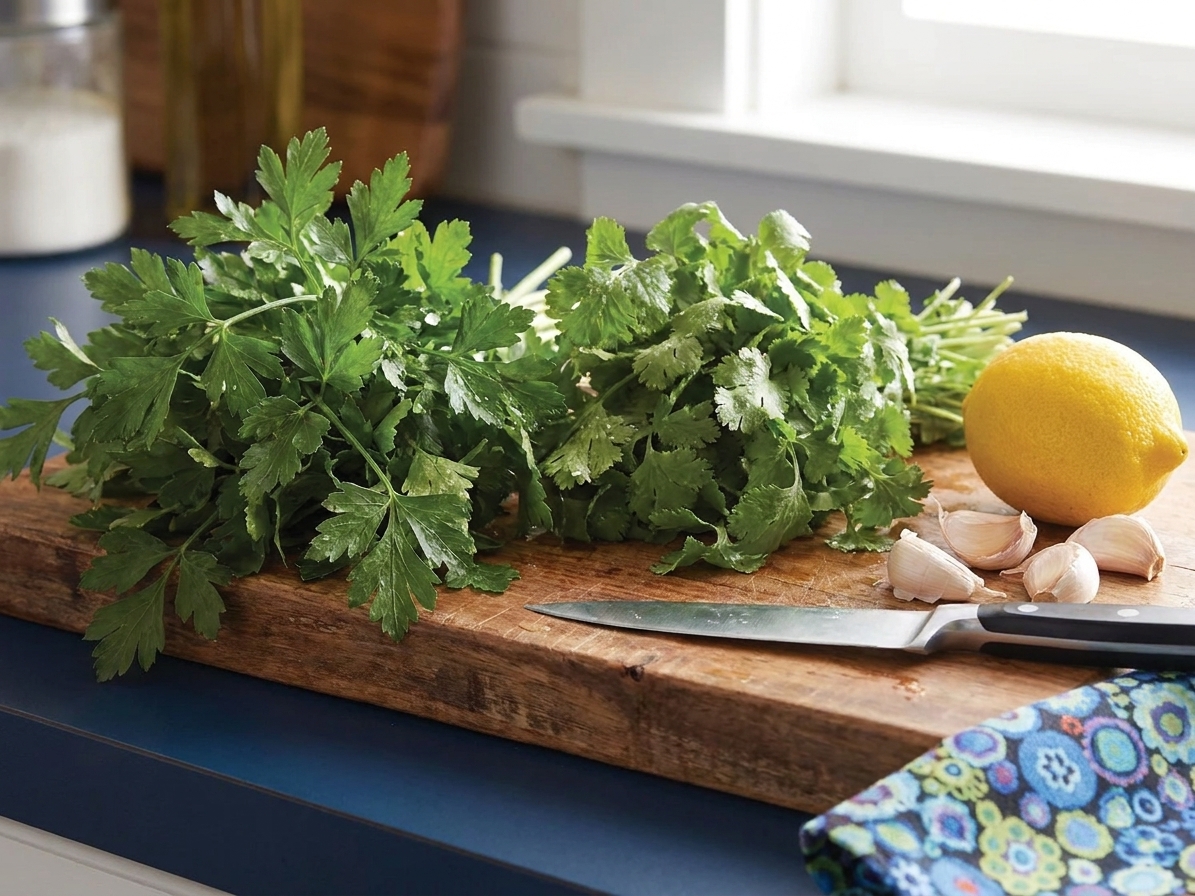
Parsley and cilantro give falafel its signature green, aromatic interior. Use tender stems too. They carry tons of flavor and reduce waste.
Allium
Onion and garlic provide sweetness and bite. If you are sensitive to raw onion, you can soak the chopped onion in cold water for 5 minutes, then drain well before adding.
Spices
Cumin and coriander are classic. I also love a small pinch of cayenne for warmth, not heat.
Chickpea flour
This is your texture insurance. It binds without making the inside bready. If you do not have it, all purpose flour works in a pinch.
Baking powder
Optional but helpful for a lighter center. Use aluminum free if you have it.
Salt and lemon
Falafel needs more salt than you think, especially if you are serving it with bread and vegetables. Lemon zest in the mix and lemon juice at the end keep the flavor bright.
Equipment you will need
- Food processor: essential for the correct coarse grind.
- Fine mesh strainer: for draining soaked chickpeas thoroughly.
- Sheet pan: for resting shaped falafel and for baking.
- Thermometer: highly recommended for frying accuracy.
- Small cookie scoop or tablespoon: for even sizing.
- Heavy bottomed pot or Dutch oven: for frying (safer, steadier heat).
- Wire rack: for draining fried falafel while keeping the crust crisp.
Pro tips
How wet should the mixture be?
Think damp sand that clumps. When you squeeze a handful, it should hold together and leave your palm slightly moist, not sticky. If it smears like paste, it is too wet or too finely processed.
Do a quick seasoning test
Pan fry a teaspoon of the mixture in a little oil. Taste it. Adjust salt, lemon, and spice before shaping the full batch.
Rest before cooking
Even 20 to 30 minutes in the fridge makes shaping easier and helps the falafel keep its shape in hot oil.
For frying: keep the oil at 350 to 365 F
If the oil is cooler, falafel absorbs oil and can fall apart. If it is too hot, the outside browns before the inside cooks through.
For baking: high heat and real oil
Brush or spray generously. A dry bake gives you pale falafel that tastes a little dusty.
Substitutes that work
- No chickpea flour: use all purpose flour, or a small amount of breadcrumbs. Start with less and add only as needed.
- No cilantro: use all parsley, or swap in a smaller amount of mint or dill for a different herb profile.
- Garlic alternative: a pinch of garlic powder works, though fresh is best.
- Gluten free: chickpea flour keeps this naturally gluten free. Avoid all purpose flour and standard breadcrumbs.
Variations
Sesame crust
Roll shaped falafel lightly in sesame seeds before frying or baking for extra crunch and a nutty finish.
Spicy falafel
Add more cayenne, or pulse in a small piece of jalapeno. Keep it modest so the mixture still holds together.
Green falafel
Increase herbs by 1 loosely packed cup total for a brighter green interior. If the mixture gets too wet, add a touch more chickpea flour.
Serving ideas
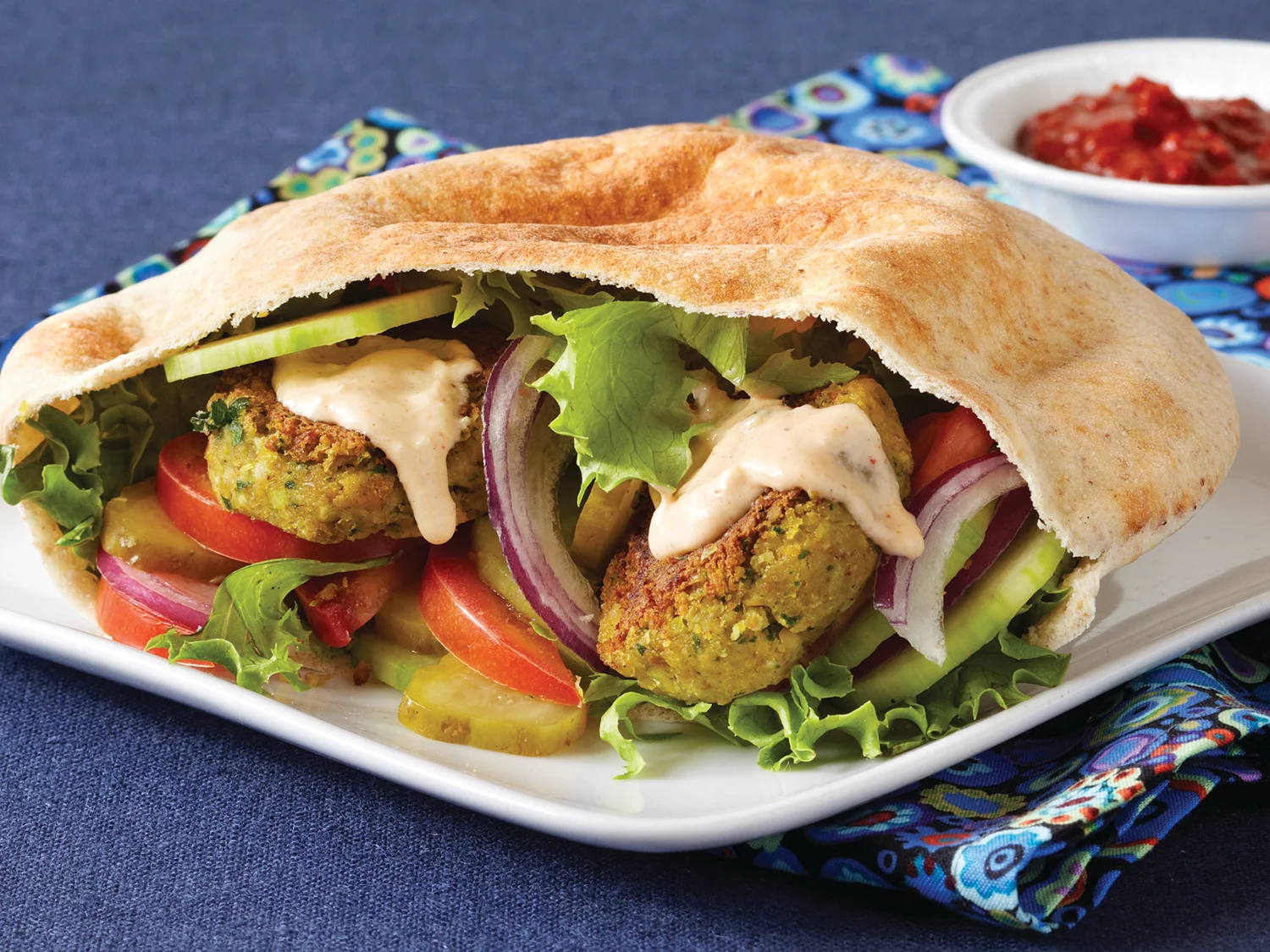
- Pita pockets with shredded lettuce, tomatoes, cucumbers, pickled onions, and tahini sauce.
- Falafel bowls over rice or quinoa with a chopped salad and a lemony yogurt sauce.
- Mezze platter with hummus, olives, crunchy cucumbers, and warm flatbread.
- Breakfast twist: tuck falafel into a wrap with scrambled eggs and a spoon of harissa yogurt.
Storage and reheating
Refrigerator
Cooked falafel keeps well for 3 to 4 days in an airtight container.
Freezer
Freeze shaped, uncooked falafel on a sheet pan until firm, then transfer to a freezer bag. Cook from frozen, adding a few extra minutes. You can also freeze cooked falafel, but the crust is best when freshly cooked.
Reheating
To bring back crispness, reheat in a 400 F oven until hot and crisp, about 8 to 12 minutes. Avoid the microwave if you care about crunch.
Common mistakes
- Using canned chickpeas: often leads to a pasty mixture and dense falafel. Save canned chickpeas for hummus and salads.
- Overprocessing: if it looks like green hummus, it will eat like green hummus. Pulse until it resembles coarse crumbs that clump when pressed.
- Not draining well: wet chickpeas create steam pockets and weak structure.
- Skipping the rest: freshly processed mixture can be fragile. A short chill makes a big difference.
- Oil too cool: greasy falafel is usually a temperature problem, not a recipe problem.
- Crowding the pot: it drops the oil temperature and encourages breakage.
FAQ
Can I make falafel with canned chickpeas if I drain them really well?
For the most reliable, classic falafel texture, I do not recommend it. Canned chickpeas are already cooked, and the mixture tends to turn pasty and cook up dense or fragile. It can be made with extra binders and careful drying, but if you want consistent results, start with soaked dried chickpeas.
How do I know the mixture is the right texture?
It should look like coarse, herby crumbs. When you squeeze a handful, it should hold together. If it crumbles completely, add a bit more chickpea flour and chill. If it smears like paste, it is too wet or overprocessed.
Why did my falafel fall apart in the oil?
Common culprits are oil that is not hot enough, a mixture that is too wet, overprocessing, or shaping that is too loose. Chill the mixture, tighten the texture with a tablespoon or two of chickpea flour, and fry at 350 to 365 F.
Can I bake falafel instead of frying?
Yes. Bake at high heat and use enough oil for browning. You will get a crisp exterior, but it will be less shatter-crisp than frying.
Can I prep falafel mixture ahead?
Yes. You can refrigerate the mixture for up to 24 hours. In fact, it often shapes even better after a longer chill.
Crispy Falafel
Herby chickpea falafel with a crisp crust and tender interior, made from soaked dried chickpeas. Includes both frying and baking options, plus texture cues so your mixture holds together without turning into hummus.
- Prep
- 25 minutes (plus overnight soak)
- Cook
- 15 minutes
- Total
- 40 minutes (plus overnight soak)
- Yield
- About 20 falafel (4 to 5 servings)
Ingredients
- 1 cup dried chickpeas (garbanzo beans), soaked overnight in plenty of cold water
- 1 small yellow onion, roughly chopped
- 4 cloves garlic, peeled
- 1 cup packed fresh parsley leaves and tender stems
- 1 cup packed fresh cilantro leaves and tender stems
- 2 tsp ground cumin
- 1 1/2 tsp ground coriander
- 1/4 tsp cayenne pepper (optional)
- 1 1/2 tsp kosher salt, plus more to taste
- 1/2 tsp freshly ground black pepper
- 1 tsp baking powder (optional, for a lighter interior)
- 2 to 4 tbsp chickpea flour, as needed for binding
- 1 tbsp lemon zest (optional but great)
- Neutral oil for frying (such as canola, grapeseed, or peanut), about 2 inches depth in your pot
- For baking option: 2 to 3 tbsp olive oil or neutral oil, for brushing
- To serve (optional): lemon wedges, tahini sauce, pita, chopped cucumbers and tomatoes
Instructions
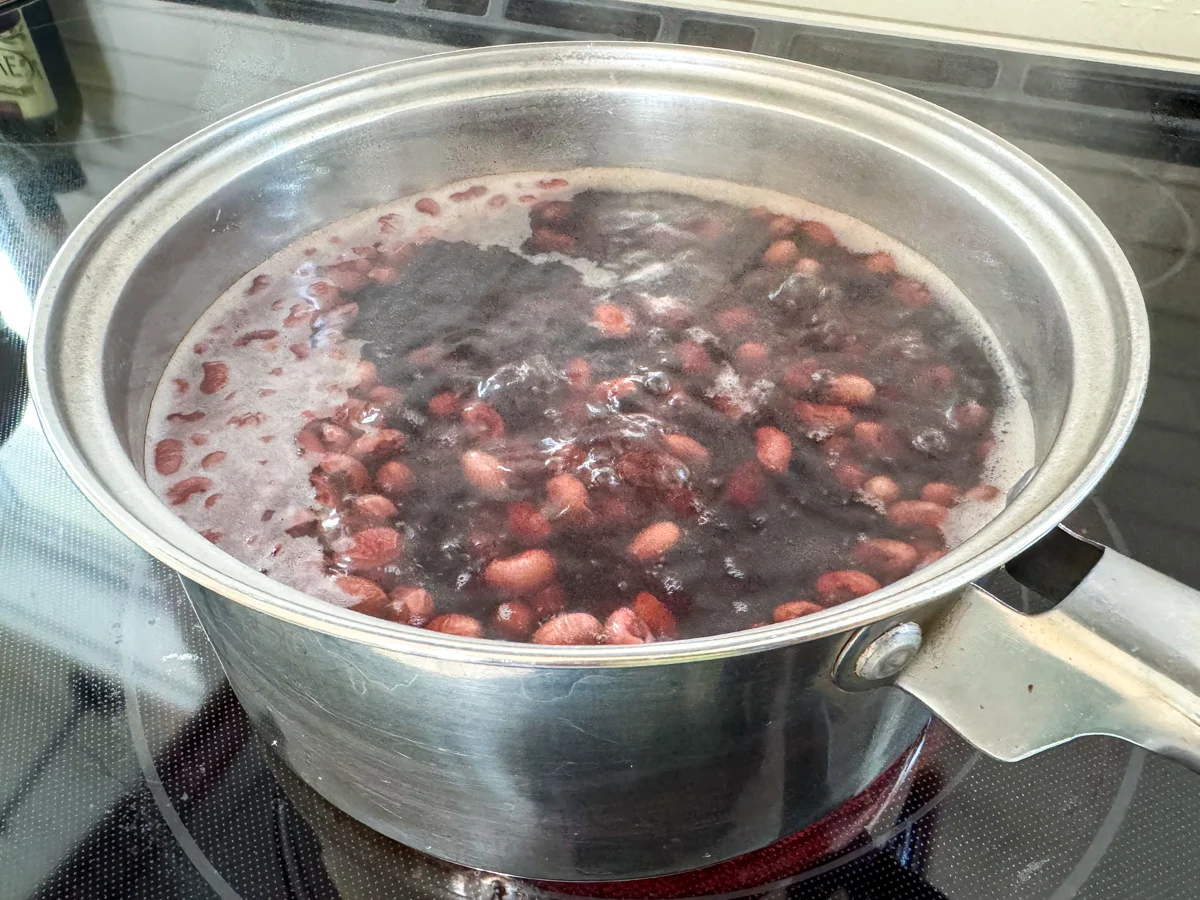
- Soak the chickpeas (night before). Place dried chickpeas in a large bowl and cover with at least 4 inches of cold water. Soak 12 to 18 hours. They should look plump and doubled in size.
- Drain and dry well. Drain chickpeas in a fine mesh strainer, rinse, then drain again thoroughly. Spread on a clean towel and pat dry. The drier the surface, the easier the mixture binds.
- Grind the mixture. In a food processor, combine drained chickpeas, onion, garlic, parsley, cilantro, cumin, coriander, cayenne (if using), salt, pepper, and lemon zest (if using). Pulse in short bursts, scraping down as needed, until the mixture resembles coarse crumbs and holds together when squeezed. Do not process into a smooth paste.
- Add leavening and binder. Sprinkle in baking powder (if using) and 2 tablespoons chickpea flour. Pulse 2 to 3 times to combine. Pinch a bit between your fingers. If it crumbles and will not hold a shape, add 1 to 2 more tablespoons chickpea flour, pulsing briefly after each addition.
- Chill to set. Transfer mixture to a bowl, cover, and refrigerate for 30 minutes (or up to 24 hours). This rest firms the mixture and helps prevent breakage.
- Shape. Scoop mixture into balls or small patties, about 1 1/2 tablespoons each. Press firmly so they are compact, with no cracks. Place on a sheet pan while you heat the oil or oven.
- Option A: Fry (crispest result). Add oil to a heavy pot to a depth of about 2 inches. Heat to 350 to 365 F. Fry falafel in batches, without crowding, for 3 to 4 minutes total, turning once, until deep golden brown and crisp. Adjust heat as needed to keep the oil in range.
- Drain and season. Transfer fried falafel to a wire rack or paper towel lined plate. While hot, sprinkle with a pinch of salt if desired.
- Option B: Bake (lighter weeknight option). Heat oven to 425 F. Brush a sheet pan generously with oil. Arrange falafel and brush or spray the tops with more oil. Bake 22 to 28 minutes, flipping at the halfway point, until deeply browned at the edges and hot through.
- Serve. Serve warm with lemon wedges, tahini sauce, pita, and crunchy vegetables.
Notes
- Texture cue: The mixture should feel like damp sand that clumps when squeezed. Sticky paste means it is too wet or overprocessed.
- Quick test: Fry a teaspoon of mixture in a small skillet to check seasoning before shaping the whole batch.
- Oil safety: Keep a lid nearby to smother flames, and do not overfill the pot. Fry in steady, uncrowded batches for the best texture.
- Make ahead: Shape and freeze uncooked falafel on a sheet pan, then bag once solid. Cook from frozen, adding a few minutes.