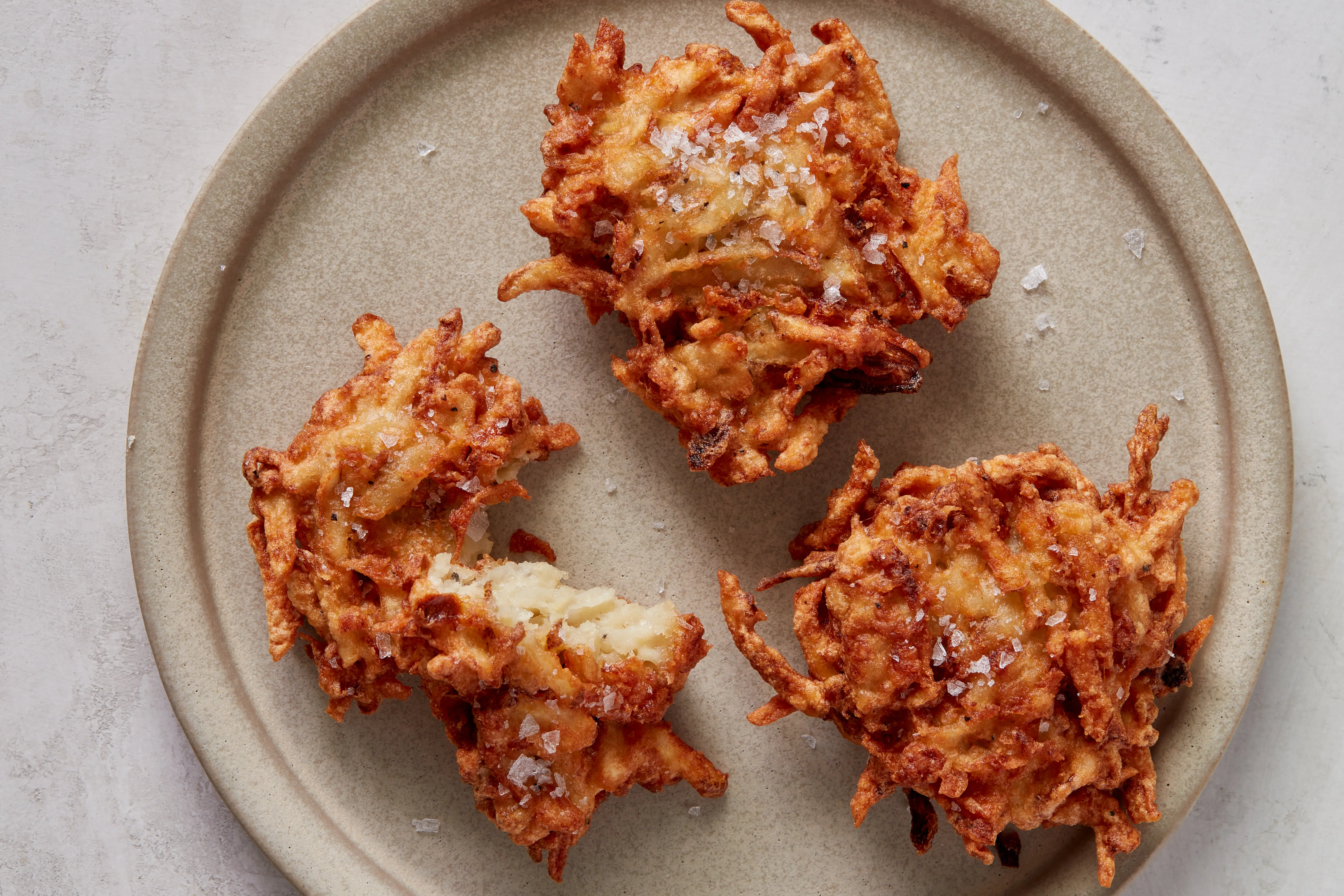

I judge a potato latke by two things: the sound when it hits the plate (a little crackle, please) and the way the edges look (lacy and bronze, not pale and soggy). Latkes look humble, but they are all about technique, and once you understand the handful of moves that matter, you can make them any weeknight without stress.

The secret is not fancy ingredients. It is moisture control, a binder that matches your shred, and shallow frying in oil that is deep enough to crisp but still easy to handle. I like about a quarter inch of oil in the pan so the edges can frill and brown and flipping stays simple and controlled. Below, I walk you through how to squeeze out the potatoes and onion, what the mixture should feel like in your hands, and how to keep each batch crisp while you fry the next.
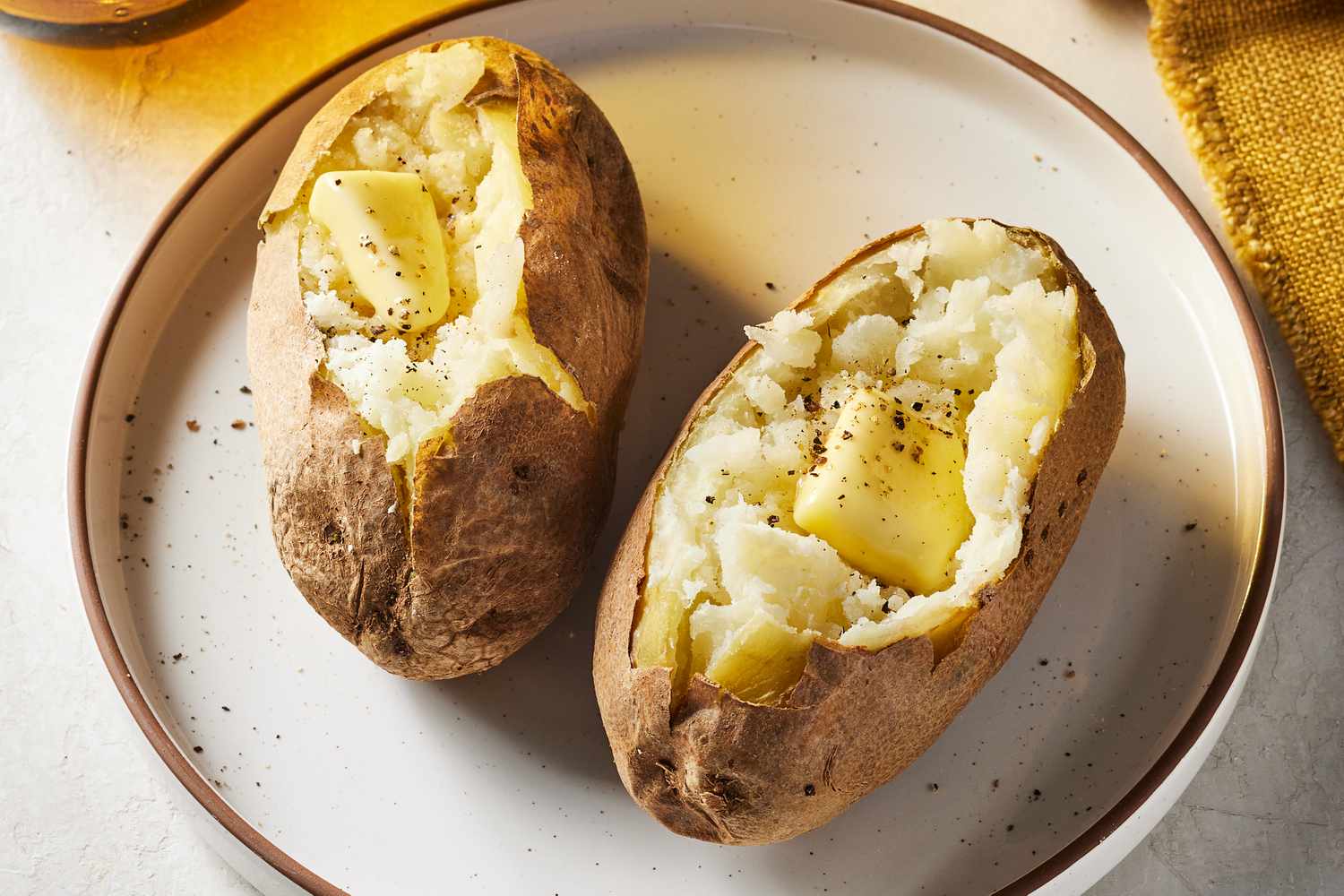
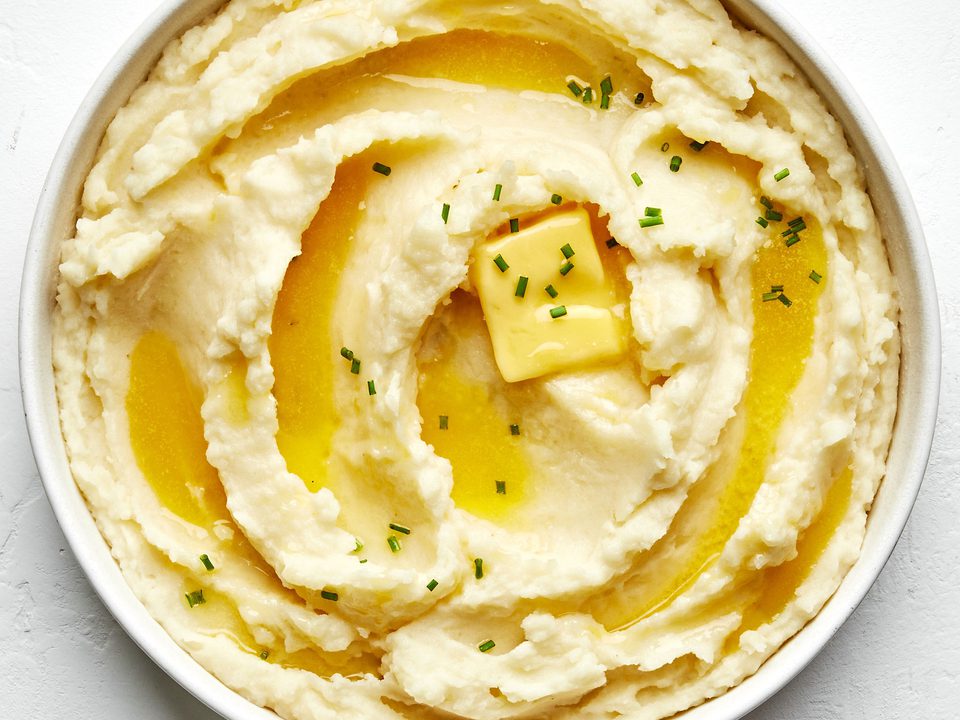
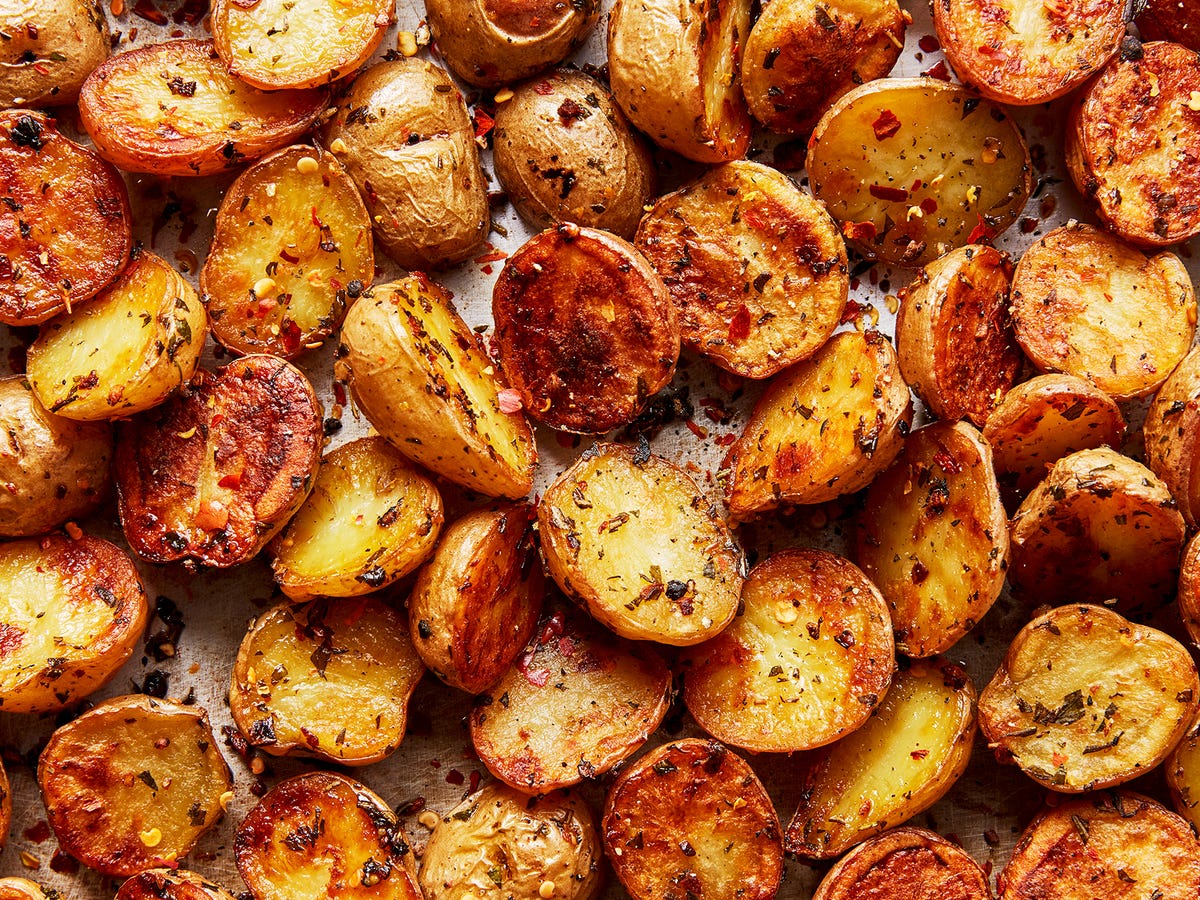
One more thing before we start: classic potato latkes are typically made with shredded raw potato and onion. No baked potatoes, no mashed potatoes, no shortcut potato-hash situation. We are going for classic, pan-fried potato pancakes with serious crunch.
What to expect
- Texture: crisp, frilly edges with a tender, savory center
- Flavor: potato-forward with sweet onion, balanced salt, and a bright finish from tangy toppings like applesauce, sour cream, or something pickled
- Difficulty: easy, but hands-on while frying
Why this recipe works
- You squeeze out the water. Shredded raw potatoes and onions carry a surprising amount of liquid. Removing it concentrates flavor and lets the latkes fry up crisp instead of steaming.
- Starch plus egg makes a reliable binder. A little flour or matzo meal, plus egg, creates a batter that holds together without turning gummy.
- Proper oil depth equals lacy edges. About 1/4 inch of oil lets the edges frill and brown quickly, while the center cooks through before the outside gets too dark.
- Batch holding is built in. A wire rack and a low oven keep finished latkes crisp while you fry the rest.
Ingredient notes
Potatoes
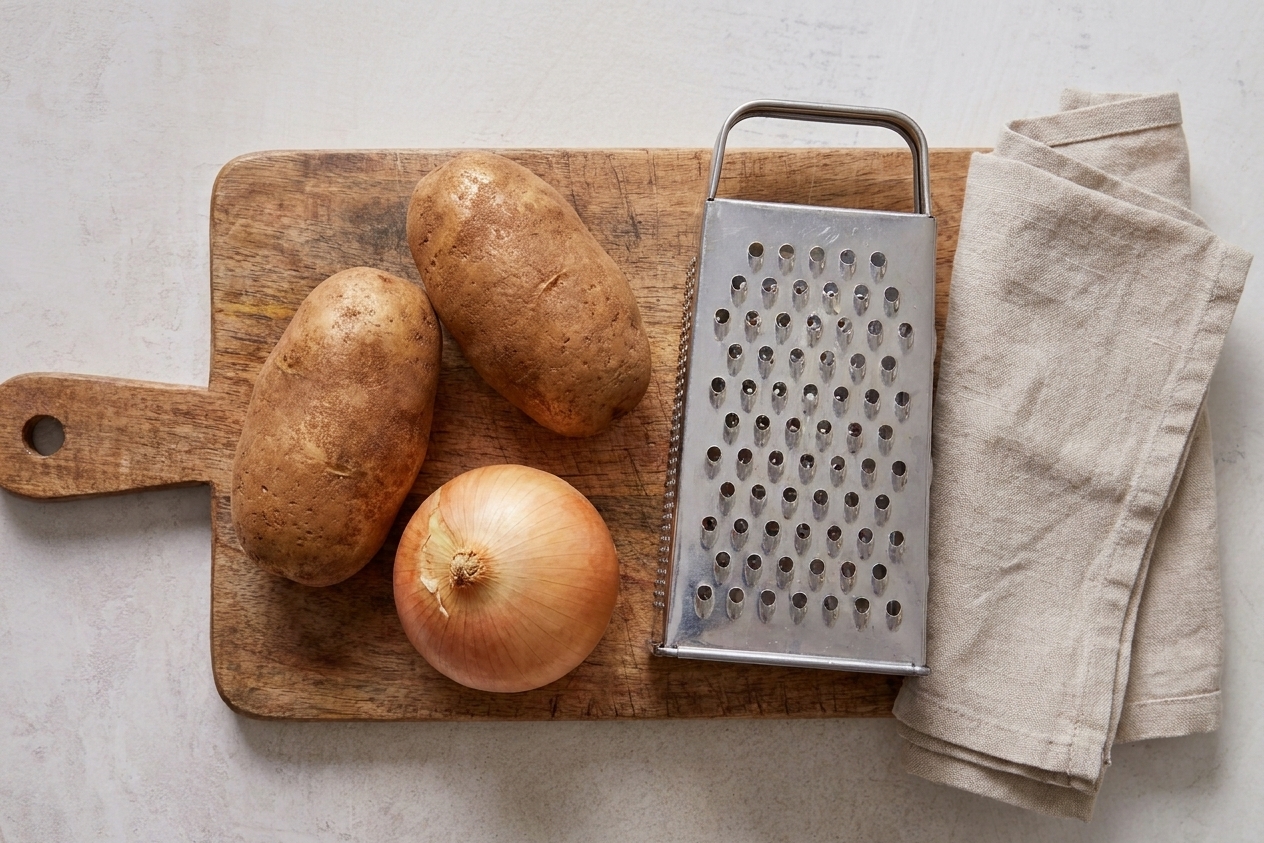
Use a starchy potato like russet (Idaho). The higher starch helps bind and crisp. Waxy potatoes tend to stay a bit slick and can fight crisping.
Onion
Yellow onion is classic. Grate it on the same holes as the potato so it melts into the mixture and perfumes every bite.
Binder: flour or matzo meal
Both work. All-purpose flour makes a slightly more cohesive interior. Matzo meal gives a traditional texture and a touch more crunch. Either way, you only need enough to help the egg do its job.
Egg
Egg is the main binder. If your mixture looks very wet after squeezing, it is usually because it needs more squeezing, not more egg.
Salt
Salt helps pull moisture out of potatoes. I mix it in right before frying so the mixture does not sit and weep.
Oil for frying
A neutral oil with a higher smoke point is your friend here, like canola, avocado, grapeseed, or peanut. Olive oil can burn before the latkes finish.
Equipment you will need
- Box grater or food processor with shredding disk
- Clean kitchen towel or cheesecloth for squeezing
- Large mixing bowl
- 12-inch skillet (cast iron or stainless steel is ideal)
- Thin spatula for flipping
- Wire rack set over a sheet pan for holding crisp
- Instant-read thermometer (optional, but helpful for oil temperature)
Pro tips
Squeeze like you mean it
After grating, wrap the potato and onion in a towel and twist hard until you stop seeing drips. If you think you are done, twist once more. Drier shreds equal crispier latkes.
Save the potato starch (optional, extra crisp)
If you squeeze into a bowl, you will see cloudy liquid. Let it sit for 1 to 2 minutes, then pour off the water. A layer of potato starch will cling to the bottom. Stir that starch back into the mixture for better binding and crunch.
Oil depth matters
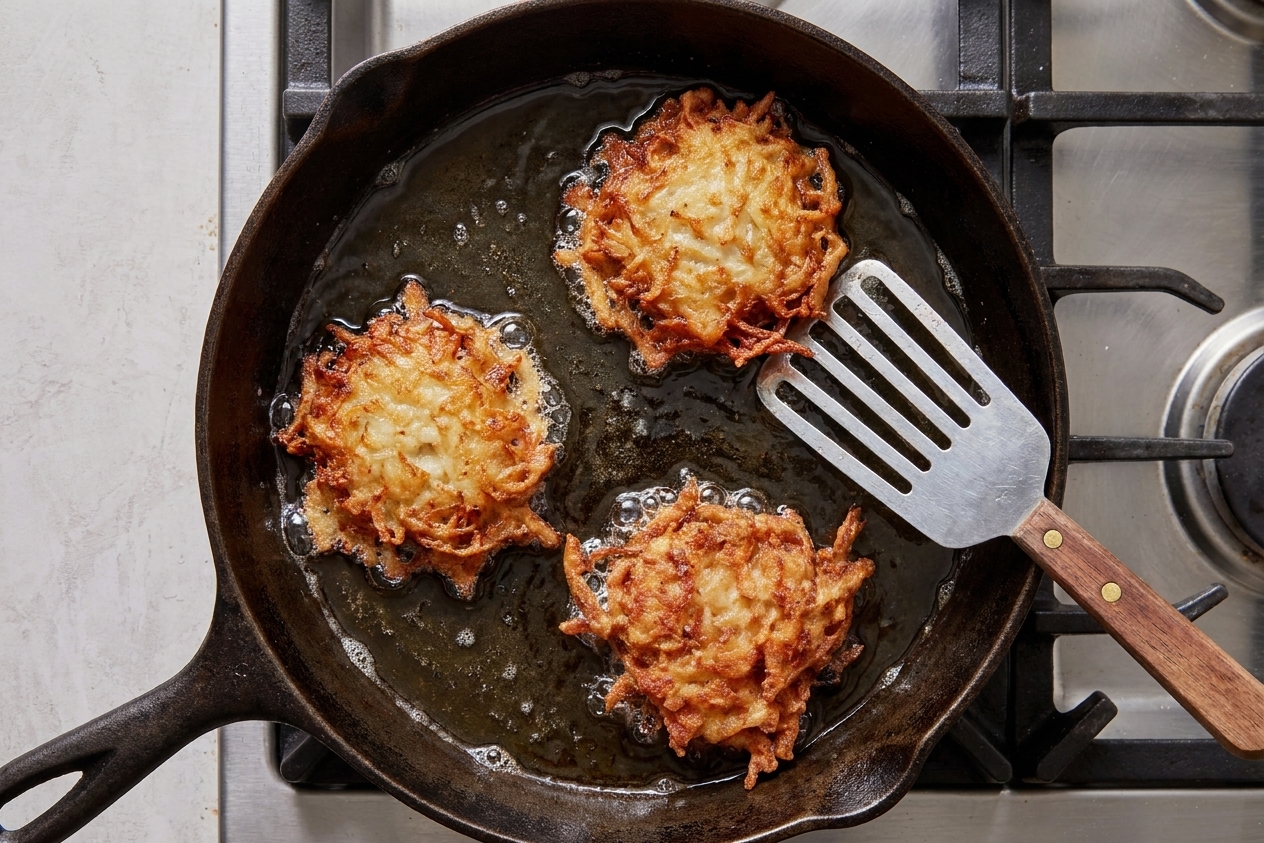
Aim for about 1/4 inch oil in the pan. Too shallow and you get uneven browning. Too deep and the latkes can puff and break apart when you flip.
Temperature cues
If you do not have a thermometer, drop in a few potato strands. They should sizzle immediately and steadily, not languish quietly and not smoke aggressively.
Hold them crisp the right way
Skip paper towels for holding. Drain briefly on a rack, then keep warm in a 200°F oven on that same rack. Airflow is what keeps the bottoms from steaming soft.
Substitutes that work
- Matzo meal instead of flour: Use the same amount for a traditional option.
- Gluten-free: Swap flour for potato starch or a 1:1 gluten-free flour blend. Potato starch gives especially crisp edges.
- No towel: Use a double layer of sturdy paper towels in a pinch, but a cloth towel squeezes harder and works better.
- Oil options: Canola, avocado, grapeseed, peanut, or sunflower oil all fry cleanly.
Variations
Extra oniony
Increase the onion slightly for a sweeter, more aromatic latke. Just squeeze well, since onion adds moisture.
Garlic and scallion
Add 1 small grated garlic clove or 2 tablespoons thinly sliced scallion for a sharper, greener flavor.
Spiced
A pinch of black pepper is classic. Smoked paprika or a tiny pinch of cayenne is great if you want a little warmth.
Serving ideas
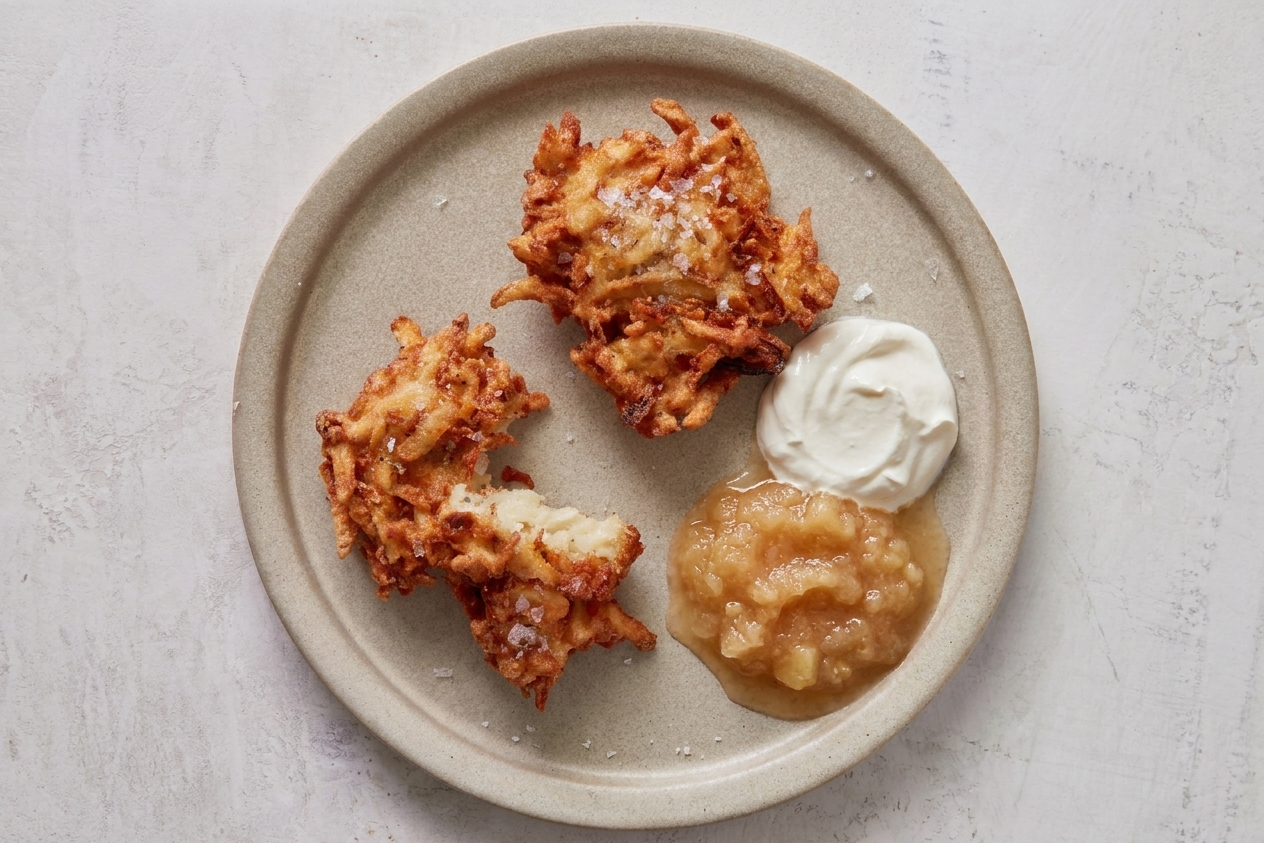
- Classic: sour cream and applesauce, either side by side or layered
- Bright and briny: crème fraîche with lemon zest and a few capers
- Brunch: topped with a poached egg and a spoon of yogurt
- Dinner shortcut: serve with a simple salad tossed with something acidic like lemon or vinegar to cut the richness
Storage and reheating
Storing
Latkes are best right after frying, but leftovers keep well. Cool completely, then refrigerate in an airtight container for up to 3 days.
Reheating to re-crisp
Reheat on a wire rack set over a sheet pan in a 400°F oven until hot and crisp, about 6 to 10 minutes. Avoid microwaving if you want crunch.
Freezing
Freeze cooked latkes in a single layer until firm, then transfer to a freezer bag. Reheat from frozen on a rack at 400°F until crisp and hot, about 12 to 15 minutes.
Common mistakes
- Not squeezing enough: The number one cause of soggy, fragile latkes. You want the shreds to feel damp but not wet.
- Salting too early: Salt draws out more water. Mix in salt right before frying, not 20 minutes ahead.
- Oil not hot enough: If the latkes absorb oil, the temperature is low. Let the oil recover between batches.
- Crowding the pan: Overcrowding drops the oil temperature and traps steam. Fry in batches.
- Draining on paper towels for too long: They steam and soften. Use a rack for airflow.
FAQ
Do I have to peel the potatoes?
For classic latkes, yes, peel them for the best texture. If you leave the peel on, the edges can get a little tough and the color will be darker, but it is not wrong if you like a more rustic vibe.
Can I grate the potatoes ahead of time?
You can, but they will brown. If you need a head start, grate and squeeze the potatoes, then keep them tightly covered in the fridge for a few hours. Stir well and drain off any liquid before mixing in egg and binder.
Why are my latkes falling apart?
Usually one of three things: the mixture is too wet, it needs a touch more binder, or you are flipping too early. Squeeze more, add 1 tablespoon more flour or matzo meal if needed, and wait until the first side is deeply golden before turning.
What oil temperature should I aim for?
About 350°F is a great target. You want a steady sizzle the moment the latke hits the oil.
How do I keep them crisp for serving?
Hold fried latkes on a wire rack in a 200°F oven while you cook the rest. This keeps them warm without trapping steam.
Crispy Potato Latkes
Lacy, golden potato latkes made from shredded raw potato and onion, squeezed dry and shallow fried until crisp at the edges and tender in the middle.
- Prep
- 20 minutes
- Cook
- 20 minutes
- Total
- 40 minutes
- Yield
- About 12 latkes
Ingredients
- 2 pounds russet potatoes, peeled
- 1 medium yellow onion, peeled
- 2 large eggs
- 3 tablespoons all-purpose flour or matzo meal
- 1 1/2 teaspoons kosher salt, plus more to taste
- 1/4 teaspoon black pepper (optional)
- Neutral frying oil (canola, avocado, grapeseed, or peanut), enough for about 1/4 inch depth in the pan
- To serve: sour cream and applesauce (optional)
Instructions
- Set up for crisp holding. Preheat the oven to 200°F. Set a wire rack over a sheet pan and place it in the oven to warm. (This is where the fried latkes will rest so they stay crisp.)
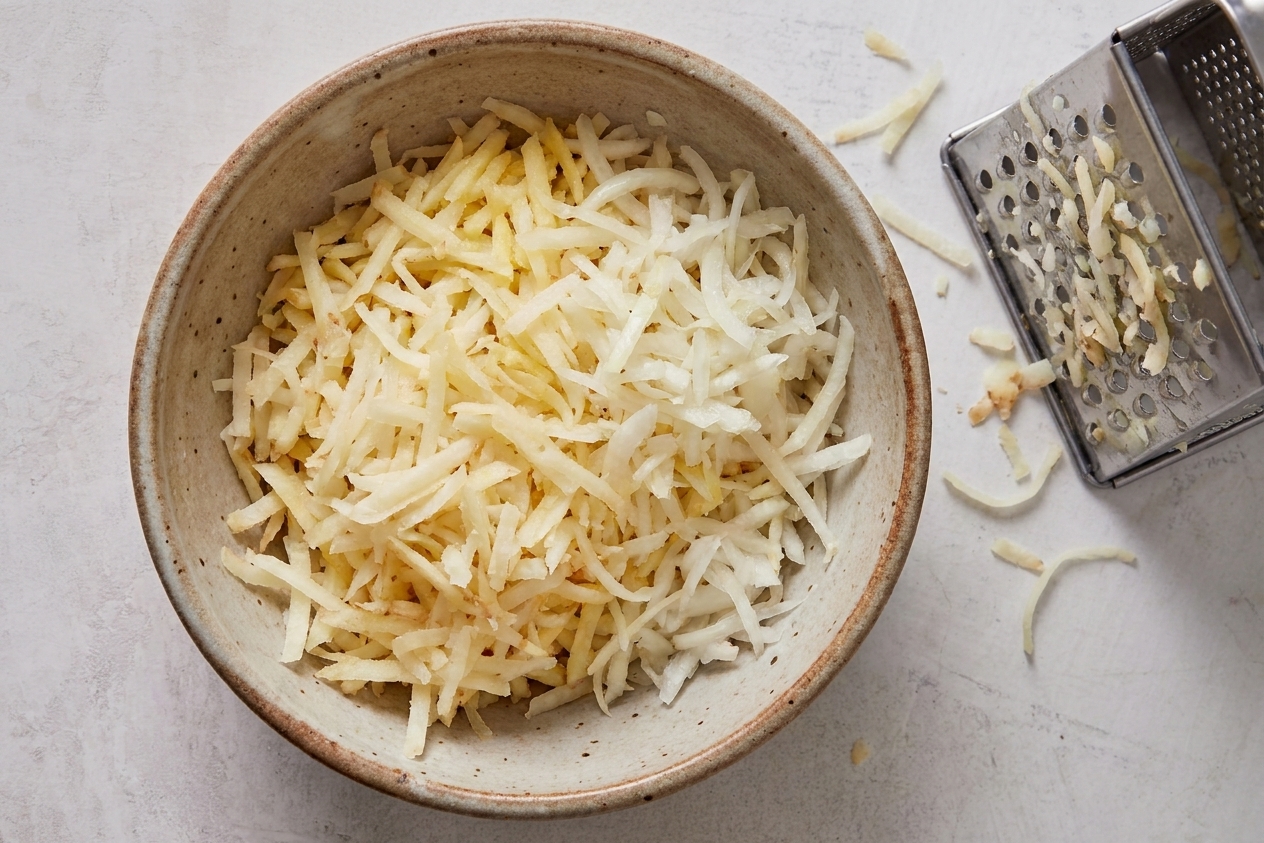
- Grate the potatoes and onion. Grate the peeled potatoes on the large holes of a box grater (or use a food processor shredding disk). Grate the onion the same way. Transfer everything to a large bowl as you go.
- Squeeze out the moisture. Scoop the grated potato and onion mixture into a clean kitchen towel or several layers of cheesecloth. Twist and squeeze firmly over a bowl or the sink until very little liquid comes out. The shreds should feel damp but not wet.
- Optional, for extra crunch: save the starch. If you squeezed over a bowl, let the liquid sit for 1 to 2 minutes so the potato starch settles. Carefully pour off the watery top layer, leaving the white starch behind. Add the squeezed potato and onion back to the bowl, then scrape in the starch.
- Mix the batter. Add the eggs, flour (or matzo meal), salt, and pepper (if using) to the squeezed mixture. Mix until the shreds are evenly coated and the mixture holds together when you press a small handful. If it seems watery, add 1 more tablespoon of flour or matzo meal.
- Heat the oil to the right depth. In a large skillet over medium to medium-high heat, add enough oil to reach about 1/4 inch depth. Heat until the oil shimmers and a few potato strands sizzle steadily on contact, about 350°F if using a thermometer.
- Fry in batches. Scoop about 1/4 cup of the mixture per latke into the pan and flatten gently to about 1/2 inch thick. Fry until deeply golden brown on the bottom with lacy edges, 3 to 4 minutes. Adjust heat as needed so the oil stays at a steady sizzle.
- Flip and finish. Flip and fry the second side until golden brown and crisp, 2 to 3 minutes more. Transfer to the warm wire rack in the oven. Repeat with remaining batter, adding oil as needed to maintain about 1/4 inch depth and letting the oil come back up to temperature between batches.
- Season and serve. Taste one latke and add a pinch more salt if needed. Serve hot, ideally with sour cream and applesauce.
Notes
Moisture check: If your mixture looks like it is pooling liquid in the bowl, pause and squeeze again. Latkes forgive many things, but they do not forgive extra water.
Oil management: Stray potato bits will burn over time. If the oil gets too dark or smoky, carefully wipe out the pan and refresh the oil.
Keeping them crisp: Use the wire rack for draining and holding. Paper towels are fine for a quick blot, but do not park latkes there.