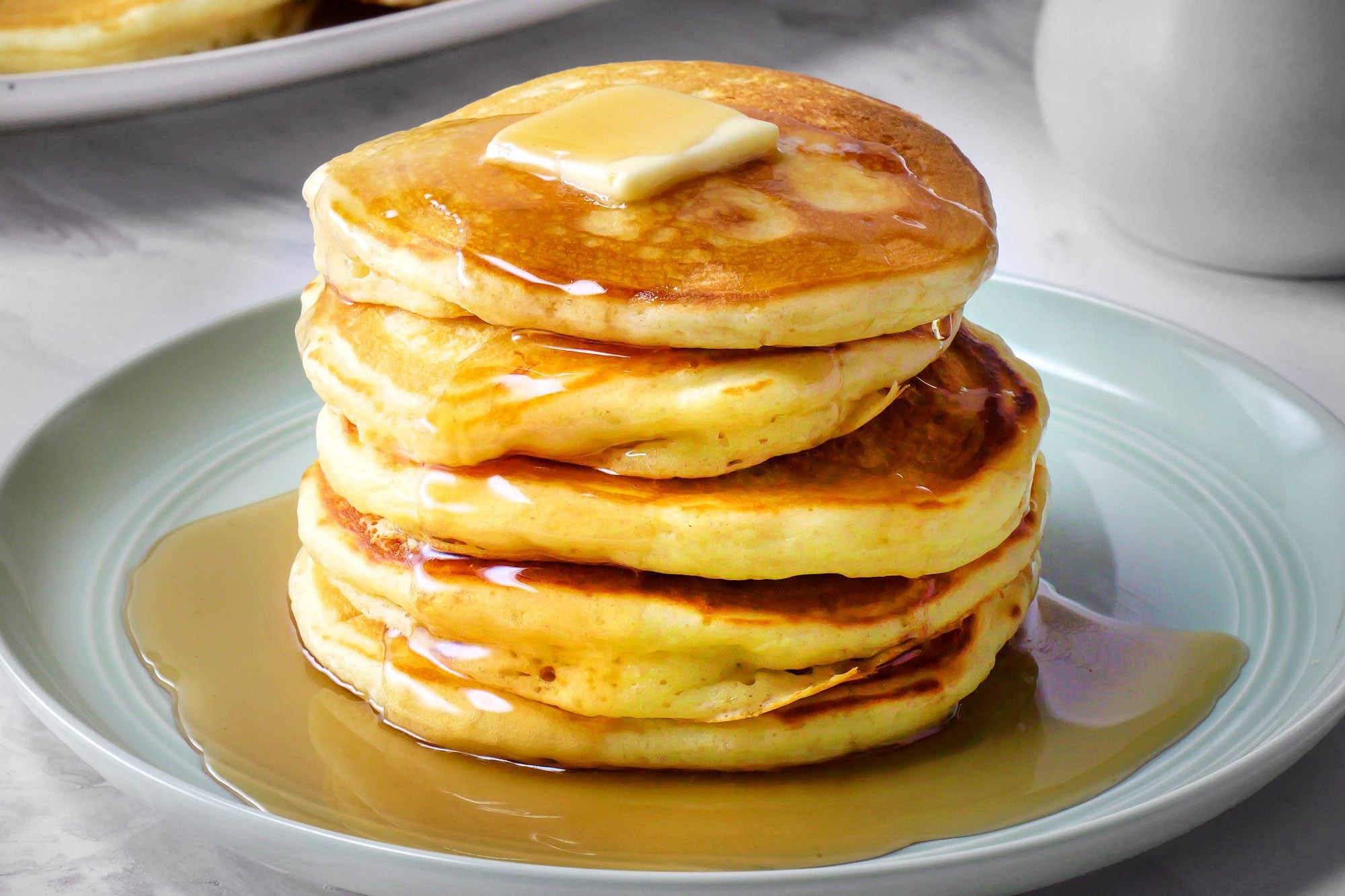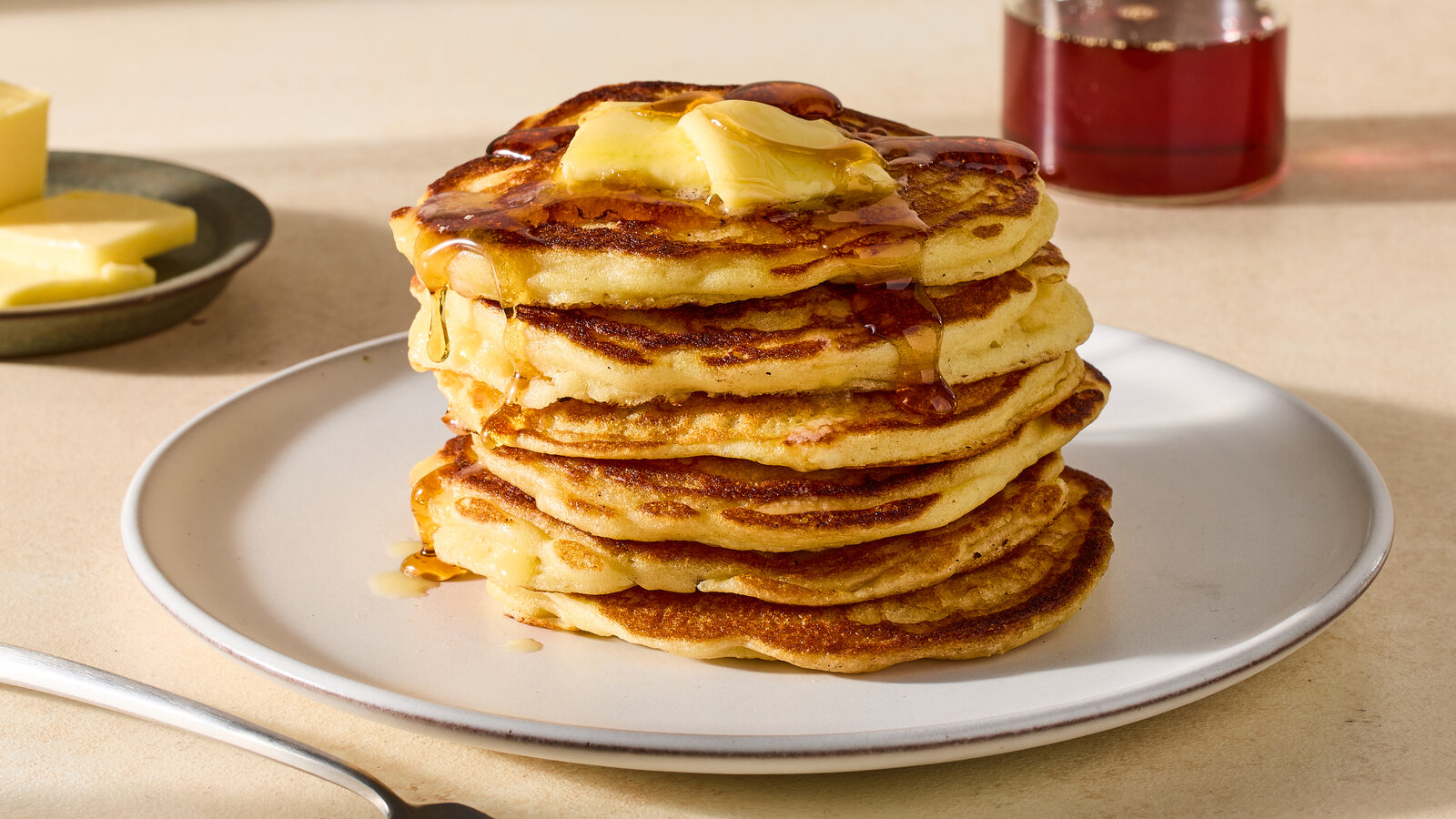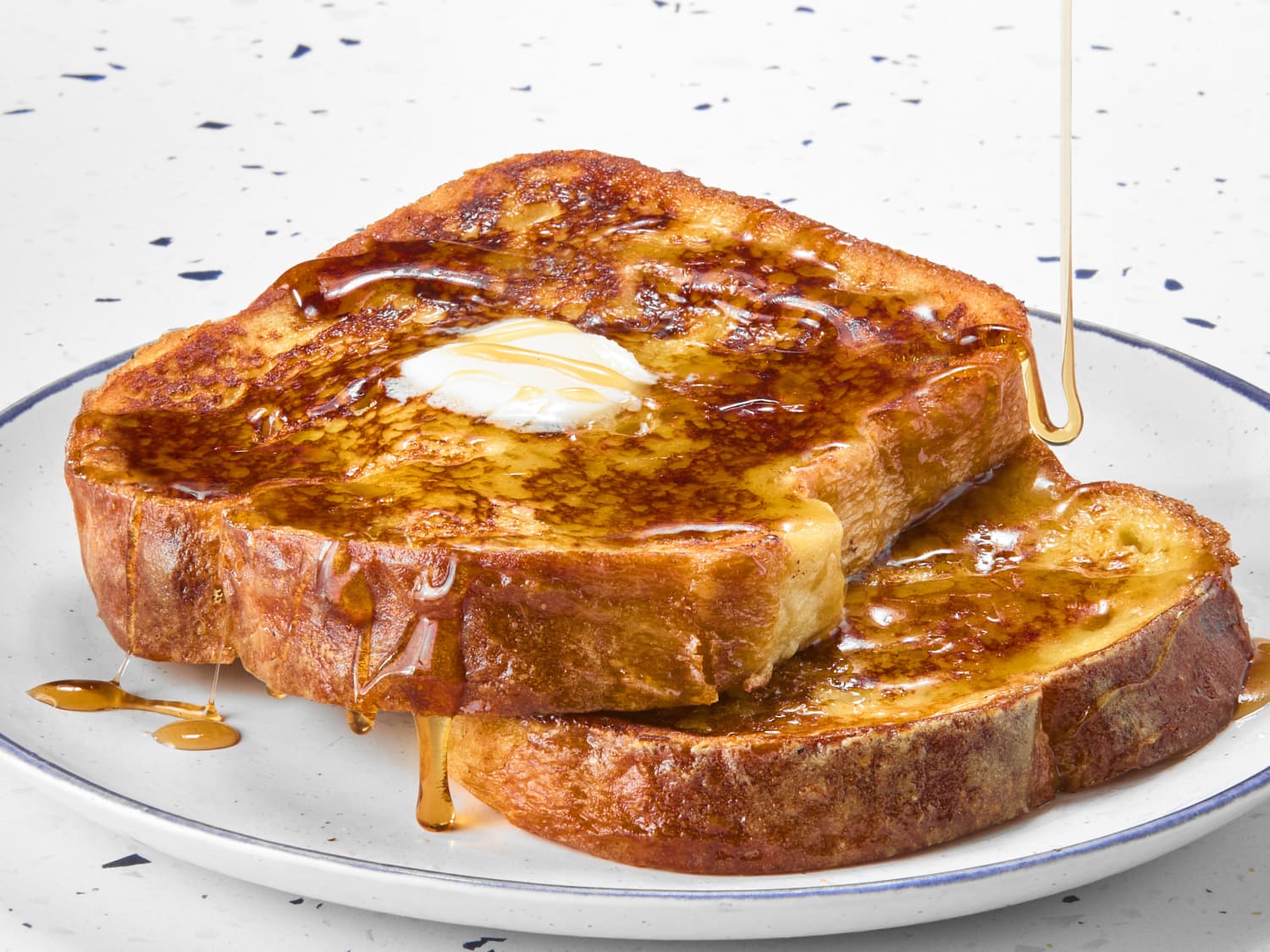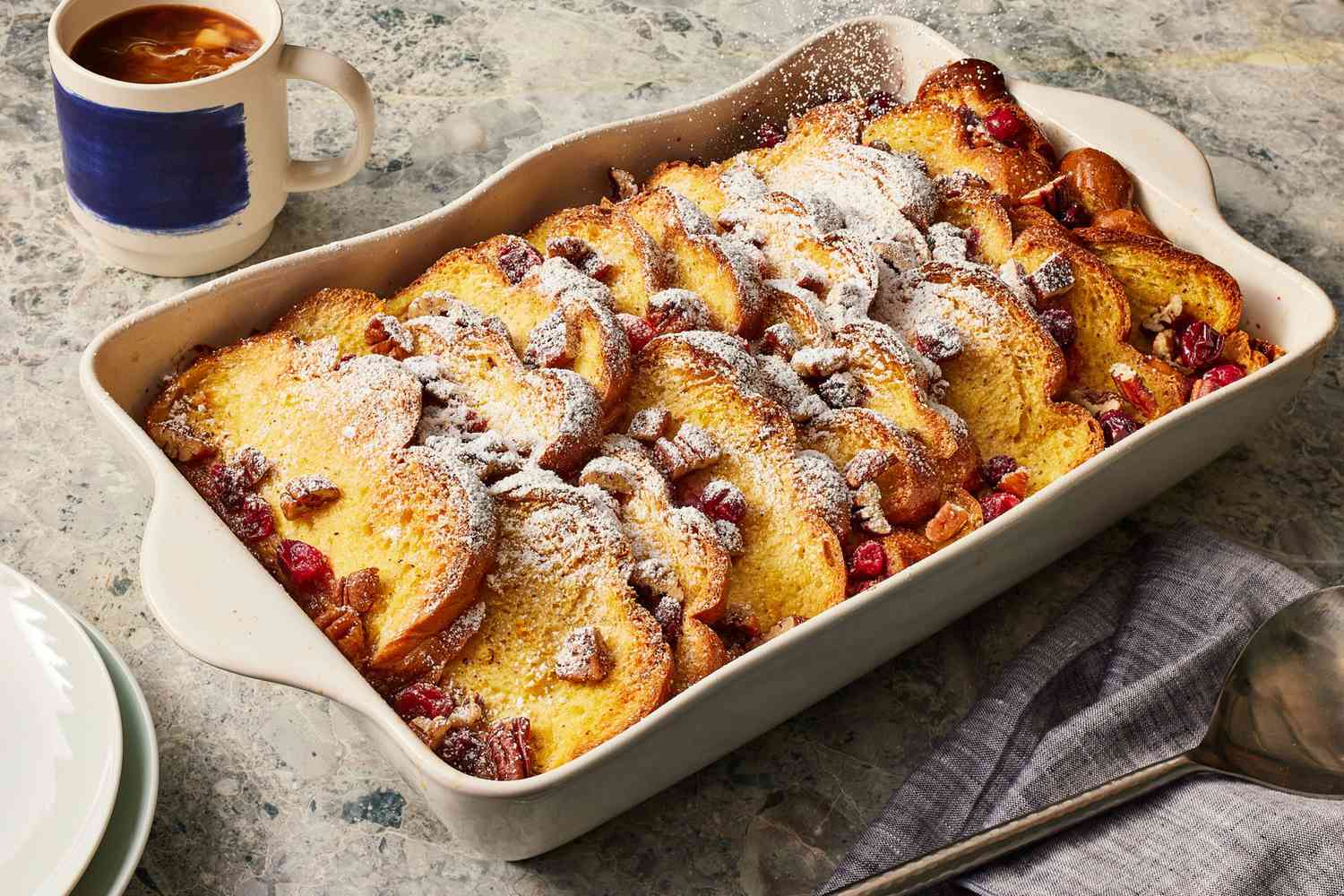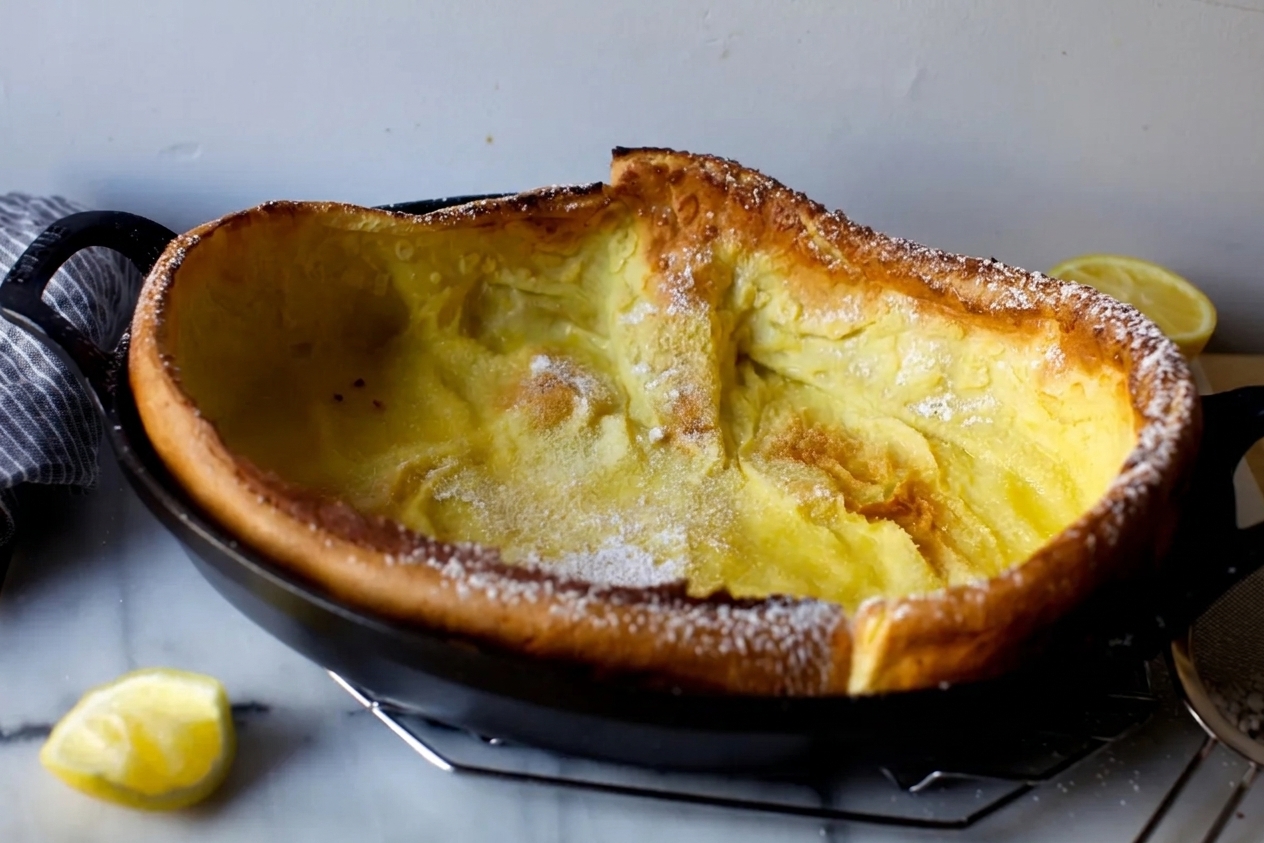

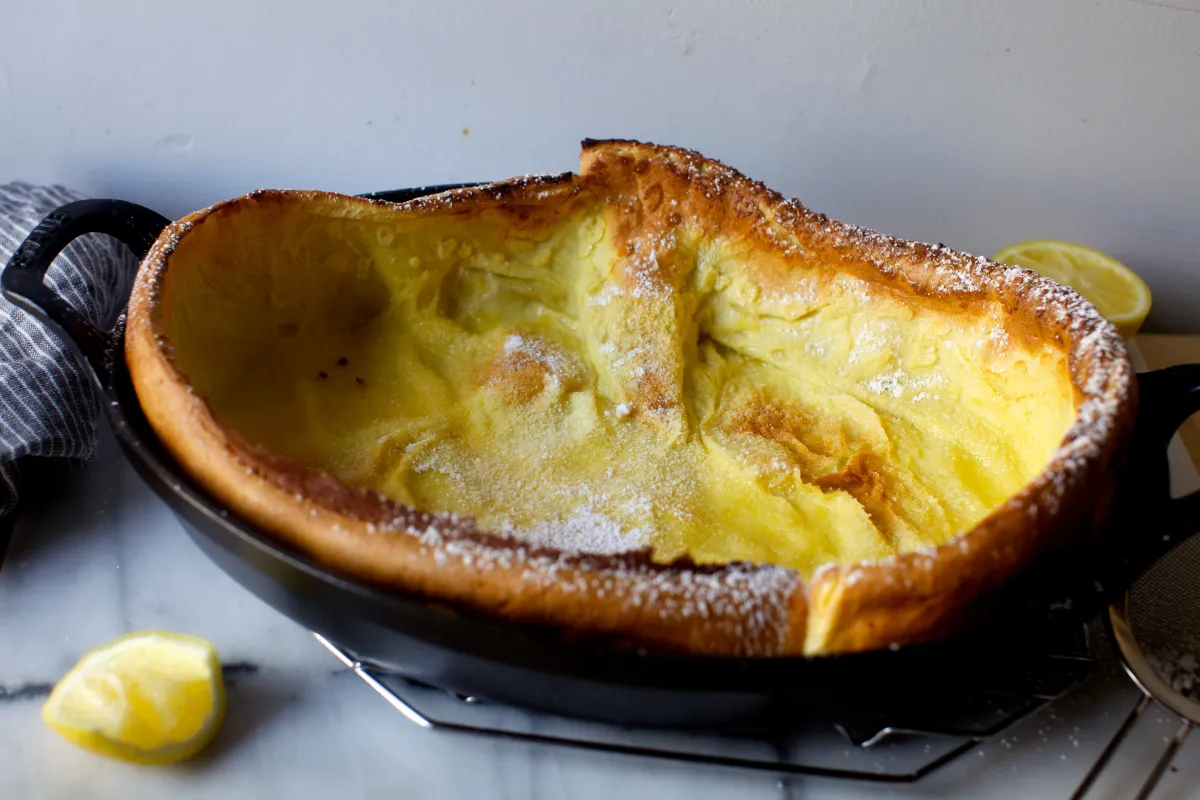
If you love pancakes but hate standing at the stove flipping batch after batch, a Dutch baby is your answer. It is one big, puffy oven pancake that feels a little magical and also deeply practical. You blend the batter, let it sit briefly while the oven heats, then pour it into a preheated, buttered skillet. About 16 to 20 minutes later, you have crisp, bronzed edges and a custardy center just begging for lemon and a snow drift of sugar.
I learned to love Dutch babies when I was teaching nervous weeknight cooks who wanted something impressive without the stress. This is the recipe I kept coming back to. No fussy technique, no whisking until your arm falls off, and no wasted half-carton of buttermilk. Just a tidy ratio, a hot pan, and a little patience while the oven does the work.

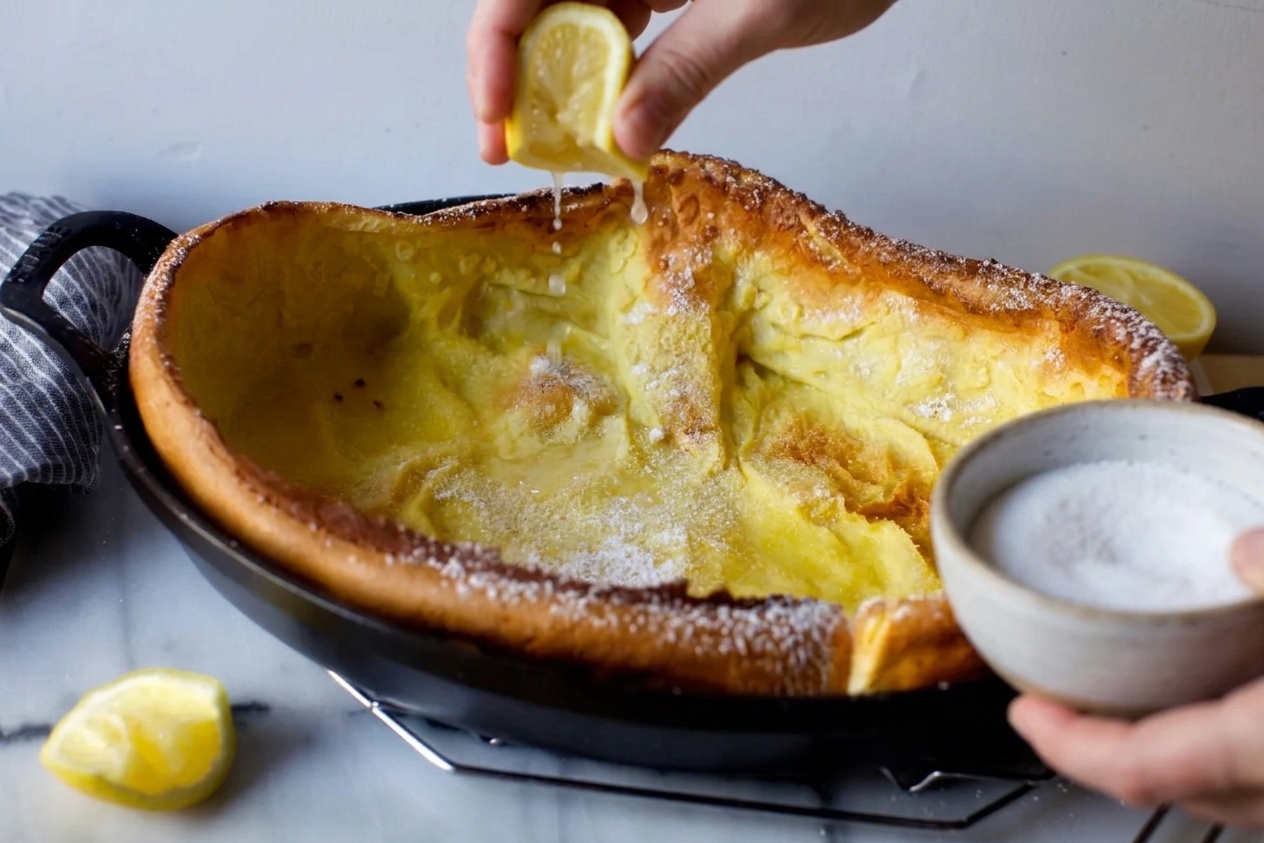
The classic finish is the one I make most often: a squeeze of lemon and a spoonful of sugar. The lemon wakes everything up, the sugar melts into the warm top, and suddenly you have that perfect balance of bright acid and sweetness with almost zero effort. If you are more of a toppings person, you can treat it like a blank canvas too, berries, jam, maple syrup, or a dusting of powdered sugar all play nicely.
What to expect
- Texture: crisp, lacy edges with a tender, eggy center (think pancake meets popover).
- Flavor: buttery and lightly sweet, made brighter with lemon.
- Effort level: blender batter and one skillet.
- Pan: a 10-inch oven-safe skillet is the sweet spot. Cast iron is fantastic, but stainless steel works too.
- Best timing: serve immediately. The puff is dramatic and temporary, so do not panic when it settles.
Why this recipe works
- Blender batter builds structure fast. A quick blend fully hydrates the flour and incorporates air for a better rise in the oven.
- A short rest smooths the batter. Even 10 minutes lets bubbles settle and flour hydrate, which helps the pancake puff more evenly.
- Hot skillet plus butter equals instant lift. Pouring batter into a preheated, buttered pan gives immediate sizzle, helping the edges climb and brown.
- High oven heat creates the signature puff. The batter steams and expands quickly, producing tall, craggy edges and a tender center.
- Lemon and sugar balance richness. The butter and eggs love a hit of acid, and sugar gives a simple finishing crunch that melts into the warm surface.
Ingredient notes
Dutch babies are wonderfully minimal, but each ingredient has a job. Here is what to know before you start.
- Eggs: Use large eggs. They provide most of the lift and that custardy, almost soufflé-like center.
- Milk: Whole milk gives the richest result, but any milk works. If you use low-fat milk, expect slightly less browning and a lighter finish.
- All-purpose flour: Standard AP flour is perfect. No need for self-rising flour here.
- Sugar: A small amount in the batter helps browning. The main sweetness comes from the sugar you sprinkle on after baking.
- Salt: Do not skip it. Salt is what makes a Dutch baby taste like breakfast, not like plain eggy bread.
- Butter: This is both flavor and nonstick insurance. It also promotes those crisp edges everyone fights over.
- Lemon: Fresh is worth it. The aroma matters as much as the juice.
Equipment you will need
- Blender: Any standard blender works. An immersion blender in a tall jar also does the job.
- 10-inch cast iron skillet: Ideal for heat retention and browning. An oven-safe stainless steel skillet is also great.
- Oven mitts: The skillet handle stays dangerously hot for a long time.
- Fine grater (optional): For a little lemon zest if you want extra citrus pop.
Pro tips
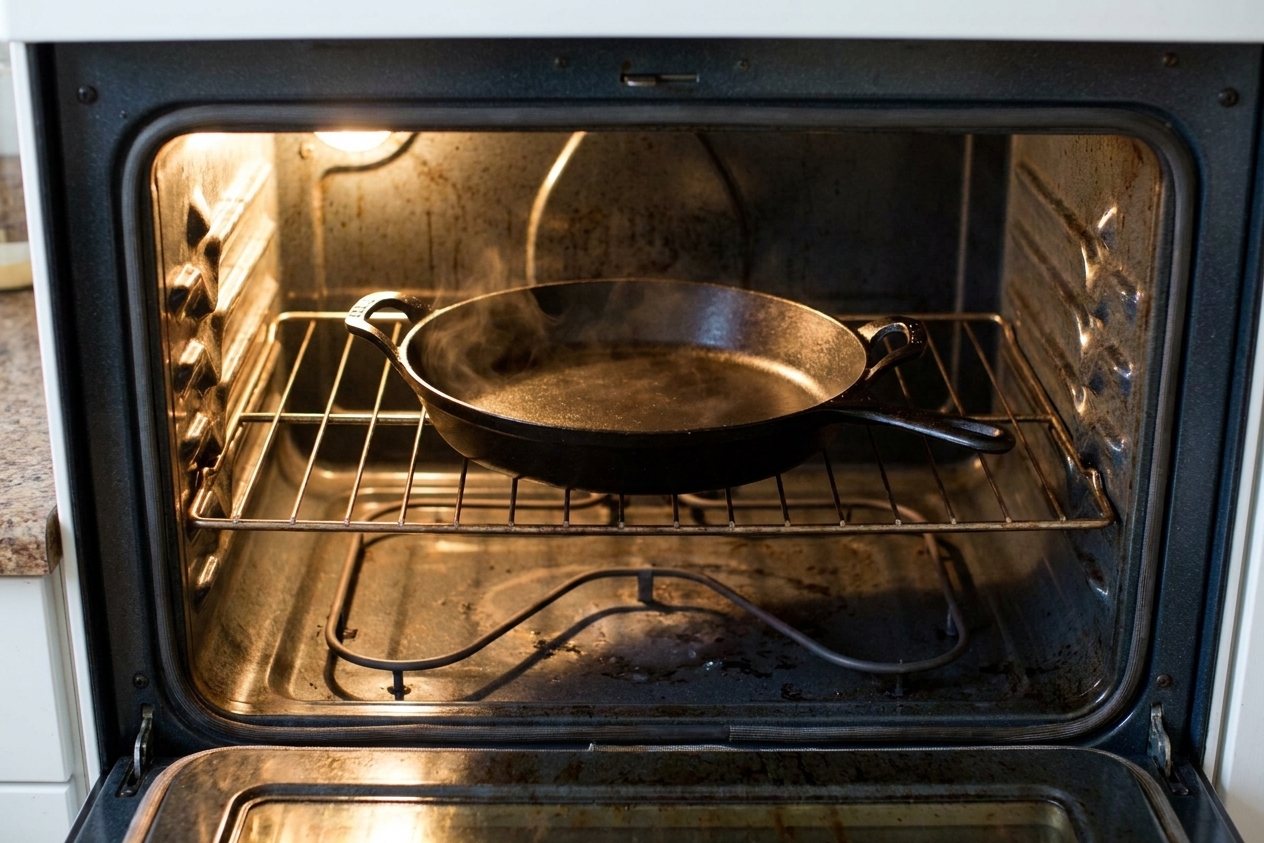
- Preheat the skillet, not just the oven. Put the empty skillet in the oven while it heats so the batter starts cooking the second it hits the pan.
- Rest the batter briefly. Use that time to heat the oven and prep lemon and sugar. A short rest helps the texture even out.
- Do not open the oven early. Heat is what makes the puff. Check near the end, not halfway through.
- Butter should foam, not burn. When you add butter to the hot skillet, it should melt fast and foam. If it smells scorched, your pan is too hot or you waited too long before adding batter.
- Serve immediately. The Dutch baby will deflate as it sits. Still delicious, just less dramatic.
Substitutes that work
- No blender: Whisk vigorously until no dry flour remains, then whisk 30 seconds more. Expect a slightly less uniform rise, still tasty.
- Dairy-free: Use an unsweetened oat milk or soy milk and a plant-based butter. Browning may be a bit lighter.
- Gluten-free: A 1:1 gluten-free all-purpose blend can work. Let the batter rest a full 15 minutes to hydrate, and expect a slightly softer edge.
- Sweetener swap: Powdered sugar is classic on top, but granulated sugar melts beautifully with lemon. Either works.
Variations
- Lemon zest sugar: Rub lemon zest into the sugar with your fingers before sprinkling for a more fragrant finish.
- Vanilla: Add a splash of vanilla to the batter for a warmer, dessert-like flavor.
- Spiced: A pinch of cinnamon or cardamom is lovely with the lemon and sugar topping.
- Savory: Skip sugar in the topping and finish with flaky salt, pepper, and a pile of arugula dressed with lemon. The pancake becomes a savory brunch base.
Serving ideas
Lemon and sugar is the classic for a reason, but here are a few other easy ways to serve a Dutch baby without turning it into a project.
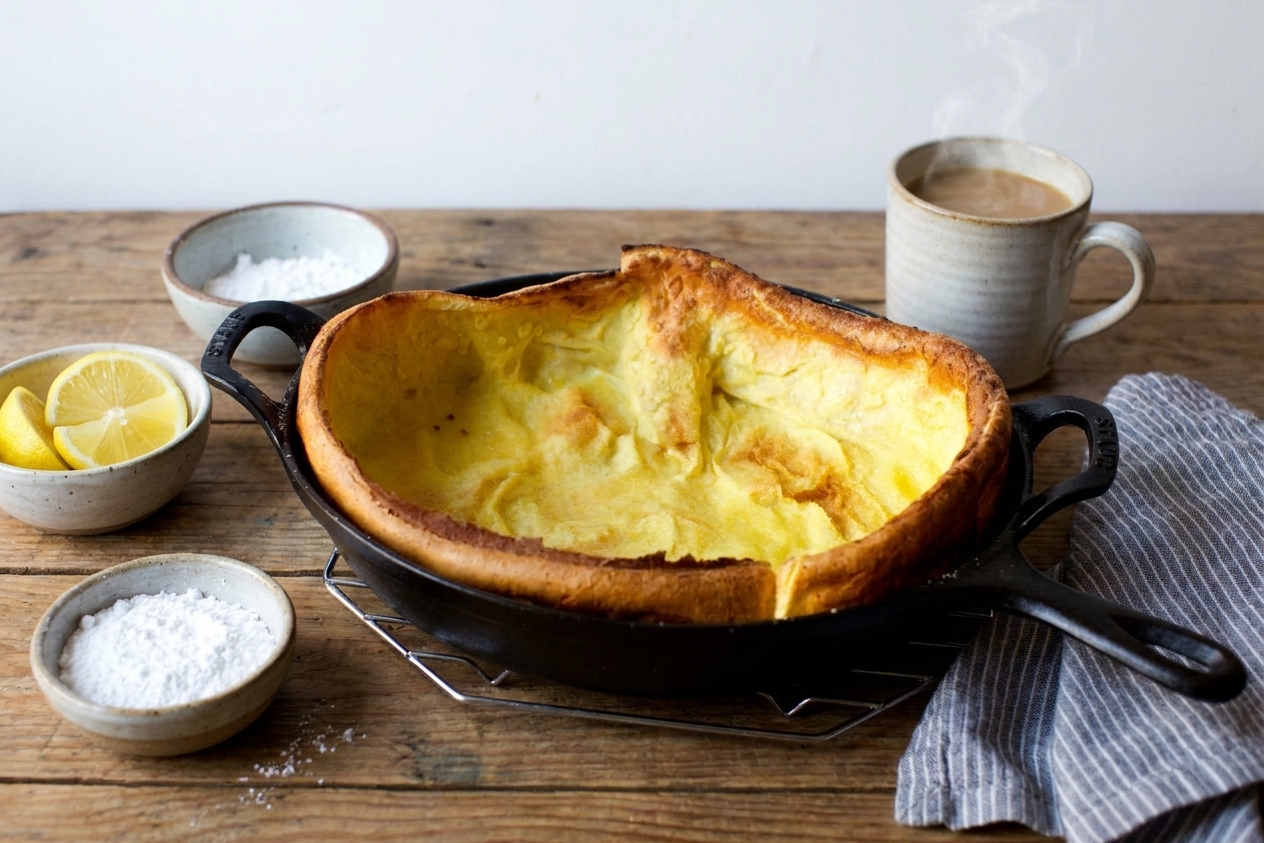
- Classic: Lemon juice plus granulated sugar, served straight from the skillet.
- Fruit: Berries or thin-sliced apples tossed with a pinch of sugar and salt.
- Yogurt: A big spoonful of plain Greek yogurt and honey for a tangy, creamy contrast.
- Jam: Warm a spoonful of jam and drizzle over the top.
- Brunchy: Crisp bacon or breakfast sausage on the side to balance sweetness.
Storage and reheating
Dutch babies are at their best fresh from the oven, but leftovers are still worth keeping.
- Refrigerate: Store cooled leftovers in an airtight container for up to 2 days.
- Reheat: Warm in a 350 F oven until heated through, about 5 to 8 minutes. This brings back some edge crispness better than the microwave.
- Microwave option: Works in a pinch, but the edges will soften.
- Food waste tip: Leftover slices make a great snack with a quick squeeze of lemon. Or chop and toast lightly, then top with yogurt and fruit like a pancake parfait.
Common mistakes
- Skillet not hot enough: The batter should sizzle when it hits the pan. A lukewarm skillet leads to a flat, pale pancake.
- Not enough butter: Butter is flavor and it helps the pancake release cleanly. Be generous.
- Opening the oven door too soon: Temperature drop can collapse the puff. Wait until the Dutch baby is clearly risen and browned at the edges.
- Overbaking: If baked too long, the center can dry out. You want the center set but still tender.
- Serving late: The showy puff deflates quickly. Get your lemon and sugar ready before the skillet comes out.
FAQ
Is a Dutch baby the same as pancakes?
Not exactly. A Dutch baby is one large oven-baked pancake with a popover-like puff. Traditional pancakes are griddled in smaller rounds and are usually fluffier from chemical leavening.
Why did my Dutch baby not puff?
The most common reasons are a skillet that was not fully preheated, an oven that was running cool, or opening the oven door too early. Also make sure you are using the correct pan size so the batter depth is right.
Can I make the batter ahead?
You can blend it and refrigerate for a few hours, then blend briefly again to re-combine before baking. For the biggest puff, I prefer making it the same morning and giving it a short rest at room temperature.
What pan size should I use?
A 10-inch oven-safe skillet is the sweet spot for a classic Dutch baby. A slightly larger pan will make a thinner pancake with less dramatic lift. A smaller pan can overflow.
Dutch Baby Pancake
A single, dramatic oven pancake made from quick blender batter baked in a hot buttered skillet until puffed and golden, then finished simply with lemon and sugar.
- Prep
- 10 minutes
- Cook
- 18 minutes
- Total
- 28 minutes
- Yield
- 2 to 4
Ingredients
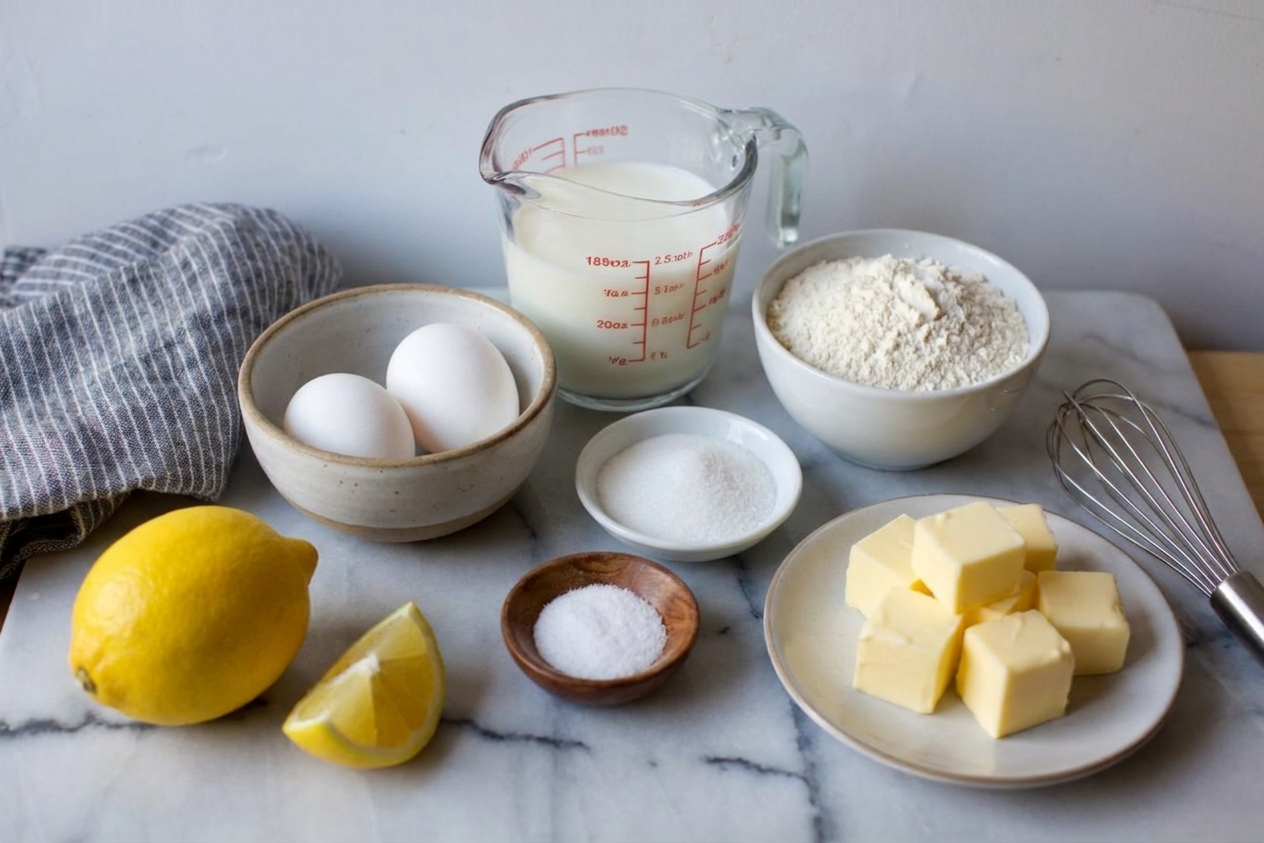
- 3 large eggs
- 1/2 cup milk
- 1/2 cup all-purpose flour
- 1 tablespoon granulated sugar, plus more for serving
- 1/4 teaspoon fine salt
- 3 tablespoons unsalted butter
- 1 lemon, cut into wedges (or juiced), for serving
Instructions
- Heat the oven and skillet. Place a 10-inch cast iron skillet (or another oven-safe skillet) on the middle rack. Preheat the oven to 425 F. Let the skillet heat in the oven while you make the batter.
- Blend the batter. Add the eggs, milk, flour, 1 tablespoon sugar, and salt to a blender. Blend until completely smooth, about 20 to 30 seconds. Scrape down if needed and blend a few seconds more.
- Rest briefly. Let the batter rest for 10 minutes at room temperature while the oven finishes heating. This is a great moment to set out lemon and sugar so you can serve right away.
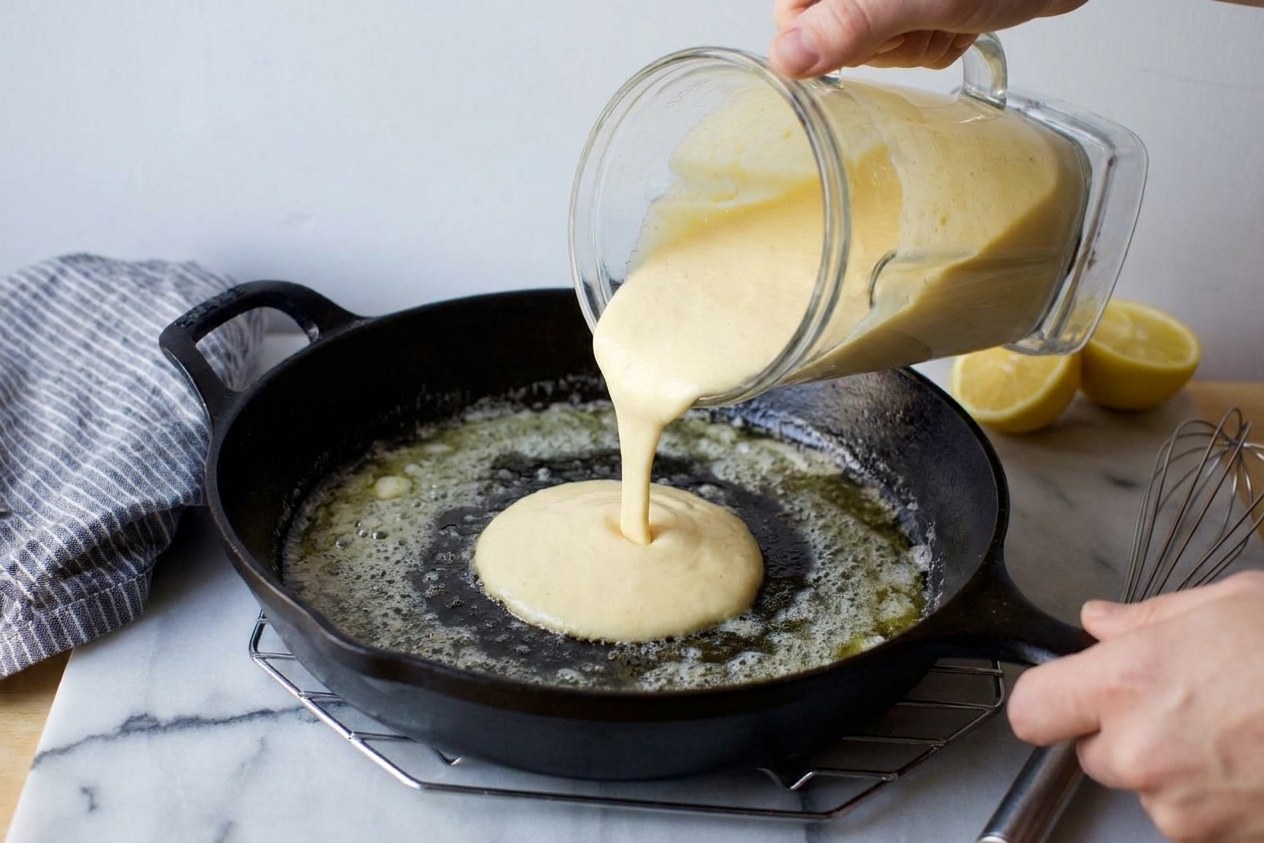
- Butter the hot skillet. Carefully remove the hot skillet from the oven and add the butter. Swirl until melted and foaming, coating the bottom and sides.
- Add batter and bake. Immediately pour in the batter and return the skillet to the oven. Bake until dramatically puffed with deep golden-brown edges and a set, tender center, 16 to 20 minutes. Do not open the oven door during the first 12 to 15 minutes.
- Serve right away. Slide the skillet onto a heat-safe surface. Squeeze lemon over the top and sprinkle generously with sugar. Slice into wedges and eat immediately while the edges are crisp.
Notes
Pan note: A 10-inch skillet gives the best balance of puff and custardy center. If you use a 12-inch skillet, the Dutch baby will be thinner and may bake a minute or two faster.
Timing note: Ovens vary. You are looking for tall, browned edges and a center that no longer looks wet or sloshy when you gently jiggle the pan.
Safety note: Keep the skillet handle covered with an oven mitt or handle cover while serving. It stays hot much longer than you think.