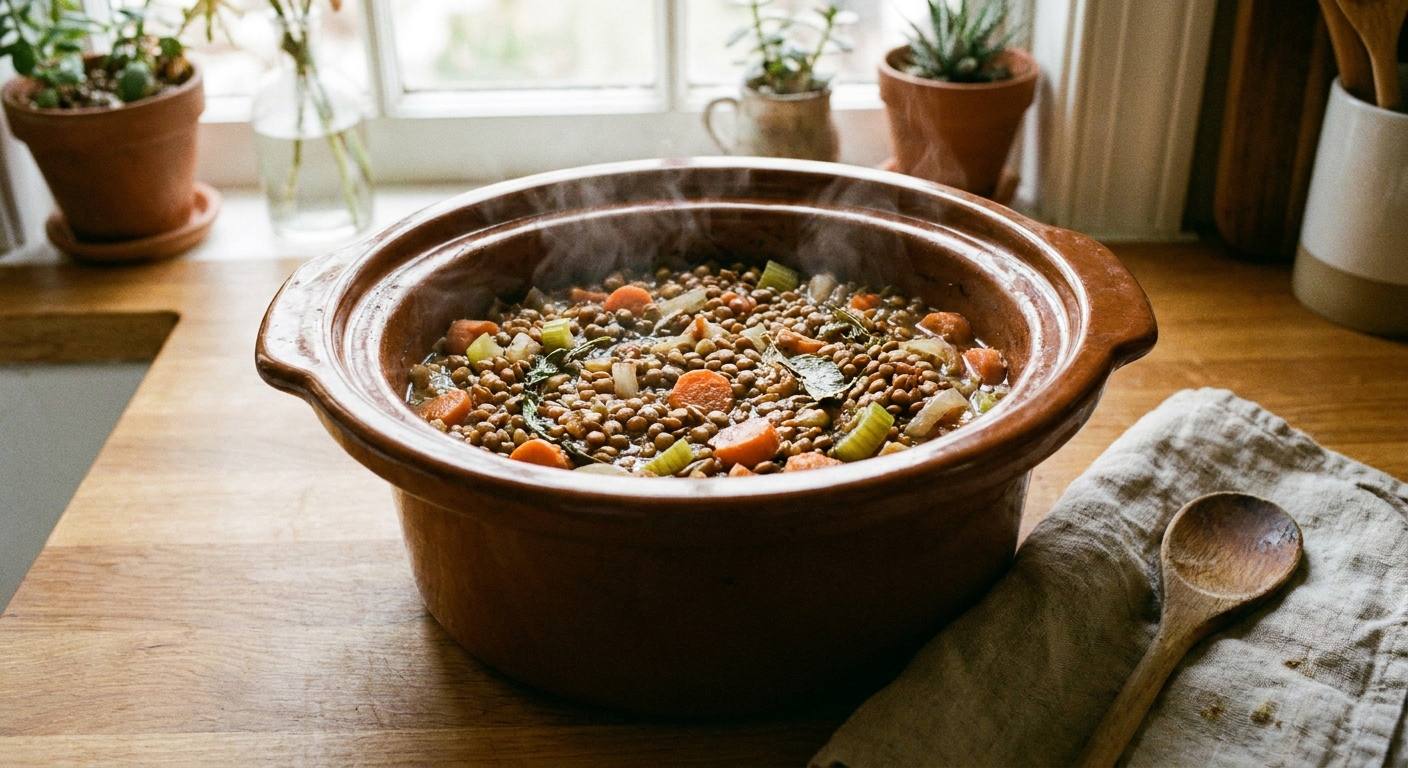

I love lentils because they feel like a pantry cheat code: inexpensive, fast-cooking compared to beans, and endlessly adaptable. But the slow cooker throws people off because lentils can go from pleasantly tender to blown-out and mushy if you leave them too long, especially on low. The good news is you can absolutely make slow-cooker lentils that hold their shape for salads or melt into a cozy soup base. You just need the right liquid ratio, a realistic time window, and a few doneness cues that are more reliable than the clock.

Before you start: 3 rules
1) Rinse and sort
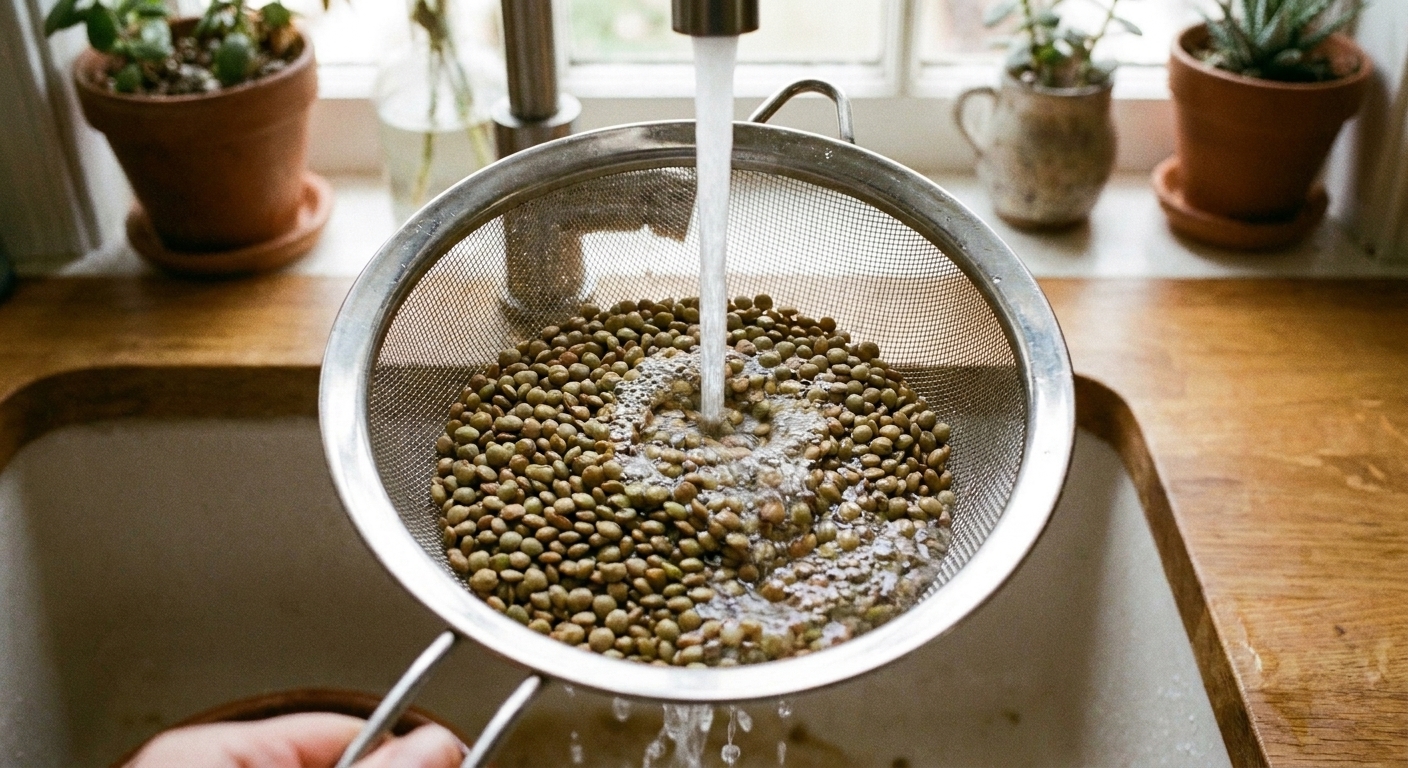
Pour lentils into a fine-mesh strainer, rinse under cool water, and quickly sort for tiny stones or shriveled lentils. It takes 20 seconds and saves your teeth and your texture.
2) Pick the right lentil
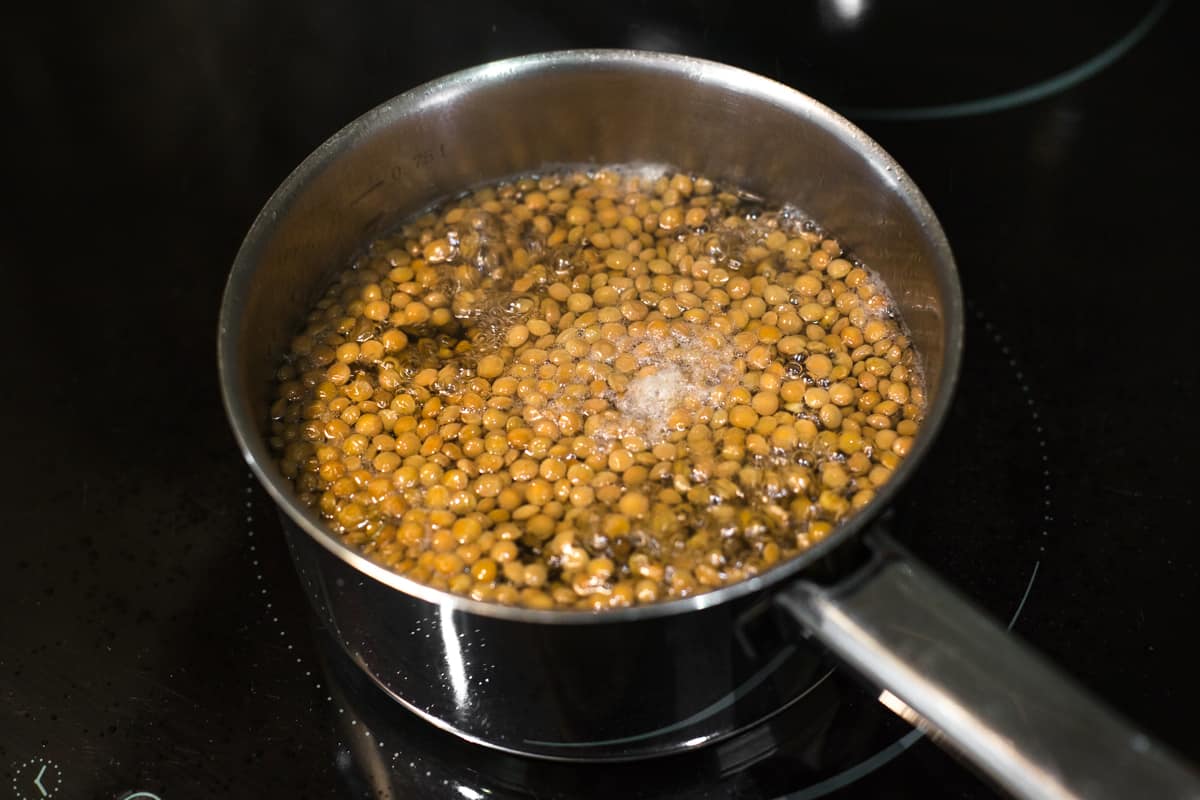
- Green lentils (including French green or Puy-style): best for salads and sides because they stay firm. French green lentils are especially good at holding their shape, and they can take a little longer than standard green or brown.
- Brown lentils: the everyday all-rounder. They can hold shape or go soft depending on time and liquid.
- Black beluga lentils: small, glossy, and great for salads. They tend to stay distinct and can run similar to green lentils for timing, sometimes a touch longer.
- Red lentils (and yellow): split lentils that break down easily. Great for creamy soups and dals, tricky for “separate grains.”
3) Know what the slow cooker does
Slow cookers are moist, enclosed environments with low evaporation. That helps lentils soften evenly, but it also means they keep cooking on the warm setting. If you want salad-style lentils, plan to check early and get them out of the heat as soon as they are done.
Liquid and timing
These ratios are for 1 cup dry lentils. Scale up as needed, keeping the same ratio. Slow cookers vary a lot by size and how hot they run, so treat the time ranges as typical and let doneness be the final judge. I start checking at the low end of the range and go from there.
Submersion tip: lentils should be mostly submerged in liquid at the start. Because evaporation is low with the lid on, the level should stay fairly steady. If your cooker runs hot and you see exposed lentils early, add a splash of hot water or broth.
Green lentils
- For salads (tender but intact): 1 cup lentils + 2 1/2 cups water or broth
- For soup (softer, some breakdown): 1 cup lentils + 3 1/2 to 4 cups water or broth
- LOW: about 4 to 6 hours
- HIGH: about 2 to 3 1/2 hours
Brown lentils
- For salads: 1 cup lentils + 2 1/2 cups water or broth
- For soup: 1 cup lentils + 3 1/2 to 4 cups water or broth
- LOW: about 3 1/2 to 5 1/2 hours
- HIGH: about 1 1/2 to 3 hours
Black beluga lentils
- For salads: 1 cup lentils + 2 1/2 cups water or broth
- For soup: 1 cup lentils + 3 1/2 to 4 cups water or broth
- LOW: about 4 to 6 1/2 hours
- HIGH: about 2 to 4 hours
Red lentils
- For “not total paste” (still creamy, but with a little texture): 1 cup lentils + 3 cups water or broth
- For very smooth soup base: 1 cup lentils + 4 cups water or broth
- LOW: about 1 1/2 to 2 1/2 hours
- HIGH: about 45 minutes to 1 1/2 hours
My best practical tip: if you are making salad lentils, use the lower liquid amount and start checking early. If you are making soup, you can always add more liquid later, but starting with a roomier ratio prevents scorched edges and dry pockets.
Slow-cooker method
This is the base method. Use the timing and ratios above for your lentil type and end goal.
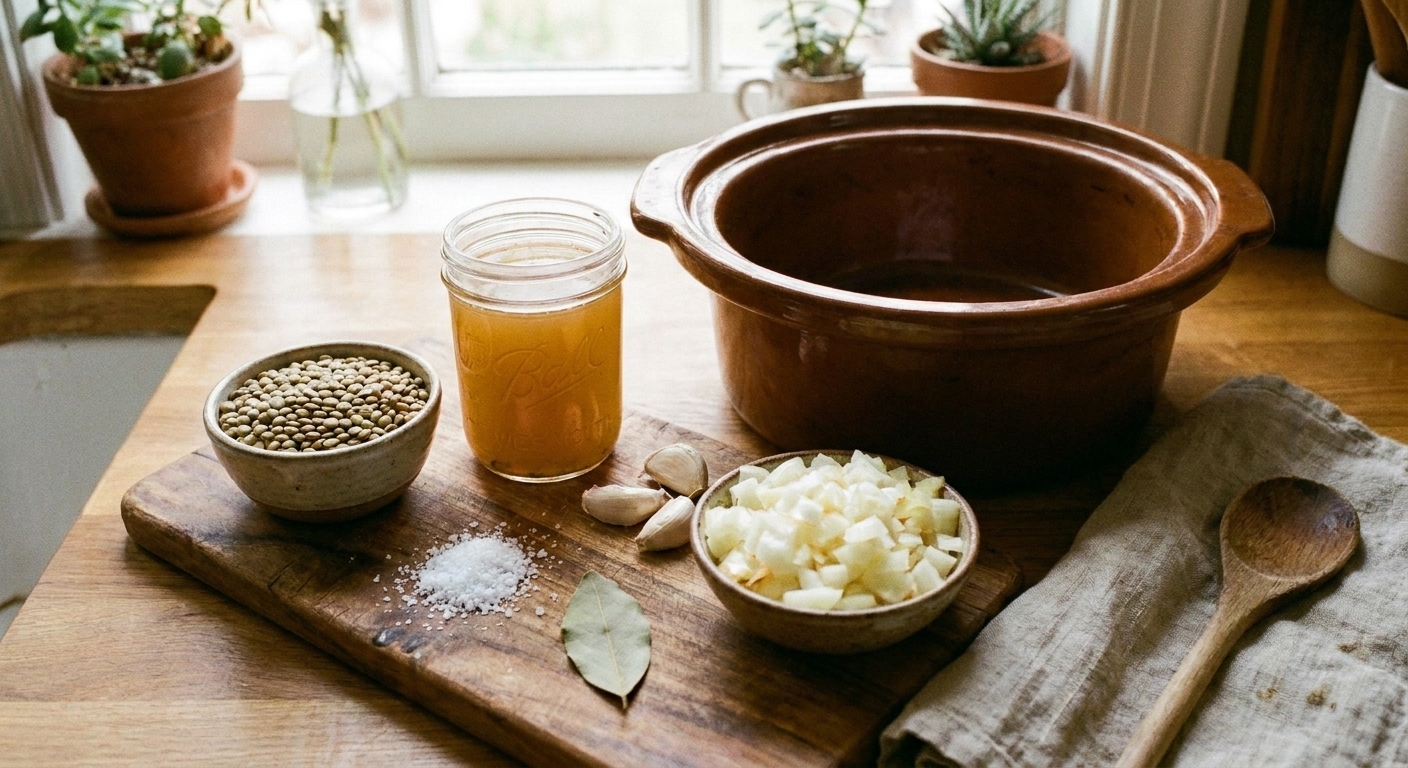
- Rinse the lentils. Drain well. (No need to skim foam later. Lentils can throw a little froth, but it is usually minimal, and a rinse takes care of most of it.)
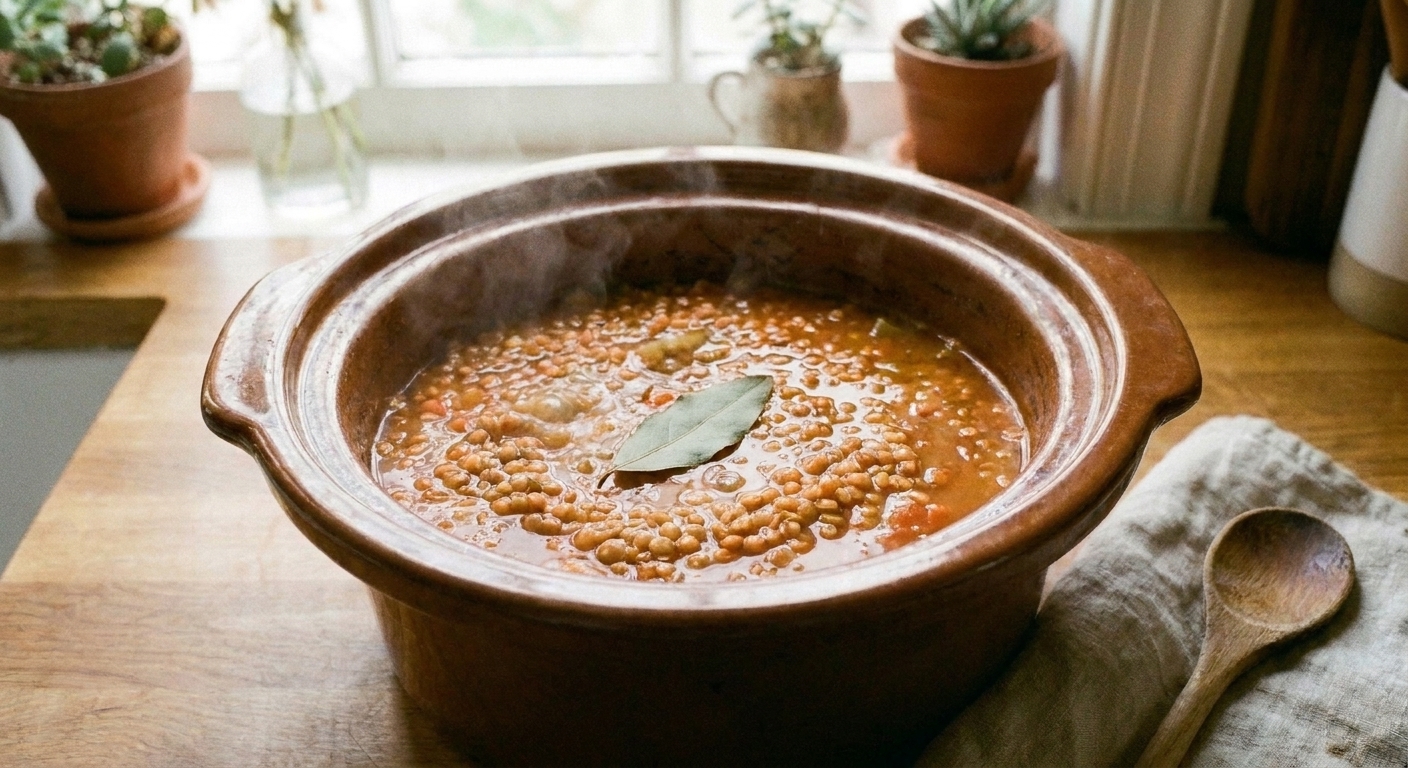
- Add lentils and liquid to the slow cooker. For more flavor, use broth, or do half broth and half water. Add aromatics if you want: a smashed garlic clove, a bay leaf, a chunk of onion, or a few sprigs of thyme.
- Cook, covered. Use the LOW or HIGH time ranges above.
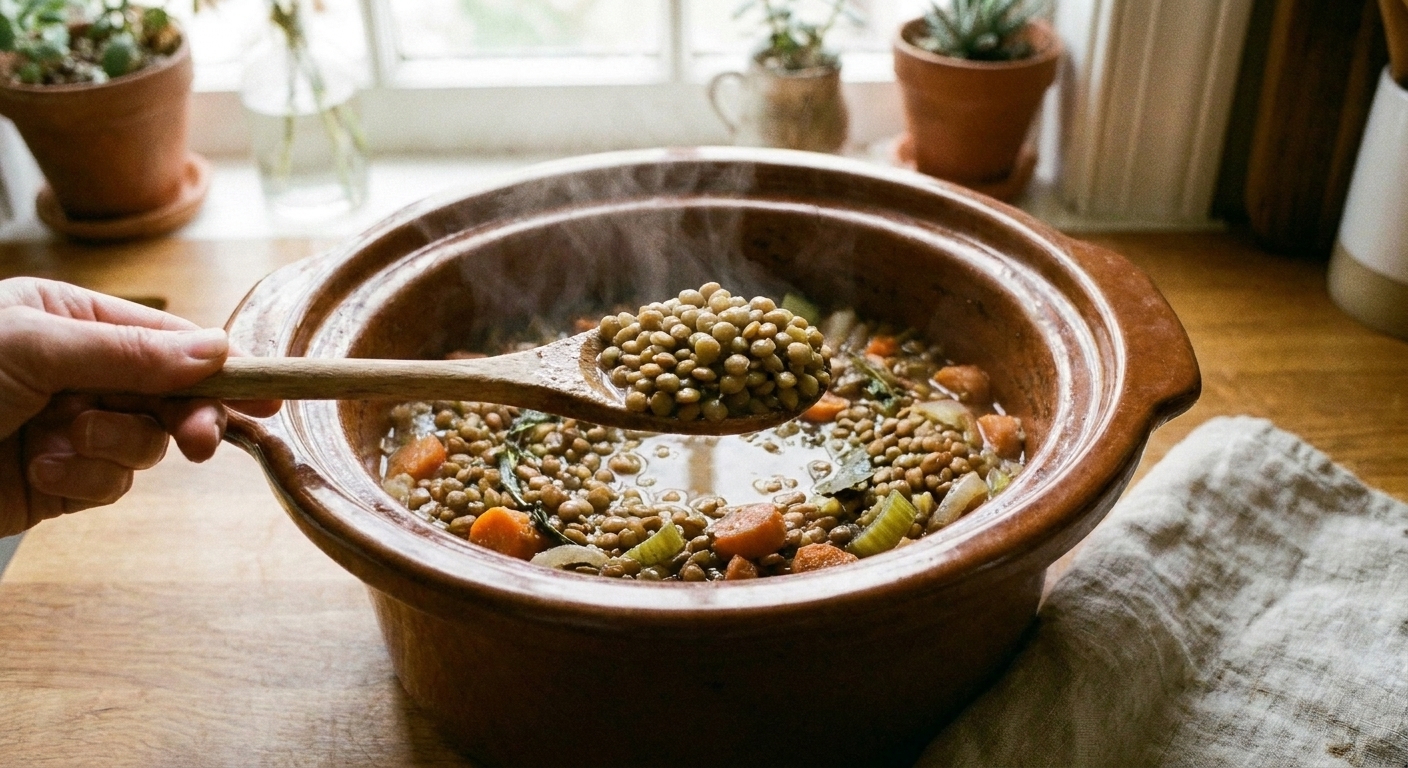
- Start checking at the low end of the range. Scoop out a few lentils and cool them for a moment, then taste. (Hot lentils can trick you into thinking they are softer than they are.)
- When done, act based on your goal. For salad-style, drain immediately and spread on a sheet pan to cool so they stop cooking. For soup-style, keep them in the cooking liquid and proceed with your recipe.
Doneness cues
For salads
- Look: lentils are plump and intact, not splitting wide open.
- Bite: tender all the way through with a gentle resistance, like an al dente pasta vibe.
- Pot cue: most liquid is absorbed but the bottom is not dry or stuck.
For soup
- Look: lentils are very tender; brown may start to split; red will look thick and creamy.
- Bite: little to no resistance, easy to mash between tongue and roof of mouth.
- Pot cue: broth looks slightly thickened and more opaque.
When to salt
For lentils, salting is more forgiving than with some beans. Here is how I do it for consistent results.
- If you want the lentils to hold shape (salads): I often wait to add most of the salt until the lentils are tender, then salt the drained lentils while they are still warm. Warm lentils absorb seasoning better, and some cooks find lentils can take on a slightly firmer skin if heavily salted from the start, especially when the lentils are older.
- If you want soup lentils: you can salt the cooking liquid from the start, especially if you are using mostly water. If using broth, go light early and adjust at the end.
Acid note: ingredients like tomatoes, vinegar, lemon juice, or wine can slow softening. How much it slows things down depends on the type and amount of acid and the age of your lentils, so for the most predictable timing, add acidic ingredients toward the end.
Red lentils without paste
Red lentils are split, so breakdown is their whole personality. But you can keep them from turning into total baby food by controlling three things: time, agitation, and how long they sit in the hot cooker.
- Use HIGH and a shorter cook: counterintuitive, but true. You get to doneness faster with less total time for them to disintegrate.
- Check early: start checking at 45 minutes on HIGH or 1 1/2 hours on LOW.
- Do not stir repeatedly: stirring breaks them down. Stir once midway only if you see sticking at the edges.
- Do not park them in the cooker for hours: when they are where you want them, switch the cooker off and crack the lid. If you are not serving soon, transfer to another container so residual heat does not keep cooking them.
- Choose your ratio carefully: more liquid encourages a smoother, porridge-like finish. For a little texture, stick closer to 3 cups liquid per 1 cup red lentils.
If they cooked dry
This happens most often when the lid is lifted a lot, the slow cooker runs hot, or the lentils are older and absorb more than expected. You can rescue them.
- Turn the slow cooker to WARM or OFF. If the bottom looks stuck, you want gentler heat while you rehydrate.
- Add hot water or hot broth, 1/4 cup at a time. Stir gently, scraping the bottom with a wooden spoon.
- Cover for 10 minutes. Let steam do the work. Lentils loosen more from resting than from aggressive stirring.
- Taste for texture. If they are still undercooked in the center, add another 1/2 cup liquid and cook on HIGH for 20 to 30 minutes, then recheck.
If the edges are scorched: do not scrape up the darkest bits. Transfer the unstuck lentils to a clean pot or bowl, leaving the burnt layer behind. A squeeze of lemon and a drizzle of olive oil can help mask minor toasty flavors, but truly burnt lentils are hard to un-burn.
Flavor add-ins
These are weeknight-friendly ways to make plain lentils taste like you meant it, without extra fuss.
- Aromatics: onion wedges, smashed garlic, scallion whites, shallots
- Herbs: bay leaf, thyme, rosemary sprig (remove after cooking)
- Warm spices: cumin, smoked paprika, coriander, turmeric
- Finishing acids: lemon juice, red wine vinegar, balsamic
- Finishing fats: olive oil, browned butter, coconut milk (for soups)
Delicate add-in tip: save quick-cooking vegetables like spinach, frozen peas, corn, or chopped fresh herbs for the last 5 to 15 minutes, or stir them in after cooking using the heat of the pot. Long-cooking aromatics are great from the beginning. Tender greens are not.
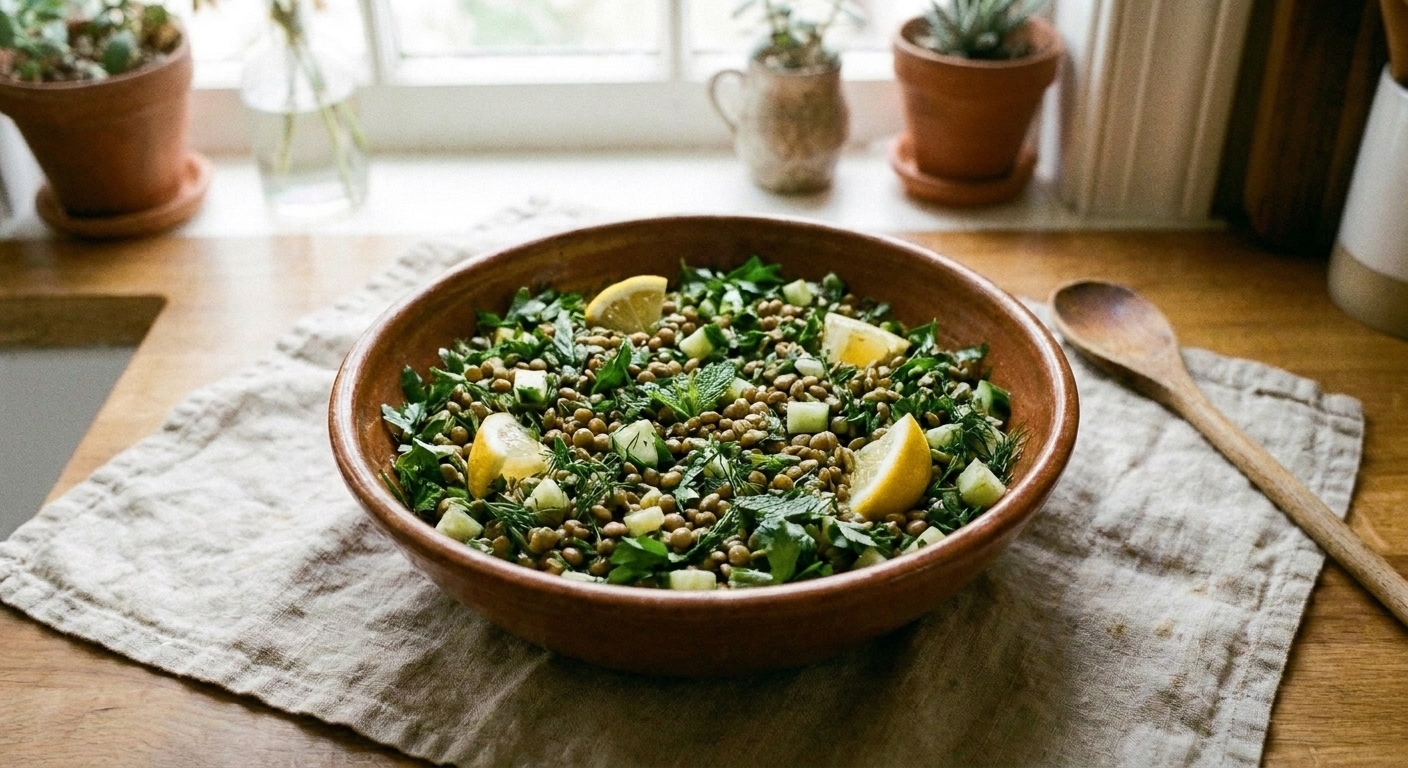
If you are making salad lentils, I like a simple finish: olive oil, lemon, salt, and something crunchy like chopped celery or toasted nuts. Lentils love texture.
Troubleshooting
Why are they still hard?
- Old lentils: they take longer and can cook unevenly. Add more time and a splash more liquid.
- Acid too early: tomatoes or vinegar can slow softening. Wait to add them until lentils are tender.
- Not enough liquid: if the pot looks dry at the edges, add hot water or broth and keep cooking.
Why are they mushy?
- Cooked too long: start checking earlier next time, especially if your slow cooker runs hot.
- Wrong lentil type for the goal: red lentils will not stay separate. Use green, French green, brown, or black beluga for salads.
Should I soak first?
No soak needed. Lentils are a quick-cook legume by design. If you soak them, they are more likely to overcook in the slow cooker window.
Storage notes
Cooked lentils keep well, which is why I love making a batch while I do other chores.
- Refrigerate: cool completely, then store airtight for up to 5 days.
- Freeze: freeze in flat bags or containers for up to 3 months. (Soupy lentils freeze especially well.)
- Revive: if lentils seem dry after chilling, warm with a splash of water or broth and a pinch of salt. Add a squeeze of lemon right at the end to wake everything up.
My favorite leftover move is turning plain brown lentils into lunch: toss with vinaigrette, whatever roasted vegetables are hanging out in your fridge, and a handful of herbs. That is a full meal with almost zero waste and zero drama.