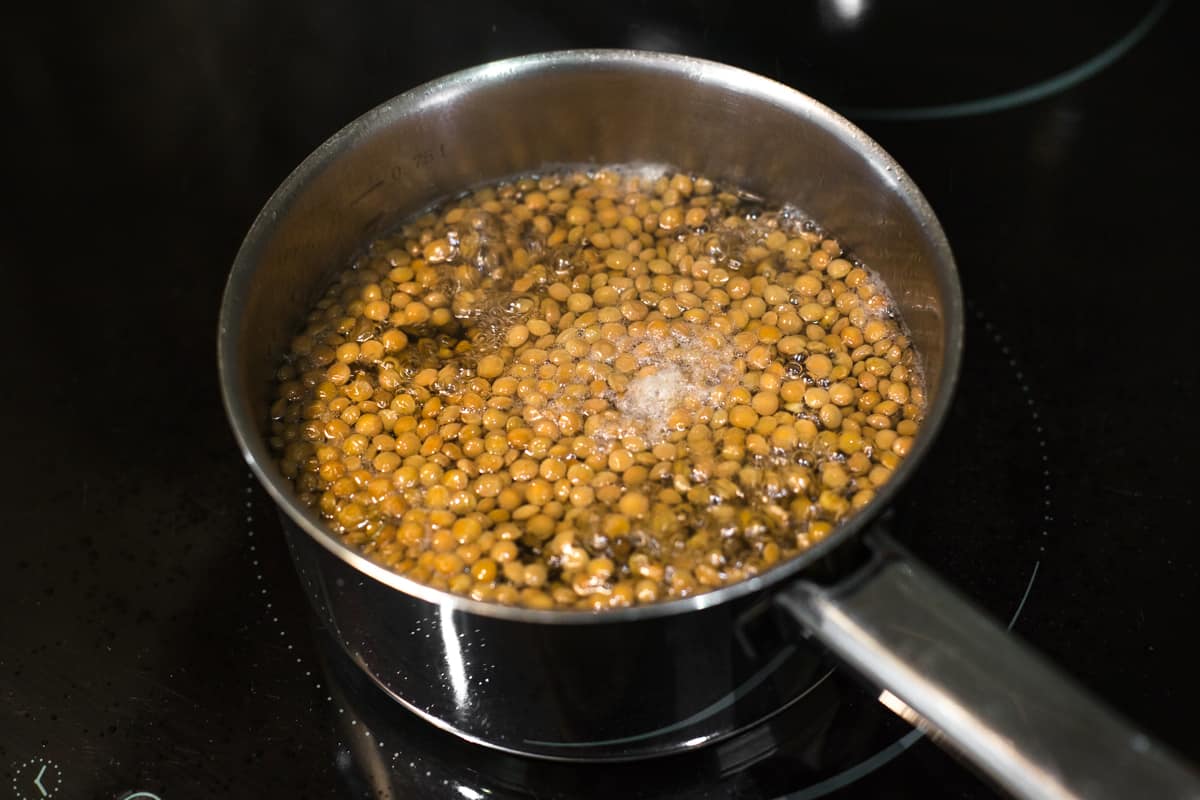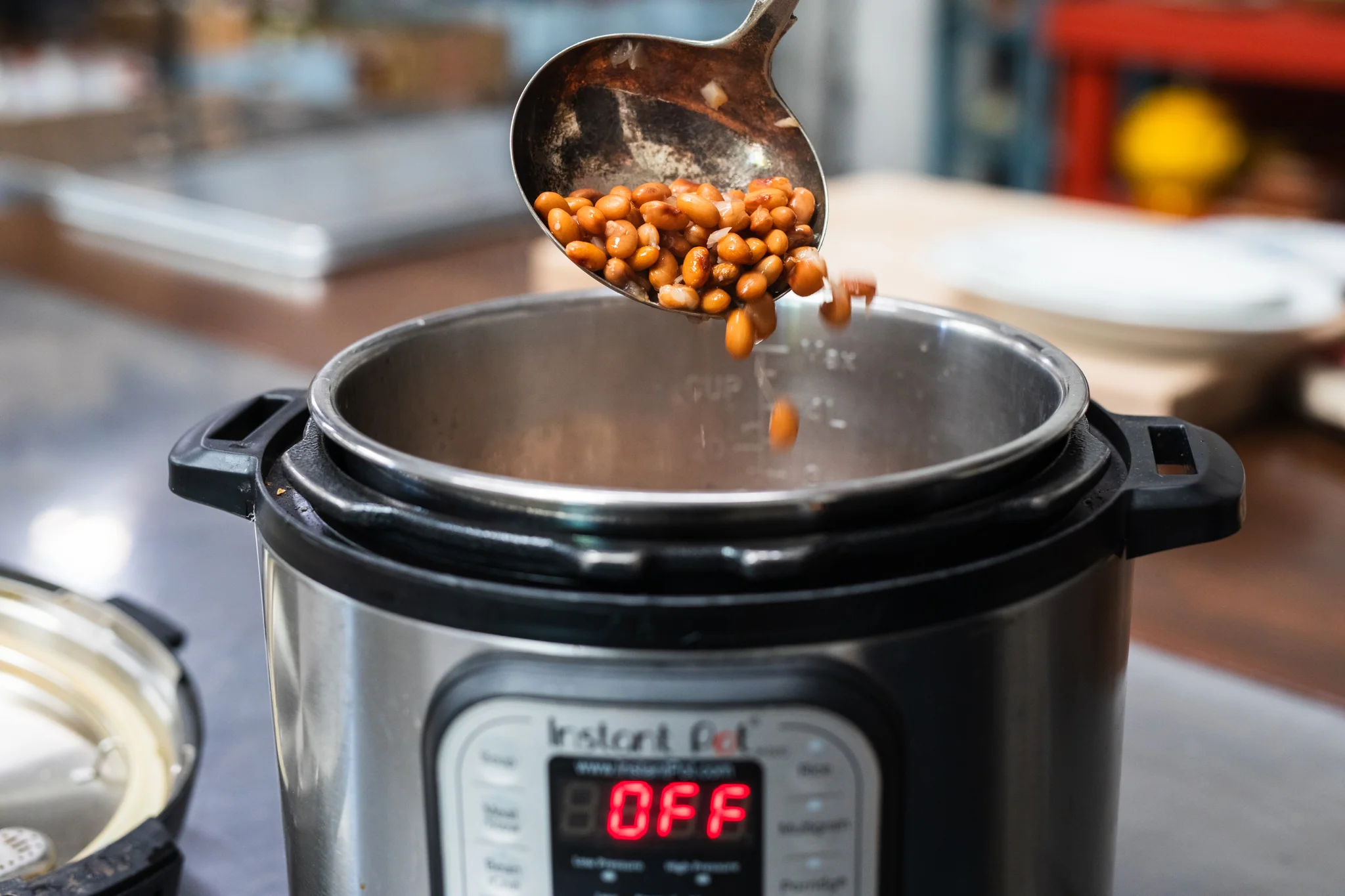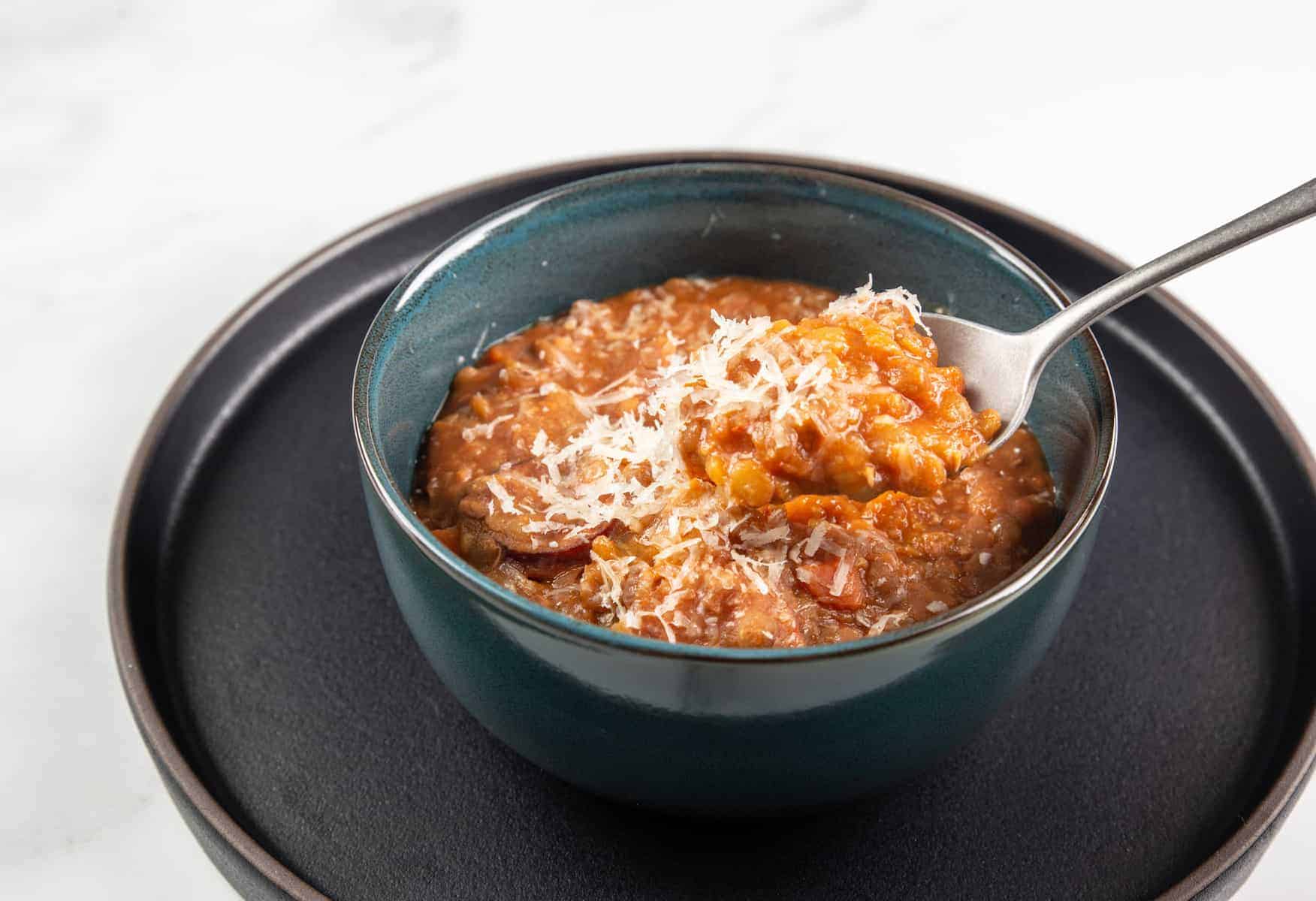

I love lentils for weeknights because they cook fast, they are affordable, and they are one of the easiest ways to turn random fridge odds and ends into a real meal. The Instant Pot makes them even more predictable, as long as you match the lentil type to the right water ratio, choose the right pressure time, and use the right release for the texture you want.
This guide gives you exact times and ratios for green, brown, and red lentils, both soaked and unsoaked, plus my best tricks for keeping salad lentils intact or cooking them down for soup.
Quick note before we get into it: consider these times a solid starting point. Lentil age, your specific Instant Pot model, and altitude can all shift the sweet spot by a minute or two, so use the texture cues I call out along the way.

Before you start
Sort and rinse (always)
Lentils are usually clean, but I still do a quick sort. Spread them on a plate, look for tiny stones or shriveled lentils, then rinse in a fine-mesh sieve until the water runs mostly clear.
Soaking: optional, but useful
Lentils do not need soaking like many beans do. I soak mainly when I want extra-even cooking with less split skins, especially for lentil salads. A short soak also helps if your lentils are older and take longer to soften.
- Quick soak: cover with cool water for 30 to 60 minutes, then drain.
- Overnight soak: 8 to 12 hours in the fridge, then drain.
Water vs broth
You can cook lentils in water or broth. If using a salty broth, go lighter on added salt at the end. For very firm salad lentils, I prefer water and then season after so I do not accidentally over-salt.
Ratios and cook times
All timings below are for High Pressure. The “release” column is part of the texture strategy, not an afterthought.
Important: Follow the Instant Pot manual’s max-fill conventions. In practice, that means staying at or under the 2/3 line for most foods, and at or under the 1/2 line for foods that foam, froth, or expand. Lentils are usually manageable, but big batches and thicker, starchier add-ins can make the pot frothier than you expect, so I err on the cautious side.
Green lentils
Green lentils are the best choice for salads because they hold their shape.
- Unsoaked ratio: 1 cup lentils: 2 cups water
- Soaked ratio: 1 cup lentils: 1 1/2 cups water
- Pressure time: 6 to 8 minutes (unsoaked), 5 to 6 minutes (soaked)
- Release: 10 minutes natural release for firm, then quick release remaining pressure
My texture cue: For salad, the lentils should be tender but still have a little “pop” when you bite. If they seem under, lock the lid back on and let them sit 2 to 3 minutes in residual heat, no extra pressure needed.
Brown lentils
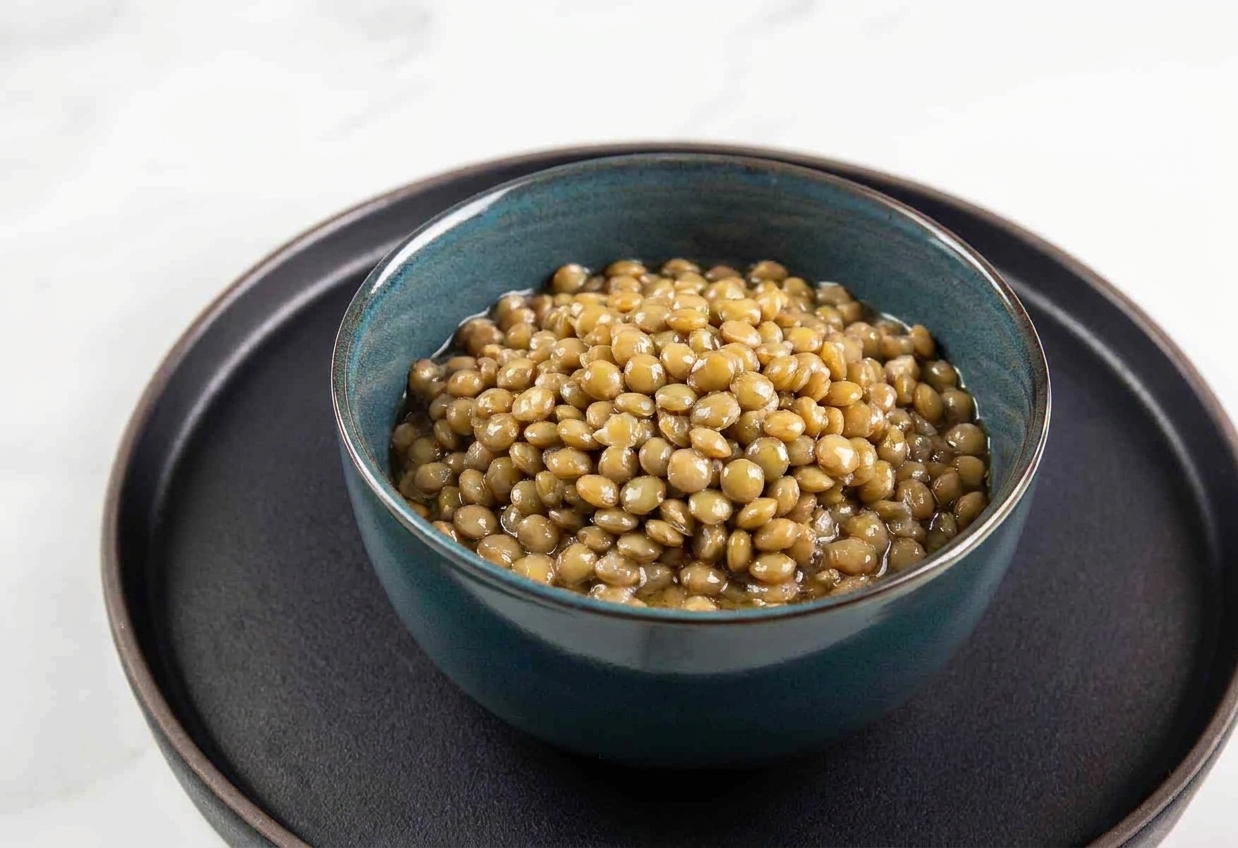
Brown lentils are your all-purpose workhorse. They can hold up for grain bowls, but also soften nicely for soups.
- Unsoaked ratio: 1 cup lentils: 2 cups water
- Soaked ratio: 1 cup lentils: 1 1/2 cups water
- Pressure time: 8 to 10 minutes (unsoaked), 6 to 8 minutes (soaked)
- Release: 10 minutes natural release for firmer lentils, 15 minutes natural release for softer lentils
My texture cue: If you want them for soup and they are not quite creamy enough, keep the lid off and simmer them down using the Instant Pot’s sauté function for a few minutes, stirring often. This cooks off excess liquid and breaks them down gently.
Red lentils
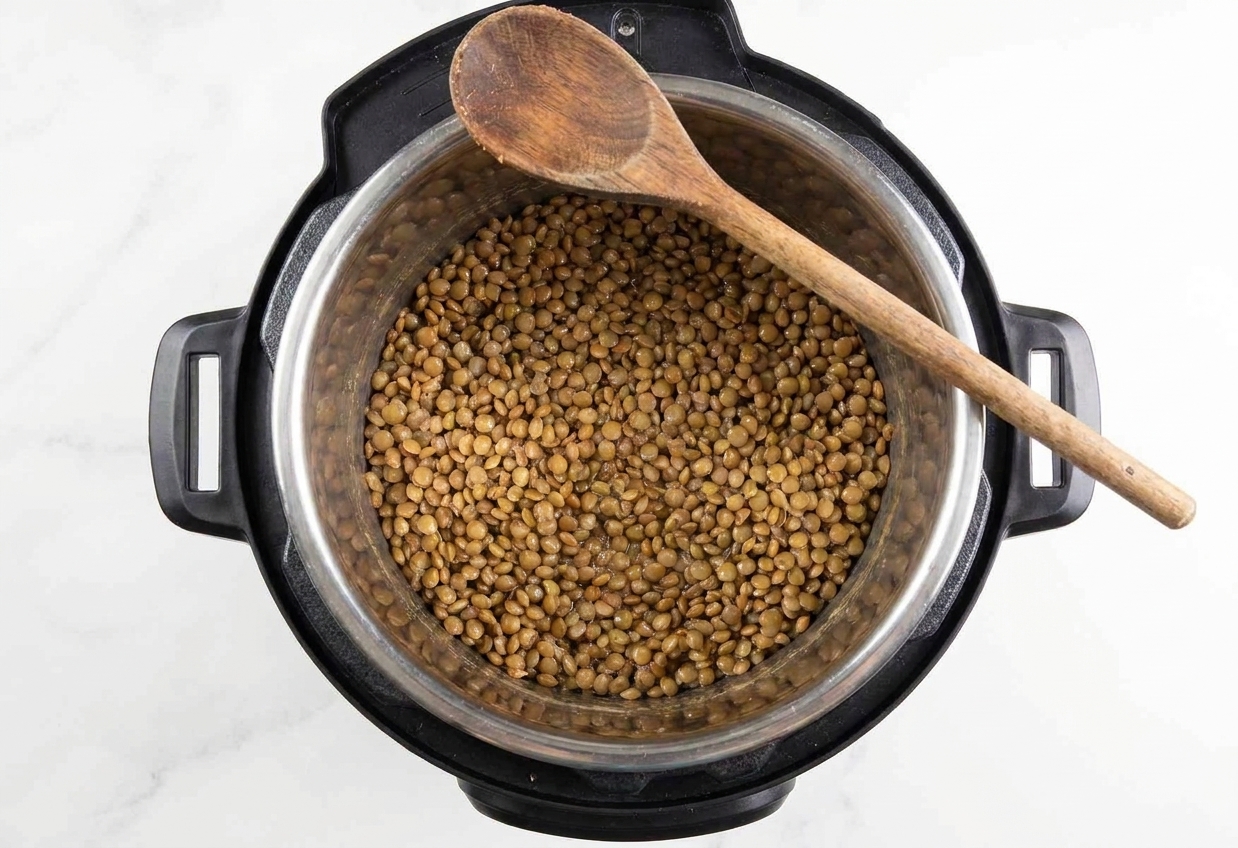
Red lentils are naturally quick-cooking and prone to turning soft. That is a feature when you want a silky soup, dal-style texture, or a thickener for stews. Also, most red lentils sold in stores are split, which means they break down even faster under pressure.
- Unsoaked ratio: 1 cup lentils: 2 1/2 cups water
- Soaked ratio: 1 cup lentils: 2 cups water
- Pressure time: 1 to 3 minutes (unsoaked), 1 minute (soaked)
- Release: 10 minutes natural release (this finishes cooking gently and reduces sputtering)
My texture cue: If you open the lid and see a little pooled liquid, stir. Red lentils often look “soupy” at first, then thicken dramatically after 1 to 2 minutes of stirring and resting.
Expectation check: If you are hoping for distinct, separate red lentils, the Instant Pot is not the easiest route. Under pressure, red lentils almost always head toward soft and creamy, which is exactly what I want for soup and dal.
Salad vs soup
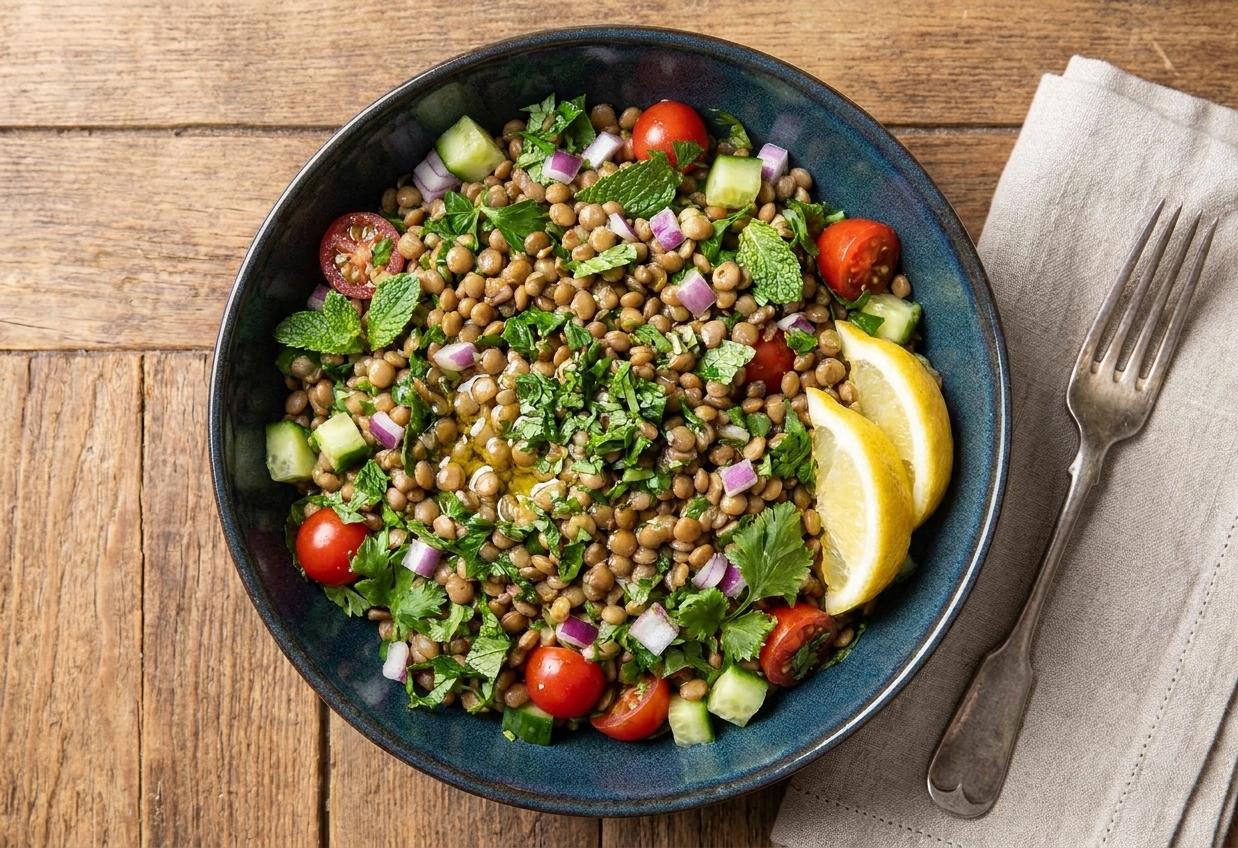
For intact lentils
- Choose: green or brown lentils (not red).
- If soaking, use the soaked ratio: less water, plus I stay on the lower end of the cook-time range for the firmest, cleanest lentils.
- Avoid over-releasing: do a 10 minute natural release, then vent. Full natural release can push them into “too soft” territory, especially if your Instant Pot runs hot.
- Drain promptly: if there is extra water, drain right away so they do not keep cooking while sitting.
- Cool fast for salads: spread on a sheet pan for 5 minutes. This stops the cooking and keeps skins from sloughing off.
Seasoning tip I teach all the time: Once they are warm, toss with a little olive oil and a splash of acid (lemon juice or vinegar). That first hit of fat plus acid makes lentils taste “finished” even before you build the rest of the salad.
For soft lentils
- Choose: brown for hearty soups, red for creamy soups.
- Use a longer natural release: 15 minutes for brown lentils if you want them softer; 10 minutes for red lends a smoother texture.
- Stir to break down: agitation matters. Stirring right after cooking helps release starch and thickens the pot.
- Blend if you want silk: an immersion blender turns red lentils into a velvety base fast.
When to add salt
I season lentils in layers, but I am careful with early salt when I want very neat, intact lentils. In my kitchen, salting later tends to give me a cleaner bite and fewer split skins, especially with older lentils.
- For salads: cook lentils in unsalted water, then salt generously after cooking while they are still warm. You get better control and a tidier texture.
- For soups: it is fine to add a small pinch of salt before pressure cooking, especially if you are using aromatics and want the broth to taste seasoned. Then adjust aggressively at the end.
My rule: If the lentils are going to be drained, I usually salt after. If the cooking liquid is part of the meal, a little salt early is helpful, but I still finish seasoning at the end.
Step-by-step
This is the universal workflow. Use the ratios and times above based on your lentil type and whether you soaked.
- Rinse and (optionally) soak. Rinse lentils well. If soaking, drain thoroughly.
- Add to Instant Pot. Add lentils and the correct amount of water or broth. Stir once to level them out.
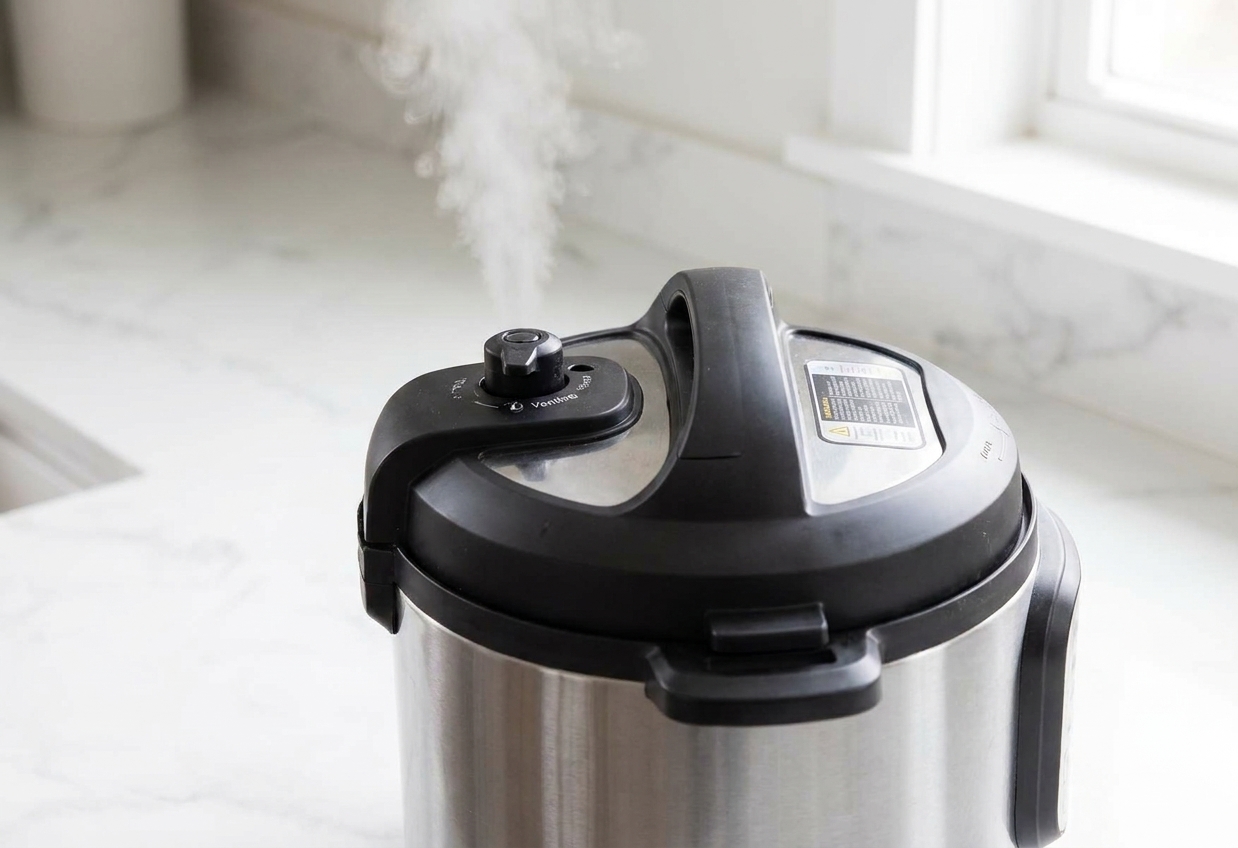
- Pressure cook. Lock the lid, set to High Pressure for the time listed above.
- Release smart. Follow the release guidance above for your target texture.
- Finish. Open the lid, stir, then drain any excess liquid if needed. Season with salt, acid, and olive oil as appropriate.
Add-ins
Aromatics are fine
Onion, garlic, carrot, celery, bay leaves, and herbs are all fair game. They do not meaningfully change cook times, but they can soak up a little liquid. If you are loading the pot with vegetables, I sometimes add an extra splash of water so nothing ends up dry on the bottom.
Be careful with acidic ingredients
Tomatoes, vinegar, and lemon can slow softening and leave lentils firmer than you expect. If I am making a tomato-heavy lentil soup, I usually cook the lentils until tender first, then stir in tomatoes or acidic ingredients after pressure cooking and simmer on sauté for a few minutes to bring everything together.
Avoid thick dairy under pressure
If you want to finish a soup with cream, coconut milk, yogurt, or cheese, I recommend stirring it in after pressure cooking. Thick, milky liquids can scorch more easily, and they tend to behave better when added at the end.
Troubleshooting
My lentils are mushy
- You likely cooked too long or did too long of a natural release. Next time, reduce pressure time by 1 to 2 minutes and do a shorter natural release.
- Older lentils can unpredictably soften fast once they finally hydrate. If your pantry bag is ancient, start at the lower end of the time range.
My lentils are still hard
- Add 1/4 cup water, lock the lid, and cook 1 to 2 minutes more at High Pressure, then quick release.
- Very hard water can slow softening slightly. A short soak helps.
I got a burn notice
- This is uncommon with plain lentils and water, but it can happen if you have very little liquid or if you added thick sauces. For best results, pressure cook lentils in water or thin broth, then stir in tomato paste, thick purees, or sugary sauces after.
The pot is watery
- Drain for salads.
- For soups, simmer on sauté for a few minutes, stirring, or blend a portion to thicken.
How much do lentils yield?
- 1 cup dry green or brown lentils yields about 2 1/2 to 3 cups cooked (it varies with lentil age and how firm you cook them).
- 1 cup dry red lentils yields about 2 1/2 cups cooked, but they collapse, so the volume reads differently, more like a thick puree.
Storage tips
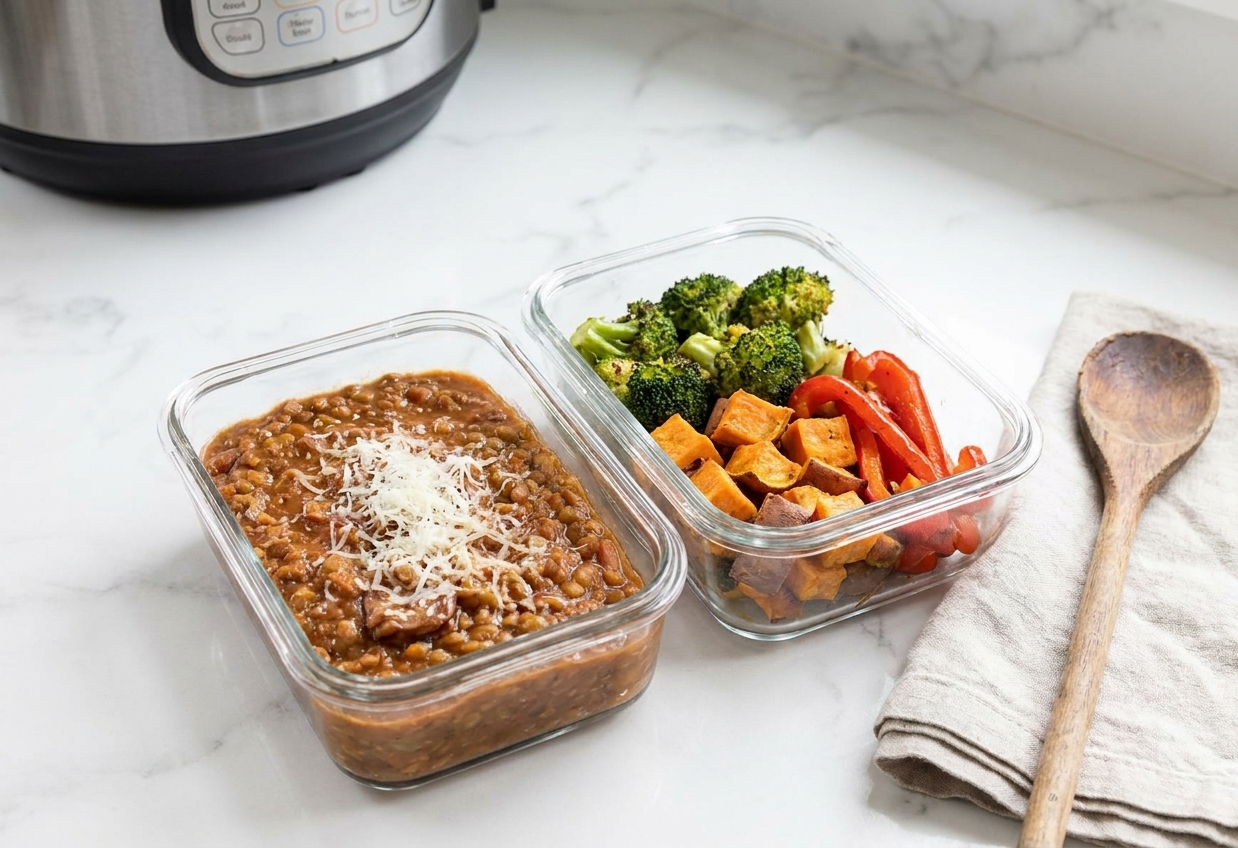
- Fridge: Cool completely, then store airtight for up to 5 days.
- Freezer: Freeze cooked lentils in flat bags or containers for up to 3 months.
- Best make-ahead move for salads: store lentils and dressing separately, then toss right before eating for the brightest flavor and best texture.
Quick FAQ
Do I need to soak lentils before pressure cooking?
No. Soaking is optional. I use it mainly for firmer, more evenly cooked lentils (especially salads) or when my lentils are older.
Can I cook lentils pot-in-pot with rice?
You can, but it is tricky because lentil types cook at different rates and rice needs specific water ratios. If you want to combine them, choose brown lentils and plan on some trial and error with your specific rice and pot.
Why do my lentils split?
Splitting can come from overcooking, a long natural release, or rough stirring while they are very hot. Green lentils split the least. Cooling them quickly helps for salads.