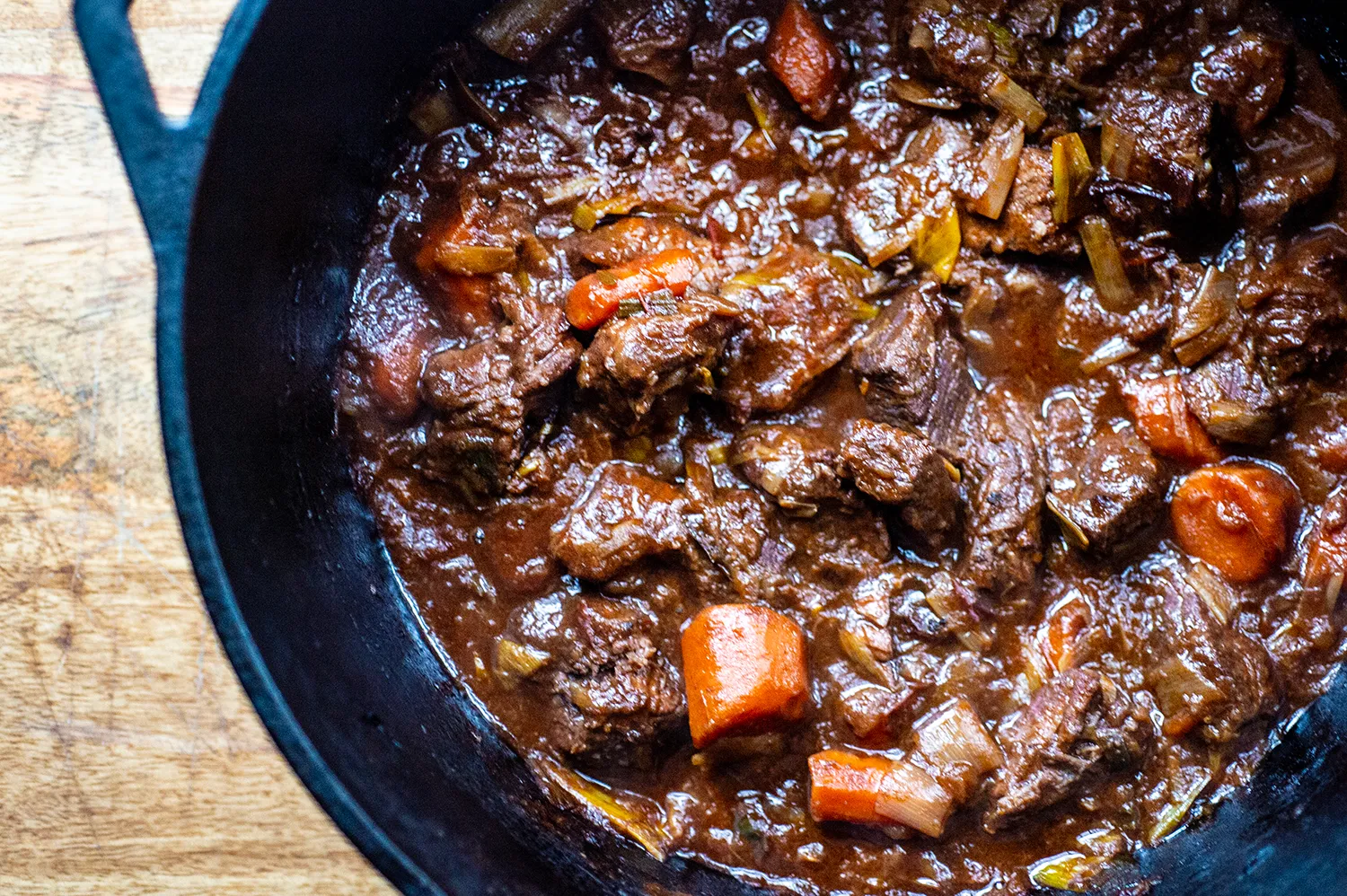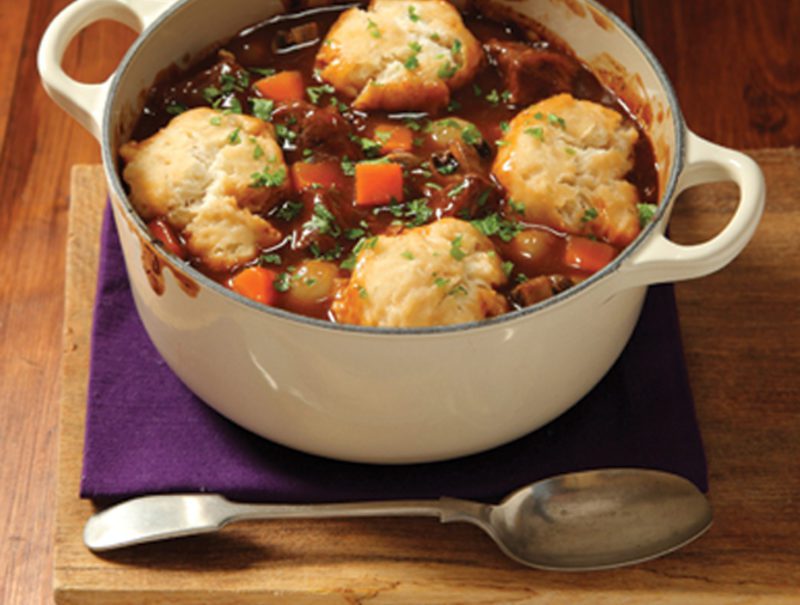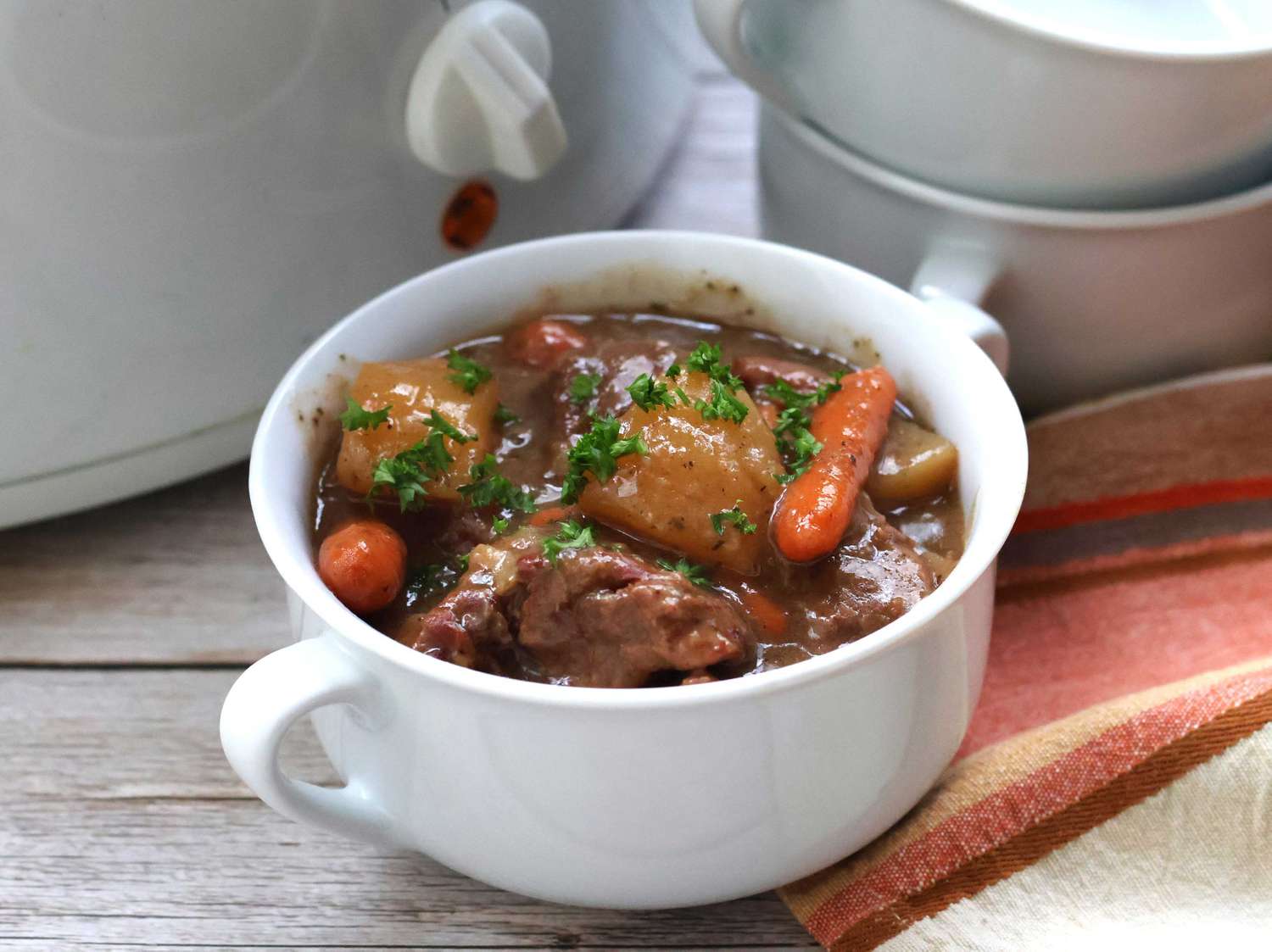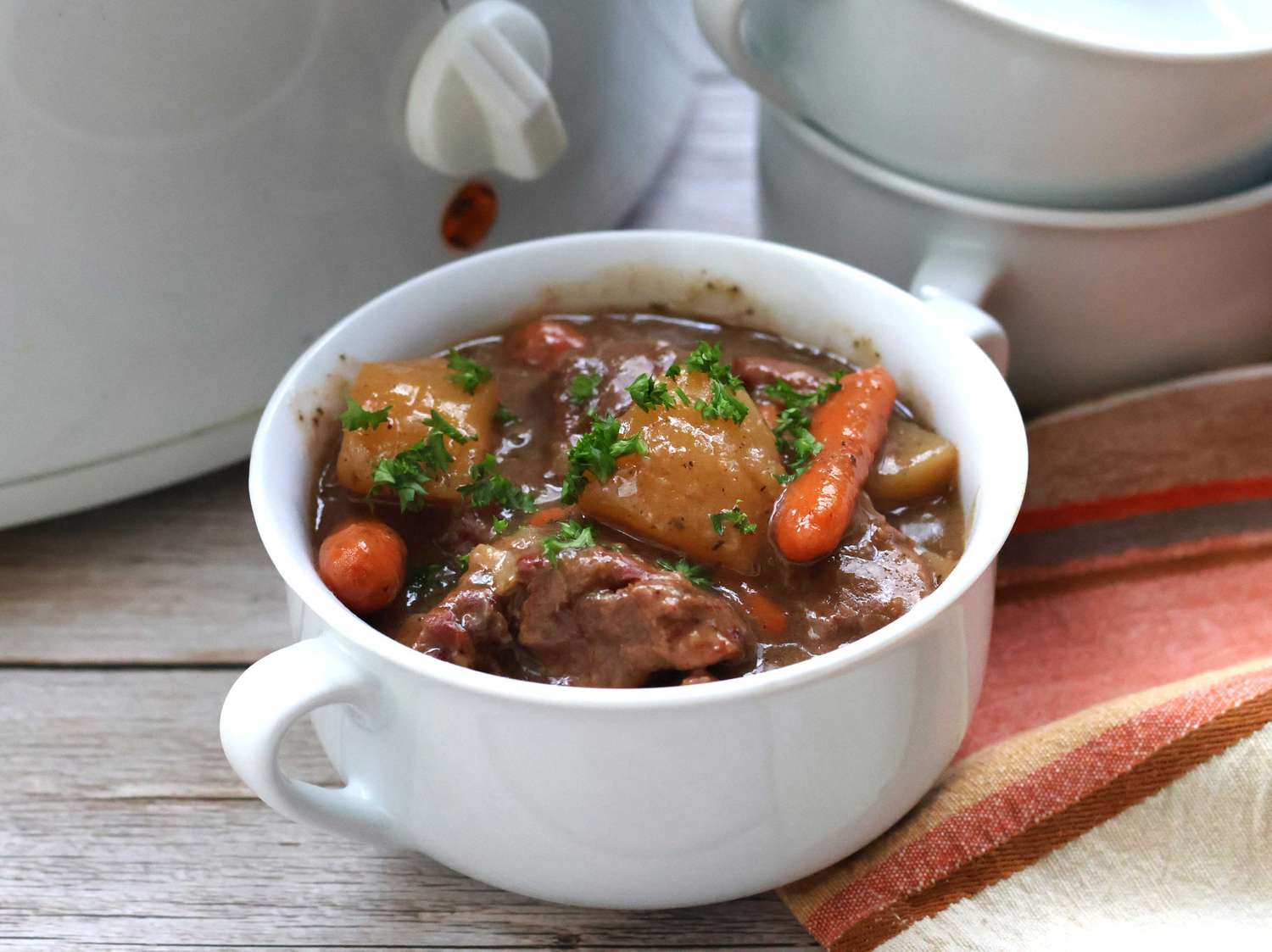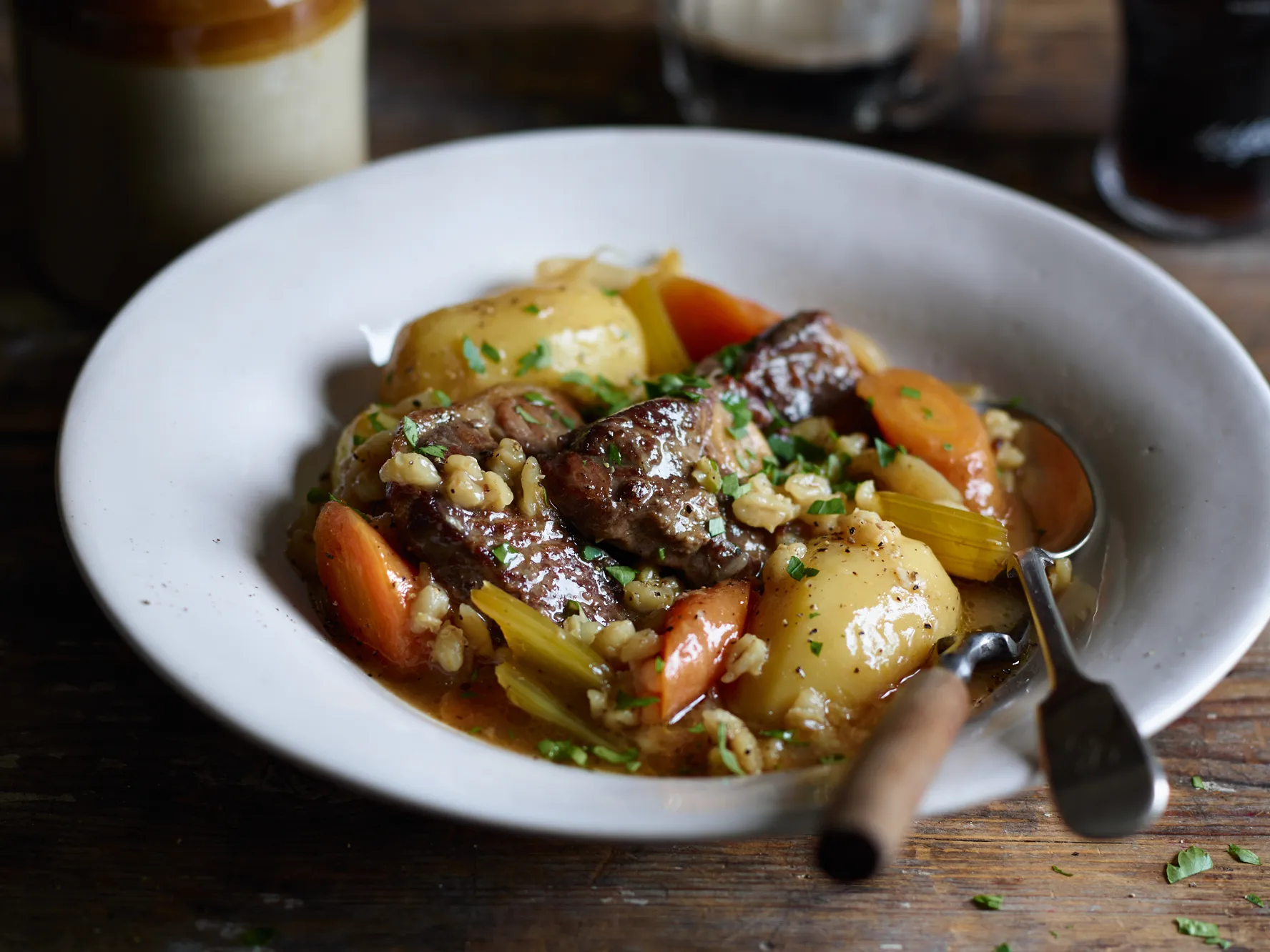

When I want a stew that feels deeply cozy but not heavy, I reach for Irish lamb stew. It is all about tender lamb, sweet carrots, silky onions, and potatoes that stay in satisfying chunks, all in a light, savory broth that you actually want to sip from the bowl.

This version uses lamb shoulder or lamb neck, both perfect for slow simmering. I will walk you through what to ask for at the butcher, the real pros and cons of browning, and a few small choices that keep the potatoes intact so the liquid stays clear and light.
Think of this as your steady, weeknight-friendly braise: minimal fuss, maximum payoff, and leftovers that somehow taste even better the next day.
What to ask for at the butcher
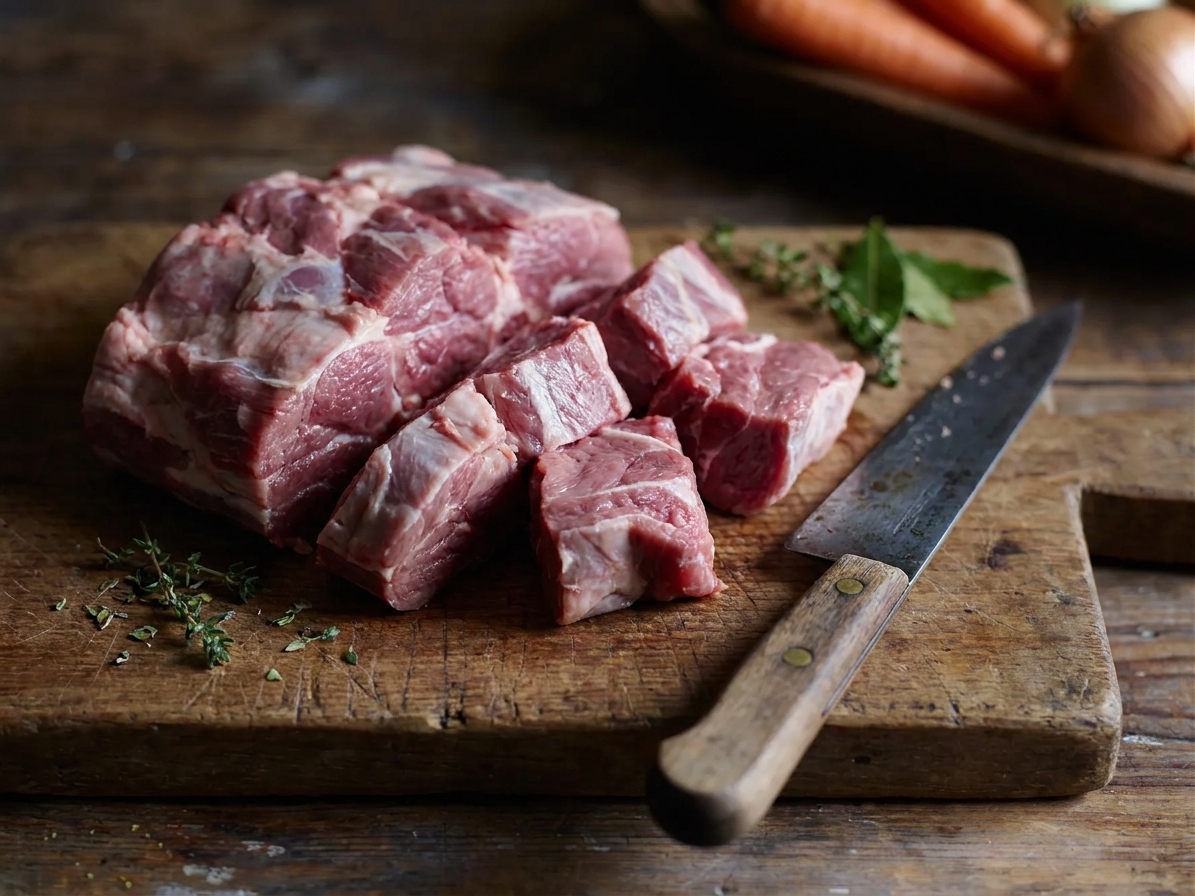
If you have a butcher counter, this is one of those recipes where asking for the right cut and the right size makes the whole pot better. I look for shoulder or neck because they have enough fat and connective tissue to turn spoon-tender without drying out.
- Ask for larger stew pieces. Something like 1 1/2 inches is ideal. Big pieces stay juicy and are less likely to shred into the broth.
- Do not fear bone-in. Neck is often sold as cross-cut slices with bone, and that bone adds body to the broth. It is a little more rustic to serve, but the payoff is real.
- Look for marbling, not leanness. Lean lamb cubes (often leg) can cook up firm and a bit dry in a stew like this. You want a little fat in the meat because it carries flavor and keeps things succulent.
If shoulder is sold as a roast, I buy it and cut it myself. It takes a few minutes, but you get exactly the chunky pieces you want.
Browning: yes or no
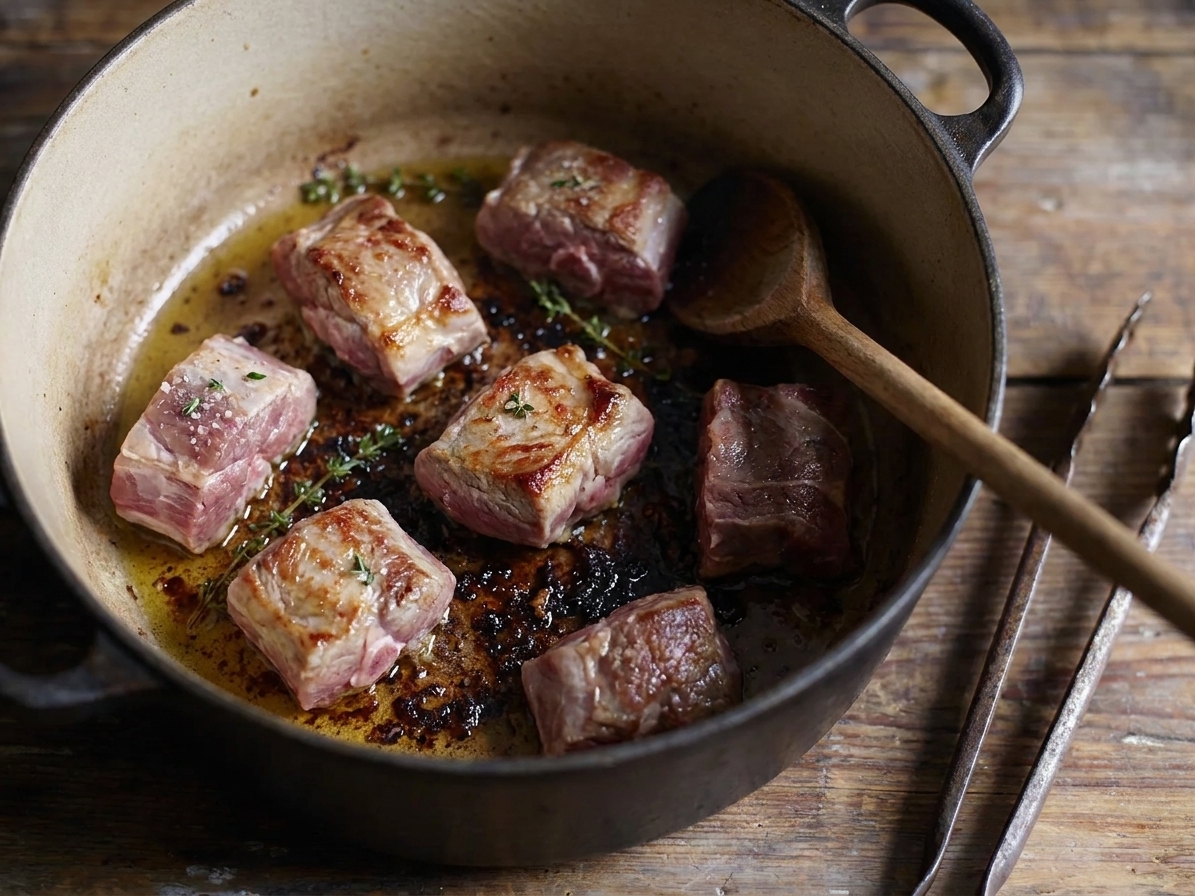
Browning is optional here, and I love that about this stew. If you brown the lamb, you get deeper, toastier flavor and a slightly darker broth. If you skip it, the stew tastes clean, gentle, and very lamb-forward, the kind of bowl that feels almost restorative.
- Reasons to brown: more savory depth, better color, and those browned bits on the bottom that make the broth taste like you worked harder than you did.
- Reasons to skip: less splatter, fewer batches, and a lighter, simpler flavor profile that still feels classic.
Either way, the rule that matters most is heat control. You want a gentle simmer, not a rolling boil. Look for lazy bubbles and a calm surface so the lamb stays tender and the vegetables keep their shape.
How to keep potatoes intact
The secret to that light, brothy Irish stew texture is keeping the potatoes from melting into the liquid. I think of it as potato insurance, and it is mostly about three choices.
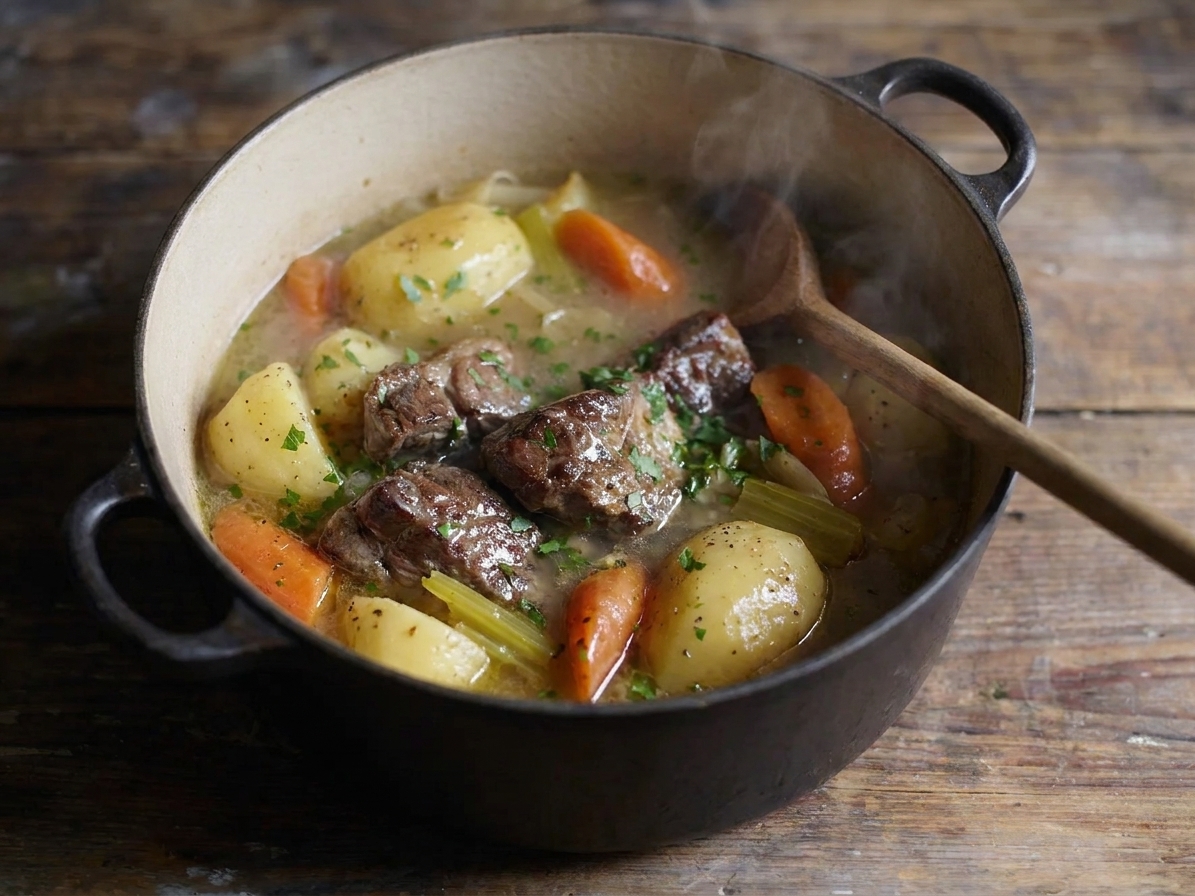
- Choose the right potato. Yukon Golds hold up well while still tasting buttery. Red potatoes hold up even more. Russets tend to break down and cloud the broth.
- Cut them bigger than you think. Larger chunks are harder to overcook, and they stay satisfying in the bowl.
- Add them later. Let the lamb have its time first, then give the potatoes just enough simmering to turn tender without falling apart.
Once the potatoes go in, I stir gently and only when I need to, more nudging than stirring. That single habit keeps the liquid clear and the chunks chunky.
What makes it Irish
The goal here is a light broth, not a thickened gravy. That means no flour dredge, no roux, no cornstarch slurry. We build flavor with lamb, aromatics, a good stock, and time. The broth will still taste rich because gelatin and collagen melt out of the lamb as it simmers.
You will see modern variations that add stout or Guinness for a darker, malty note. This version stays on the classic, lighter side, more about lamb and vegetables than beer. For seasoning, I keep it simple with thyme, bay, and parsley so the lamb stays front and center.
To serve, I love it with soda bread or any crusty loaf for the broth, and I am not shy about calling it even better on day two.
Quick visual guide
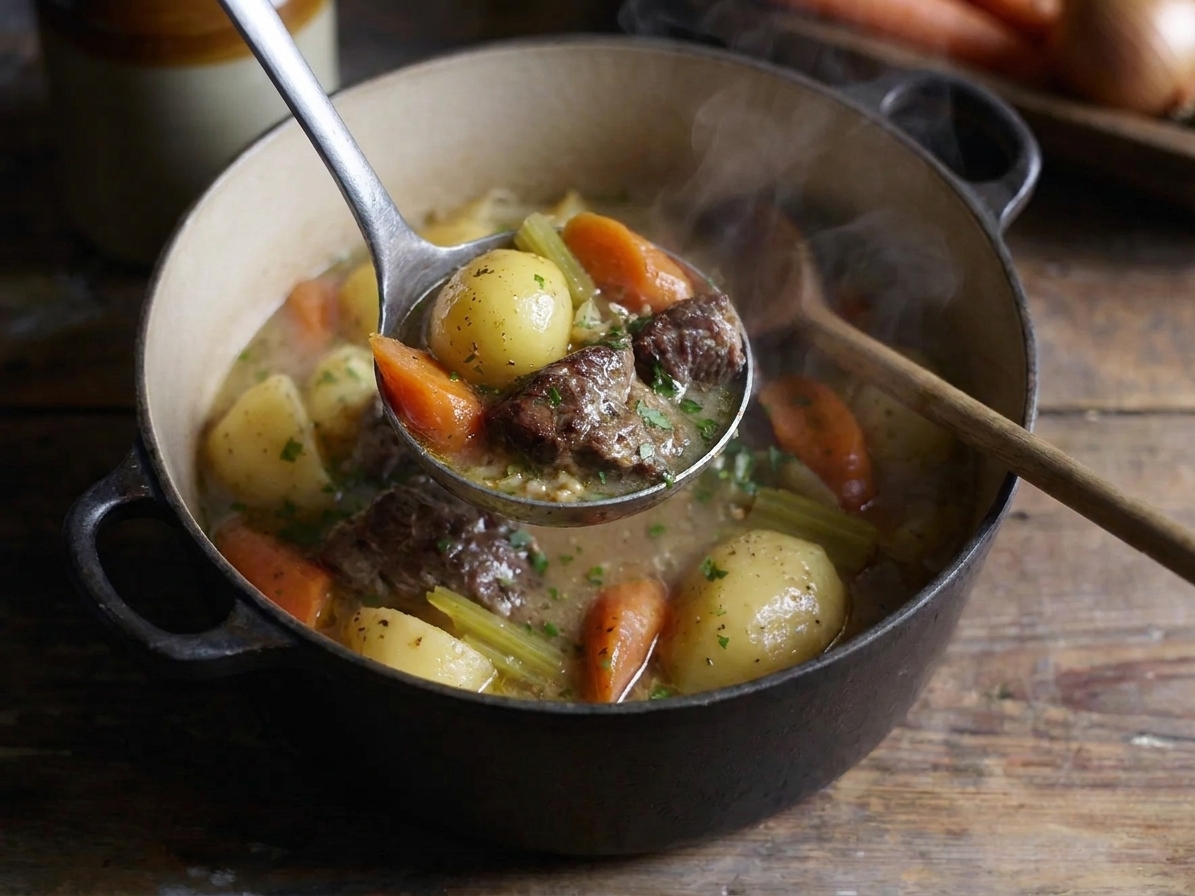
Why this recipe works
- Lamb shoulder or neck stays succulent. These cuts have enough fat and connective tissue to turn tender and spoonable after a slow simmer.
- A light broth comes from technique, not thickeners. Browning (optional), sweating the onions, and simmering gently give you depth without turning the pot into gravy.
- Large potato chunks plus the right timing keeps them intact. Adding potatoes later and cutting them big prevents that "mashed potato soup" situation.
- Gentle heat protects texture. A low simmer keeps lamb pieces whole and potatoes from breaking apart.
Ingredient notes
Lamb shoulder vs lamb neck
Lamb shoulder is my easiest recommendation for most grocery stores. Look for well-marbled meat and ask for it cut into large stew pieces, about 1 1/2 inches.
Lamb neck is a little more old-school and incredibly flavorful. It often comes sliced crosswise with bone. Bone-in pieces give the broth extra body. Just plan on a bit of bone navigating when serving.
Potatoes
Use a waxy or all-purpose potato if you are worried about dissolving. Yukon Gold holds up nicely while still tasting buttery. Red potatoes are even sturdier. Russets work, but they are more likely to break down and cloud the broth.
Onion and carrot
Keep the cuts on the chunky side so the vegetables do not disappear before the lamb is tender.
Broth choice
Use low-sodium beef stock or lamb stock if you have it. Chicken stock works in a pinch and keeps things lighter. Low-sodium matters because reduction happens and you want control over salt at the end.
Herbs
Bay leaf and thyme are classic. If you have fresh parsley, stir it in at the end for a clean finish that brightens the whole pot.
Equipment you will need
- Dutch oven or heavy pot with a lid for steady simmering
- Large cutting board and sharp knife
- Tongs for turning lamb (especially if browning)
- Wooden spoon for scraping up browned bits
- Skimmer or spoon to remove excess surface fat if needed
Pro tips
Should you brown the lamb?
Optional, but worth it if you have 10 extra minutes. Browning adds roasty depth and color. If you skip it, you still get a delicious stew, just a cleaner, more straightforward lamb flavor.
- If you brown: work in batches, do not crowd the pot, and brown one side well before turning.
- If you do not brown: sweat the onions longer than you think, until they look glossy and lightly golden at the edges. That builds plenty of flavor.
How to keep potatoes from dissolving
- Cut them big. Aim for 1 1/2 to 2 inch chunks.
- Add them later. Let the lamb simmer first, then add potatoes for the final 30 to 45 minutes.
- Keep the simmer gentle. Bubbles should be lazy, not aggressive.
- Stir carefully. Once potatoes are in, stir by nudging from the bottom, not whipping.
Salt at the end, then balance with acid
I season lightly early, then taste and adjust at the end. If the stew tastes "flat" even after salt, add a tiny splash of vinegar or a squeeze of lemon. You will not taste "vinegar". You will taste lamb and vegetables with the volume turned up.
Substitutes that work
- Meat: If you cannot find shoulder or neck, lamb shank meat (cut off the bone) works. Avoid lean leg cubes unless you like very firm, drier stew meat.
- Potatoes: Yukon Gold, red potatoes, or fingerlings all hold their shape well.
- Herbs: Dried thyme is fine. If using dried, add it early. If using fresh parsley, add it at the end.
- Broth: Low-sodium beef, lamb, or chicken stock all work. If using water, the stew will be milder, so be generous with salt and herbs.
Variations
- Add parsnips: Swap half the carrots for parsnips for extra sweetness.
- Add leeks: Replace some of the onion with sliced leeks for a softer allium flavor.
- Stout-free depth: Keep it traditional and light, but add a spoonful of tomato paste when cooking the onions for a subtle savory backbone.
- More greens: Stir in a few handfuls of kale in the last 5 minutes until just wilted.
Serving ideas
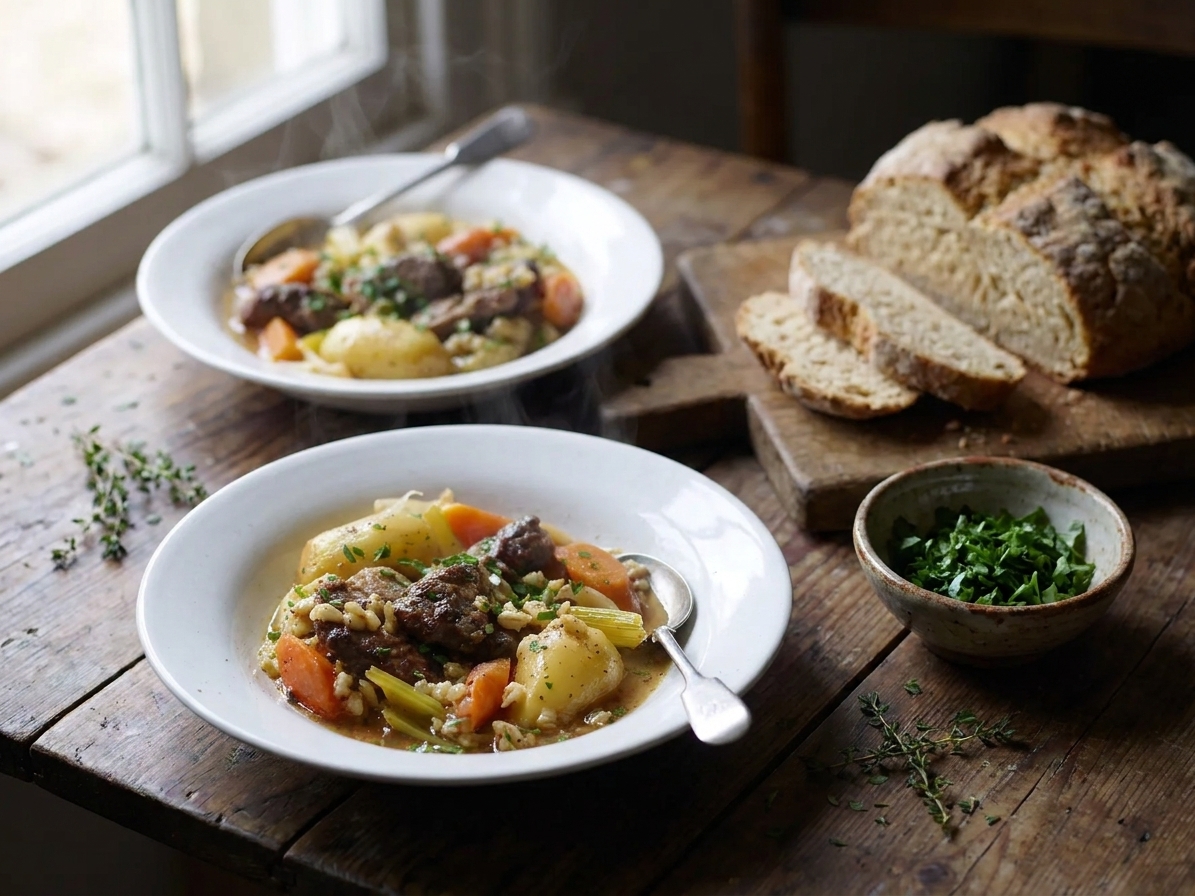
- Serve with crusty bread or soda bread to soak up the broth.
- Top each bowl with chopped parsley and a pinch of flaky salt.
- If you want a bigger meal, add a sharp, mustardy salad on the side to cut the richness.
Storage and reheating
Refrigerate
Cool, then store in an airtight container for up to 4 days. The fat will rise and solidify on top, which is actually helpful. You can lift off some if you want a lighter bowl.
Freeze
Freeze for up to 3 months. Potatoes can soften a bit after freezing, but they usually hold up better here than in many creamy stews because the broth is light.
Reheat
Reheat gently on the stovetop over medium-low until hot. Avoid a hard boil so the potatoes stay intact.
Common mistakes
- Cutting potatoes too small. Small pieces break down quickly and turn the broth cloudy and starchy.
- Boiling instead of simmering. A hard boil toughens lamb edges and shatters potatoes.
- Overcrowding the pot while browning. You will steam the lamb instead of browning it. Brown in batches.
- Over-salting early. Broth reduces and concentrates. Season in layers, then finish to taste.
- Cooking potatoes from the beginning. By the time lamb is tender, potatoes can be gone. Add them later.
FAQ
Do I have to brown the lamb first?
No. Browning adds deeper flavor, but a non-browned version can be beautifully clean and comforting. If you skip browning, take your time sweating the onions and keep the simmer gentle.
Why did my potatoes dissolve?
Usually it is one of three things: the potato type (russets break down fastest), the pieces were too small, or the stew boiled too hard. Next time, cut bigger chunks, use Yukon Gold or red potatoes, and add them later in the cook.
Can I make Irish lamb stew in advance?
Yes, and it is one of those dishes that improves overnight. If you are making it a day ahead, consider cooking the lamb and broth first, then reheating and adding the potatoes so they stay chunkier.
How do I skim excess fat?
Use a spoon to skim the surface while the stew is warm, or chill the whole pot and lift off the solid fat the next day. Chilling is the cleanest method.
Irish Lamb Stew
Tender lamb shoulder or neck simmered with onions, carrots, and potatoes in a light, savory broth. No flour, no gravy, just classic stew comfort with potatoes that hold their shape.
- Prep
- 20 minutes
- Cook
- 2 hours 10 minutes
- Total
- 2 hours 30 minutes
- Yield
- 6 servings
Ingredients
- 2 1/2 to 3 pounds lamb shoulder or lamb neck, cut into 1 1/2-inch chunks (bone-in neck slices are fine)
- 1 1/2 teaspoons kosher salt, plus more to taste
- 1/2 teaspoon freshly ground black pepper, plus more to taste
- 2 tablespoons neutral oil (or use rendered lamb fat if you brown the meat)
- 2 large yellow onions, cut into 1-inch wedges
- 3 medium carrots, cut into 1-inch pieces
- 3 cloves garlic, minced
- 2 tablespoons tomato paste (optional, for a little extra depth without thickening)
- 6 cups low-sodium beef, lamb, or chicken stock
- 1 bay leaf
- 1 teaspoon fresh thyme leaves (or 1/2 teaspoon dried thyme)
- 1 1/2 pounds Yukon Gold potatoes, peeled if you want, cut into 1 1/2 to 2-inch chunks
- 2 tablespoons chopped fresh parsley (optional, for serving)
- 1 to 2 teaspoons vinegar or lemon juice (optional, to finish and brighten)
Instructions
- Season the lamb. Pat the lamb dry. Season all over with 1 1/2 teaspoons kosher salt and the pepper.
- Brown the lamb (optional but flavorful). Heat the oil in a Dutch oven over medium-high. Working in batches, brown lamb pieces well on one side, then turn to lightly brown another side, 5 to 7 minutes total per batch. Transfer browned lamb to a plate. If you skip browning, move on to the next step with the oil in the pot.
- Cook the onions and carrots. Reduce heat to medium. Add onions and carrots to the pot and cook, stirring and scraping up any browned bits, until onions soften and look glossy, 6 to 8 minutes.
- Add garlic (and tomato paste if using). Stir in garlic and cook 30 seconds. If using tomato paste, stir it in and cook 1 minute, just until it darkens slightly and smells sweet.
- Build the broth and simmer the lamb. Return lamb (and any juices) to the pot. Add stock, bay leaf, and thyme. Bring to a gentle simmer, then reduce heat to low, cover, and simmer until the lamb is starting to turn tender, about 1 hour 15 minutes.
- Add potatoes at the right time. Add the potato chunks, nudging them under the broth. Cover and continue to simmer gently until potatoes are tender but holding their shape and the lamb is very tender, 30 to 45 minutes.
- Finish and balance. Remove bay leaf. Taste and add more salt and pepper as needed. If the stew tastes rich but slightly flat, stir in 1 teaspoon vinegar or lemon juice, then taste and add more only if needed.
- Serve. Ladle into bowls and top with parsley if using. Keep stirring gentle when serving so the potato chunks stay intact.
Notes
Potato insurance: If you know you will be simmering longer (or you like very distinct chunks), use red potatoes and keep the pieces large.
Make-ahead tip: For the chunkiest potatoes, cook the stew through step 5, cool and refrigerate. Reheat to a gentle simmer, then add potatoes and finish cooking.
Broth clarity: A hard boil and lots of stirring will cloud the broth. A low simmer keeps it cleaner and helps vegetables stay intact.