Praline pecans are the kind of snack you “test” one at a time until half the batch mysteriously disappears. They are sweet, buttery, toasty, and just salty enough to keep you reaching back into the jar. The good news is you can absolutely get that glossy, crisp coating at home without a candy thermometer. Timing can vary a bit depending on your pan, stove, and even the humidity, so lean on the sensory cues and you will be golden.
Why this recipe works
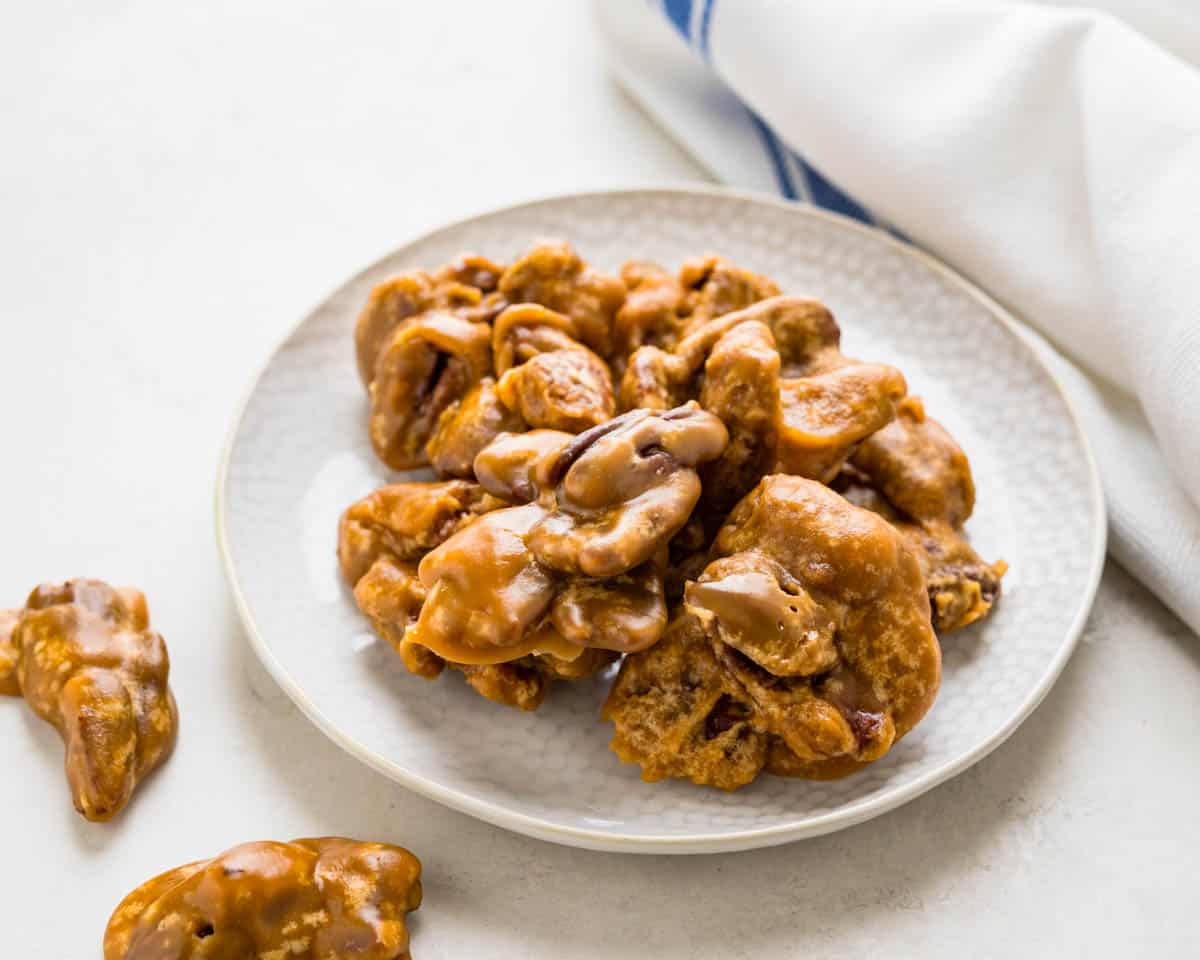
These praline pecans are inspired by the Southern-style flavor profile, but the goal here is a crisp shell. Pecans are coated in a brown sugar and butter syrup, cooked just long enough to thicken and cling, then spread out so the coating sets snappy.
- Toasting the pecans so they taste nutty, not raw.
- Cooking the sugar mixture to the right stage so it dries into a thin shell instead of staying sticky.
Safety note: Molten sugar is extremely hot. Keep kids and pets clear of the stove, and use heatproof tools.
Ingredient notes
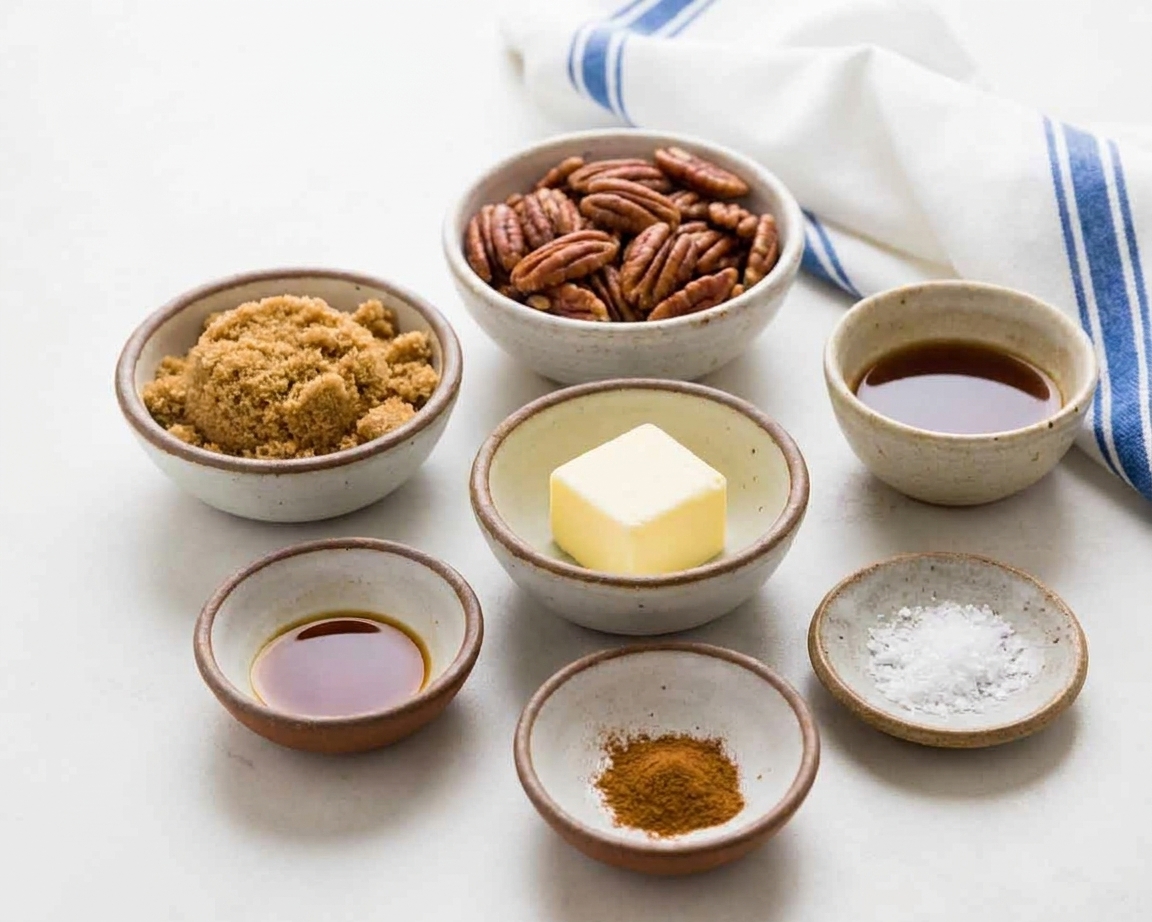
- Pecans: Halves look prettiest for gifting, but pieces work great for salads and baking.
- Brown sugar: Adds caramel notes and a little moisture that helps the coating go glossy.
- Butter: Flavor and sheen. Use unsalted so you control the salt.
- Vanilla extract: Adds that warm bakery aroma.
- Salt: Not optional in my kitchen. It sharpens the sweetness and keeps them from tasting flat.
- Cinnamon (optional): Cozy, subtle. You can also use pumpkin pie spice or a tiny pinch of cayenne.
- Water: Helps dissolve the sugar smoothly at the start.
- Flaky salt (optional): An excellent finishing touch.
Allergy note: If you need a nut-free version, this method works with pepitas or sunflower seeds, but note that “nut-free” depends on sourcing and cross-contact. Seeds are smaller and toast faster, so watch closely and plan on reducing both toast time and coating cook time slightly.
Equipment you will need
- Skillet: A wide skillet gives you more surface area so the sugar syrup reduces evenly. Nonstick makes cleanup easier, stainless works too. Pan thickness can affect timing, so watch the syrup more than the clock.
- Parchment or silicone mat: Do not skip this. Caramelized sugar glues itself to bare pans.
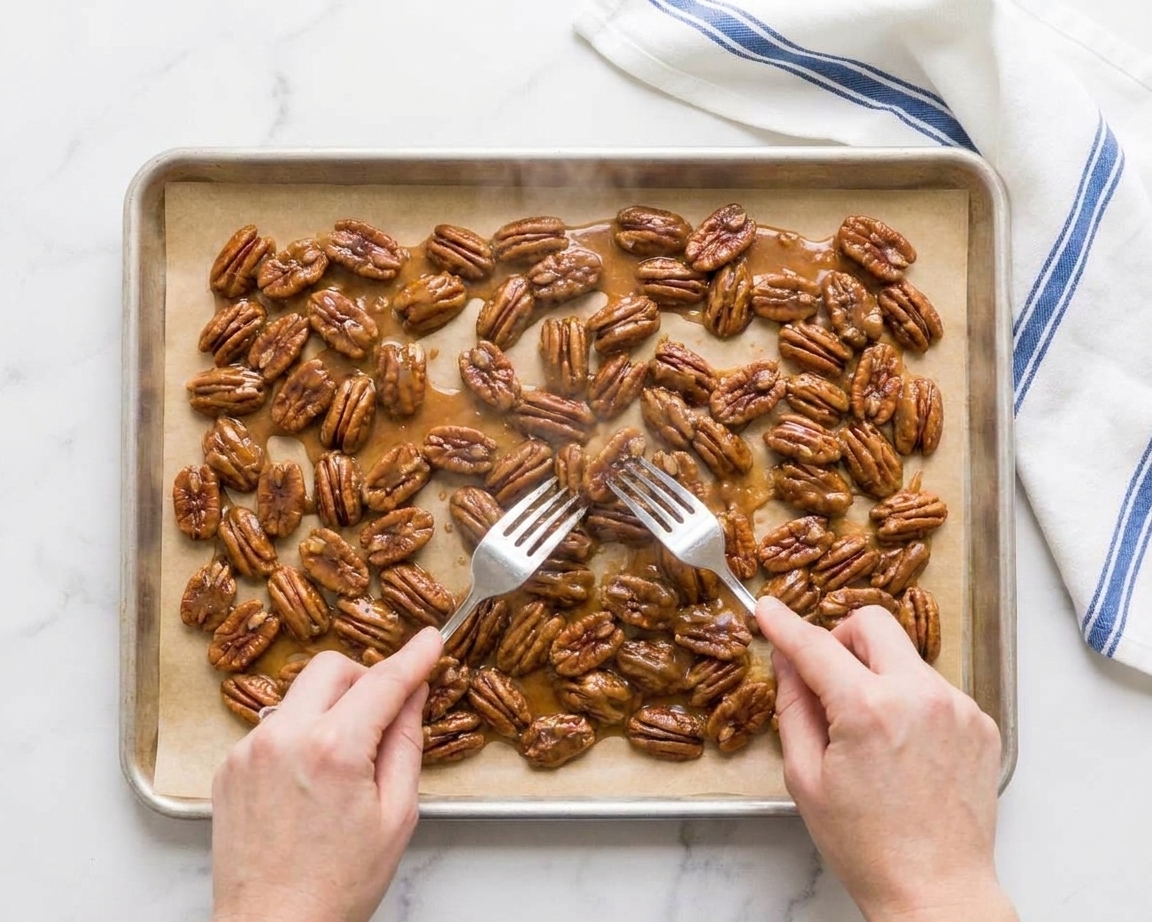
- Two forks: The best low-tech tool for separating nuts fast.
Pro tips
- Watch the syrup, not the clock: Timing can vary depending on your pan, stove, and humidity. Look for steady bubbling, a glossy sheen, and slight thickening.
- Best cue for crisp results: If your pecans look wet at the end, you probably did not cook the sugar mixture long enough. Give it another 30 to 60 seconds of bubbling next time.
- Avoid bitterness: If they taste bitter, the sugar cooked too long or the heat was too high.
- Separate fast: Spread and separate with forks while warm to prevent a mega-cluster.
- Cool fully before storing: Trapped steam softens the coating.
Substitutes that work
- Other nuts: Walnuts and almonds both work. Cashews are delicious but can burn faster, so keep the heat slightly lower and watch closely.
- Nut-free option: Pepitas or sunflower seeds work with this method, but they toast faster and may need slightly reduced toast time and coating cook time.
- Spices: Swap cinnamon for pumpkin pie spice, or use a tiny pinch of cayenne.
Variations
Praline pecans are a perfect place to play, especially when you are trying to use up pantry odds and ends.
- Maple: Replace 2 tablespoons brown sugar with maple syrup. Cook the glaze an extra 30 to 60 seconds to thicken.
- Bourbon vanilla: Add 1 to 2 teaspoons bourbon off heat with the vanilla.
- Orange zest: Stir in 1 teaspoon finely grated zest off heat.
- Rosemary: Add 1/2 teaspoon finely chopped fresh rosemary with the salt for a sweet-savory snack board vibe.
- Spicy: Add a pinch of cayenne and a pinch of smoked paprika.
Serving ideas
Beyond snacking straight from the jar, these are favorite low-effort upgrades:
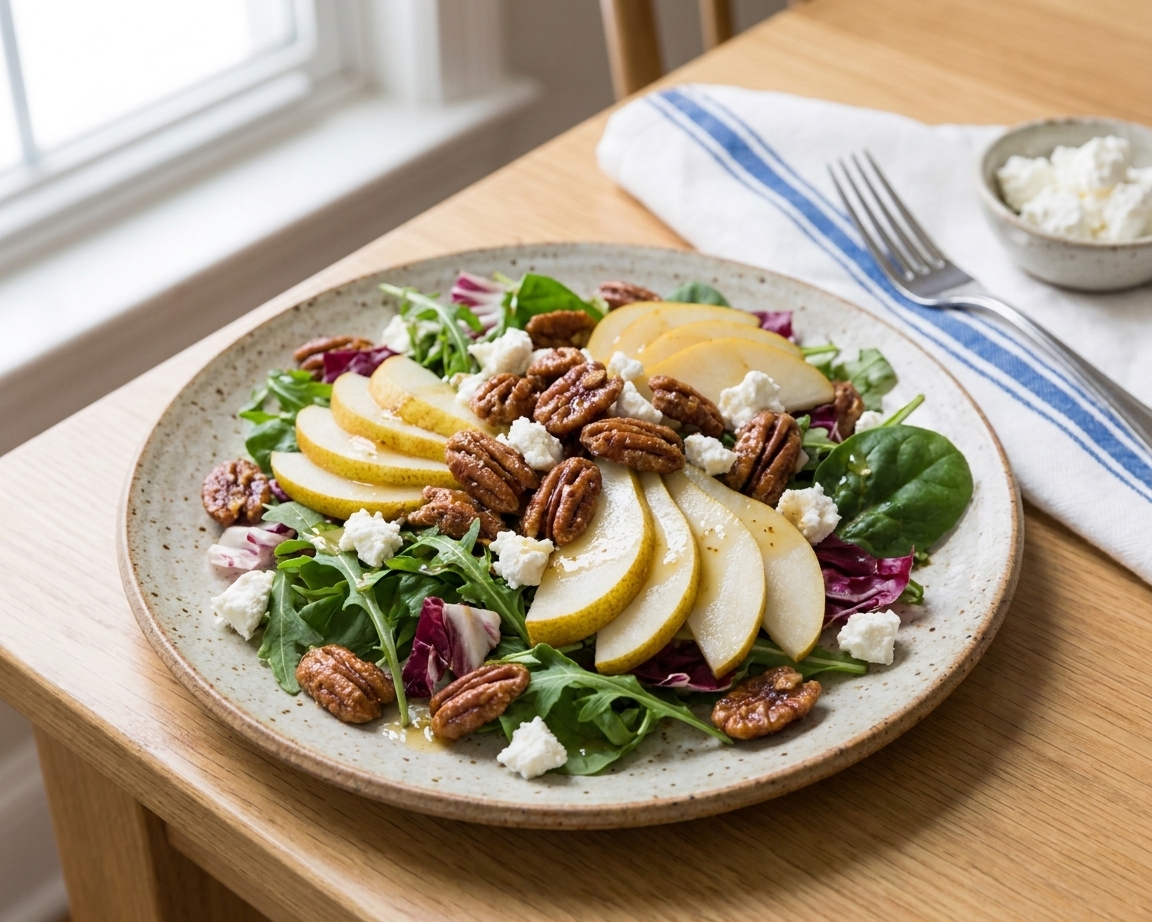
- Salads: Especially with apples or pears, bitter greens, goat cheese, and a punchy vinaigrette.
- Oatmeal or yogurt: Chop and sprinkle for instant crunch.
- Sweet potatoes: Toss on roasted sweet potatoes with a squeeze of lemon to balance the sweetness.
- Ice cream: Vanilla ice cream, warm praline pecans, and a tiny pinch of flaky salt is unfairly good.
- Cheese boards: Add to a board with sharp cheddar, brie, or blue cheese.
Waste-not note: If you have broken pieces at the bottom of the jar, save them. They are perfect for topping muffins, folding into cookie dough, or crusting French toast.
Storage and reheating
Humidity is the enemy of crunchy praline pecans. Let them cool fully before storing so trapped steam does not soften the coating.
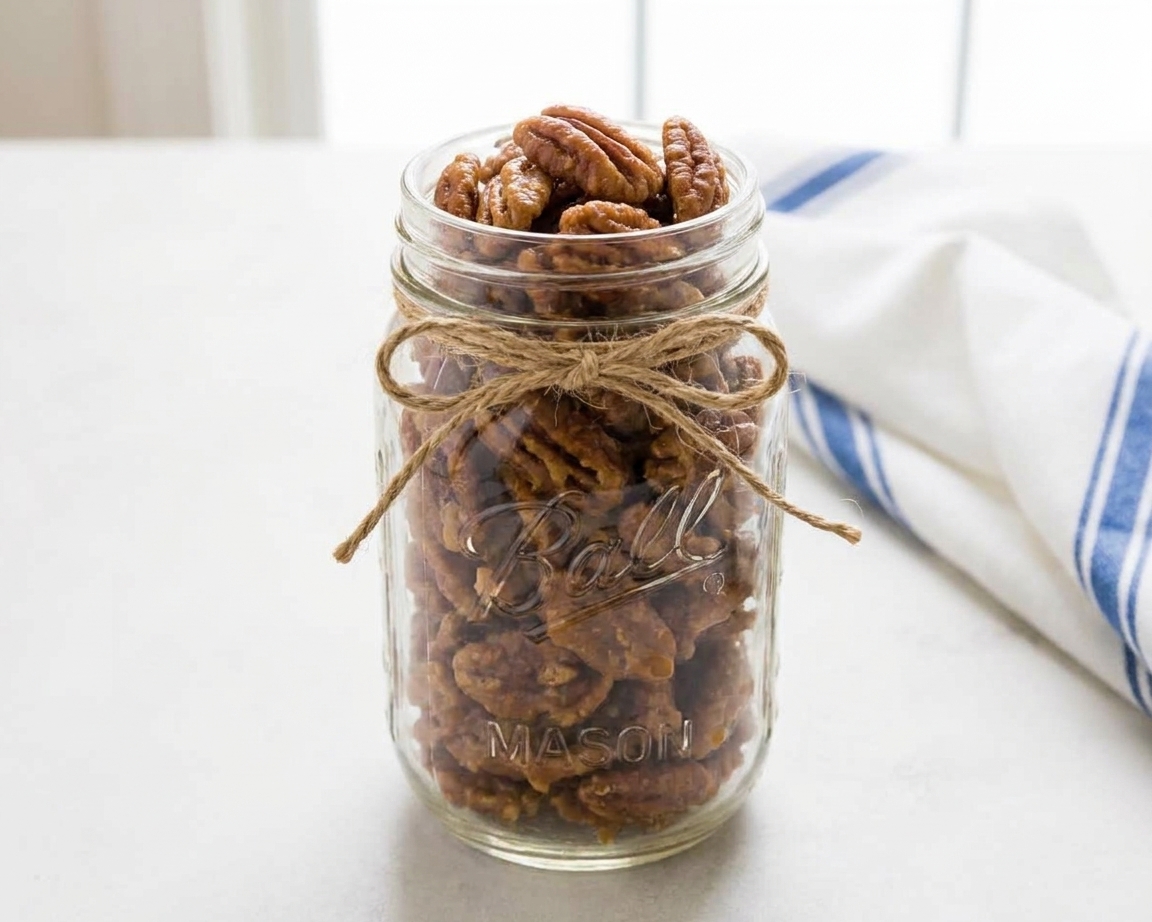
- Room temperature: Store in an airtight jar or container for about 1 to 2 weeks (shorter in humid weather).
- Freezer: Freeze in a zip-top bag for up to 3 months. Thaw at room temp, uncovered for 10 minutes, then seal again.
- To re-crisp: Spread on a sheet pan and warm at 300°F (150°C) for 5 to 8 minutes, then cool.
Gift tip: Slip a square of parchment into the jar if you are stacking multiple layers. It helps prevent clumping if they ride around in a bag all day.
Common mistakes
- Sticky coating: Usually the sugar syrup did not cook long enough, or the nuts were stored before fully cooled. Next time, let the glaze bubble until it thickens and looks lacquered, then cool completely before sealing.
- Grainy coating: Typically from undissolved sugar or sugar crystals forming on the sides of the pan. Stir the brown sugar, butter, and water until the sugar looks mostly dissolved before you start timing, scrape any dry sugar down into the syrup, and keep heat at medium to medium-low.
- All stuck together: Normal if they cool in a pile. Spread and separate with forks while warm. If they cool into one cluster, break them apart with clean hands or a gentle tap from a rolling pin.
- Bitter flavor: Sugar cooked too long or heat was too high.
FAQ
What makes them praline?
“Praline” means a few different things depending on where you are. Traditional French and Belgian pralines are more like filled chocolates. In the U.S. South, pralines are the classic candy with sugar and nuts, often made with milk or cream and a softer, fudge-like texture.
Can I use other nuts?
Yes. Walnuts and almonds both work. Cashews are delicious but can burn faster, so keep the heat slightly lower and watch closely.
Do I need a candy thermometer?
No. You are looking for visual cues: steady bubbling, glossy syrup, and a slight thickening before you add vanilla and nuts. Because stoves and pans vary, your “2 to 4 minutes” might be “3 to 5.” Trust the shine and thickness.
How do I make them less sweet?
Use more salt (start with an extra pinch), add citrus zest, or finish with flaky salt. Sweetness reads lower when the salt and acid are dialed in.
Why add vanilla off heat?
Vanilla is alcohol-based and can taste harsh if boiled hard. Stirring it in off heat keeps the flavor round and aromatic.
Praline Pecans
Sweet, buttery, toasty praline pecans with a glossy, crisp coating made on the stovetop (no candy thermometer). Includes an optional oven method for more hands-off drying and easy double batches.
- Prep
- 5 minutes
- Cook
- 10 minutes
- Total
- 35 minutes
- Yield
- Yield: about 3 cups
Ingredients
- 3 cups pecan halves (about 340 g / 12 oz)
- 1/2 cup packed brown sugar (about 100 g, light or dark)
- 3 tbsp unsalted butter (about 42 g)
- 2 tbsp water (30 ml)
- 1 tsp vanilla extract (5 ml)
- 1/2 tsp fine salt
- 1/2 tsp cinnamon (optional)
- Flaky salt, for finishing (optional but excellent)
Instructions
- Prep your landing zone: Line a baking sheet with parchment paper (or a silicone mat). Set aside two forks, or a heatproof spatula.
- Toast the pecans: Add pecans to a large skillet over medium heat. Toast 3 to 5 minutes, stirring often, until they smell deeply nutty and a shade darker. Transfer them to the lined sheet so they do not keep toasting while you make the syrup (no need to wipe out the skillet).
- Melt the base: Add brown sugar, butter, and water to the skillet over medium heat. Stir until the sugar looks mostly dissolved and the mixture is bubbling evenly.
- Thicken to a glossy syrup: Let it bubble 2 to 4 minutes, stirring frequently, until it looks shiny and slightly thickened. If it is bubbling violently, turn the heat down to medium-low. Sensory cue: when you drag a spatula through, the trail should stay visible for a second before filling in.
- Flavor it: Turn off the heat. Stir in vanilla, salt, and cinnamon (if using).
- Coat the nuts: Add the toasted pecans back into the skillet and stir quickly until every nut is coated and the glaze looks like it is grabbing on, not pooling at the bottom.
- Spread and separate: Immediately scrape onto the lined baking sheet. Use two forks to separate clumps while the coating is still warm. Sprinkle with a pinch of flaky salt if you like.
- Cool until crisp: Let cool completely, about 15 to 20 minutes. They will harden as they cool. Break apart any remaining clusters.
Notes
Oven method: Heat oven to 300°F (150°C). Toast pecans on a sheet pan for 8 to 10 minutes, stirring once. Meanwhile, cook the glaze on the stovetop as written above, but stop when it is glossy and fluid. Toss pecans with glaze, spread on parchment, and bake 10 to 15 minutes, stirring every 5 minutes. Cool completely on the pan to crisp.
Why bake at a lower temp? Sugar and nuts can go from “toasty” to “scorched” fast. Low and slow helps the coating dry out without burning.
My best cue: If your pecans look wet at the end, you probably did not cook the sugar mixture long enough. Give it another 30 to 60 seconds of bubbling next time. If they taste bitter, the sugar cooked too long or the heat was too high.
Troubleshooting graininess: Stir the brown sugar, butter, and water until the sugar looks mostly dissolved before you start timing. Avoid letting dry sugar sit on the skillet sides, scrape it down into the bubbling syrup if you see it, and keep the heat at medium to medium-low.
Nutrition
- Calories: ~240
- Fat: ~22 g
- Carbs: ~12 g
- Protein: ~3 g
- Fiber: ~3 g
- Sugar: ~8 g
- Sodium: ~150 mg
Nutrition values are approximate and will vary by exact ingredients and serving size.