
I have a soft spot for ham and bean soup because it is the most delicious kind of kitchen thrift: a pot of brothy beans that turns a leftover ham bone and a couple of celery stalks into real comfort. This is not a bland pot of beans. We are building a smoky, salty, porky broth on purpose, then letting the beans drink it in until they are tender and creamy without turning the whole pot into paste.

This recipe works whether you have a ham bone, a meaty ham hock, or just diced ham. Starting with dry beans usually gives you the creamiest centers and the richest broth, simply because they simmer longer and release a little starch as they cook. Canned beans can still make a great pot on a weeknight, especially if you take a few minutes to simmer the ham and aromatics first so the broth actually tastes like ham.
Two things I want you to feel confident about from the start: when to salt and how to fix a pot that cooked down too far. Ham varies wildly, so I like to hold off on final salting until the ham has simmered and you have tasted the broth. And if you look up and realize your “soup” is now bean stew, you are not stuck: thin it with hot water or low-sodium broth, then taste again and rebalance at the end with a small splash of vinegar or lemon.
What to expect
- Smoky, brothy finish: like classic pork-and-beans, not thick puree.
- Bean timing you can trust: expect a range, then cook to the cue that matters. The beans should be creamy inside, not chalky, and the skins should be intact, not blown out.
- Salt strategy: season in layers. Let the ham do its thing first, then adjust near the end after you taste.
- Built-in flexibility: ham bone, hock, or diced ham all work.
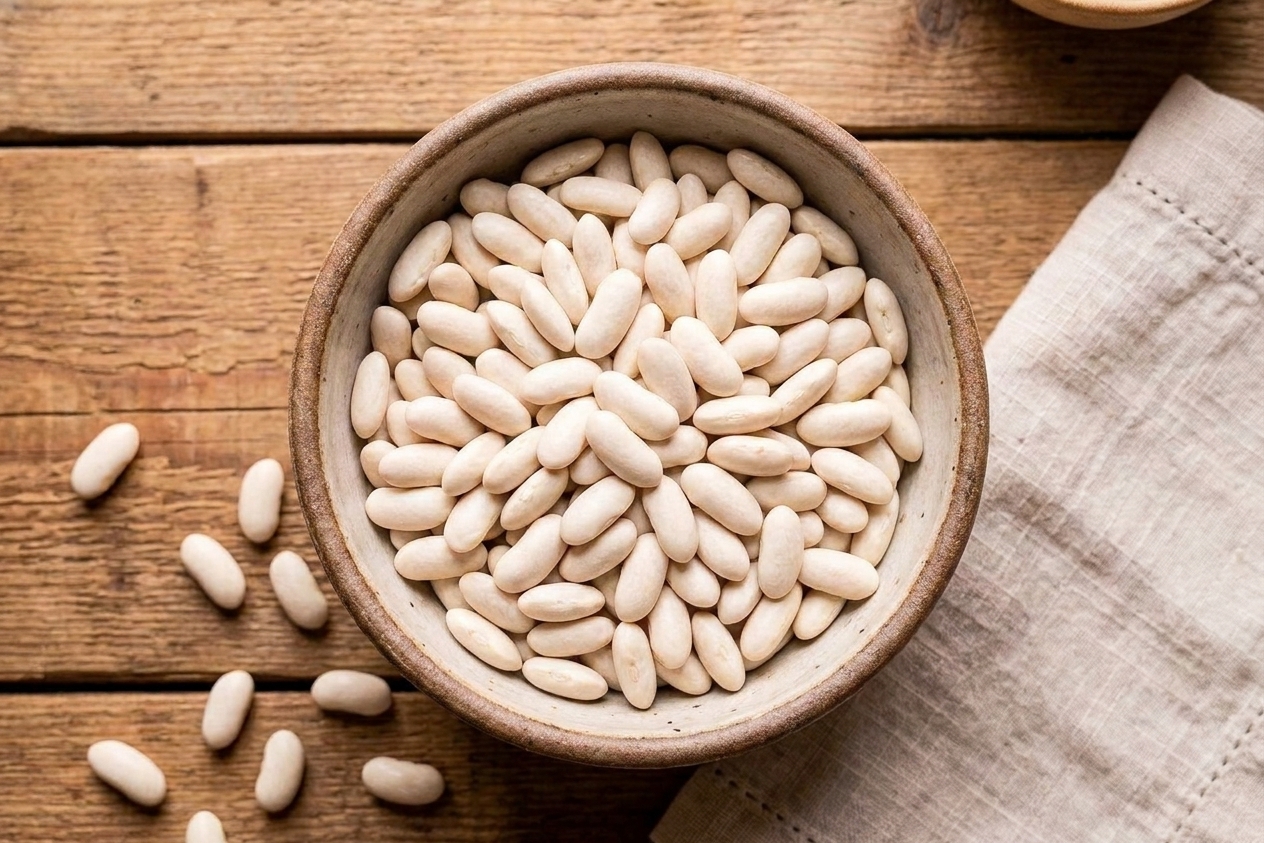
My weeknight shortcut if you are using canned beans
If all you have is canned cannellini or navy beans, you can still get a smoky broth. Simmer the ham (bone, hock, or diced ham) with onion and celery for 20 to 30 minutes first, just until the broth tastes hammy and the aromatics have softened. Then add rinsed canned beans and cook about 10 more minutes, just long enough to heat them through without turning them ragged. You will not get the same bean-to-broth body as dry beans, but you will absolutely get a satisfying, salty-smoky bowl.
Why this recipe works
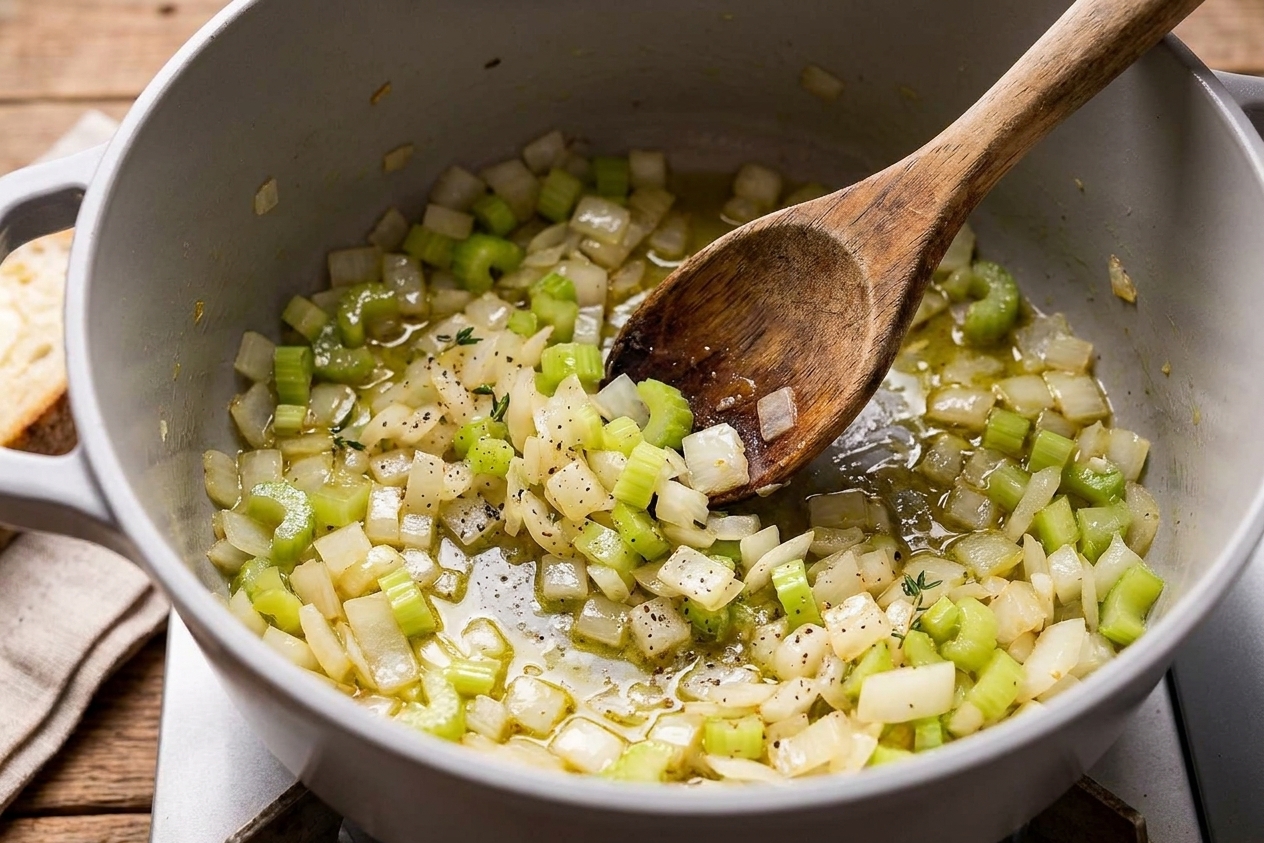
- Aromatics first: sweating onion and celery in a little fat builds a savory base so the soup tastes seasoned, not just boiled.
- Ham simmers before final salting: the ham bone or hock releases plenty of salt and smoke. Waiting to fully salt until the beans are nearly tender helps prevent over-seasoning.
- Brothy by design: we add enough liquid, then adjust at the end so it eats like soup even after a longer simmer.
- Finish with acid: a small splash of vinegar or lemon wakes up the whole pot and balances the richness of pork and beans.
Ingredient notes
White beans
Great choices are navy beans (classic, smaller, creamy) or cannellini (bigger, silky). Dry beans vary in age, so always cook to texture, not the clock.
Ham bone, hock, or diced ham
Ham bone: best flavor, especially if there is still some meat clinging to it. Smoked ham hock: very flavorful and smoky, sometimes saltier. Diced ham: fastest, but add part early for broth flavor and part late so you still get distinct ham bites.
Onion and celery
This is the classic backbone. If you have carrots, feel free to add one for sweetness, but it is optional.
Smoky seasoning
If your ham is not very smoky, a little smoked paprika makes the soup taste like it simmered all afternoon.
Acid to finish
Apple cider vinegar, red wine vinegar, or lemon juice all work. Add it at the end, taste, and stop when the flavor feels brighter.
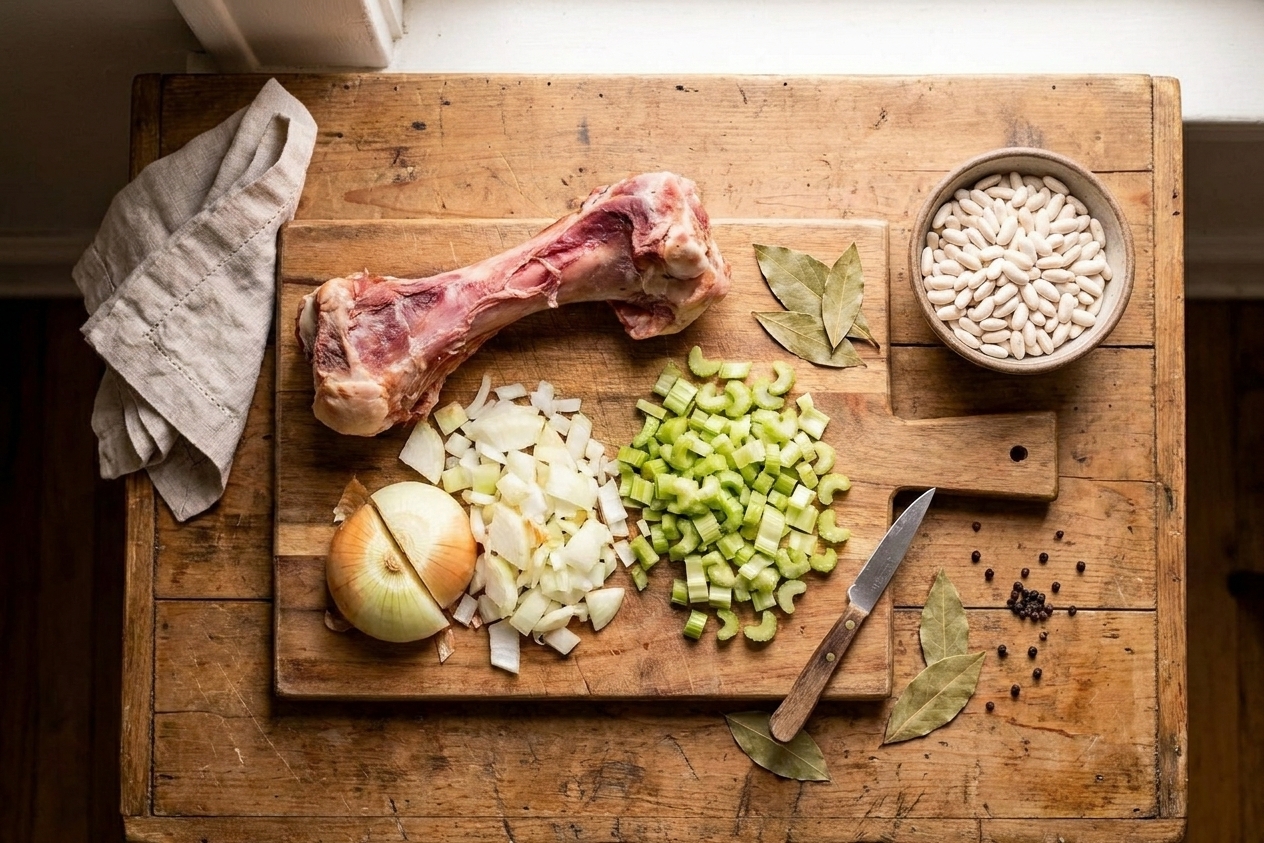
Equipment you will need
- Large heavy-bottomed pot or Dutch oven (6 quart is ideal)
- Fine-mesh strainer (for rinsing beans)
- Ladle
- Tongs (for removing the bone or hock)
- Cutting board and sharp knife
Pro tips
Bean timing (dry beans)
- No soak: plan on 75 to 120 minutes of gentle simmering.
- Overnight soak: plan on 45 to 75 minutes.
- Doneness cue: a bean should split easily when pressed, with a creamy center. If the skins are tight or the centers taste chalky, keep going.
When to salt
Start with no added salt (or just a small pinch) until you have simmered the ham for a bit and the beans are well on their way. When the beans are almost tender, taste the broth and add salt a little at a time. Ham varies widely in saltiness.
How to thin soup that cooked down too far
Add hot water or low-sodium broth in small splashes, stir, and simmer 2 to 3 minutes. Then taste for salt again. The beans will keep absorbing liquid as they sit, so it is normal to thin twice: once at the end of cooking and again when reheating.
Keep it brothy
Stir gently and not too often. Over-stirring breaks beans and thickens the pot. If you want a little body without losing broth, mash a small ladleful of beans against the side of the pot and stir it back in.
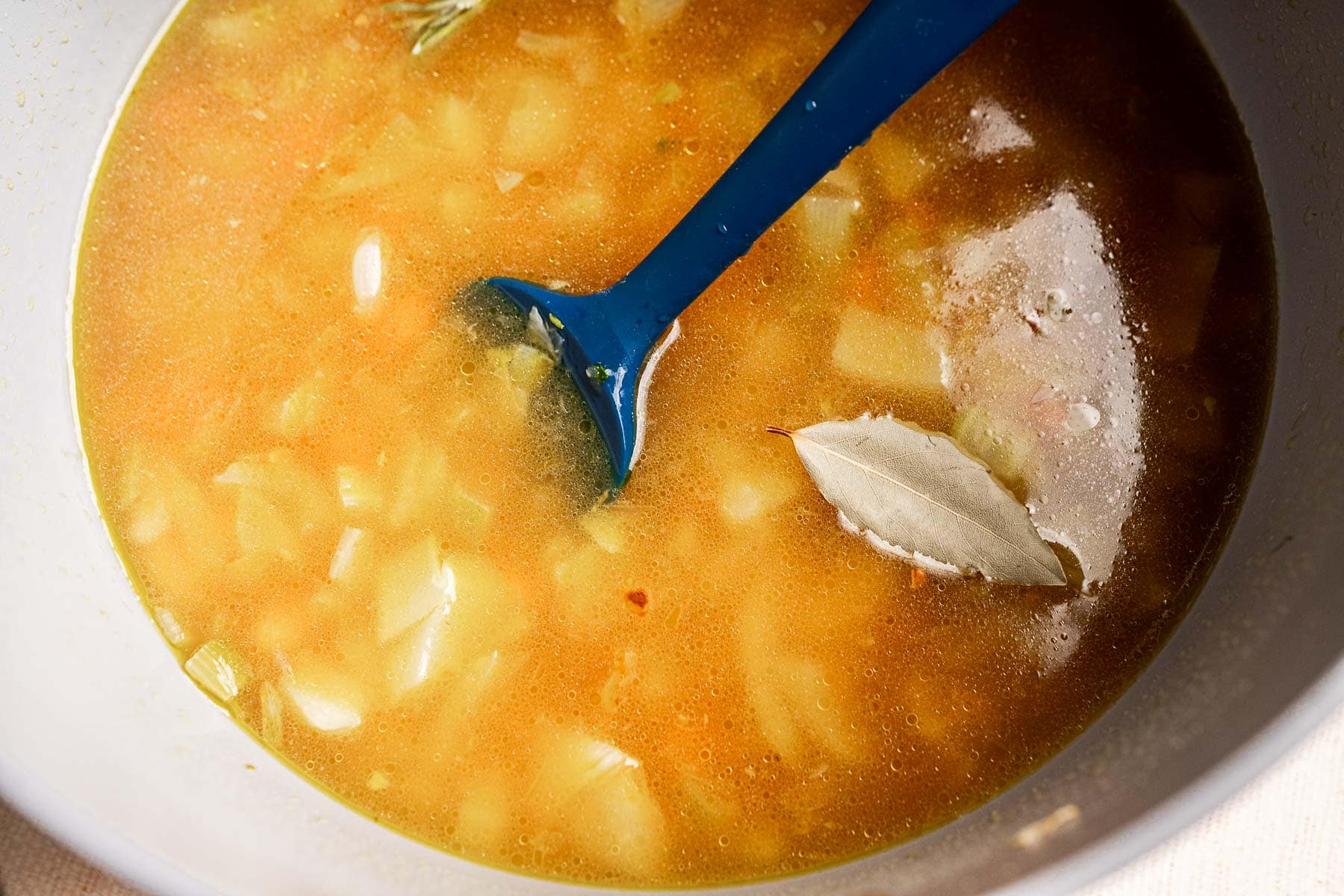
Substitutes that work
- No ham bone: use a smoked ham hock, smoked turkey leg, or thick-cut bacon plus extra broth.
- No celery: use fennel (nice and aromatic) or a pinch of celery seed.
- No smoked paprika: use sweet paprika plus a tiny pinch of chipotle powder, or skip it if your ham is already very smoky.
- No bay leaf: add a sprig of thyme or rosemary, then remove before serving.
Variations
Tomato-kissed ham and beans
Add 1 to 2 tablespoons tomato paste when you sauté the onion and celery. It deepens the broth and adds a subtle sweetness.
Greens at the end
Stir in chopped kale or Swiss chard during the last 5 minutes, just until tender. Great for using up that half-bunch in the crisper.
Spicy and smoky
Add a pinch of crushed red pepper with the aromatics, or finish bowls with hot sauce.
Serving ideas
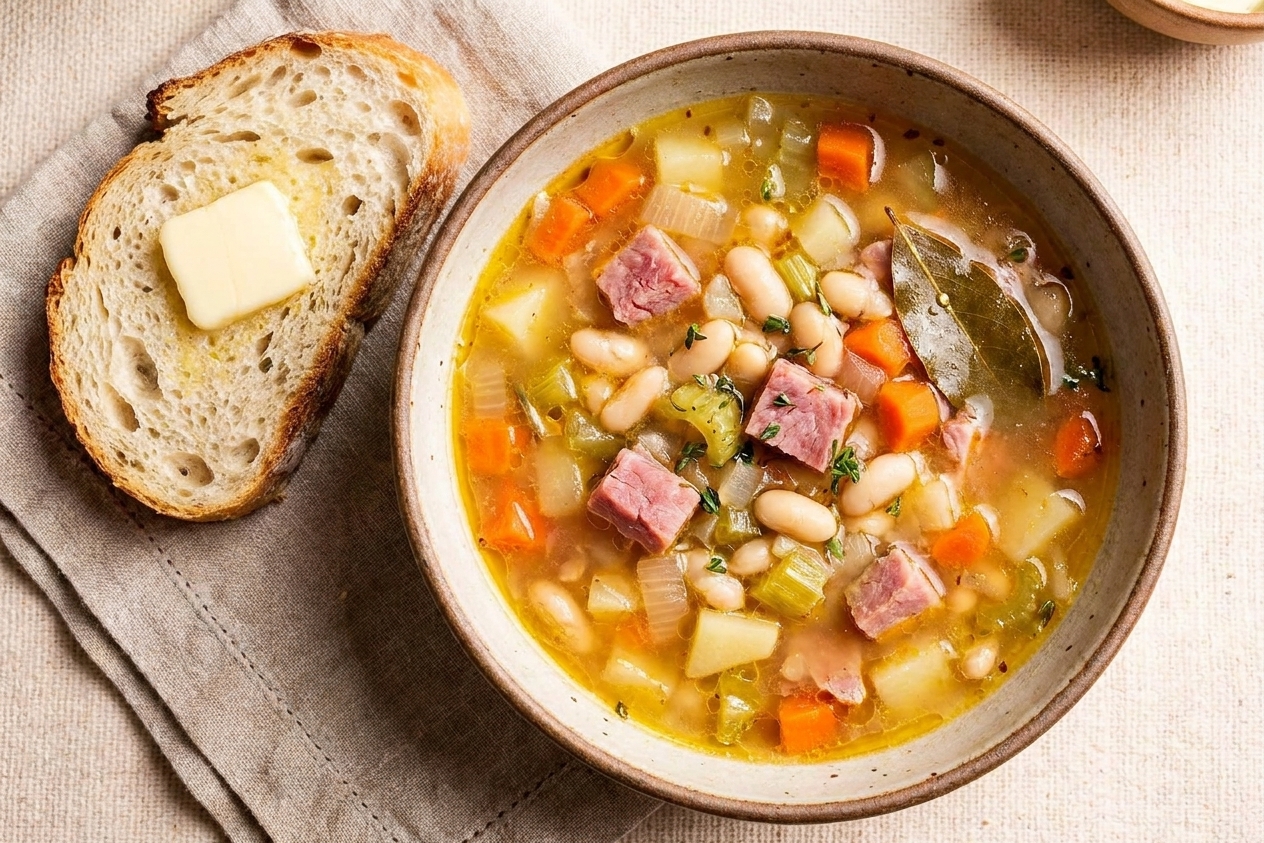
- With crusty bread for dunking, or buttered toast if that is what you have.
- With a crunchy salad dressed with lemon and olive oil to balance the rich soup.
- As a full meal with a simple side of roasted cabbage or sautéed greens.
Storage and reheating
Refrigerator
Store in an airtight container for up to 4 days. Expect the beans to keep soaking up broth.
Freezer
Freeze for up to 3 months. Cool completely first. Thaw overnight in the fridge for best texture.
Reheating
Reheat gently on the stove, adding hot water or low-sodium broth to loosen to your preferred brothiness. Taste for salt after thinning.
Common mistakes
- Over-salting early: ham can be very salty. Hold back until the beans are nearly tender, then season with intention.
- Boiling hard: a rapid boil can break beans and make the broth cloudy and thick. Aim for a gentle simmer.
- Not adding enough liquid: beans absorb a surprising amount. Keep extra hot water nearby.
- Stopping before the beans are truly done: “almost” tender beans get worse as they cool. Cook until creamy inside.
FAQ
Do I need to soak the beans?
No. Soaking speeds things up and can help beans cook more evenly, but a no-soak simmer works well. Just budget more time and keep an eye on your liquid level.
Why are my beans not getting tender?
Most often the beans are older and need more time. Keep the simmer gentle and steady. If your pot looks dry, add hot water. Also make sure you are not cooking at a hard boil, which can toughen skins.
Can I make this in advance?
Yes, and it gets better. The next day, add a splash of hot water or broth while reheating to bring back the brothy texture.
How do I fix soup that tastes flat even though it is salty?
Add a small splash of vinegar or lemon juice, then taste again. Acid is the missing piece in many bean soups.
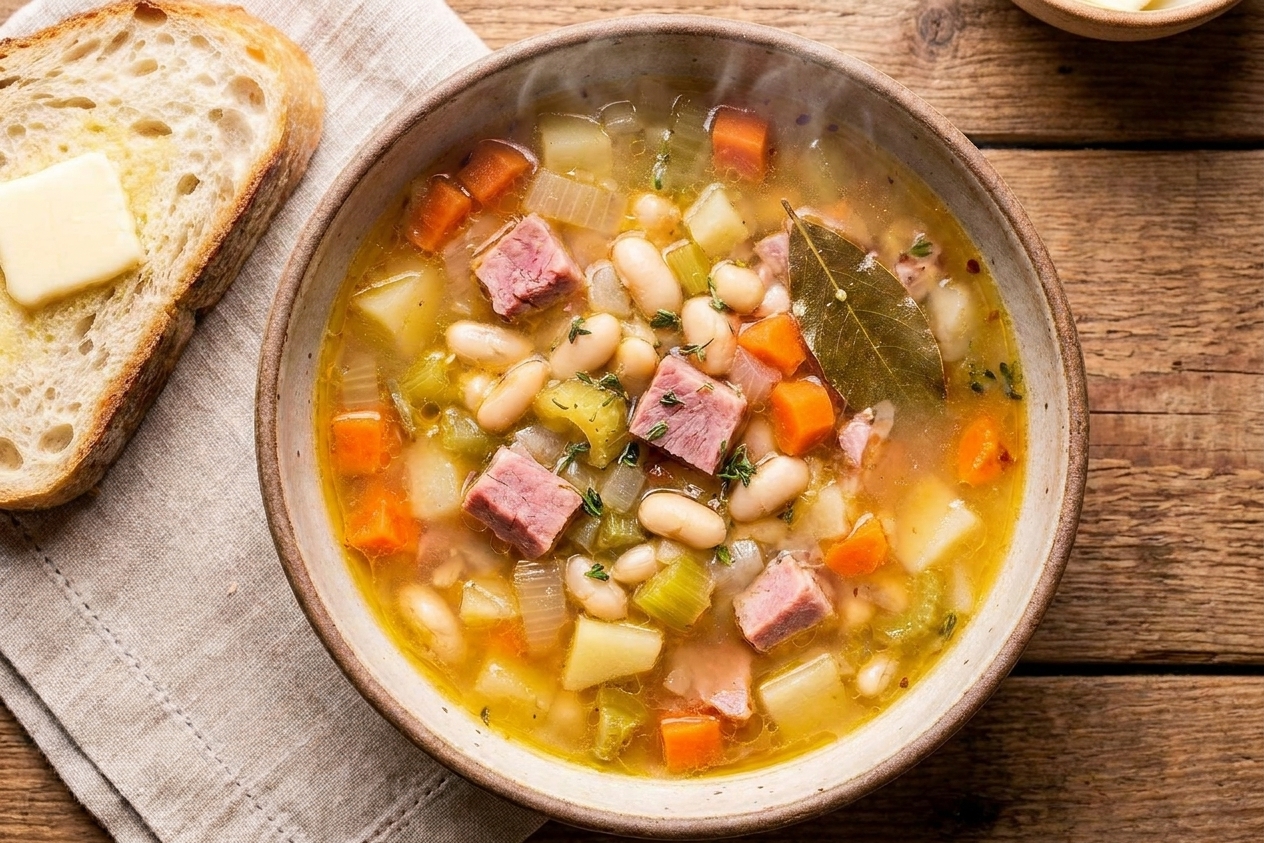
Smoky Ham and White Bean Soup
A smoky, brothy ham and white bean soup built from a ham bone or diced ham, onion, and celery. Includes clear bean timing, when to salt, and an easy fix for soup that reduced too much.
- Prep
- 15 minutes
- Cook
- 1 hour 45 minutes
- Total
- 2 hours
- Yield
- 6
Ingredients
- 1 lb (about 2 cups) dry navy beans or cannellini beans, picked over and rinsed
- 1 tbsp olive oil (or 1 tbsp rendered fat from the ham, if available)
- 1 large yellow onion, diced
- 2 celery stalks, diced
- 3 cloves garlic, minced
- 1 meaty ham bone or 1 smoked ham hock (about 1 to 1 1/2 lb), or 2 cups diced ham (see notes)
- 8 cups water or low-sodium chicken broth, plus more as needed to keep it brothy
- 1 bay leaf
- 1/2 tsp smoked paprika (optional, especially helpful if your ham is not very smoky)
- Freshly ground black pepper, to taste
- Kosher salt, to taste (added near the end)
- 1 to 2 tsp apple cider vinegar or lemon juice, to finish
- Optional garnish: chopped parsley
Instructions
- Sweat the aromatics. In a large heavy-bottomed pot or Dutch oven over medium heat, warm the olive oil. Add the onion and celery and cook, stirring occasionally, until softened and glossy, 6 to 8 minutes. Add the garlic and cook 30 seconds, just until fragrant.
- Add beans, ham, and liquid. Add the rinsed beans, ham bone or ham hock (or see step 7 if using diced ham), water or broth, bay leaf, smoked paprika (if using), and a few grinds of black pepper. Bring to a boil, then immediately reduce to a gentle simmer.
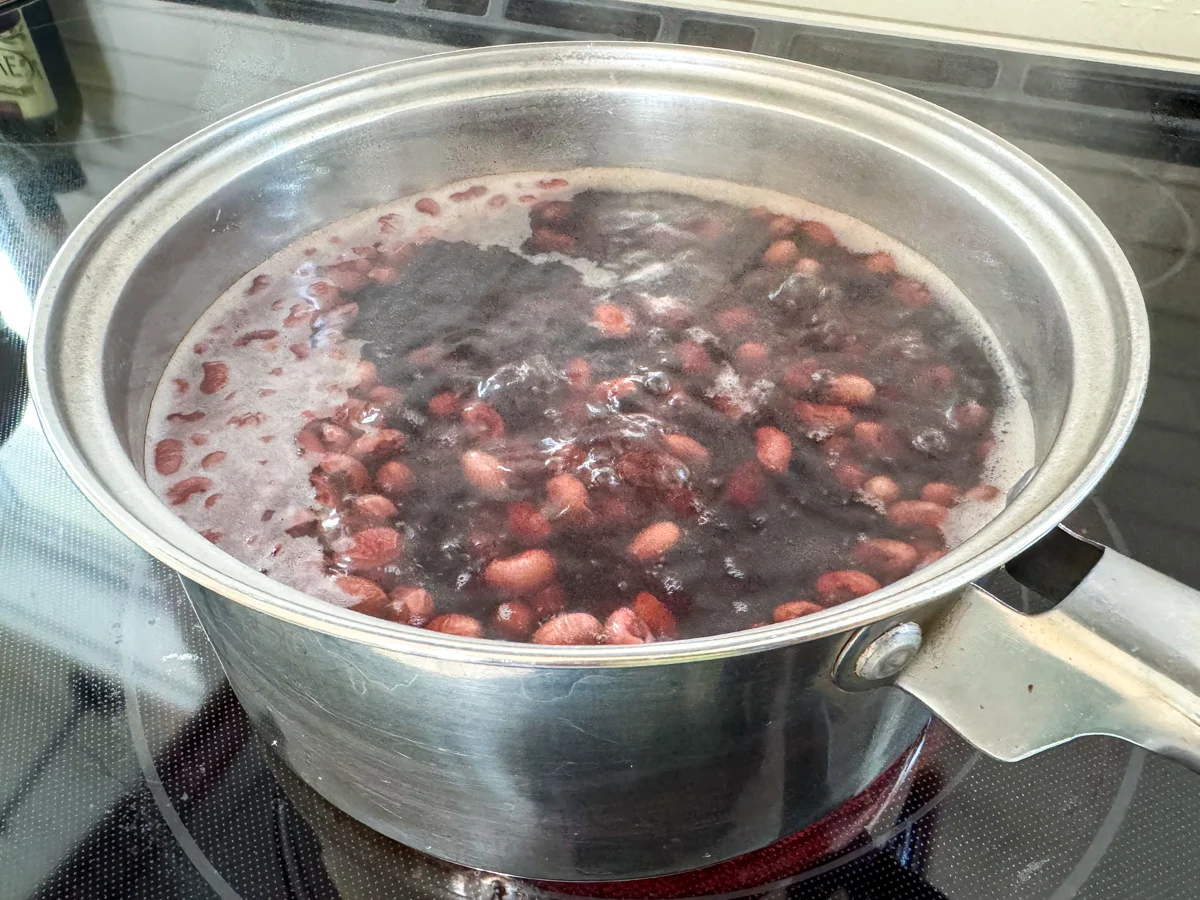
- Simmer until the beans are tender. Partially cover and simmer, stirring occasionally and scraping the bottom gently, until beans are creamy and tender. Timing will vary: 75 to 120 minutes for unsoaked beans, or 45 to 75 minutes for soaked beans. If the liquid level drops below the beans at any point, add hot water to keep everything submerged.
- Remove the bone or hock, then shred. Transfer the ham bone or hock to a plate. When cool enough to handle, pull off any meat, chop or shred it, and discard bone, skin, and excess fat. Return the meat to the pot.
- Season in layers, late. When the beans are tender, taste the broth and add kosher salt a little at a time until the soup tastes savory and well-seasoned. Simmer 5 minutes, then taste again. Ham varies, so let your spoon be the boss.
- Adjust to a brothy finish. If the soup has reduced and looks more like stew, stir in hot water or low-sodium broth a splash at a time until it is brothy again. Simmer 2 to 3 minutes to blend.
- If using diced ham. For best flavor, add 1 cup diced ham in step 2 so it seasons the broth. Add the remaining 1 cup during the last 10 minutes of simmering so you still get distinct ham pieces in the bowl.
- Finish with acid. Off heat, stir in 1 teaspoon vinegar or lemon juice. Taste and add the remaining teaspoon only if it needs more brightness. Remove the bay leaf.
- Serve. Ladle into bowls. Garnish with parsley if you like. Serve hot, with bread for dunking.
Notes
Soaking option: If you want faster cooking, soak the beans in plenty of cold water overnight, then drain and rinse before using.
Keeping it brothy: Beans keep absorbing liquid as the soup sits. Plan to add a splash of water or broth when reheating.
Prefer a little more body: Mash a small ladleful of beans against the side of the pot and stir back in, but keep most beans intact so the soup stays brothy.