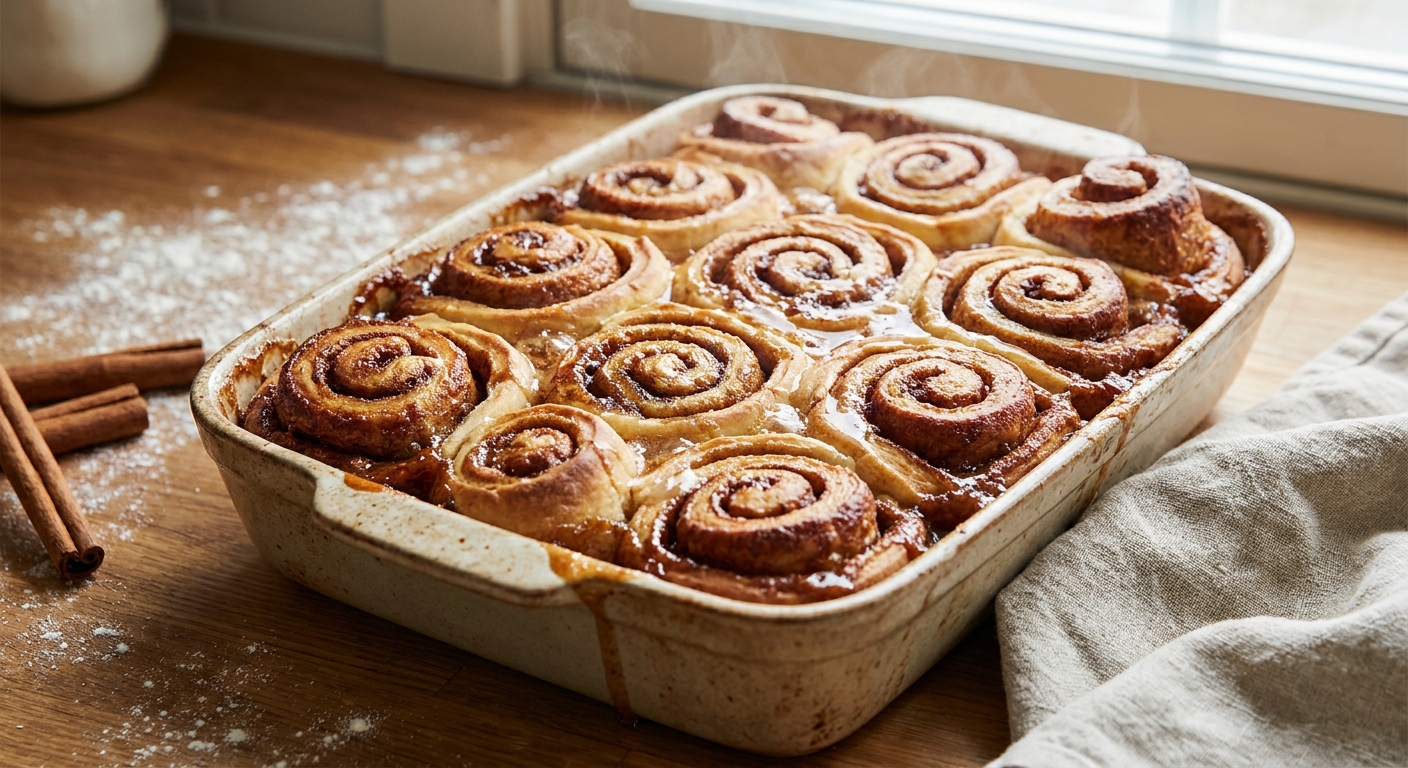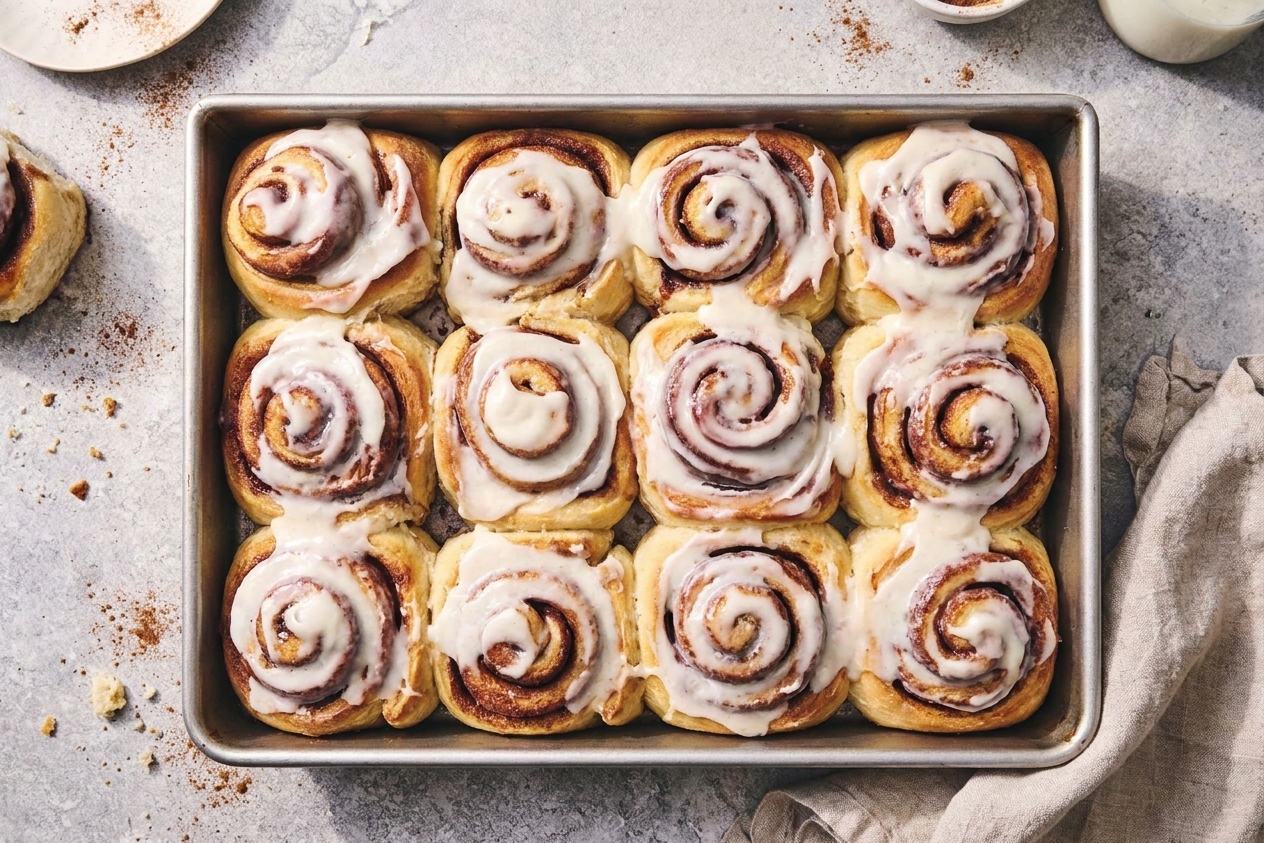

In my house growing up, “special breakfast” meant something warm, sweet, and tearable. Cinnamon rolls were the crown jewel, but they always felt like a weekend bakery project until I started teaching and realized most of the stress comes from unclear cues, not the dough itself.

These sourdough cinnamon rolls are the version I make when I want that bakery-soft bite without relying on commercial yeast. The rise comes entirely from an active, bubbly starter, then I slow everything down with an overnight cold ferment. The reward is a dough with deeper flavor, plus a chill that makes shaping calmer and cleaner, even if the dough still feels soft and a little tacky. That tackiness is normal for enriched sourdough, and a light touch (and minimal flour) goes a long way.
Here is what to expect: you will mix and bulk ferment on day one, refrigerate overnight, then roll, shape, proof, and bake on day two. I will walk you through what the dough should feel like during bulk and proof, and the exact cues that tell you, “Yes, it is ready,” so you are not guessing by the clock.
If you keep a starter and can catch it at peak or just after peak, this recipe is for you. You do not need to bake sourdough every week, you just need a starter that is awake and ready to work.
Why this recipe works
- Active starter, not commercial yeast: The dough rises from a healthy, recently fed starter, which gives a gentle tang that plays beautifully with cinnamon and cream cheese.
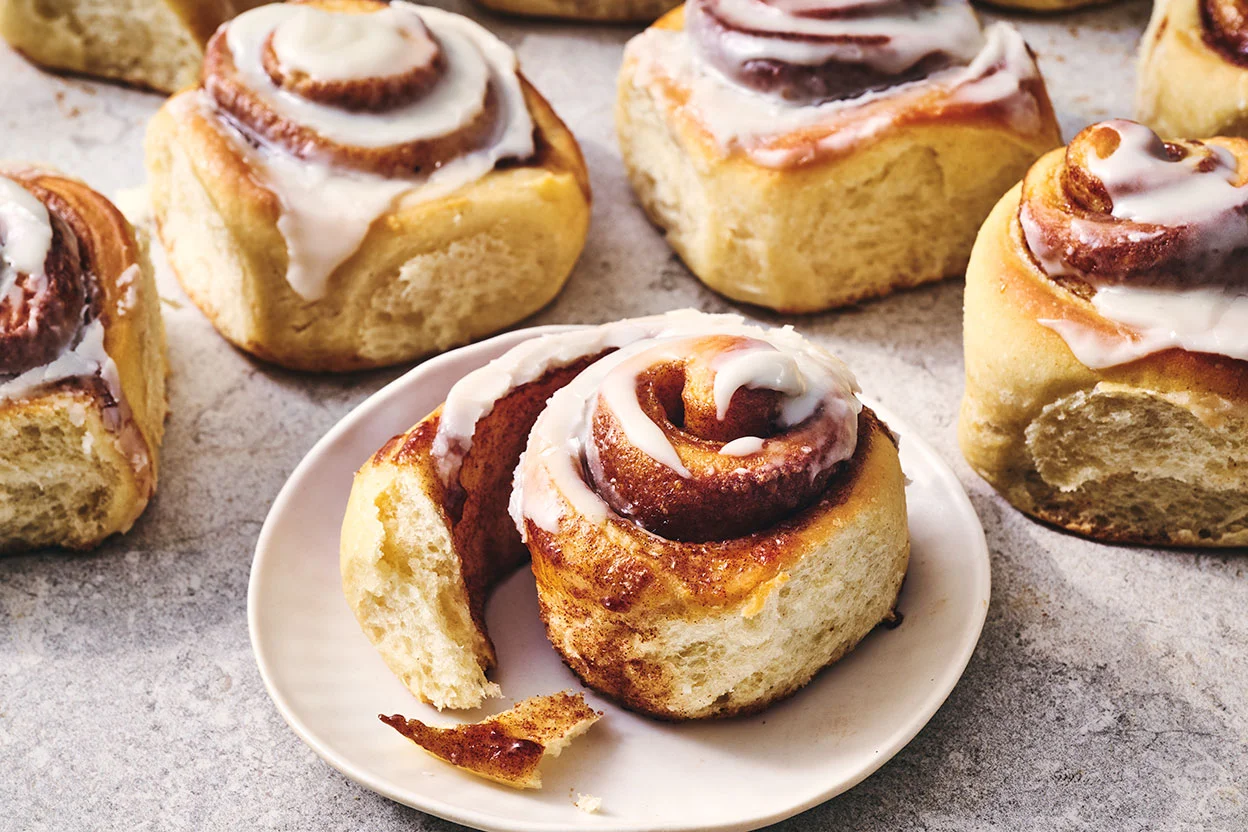
- Enriched dough stays soft: Milk, butter, egg, and sugar tenderize the crumb so the rolls bake up pillowy, plush, and tender.
- Overnight cold ferment improves flavor and handling: Chilling the dough tightens it up for easier shaping and helps the rolls taste more complex without extra effort.
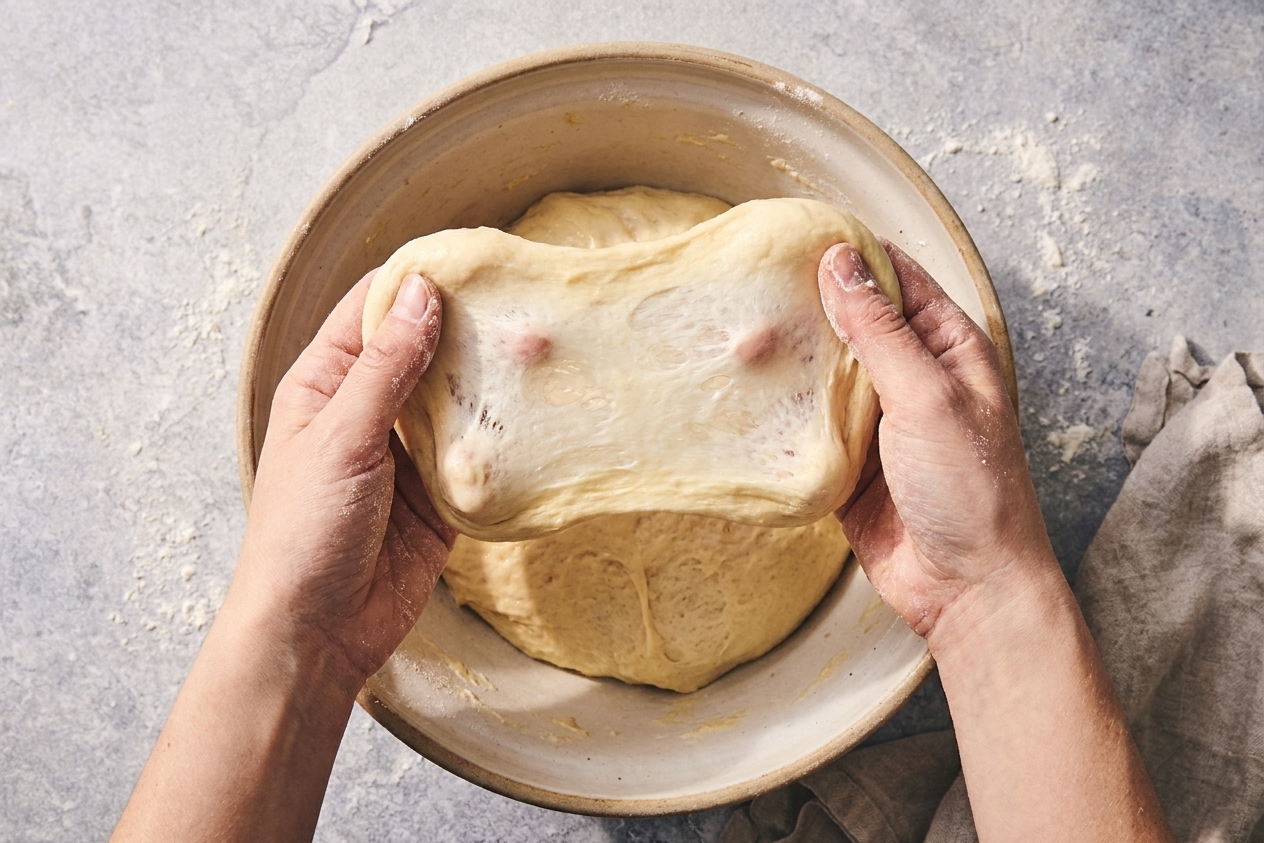
- Clear fermentation cues: Instead of chasing the clock, you will look for volume increase, bubbles, and a dough that feels airy and elastic before shaping.
- Heavy cream in the pan (optional but wonderful): A splash around the rolls before baking turns the bottoms gooey and rich without making them greasy.
Ingredient notes
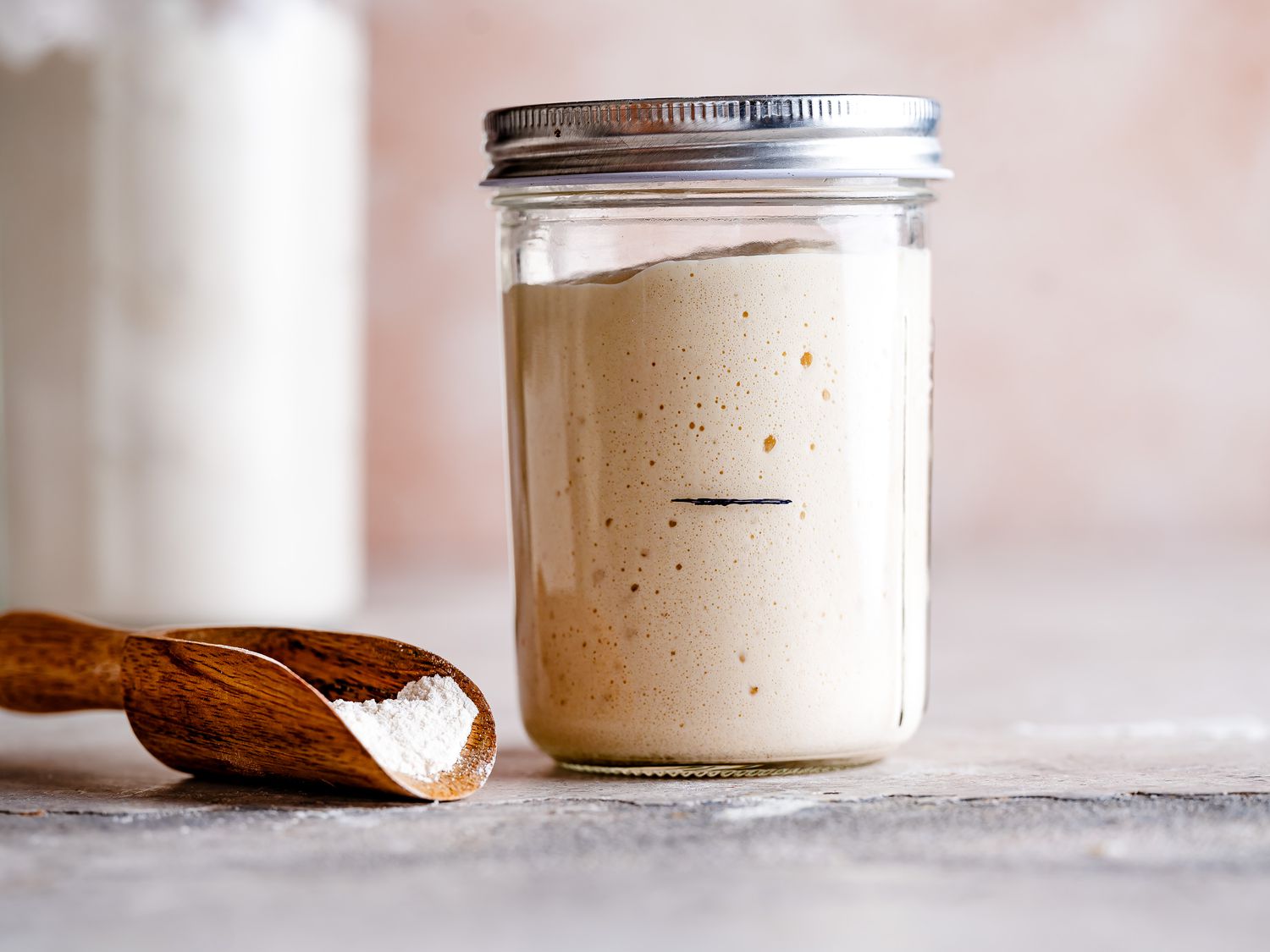
Active sourdough starter: Use starter at peak or just after peak. It should look domed and bubbly and smell pleasantly tangy, not sharply acidic. If it floats in water, that is a nice sign, but the look and smell matter more.
Flour: Bread flour gives the tallest, fluffiest rolls. All-purpose flour works too, just expect slightly less height and a softer structure. If your kitchen is humid, hold back a tablespoon or two of milk and add only if needed.
Milk: Whole milk makes the dough tender. Any milk works. If using plant milk, choose one that is unsweetened and unflavored.
Butter: Use softened butter in the dough so it incorporates fully. Melted butter can make the dough feel greasy and harder to develop.
Brown sugar and cinnamon: Brown sugar brings moisture and a caramel note. Fresh cinnamon tastes louder and warmer.
Cream cheese: Full-fat cream cheese makes an icing that sets into a soft, swoopy layer instead of melting into a puddle.
Equipment you will need
- Stand mixer with dough hook or a large mixing bowl for hand mixing
- Digital scale (highly recommended for consistent dough feel)
- 9x13-inch baking pan or similar size casserole dish
- Rolling pin
- Bench scraper (optional but helpful for clean shaping)
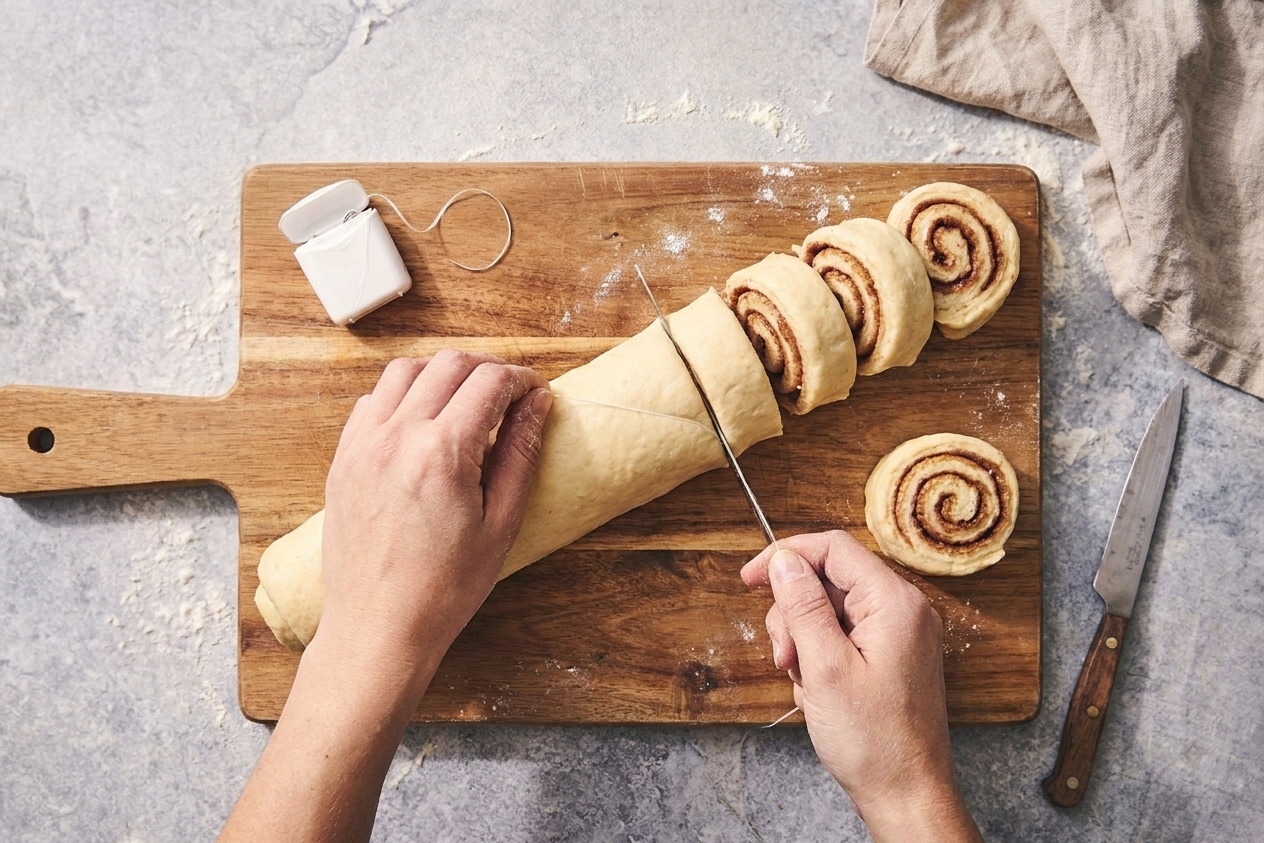
- Dental floss or thin thread for slicing neat spirals
- Instant-read thermometer (optional for checking doneness)
Pro tips
What the dough should feel like before shaping
After bulk fermentation and a chill, the dough should feel cool, puffy, and elastic. When you press it with a fingertip, it should spring back slowly and leave just the faintest indentation. If it feels dense and tight, it needs more time at room temperature.
Bulk fermentation cues
- Look for 50 to 75 percent rise in volume, not necessarily a full doubling.
- Surface should look smoother and slightly domed, with small bubbles along the sides and bottom of the bowl.
- Dough should feel lighter and less sticky as gluten develops.
Final proof cues
- Rolls should look plump and be touching or almost touching.
- Do a gentle poke test: the dough should spring back slowly, not snap back immediately.
For clean swirls
Chill the shaped log for 10 minutes if it feels too soft to cut neatly. Then slice with floss for picture-perfect spirals.
Substitutes that work
- No bread flour: Use all-purpose flour. Start by holding back a small amount of liquid and add only if the dough feels dry.
- No cream cheese for icing: Make a simple vanilla glaze with powdered sugar, milk, a pinch of salt, and vanilla.
- No brown sugar: Use granulated sugar plus 1 teaspoon molasses if you have it. Or use all granulated sugar for a cleaner sweetness.
- Dairy-free: Swap in plant milk, vegan butter, and a dairy-free cream cheese. The proof may run slightly faster or slower depending on the brands used.
Variations
- Orange cinnamon rolls: Add orange zest to the filling and a little orange juice to the icing.
- Cardamom rolls: Replace half the cinnamon with ground cardamom for a floral, bakery-style twist.
- Pecan sticky buns: Scatter toasted pecans over the filling and spoon a thin layer of butter-brown sugar syrup into the bottom of the pan before adding the rolls.
- Raisin walnut: Sprinkle raisins and chopped walnuts over the cinnamon sugar before rolling.
Serving ideas
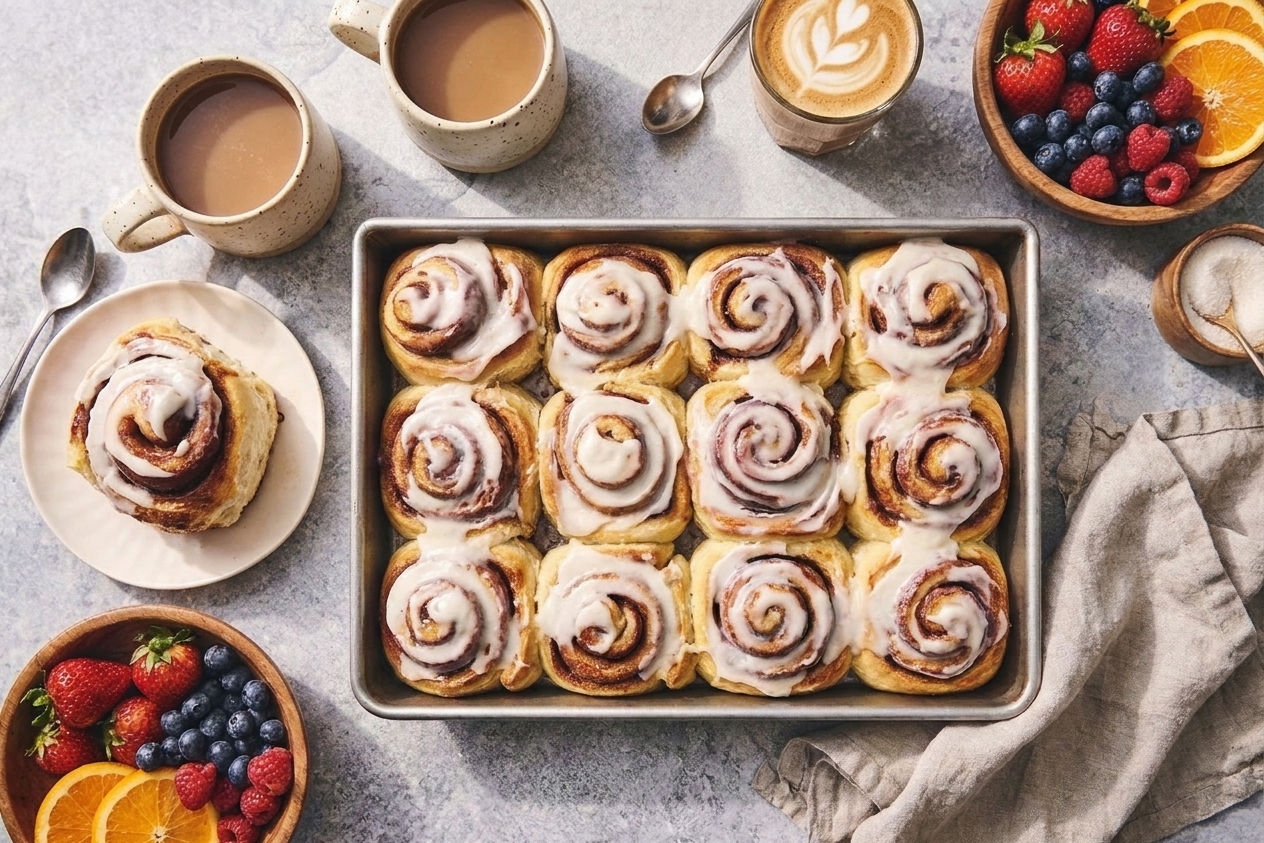
- Serve warm with hot coffee and a pinch of flaky salt over the icing for that sweet-salty finish.
- Pair with fresh fruit for brightness. Acid is your friend with rich dough.
- For a brunch spread, add scrambled eggs and something crunchy like toasted nuts or granola.
Storage and reheating
- Room temperature: Store covered for up to 2 days. The icing helps keep them soft.
- Refrigerator: Up to 5 days, tightly covered. Let come to room temp or warm before serving.
- Freezer: Freeze baked, un-iced rolls for up to 2 months. Thaw overnight in the fridge, then warm and ice.
- Reheating: Microwave individual rolls for 15 to 25 seconds, or warm the whole pan covered in a 300°F oven until soft and heated through.
Common mistakes
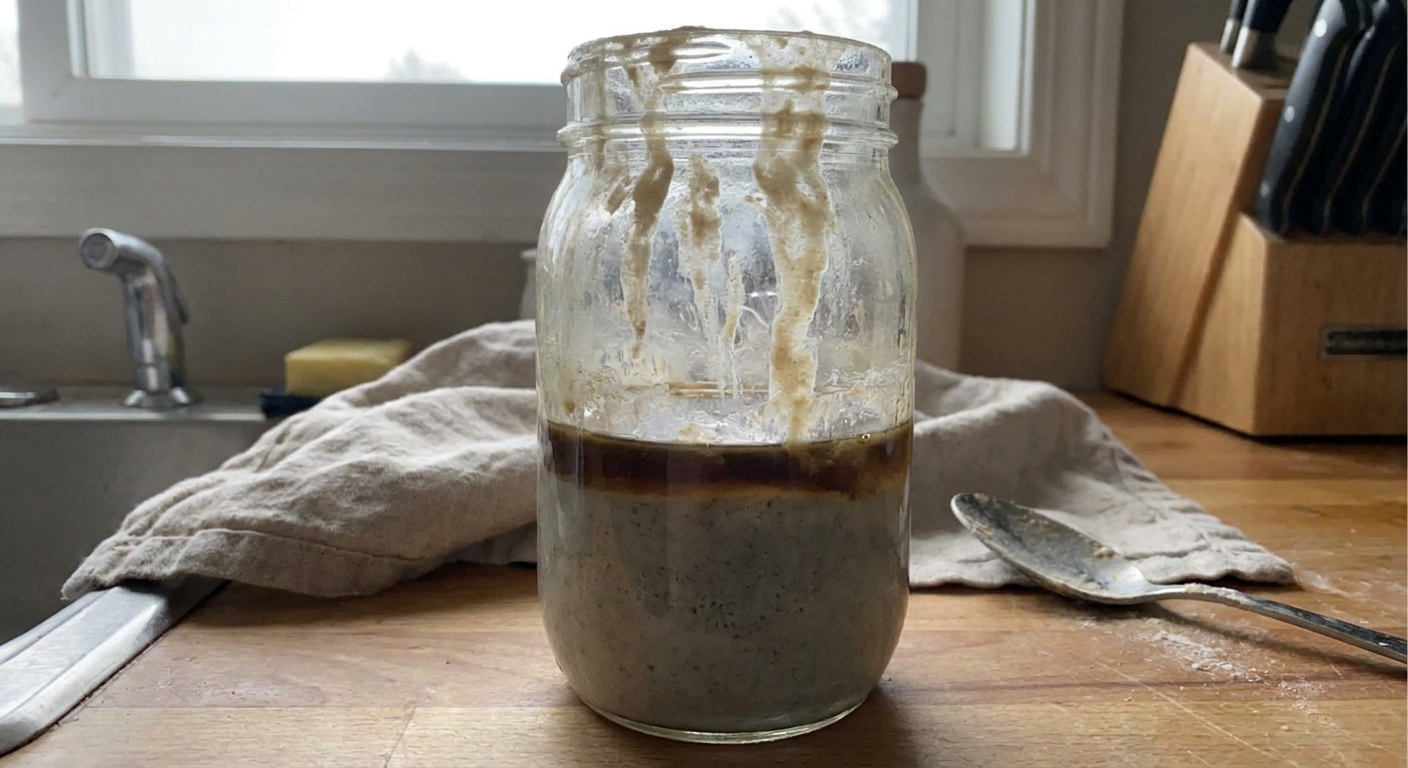
- Using starter that is not active: If your starter is sluggish, the dough will be too. Feed it and wait for it to peak before mixing.
- Over-flouring during rolling: Too much flour prevents a tight roll and can create dry seams. Use the minimum needed to keep the dough from sticking.
- Spreading cold butter for the filling: Cold butter tears the dough. Use very soft butter so it spreads like frosting.
- Under-proofing: If the rolls go into the oven still dense, they will bake up tight. Wait for that plump, marshmallow look.
- Over-baking: Cinnamon rolls keep cooking from residual heat. Pull them when the centers are set and the tops are golden, not deeply browned.
FAQ
Can I mix the dough at night and bake in the morning?
Yes. Bulk ferment at room temperature until the dough has risen about 50 to 75 percent, then refrigerate overnight. In the morning, shape, proof until puffy, and bake.
How long will fermentation take?
It depends on your starter strength and kitchen temperature. In a warm kitchen, bulk can be several hours. In a cool kitchen, it can take much longer. Use the cues: visible rise, bubbles, and a lighter, airy feel.
My dough feels sticky. Should I add flour?
A slightly tacky enriched dough is normal. If it is truly wet and unmanageable after mixing and a short rest, add flour 1 tablespoon at a time. Too much flour makes dry rolls.
Can I proof the shaped rolls overnight in the fridge?
You can, but watch the proofing closely. If your fridge runs warm, they may over-proof. For the most consistent results, cold ferment the dough, then shape and proof at room temperature the next day.
Do I have to use heavy cream in the pan?
No. It is optional. It makes the bottoms extra gooey and the texture more plush, but the rolls are still soft without it.
Sourdough Cinnamon Rolls
Soft, enriched sourdough cinnamon rolls leavened entirely with active starter, cold-fermented overnight for better flavor and easier shaping, then baked until golden and finished with tangy cream-cheese icing.
- Prep
- Cook
- Total
- Yield
Ingredients
- Active sourdough starter: 100 g (at peak or just after peak)
- Whole milk: 240 g, warm (about 85 to 95°F)
- Large egg: 1
- Granulated sugar: 50 g
- Fine sea salt: 8 g
- Bread flour: 420 g (plus more as needed for rolling)
- Unsalted butter: 60 g, very soft
- Filling, unsalted butter: 60 g, very soft
- Filling, brown sugar: 150 g (light or dark)
- Filling, ground cinnamon: 2 tbsp
- Filling, fine sea salt: 1/4 tsp
- Optional for extra gooey rolls: 120 g heavy cream, poured into the pan before baking
- Icing, cream cheese: 113 g, softened
- Icing, unsalted butter: 28 g, softened
- Icing, powdered sugar: 180 to 240 g, to taste
- Icing, vanilla extract: 1 tsp
- Icing, fine sea salt: pinch
- Icing, milk: 1 to 3 tbsp, as needed for consistency
Instructions
- Mix the dough. In the bowl of a stand mixer (or a large bowl), combine 100 g active starter, 240 g warm milk, 1 egg, 50 g sugar, and 8 g salt until smooth. Add 420 g bread flour and mix until a shaggy dough forms. Let rest 10 minutes.
- Develop gluten, then add butter. Knead with a dough hook on medium-low speed for 4 to 6 minutes, until the dough begins to look smoother and pulls from the sides. Add 60 g very soft butter in small pieces and continue kneading 4 to 6 minutes more, until the dough is glossy, elastic, and stretchy. It should feel soft and slightly tacky, not soupy. If it is extremely sticky and not gaining strength, sprinkle in flour 1 tablespoon at a time and knead briefly after each addition.
- Bulk ferment (first rise). Transfer dough to a lightly buttered bowl. Cover and ferment at room temperature until it rises about 50 to 75 percent and feels airy and elastic, with small bubbles along the sides. Depending on temperature and starter strength, this can take several hours. If your kitchen is cool, it may take longer. Use the cues.
- Cold ferment. Cover the bowl tightly and refrigerate 8 to 16 hours. The dough should be puffy and cool, and easier to handle.
- Make the filling. In a small bowl, mix 150 g brown sugar, 2 tbsp cinnamon, and 1/4 tsp salt. Set aside. Make sure the 60 g filling butter is very soft so it spreads easily.
- Roll out the dough. Butter or lightly flour a work surface. Turn out the cold dough and pat into a rectangle. Roll into a roughly 16x12-inch rectangle, with the long side facing you. If the dough springs back aggressively, let it rest 5 to 10 minutes, then continue.
- Fill and roll. Spread 60 g very soft butter evenly over the dough, leaving a 1/2-inch strip bare along the far long edge. Sprinkle the cinnamon sugar evenly over the butter and press lightly to adhere. Roll up tightly from the long edge nearest you into a snug log. Pinch the seam closed.
- Slice. Trim the ends if uneven. Cut into 12 equal rolls using dental floss or a sharp knife. If the log feels too soft to slice cleanly, chill it 10 minutes, then cut.
- Pan the rolls. Place rolls in a buttered 9x13-inch pan. Cover.
- Proof (second rise). Let rise at warm room temperature until rolls are plump and marshmallowy and are touching or nearly touching, 2 to 6 hours depending on temperature and starter activity. Use the poke test: a gentle press should spring back slowly and leave a slight indentation.
- Heat the oven. When the rolls are close to ready, heat oven to 350°F.
- Optional for extra gooey rolls. Just before baking, pour 120 g heavy cream around the rolls in the pan, not directly on top.
- Bake. Bake 25 to 32 minutes, until tops are golden and the centers are set. If the tops brown too quickly, loosely tent with foil for the last 8 to 10 minutes. For extra certainty, the center of a middle roll should read around 190 to 200°F on an instant-read thermometer.
- Make the icing. While rolls cool for 10 to 15 minutes, beat together 113 g softened cream cheese and 28 g softened butter until smooth. Beat in 180 g powdered sugar, 1 tsp vanilla, and a pinch of salt. Add more powdered sugar for a thicker icing, or 1 to 3 tbsp milk to loosen to a spreadable consistency.
- Ice and serve. Spread icing over warm rolls so it melts slightly into the swirls. Serve warm.
Notes
Make-ahead schedule: Mix in the afternoon, bulk ferment until airy and risen 50 to 75 percent, then refrigerate overnight. Shape in the morning, proof until puffy, and bake.
Dough feel checkpoint: Before shaping, the dough should feel cool, puffy, and elastic. If it feels dense straight from the fridge, let it sit at room temperature 30 to 60 minutes before rolling.
Food waste note: If you have extra icing, it is excellent on toast, pancakes, or stirred into oatmeal with a pinch of salt.