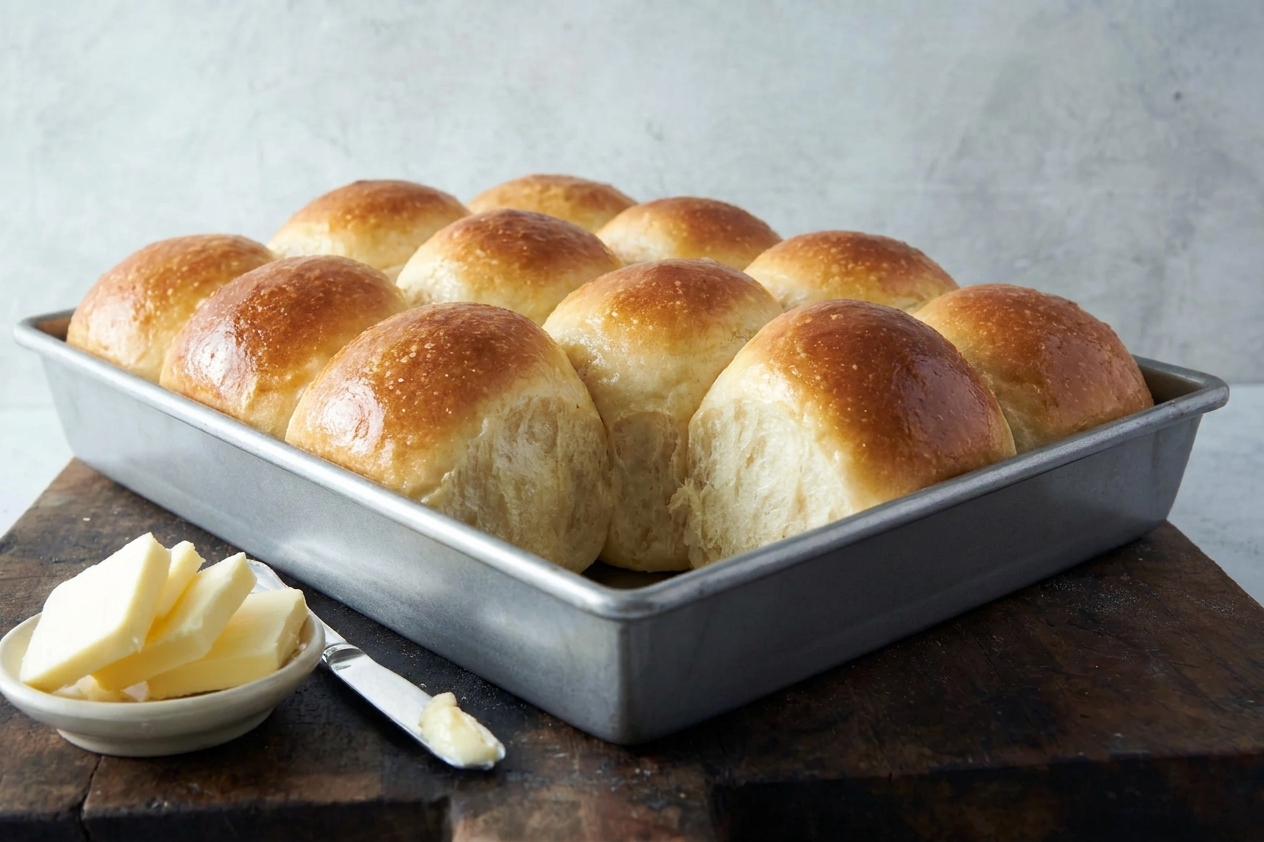

These sourdough dinner rolls are the ones I make when I want that cozy, pull-apart softness you usually only get from yeasted rolls, but with the depth and gentle tang of an active sourdough starter. The dough is enriched with milk and butter, shaped into neat little balls, then proofed and baked close together so the sides stay soft and tender instead of turning crusty.

If you are newer to sourdough baking, this is a wonderfully forgiving place to start because the goal is plush and springy, not towering and crackly. I will give you the cues I use in my own kitchen in Portland: what the dough should feel like after mixing, how much rise you are really looking for during bulk, and the simple jiggle test I watch for before baking. Those little details are what keep enriched sourdough from turning dense or drying out.
Bonus for my fellow food-waste-avoiders: if you keep a larger starter (or you fed extra on purpose for baking day), this is a great way to use up a good chunk of it while it is still at peak strength. This is not a discard recipe, it is simply a smart use for extra ripe starter you intentionally built for strong lift. If your starter is sluggish, you will still get rolls, but the proof will take longer and the texture will not be quite as cloud-like. Keep the dough warm and give it time. Enriched sourdough rewards patience.
Why this recipe works
- Enriched dough stays soft: Milk, butter, and a touch of sugar tenderize the crumb and help the rolls stay pillowy even after they cool.
- Close-set bake for pull-apart sides: Nestling the rolls together in a pan protects the sides from direct oven heat, so you get soft, tearable edges rather than a thick crust.
- Bulk and proof cues prevent dryness: Instead of forcing a dramatic rise, you are looking for a moderate increase and an airy feel. Over-fermenting enriched dough can make it bready and dull, not fluffy.
- Starter provides flavor and structure: An active, bubbly starter gives the dough lift and that subtle sourdough complexity without needing commercial yeast.
Ingredient notes
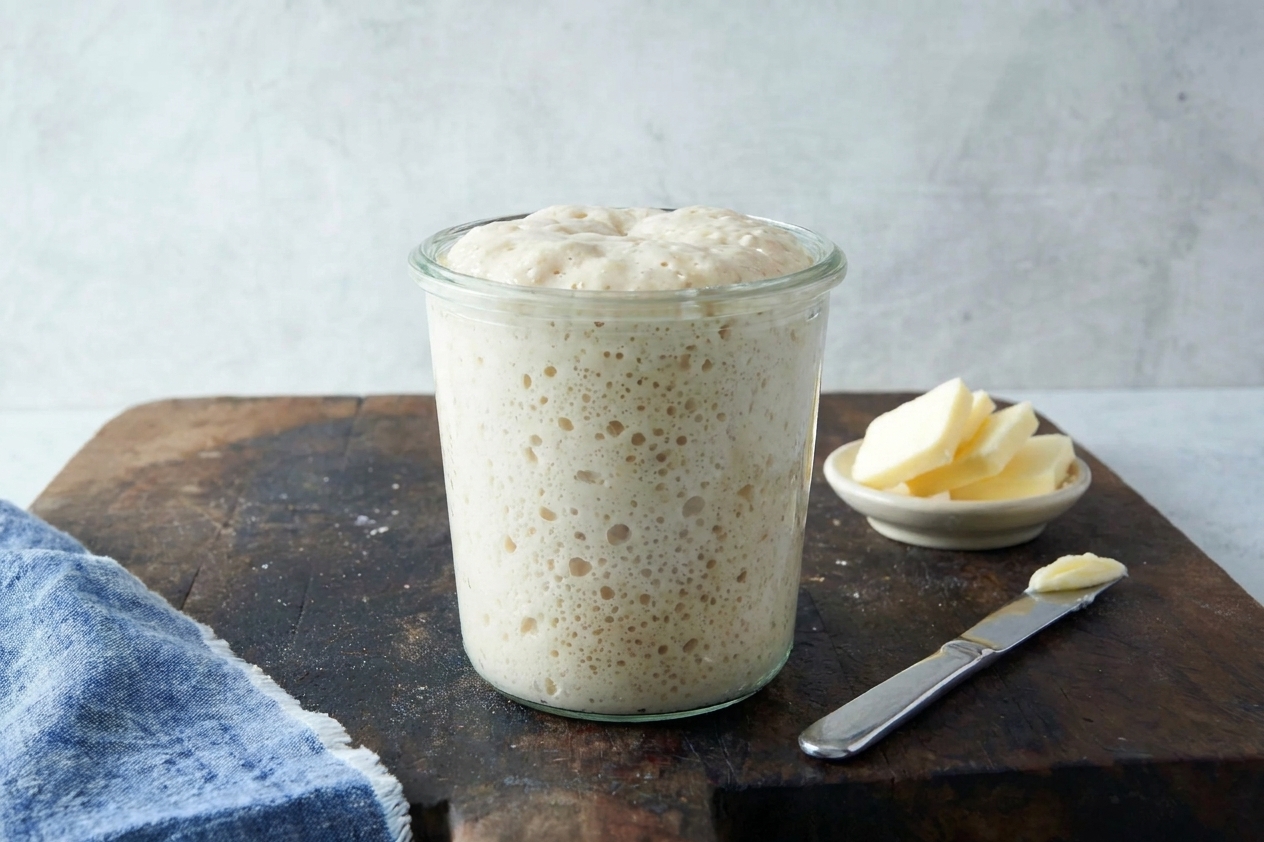
Active sourdough starter
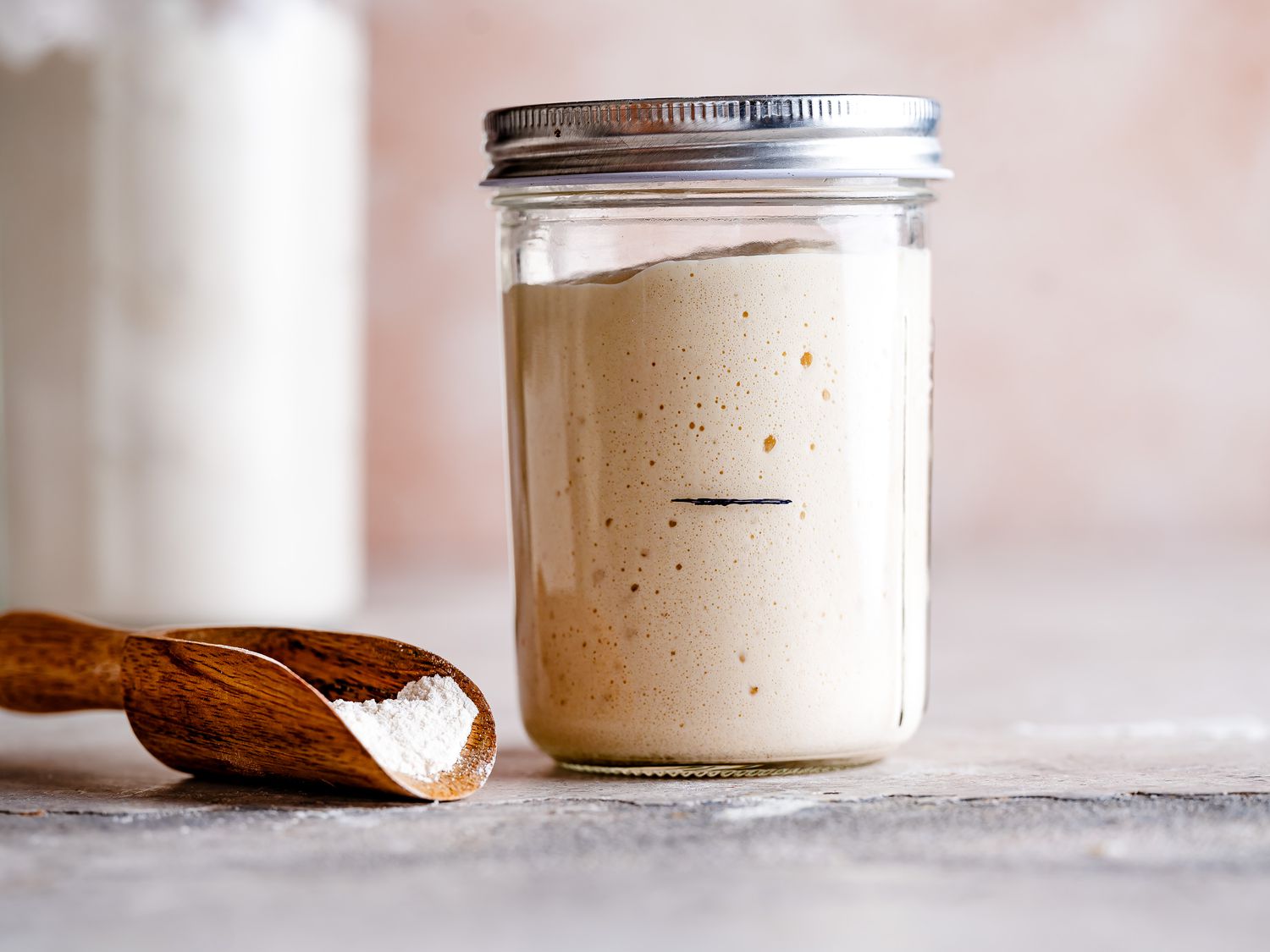
Use starter at peak activity, when it is bubbly and expanded and smells pleasantly tangy, not sharply acidic. If it has started to collapse, feed it and wait until it peaks again for the best rise.
Milk
Whole milk gives the softest texture, but 2 percent works. Warm it slightly so the dough stays cozy, but do not make it hot enough to melt butter aggressively or stress the starter. Think warm bath water, not steaming.
Butter
Softened butter incorporates more smoothly than melted butter and helps you avoid a greasy dough. If your kitchen is cool, cube the butter and let it sit at room temperature until pliable.
Sugar
A small amount of sugar supports browning and tenderness. This is not a sweet roll, it is just enough to round out the flavor.
Flour
All-purpose flour makes the fluffiest rolls. Bread flour can work, but the crumb will be chewier and you may need a small splash of extra milk if the dough feels tight.
Salt
Salt is non-negotiable for flavor. In enriched dough, it also keeps fermentation steady so the rolls do not proof unevenly.
Equipment you will need
- 9x13-inch baking pan or a similar pan that fits the rolls snugly for pull-apart sides
- Kitchen scale for consistent results, especially with flour and starter
- Stand mixer with dough hook or a large bowl and sturdy spoon for hand mixing
- Bench scraper for dividing and shaping
- Instant-read thermometer (optional) to check milk temperature and doneness
- Clean kitchen towel or a reusable cover for proofing
Pro tips
- Chase feel, not the clock: Enriched sourdough timing changes with starter strength and room temperature. Use the rise and jiggle cues in the recipe card to decide when to move on.
- Keep the dough slightly tacky: A dough that is too dry bakes up bready. It should feel soft and a little tacky after mixing, but not so sticky that it cannot be handled with lightly floured hands.
- Proof for tenderness, not height: For rolls, I stop the final proof when the dough looks puffy and marshmallowy and the pan gently jiggles as one unit. If you wait for them to double dramatically, they can overproof and bake up dry.
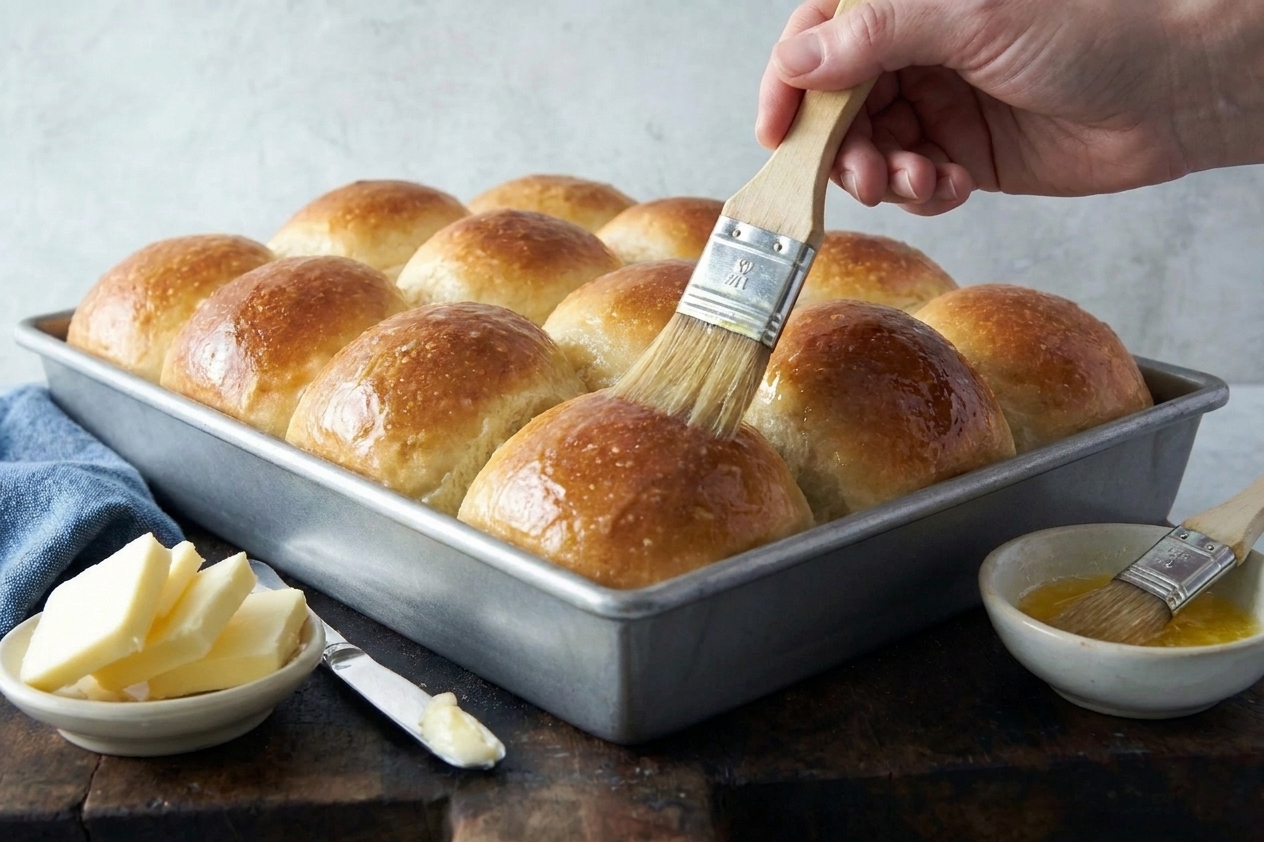
- Butter after baking: Brushing melted butter on hot rolls keeps the tops soft and adds that classic dinner-roll finish.
- Use warmth strategically: If your kitchen is chilly, proof in an off oven with the light on, or near (not on) a warm stove.
Substitutes that work
- Milk: Swap in unsweetened oat milk or soy milk. The rolls will be slightly less rich but still soft.
- Butter: Use vegan butter sticks. Avoid tub spreads that contain lots of water, which can affect texture.
- Sugar: Honey works, but reduce the milk slightly if your dough feels loose. Maple syrup also works for a mild sweetness.
- All-purpose flour: Bread flour is fine for a chewier roll. Start with the same amount and add a small splash of milk only if the dough feels stiff after mixing.
Variations
- Garlic herb: Add finely chopped parsley or chives to the dough, then brush with garlic butter after baking.
- Seeded tops: Brush with milk or egg wash before baking and sprinkle with sesame seeds or flaky salt. Keep the coating light so the tops stay soft.
- Whole wheat touch: Replace up to 20 percent of the flour with whole wheat flour for a slightly heartier roll. You may need an extra tablespoon or two of milk.
Serving ideas
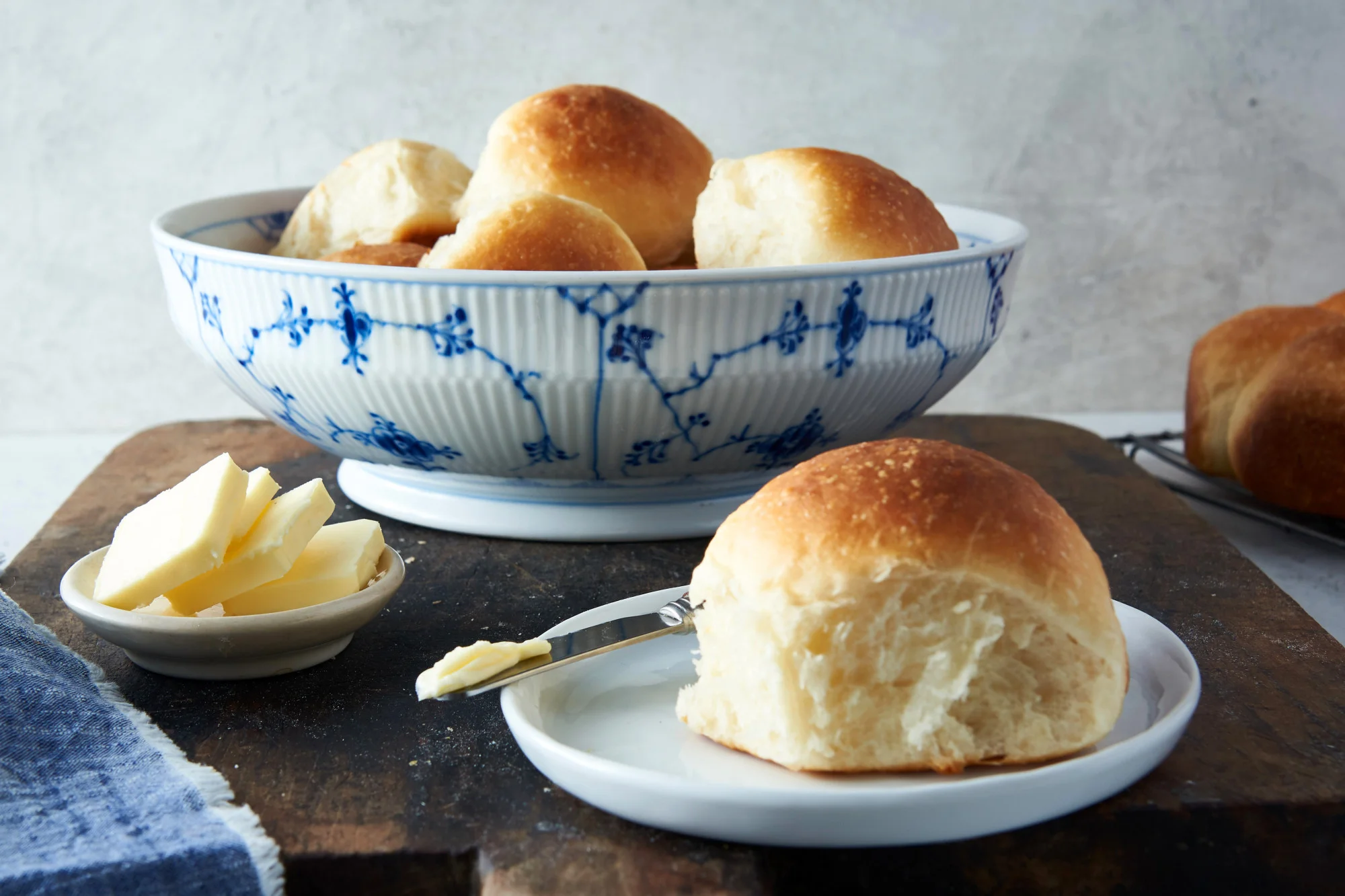
- Serve warm with salted butter and a squeeze of lemony dressed greens for acid balance alongside rich soups.
- Set them out with roast chicken, braised beans, or any saucy main that begs for swiping.
- Split leftover rolls and toast lightly, then top with scrambled eggs and a little hot sauce for breakfast.
Storage and reheating
Room temperature
Store completely cooled rolls in an airtight container for up to 2 days. Keeping them sealed is what preserves softness.
Freezer
Freeze rolls in a freezer bag for up to 2 months. Thaw at room temperature in the closed bag so they do not dry out.
Reheating
To re-soften, warm in a 300 F oven for 8 to 12 minutes, loosely covered with foil. For a single roll, a quick 10 to 15 seconds in the microwave works, then finish with a tiny smear of butter.
Common mistakes
- Using starter that is not active: If your starter is flat, your rolls will take forever to proof and can bake up heavy. Feed and wait until it is bubbly and expanded.
- Adding too much flour: A dry dough bakes up tight. If the dough is sticking, use a light oil on your hands or a bench scraper instead of burying it in flour.
- Overproofing the final rise: Overproofed rolls can collapse and turn dull and dry. Look for puffy, airy dough that springs back slowly when gently pressed.
- Baking too long: Dinner rolls go from golden to dry quickly. Pull them when the tops are light golden brown and the centers are set.
- Skipping the post-bake butter: That quick brush of butter is your insurance policy for a soft top.
FAQ
How do I know bulk fermentation is done for enriched roll dough?
Look for a moderate rise, about 30 to 60 percent, and a dough that feels lighter and smoother. It should show bubbles along the sides of the bowl and jiggle slightly when you shake the bowl. With enriched dough, I do not chase a full doubling.
Can I refrigerate the dough overnight?
Yes. After shaping and placing the rolls in the pan, cover well and refrigerate. The next day, let them sit at room temperature until puffy and the dough slowly springs back when pressed, then bake. Expect the final proof to take longer straight from the fridge.
Why are my sourdough rolls dry?
The most common culprits are adding too much flour, overproofing, or overbaking. Measure flour carefully, stop the final proof when the rolls are marshmallowy, and bake just until set and lightly golden.
Do I need an egg wash?
No. Egg wash gives a shinier, deeper brown top, but for ultra-soft dinner rolls I often skip it and brush butter after baking instead.
Sourdough Dinner Rolls
Soft, enriched sourdough dinner rolls made with active starter, milk, and butter. Shaped into balls, proofed in a pan, and baked close together for tender pull-apart sides.
- Prep
- Cook
- Total
- Yield
Ingredients
- 100 g active sourdough starter (100% hydration), at peak
- 240 g whole milk, warm (about 85 to 95 F)
- 50 g granulated sugar
- 60 g unsalted butter, softened, plus more for the pan and finishing
- 9 g fine sea salt
- 420 g all-purpose flour, plus a little extra for shaping as needed
Instructions
- Mix the dough. In a large bowl (or the bowl of a stand mixer), combine the active starter, warm milk, and sugar and stir until mostly smooth. Add the flour and salt and mix until no dry flour remains. The dough will look shaggy. Cover and let it rest 10 minutes to hydrate.
- Knead and add butter. Knead by hand or with a dough hook until the dough begins to look smoother, 3 to 5 minutes. Add the softened butter in small pieces, kneading between additions, until fully incorporated and the dough looks satiny. The dough should feel soft and slightly tacky, not dry. If it is very sticky and slack, let it rest 5 minutes and continue kneading rather than adding a lot of flour.
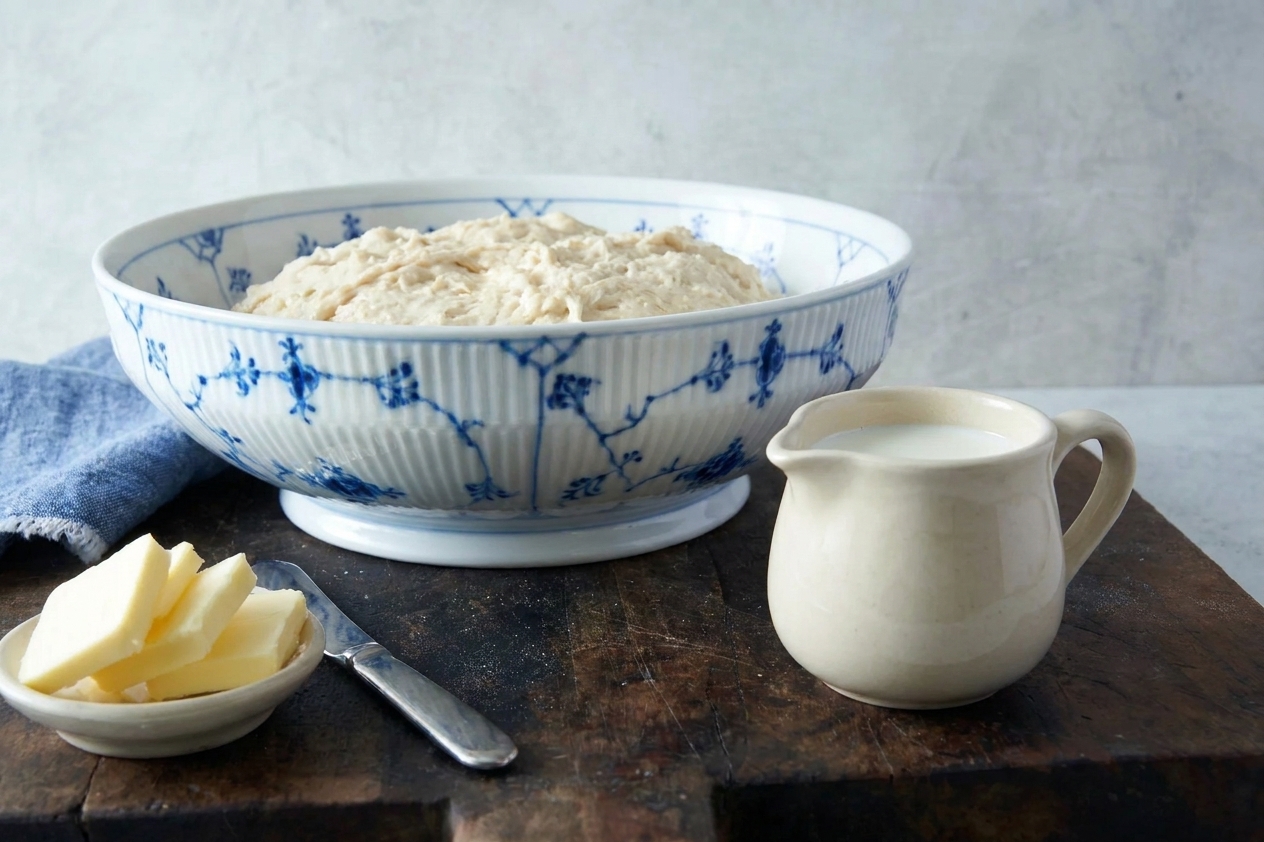
- Bulk ferment. Cover and let rise at room temperature until the dough has increased about 30 to 60 percent and feels lighter and aerated, with a few bubbles visible at the edges. A simple cue I use is the feel: when you lift the dough, it should stretch a bit and feel airy rather than heavy and tight. Depending on starter strength and room temperature, this can take several hours. The dough should not look blown out or fragile.
- Divide. Butter a 9x13-inch pan. Turn the dough onto a lightly floured counter. Divide into 12 equal pieces for standard dinner rolls.
- Shape. Shape each piece into a tight ball by pulling the edges to the center, then rolling seam-side down against the counter to create surface tension. Use only a light dusting of flour as needed.
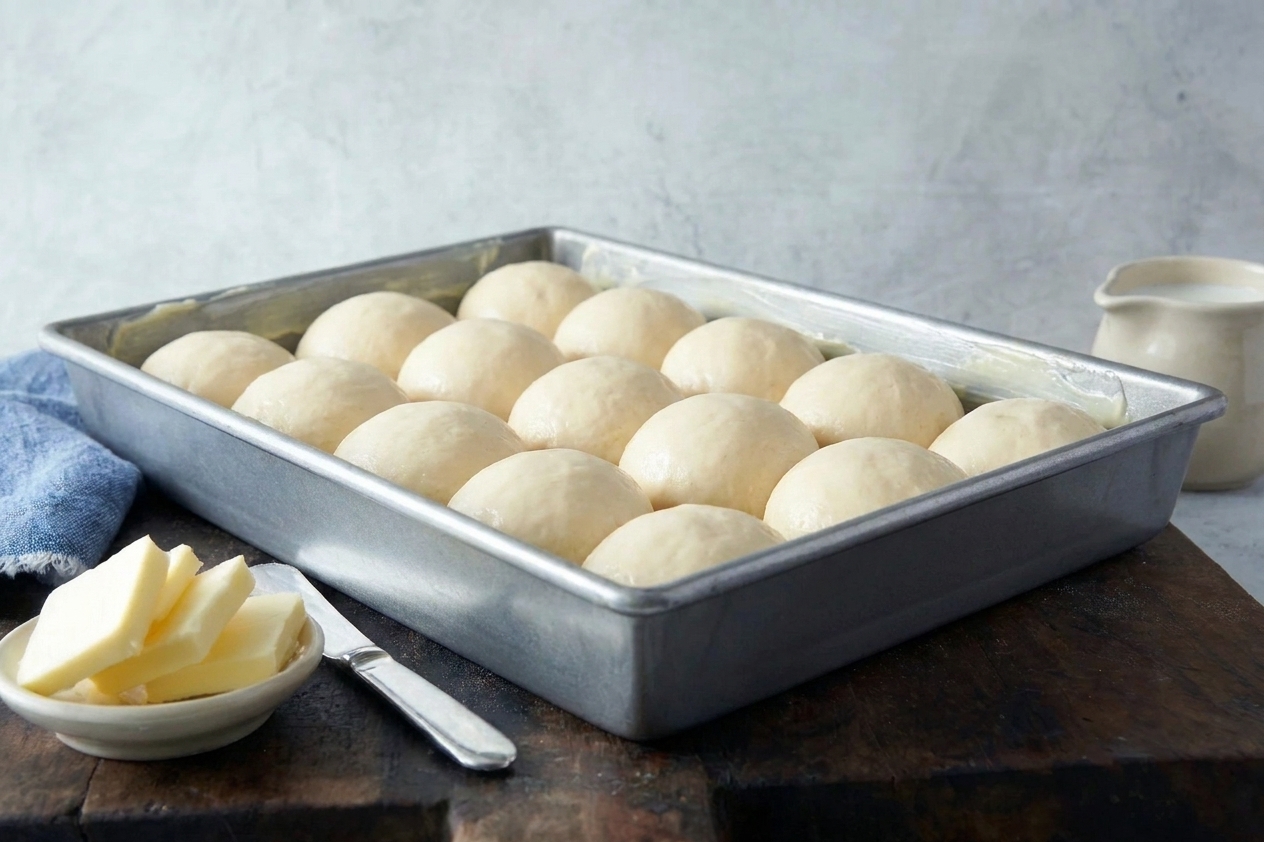
- Pan and proof. Arrange the dough balls evenly in the prepared pan. Cover and proof until puffy and marshmallowy. When you gently press a roll with a floured fingertip, the indentation should spring back slowly and not fill in immediately. For the jiggle test, nudge the pan gently on the counter. The rolls should wobble slightly as one connected, pillowy sheet, not slosh or look loose.
- Heat the oven. Toward the end of proofing, heat the oven to 375 F.
- Bake. Bake until the tops are light golden brown and the center rolls are set. If you like to check temperature, aim for about 190 to 200 F in the center roll. Avoid overbaking, which dries them out.
- Finish for softness. Immediately brush the hot rolls with melted butter. Cool in the pan for 10 minutes, then serve warm for the softest pull-apart texture.
Notes
Overnight option: After shaping and placing in the pan, cover tightly and refrigerate up to overnight. The next day, bring to room temperature until puffy and the dough slowly springs back when pressed, then bake as directed.
Bulk cue reminder: For enriched rolls, I stop bulk when the dough is clearly lighter and moderately risen, not when it has doubled dramatically.
Make-ahead for dinner: If you want rolls on the table at a specific time, start earlier than you think and let the dough lead. Sourdough is wonderfully flexible as long as you watch the dough, not the clock.