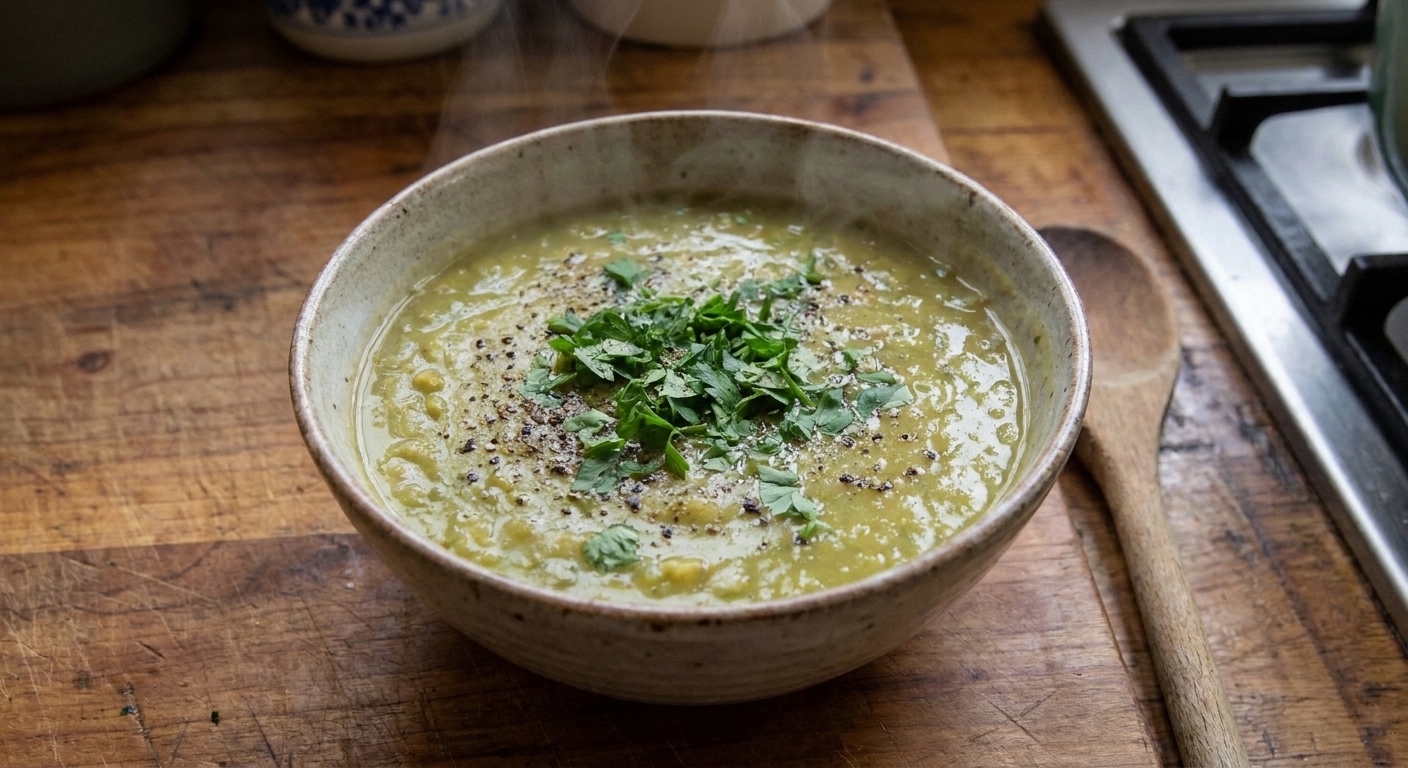

Split pea soup is one of those quietly perfect pots of food: humble pantry ingredients, one long simmer, and you end up with a soup that feels like a blanket. The magic is that split peas are the body of the soup. No cream, no flour, and typically no blending required. When you simmer them long enough, they naturally collapse into a thick, spoon-coating broth.

This version starts with onion, carrot, and celery for sweetness and backbone. If you have a ham bone or a thick slice of ham, it adds that classic smoky-salty depth. If you do not, there is a truly satisfying vegetarian path that still tastes full and savory, thanks to a good sauté and a touch of smoked paprika, plus a bright squeeze of lemon at the end.
One more thing that makes split pea soup a weeknight hero: it’s even better the next day. It will thicken a lot overnight, which is exactly what it’s supposed to do. I’ll show you how to bring it back to “freshly made” with a splash of broth or water and one quick seasoning check at the end. Also, you do not need to soak split peas. Just rinse them, then let the pot do the work.
As it thickens, keep the heat gentle and give it a few good stirs toward the end so the bottom does not scorch. That is the only real “babysitting” this soup asks of you.
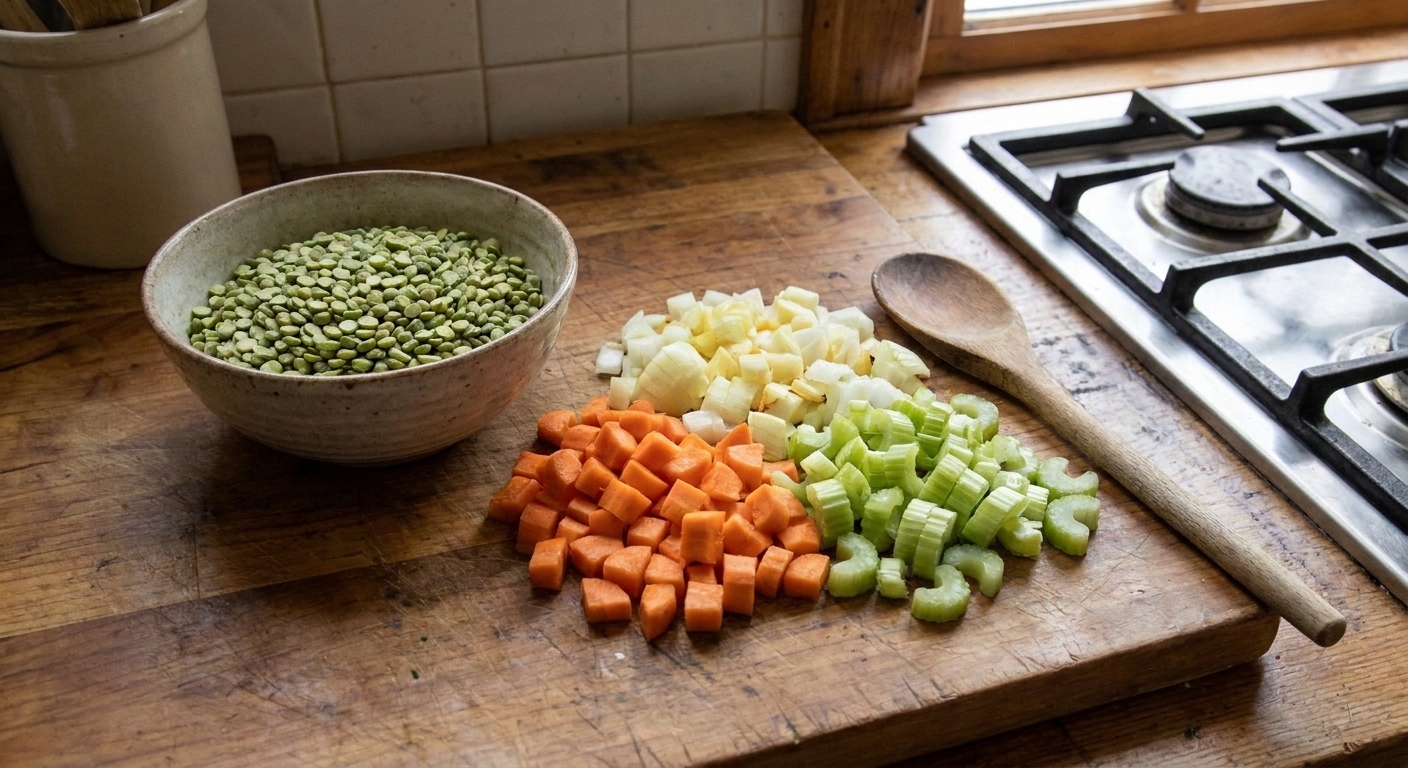
Why this recipe works
- Split peas naturally thicken the soup. Given enough time at a gentle simmer, they break down into a creamy base all on their own.
- A quick sauté builds real flavor. Softening the onion, carrot, and celery first pulls out sweetness and makes the soup taste simmered all day.
- Flexible smoky depth. Ham gives you the traditional version, but smoked paprika and a smart broth choice make the vegetarian pot feel just as cozy.
- Clear doneness cues. You are not waiting for a timer. You are waiting for peas to collapse and the soup to go from brothy to velvety.
Ingredient notes
Split peas: Green or yellow both work. Green peas taste slightly earthier, yellow a bit sweeter and more delicate. Either way, pick over for tiny stones and rinse until the water runs mostly clear.
Aromatics (onion, carrot, celery): This trio gives you sweetness and structure. Cut them fairly small so they melt into the soup by the time the peas collapse.
Ham bone, ham hock, or diced ham (optional): A bone or hock adds smoky flavor to the broth while it simmers. If using diced ham, stir it in later so it stays pleasantly meaty instead of disappearing.
Broth: Chicken broth is classic with ham. For vegetarian, use vegetable broth, or even water plus a little extra seasoning. Split peas bring plenty of body.
Bay leaf and thyme: They quietly round out the flavor. If you only have dried thyme, it’s great here.
Acid at the end: A squeeze of lemon or a small splash of vinegar wakes up the whole pot. Add it at the end so it stays bright.
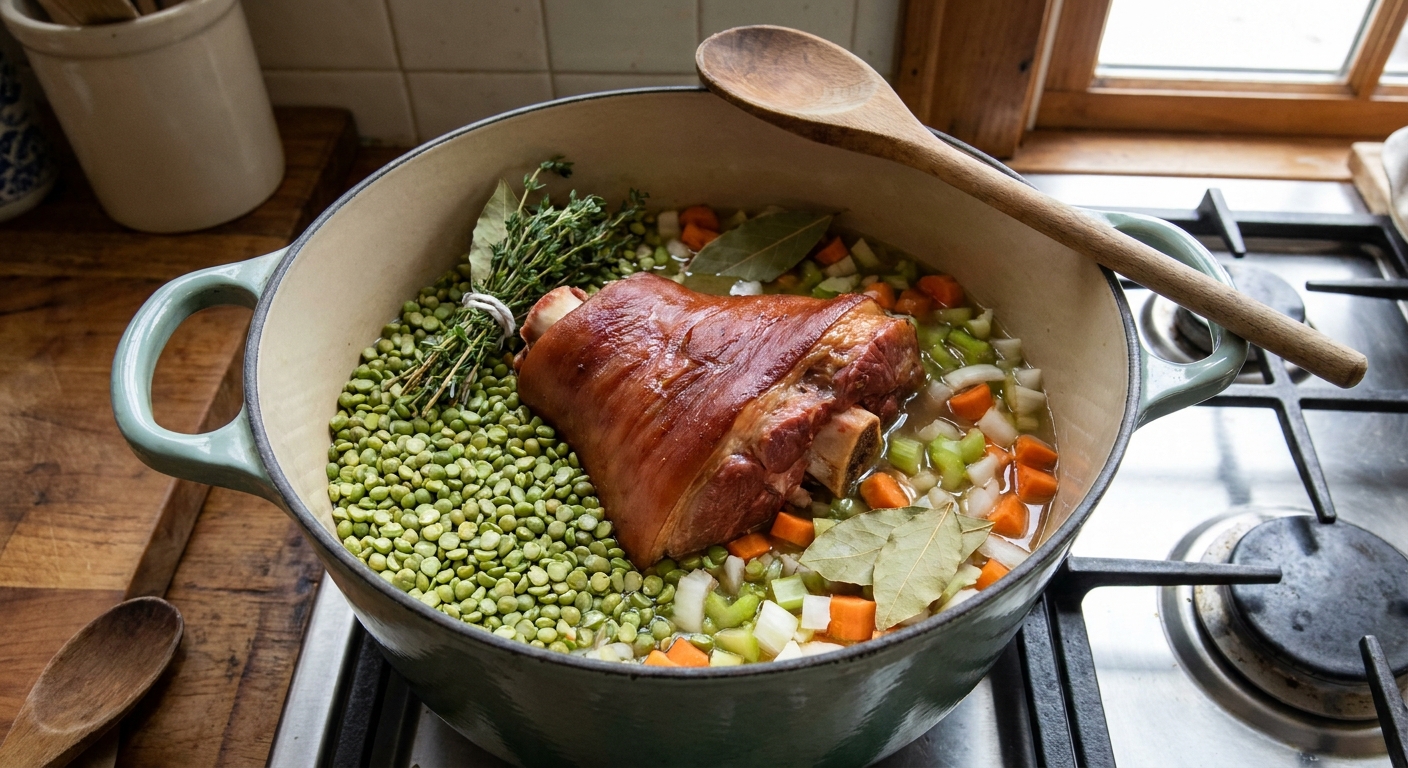
Equipment you will need
- Large heavy-bottomed pot or Dutch oven (5 to 7 quarts)
- Cutting board and sharp knife
- Wooden spoon
- Fine-mesh strainer for rinsing peas
- Ladle
Pro tips
- Start with a gentle simmer, not a hard boil. A low simmer helps the peas break down evenly and keeps the bottom from scorching.
- Stir more often toward the end. Once the peas start collapsing, the soup gets thicker and can stick. If you see little bubbles that look like it is burping, that is your cue to stir and lower the heat.
- Salt thoughtfully if using ham. Ham and broth can be salty. Season lightly at the start, then adjust once the soup is thick and the ham flavor has fully infused.
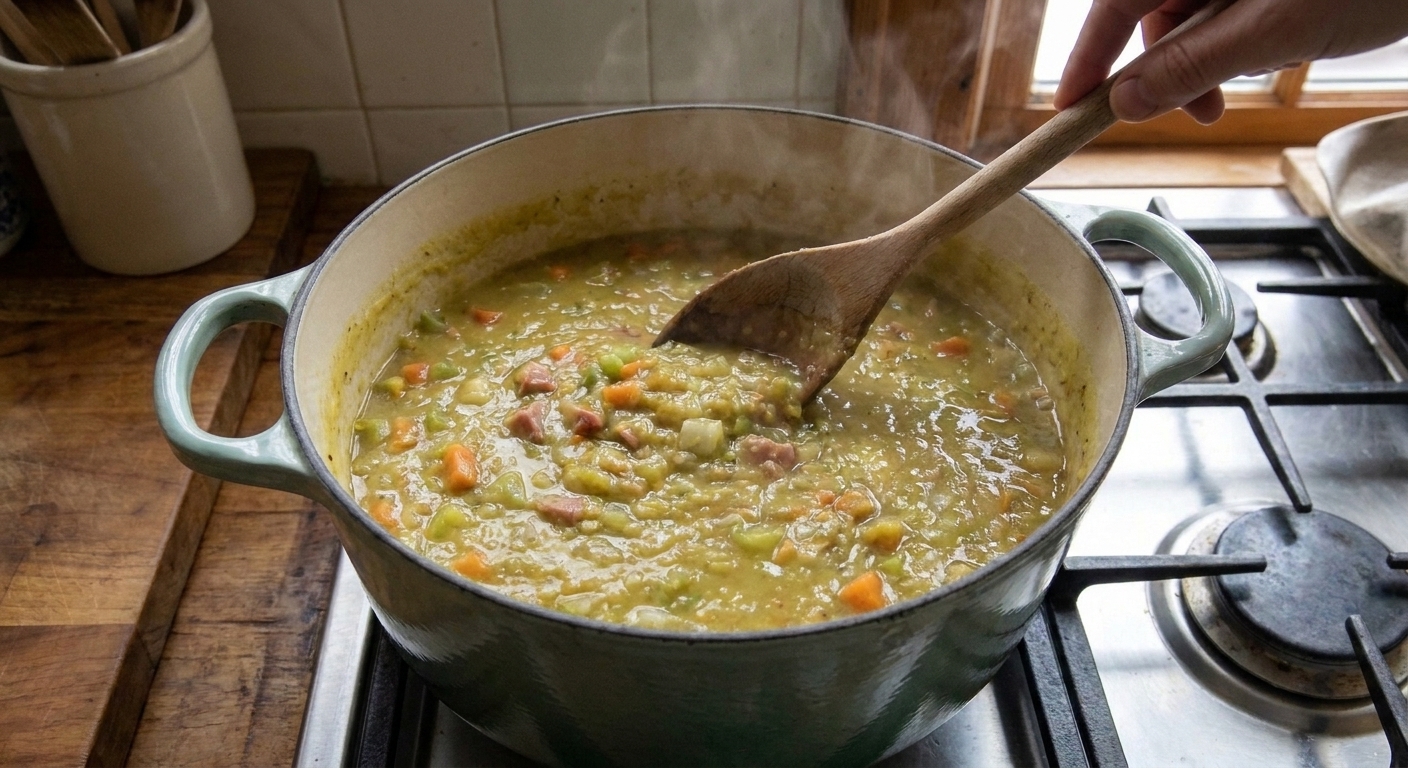
- Use the spoon test. When it is ready, a spoon dragged across the bottom should leave a brief trail, and peas should be mostly broken down with only a few intact.
- Thin leftovers gradually. Add broth or water in small splashes while reheating, stirring between additions, until it loosens to your preferred texture.
Substitutes that work
- No celery: Use extra onion and carrot, or add a small pinch of celery seed if you have it.
- No bay leaf: Skip it. The soup will still be delicious.
- No thyme: Try rosemary (use less), oregano, or an Italian herb blend.
- No ham but want smoky flavor: Add 1 to 2 teaspoons smoked paprika and use a flavorful vegetable broth. A tiny pinch of cumin is also nice.
- Broth options: Chicken, turkey, or vegetable broth all work. Water works in a pinch, just be sure to season well and finish with acid.
Variations
- Yellow split pea soup: Use yellow split peas and finish with lemon. It feels a little brighter and sweeter.
- Chunkier texture: Stir less and stop cooking when peas are mostly collapsed but you still see more texture. You can also add a little extra diced carrot near the end so it stays distinct.
- Extra greens: Stir in a few handfuls of baby spinach at the very end until just wilted.
- Spicy: Add a pinch of red pepper flakes with the onions, or finish with hot sauce at the table.
Serving ideas
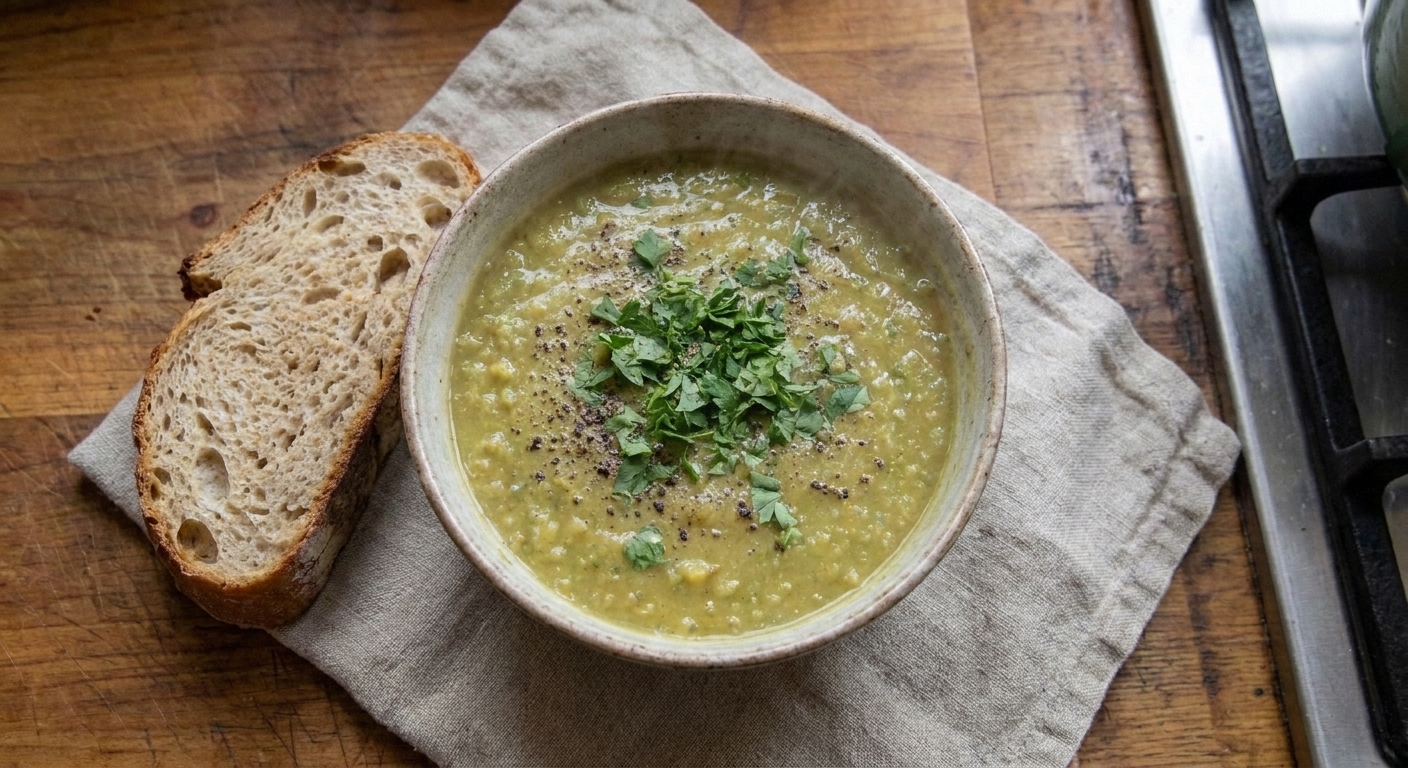
- With something crunchy: Crusty bread, garlic toast, or simple croutons are perfect for scooping.
- With acid and herbs: A squeeze of lemon and a sprinkle of parsley makes the bowl taste lighter and fresher.
- With a salad: Pair with a crisp, vinaigrette-dressed salad to balance the soup’s richness.
- As meal prep: Portion into containers for lunches. It reheats beautifully with a splash of water or broth.
Storage and reheating
Refrigerate
Cool the soup, then refrigerate in an airtight container for up to 5 days. It will thicken significantly as it sits.
How to reheat and thin
Warm gently over medium-low heat, stirring often. Add broth or water a splash at a time until it loosens back into a creamy, ladleable soup. Once hot, taste and adjust salt, then finish with lemon or vinegar again if it needs brightness.
Freeze
Split pea soup freezes well. Freeze in airtight containers with a little headspace for expansion for up to 3 months. Thaw overnight in the fridge, then reheat with extra liquid as needed.
Common mistakes
- Boiling too hard: A rolling boil can make the soup reduce too fast and scorch. Keep it at a gentle simmer.
- Not rinsing or picking over peas: Rinsing removes excess starch and dust, and picking over protects you from the occasional tiny stone.
- Salting heavily at the start when using ham: Wait until the end to fine-tune. The ham and broth concentrate as the soup reduces.
- Calling it done too early: Split peas can look soft but still be holding their shape. You want them to collapse and thicken the pot.
- Reheating leftovers without extra liquid: Day two soup is basically pea pudding in the best way. Thin it slowly as it warms.
FAQ
Do I need to soak split peas?
No. Split peas cook without soaking. Just rinse and pick over, then simmer until they collapse.
How do I know when split pea soup is done?
You are looking for a texture change more than a clock. The soup is done when most peas have broken down, the broth turns creamy and opaque, and a spoon dragged through the pot leaves a brief trail. If it still looks watery with lots of intact peas, keep simmering.
Why did my soup stay thin?
Most often it just needs more time at a gentle simmer. If you added a lot of extra liquid early on, simmer uncovered a bit longer. Split peas thicken as they break down.
Why did my soup get so thick overnight?
Totally normal. Split peas continue absorbing liquid as they sit. Reheat with broth or water, adding a little at a time until it’s silky again.
How do I make it vegetarian but still flavorful?
Use vegetable broth, sauté the aromatics well, and add smoked paprika for that cozy, savory depth. Finish with lemon for brightness. The peas still provide the creamy body.
Split Pea Soup
A thick, cozy split pea soup built on onion, carrot, and celery, with optional ham for smoky depth. Split peas naturally collapse into a creamy base, and leftovers reheat beautifully with a splash of broth or water.
- Prep
- 15 minutes
- Cook
- 1 hour 15 minutes
- Total
- 1 hour 30 minutes
- Yield
- 6 servings
Ingredients
- 1 pound (about 2 cups) green or yellow split peas, picked over and rinsed
- 2 tablespoons olive oil (or butter)
- 1 large yellow onion, finely diced
- 2 medium carrots, diced
- 2 celery stalks, diced
- 3 cloves garlic, minced
- 1 bay leaf
- 1 teaspoon dried thyme (or 2 teaspoons fresh thyme leaves)
- 6 cups low-sodium chicken broth or vegetable broth, plus more as needed
- 1 ham bone or ham hock (optional), or 1 to 2 cups diced ham
- 1/2 teaspoon kosher salt, plus more to taste (use less at first if using ham)
- 1/2 teaspoon freshly ground black pepper, plus more to taste
- 1 to 2 teaspoons smoked paprika (optional, especially for vegetarian)
- 1 to 2 teaspoons lemon juice or 1 teaspoon apple cider vinegar, to finish
- Chopped parsley, for serving (optional)
Instructions
- Sauté the aromatics. In a large pot or Dutch oven over medium heat, warm the olive oil. Add the onion, carrots, and celery. Cook, stirring occasionally, until the onion is translucent and the vegetables begin to soften, 8 to 10 minutes.
- Add garlic and seasonings. Stir in the garlic and cook until fragrant, about 30 seconds. Add the bay leaf, thyme, black pepper, and smoked paprika (if using). Stir for 10 seconds to bloom the spices.
- Add peas and liquid. Add the rinsed split peas and pour in the broth. Stir well, scraping the bottom of the pot.
- Add ham (optional). If using a ham bone or ham hock, nestle it into the pot now. If using diced ham instead, wait to add it until step 7 so it stays meatier.
- Simmer gently. Bring the soup to a boil, then immediately reduce heat to maintain a gentle simmer. Partially cover and cook, stirring occasionally, for 60 to 75 minutes. As the soup thickens, stir more often to prevent sticking.
- Cook to the collapse cue. The soup is ready when the split peas have mostly collapsed into a thick, creamy base and the soup looks velvety rather than brothy. If the peas are still holding their shape, keep simmering 10 to 15 minutes more, adding a splash of broth or water if it gets too thick to stir.
- Finish the ham (optional). If you used a bone or hock, remove it to a bowl. When cool enough to handle, pick off the meat, chop it, and stir it back into the soup. Discard bone, skin, and excess fat. If using diced ham, stir it in now and simmer 5 minutes to warm through.
- Season and brighten. Turn off the heat. Stir in 1 teaspoon lemon juice or vinegar. Taste and adjust with more salt, pepper, and lemon as needed.
- Serve. Ladle into bowls and top with parsley and extra black pepper if you like. If the soup is thicker than you want, loosen each bowl with a splash of hot broth or water.
Notes
Vegetarian path: Skip the ham and use vegetable broth. Add 1 to 2 teaspoons smoked paprika for savory depth, then finish with lemon. The split peas still make the soup thick and creamy.
Leftovers and thinning: Split pea soup thickens a lot in the fridge. Reheat over medium-low heat, stirring often, and add broth or water a splash at a time until it loosens to your preferred texture. Re-taste for salt and add a fresh squeeze of lemon at the end.
Doneness cue: You are looking for peas that collapse and melt into the pot. A spoon dragged along the bottom should leave a brief trail, and the soup should look creamy and opaque.