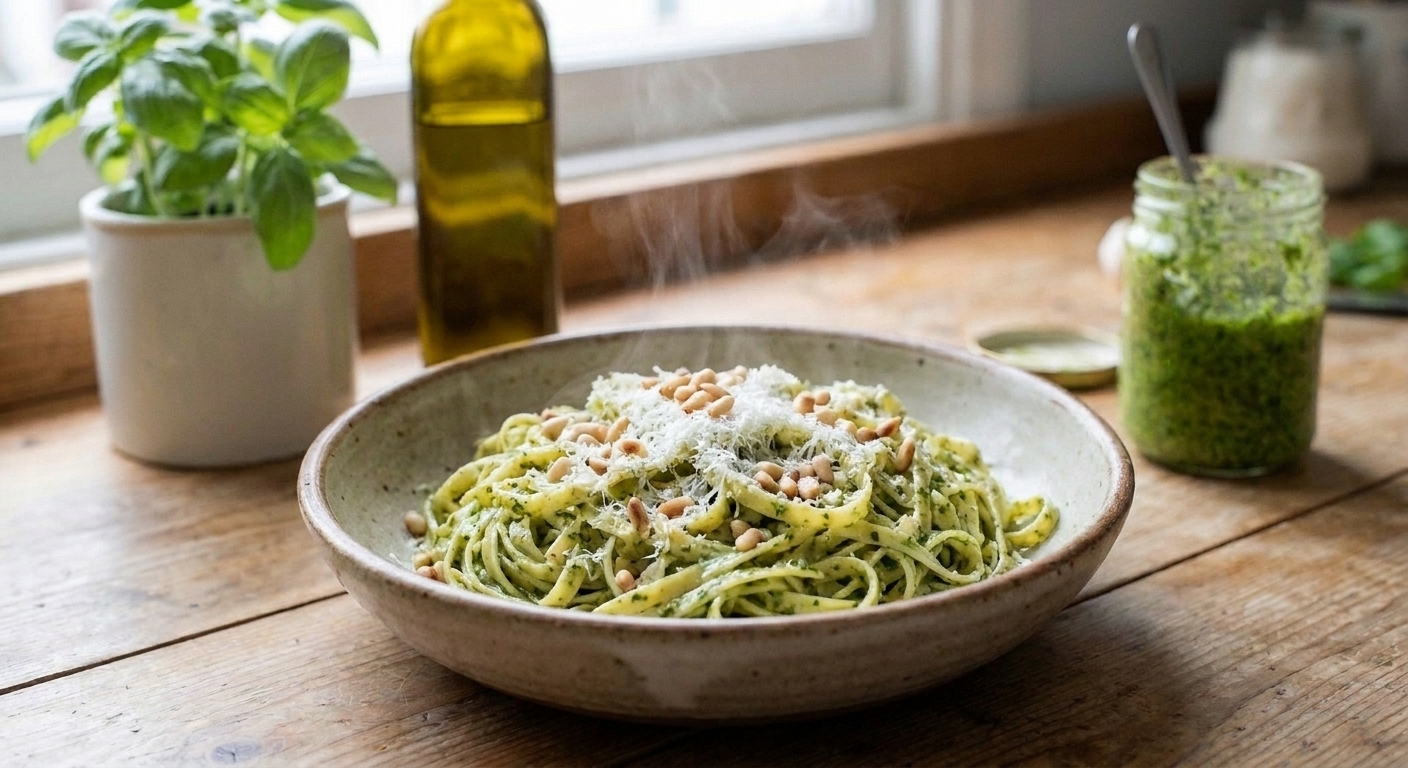

Pesto pasta is one of those meals that should be effortless, but it can turn frustrating fast: oily puddles, clumpy pesto, noodles that taste like they were dressed in cold green paste. The fix is not more pesto. It is technique.
When you toss hot pasta with pesto and a measured splash of starchy pasta water, you build a creamy, glossy sauce that hugs every twist and ridge. It works with homemade pesto and it works with the jar in your fridge door. This page is all about the bowl: pasta shape, pesto-to-pasta ratio, cheese choices, and a few weeknight proteins that slide right in without a second pan.

If you want a cozy, green, deeply satisfying dinner in under 20 minutes, this is it. Set a timer for your pasta, grab a big bowl, and let the pasta water do the heavy lifting.
Choosing the best pasta shape
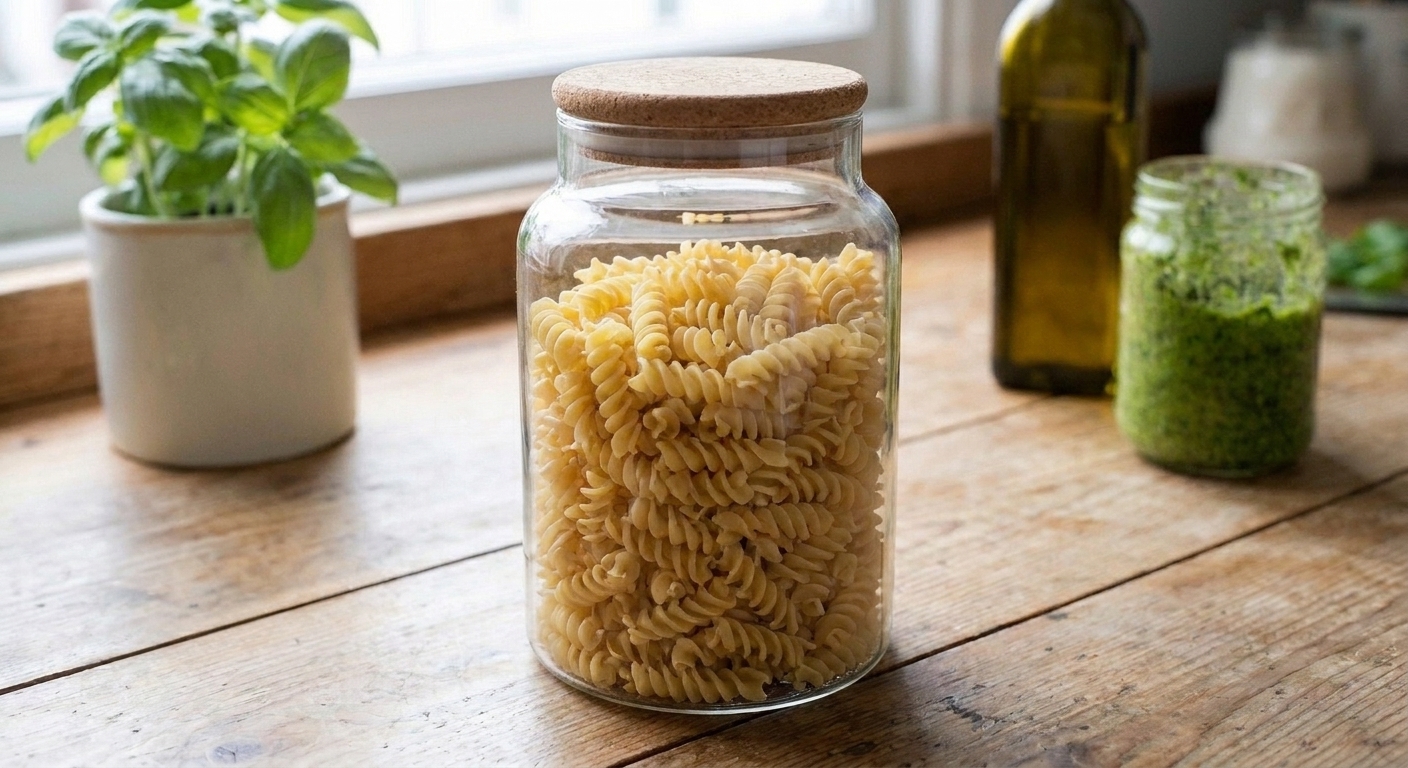
Pesto loves surfaces: ridges, twists, little cups, and any shape that can catch sauce. You can use long noodles, but short shapes tend to give you the most even coating and the least slipping and sliding on the plate.
- Best all-around: trofie, fusilli, rotini, gemelli
- Great for extra glossy sauce: linguine, spaghetti, bavette
- Best for add-ins: penne rigate, mezze rigatoni, farfalle
- If you have it: orecchiette is amazing because pesto pools inside the little cups
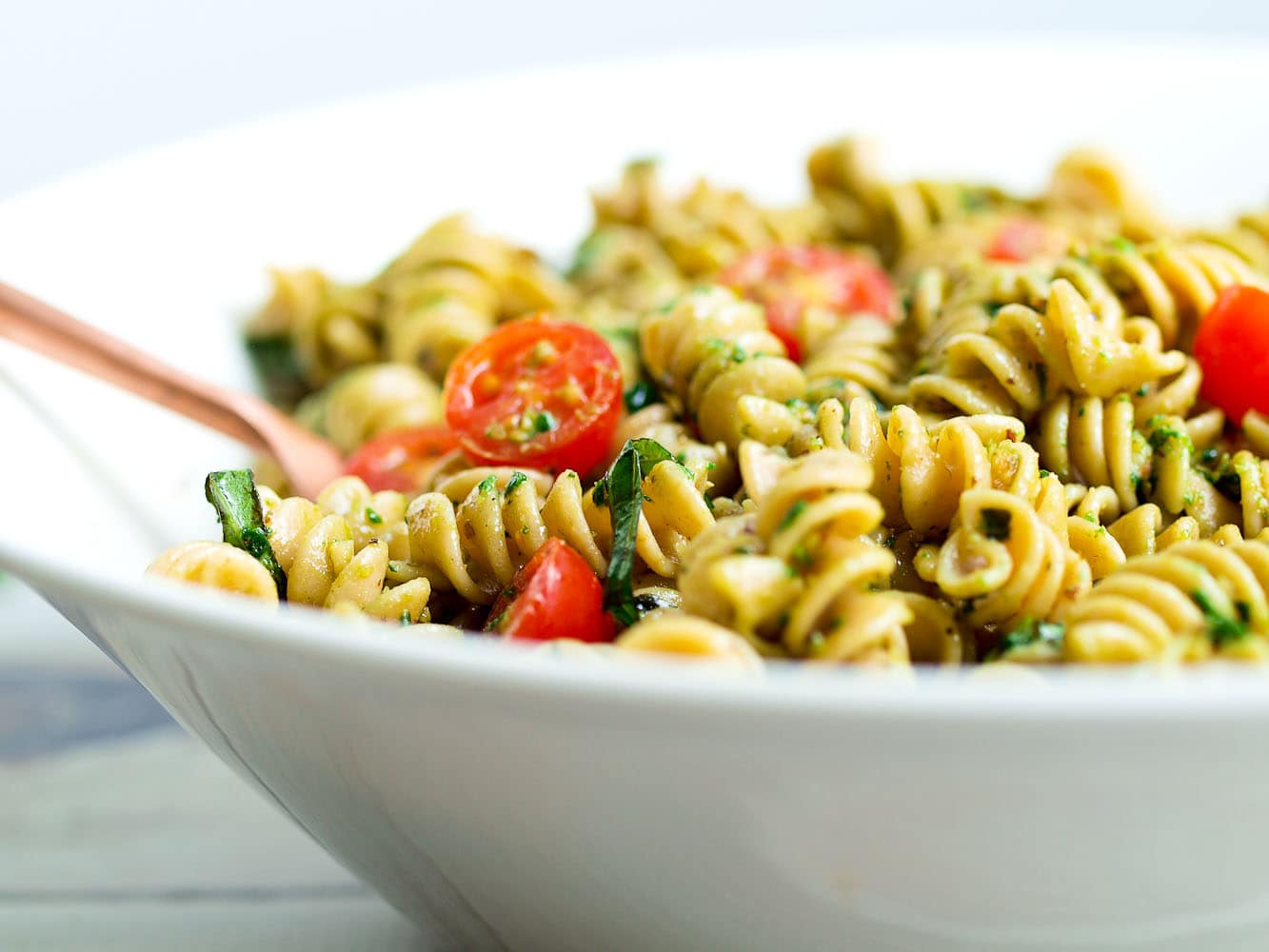
My weeknight default is fusilli because it traps pesto in the spirals and stays saucy even after a few minutes on the table.
How much pesto per pound of pasta
This is the ratio I teach because it keeps the pasta well coated without turning it heavy or greasy.
- For 1 pound (16 oz) dried pasta: 3/4 cup pesto for a balanced, saucy bowl
- For extra pesto-forward: 1 cup pesto
- For lighter: 1/2 cup pesto, plus extra pasta water and a little more cheese
If you are using a very thick pesto, lean toward the lower end and let pasta water loosen it. If your pesto is already loose and oily, you can use a bit more but keep the pasta water measured so the sauce emulsifies instead of separating.
Cheese and finishing touches
Pesto already has salty, nutty richness, so think of cheese as your seasoning and your texture booster.
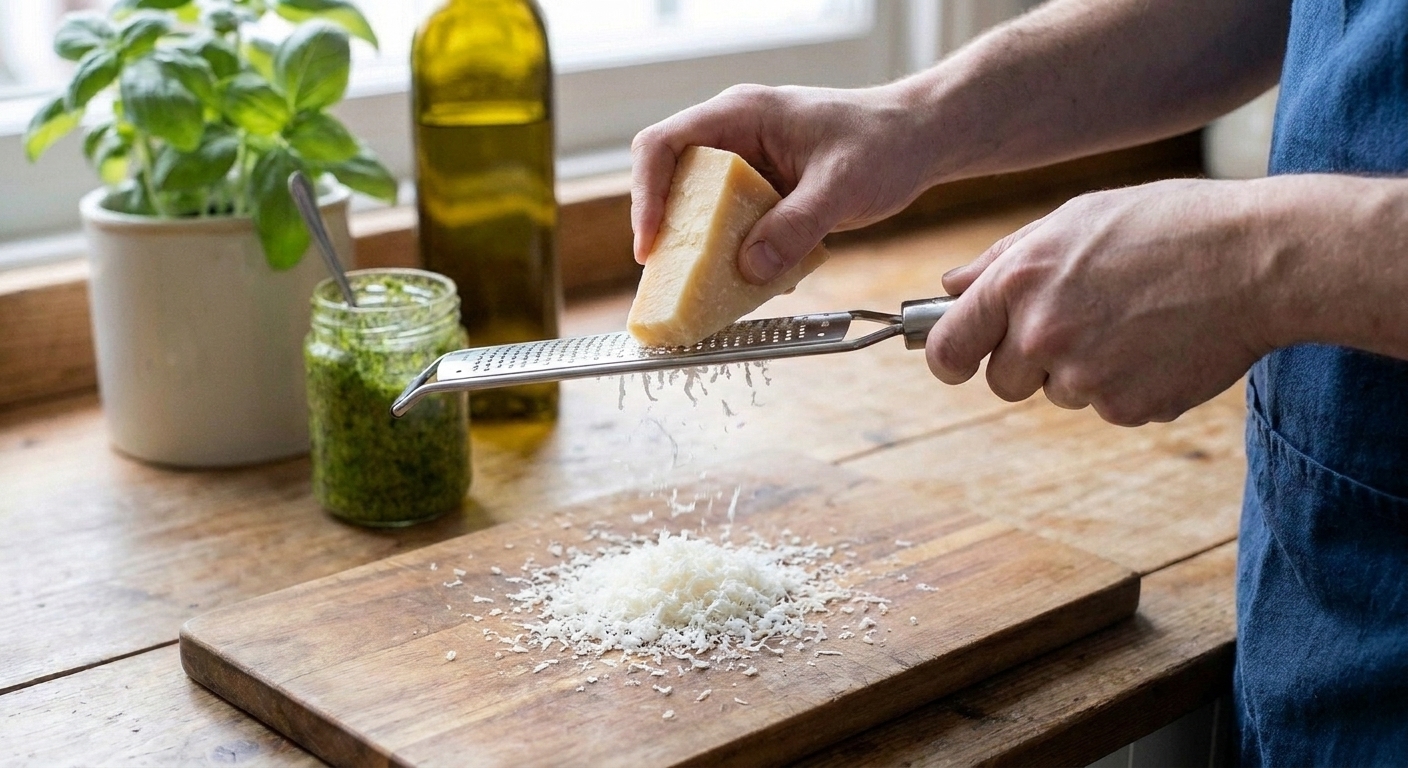
- Parmesan: the classic. Sharp, salty, melts smoothly.
- Pecorino Romano: punchier and saltier. Use a little less, then taste.
- Aged Asiago: slightly sweeter, great if your pesto is extra garlicky.
I like to finish the bowl with a little fresh grated cheese after tossing, then another tiny splash of pasta water if it looks tight. Optional but excellent: lemon zest, a squeeze of lemon, flaky salt, or toasted pine nuts for crunch.
Easy protein add-ins
Pesto pasta can be dinner on its own, but protein makes it feel complete. These are my weeknight favorites because they are fast and forgiving.
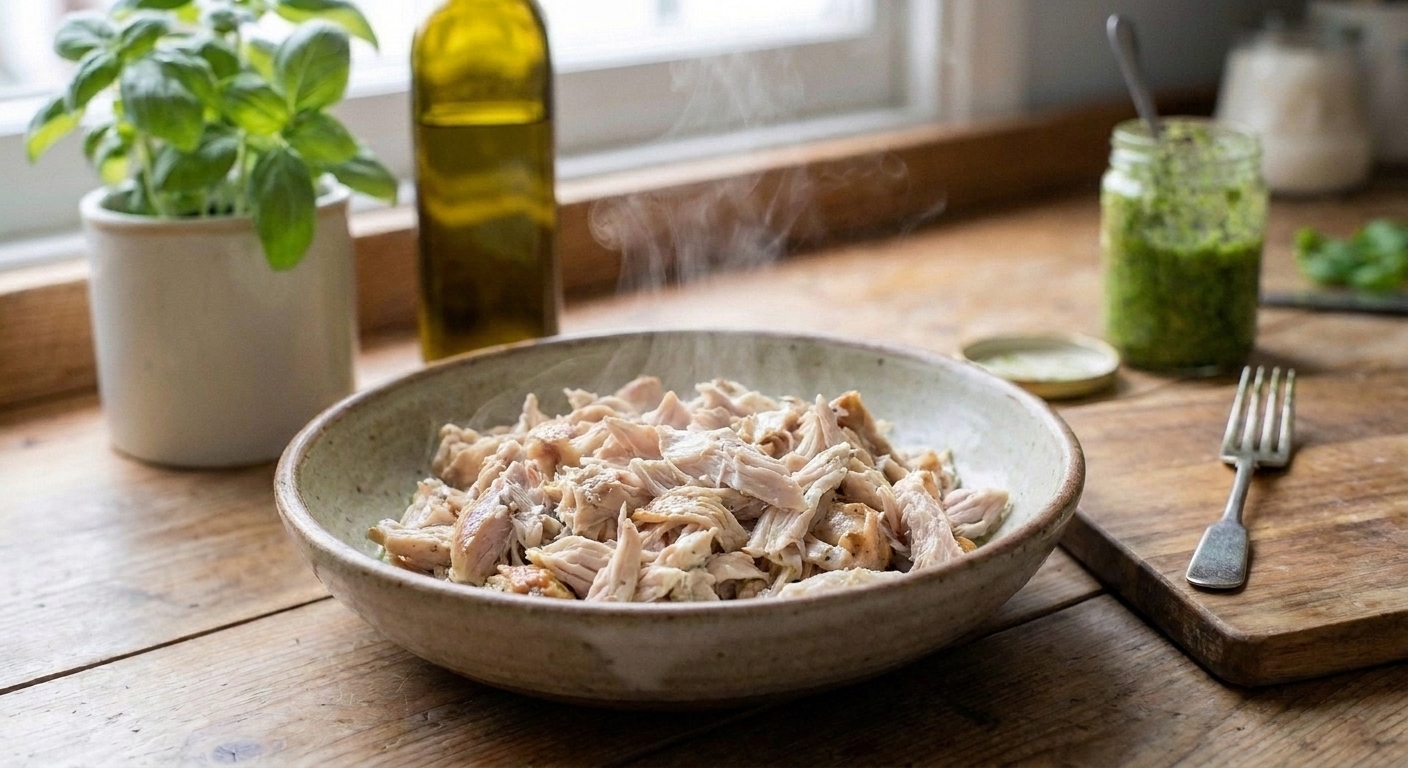
- Rotisserie chicken: shred, then warm it in the hot pasta for 30 to 60 seconds while tossing.
- Chicken cutlets: pan-sear thin cutlets, slice, and pile on top. Great if you want a “restaurant” vibe.
- Italian sausage: brown it while the pasta boils. Toss the drippings in with the pesto for extra depth.
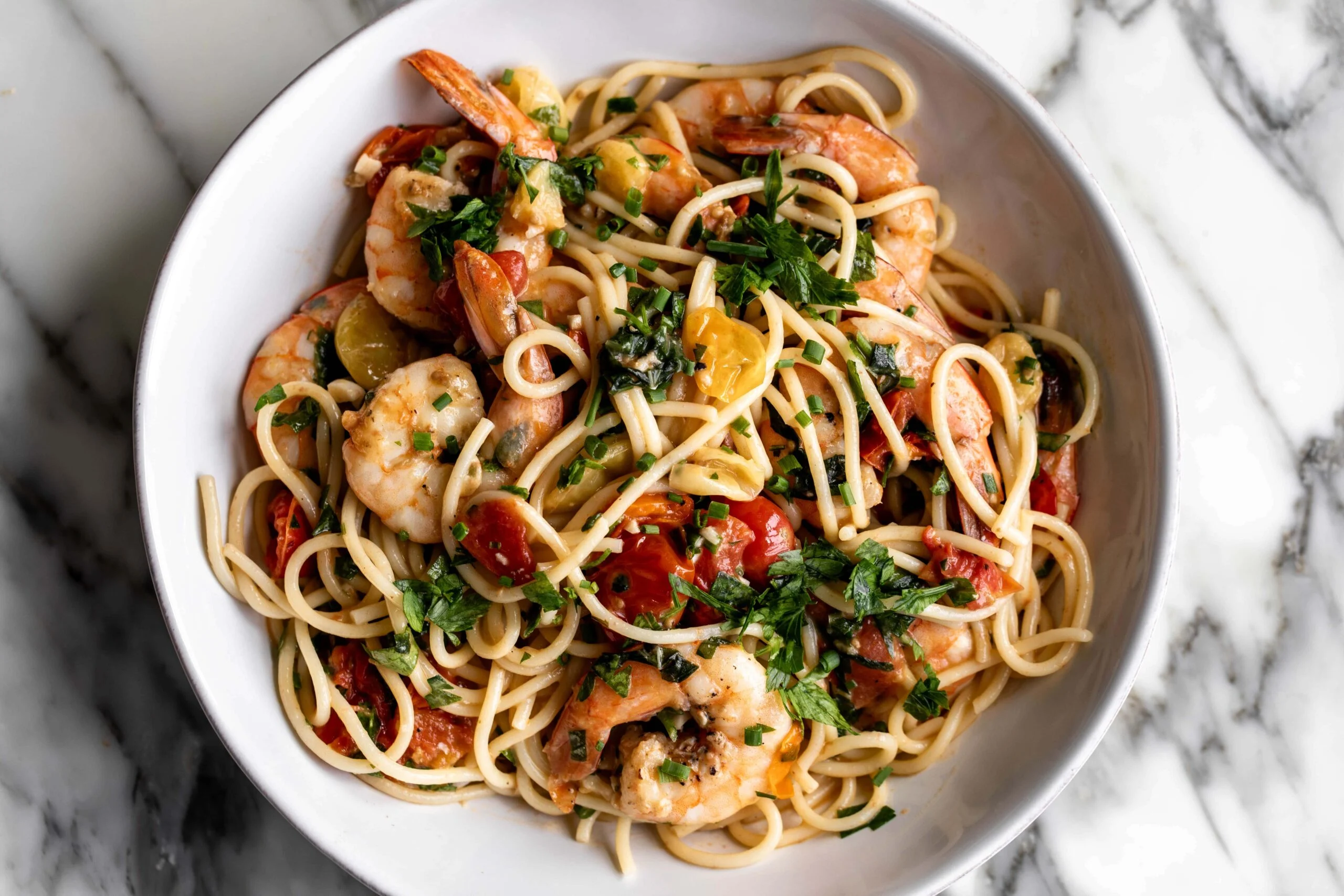
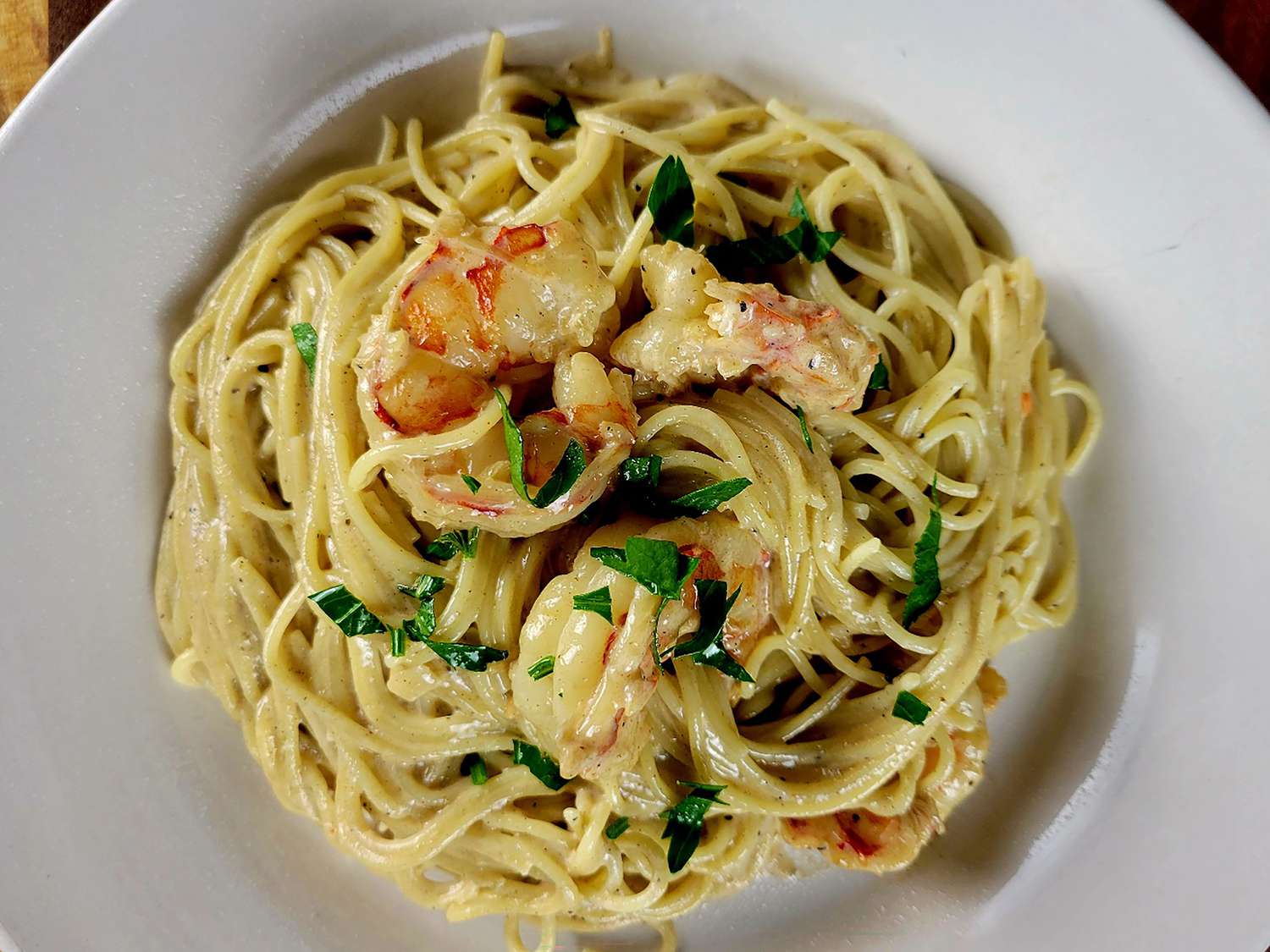
- Shrimp: quick sauté in olive oil, 2 to 3 minutes total, then toss in at the end.
- White beans: rinse and drain, then warm in the pasta. Creamy, budget-friendly, and pantry-smart.
Tip from my food waste brain: if you have a handful of spinach or arugula that is on its last legs, toss it into the colander and drain the pasta over it. Instant wilted greens, zero extra pan.
Why this recipe works
- Starchy pasta water emulsifies the sauce. That cloudy water helps pesto cling to noodles and turns oily pesto into a cohesive, glossy coating.
- Off-heat tossing protects pesto’s flavor. Basil can taste dull or bitter if it is cooked aggressively. Tossing with hot pasta, not over high heat, keeps it fresh and bright.
- A reliable ratio keeps it weeknight-friendly. Measuring pesto and pasta water prevents the two classic failures: dry, clumpy pasta or separated oil.
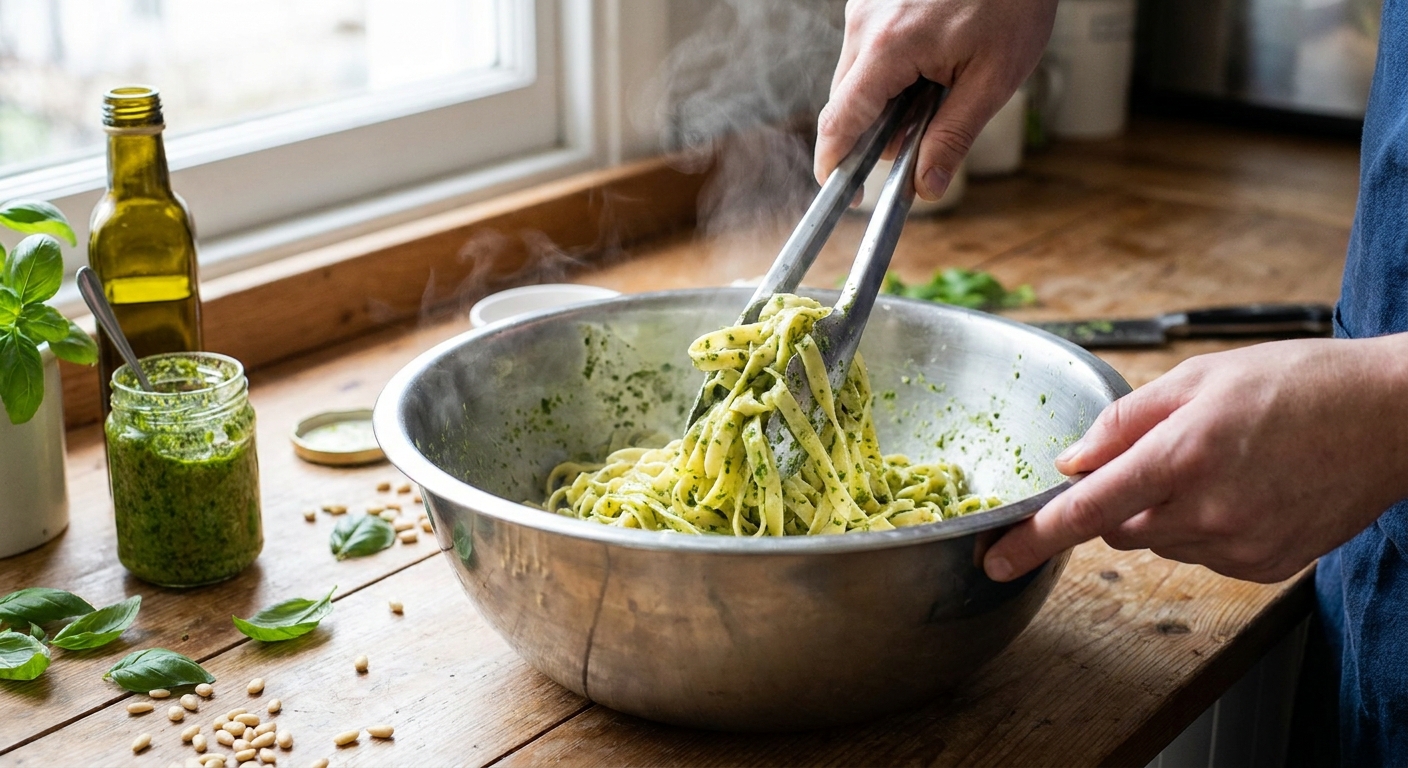
- Big bowl tossing builds better sauce. More surface area plus vigorous stirring helps the pesto, cheese, and water come together quickly.
Ingredient notes
Pasta: Use 1 pound dried pasta for the recipe card below. Short, twisty shapes coat most evenly, but long noodles work beautifully if you toss thoroughly.
Pesto (jarred or homemade): Any basil pesto works here. If jarred pesto tastes flat straight from the jar, wake it up with lemon juice or zest, and a pinch of salt after tossing. Some jarred pestos are already very salty, so taste first.
Pasta water: This is not optional if you want a glossy sauce. Reserve it before draining. You want it hot and starchy, not lukewarm.
Cheese: Parmesan is the easiest win. Pecorino is great, just use a lighter hand and season at the end.
Butter (optional): A tablespoon adds richness and helps the sauce look extra silky, especially if your pesto is lean or very herb-heavy.
Equipment you will need
- Large pot for boiling pasta
- Colander
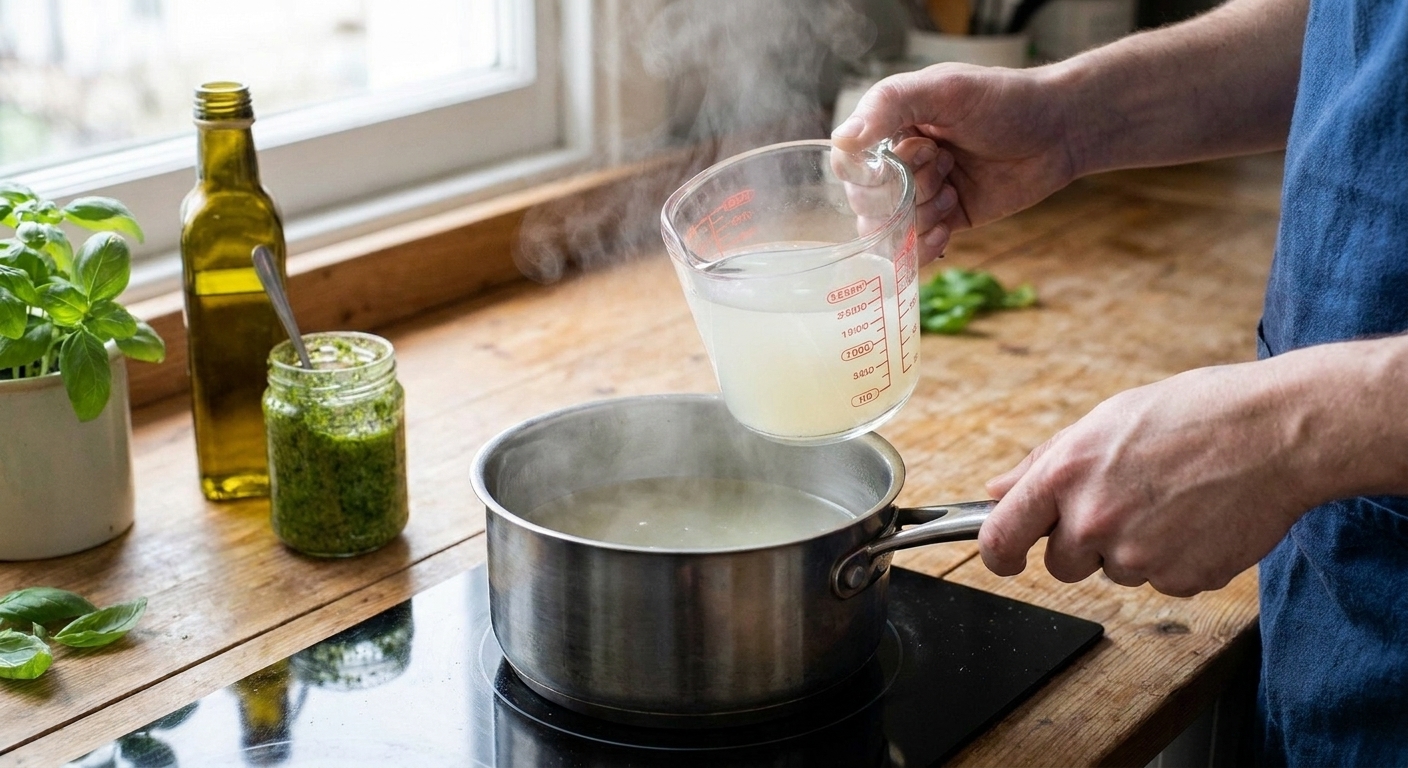
- Heatproof measuring cup for reserving pasta water
- Large mixing bowl or the empty pasta pot for tossing
- Microplane or fine grater for cheese
- Tongs (helpful for long noodles)
Pro tips
- Salt the pasta water like you mean it. Pesto is flavorful, but properly seasoned noodles are what make the whole dish taste “finished.”
- Reserve more pasta water than you think you need. Scoop out at least 1 1/2 cups. You might only use 1/2 cup, but having extra gives you control.
- Toss off the heat. If you put pesto in a hot pan over high heat, basil can darken and taste cooked. Use residual heat from the pasta.
- Add pasta water first, then adjust. Start with 1/2 cup reserved water for 1 pound pasta, toss, then add more a tablespoon at a time until it is glossy.
- Cheese last, then taste. Cheese thickens the sauce. Toss it in, then decide if you need more pasta water, salt, or lemon.
Substitutes that work
- No Parmesan: use Pecorino Romano, aged Asiago, or Grana Padano.
- Dairy-free: use a dairy-free pesto and finish with nutritional yeast or a dairy-free Parmesan alternative. The pasta water emulsion still helps a lot.
- Gluten-free pasta: works well, but pasta water can be less starchy. Reserve extra water and consider whisking 1 teaspoon olive oil into the pesto to help it coat smoothly.
- Nut-free needs: use nut-free pesto you already have. Finish with toasted breadcrumbs for crunch instead of nuts.
Variations
- Lemon pesto pasta: add 1 teaspoon lemon zest and 1 to 2 teaspoons lemon juice after tossing, then taste.
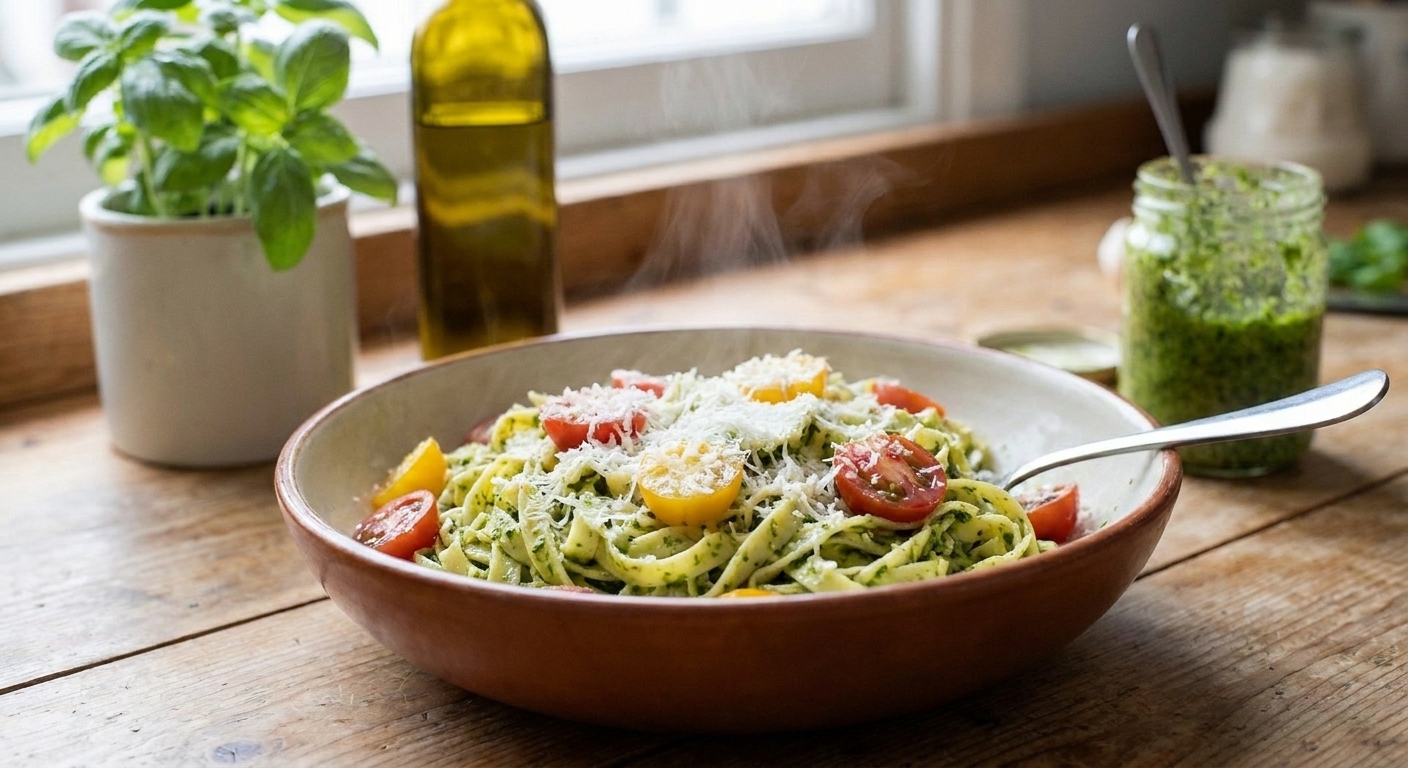
- Tomato pesto pasta: toss in a pint of halved cherry tomatoes. The heat softens them just enough.
- Veggie-loaded: add quick sautéed zucchini, green beans, or frozen peas (stir peas into the boiling pasta for the last 2 minutes).
- Creamier bowl: add 2 tablespoons mascarpone or crème fraîche with the pesto, then emulsify with pasta water.
Serving ideas
- Serve with a simple green salad with lemony vinaigrette for contrast.
- Add a side of blistered broccoli or roasted asparagus if you want more vegetables without complicating the pasta.
- Finish each bowl with extra cheese, black pepper, and a drizzle of good olive oil.
- For guests, top with sliced chicken cutlets or sautéed shrimp and a handful of arugula.
Storage and reheating
Fridge: Store leftovers in an airtight container for up to 3 days.
Reheat: Pesto pasta tightens as it sits. Reheat gently in a skillet or microwave with a splash of water. Stir well, then taste and add a pinch of salt or a squeeze of lemon to brighten.
Make-ahead tip: If you know you will have leftovers, reserve extra pasta water and store it in the fridge. It is the best way to bring the sauce back to life the next day.
Common mistakes
- Draining without reserving pasta water: you lose the ingredient that makes the sauce glossy and cohesive.
- Adding pesto to a ripping-hot pan: basil can darken and taste flat. Toss off heat with hot pasta.
- Using too much pesto and no water: the pasta turns heavy and clumpy instead of silky.
- Not tossing long enough: emulsification needs agitation. Toss vigorously for 30 to 60 seconds.
- Over-salting early: pesto and cheese can be salty. Season at the end after tasting.
FAQ
Can I use jarred pesto?
Absolutely. Jarred pesto becomes dramatically better when you emulsify it with hot pasta water. Taste after tossing and adjust with lemon juice or zest if it needs brightness.
Why is my pesto pasta oily?
Usually because there is not enough pasta water, or it was not tossed long enough to emulsify. Add a splash of hot pasta water and toss vigorously until the sauce looks cohesive and glossy.
Should I rinse pasta for pesto pasta?
No. Rinsing removes surface starch that helps the sauce cling. Drain, then immediately toss with pesto and pasta water.
Can I add cream?
You can, but you do not need it. For a richer bowl, add a spoonful of mascarpone or crème fraîche with the pesto, then loosen with pasta water. It reads creamy without drowning the basil flavor.
What if my pesto is very thick?
Start with less pesto, then use more pasta water. Thick pesto almost always needs more water to turn silky instead of clumpy.
Weeknight Pesto Pasta
Hot pasta tossed with basil pesto and starchy pasta water turns into a glossy, restaurant-style sauce in minutes. Works with jarred or homemade pesto, and it is easy to customize with cheese and quick proteins.
- Prep
- 5 minutes
- Cook
- 12 minutes
- Total
- 17 minutes
- Yield
- 4 servings
Ingredients
- 1 lb (16 oz) dried pasta (fusilli, linguine, or penne rigate all work)
- Kosher salt, for the pasta water
- 3/4 cup basil pesto (jarred or homemade), plus more to taste
- 1/2 cup hot reserved pasta water, plus more as needed
- 1/2 cup finely grated Parmesan cheese (about 2 oz), plus more for serving
- 1 tbsp unsalted butter (optional, for extra silkiness)
- Freshly ground black pepper, to taste
- 1 tsp lemon juice or 1/2 tsp lemon zest (optional, to brighten)
Instructions
- Boil the pasta. Bring a large pot of water to a boil. Salt it generously. Add the pasta and cook until al dente, stirring occasionally.
- Reserve pasta water. About 2 minutes before the pasta is done, scoop out at least 1 1/2 cups of the starchy pasta water into a heatproof measuring cup.
- Drain, do not rinse. Drain the pasta in a colander, then immediately return it to the empty pot or a large mixing bowl while it is still hot.
- Start the emulsion. Add the pesto and 1/2 cup hot reserved pasta water to the hot pasta. Toss vigorously with tongs or a large spoon for 30 to 60 seconds until the sauce looks glossy and evenly coats the noodles.
- Add cheese and finish. Add the Parmesan and the butter (if using). Toss again until melted and creamy. If the pasta looks tight or dry, add more hot pasta water 1 to 2 tablespoons at a time, tossing well between additions.
- Taste and adjust. Season with black pepper. Taste, then add a pinch of salt only if needed. Add lemon juice or zest if you want a brighter finish.
- Serve. Serve right away with extra Parmesan on top. If you like, finish with another tiny drizzle of olive oil.
Notes
Pesto ratio: For 1 pound pasta, 3/4 cup pesto is my “just right” weeknight amount. Use 1/2 cup for a lighter bowl or up to 1 cup for a very pesto-forward pasta. Always adjust with pasta water to keep it glossy.
Protein add-ins: Stir in shredded rotisserie chicken, browned Italian sausage, white beans, or sautéed shrimp at the end, just long enough to warm through.
Leftovers: Reheat gently with a splash of water, stirring well to bring the sauce back together.