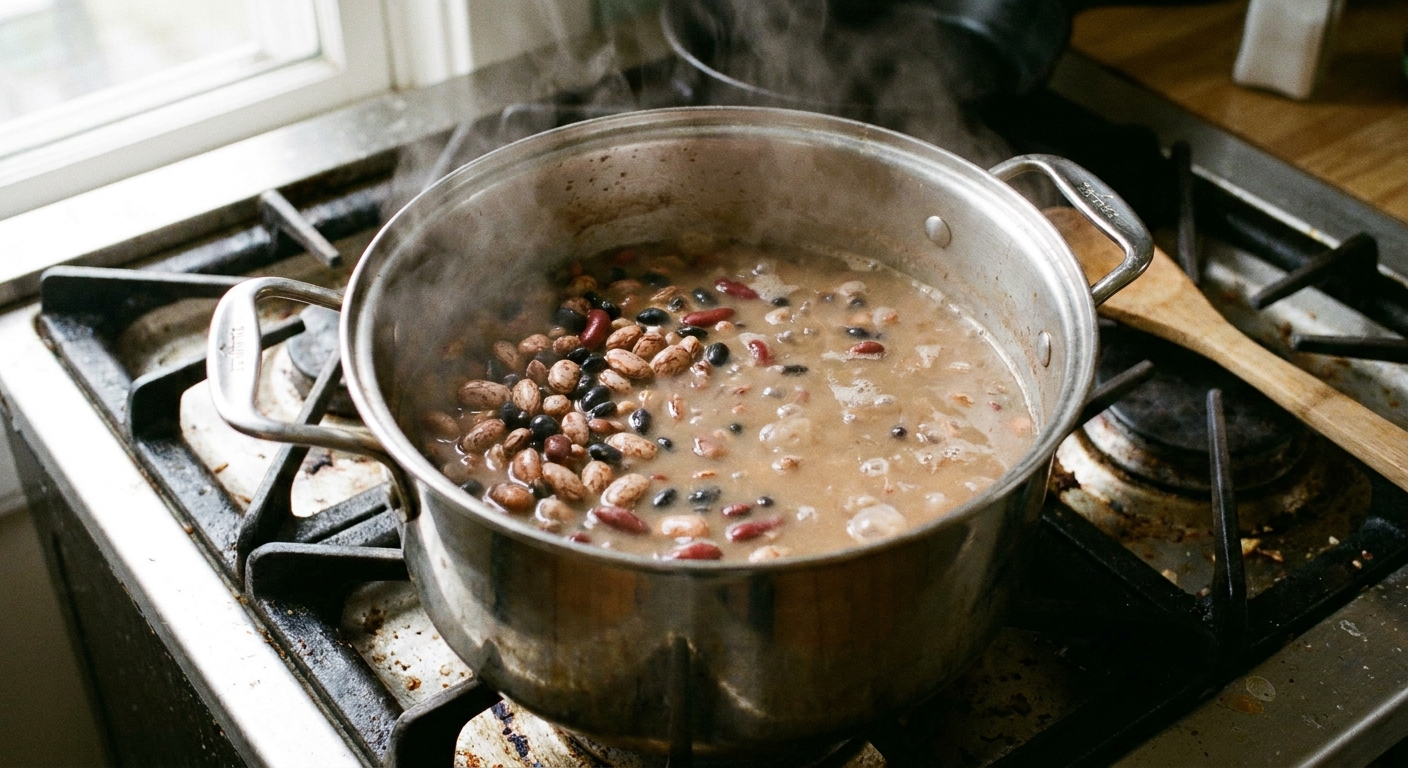

If you have ever stared at a pot of beans that has been “cooking” forever and still tastes chalky in the middle, you are not alone. I have taught a lot of beginner cooks, and this is one of the most frustrating kitchen situations because it feels like you did everything right: water, heat, time, done.
The good news is that beans usually stay hard for a few predictable reasons. Once you know what to look for, you can often rescue the pot you have on the stove right now and set yourself up for reliably creamy beans next time.

First, a quick check
Before we troubleshoot, make sure what you are experiencing is truly a problem and not just timing.
- Some beans take longer than you think. Chickpeas, cranberry beans, and large lima beans can easily take 90 to 150 minutes on the stove, sometimes more.
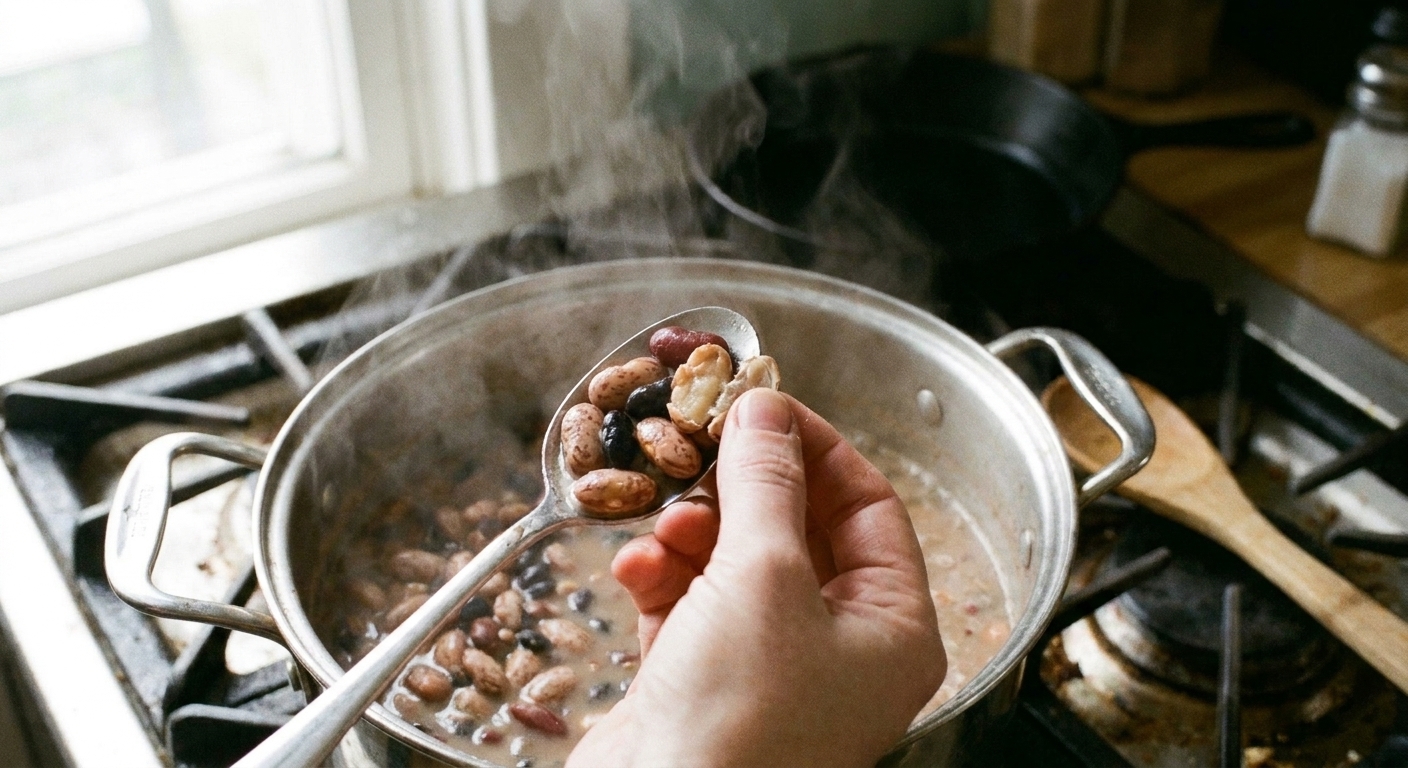
- Beans soften from the outside in. Early on, the skins can look wrinkly and cooked while the centers still taste firm.
- A weak simmer slows everything. Beans need enough heat for steady, gentle bubbling. A pot that is barely warm can stay in limbo for hours.
- Altitude can add time. At higher elevations, water boils at a lower temperature, so beans often take noticeably longer to soften.
If your beans have been at a real simmer for a long time and the centers are still hard or gritty, keep reading.
Why beans stay hard
1) The beans are old
This is the number one culprit. Dried beans do not exactly “spoil” quickly, but as they sit on a shelf (or in your pantry) they lose moisture and their structure changes. Practically speaking, older beans can take much longer to soften, and some never get fully creamy.
Clues you are dealing with old beans:
- They look very dull, dusty, or extremely shriveled.
- They took forever to hydrate, even after soaking.
- After long cooking, the skins may split but the centers stay chalky.
2) Your water may be working against you
In some kitchens, beans just cook better with filtered or bottled water. Hard water (high in minerals like calcium and magnesium) can contribute to slow softening in some cases, and water chemistry varies a lot city to city. If you suspect your tap water is part of the issue, the simplest test is to cook a small batch of the same beans in filtered or bottled water and compare.
Clues it might be your water:
- You see mineral scale on kettles, faucets, or pots.
- Your tea or coffee kettle gets crusty quickly.
- Beans cook noticeably better when you use filtered water.
3) Acid was added too early
Tomatoes, vinegar, wine, citrus juice, and some fermented ingredients (like certain hot sauces) can slow softening if added before the beans are tender. Acid helps beans hold their shape, which is great once they are soft, but a problem if they are still trying to get there.
Common “oops” ingredients: canned tomatoes, tomato paste, salsa, vinegar, lemon or lime juice, wine, molasses, tamarind, and very acidic chili sauces.
4) Heat and cooking style are off
Beans want a steady, gentle simmer. Too low and they stall. Too high and the outside can break down before the inside softens, especially if the pot is boiling hard and the beans are bouncing around.
Clues it is a heat issue:
- No bubbles at all, just heat and steam.
- A rolling boil that is breaking skins and turning the pot starchy fast.
- The pot keeps drying out, so you keep adding water in panic (we have all been there).
What about salt?
This is the internet’s favorite argument. In my kitchen tests, salt does not usually prevent beans from softening. In fact, salting the cooking water can improve flavor and can help beans cook more evenly. If your beans are hard, salt is very unlikely to be the reason.
Fix the pot you have now
Let’s assume you have a pot of beans that is simmering and still stubbornly firm. Here is the rescue plan I use, in order.
Step 1: Check liquid and simmer
- Add hot water if needed. Beans should be covered by about 1 to 2 inches of water or broth as they cook. If the pot is low, top it up with boiling water so you do not kill the simmer.
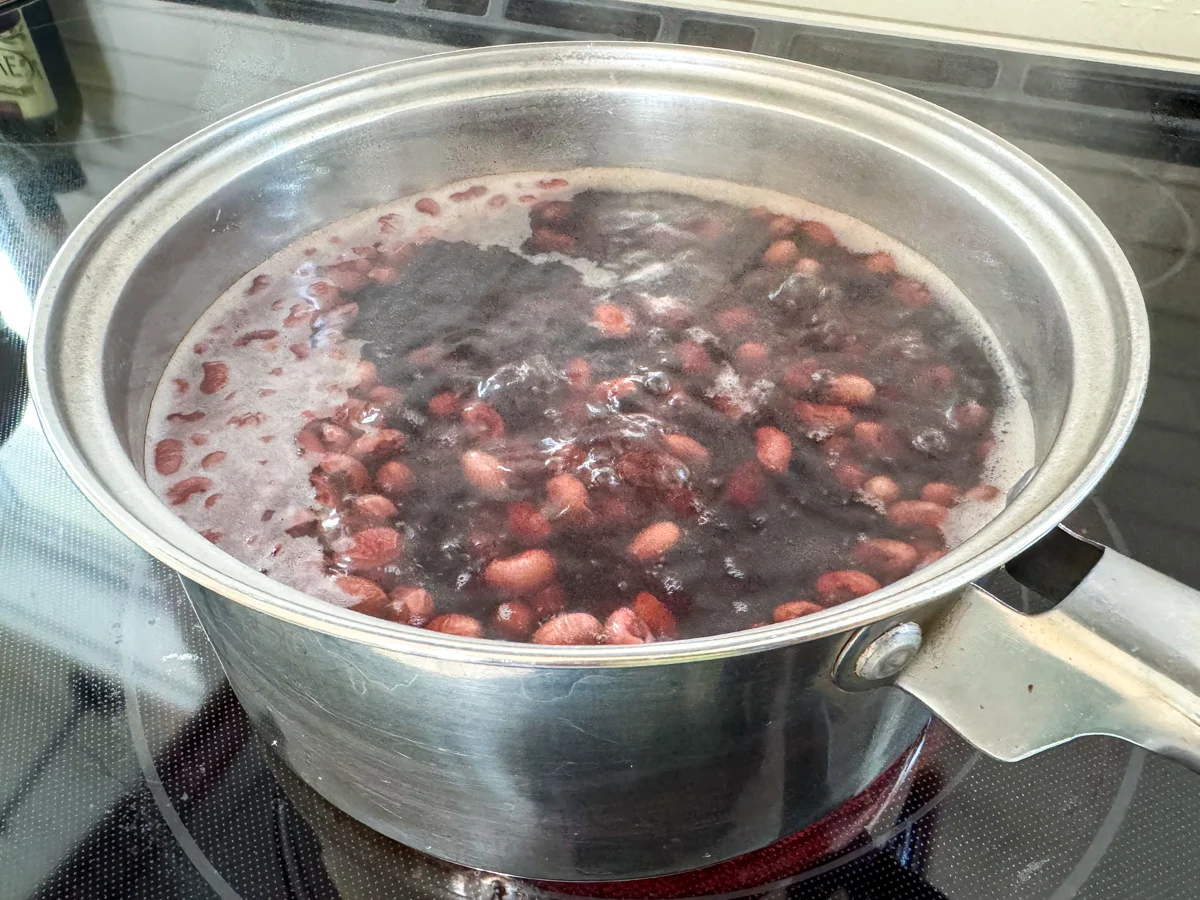
- Bring to a proper simmer. You want small, steady bubbles breaking the surface, not a roaring boil and not silence.
- Cover partially. A lid slightly ajar helps maintain heat while preventing boil-overs.
Step 2: If you added acid, pause it
If your pot has tomatoes or another acidic ingredient in it and the beans are still hard, you have two options:
- Best option: If possible, scoop out the beans with a slotted spoon into another pot, cover with fresh water, and simmer until tender. Then add them back to the acidic base.
- If you cannot separate them: Keep simmering and be patient. Some beans will still soften eventually, just more slowly.
Step 3: Try a pinch of baking soda
This is the most effective “emergency lever” I know. A small amount of baking soda makes the cooking liquid more alkaline, which helps break down the beans’ structure and speeds softening.
- Start with 1/8 teaspoon baking soda per pound of dried beans (or per big pot), stir well, and simmer 15 minutes.
- If they are still stubborn, you can add another tiny pinch. In tough cases, you may need up to 1/4 teaspoon per pound, but go slowly.
Important: Too much baking soda can make beans taste soapy and can cause them to break apart.
Step 4: Give them time, then rest
Once beans finally turn tender, turn off the heat and let them sit in their cooking liquid for 15 to 30 minutes. This rest helps the centers finish hydrating and evens out texture.
When to call it
If beans have simmered for hours, you have tried baking soda, and they are still gritty in the center, they are probably very old. At that point, I would pivot: blend them into a soup where texture matters less, or discard them and treat it as a pantry reset. Life is too short for beans that refuse to cooperate.
Prevent it next time
Buy beans you will use
If reducing food waste is your goal, this is one of the easiest wins. Dried beans are inexpensive, so it is tempting to hoard them, but they cook best when reasonably fresh.
- Buy from stores with high turnover, or from bulk bins you trust.
- If you love beans weekly, consider purchasing from a reputable regional producer where harvest dates are more transparent.
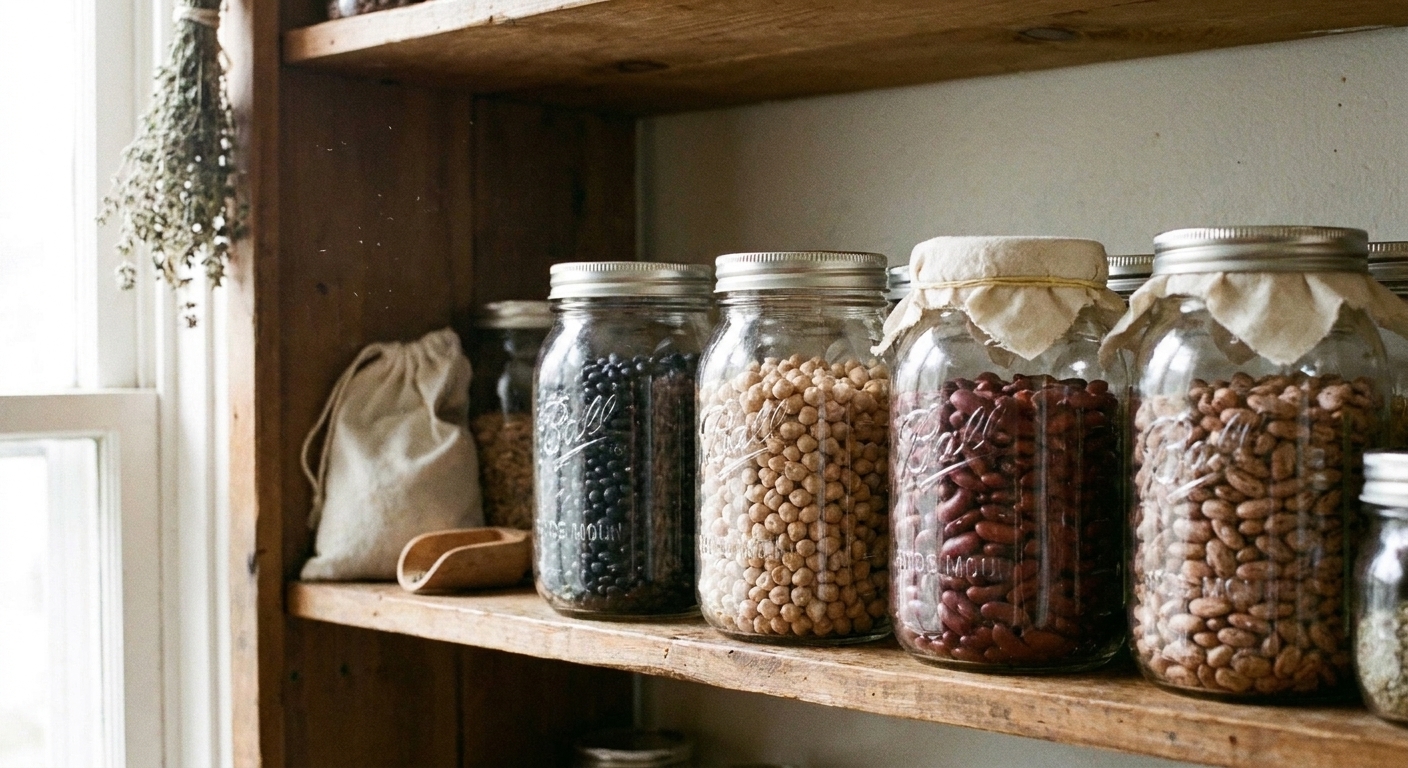
- Store in an airtight container in a cool, dark place.
Try filtered water if you suspect an issue
If your tap water seems to fight you, cook beans with filtered water and see if you notice a difference. You do not need anything fancy. A basic carbon filter pitcher is enough for most people.
Soak smart (or brine soak)
Soaking is not mandatory for every bean, but it can help with even cooking and can shorten simmer time.
- Overnight soak: Cover beans with plenty of water and soak 8 to 12 hours.
- Quick soak: Boil 2 minutes, cover, then soak 1 hour off heat.
- Salted soak (my favorite): Add 1 to 1 1/2 tablespoons kosher salt per quart of water. This seasons the bean internally and tends to produce a creamier texture.
Soak water vs fresh water: If you want the cleanest flavor and the most predictable texture, drain and rinse soaked beans, then cook in fresh water. If you are in a hurry, you can cook in the soaking water, but keep an eye on foam and flavor. I usually prefer fresh water for a calmer pot.
Save acid for the end
Add tomatoes, vinegar, citrus, wine, and other acidic ingredients after the beans are tender. If you are making chili, for example, cook the beans until soft first, then stir them into the tomato-rich base.
Pressure cooker note
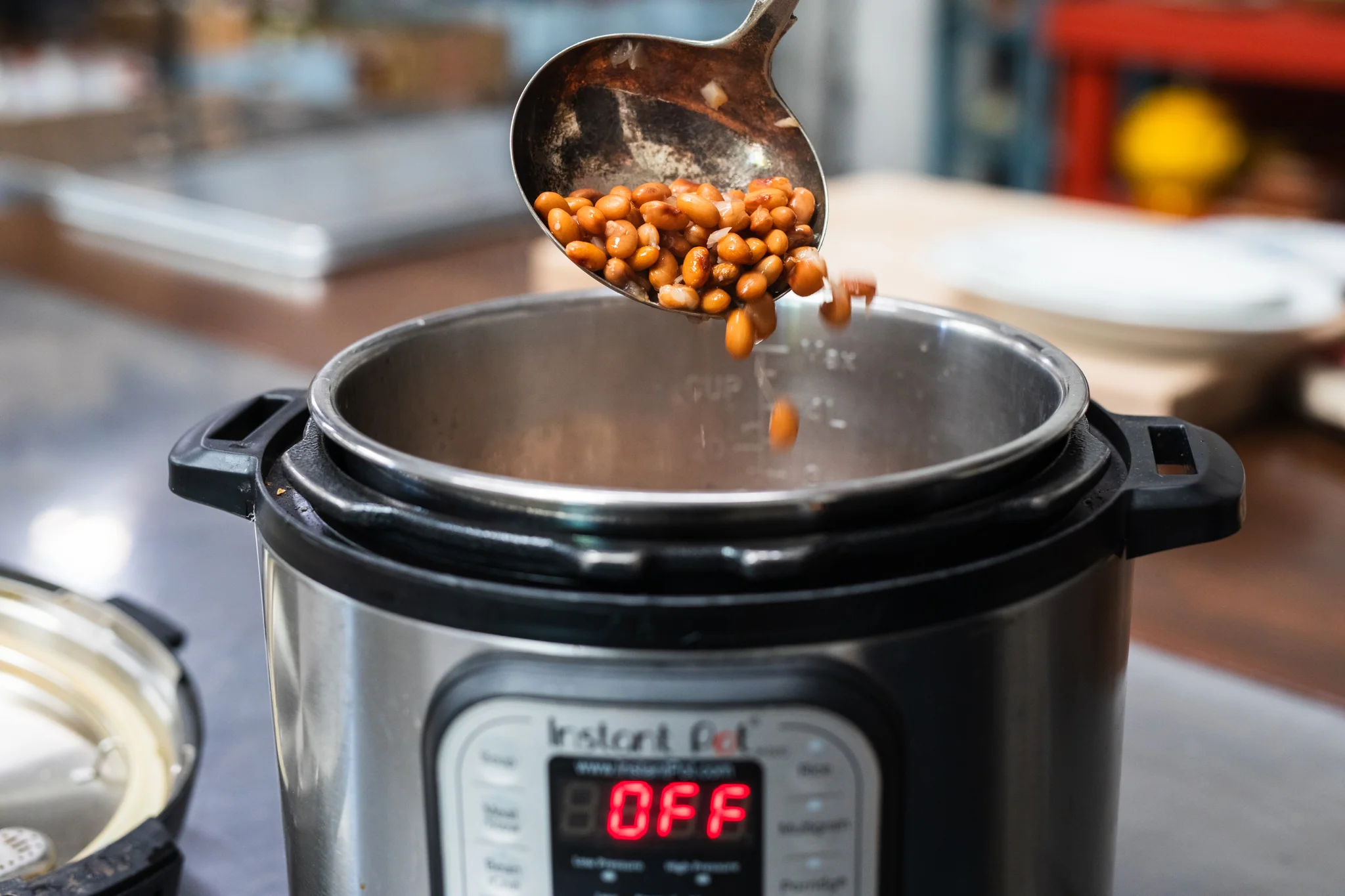
If you have a pressure cooker, it can be a bean game-changer. Pressure cooking often softens beans faster and more reliably, especially when time, altitude, or stubborn beans are working against you.
Build flavor in layers
I like to cook beans with onion, garlic, bay leaf, or a strip of kombu for depth. Then once they are tender, I dial in the flavor: salt, a splash of vinegar, a squeeze of lemon, or a spoonful of salsa. That is where the magic balance of salt and acid really shines, without sabotaging texture.
Bean questions
Can I overcook beans while trying to soften them?
Yes. The risk is that the outside turns mushy and the skins split while the centers lag behind. Keep a gentle simmer, stir occasionally, and add water as needed so the pot never runs dry.
Why are my beans soft but the skins are tough?
This can happen with very old beans, tricky water chemistry, or overly vigorous boiling. A short rest in the cooking liquid can help. Next time, try filtered water and a steadier simmer.
Do beans soften faster with a lid on?
Usually, yes. A partially covered pot holds heat more consistently and reduces evaporation. Leave the lid slightly ajar so it does not boil over.
Should I cook beans in broth?
You can, but broth can be salty and sometimes acidic depending on brand. For the most predictable results, cook beans in water with aromatics, then season boldly at the end.
Is it safe to eat beans that are still hard?
They are unpleasant to eat and can be hard on digestion. With kidney beans specifically, do not rely on low-temperature cooking. For safety, boil soaked kidney beans hard for at least 10 minutes, then continue cooking at a simmer until fully tender.
My go-to method
If you want a simple baseline, here is the approach I teach and use at home:
- Sort and rinse. Pick out any tiny stones or broken beans, then rinse well.
- Soak if you can. Overnight is easiest. If not, quick soak works.
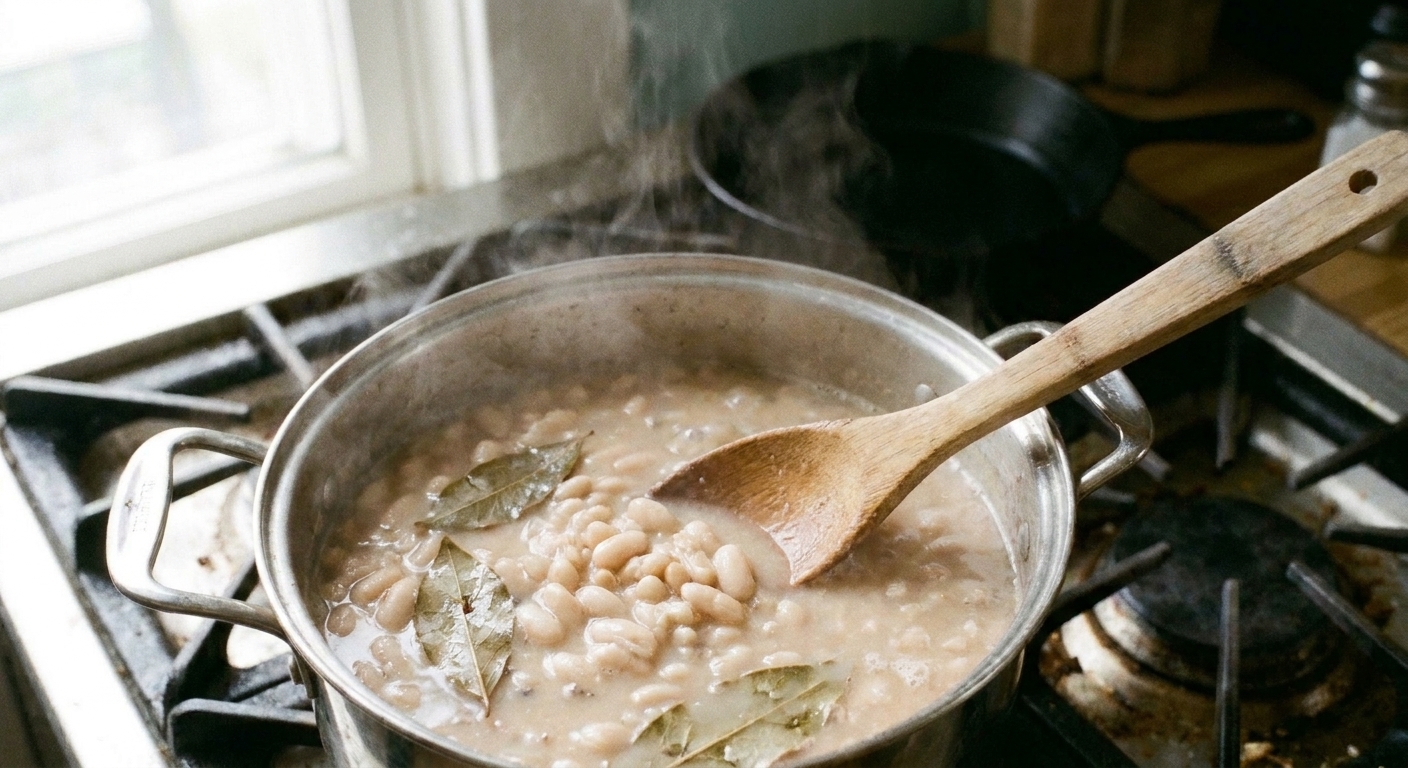
- Drain and use fresh water. Cover beans by 1 to 2 inches. Add onion, garlic, bay leaf if you want.
- Simmer gently. Small steady bubbles, not a hard boil.
- Salt the water. Season so it tastes lightly salty, like soup.
- Do not add acid until tender. Once beans are creamy inside, then add tomatoes, vinegar, citrus, wine, and simmer a few minutes to marry flavors.
- Rest in the liquid. 15 to 30 minutes off heat makes texture more even.
If your beans are still fighting you after that, it is almost always one of two things: old beans or water that is not doing you any favors. And now you know exactly how to troubleshoot both.