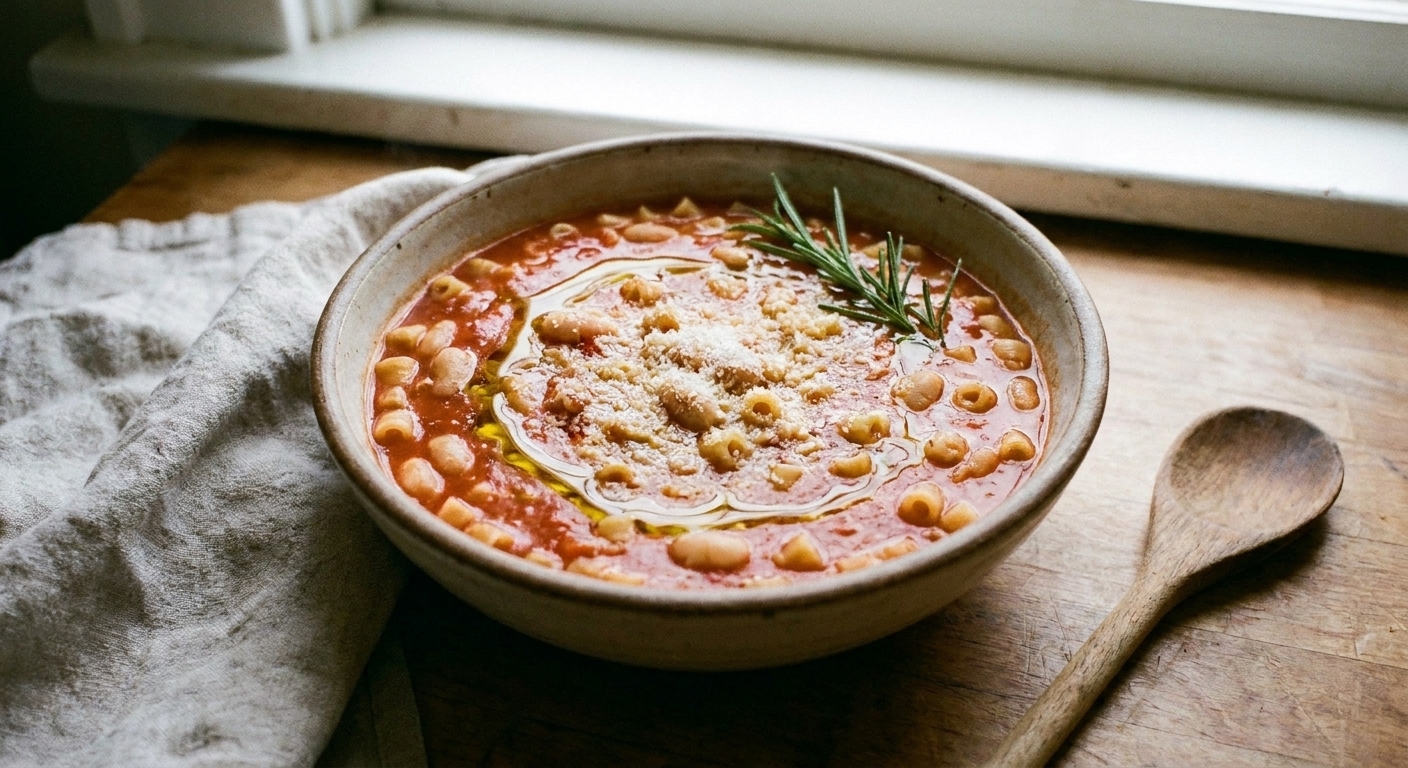

If you have a bag of beans, a half-empty box of tiny pasta, and that one rosemary sprig that is somehow still alive in your fridge drawer, you are dangerously close to Pasta e Fagioli. This is the Italian tomato-broth bean soup I teach when someone tells me they want “comfort food,” but also wants dinner to taste like they tried a little.

The whole trick to a great bowl is texture: beans that stay intact and creamy, pasta that is tender but not bloated, and a broth that stays brothy. That comes down to timing. I build the tomato and aromatics first, simmer the beans gently in that flavorful base, then add the pasta near the end. Pasta is a starch sponge. If it simmers too long, it drinks your broth and turns your soup into something closer to pasta stew. Plus, vigorous boiling and heavy stirring can break up tender beans.
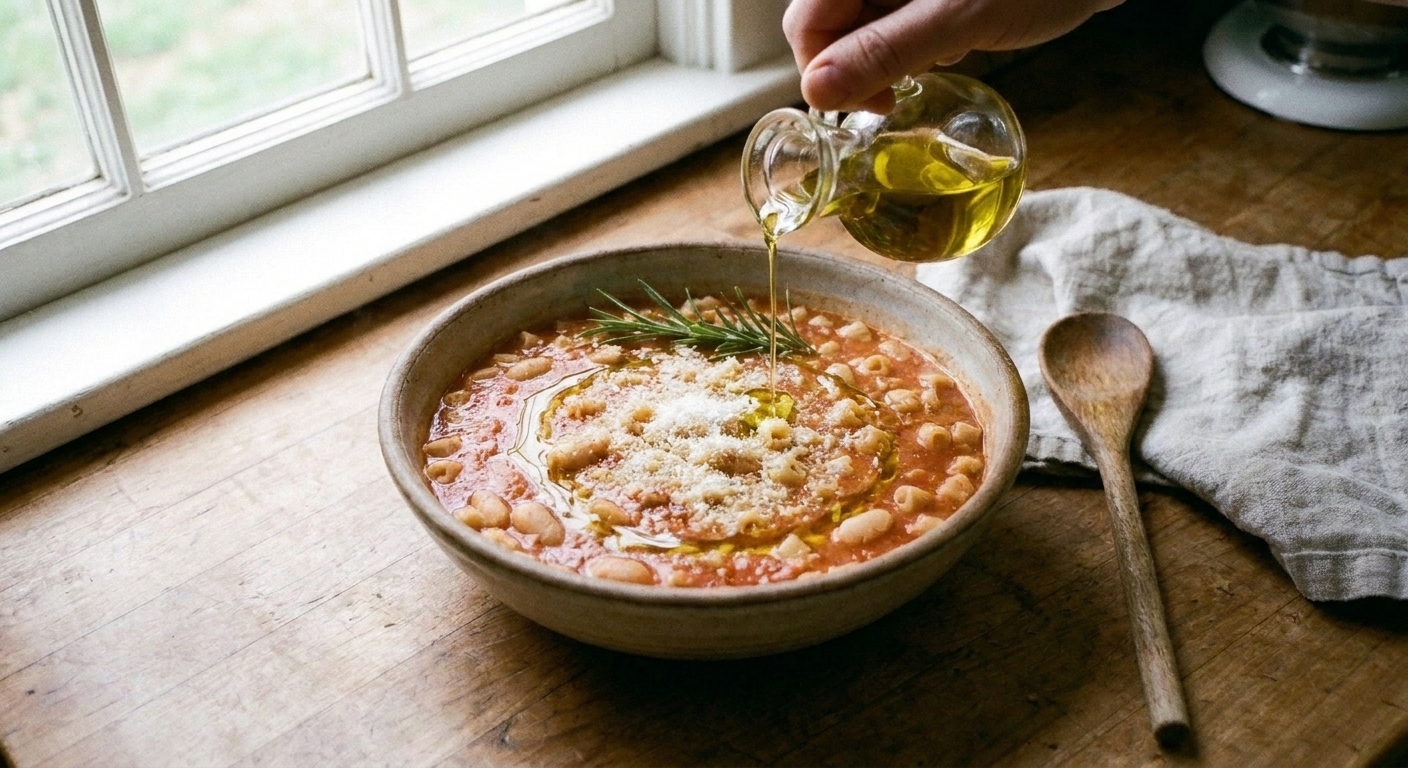
Finish it like you mean it: a good glug of olive oil and a shower of Parmesan (or pecorino). The fat softens the sharp edges of tomato acidity, the cheese adds salty depth, and suddenly this humble pantry soup tastes like your favorite trattoria.
Brothy vs. thick
I write this recipe to be brothy, because that is the sweet spot for weeknight leftovers. If you want it thicker, you do not need to overcook anything. Just mash a small scoop of beans against the side of the pot, stir, and you will get a creamy body while keeping most beans whole.
Pasta timing matters
Add the pasta when the beans are fully tender and the broth tastes balanced, usually in the last 8 to 12 minutes, or according to the package time for your pasta shape. That way:
- Your beans stay intact. Less time simmering, less agitation, fewer split skins.
- Your soup stays brothy. Pasta releases starch and absorbs liquid as it cooks, and it keeps absorbing as it sits.
- Leftovers are better. For the brothiest next-day bowl, you can even cook the pasta separately and add it to each serving (I note this option in the recipe).
Why this recipe works
- Tomato paste gets toasted for a deeper, sweeter tomato backbone without needing hours of simmering.
- Rosemary and garlic give the soup that unmistakable Italian aroma with minimal ingredients.
- Pasta is added late so it cooks perfectly while beans remain whole and the broth does not disappear.
- A finishing drizzle of olive oil adds richness and softens the tomato acidity in the most classic way.
- Optional bean mashing thickens naturally, no cream and no extra steps that muddy the flavor.
Ingredient notes
Beans
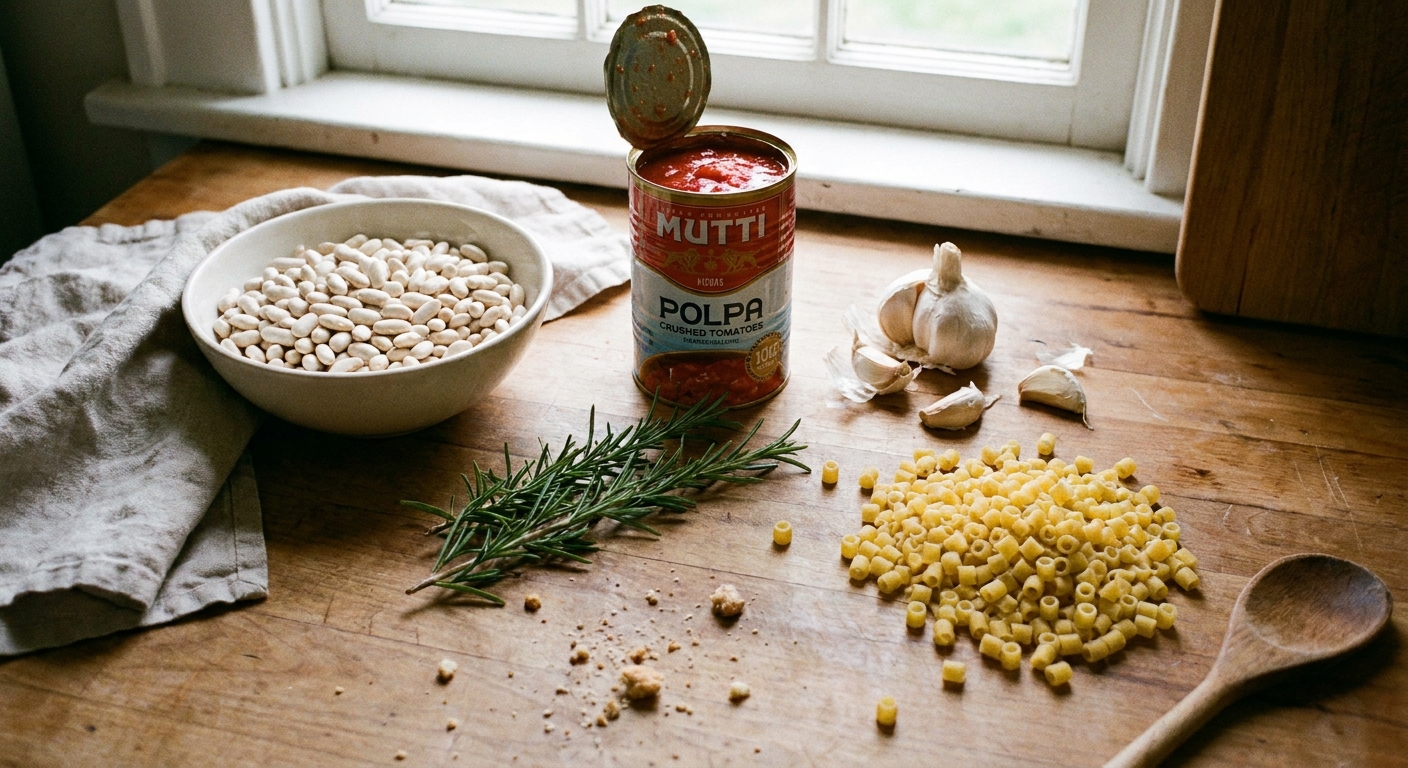
Cannellini (white kidney beans) are the classic choice. Great Northern beans also work beautifully. If you are using home-cooked beans, you will need about 3 cups cooked beans plus some of their cooking liquid if you have it. Canned beans work too, just rinse well.
Small pasta
Ditalini is my favorite here, but any small shape works: tubetti, small shells, elbow macaroni, even broken spaghetti in a pinch. Use what you have and keep an eye on doneness.
Tomatoes
Crushed tomatoes make the broth feel cohesive. If you only have whole peeled tomatoes, crush them with your hands in a bowl first.
Rosemary
Fresh rosemary is punchy and piney. If using dried, go lighter since dried rosemary can read woody if overdone.
Cheese
Parmesan is classic. Pecorino Romano is saltier and sharper, which is great if you like a more assertive finish.
Equipment you will need
- Large heavy-bottomed pot or Dutch oven
- Wooden spoon or silicone spatula
- Microplane or fine grater for the cheese
- Ladle
- Small saucepan (optional, if cooking pasta separately for leftovers)
Pro tips
- Season in layers. Add a little salt with the aromatics, taste again after the tomatoes simmer, then fine-tune at the end. Beans need more salt than you think, but they want it gradually.
- Keep it at a gentle simmer. A hard boil can split beans and turn the broth cloudy.
- Save broth insurance. Keep a kettle of hot water or warm broth nearby. If the pasta absorbs more liquid than expected, you can loosen the soup in seconds.
- For the best leftovers, cook pasta separately. Store pasta and soup apart, then combine when reheating so the pasta stays springy and the soup stays brothy.
- Finish with olive oil off heat. It keeps the flavor fruity and prevents the oil from tasting flat.
Substitutes that work
- No rosemary: Use fresh sage or thyme. If you only have dried Italian seasoning, use a small amount and add it with the tomatoes.
- No tomato paste: Add an extra splash of crushed tomatoes and simmer a few minutes longer to concentrate.
- No Parmesan: Pecorino Romano, Grana Padano, or even a spoonful of pesto stirred into each bowl.
- No veggie broth: Water works. Just be extra thoughtful with salt and the final cheese finish.
- Want a shortcut: Use canned beans. The recipe includes both options.
Variations
- Greens in the last minute: Stir in baby spinach or chopped kale until just wilted.
- Lemon finish: Add a squeeze of lemon to brighten everything up if your tomatoes taste especially sweet.
- Spicy: Add crushed red pepper flakes with the garlic.
- Creamier without dairy: Mash a half cup of beans and stir them back in.
Serving ideas
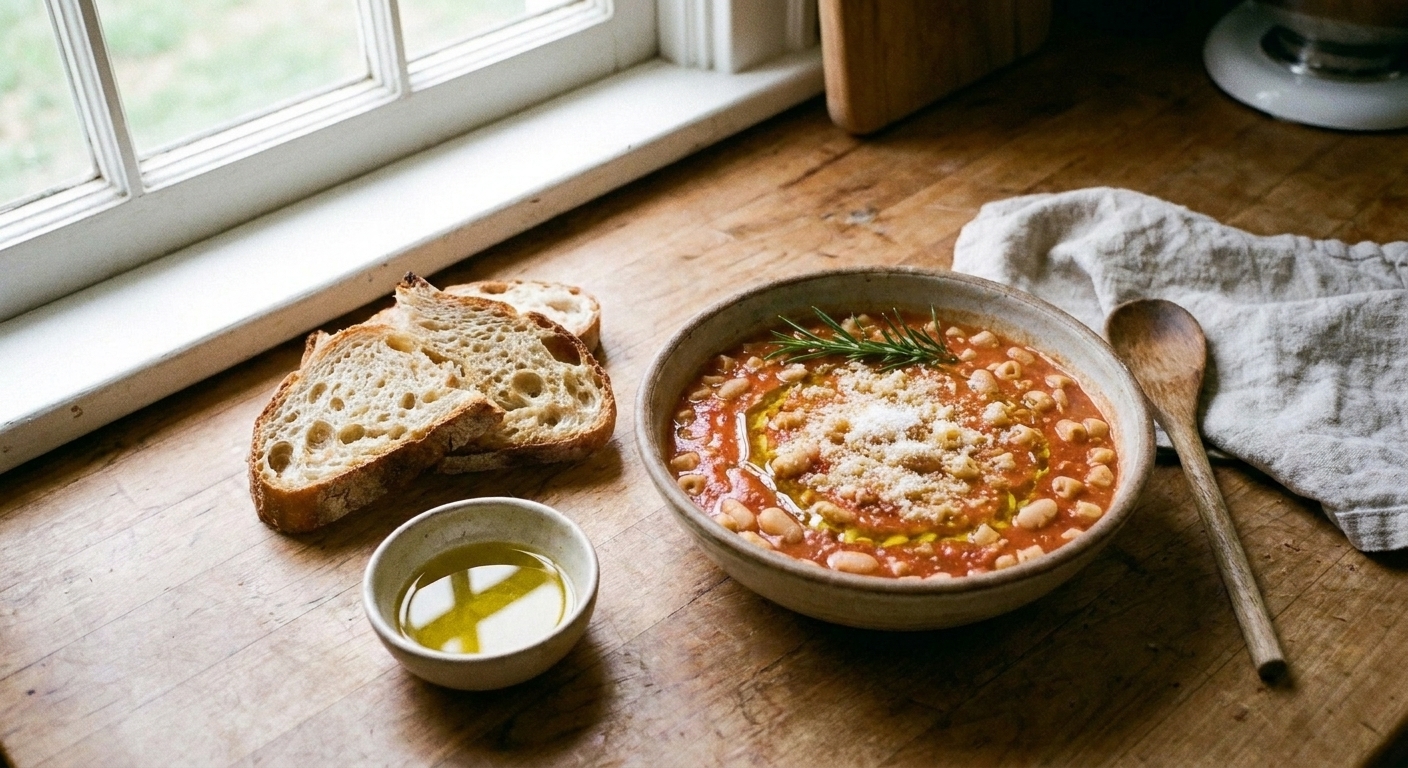
- Serve with crusty bread for dunking and broth-catching.
- Add a simple green salad with a sharp vinaigrette to balance the richness.
- Top each bowl with extra Parmesan and black pepper, plus a little more olive oil.
Storage and reheating
Refrigerate: Store in an airtight container for up to 4 days.
Broth tip: The pasta will keep absorbing liquid as it sits. When reheating, add a splash of water or broth until it is as brothy as you like.
Best leftover strategy: If you know you want leftovers, cook the pasta separately and store it apart. Reheat soup, then add pasta to each bowl.
Freeze: For best texture, freeze the soup without pasta (beans and tomato broth freeze well). Add freshly cooked pasta when serving.
Common mistakes
- Adding pasta too early. It will drink your broth and overcook by the time you serve, and the extra simmering can break beans.
- Boiling aggressively. A hard boil roughs up the beans and can make the soup taste muddy instead of clean and bright.
- Underseasoning. Beans and tomatoes both need salt. Taste at the end and adjust, especially after the pasta cooks.
- Skipping the finish. Olive oil and cheese are not garnish here. They are the final seasoning.
FAQ
Can I use canned beans?
Yes. Rinse and drain them well, then simmer them in the tomato broth just long enough to pick up flavor before adding the pasta near the end.
How do I keep Pasta e Fagioli from getting too thick?
Add the pasta late and keep extra hot broth or water nearby. For make-ahead, cook pasta separately and combine per bowl.
Should I blend this soup?
I would not blend the whole pot. If you want a creamier body, mash some beans with a spoon and stir them in. You keep the rustic texture without turning it into puree.
What pasta shape is most traditional?
Ditalini and tubetti are very common, but plenty of Italian households use small shells or whatever is in the pantry. Small and sturdy is the goal.
Pasta e Fagioli Soup
Italian-style tomato broth with beans, small pasta, garlic, and rosemary, finished with olive oil and Parmesan. Pasta goes in at the end so the beans stay whole and the soup stays brothy.
- Prep
- 15 minutes
- Cook
- 35 minutes
- Total
- 50 minutes
- Yield
- 6 servings
Ingredients
- 2 tablespoons extra-virgin olive oil, plus more for finishing
- 1 medium yellow onion, finely chopped
- 2 medium carrots, finely chopped
- 2 celery stalks, finely chopped
- 1 teaspoon kosher salt, plus more to taste
- 4 cloves garlic, minced
- 1 tablespoon tomato paste
- 1 sprig fresh rosemary (or 1/2 teaspoon dried rosemary)
- 4 cups low-sodium vegetable broth (or chicken broth)
- 1 can (28 ounces) crushed tomatoes
- 3 cups cooked cannellini beans (or 2 cans, 15 ounces each, rinsed and drained)
- 1 bay leaf
- 1/2 teaspoon freshly ground black pepper, plus more to taste
- 1 cup small pasta (ditalini, small shells, or elbow macaroni)
- 1 to 2 tablespoons balsamic vinegar or fresh lemon juice, to taste (optional, for balancing acidity)
- Finely grated Parmesan or pecorino, for serving
Instructions
- Sauté the aromatics. Set a large pot over medium heat. Add the olive oil, onion, carrots, celery, and kosher salt. Cook, stirring occasionally, until the vegetables are softened and the onion looks translucent, 8 to 10 minutes.
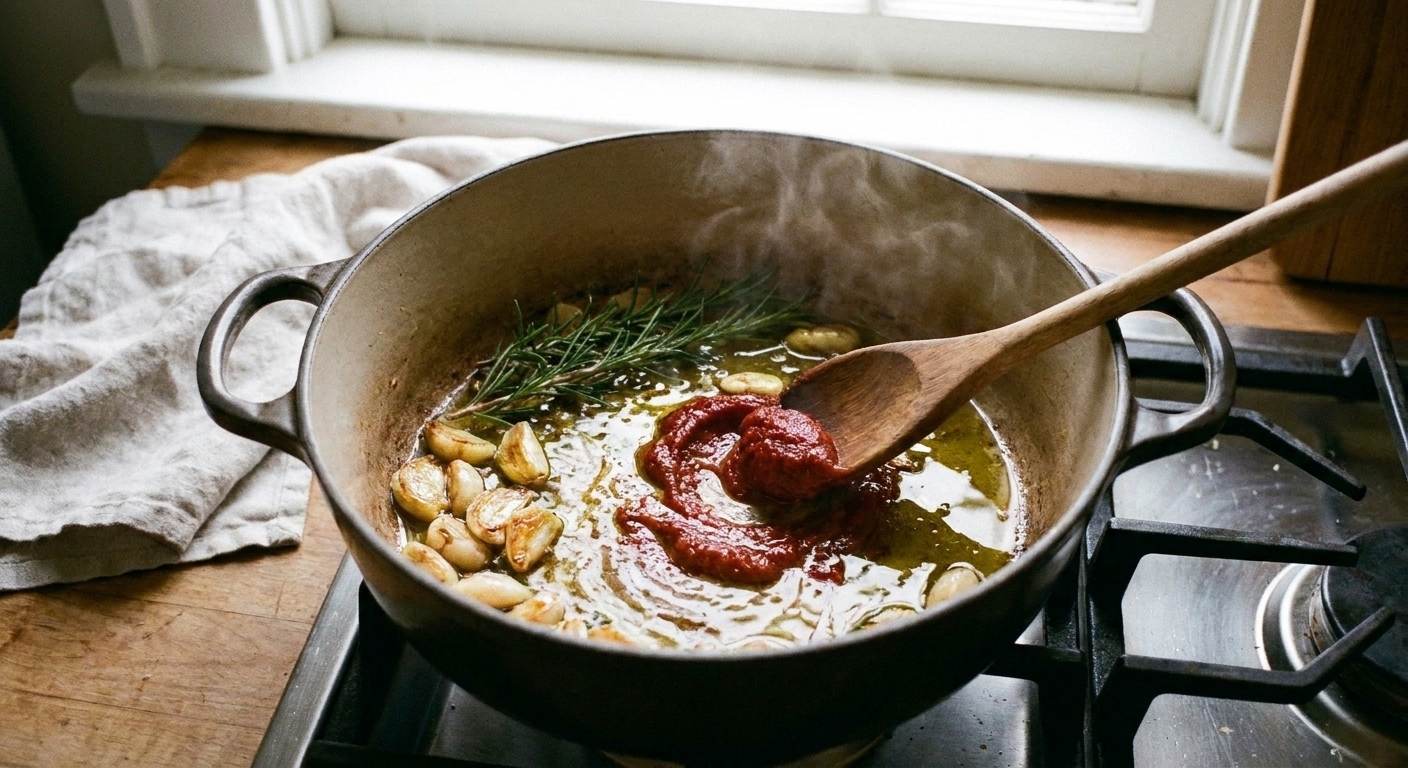
- Add garlic and toast the tomato paste. Stir in the garlic and cook until fragrant, about 30 seconds. Add the tomato paste and stir constantly until it darkens slightly and starts to stick to the bottom of the pot in a good way, 1 to 2 minutes.
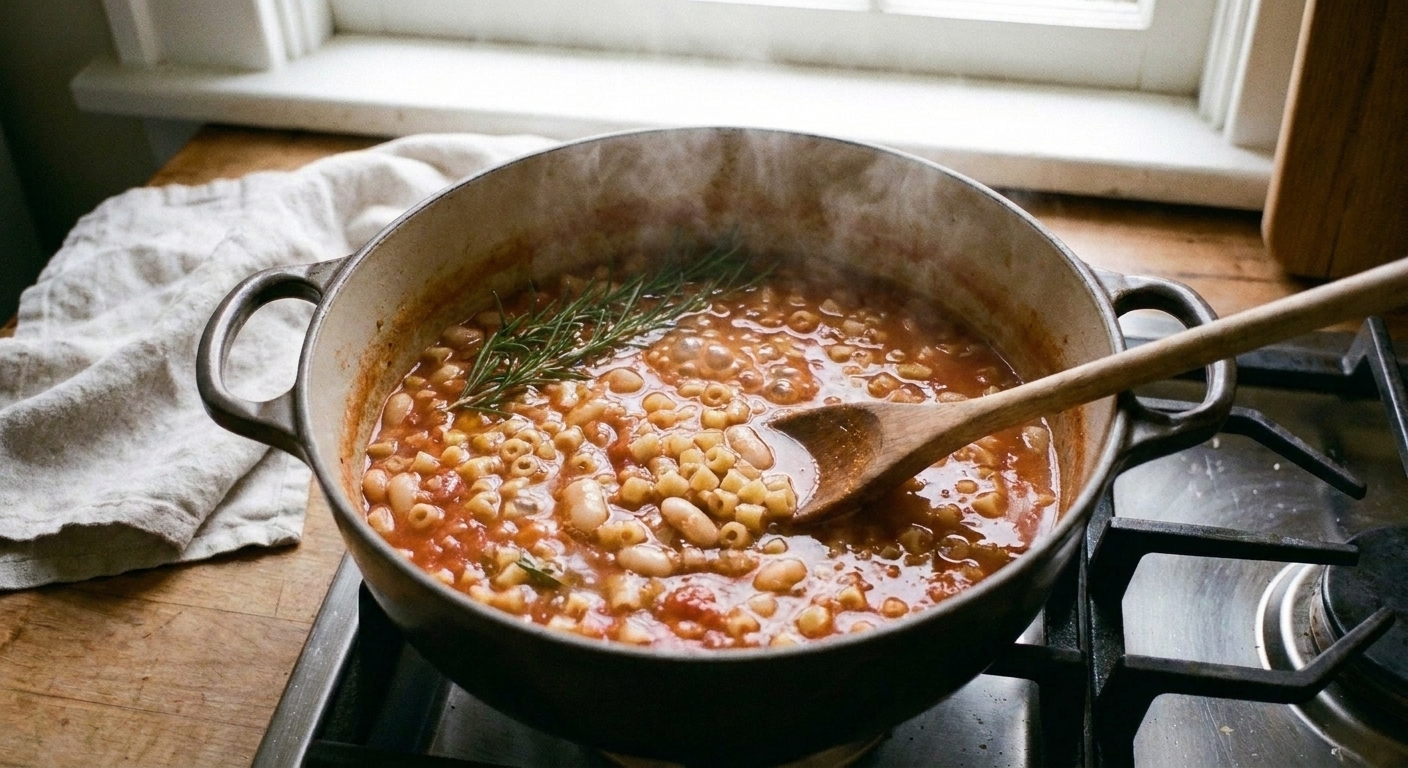
- Build the broth. Add the rosemary sprig, broth, crushed tomatoes, beans, bay leaf, and black pepper. Bring to a gentle simmer.
- Simmer gently to keep the beans intact. Partially cover and simmer on low, stirring occasionally and gently, for 15 minutes. Taste the broth and add salt if needed.
- Decide on texture. For a slightly creamier soup without thickening it too much, scoop out about 1/2 cup beans, mash them with a fork, and stir back into the pot. Skip this if you want it very brothy.
- Add the pasta at the end. Keep the soup at a steady simmer and stir in the pasta. Cook until the pasta is tender, 8 to 12 minutes depending on shape. Stir occasionally to prevent sticking and add a splash of broth or hot water if the soup tightens up.
- Finish and serve. Turn off the heat. Remove the rosemary sprig and bay leaf. If you want a brighter finish, stir in balsamic vinegar or lemon juice a little at a time until it tastes balanced. Ladle into bowls, drizzle with extra-virgin olive oil, and top generously with grated Parmesan.
- Optional best-leftovers method. If you want the soup to stay brothy for days, cook the pasta separately in salted water, drain, and add pasta to each bowl as you serve. Store soup and pasta separately.
Notes
Pasta timing: Add pasta only after the beans are tender and the broth tastes right. Pasta absorbs liquid quickly and will keep absorbing as it sits.
Salt note: The amount needed varies a lot depending on your broth and tomatoes. Taste after simmering and again after the pasta cooks.
Rosemary note: Fresh rosemary is strong. One sprig is plenty. If using dried, crush it between your fingers first and use a light hand.