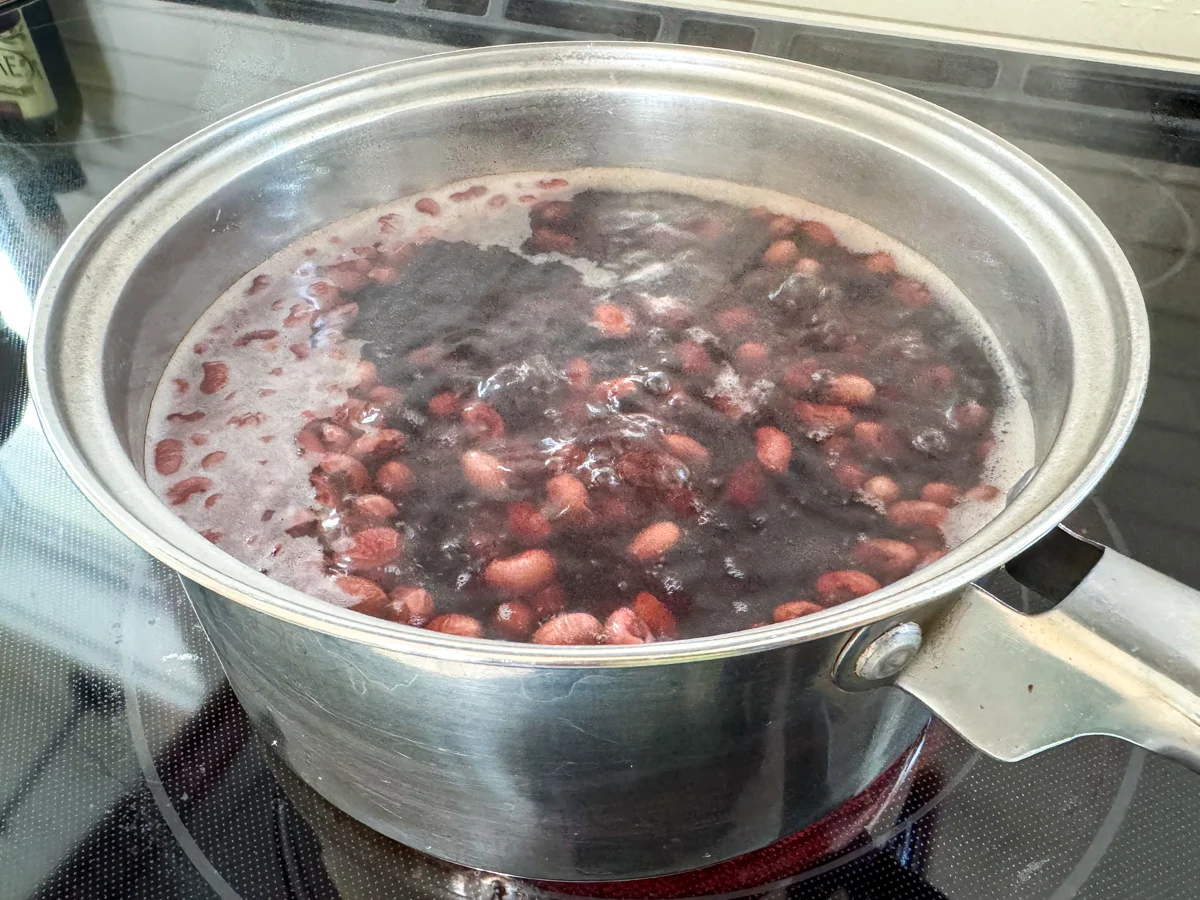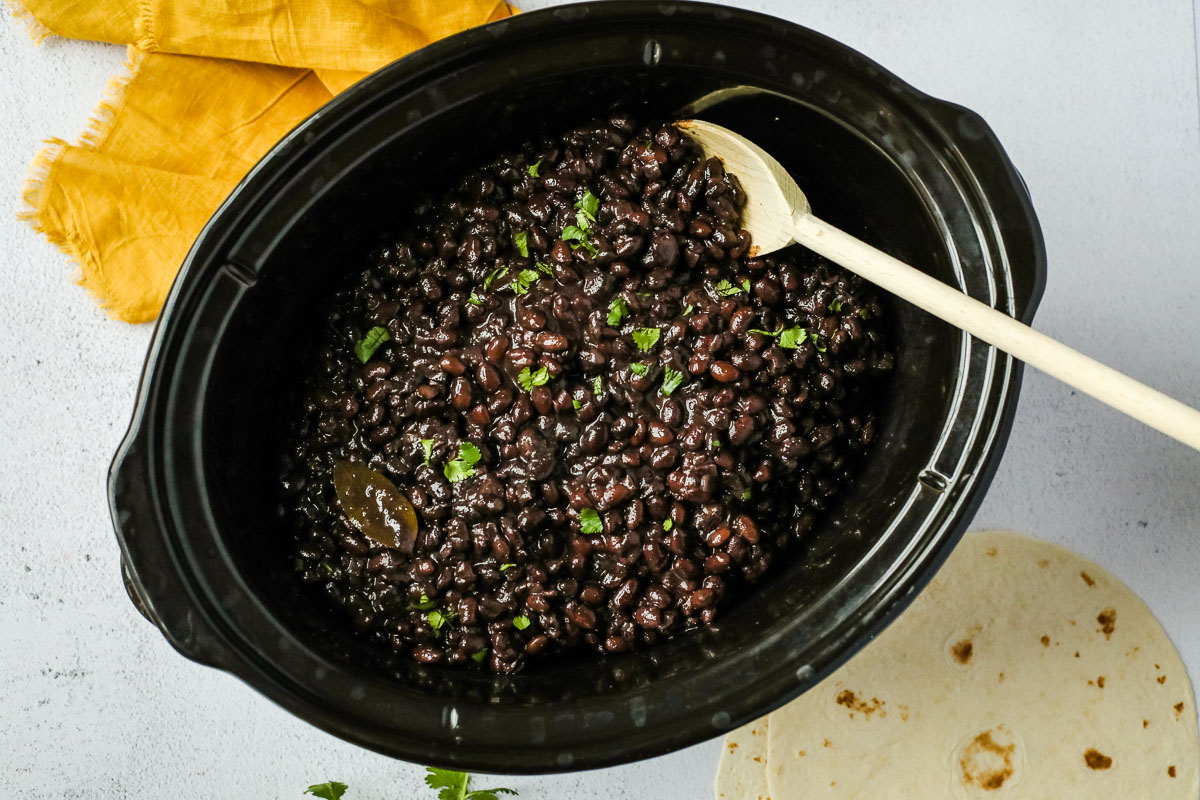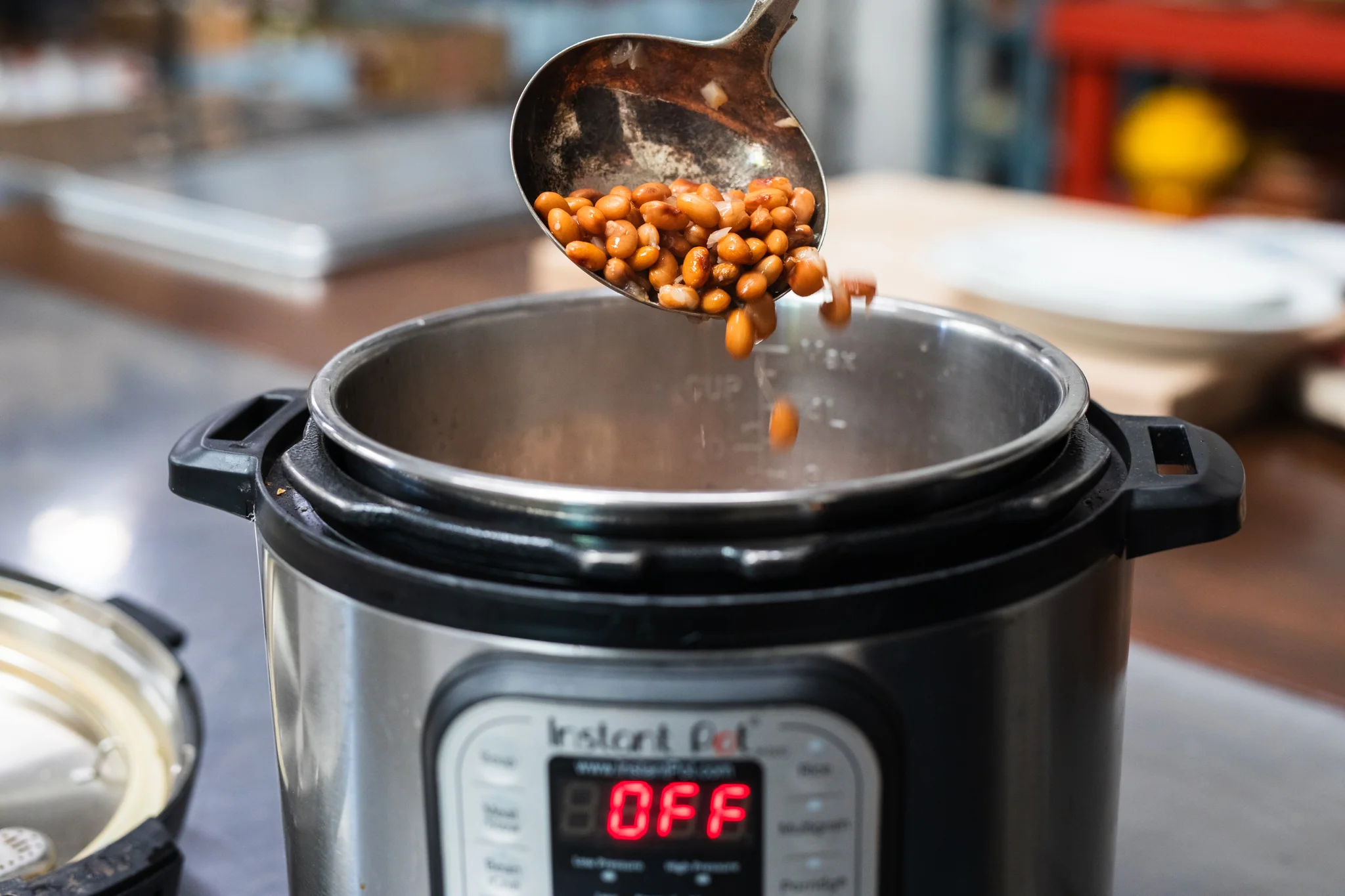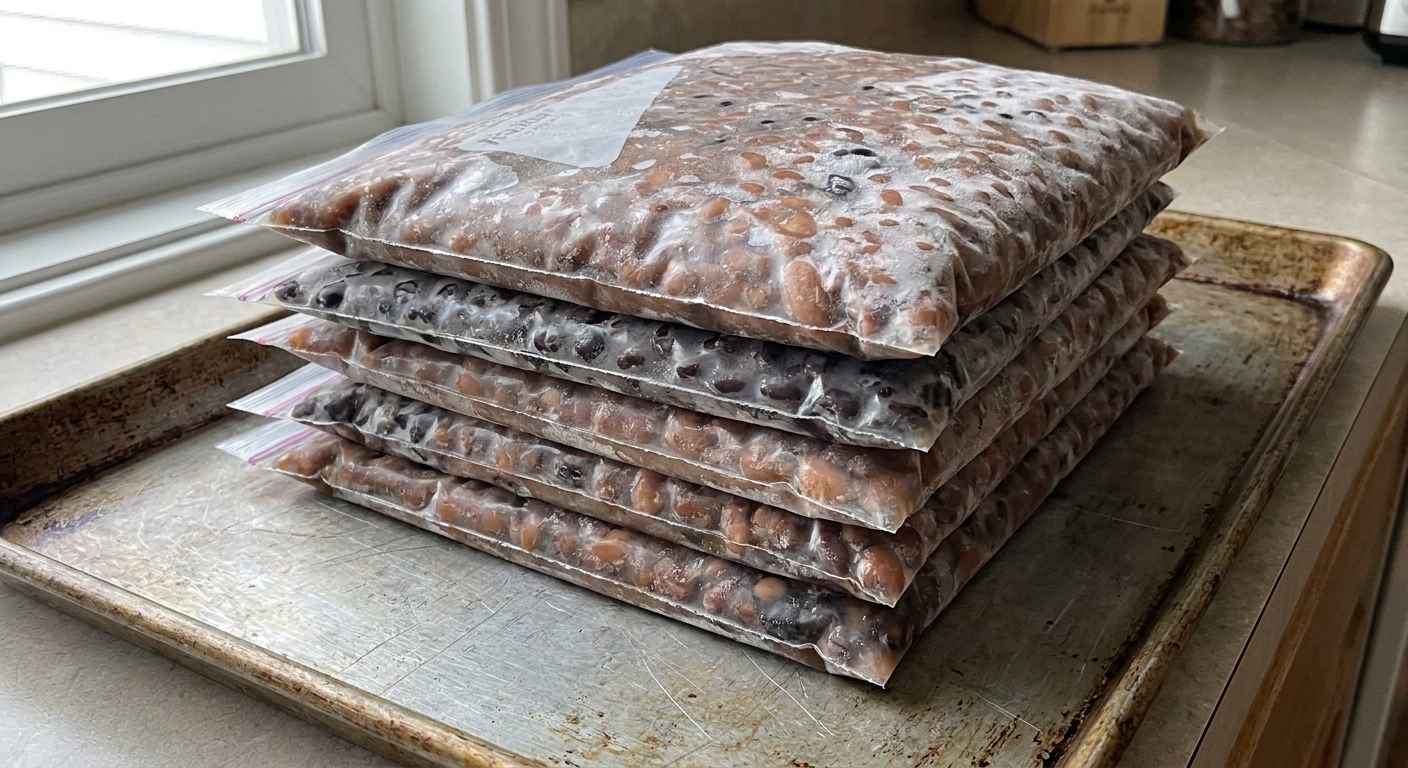

If you have ever cooked a big pot of beans and then watched half of it languish in the back of the fridge, this is your sign to start freezing them. Frozen cooked beans are one of my favorite low-effort, high-reward kitchen habits: you get all the flavor of beans cooked from scratch, but on a weeknight timeline.
The key is simple: cool the beans safely, portion them with some of their cooking liquid, and freeze them flat so they thaw quickly and evenly. That little bit of liquid is what keeps the beans plush instead of dry and mealy later.

Why freeze beans with liquid
Beans are like tiny sponges. As they cool and sit, they keep absorbing liquid. If you freeze beans drained dry, they can thaw crumbly, split, and oddly grainy.
- Cooking liquid protects texture: It cushions the beans during freezing and reheating.
- Better flavor: That broth is seasoned by the beans and aromatics. It is gold for soups, chili, and quick pan sauces.
- Easier reheating: Beans warm up more gently in liquid, so the skins do not toughen as easily.
Bean note: Sturdier beans like chickpeas and black beans tend to hold their shape especially well. More delicate, thin-skinned beans can split a bit more, but freezing with liquid still helps a lot.
How to cool beans safely
Before anything goes into the freezer, cool your pot of beans efficiently. From a food-safety standpoint, you do not want cooked beans sitting out at room temperature for too long. A practical home rule is to get them into the refrigerator (or freezer) within about 2 hours of cooking, and sooner if your kitchen is hot.
Also, cooling fast keeps steam from getting trapped in the bag. That extra moisture can form ice crystals and can worsen texture and increase freezer-burn risk over time.
Best method: shallow pans
- Fish out big aromatics (bay leaves, herb stems, onion halves) so portioning is easier later.
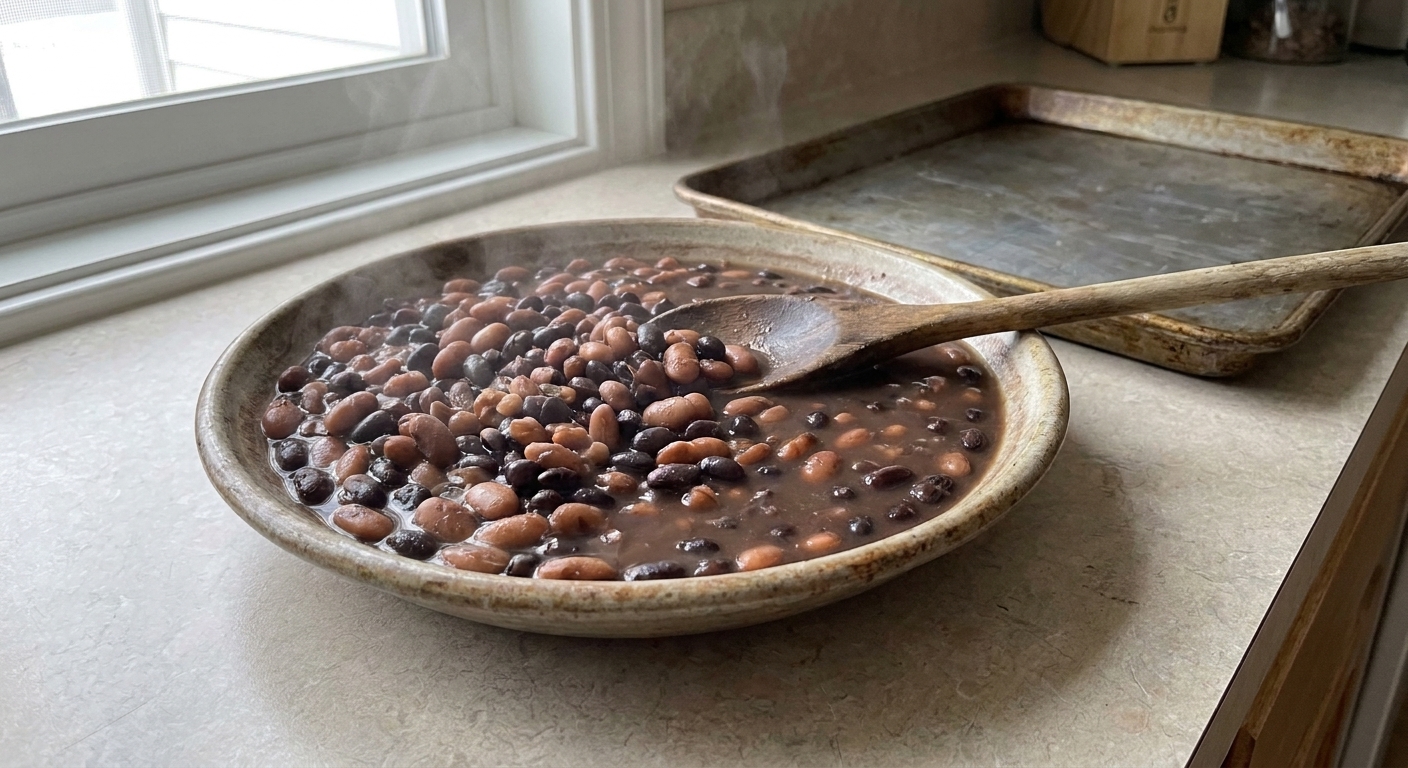
- Spread beans and liquid into a wide, shallow container (a rimmed sheet pan with high sides, a casserole dish, or two large bowls). The more surface area, the faster the cooling.
- Stir every 10 minutes to release heat. If your kitchen is warm, set the container over an ice pack or a larger bowl of ice to speed it up.
- Refrigerate once no longer steaming hot, then chill fully before freezing if you have time. If you are moving quickly, you can portion once the beans are cooled down and not actively steaming.
Tip: If your beans are very thick, add a small splash of water to loosen them while cooling. A slightly brothy freeze is better than a paste-like freeze.
Portion beans for the freezer
Portioning is what makes frozen beans actually useful. If you freeze one giant brick, you will need to thaw all of it at once. I like a mix of meal-size and small helper portions.
My go-to portion sizes
- 2 cups beans + 1/2 cup liquid: great for chili, soup starters, bean salads, and grain bowls.
- 1 cup beans + 1/4 cup liquid: perfect for tacos, tostadas, quick sautéed beans, and adding to a skillet meal.
- 3 cups beans + 3/4 cup liquid: family-size for a big pot of soup or a batch of refried beans.
You do not need to measure perfectly. The goal is: beans mostly covered or at least well-coated with broth, with enough headspace for expansion.
Do not skip labeling: Write the bean type, portion size, and date on the bag or container. Future you will thank you.
Freeze beans flat
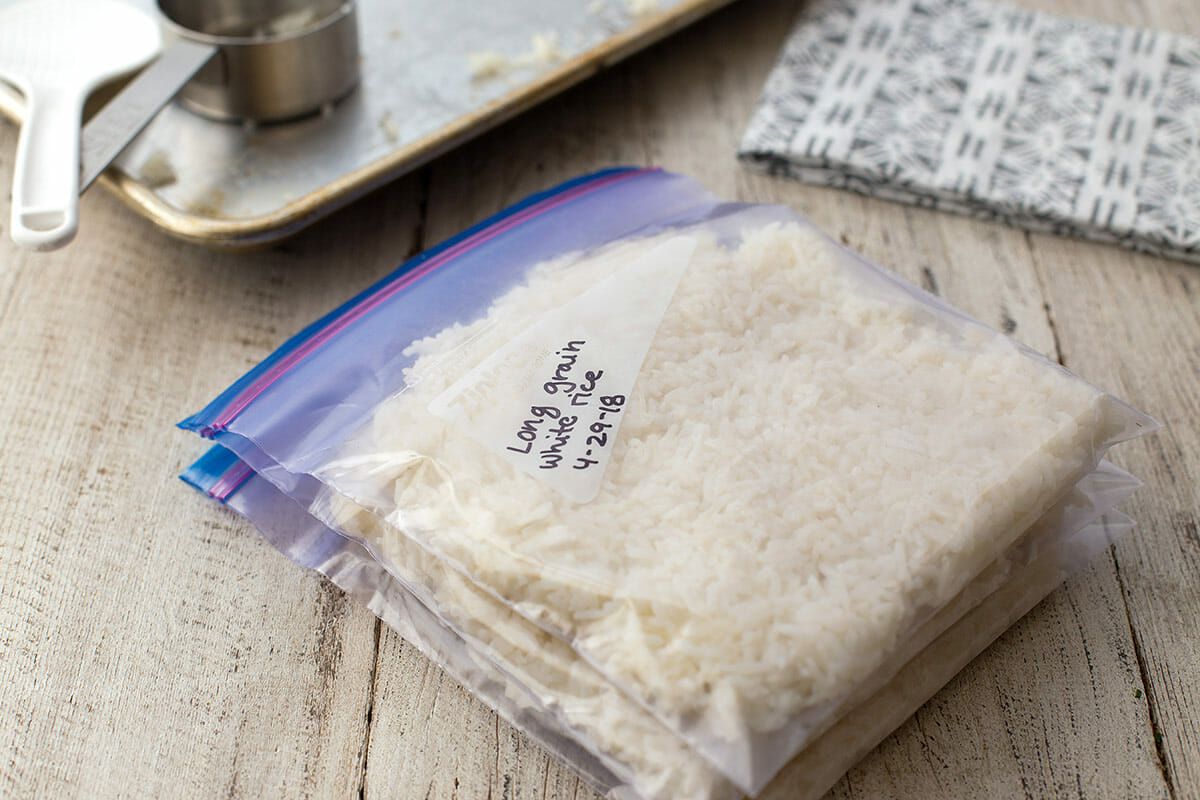
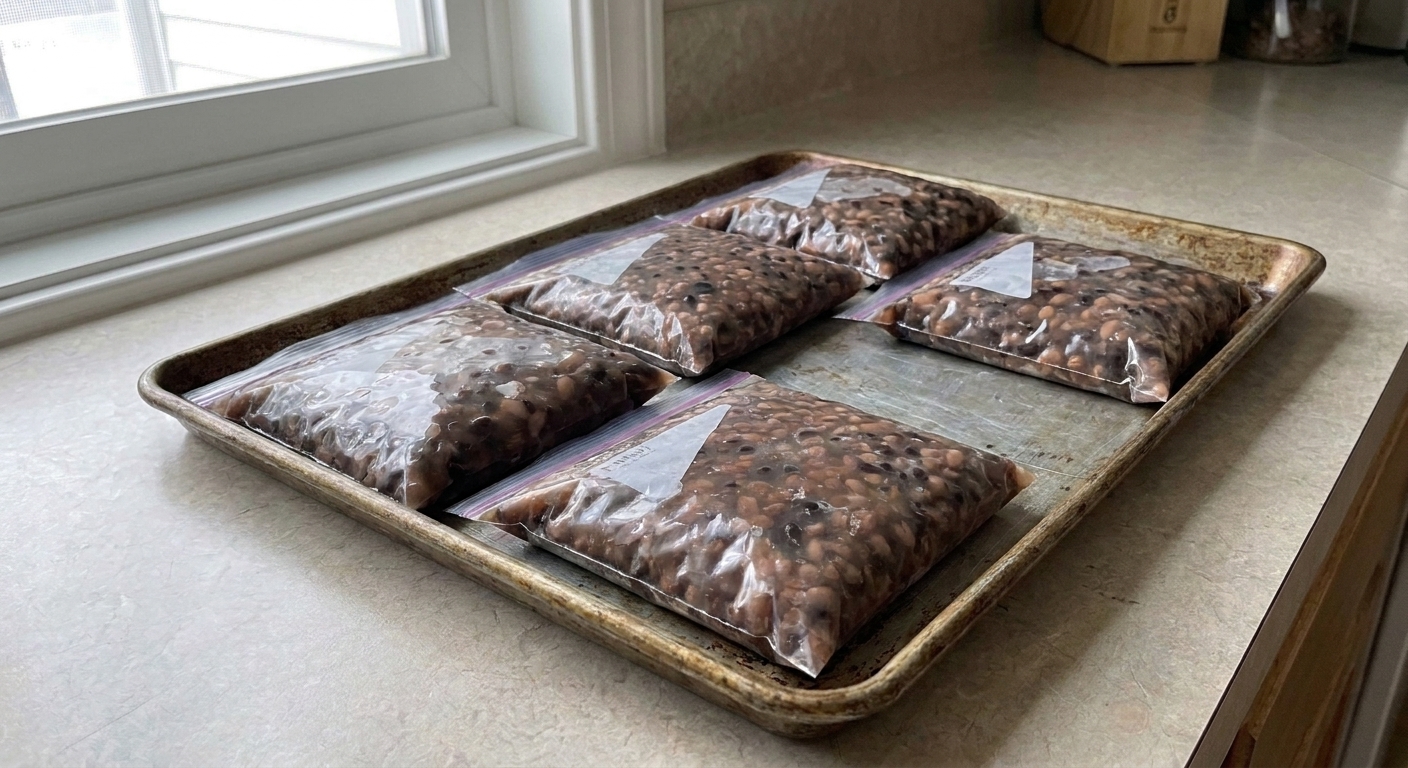
Flat freezing is the trick that makes beans a weeknight staple. Thin, even packages freeze faster, stack neatly, and thaw in a fraction of the time.
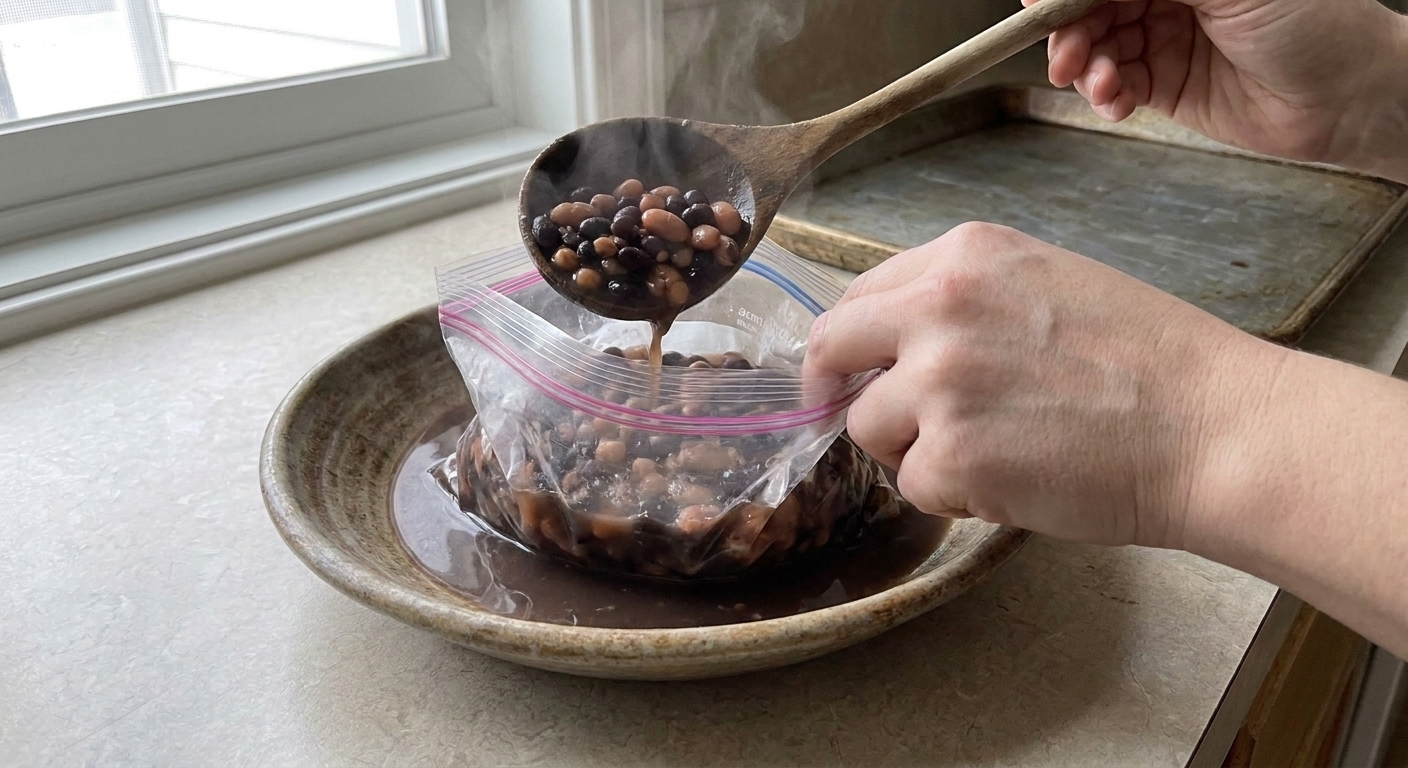
- Fill freezer bags with your portioned beans and liquid. Use freezer-grade bags or containers, since they are thicker and help prevent freezer burn.
- Press out extra air (use the water-displacement method if you like, but keep the zipper above the water line). Less air equals less dehydration.
- Lay bags flat on a sheet pan or cutting board.
- Freeze until solid, then store upright like files in a bin so you can grab what you need.
Container option: Wide-mouth pint or quart containers also work well. Just leave 1/2 inch headspace because liquids expand as they freeze.
How long frozen beans keep
Frozen beans are very forgiving. They stay safe longer than they stay at peak quality, so think of these time ranges as best flavor and texture when stored well-sealed in a freezer kept around 0°F (-18°C).
- Best quality: about 3 months
- Still very good: up to 6 months
- Fine but may soften more: 6 to 12 months (especially for thinner-skinned beans)
Freezer burn clue: If you see dry, pale patches inside the bag or a lot of ice crystals, the beans will taste flatter and the skins can feel tougher. They are usually still usable in blended dishes like refried beans or pureed soups.
Thawing cooked beans
You have options, depending on how last-minute dinner is.
1) Overnight in the fridge
Put the bag in a bowl (just in case of leaks) and thaw overnight. This keeps the skins intact and reduces splitting.
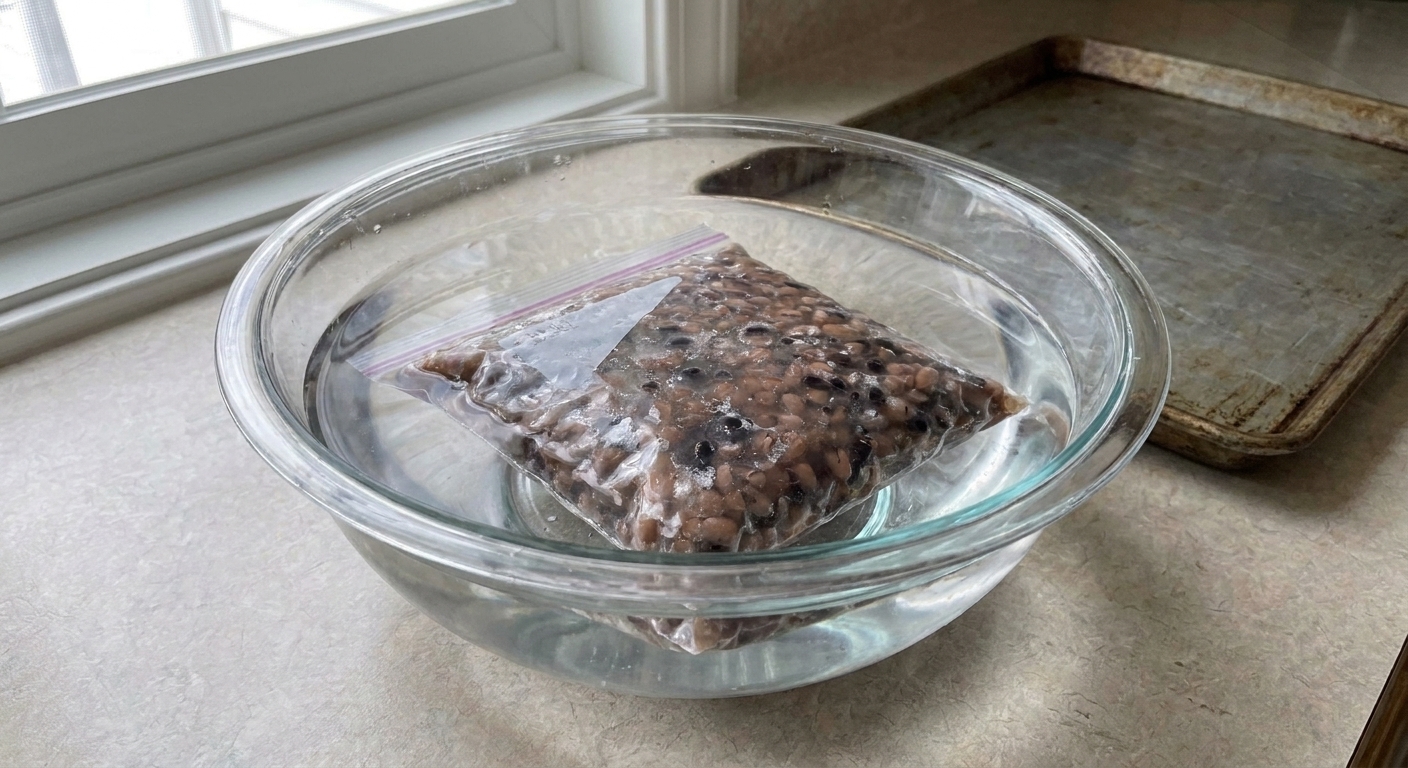
2) Cold-water thaw
Submerge the sealed bag in cold water, changing the water every 20 to 30 minutes. A 1 to 2 cup flat portion usually thaws in about 30 to 60 minutes.
3) Straight from frozen
Pop the frozen slab into a pot. Add a splash of water or broth if needed, cover, and warm over low heat, stirring occasionally as the edges melt.
How to reheat beans well
Mealy beans usually come from one of two things: reheating too aggressively (hard boil) or reheating beans that were frozen too dry. Here is how to keep them creamy and intact.
Best method: low heat with liquid
- Start with beans plus their liquid in a small pot or deep skillet.
- Add a splash of water, broth, or salsa if the mixture looks thick. You want a loose, simmer-friendly consistency.
- Warm over low heat until gently steaming. Aim for a bare simmer, not a rolling boil.
- Stir carefully with a rubber spatula or wooden spoon. If you stir hard, you will break skins and make the pot starchy.
- Salt at the end, to taste. The perception of salt can change after freezing, so adjust once hot.
Salt question I get a lot: Yes, salting beans during cooking is fine. I still like to do a final salt check after thawing and reheating, because flavors can taste a little muted when they come back from the freezer.
Microwave method
Put beans and a little liquid in a microwave-safe bowl. Cover loosely. Microwave in 45-second bursts, stirring gently between rounds. Add a spoonful of water if the bowl looks dry around the edges.
Sensory cue: Stop heating when the beans are hot and tender but not exploding. If you see rapid bubbling, turn down the heat or shorten the bursts.
Ways to use thawed beans
Once you have frozen beans on standby, you can turn a random pantry dinner into a real meal fast. Here are my favorite uses.
Chili and soups
- Stir thawed beans (plus a bit of their liquid) into tomato-based chili.
- Add to chicken soup, vegetable soup, or tortilla soup near the end, just long enough to heat through.
- Blend a portion with broth for a creamy, dairy-free soup base.
Refried beans
Warm beans with a little broth, then mash. For extra silkiness, add a spoonful of olive oil, bacon fat, or butter and a squeeze of lime. If they look stiff, add more bean liquid a tablespoon at a time until swoopy and spreadable.
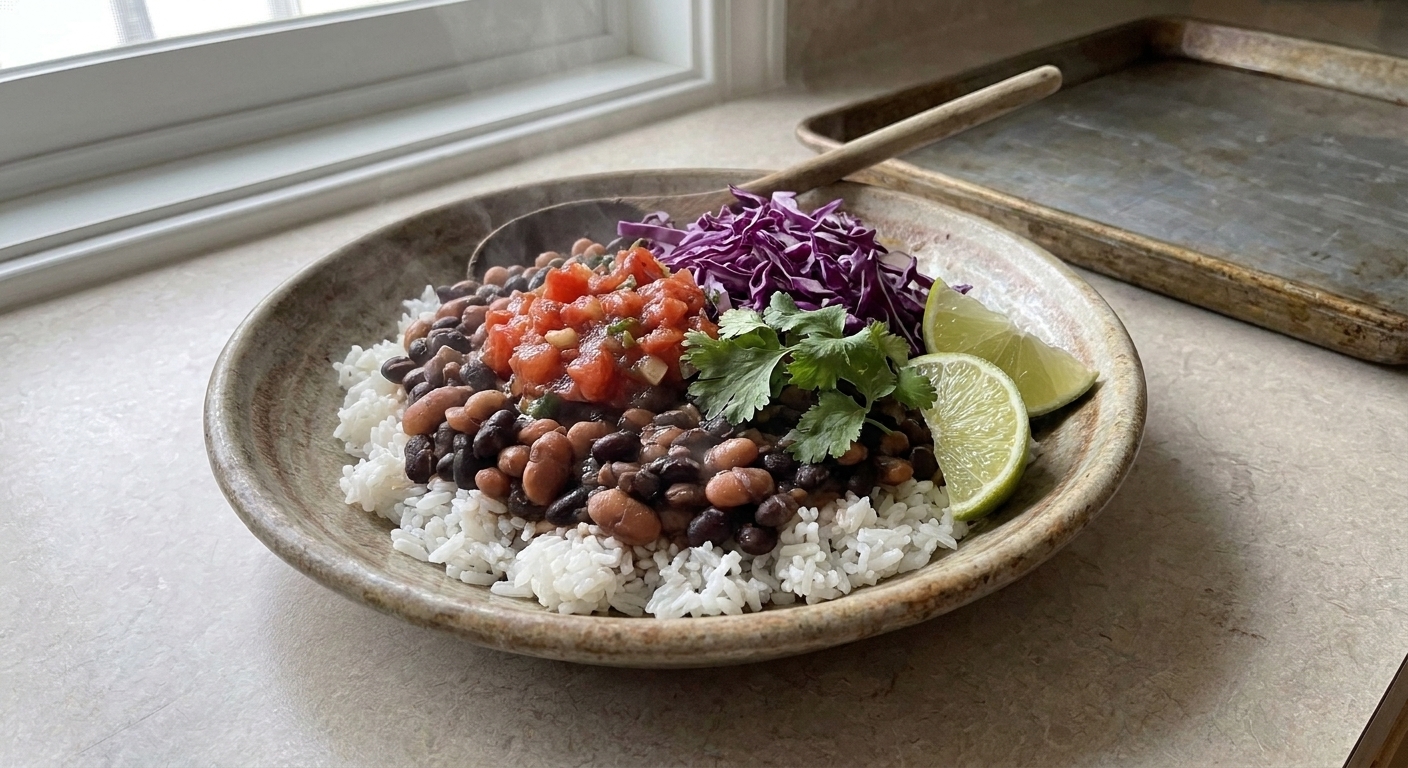
Quick weeknight bowls
- Warm beans with cumin and a splash of vinegar or lime.
- Spoon over rice or a baked sweet potato.
- Top with shredded cabbage, salsa, and something creamy like yogurt or avocado.
Common problems and fixes
My beans split after thawing
This can happen with very tender beans, delicate varieties, or aggressive reheating. Freeze with enough liquid, thaw gently, and reheat at a bare simmer.
The bag froze into a lumpy shape
Next time, freeze on a sheet pan so the bag stays flat. If it is already frozen lumpy, just thaw and transfer to a container for more even reheating.
The beans taste flat after freezing
Brighten them up at the end: a squeeze of lemon or lime, a splash of vinegar, or a spoonful of salsa. Then adjust salt.
There is jelly-like stuff in the bag
Totally normal. Bean liquid is starchy and can gel when cold. It melts back into a broth as you reheat.
My simple freezer routine
When I am tired and cleaning up after cooking, I do this:
- Cool beans in a shallow dish while I wipe down the kitchen.
- Portion into 1-cup and 2-cup bags with a little liquid.
- Label, press out air, and freeze flat on a sheet pan.
- Once solid, stack the bags in one bin so I can grab them like index cards.
Future me is always grateful. Especially on the nights when dinner needs to happen fast, and I still want it to taste like I tried.